Book Corner: Athena’s Champion by David Hair and Cath Mayo

The first in a thrilling new historical fantasy series; Odysseus must embrace his secret heritage and outwit the vengeful gods who would control or destroy him…

Prince Odysseus of Ithaca is about to have his world torn apart. He’s travelled to the oracle at Pytho to be anointed as heir to his island kingdom; but instead the Pythia reveals a terrible secret, one that tears down every pillar of his life, and marks him out for death.

Outcast by his family, hunted by the vengeful gods, Odysseus is offered sanctuary by Athena, goddess of wisdom, and thrust into the secret war between the Olympians for domination and survival. Only his wits, and his skill as a warrior, can keep him ahead of their power games – and alive.

When one of Athena’s schemes goes drastically wrong, and the young Helen of Sparta is kidnapped, Odysseus must journey past the gates of Hades to save her. Falling in love with a Trojan princess, a bewitching woman who poses a deadly threat to both his homeland and Athena, won’t make his task any easier…

Drawing from classic Greek mythology, Athena’s Champion, first in the epic Olympus Trilogy, is perfect for fans of Madeline Miller and David Gemmell.
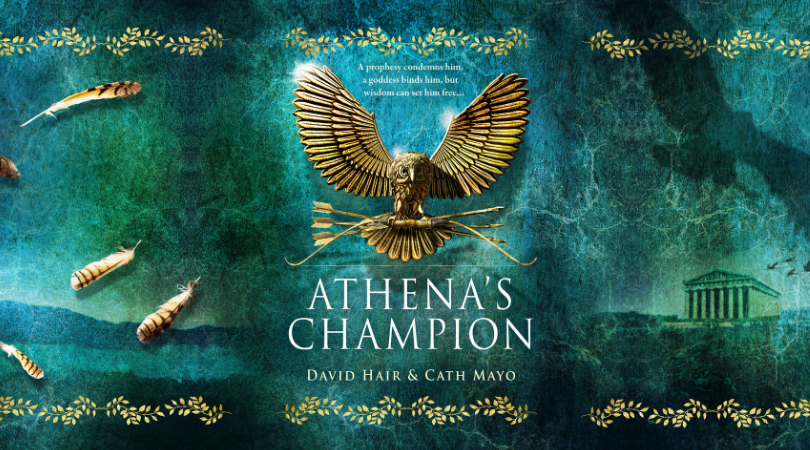
It is a distinct pleasure to have been able to review Athena’s Champion by David Hair and Cath Mayo as part of the blog tour celebrating the release of this wonderful novel.

I have to admit, I have a soft spot for the Greek legends. I try to read everything associated with the Greek myths, and the Trojan Wars in particular. David Gemmell and Glyn Iliffe have been my go-to authors for a long time. However, with Athena’s Champion there is an excellent new series to get my teeth into. Written as a collaboration between David Hair and Cath Mayo, Athena’s Champion is the first in their Olympus Trilogy, a series which promises to bring the Greek myths to vivid life.

Athena’s Champion follows the adventures of Odysseus before he finds fame on the battlefields of Troy. It portrays the Greek hero as he learns his trade as a leader and a warrior, and as an instrument of the Gods. Several of the characters – Gods and heroes – who shape the Trojan Wars are introduced to us as the story weaves its way through ancient Greece and the depths of Hades itself.

An outcast from his home on Ithaca, Odysseus has to find his own place in the world while serving the ambitions and plans of his goddess, Athena. He is helped and guided by an immortal named Bria, who serves Athena and inhabits the bodies of mortals.

After a while, my brains clears a little, though I’m left with a thunderous headache, and I’m able to observe her more closely. She’s clad in a short brown tunic, man’s garb, her bony legs deeply tanned and her hair hacked short. The smell of stale perspiration and smoke clings to her, the dust on her face is being sweated off in shiny streaks, and a copper bracelet of strange design has been pushed up her forearm until it’s tight to her skin, the only unusual thing about her.

‘Was that … beast … Was it Molebus?’ I ask, curious to see how she responds, despite my pain and exhaustion.

She gives me an interested look. ‘Mmm,’ she says. ‘The Pythia’s going to be pissed off.’

‘Is he…? Did he…?’

‘He’s in a hole,’ she drawls, her manner more thirty than thirteen.

She killed a man… if that’s what he was! From her manner, I doubt it’s the first time.

‘How did I get here?’ I ask.

‘I dragged you,’ the girl says. ‘Lucky you’re a short-arse, otherwise I’d not have managed.’

I look down at my leg, wrapped tightly in a bloodied swathe of my own cloak, and shudder as I remember seeing my thigh bone amidst the torn meat and pumping blood. I grope at the bandages, my chest constricting in fear.

‘Don’t touch!’ the girl snaps. ‘Athena stopped the blood and closed the wound. That saved your life, but there’s still much healing to be done. You interfere with it, you’ll mess it up.’

Athena … Molebus … The Pythia … There has to be a rational explanation for all of this. But right now I can’t fond one – all I’m doing is making my head throb even worse than it was before. ‘I suppose I’m in your hands,’ I manage to murmur. ‘Thank you.’

‘You’re welcome, O Prince of Ithaca.’

‘You know who I am?’

She snickers. ‘Yes – we had that conversation some hours ago, during one of your semi-lucid moments – though not lucid enough for you to remember, clearly.’

‘If you say so.’

Odysseus is not the confident trickster we know for the traditional Trojan stories. He is learning his trade, though his quick intelligence and obvious courage. The enemies are not always obvious and not always tangible – Odysseus has to fight with his conscience as well as his physical opponents. The way he faces his trials head-on, and takes responsibility for  his mistakes makes him a sympathetic hero and one who draws the reader to his side from the very first pages.

Ancient Greece and the realms of the gods and Hades are wonderfully recreated in all their majestic and terrifying glory. Hades, in particular, is a marvelous, wondrous world in which the reader can get lost as easily as the souls trapped within.

The book is written by co-authors David Hair and Cath Mayo and it is a testimony to their writing skills that the story is seamless – it is impossible to tell which parts were written by which author. In fact, if I hadn’t known there were two writers, I would never have guessed. They have managed to recreate ancient Greece, combining the mystical and magical with the history and legends to produce a story that is at once in the greatest tradition of Homer whilst offering a refreshing and unique vision of these timeless stories.

I can highly recommend this fascinating, engaging novel to anyone who loves the greatest traditions of the Greek myths.


To Buy the Book:

Athena’s Champion can be bought from: Amazon (UK); Kobo (UK); Google Books (UK); Apple Books (UK)

Athena's Champion blog tour banner (2)

About the authors:

David Hair is an award-winning New Zealand YA and Adult fantasy writer, and the author of sixteen novels. He’s joined his considerable skill and expertise with Cath Mayo to create the Olympus Series, an adult historical fantasy drawing on ancient Greek Mythology, following the adventures of Odysseus as he navigates the dangerous world of the Greek Gods. @DHairauthor

Cath Mayo is a New Zealand YA, Children and Adult fiction author. Her two published YA historical novels are both set in Ancient Greece and her first novel received a Storylines Notable Book Award for Young Adult Fiction in 2014. She’s joined her considerable skill and expertise with David Hair to create the Olympus Series, an adult historical fantasy drawing on ancient Greek Mythology, following the adventures of Odysseus as he navigates the dangerous world of the Greek Gods. @cathmayoauthor


*

Coming November 2018

Tracing the fortunes of the women who had a significant role to play in the momentous events of 1066, Silk and the Sword: the Women of the Norman Conquest will be released in the UK on 15 November 2018 and is available for pre-order on Amazon UK,  Amberley Publishing and Book Depository. It is scheduled for release in the US on 1 March 2019 and is available for pre-order from Amazon US.
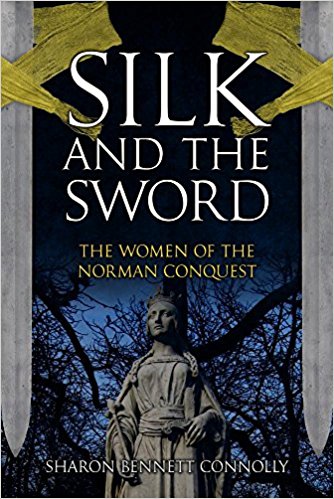
 

Also by Sharon Bennett Connolly:

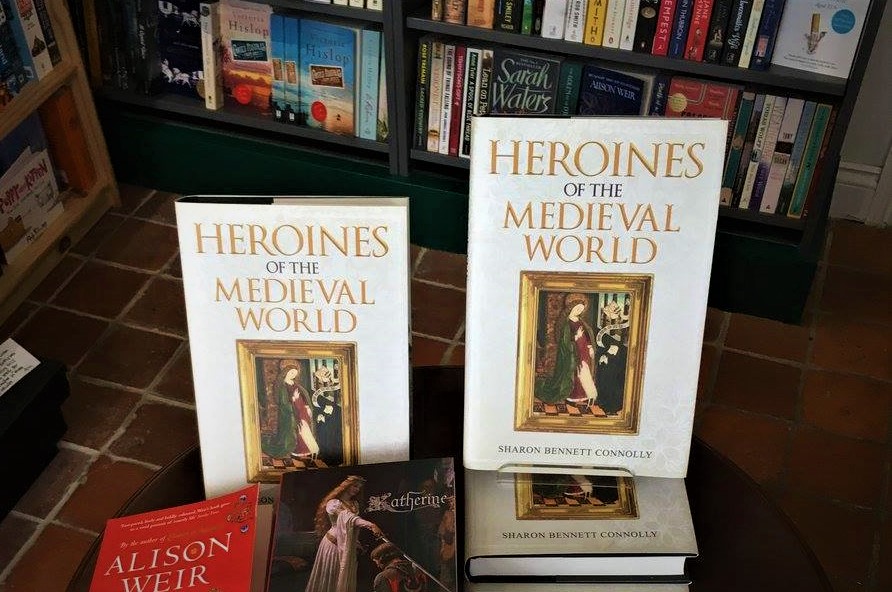
Telling the stories of some of the most incredible women from Medieval history, Heroines of the Medieval World,  is now available in hardback in the UK from both Amberley Publishing and Amazon UK, in the US from Amazon US  and worldwide from Book Depository. It will be released in paperback in the UK from 15 March 2019 and is available for pre-order on Amazon.
You can be the first to read new articles by clicking the ‘Follow’ button, liking our Facebook page or joining me on Twitter.

*

©2018 Sharon Bennett Connolly
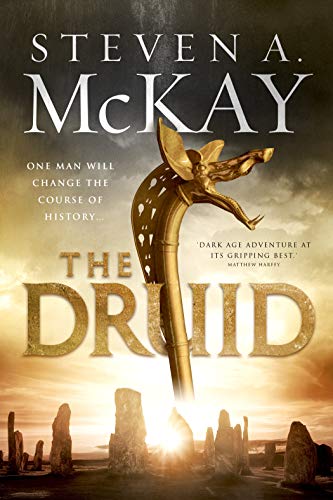
Book Corner: The Druid by Steven A. McKay

Northern Britain, AD430

A land in turmoil. A village ablaze. A king’s daughter abducted.

In the aftermath of a surprise attack Dun Buic lies in smoking ruins and many innocent villagers are dead. As the survivors try to make sense of the night’s events the giant warrior-druid, Bellicus, is tasked with hunting down the raiders and thwarting their dark purpose.

With years of training in the old ways, two war-dogs at his side, and unsurpassed skill with a longsword, Bellicus’s quest will take him on a perilous journey through lands still struggling to cope with the departure of the Roman legions.

Meanwhile, amongst her brutal captors the little princess Catia finds an unlikely ally, but even he may not be able to avert the terrible fate King Hengist has in store for her.

This, the first volume in a stunning new series from the bestselling author of Wolf’s Head, explores the rich folklore and culture of post-Roman Britain, where blood-sacrifice, superstition and warfare were as much a part of everyday life as love, laughter and song.

As Saxon invaders and the new Christian religion seek to mould the country for their own ends one man will change the course of Britain’s history forever. . .

. . . THE DRUID.

“Steven A. McKay’s archetypal villains and heroes step vividly onto the page from a mist-veiled past of legend to battle for the life of a princess and the fate of Britain.
Dark age adventure at its gripping best.” – MATTHEW HARFFY, author of The Bernicia Chronicles


I have to say that the first thing that attracted me to this book was the awesome cover – it is one of the best and most original that I have seen in a long time. It offers the promise of an amazing story and does not disappoint.

Steven A. McKay is an excellent storyteller, who brings the legends of the past to life, with a new and unique perspective. His Robin Hood series was one of the best I’ve read, moving the events into Barnsdale Forest, he gave a refreshing revamp to the age-old tales and made them his own. He has now gone further back in time, to the dawn of the Anglo-Saxon occupation of Britain, when the departure of the Roman legions was still within living memory and the Britons were trying to resist the incursions of the Angles Saxons and Jutes, who had established bridgeheads on the Saxon shore – the east and south coasts of Britain.

The author sets the scene wonderfully for the events that will take the reader on a breathtaking journey from Scotland to the most sacred site in England, following the druid Bellicus as he hunts the Saxon raiders who had kidnapped a young princess, Catia. A vision of the landscape is beautifully woven into the reader’s mind, with the challenges the moutainous terrain, and the security offered to the northern tribes by Hadrian’s wall all making their own impact on the story. The distances walked or ridden lend credence to  the length of the journey undertaken by the Saxons in their journey back to their master, and by Bellicus in his dogged pursuit of the little princess’s kidnappers.

Yet here they were, with a settlement ravaged by fire and Alt Clota’s princess abducted by Saxon raiders.

“Sometimes I wish the Romans had never left,” Coroticus growled, then nodded his thanks as Nectovelius’s wife placed a steaming bowl of broth on the table before him, closely followed by three more for the other men.

Bellicus understood his king’s feelings at that moment but he couldn’t share them. The Romans might have put a stop to the raids by the people that surrounded Alt Clota, but they’d also tried to destroy the native way of life, including their religion.

The druids had been almost wiped out in the lands south of the Antonine Wall although the “civilising” influence of the Roman overlords had not penetrated much further north. The harsh land there offered sanctuary to those druids who managed to evade their persecutors and Bellicus had learned at the feet of some of them.

No, the giant druid was glad the Romans had gone. Now that they’d finally returned to their own lands the old ways were making a resurgence in Britain and the gods were once again enjoying the reverence they deserved. News had even reached Bellicus of a warlord in the south who aimed to unite the native peoples against the invading Saxon hordes. His closest advisor was a druid steeped in the old traditions, highest of their brotherhood and known as the Merlin.

“What are we going to do?” Gavo’s blunt question broke Bellicus’s reverie.

“We must go after them,” Coroticus responded, his tone making it clear there would be no argument.

Bellicus was always one to speak his mind though, even if kings didn’t like what they heard.

“Aye, certainly we must follow them and rescue the princess,” he agreed. “But you, my lord king, must remain here in Alt Clota.”

He held up a hand, forestalling the expected outburst.

….

As anyone who has read Steven A. MacKay’s work before has come to expect, the large-as-life characters make this story. Bellicus is a truly tenacious and singular druid, he exudes the mystery and magic of his people, confident in his knowledge of the old ways, and in his fighting abilities, the man is not just a giant in height, but also in his power and personality. He instills fear, trust and dedication in those he comes into contact with, and his own dedication to duty is an inspiration to those he comes into contact with.

Bellicus is human, however, and proves susceptible to the odd misdirection, but manages to overcome such setbacks with admirable courage and tenacity. He is a hero it is easy to like, and to whom the reader can easily relate. The supporting characters in the tale demonstrate clearly the conflict which England is about to be torn by, the Britons fighting for survival against the invading German tribes. The lines are drawn, but not always clear.

There are some wonderfully surprising elements to the story, and some cameo appearances that will bring a smile to the reader’s face. The adventure is fun and edge-of-the-seat stuff, from the pursuit to the frequent clashes of arms, the reader barely gets a moment to take a breath before the next part of the action unfolds.

The Druid tells a story as stunning as the cover art suggests and, as the first of a new series, promises drama and excitement for many books to come.

About the author:

Steven A. McKay was born in Scotland in 1977. His first book, “Wolf’s Head”, came out in 2013 and was an Amazon UK top 20 bestseller. “Blood of the Wolf” is the fourth and final book in the Forest Lord series which has over 100,000 sales so far.

Steven’s next book, “The Druid” is the first in a brand new series set in post-Roman Britain and will be published on November 1st 2018.

He plays guitar and sings in a heavy metal band when they can find the time to meet up (which isn’t often these days to be honest).

Check out his website at https://stevenamckay.com/ and sign up for the email list – in return we’ll send you a FREE short story which is not available anywhere else, as well as offering chances to win signed books and other goodies!

The Druid goes on sale on 1st November 2018 and can be found on Steven A. McKay’s Amazon page.

*

Coming in November!

Tracing the fortunes of the women who had a significant role to play in the momentous events of 1066, Silk and the Sword: the Women of the Norman Conquest will be released in the UK on 15 November 2018 and is available for pre-order on Amazon UK,  Amberley Publishing and Book Depository. It is scheduled for release in the US on 1 March 2019 and is available for pre-order from Amazon US.


Also by Sharon Bennett Connolly:

Telling the stories of some of the most incredible women from Medieval history, Heroines of the Medieval World,  is now available in hardback in the UK from both Amberley Publishing and Amazon UK, in the US from Amazon US  and worldwide from Book Depository. It will be released in paperback in the UK from 15 March 2019 and is available for pre-order on Amazon.

You can be the first to read new articles by clicking the ‘Follow’ button, liking our Facebook page or joining me on Twitter.

*

©2018 Sharon Bennett Connolly
 

Guest Post: The Quest for The Holy Grail by Mary Anne Yarde.

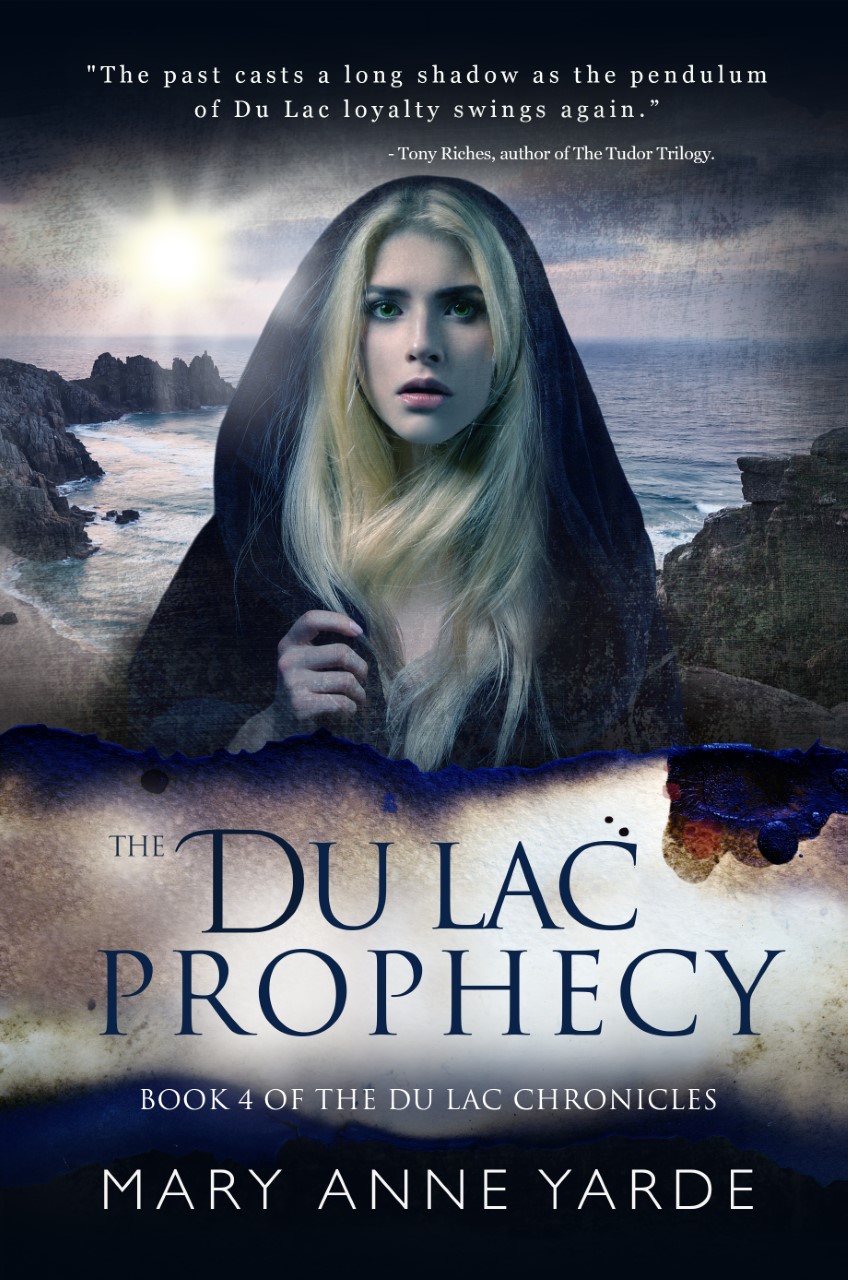
Today it is a pleasure to welcome back Arthurian novelist Mary Anne Yarde to the blog. Mary Anne’s latest book, The Du Lac Prophecy, book 4 of The Du Lac Chronicles, is released today. Mary Anne has joined us to share some of the research behind the book, with an article about that most elusive of historical relics, the Holy Grail.


The Quest for The Holy Grail

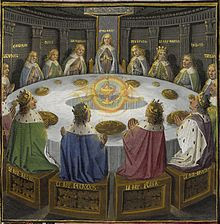
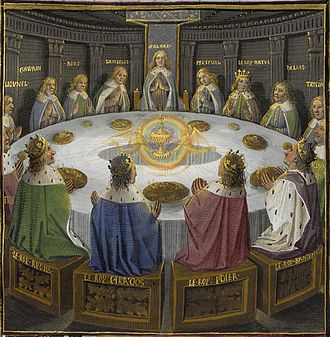
The Holy Grail, by Évrard d’Espinques c. 1475

By Mary Anne Yarde.

King Arthur’s Britain is a utopian world filled with chivalry, glory, and just a touch of glamour. Imagine Camelot as she rises out of the Fata Morgana — the mist. Picture the Knights as they mount their beautiful horses and ride through the portcullis as they embark on another noble quest. Is there anything more romantic?

The most famous quest of all was, of course, the quest for The Holy Grail. It is this quest that I am going to take a closer look at today. I am going to talk about where the idea came from, and how it became associated with King Arthur and his Knights.

To start with, we need to look at a passage from the Bible.

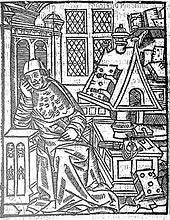
Chrétien de Troyes

While they were eating, Jesus took bread, and when he had given thanks, he broke it and gave it to his disciples, saying, “Take and eat; this is my body.”

Then he took a cup, and when he had given thanks, he gave it to them, saying, “Drink from it, all of you. This is my blood of the covenant, which is poured out for many for the forgiveness of sins.

Matthew 26:17-30 New International Version (NIV)

This was to be the last supper before Jesus’ arrest and horrific crucifixion. It is said that the cup that Jesus used on that fateful night was also used to catch his blood as he hung on the cross. So, because of this, The Holy Grail was / is a very precious Christian artefact.

Joseph of Arimathea and The Holy Grail.

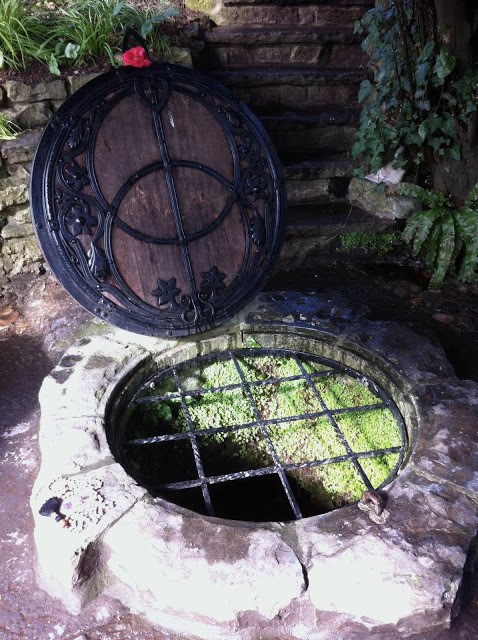
The Chalice Well Gardens, Glastonbury

But then a miracle happened, and Jesus rose from the dead. The tomb was again empty, but Joseph’s heart was full of wonder. Joseph spent the rest of his life wandering the world and passing on the teachings of Jesus.

It came to pass that Joseph and a group of friends sailed to a distant land called Albion. They followed the River Severn as they travelled inland and finally they found themselves in The Summer Lands. Joseph brought with him the sacred Chalice of Christ, for it was his to protect.

Joseph settled in a place known locally as The Island of Glass (Glastonbury), and it is said that it was here that Joseph hid the Holy Grail down a sacred well. The water of the well, so the story goes, instantly turned red and tasted of blood.

The Grail’s hiding place remained a secret for many years, and over time it became the stuff of legends. The stuff of folklore.

So how did Arthur and his Knights become associated with this story?

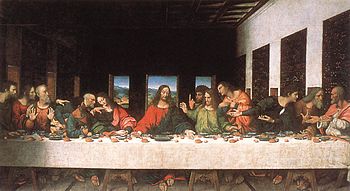
The Last Supper, ca. 1520, Andrea Solari, after Leonardo da Vinci

Well, to answer that question we need to look at one man — Chrétien de Troyes. At the end of the 12th Century, Chrétien de Troyes, a French poet, took up the story of the Grail. He wove the story of the Grail into the story of King Arthur and his Knights. It was an instant hit.

The importance of de Troyes influence on Arthurian Legend cannot be overlooked. It is de Troyes that introduced us to Lancelot and the love triangle. It is de Troyes that first introduced the idea of the Knights Quest for the Holy Grail. He also introduced us to the knight that would discover the Grail’s hiding place — Sir Percival.

If nothing else, de Troyes certainly sparked the imagination of the populace, for what could be more romantic than these chivalrous, heroic knights, searching for the sacred cup of their religion?

The Chalice Well

Robert de Boron (a late 12th Century French Poet) went into even more detail when he took up the story. But it was the Vulgate Cycle (Lancelot-Grail), which was written in the 13th Century by an unknown author that really cemented the Grail Quest with Arthur and his Knights.

The central character of the story is Lancelot. However, instead of Percival being the ultimate Grail hunting knight, it is Lancelot’s son, Galahad.

What did the Church think of this story? It is, after all, about a sacred relic.

The idea of a magic cup – cauldron – was a prevalent theme in Celtic myths, not so much the Bible. It was, in short, a pagan tale that was rewritten by a French poet with a socially acceptable Christian theme.

As with almost all things King Arthur, excavating the truth is near on impossible. Arthur resides in the shadowy world of folklore, and that is where the Grail can be found as well. However, the story of the Knights and the Holy Grail captured the imagination of the country and it has been associated with Arthurian Legends ever since.

*

Picture courtesy of Wikipedia, except the Chalice Well and Gardens, which are courtesy of Mary Anne Yarde.

*

The Du Lac Prophecy (Book 4 of The Du Lac Chronicles) by Mary Anne Yarde

Two Prophesies. Two Noble Households. One Throne.

Distrust and greed threaten to destroy the House of du Lac. Mordred Pendragon strengthens his hold on Brittany and the surrounding kingdoms while Alan, Mordred’s cousin, embarks on a desperate quest to find Arthur’s lost knights. Without the knights and the relics they hold in trust, they cannot defeat Arthur’s only son – but finding the knights is only half of the battle. Convincing them to fight on the side of the Du Lac’s, their sworn enemy, will not be easy.

If Alden, King of Cerniw, cannot bring unity there will be no need for Arthur’s knights. With Budic threatening to invade Alden’s Kingdom, Merton putting love before duty, and Garren disappearing to goodness knows where, what hope does Alden have? If Alden cannot get his House in order, Mordred will destroy them all.

About the Author

Mary Anne Yarde is the multi award-winning author of the International Bestselling series — The Du Lac Chronicles.

Yarde grew up in the southwest of England, surrounded and influenced by centuries of history and mythology. Glastonbury — the fabled Isle of Avalon — was a mere fifteen-minute drive from her home, and tales of King Arthur and his knights were a part of her childhood.

To buy the latest book in Mary Anne’s fabulous Du Lac Chronicles: Amazon US; Amazon UK; Amazon CA.

*

My books

Heroines of the Medieval World tells the stories of women, famous, infamous and unknown, who shaped the course of medieval history. It is available in hardback in the UK from both Amberley Publishing and Amazon UK. It is now available in Hardback from Amazon US  and worldwide from Book Depository.

From Emma of Normandy, wife of both King Cnut and Æthelred II to Saint Margaret, a descendant of Alfred the Great himself, Silk and the Sword: the Women of the Norman Conquest traces the fortunes of the women who had a significant role to play in the momentous events of 1066. Silk and the Sword: the Women of the Norman Conquest will be released in the UK on 15 November 2018 and is available for pre-order on Amazon UKAmberley Publishing and Book Depository.

You can be the first to read new articles by clicking the ‘Follow’ button, liking our Facebook page or joining me on Twitter.

*

©2018 Sharon Bennett Connolly and Mary Anne Yarde

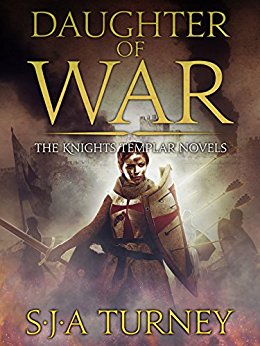
Book Corner: Daughter of War by S.J.A. Turney

Today it is my pleasure to be a part of S.J.A. Turney’s Blog Blitz  with a review of his latest novel, Daughter of War.

An extraordinary story of the Knights Templar, seen from the bloody inside

Europe is aflame. On the Iberian Peninsula the wars of the Reconquista rage across Aragon and Castile. Once again, the Moors are gaining the upper hand. Christendom is divided.
Amidst the chaos comes a young knight: Arnau of Valbona. After his Lord is killed in an act of treachery, Arnau pledges to look after his daughter, whose life is now at risk. But in protecting her Arnau will face terrible challenges, and enter a world of Templars, steely knights and visceral combat he could never have imagined.
She in turn will find a new destiny with the Knights as a daughter of war… Can she survive? And can Arnau find his destiny?
An explosive novel of greed and lust, God and blood, Daughter of War marks the beginning of an epic new series from bestseller S.J.A. Turney. Perfect for fans of Bernard Cornwell, Conn Iggulden and Matthew Harffy.
I had been looking forward to reading Daughter of War by S.J.A. Turney ever since i heard about the book. And I was not disappointed. Daughter of War is like no other Templar story I have read. The story is set in Spain, rather than the Holy Land, during the Reconquista. And has none of the mysticism that many Templar novels revolve around.
Rather than making the book unreadable, however, this makes the story all-the-more fascinating. the author concentrates on the fighting, monastic and community elements of the Templar order and, as a result, has managed to create a story that is both unique and refreshing. This is a must-read for any fan of the real Knights Templar.
What did I love about this book? Everything. The story revolves around a small Templar preceptory in rural Spain, which has attracted the attention and ire of an unscrupulous and greedy Spanish noble. The preceptory is run by Ermengarda d’Oluja – a woman – but a formidable, commanding woman who has become one of my favourite characters. If ever I write a Heroines of the Medieval World 2, Ermengarda will be in there! And that’s the amazing thing, Ermengarda is a real historical character who did run a Templar preceptory – I didn’t even know they had women in the Templars.
 
But if you think that because there is a female Templar, that this book would be any less gritty or warlike than any other Templar story, you’d be mistaken. Ermengarda is a woman of steel and an incredible character. S.J.A. Turney, however, has made sure to keep her within the male-orientated realm in which she lived. She extends the limits of female convention if the twelfth century, but never quite breaks them.
The story also deals with the powerlessness of women in the medieval era and the fact that they did not have the right to decide their own fate when it came to marriage. That they could be forced to marry wherever their family and betters decided. And this is what causes the conflict in Daughter of War.
… There, in an antechamber of ancient stone, beneath an elegantly vaulted ceiling, stood Titborga Cervelló de Santa Coloma in her mourning dress of pure white. The sound of loud conversation emerged from the great hall beyond the thick, heavy wooden doors and, though the details of the discussion could not quite be made out, they sounded purposeful and combative.
Arnau dropped to a knee and bowed his head in respect.
‘My lady.’
‘Rise, Señor de Vallbona,’ she said in an odd, worried tone.
‘How may I be of service?’ he asked, climbing to his feet once more and adjusting his grey bliaut swiftly.
Something about the way the lady’s eyes scoured the dim surroundings put him on edge, and when she spoke, her voice was quiet and suspicious. ‘You are one of Santa Coloma’a most trusted men, Arnau de Vallbona.’
‘I have striven in my time to serve your father appropriately,’ he replied, brow creased more than ever.
‘My father spoke of you often, and well. I have seen you with him. He held you in esteem, perhaps more than one might expect for your somewhat minor rank.’
Arnau stifled the disappointment and irritation he felt at the rather blunt remark. Keeping his expression carefully neutral, he nodded. ‘Your father was a great man. I looked up to him. Even at the end, I -‘
‘I need your help. Your oath, Señor de Vallbona.’
Now Arnau felt alarm. These were careful words spoken in a dangerous tone. What was happening? …
Arnau and Titborga are wonderful characters, each joining the Templar order for their own reasons, and each looking for their own purpose in life. Each character – indeed, every character in the book – is unique, with their own hopes and dreams – and challenges. The book takes care not to stereotype the Templars into over zealous religious fanatics, but gives each their individual stories.
Care is taken to enthuse the book with historical accuracy, be it of the region in which the story is based, of the Templar order in general and of the preceptory in particular. The level of research that has gone into this book is astounding and impressive and has helped to create the world of 12th century Spain, torn between Christian and Muslim inhabitants.
As a story, the pace is incredible and barely gives the reader any time to stop and think as the Templars deal with the growing crisis. The attention to detail of S.J.A. Turney means that the fight scenes, in particular, are incredible scenes that draw the reader in, until they’re cowering behind their sofa to hide from the swinging swords and flying crossbow bolts. The author is a true wordsmith and recreates the medieval world and people with a skill level that is rarely achieved and maintained.
Daughter of War has an air of authenticity that is rarely achieved by an author, you can feel the heat of medieval Spain, the desperation of people in a fight they are not sure they can win, and the determination of those who know they are in the right. However, above all, Daughter of War is one thing; it is a fabulously entertaining story, and I cannot recommend it highly enough.
About the author:
S.J.A. Turney is an author of Roman and medieval historical fiction, gritty historical fantasy and rollicking Roman children’s books. He lives with his family and extended menagerie of pets in rural North Yorkshire.
To buy Daughter of War by S.J.A. Turney:

Amazon (UK); Kobo (UK);  Google Books (UK); Apple Books (UK)

Author Social Media Links

Twitter: @SJATurney

*

My book

Heroines of the Medieval World,  is now available in hardback in the UK from both Amberley Publishing and Amazon UK and worldwide from Book Depository. It is also available on Kindle in both the UK and USA and will be available in Hardback from Amazon US from 1 May 2018.

You can be the first to read new articles by clicking the ‘Follow’ button, liking our Facebook page or joining me on Twitter.

*

©2018 Sharon Bennett Connolly
Guest Post: Digging up Folklore – King Arthur by Mary Anne Yarde

Today it is a pleasure to welcome Mary Anne Yarde, author of The Du Lac Chronicles, to History…the Interesting Bits with an article about her fascination with King Arthur.

Digging up Folklore ~ King Arthur

I have been fascinated with the life and times of King Arthur and his Knights of the Round Table since I was a child — I guess growing up a stone’s throw from Glastonbury (The Ancient Isle of Avalon) may have had something to do with that.

My book series, The Du Lac Chronicles, tells the story of what happened after the death of Arthur, and continues the story of his Knights and their sons. But to write about the end of Arthur’s reign, I needed to know about the beginning. A not so easy task, it turned out.

The history of a historical Arthur is not written in stone but is, instead, engraved in folklore and that brings its own set of challenges.

Firstly, where did Arthur come from? Well, that is an easy question to answer…

King Arthur was English. No, he was Welsh. Arthur was Scottish. He was from Brittany. Oh, for goodness’ sake, he was a Roman General!

Which is right? Arthur is so famous that everyone wants to claim him and, over the years, there have been many names thrown out there as to who he really was. But we mustn’t forget that when we are dealing with Arthur, we are digging up folklore, and that is not the same as excavating relics. We can make Arthur fit wherever we want him to, and that is where the problem lies. It is very easy to make mistakes, and I have read many books that claim to have found the real Arthur, only they haven’t, it is just a theory, sometimes a very shaky one.

The same can be said for Arthur’s famous castle, Camelot. There have been many possible locations for one of the most famous castles in history. Tintagel, Cadbury Hill, Caerlaverock Castle, have all been put forward, and recently it has been suggested that a small Roman fort at Slack is where the real Camelot once stood. However, during all this excitement and discoveries we have overlooked a fundamental issue — there was no Camelot. It was an invention of a French poet in 1180! How can you look for something that was never there to begin with?

The Dark Ages, in which my books are set, are equally challenging to research because there is a lack of reliable primary resources. What was written down was written down for a purpose and that purpose was usually politically motivated, which in itself is fascinating, although not so helpful. Now, in these early texts when Arthur is mentioned, there is nothing about him being a king. Nennuis describes him as a warrior on par with Ironman, but no mention of a crown.

It isn’t until the 12th Century when Geoffrey of Monmouth writes his great work that the Arthur we know is born. The History of The Kings of Briton was meant to be a historically accurate account of British History and for many, many, years what Monmouth wrote was considered factually correct. Of course, we now know it was anything but. However, that does not mean that Monmouth’s work is of no particular value. Monmouth borrowed heavily from folklore and it is his story that drives the legend of Arthur and his Knights forward. I think Monmouth’s book is incredibly important as it tells us a great deal about, not only the era, but also about the people who were listening to his stories. And if we dig a little further, we can discover that it wasn’t only the populous who loved listening to Arthurian tales. Those pragmatic monks at Glastonbury Abbey did as well.

Let’s take a journey back to 12th Century England…

A terrible fire had spread through Glastonbury Abbey, and unfortunately for the monks, they did not have the coffers to pay for the repairs. If only they could encourage more pilgrims to come to the Abbey. What could they do? Pray to God and hope all would be well…?

Thanks to Monmouth’s book Arthur was the hot topic of the day and people would pay to go on a pilgrimage to Arthur’s final resting place so they could pay their respects to this once great King. All that was needed was a good story and a grave. The monks of Glastonbury announced to the world that they had discovered Arthur’s final resting place. That brought in the crowds — much like Tintagel does for English Heritage today! Glastonbury Abbey soon had the coffers to make the repairs and then some. There was as much truth in the story of Glastonbury Abbey and King Arthur’s grave as there was in The History of the Kings of Briton. But for hundreds of years, both the Abbey and Monmouth were believed.

My books are not just set in Britain, but France as well, so I needed to have a good understanding of what was happening in both of these countries in the 5th / 6th Century in order to keep the history real in the telling. Before we look at any of these countries we need to look at the powerhouse of the world at this time, and that was the Roman Empire. However, the golden age of the Roman Empire was almost over; she was politically unstable and was withdrawing her forces from far-flung provinces such as Briton, to defend her borders.

But this dawning new era brings some of the most fascinating historical figures that ever lived. These were the days of men such as Clovis. Clovis won a decisive victory against Rome, at the Battle of Soissons in AD 486. But, Clovis’ ambition didn’t stop there. Roman Gaul and parts of Western Germany fell to him as well. He forged a new empire through blood, war, and marriage. He made Paris the capital of his new kingdom, and he was the first King of a united Frank (France).

The Saxons and the Angles crossed the South Sea (The English Channel) to take advantage of vulnerable Britain who, since the Romans had left, had split back into various smaller kingdoms. There was much infighting and unrest, it was the perfect opportunity for the Saxon’s to come over and stake their claim.

Brittany, like Britain, wasn’t one united country, but many, and they were a race of warriors. While they were busy fighting each other, they missed the real threat to the kingdom, which eventually would be their undoing and they would find themselves at the mercy of Frank.

While all this is going on, the Church is creeping into the crevices, and spreading the word of God and, what could be considered of equal value, one language — Latin. It could be argued that it was the Church that united Britain in the end.

This was a time of great unrest and change, but one thing remained constant for the general populous and that was storytelling. Arthur may well have been a general but folklore made him a Christian King and gave him a castle full of noble knights. Arthur and his Knights (most of them anyway) cared about the people they represented. Arthur was a good king, the like of which has never been seen before or after. He was the perfect tool for spreading a type of patriotic propaganda. Arthur was someone you would want to fight by your side. But he also gave ordinary people a sense of belonging and hope. He is, after all, The Once and Future King.

I have tried to show what life was like in the 5th /6th Century in my books, but I have been heavily influenced by folklore, because when you are dealing with this period in history you cannot dismiss it. Brittany, for example, is terribly difficult to research historically during this era, but when it comes to folklore, she is rich and if that is all she is going to give us, then so be it. Folklore is its own special brand of history, and it is often overlooked by historians, which I think is a shame. You can tell a lot about a people by the stories they tell, and people are still fascinated by this larger-than-life King, which I think says it all. Arthur may well have been a general, or a knight, he may have been English, he may not, but it doesn’t matter because his story is timeless, it will never grow old.

Blurb:

The multi award-winning series, The Du Lac Chronicles, continues…

War is coming…

The ink has dried on Amandine’s death warrant. Her crime? She is a du Lac.

All that stands in the way of a grisly death on a pyre is the King of Brittany. However, King Philippe is a fickle friend, and if her death is profitable to him, then she has no doubt that he would light the pyre himself.

Alan, the only man Amandine trusts, has a secret and must make an impossible choice, which could have far-reaching consequences — not only for Amandine, but for the whole of Briton.

Links for Purchase:

Amazon US Amazon UK  Amazon CA

Bio: Mary Anne Yarde is the multi award-winning author of the International Best Selling Series — The Du Lac Chronicles. Set a generation after the fall of King Arthur, The Du Lac Chronicles takes you on a journey through Dark Age Briton and Brittany, where you will meet new friends and terrifying foes. Based on legends and historical fact, the Du Lac Chronicles is a series not to be missed.

Born in Bath, England, Mary Anne Yarde grew up in the southwest of England, surrounded and influenced by centuries of history and mythology. Glastonbury–the fabled Isle of Avalon–was a mere fifteen-minute drive from her home, and tales of King Arthur and his knights were part of her childhood.

Useful Links

Myths Legends Books & Coffee Pots

Mary’s Bookcase

A Small Gang of Authors

Goodreads

Facebook

Twitter

Amazon Author Page

I would like to say a huge ‘thank you’ to Mary Anne for such a fascinating post and wish her every success with her latest novel.

*

My book, Heroines of the Medieval World,  is now available in hardback in the UK from both Amberley Publishing and Amazon UK and worldwide from Book Depository. It is also available on Kindle in both the UK and USA and will be available in Hardback from Amazon US from 1 May 2018.

Sharons book cover

You can be the first to read new articles by clicking the ‘Follow’ button, liking our Facebook page or joining me on Twitter.

*

©2017 Sharon Bennett Connolly

Book Corner: Warriors and Kings by Martin Wall

For centuries, the Celtic peoples of Britain stood fast against invasion and oppression. Theirs is a fascinating and exciting story that includes the deeds of some of the most tenacious and heroic leaders in history – from Caratacus and Boudicca to William Wallace, Owain Glyndwr and the legendary King Arthur. What was it that gave first the Britons, and then the Welsh, this fanatical will to hold out against overwhelming odds through so many centuries?

Martin Wall explores the mythology and psychology of this unyielding and insular people; their devotion to charismatic leaders they believed to be sent from God, and their stubborn determination ‘ne’er to yield’ to oppression and injustice, whether Roman, Saxon, Norman, Viking, or later, the ravages of industrialisation. This fascinating book explores Celtic Britain from before the onslaught of the Roman Empire, through rebellion and open war, to the Act of Union passed under the Tudors and on to the Victorian era.

Warriors and Kings: The 1500-year Battle for Celtic Britain is a treasure trove of information on the history  of the Celts. Charting their progress, trials and tribulations from the time of the Romans, it provides a unique, in-depth biography of the race that once occupied Britain.

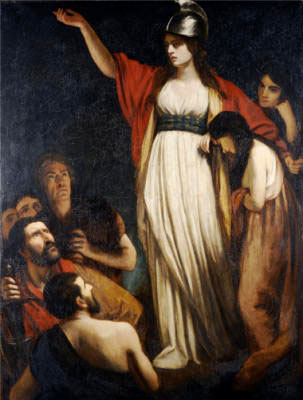
Boadicea Haranguing The Britons by John Opie.

Opening with the first Roman invasion of Britain, Martin Wall takes the reader on a journey through England through the eyes of the Celts, providing a detailed and interesting analysis of their way of life, their culture and beliefs and the key points in the history of the Celtic peoples and – by extension – Britain itself. Warriors and Kings: The 1500-year Battle for Celtic Britain gives us insight into the key characters of Celtic Britain, the heroes and the villains.

Using and analysing contemporary sources Warriors and Kings: The 1500-year Battle for Celtic Britain tells the fascinating story of Boudicca’s – ultimately doomed – rebellion. The book also discusses the existence – or not – of King Arthur, offering theories and ideas as to his identity; while leaving the reader to decide for themselves who he may have been.

The real problem which has bedevilled researchers into a ‘factual’ Arthur is that his rise to power coincided with the collapse of Roman Britain and the re-emergence or revival of Celtic culture – combined with a barbarian onslaught of unprecedented intensity from the Saxons. In times so troubled few contemporary records were kept up, but a little later, after the events but close enough to them to be reliably informed, Gildas wrote his De Excidio et conquestu Britanniae, his ‘complaining book’, about the ‘ruination of Britain’

Martin Wall has produced a book that is both enjoyable and informative, providing balanced argument and analysis of all the major events and figures of Celtic Britain. Making good use of contemporary and near-contemporary literature and archaeology, the story is re-told in a fascinating chronological narrative. Drawing on historians from earliest times, such as Tacitus and Gildas, all the way to the most recent studies, Martin Wall pulls everything together in order to tell the story.

Warriors and Kings: The 1500-year Battle for Celtic Britain charts the 1500-year-long struggle for supremacy over the island of Britain, showing how the Celts have been faced with one invasion after another. Using the battles, conflicts and invasions, we follow the fate of the Celts from the Romans, through the Dark Ages and in to the reign of King Alfred. The wonderful Aethelflaed, Lady of Mercia, and her struggle with the Vikings leads into the Norman Conquest and further erosion of Celtic traditions, with the invaders pushing inexorably westwards. There are some fascinating insights into Celtic culture and history; for example, did you know that small enclaves of Celts existed in Mercia during the 5th and 6th centuries?

By the late 570s it was clear that several powerful Anglo-Saxon kings were poised ready to move westwards. In the north, King Aethelric of Deira commenced hostilities with Rheged. A bold Anglian attack thrust right over the Pennines and at Argoed Llyfein, the forest of Leven in Cumbria, Aethelric, nicknamed the ‘Flame-bearer’ by the Celtic bards (perhaps his army had marched through the mountain passes in a night attack), was confronted on a bleak Saturday morning by the mighty Urien. The Angles were soundly beaten and Urien became a legendary Brythonic hero. This did not end the war, but intensified it until it became an epic conflict – truly worthy of poetry and legend, a contest between ‘Dark Age’ super-powers.

King Arthur and his Knights have a vision of the Holy Grail a by Evrard d’Espinques


Warriors and Kings: The 1500-year Battle for Celtic Britain demonstrates that, despite its name, ‘Dark Age’ Britain is anything but the unknown entity as previously thought. We have a wealth of information on people and events and Martin Wall has brought all the disparate sources – legends, chronicles and poems – together to recreate and enlighten a hitherto underexposed era of British history.

The author’s analysis is clear, concise and informative. He makes it clear where his own theories and those of other historians either agree or digress, while always being respectful. There are no footnotes, but references are included as part of the text, with a bibliography at the back of the book. The sources are assessed on an individual basis, with Martin Wall giving clear views on their veracity, bias and – sometimes – exaggeration.

For fans of Bernard Cornwell, Matthew Harffy and Annie Whitehead, this book gives the historical background to their fabulous novels, explaining the origins and times of Uhtred, Beobrand and Aethelflaed (even if Uhtred and Beobrand are fictional).

Warriors and Kings: The 1500-year Battle for Celtic Britain examines every aspect of Celitc history; their language, literature, religion and, even, warfare. It charts their story through the centuries and provides some explanation of how they disappeared into legend, their enclaves getting smaller and smaller as other tribes grew in power and influence over Britain. The book is a pleasure to read and a useful addition to any book shelf – be it a fan of King Arthur, a lover of Boudicca or a general history lover.

*

Pictures courtesy of Wikipedia

Warriors and Kings: The 1500-year Battle for Celtic Britain by Martin Wall is available from Amberley Publishing and Amazon.

*

My book, Heroines of the Medieval World,  is now available in hardback in the UK from both Amberley Publishing and Amazon UK and worldwide from Book Depository. It is also available on Kindle in both the UK and USA and will be available in Hardback from Amazon US from 1 May 2018.

You can be the first to read new articles by clicking the ‘Follow’ button, liking our Facebook page or joining me on Twitter.

*

©2017 Sharon Bennett Connolly


Book Corner: Half Sick of Shadows by Richard Abbott

Today over at The Review, you can read my thoughts on Richard Abbott’s fantastic new historical fantasy novel, Half Sick of Shadows, a fabulous re-imagining of Alfred Lord Tennyson’s The Lady of Sahlott.

And there’s a fabulous giveaway! With one signed paperback copy going to a winner in the UK, or and ebook to anywhere else in the world.

Here’s a taster:

There is one great advantage to being a book reviewer; every now and then you get to read a gem of a book, one that you may never have discovered had you relied on Amazon’s reading recommendations. Half Sick of Shadows is one such treasure. This novel, inspired by Alfred Lord Tennyson’s epic poem The Lady of Shalott, is unique and engrossing from the very first page.

When trying to think of a single word that could be used to describe this novel, the only one that seemed to fit was ‘mesmerising‘.

The reader is instantly drawn into the world of the Lady, who can watch the lives and interactions of the people in the world only through the guide of a mirror. She can see the world, but is apart from it, safe in her own keep…..


To read the full review of this fantastic novel – and to enter the prize draw and be in with a chance in this fantastic giveaway, simply visit The Review and leave a comment.

Good luck!

*

My book, Heroines of the Medieval World,  is now available in hardback in the UK from both Amberley Publishing and Amazon UK and worldwide from Book Depository. It is also available on Kindle in both the UK and USA and will be available in Hardback from Amazon US from 1 May 2018.

You can be the first to read new articles by clicking the ‘Follow’ button, liking our Facebook page or joining me on Twitter.


*

©Sharon Bennett Connolly 2017

Book Corner: Sharon talks to Matthew Harffy

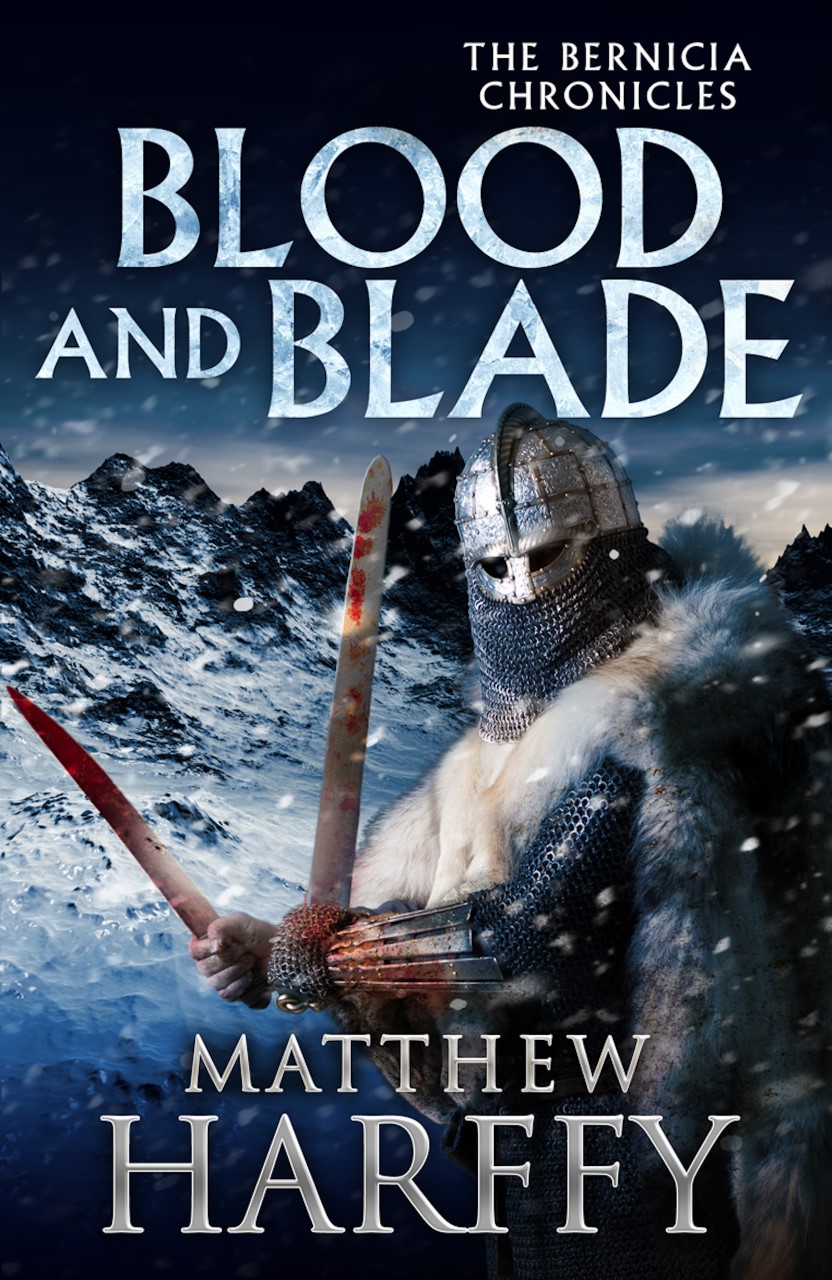
AD 636. Anglo-Saxon Britain. A gripping, action-packed historical thriller and the fourth instalment in The Bernicia Chronicles. Perfect for fans of Bernard Cornwell.

Beobrand has land, men and riches. He should be content. And yet he cannot find peace until his enemies are food for the ravens. But before Beobrand can embark on his bloodfeud, King Oswald orders him southward, to escort holy men bearing sacred relics.

When Penda of Mercia marches a warhost into the southern kingdoms, Beobrand and his men are thrown into the midst of the conflict. Beobrand soon finds himself fighting for his life and his honour.

In the chaos that grips the south, dark secrets are exposed, bringing into question much that Beobrand had believed true. Can he unearth the answers and exact the vengeance he craves? Or will the blood-price prove too high, even for a warrior of his battle-fame and skill?

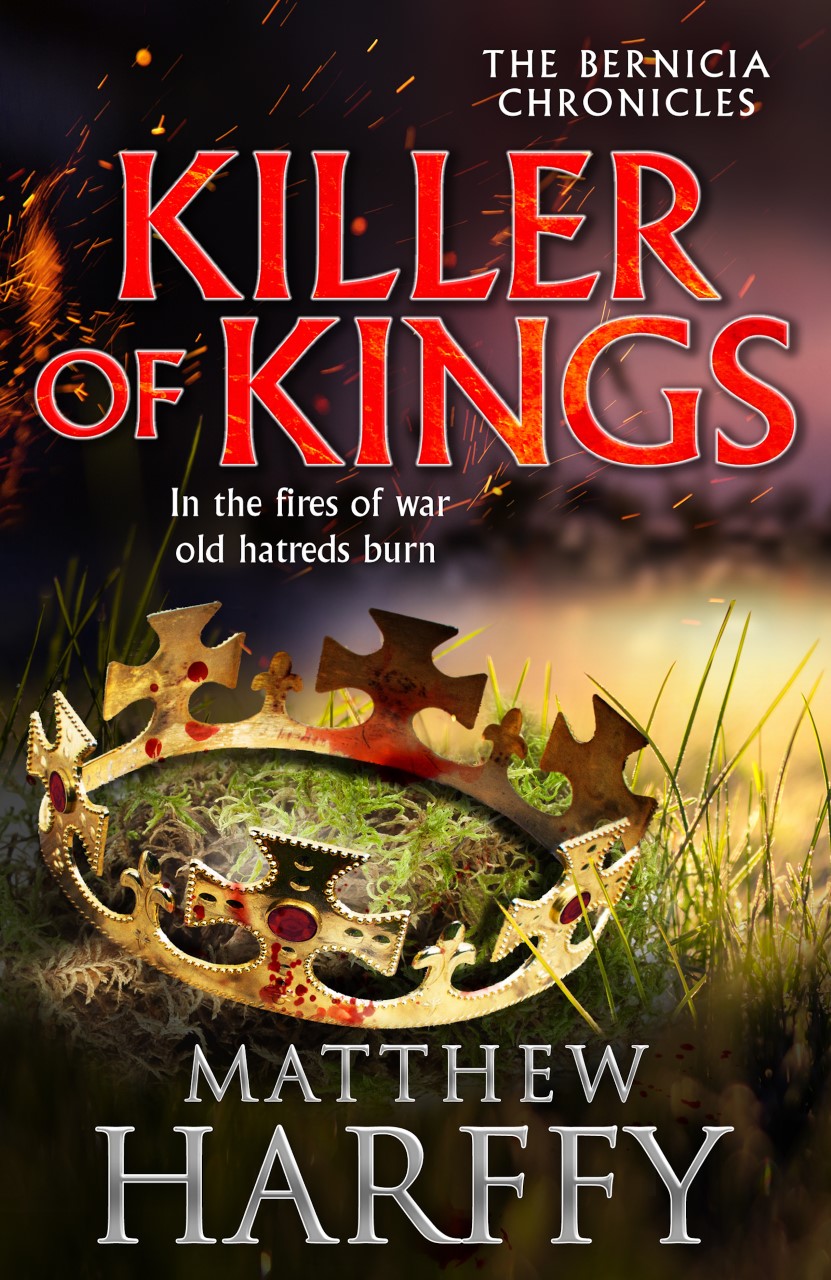
It is my pleasure, today, to welcome Matthew Harffy back to the blog, opening his Blog Tour for the release of the latest instalment in the Bernicia Chronicles series, Killer of Kings.

Hi Matthew, thank you so much for agreeing to another interview. The last time we chatted you had just released your second novel in the Bernicia Chronicles, The Cross and the Curse, and now you’re about to release the fourth in the series, Killer of Kings.  What an amazing achievement. Congratulations!

Thank you! And thank you for having me on your blog again, it’s great to be back!

It’s great  to have you back, Matthew. I love the Bernicia Chronicles, such wonderful stories. And so, I was wondering;

Are you still enjoying the writing process? Do you still get that buzz when you type ‘The End’?

I get a real buzz out of typing “the end”, but I think that’s more due to relief than enjoyment! I do still enjoy writing, but the more readers I have, the more I question whether what I’m writing is any good! That’s not a bad problem to have, but it does mean that the writing process is slightly more stressful than it was before anybody was reading my stuff.

How have you changed your writing routine since publishing your first novel?

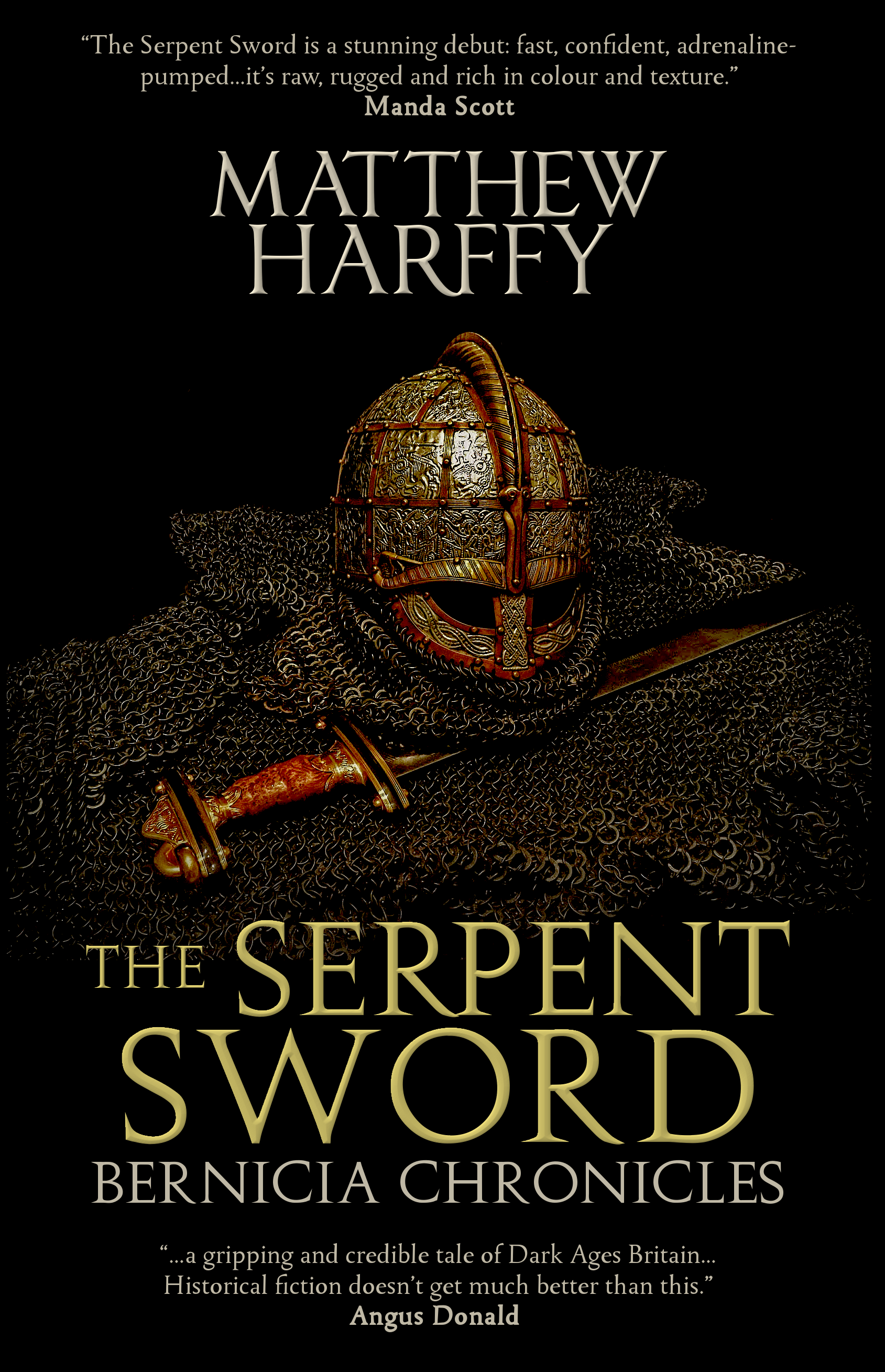
When I wrote my first novel, THE SERPENT SWORD, I did most of it in small windows of opportunity whilst my daughters were in clubs, such as dancing or Tae Kwon Do. I still write in small windows of opportunity that come along, but I also have set aside one whole day for writing each week. That makes it easier to make progress more quickly than before.

How many more stories of Beobrand can we expect to enjoy?

Well, I am writing book 5 at the moment, entitled Warrior of Woden. After that, I have at least one more novel contracted with Aria. After book 6, who knows what I’ll write?

Do you have a story outline for the whole series of books, or do you just go where the story leads you?

I do have a general outline for the whole series, but it isn’t broken down to the level of each book. That means I have an idea of where Beobrand will end up at the end of his life, and I know some of the events that he will be involved in, but I don’t have all the details until I get to the next book in the series. It also means I don’t know exactly how many books there will be in the series, but there are definitely more than six, if people keep buying them.

How meticulously is each book planned before you start writing?

I think it would be stretching things to say that I plan each book meticulously! I read around the subjects and events that are going to be touched upon, and come up with a basic timeline and then break that down into a very rough chapter outline. At that point, I usually just start writing and things begin to fall into place. As the book goes on, I add more and more detail to the synopsis and the plan until, by the time I reached the last quarter, I actually know what it is I’m writing about!

As a Bernard Cornwell fan writing about Northumbria, are you not tempted to introduce a character named Uhtred?

I have thought about it! However, as my books are set hundreds of years before Bernard Cornwell’s, I think it is more likely that Beobrand is one of Uhtred’s ancestors!

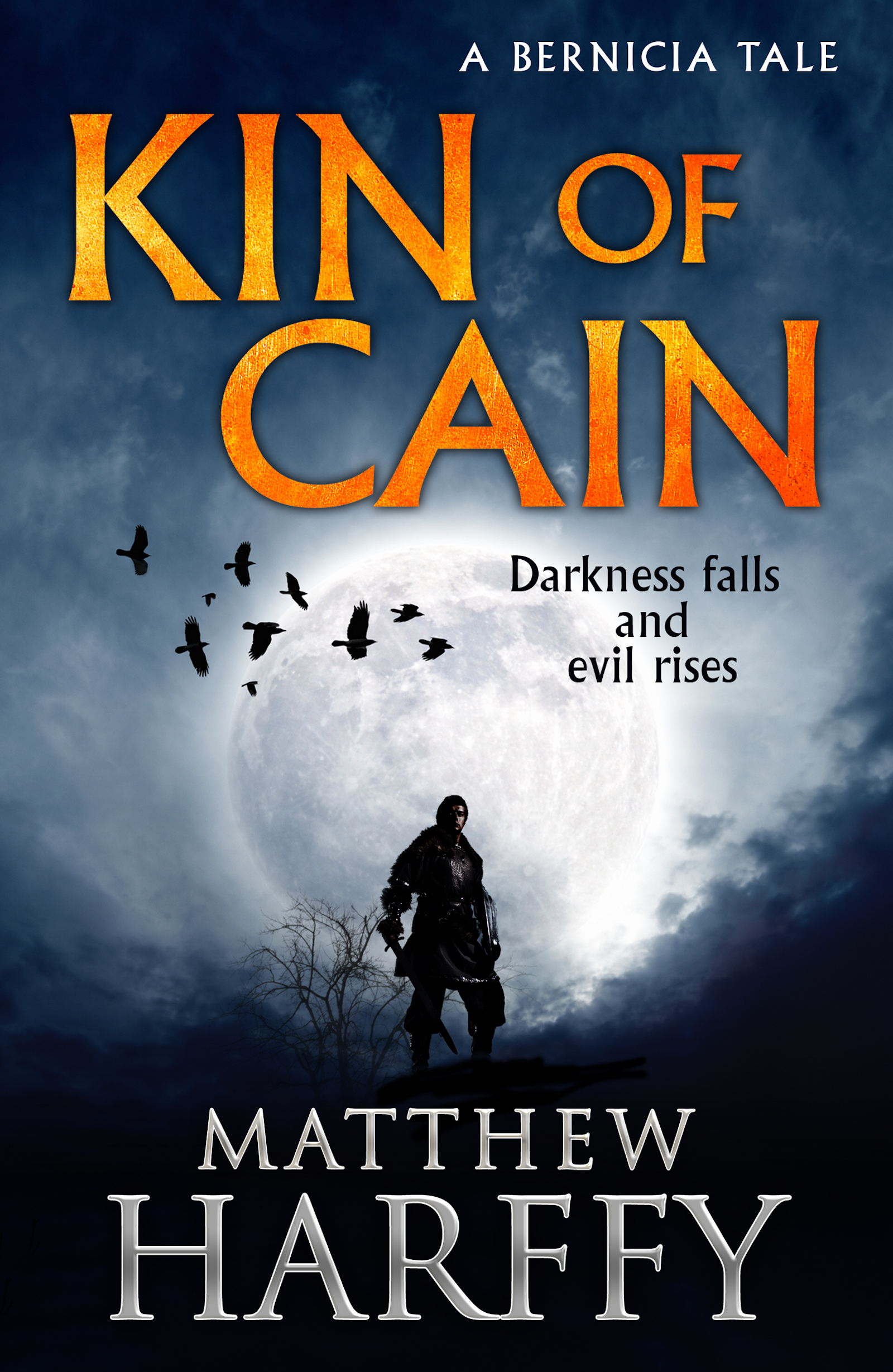
I loved the short story, ‘Kin of Cain’, about Beobrand’s brother, Octa; how did you come up with the idea of using the Beowulf story?

Thank you, I really enjoyed writing it too. The seed of the idea actually came from a reader who asked me whether Hrunting in the Bernicia Chronicles was the famous sword from the Beowulf story. The question made me think, and in the end the story told itself.

Will we see more stories about Octa, maybe a prequel to the Bernicia Chronicles?

I haven’t got anything else planned with Octa, but you never know. If I can think of any other good ideas, I’m tempted to write some more novellas, as I really enjoyed being able to write a whole story in such a short space of time.

Who is the best character you have created, which are you most proud of?

I really don’t know. That’s like asking a parent who is your favourite child! I think the most memorable of the characters I have created is probably Hengist. He is truly evil and does horrible things, but I imagined him as someone who had suffered terribly and witnessed so many atrocities of war that he suffered from post-traumatic stress disorder. There is some debate as to whether soldiers suffered from PTSD in the time when warfare was waged with swords and shields, but I think it is likely that certain warriors would have been affected by particularly traumatic events.

How do you come up with the ideas for characters? Are they ever someone you know, or pure imagination?

They’re mostly purely imagination. But where does inspiration and imagination come from, if not from everything we have seen and done in our lives? Therefore I am sure that there are many traits exhibited by my characters which actually come from me or from people I know. I am also sure that some of my characters were inspired by fictional characters in other authors’ books.

What is the most significant thing you have learned that made you a better writer?

To trust myself and to write stories that I would enjoy reading. It is impossible to write novels that everybody will enjoy, but if you as the writer enjoy reading the finished product, you can be sure there will be a lot of people who will agree with you.

What advice would you give to someone wanting to write their first novel?

Don’t overthink it. The only way to write a novel is to actually write it. Behind every published author is an amateur writer who didn’t give up and who finished their novel. Nobody is going to publish an unwritten book.

After Beobrand, do you have other projects in the pipeline?

I have got a couple of ideas that I’ve been mulling over, but nothing that I can talk about yet. If I actually write them, it probably won’t be for a couple of years yet anyway.

Is there any historic era or topic that you would dearly love to write about?

I would love to write a western.

Have you ever thought of writing non-fiction, if so what would you write about?

I have written scientific papers and manuals for computer software, so I have written non-fiction. However, I haven’t considered writing any non-fiction for publication beyond that. Perhaps one day, but I’m not sure it would be about history, as I would be too scared of getting things wrong! It’s bad enough when you do it in a novel!

Thank you so much for answering my questions Matthew – it’s always great to welcome you to the blog. Good luck with Killer of Kings – I wish you every success.

Thank you very much, Sharon, and best of luck with your own book that I know is coming out at the end of the year. Thank you.

About the author: Matthew Harffy grew up in Northumberland where the rugged terrain, ruined castles and rocky coastline had a huge impact on him He now lives in Wiltshire, England, with his wife and their two daughters.

Killer of Kings, Book 4 in the Bernicia Chronicles, is now available from Amazon, Kobo, ibooks and Google Play.

Follow Matthew: Website: www.matthewharffy.com; Twitter: @MatthewHarffy; Facebook: MatthewHarffyAuthor

Follow Aria: Website: www.ariafiction.com; Facebook: @ariafiction; Twitter: @aria_fiction; Instagram: @ariafiction; NetGalley: http://bit.ly/2lkKB0e. Sign up to the Aria newsletter: http://bit.ly/2jQxVtV

Follow the rest of the Blog Tour: 6th June; 7th June; 8th June; 9th June; 10th June; 11th June; 12th June.

*

My book, Heroines of the Medieval World,  is now available in hardback in the UK from both Amberley Publishing and Amazon UK and worldwide from Book Depository. It is also available on Kindle in both the UK and USA and will be available in Hardback from Amazon US from 1 May 2018.

You can be the first to read new articles by clicking the ‘Follow’ button, liking our Facebook page or joining me on Twitter.

*

©2017 Sharon Bennett Connolly

Guest Post: Sir Lancelot of Siedlęcin

“Painted tower in Siedlęcin: the unique residence of an ambitious Silesian duke”¹

Ducal tower of Siedlęcin. Photo courtesy of sekulada.com

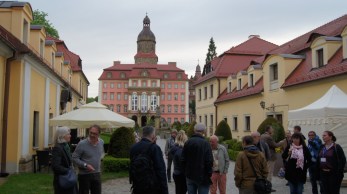
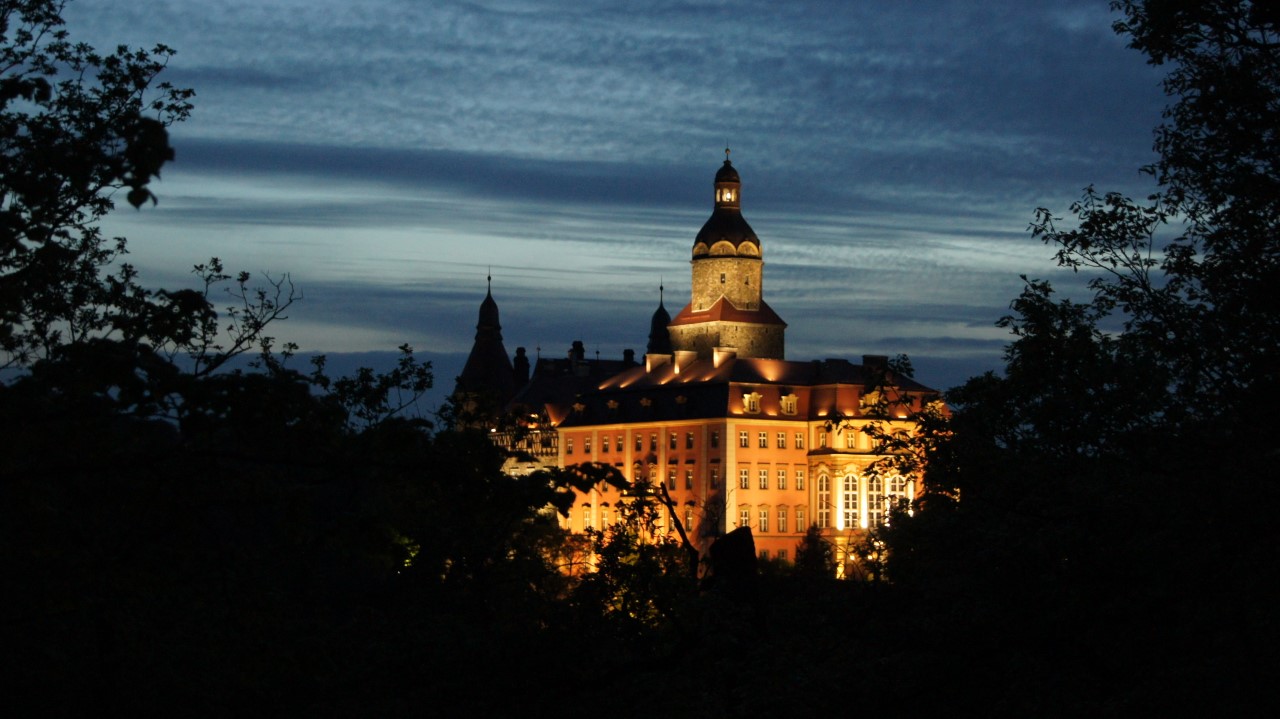
The 15th International Castellological Conference „Castrum Bene” took place at Książ Castle, in Lower Silesia, Poland, on 16th – 19th May, 2017. This year’s conference brought together, as it always does,  prominent architectural historians and castellologists from across ten European countries. There were scholars from Poland, Hungary, Slovakia, Czech Republic, Germany, Croatia, to name but a few.

The annual International Castellological Conference is a great opportunity for the experts to come together, learn from each other and exchange ideas. The participants are always treated to a series of diverse and intellectually challenging papers, some giving interesting fresh perspectives on castle exploration and preservation. The papers show considered approach to the key castellological issues and bring together a wealth of knowledge, talent and experience.

thumbnail_photo 4
„Castrum Bene” comes to Siedlęcin. Photo courtesy of Monika Filipińska

This year’s conference focused on castles as symbols of status. In their lectures the Polish experts discussed Henrys, the dukes of Silesia and their residences, castles and elites of the Cracow Land in the Middle Ages, motte-and-bailey castles of Lower Silesia.

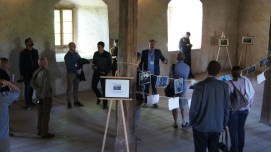
18 May saw the participants taking a full-day study tour to the castles on the Piast Castles Trail. They visited, among others, Bolków, Świny and Wleń. In the Great Hall of the ducal tower of Siedlęcin they had an opportunity to listen to the lecture delivered by Dr Przemysław Nocuń, Jagiellonian University, Kraków, on the subject of the tower, its founder and unique wall paintings preserved in it.

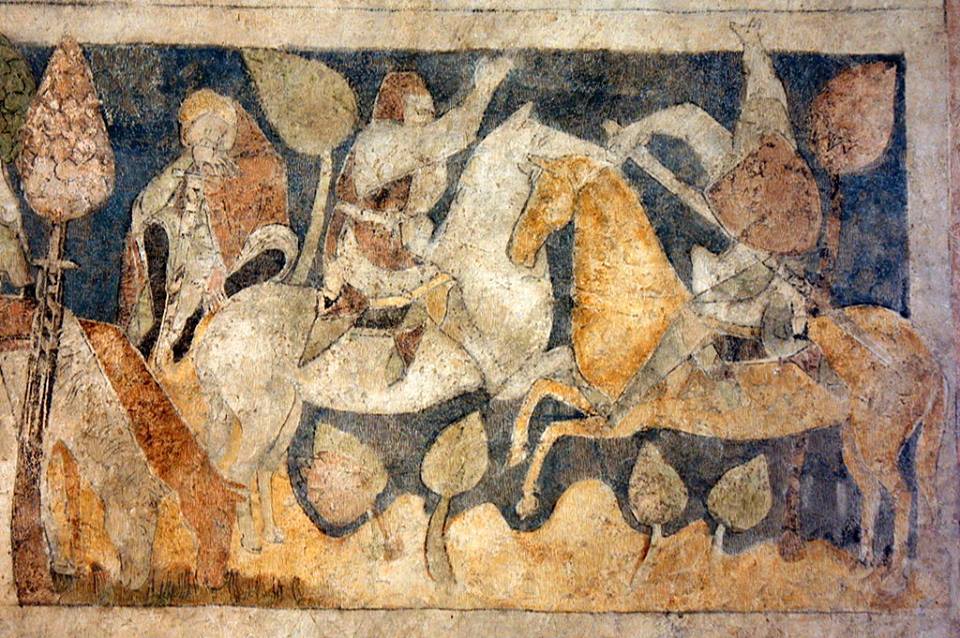
Lancelot fighting a duel with Tarquin, the Siedlęcin set, detail. Photo courtesy of Wikimedia Commons

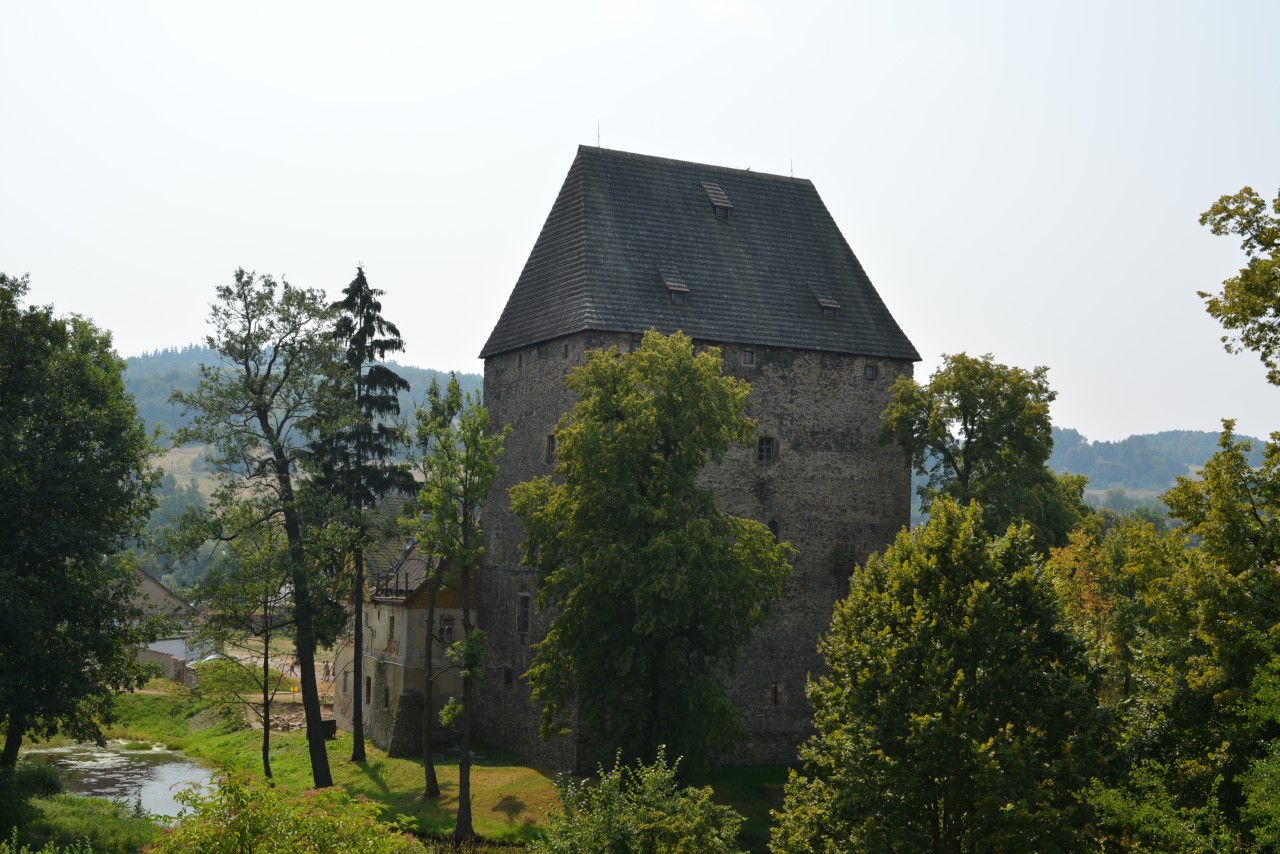
The Ducal tower of Siedlęcin displays one of the most complete and important sets of 14th century domestic wall paintings in Central Europe. The paintings are a rarity both for their mixture of secular, religious and didactic themes, and for their leading subject being the legend of Sir Lancelot of the Lake. Both the tower and paintings reflect its builder’s high ambitions. Preserved monuments and names of the Arthurian characters given to the sons of the Silesian nobility indicate that the Arthurian legends were known at the courts of medieval Poland and Silesia. However, most of the preserved monuments with Arthurian motifs date from the second half of the 14th or from the 15th century, which makes the Siedlęcin set  (created in 1320s -1340s) the earliest surviving example. Among the Piasts (Poland’s first ruling dynasty) Henryk I of Jawor (c. 1292 – 1346) is believed to be the first to commission the Arthurian paintings in one of his residences. Today Duke Henryk’s tower is the only place in the world where the medieval wall paintings depicting Sir Lancelot of the Lake have been preserved in situ. Their true subject matter was not recognised until the 1990s. Major conservation was carried out in 2006, actually saving them, for they were in very poor condition.

thumbnail_photo 2
Participants of the The 15th International Castellological Conference „Castrum Bene” at Książ Castle. Photo courtesy of P. Nocuń

The tower house of Siedlęcin is one of the best preserved castles of this type in Central Europe.  It was built as a ducal seat for both residential and defensive purposes (probably as a hunting „lodge”) near the River Bóbr [Bobber] crossing in the hunting territories north-east of Jelenia Góra [Hirschberg]. Initially crenelated, the tower stands 22 meters high (72 feet) with the remains of the moat still visible from the northern and eastern sides. The only siginificant alteration since the 14th  century is the addition of a roof (in the 16th century). Preserved massive tie beams are the oldest surviving wooden ceilings in Poland. Dendrochronolocial research has revealed the trees used for their construction were cut down in 1313 , 1314  and 1315 respectively. Adjacent to the tower is a manor house which dates from 18th century.

Książ Castle, the Lower Silesia, Poland. Photo courtesy of Przemysław Nocuń

The paintings have been preserved on the south wall of the tower’s finest interior space, being that of the former Great Hall on the second floor. The group includes representations of the scenes from the Vulgate Lancelot and depict Sir Lancelot of the Lake and his marvelous exploits with the focus on the beginning and ending of his brilliant career as a knight of the Round Table. There are scenes depicting the court of King Arthur, his queen Guinevere with her ladies, Guinevere’s kidnapping by Meleagant and her rescue by Lancelot. There are also representations of Lancelot and his cousin Lionel setting off for their first knightly adventure. Lancelot asleep under an apple tree and Lionel sleeping on guard, a duel between Lancelot and Tarquin and Lancelot with Arthur’s brother, Sir Kay. The unfinished portion depicts a duel between Lancelot and Sagramour and the healing of Urry de Hongre.

You can learn more about the tower and its marvellous paintings on Ducal Tower of Siedlęcin Official Website

*

Footnote: ¹From an article by by Dr P. Nocuń.

Article by Kasia Ogrodnik of Henry The Young King.

Photos courtesy of The Ducal Tower of Siedlęcin Association and sekulada.com.

*

©2017 Kasia Ogrodnik-Fujcik & Sharon Bennett Connolly
*

Sharon’s book, Heroines of the Medieval World,  is now available in hardback in the UK from both Amberley Publishing and Amazon UK and worldwide from Book Depository. It is also available on Kindle in both the UK and USA and will be available in Hardback from Amazon US from 1 May 2018.

You can be the first to read new articles by clicking the ‘Follow’ button, liking our Facebook page or joining me on Twitter.

The Real D’Artagnan

330px-paris-dumas-monument01
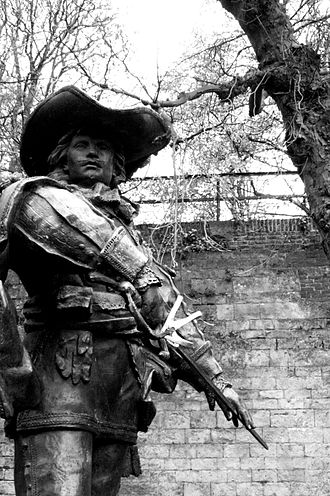
D’Artagnan – the Dumas monument, Paris

My favourite book of all time has to be The Three Musketeers by Alexandre Dumas. Nothing else comes close to this amazing story. It is full of everything; friendship, intrigue, betrayal, swashbuckling adventure and a doomed love story. The central character is D’Artagnan; he does not become a Musketeer until the very end, but he is the hero, his courage, skill and intelligence are unsurpassed.

But did you know d’Artagnan was real and so were the Regiment of Musketeers?

The Regiment of Musketeers were formed in France in 1622, as part of King Louis XIII’s personal bodyguard. Originally a compliment of 100 men, the regiment was made up of gentlemen and members of the nobility who were also proven soldiers; a candidate had to have served in the regular army before being considered for enrolment in the Musketeers.

The Musketeers were a mounted regiment, armed with swords and muskets. The 1st and 2nd companies were distinguished by the colour of their horses; grey for the 1st Company of Musketeers and black for the 2nd. Their captain was, in fact, the king; however, their everyday command was left to a captain-lieutenant, with a sub-lieutenant, an ensign and a cornet as junior officers. Their uniform comprised a blue, sleeveless, tunic with a cross of white velvet on the back and front, which was worn over a scarlet coat.

One thing that does hold true in the Dumas novels, is the Musketeers rivalry with the Cardinal’s Guard. Formed by Cardinal Richelieu for his own protection, the Guard and Musketeers kept up an ‘unhealthy’ rivalry, and competition was fierce between France’s 2 elite regiments.

330px-chateau_de_castelmore_lupiac
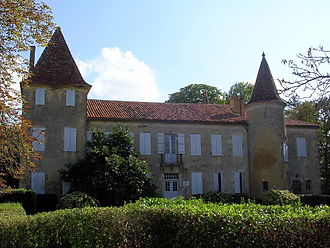
Chateau de Castelmore, Lupiac, Gascony

The Musketeer captain-lieutenant was a Captain Troisvilles (Tréville); while other members of the regiment included Armand de Sillègue d’Athos d’Autevielle (Athos), Isaac de Porteau (Porthos) and Henri d’Aramitz (Aramis). Of course, the most famous Musketeer of all is d’Artagnan or, to give him his full name, Charles Ogier de Batz de Castelmore, sieur d’Artagnan. D’Artagnan was born around 1613/15 in the château of Castelmore in Lupiac in Gascony.

His father was Bertrand de Batz,  seigneur de la Plaigne, while his mother was Françoise de Montesquiou, daughter of Jean de Montesquiou, seigneur d’Artagnan; and from whom the hero took his nom de guerre. D’Artagnan was one of 7 children with 3 brothers and 3 sisters. Paula and Jean, who became captain of the guards, were older, whilst Arnaud was younger and became an abbot. His 3 sisters, Claude, Henrye and Jeanne, all made good marriages.

No one could join the Musketeers without having proved themselves in the regular regiments. D’Artagnan joined the guards in the mid-1630s and served under Captain des Essarts. The regiment saw much action in the early 1640s, taking part in sieges at Arras, Aire-sur-la-Lys, la Bassée and Bapaume in 1640-41  and Collioure and Perpignan in 1642. Whether or not d’Artagnan was personally involved is unclear, but it is likely he took part in some – if not all – of these sieges.

d_a
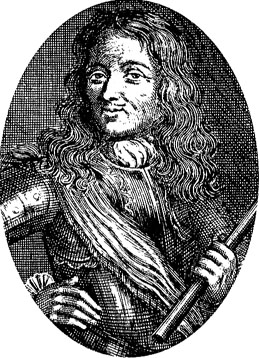
D’Artagnan

D’Artagnan managed to find himself a great patron, in the form of Cardinal Mazarin, Richelieu’s protégé and successor as First Minister of France. With the death of Louis XIII, in 1643, Mazarin was also regent for the new king, Louis XIV, who was only 5-years-old at his accession. With Mazarin’s patronage, aged about 30, d’Artagnan joined the Musketeers in 1644. Unfortunately for d’Artagnan, the Musketeers were disbanded only 2 years later, in 1646.

D’Artagnan, however, continued in the service of Cardinal Mazarin. He was active during the Fronde, the French civil wars that marred Louis XIV’s minority and gave the young king an abiding distaste for Paris. D’Artagnan carried out various missions and acted as a go-between for the Cardinal and his allies, when Mazarin was exiled from France in 1651.

D’Artagnan was ever in the thick of the fighting and narrowly escaped being killed, in 1654, at Stenay, while under the command of Turenne. He fought in sieges at Lancrecies and Saint-Ghislaine and, aged about 40, earned himself promotion, becoming captain of the Guards. When the Musketeers were reinstated, in 1657, d’Artagnan went ‘home’ and the following year he became sub-lieutenant, replacing Isaac de Baas. With Philippe-Julien de Mancini, duc de Nevers and Mazarin’s nephew, in the post of captain-lieutenant, the day-to-day command fell to d’Artagnan.

Although Alexandre Dumas’ hero stayed resolutely single, after the death of Constance, his true love, in reality d’Artagnan married, in 1659, Charlotte-Anne de Chanlecy, baronne de Sainte-Croix. They had 2 sons, born in 1660 and 1661 and both named Louis – after their godfathers, Louis XIV and his son Louis, the Dauphin. The marriage did not last long and the couple officially separated in 1665, possibly due to d’Artagnan’s long absences on duty.

nadar_-_alexander_dumas_pere_1802-1870_-_google_art_project_2
Alexandre Dumas, author of The Three Musketeers

The  last few years of his marriage coincided with d’Artagnan’s duty as gaoler to a high-profile political prisoner; Louis XIV’s former Superintendant of Finances, Nicholas Foucquet. D’Artagnan had been ordered to arrest Foucquet in September 1661, on charges of embezzlement and High Treason. The prosecution process was to take 3 years, with Foucquet becoming the ‘fall guy’ for decades of financial mismanagement and corruption; although most believed his real crime was to be more regal than the king himself. D’Artagnan’s duty as gaoler was only finally discharged in January 1665, when Foucquet was delivered to the prison-fortress of Pignerol, in the Italian Alps.

An initial sentence of banishment had been considered too lenient, and so Louis had changed it to one of perpetual imprisonment and solitary confinement, although he was allowed a valet. Foucquet died 15 years later. Some sources suggest that it was Foucquet’s valet, who had served the disgraced minister in prison, who became known as the Man in the Iron Mask, the prisoner in the Bastille, and the inspiration for the character in Dumas’ concluding Musketeer novel, The Vicomte de Bragelonne (Ten Year Later). Another d’Artagnan link to the Iron Mask story is Saint-Mars, d’Artagnan’s friend and second-in-command during the Foucquet affair, and eventual Governor of the Bastille – he was, in fact, still governor there at the time of the Man in the Iron Mask’s death.

With the failure of his marriage, d’Artagnan concentrated on his career as a soldier. In 1671 he was  again involved in a high-profile arrest, that of the Duc de Lauzun, who had dared to marry the Duchesse de Montpensier, la Grande Mademoiselle, cousin of Louis XIV. D’Artagnan and his Musketeers again made the journey across the Alps, delivering Lauzun to Pignerol on 16 December; his rooms were those directly below Foucquet, in the Angel Tower.¹

330px-statue_dartagnan
Statue of D’Artagnan, Maastricht

In 1672 d’Artagnan was appointed Governor of Lille, replacing the Mareschal d’Humières. However, by 1673, he was back in his rightful place, at the head of his regiment of Musketeers in the Dutch Wars. In May, 1673, Louis XIV had marched on Maastricht at the head of his troops, several thousand strong. By 10 June the town was surrounded,  not only by French forces, but also their English allies, and the siege began in earnest. The artillery bombardment began on 19th June and lasted for 5 days and was followed by an assault which included 4 battalions, 8 squadrons of the King’s Horse, 300 Grenadiers and the 1st company of the Musketeers, led by d’Artagnan.

D’Artagnan’s company attacked a demi-lune (half-moon) fortification, which protected the Tongres Gate. Within half an hour of fierce fighting, d’Artagnan’s men had control of the demi-lune, a flag of the fleur-de-lis planted firmly on the parapet. The Duke of Monmouth, on e of the English commanders, then decided to cross the open ground that separated the demi-lune from the Tongres Gate. It is likely that d’Artagnan, a more experienced soldier, advised against such foolhardy action, but once Monmouth led the charge, d’Artagnan could do nothing but follow, leading his Musketeers into the foray.

D’Artagnan made it to the ramparts of Maastricht before falling mortally wounded from a musket ball:

It was on this occasion that Monsieur D’Artagnan was killed. The intensity of musket fire was such that even hail could not fall more abundantly. Two musketeers trying to pick up Monsieur D’Artagnan were killed at his side, and two others who had taken their place and given themselves the same duty, were killed in the same way next to their captain, without even having the time to pick themselves up …. This battle went on for five hours in the light of day and out in the open, and one could almost say: “And the combat ceased due to a lack of combatants.”³

D’Artagnan died on 25th June, 1673, aged about 60; he was buried in Maastricht. Having lost their brilliant, legendary captain, the Musketeers were grief-stricken. As was Louis XIV, who, that evening, wrote to his wife, Maria Theresa, ‘Madame, I have lost d’Artagnan, in whom I had the utmost confidence and who merited it in all occasions.’²

Intelligent, loyal, steadfast and brave, d’Artagnan was as much a hero in real-life as on the page; but thanks to Alexandre Dumas his legend not only lives on, but grows…

the_musketeers_titlecard

*

Footnotes: ¹The Man Behind the Iron Mask by John Noone; ²The Death of D’Artagnan (article) Dr Josephine Wilkinson, Facebook page; ³Mercure Galant, June 1673, quoted by Dr Josephine Wilkinson

Thanks to Cindy Barris-Speke who informed me via Facebook that d’Artagnan is buried in Maastricht.

*

Pictures courtesy of Wikipedia

*

Sources: The Man Behind the Iron Mask by John Noone; The Death of D’Artagnan (article) Dr Josephine Wilkinson, Facebook page; jospha-josephine-wilkinson.blogspot.co.uk; sirclisto.com; Forgotten History, Unbelilevable Moments from the Past by Jem Duducu; awesomestories.com.

By Alexandre Dumas: The Three Musketeers (Les Trois Mousquetaires); Twenty Years After (Vingt Ans Apres); Dix And Plus Tard (Ten Years After, which includes the story of the Man in the Iron Mask)

*

My Books

Signed, dedicated copies of all my books are available through my online store.

Out now: Scotland’s Medieval Queens

Books by Sharon Bennett Connolly
Scotland’s history is dramatic, violent and bloody. Being England’s northern neighbour has never been easy. Scotland’s queens have had to deal with war, murder, imprisonment, political rivalries and open betrayal. They have loved and lost, raised kings and queens, ruled and died for Scotland. From St Margaret, who became one of the patron saints of Scotland, to Elizabeth de Burgh and the dramatic story of the Scottish Wars of Independence, to the love story and tragedy of Joan Beaufort, to Margaret of Denmark and the dawn of the Renaissance, Scotland’s Medieval Queens have seen it all. This is the story of Scotland through their eyes.

Scotland’s Medieval Queens gives a thorough grounding in the history of the women who ruled Scotland at the side of its kings, often in the shadows, but just as interesting in their lives beyond the spotlight. It’s not a subject that has been widely covered, and Sharon is a pioneer in bringing that information into accessible history.’ Elizabeth Chadwick (New York Times bestselling author)

Available now from Amazon and Pen and Sword Books

Also by Sharon Bennett Connolly:

Books by Sharon Bennett Connolly

Heroines of the Tudor World tells the stories of the most remarkable women from European history in the time of the Tudor dynasty, 1485-1603. These are the women who ruled, the women who founded dynasties, the women who fought for religious freedom, their families and love. Heroines of the Tudor World is now available from Amberley Publishing and Amazon UK. Women of the Anarchy demonstrates how Empress Matilda and Matilda of Boulogne, unable to wield a sword themselves, were prime movers in this time of conflict and lawlessness. It shows how their strengths, weaknesses, and personal ambitions swung the fortunes of war one way – and then the other. Available from Bookshop.orgAmberley Publishing and Amazon UKKing John’s Right-Hand Lady: The Story of Nicholaa de la Haye is the story of a truly remarkable lady, the hereditary constable of Lincoln Castle and the first woman in England to be appointed sheriff in her own right. Available from all good bookshops Pen & Sword Booksbookshop.org and Amazon

Royal Historical Society

Defenders of the Norman Crown: The Rise and Fall of the Warenne Earls of Surrey tells the fascinating story of the Warenne dynasty, from its origins in Normandy, through the Conquest, Magna Carta, the wars and marriages that led to its ultimate demise in the reign of Edward III. Available from Pen & Sword BooksAmazon in the UK and US, and Bookshop.orgLadies of Magna Carta: Women of Influence in Thirteenth Century England looks into the relationships of the various noble families of the 13th century, and how they were affected by the Barons’ Wars, Magna Carta and its aftermath; the bonds that were formed and those that were broken. It is now available in paperback and hardback from Pen & SwordAmazon, and Bookshop.orgHeroines of the Medieval World tells the stories of some of the most remarkable women from Medieval history, from Eleanor of Aquitaine to Julian of Norwich. Available now from Amberley Publishing and Amazon, and Bookshop.orgSilk and the Sword: The Women of the Norman Conquest traces the fortunes of the women who had a significant role to play in the momentous events of 1066. Available now from Amazon,  Amberley Publishing, and Bookshop.org.

Alternate Endings: An anthology of historical fiction short stories including Long Live the King… which is my take what might have happened had King John not died in October 1216. Available in paperback and kindle from Amazon.

Podcast:

Have a listen to the A Slice of Medieval podcast, which I co-host with Historical fiction novelist Derek Birks. Derek and I welcome guests, such as Bernard Cornwell and Michael Jecks, and discuss a wide range of topics in medieval history, from significant events to the personalities involved. 

Every episode is also now available on YouTube.

*

Don’t forget! Signed and dedicated copies of all my books are available through my online store.

For forthcoming online and in-person talks, please check out my Events Page.

You can be the first to read new articles by clicking the ‘Follow’ button, liking our Facebook page or joining me on TwitterThreadsBluesky and Instagram.

©Sharon Bennett Connolly 2016 FRHistS