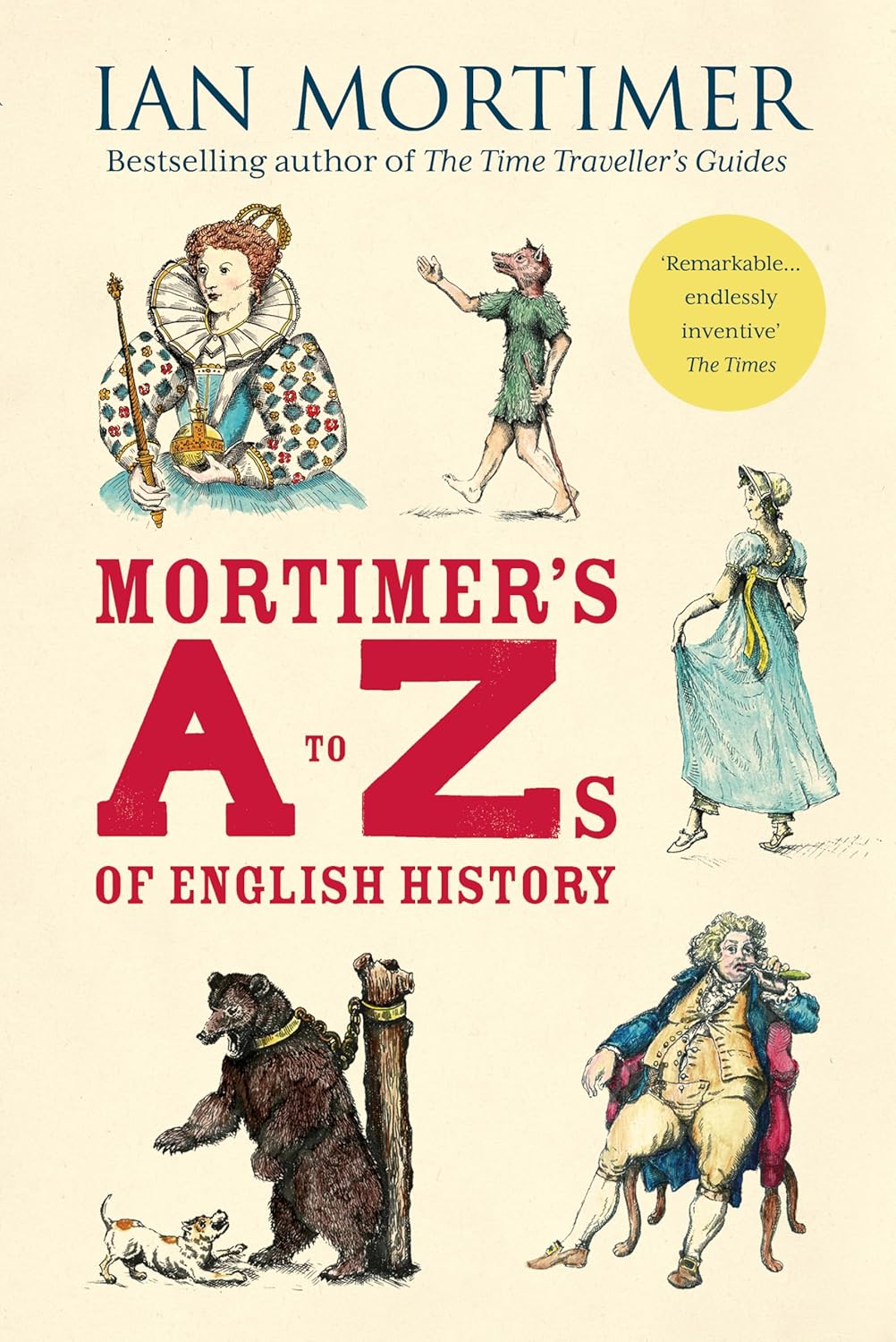
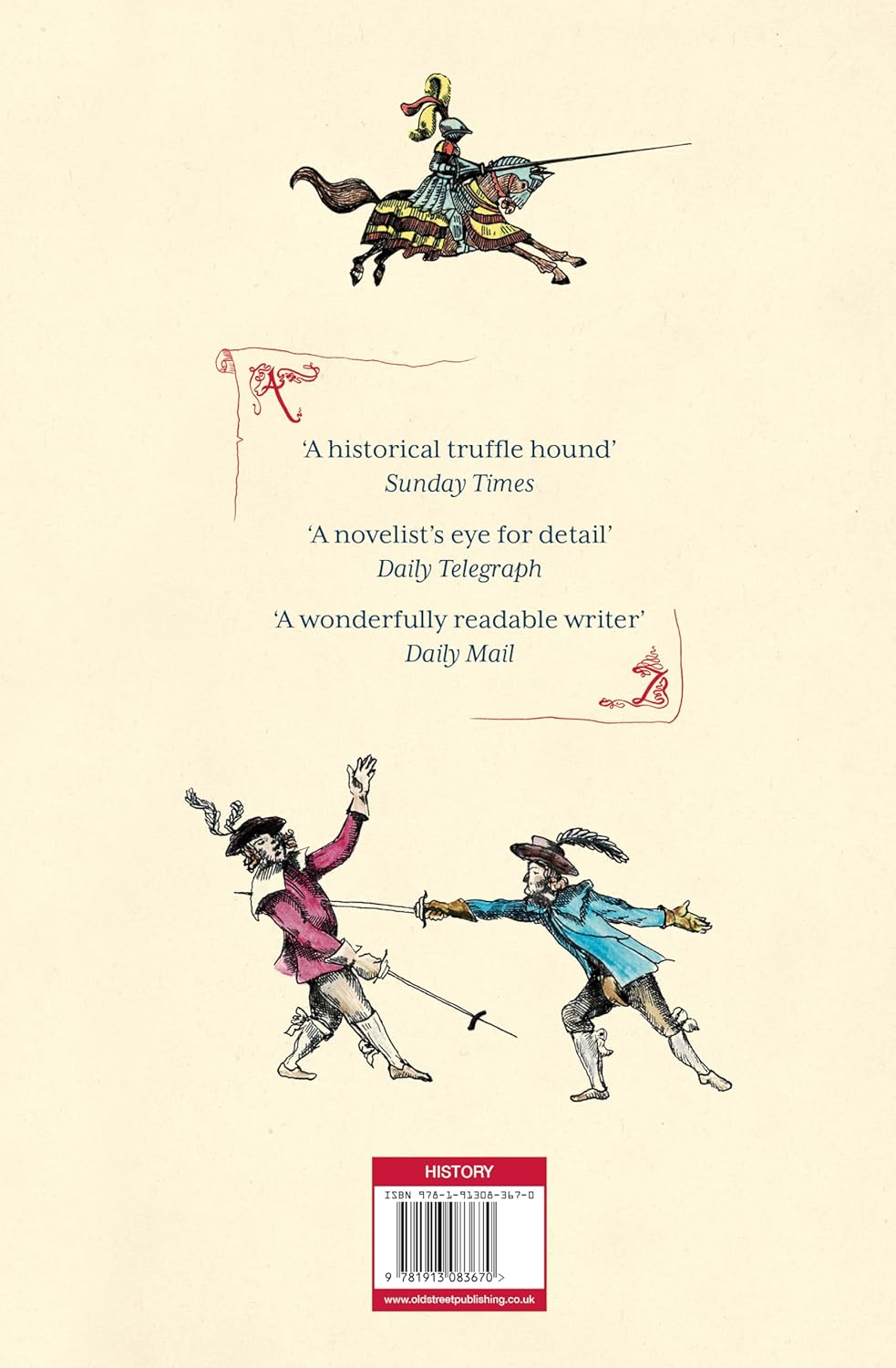
Book Corner: Mortimer’s A to Zs of English History by Ian Mortimer

From the bestselling author of the Time Traveller’s Guides

In these sparkling A to Zs, time-travelling historian Ian Mortimer visits four classic periods of English history: the fourteenth century, the Elizabethan age, the Restoration and the Regency.

As he ranges from the Great Plague to the Great Freeze, from Armada to Austen, and from tobacco to toenails, he shines a light into corners of history we never knew were so fascinating — or so revealing of the whole.

How did the button change life in the Middle Ages? If you found yourself at a smart Elizabethan party, should you kiss your hostess on the lips? Why were pistols safer than swords in a duel? And how come Regency Londoners quaffed so much port?

This is Mortimer at his accessible and witty best. As ever, his aim is not only to bring the past to life but also to illuminate our own times.
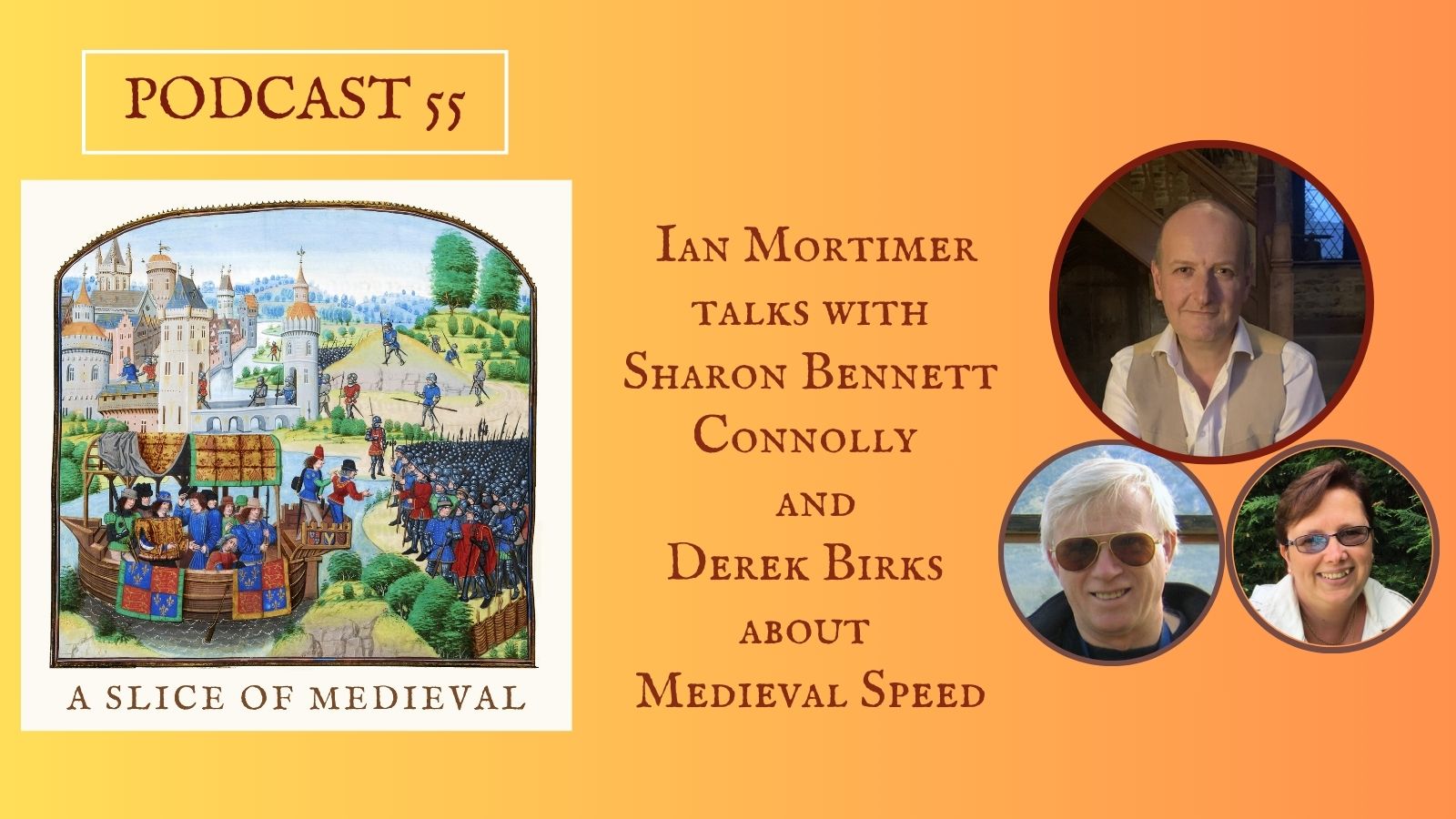
A couple of weeks ago, Derek Birks and I had the pleasure of chatting with Ian Mortimer on our podcast, A Slice of Medieval, and we talked about THIS book. You can listen to the episode when it goes live on New Years’ Eve. And if this review doesn’t persuade you to have a read, Ian’s interview certainly will. Ian Mortimer has a refreshing outlook on History – he not only wants to make it accessible to everyone, he wants to make it enjoyable. And he wants you to look at History from different angles, even sideways. Because then, you see things differently.

Mortimer’s A to Zs of English History is split into 5 sections and focuses on 4 main periods; 14th century, Elizabeth, Restoration and Regency, with a 5th section, the envoi, an A to Z of reflections on those themes history that cross periods. This is a stunning book and a thoroughly enjoyable read.

Many History fans look down on general History books, saying they already know the basics. But this isn’t basic. It is not as much about the facts as it is about changing the way you look at the facts. It is about making you think and making you look differently at the facts, at what we know and how we know it. It makes you wonder how inventions came about, how innovations developed. It makes you consider how diet, environment, opportunities – and the weather – affected society and drove change.

And the envoi of Mortimer’s A to Zs of English History highlights what doesn’t change, considering the values, good and bad, that transect eras and generations. Xenophobia, for instance, rears its ugly head in every generation. Speed, also, is a consideration throughout the eras; the speed of travel, of communication and of progress.
Q is for Queenship

What are medieval queens for? Obviously, they are the partners of kings and their primary duty is to produce the next generation of the royal family. In medieval times it is essential to have a line of succession: political stability depends on it. But it is worth asking what queens are for other than childbirth. After all, they are not like other aristocratic women. When Lord So-and-so goes off to court, he leaves Lady So-and-so behind to look after the household in his absence, with staff to carry out her instructions, just as in countless other private households in the country. But when the king travels, the court goes with him. His queen might remain in one of the palaces or castles or she might accompany him, but even if she remains, her role is limited. Officials are left in charge of the royal residences. Childcare is normally passed over to other women – wetnurses and guardians. When a fourteenth-century king goes abroad, he entrusts the guardianship of the realm to his heir or a near male relative, not his queen. (In this respect, the fourteenth-century is more sexist than earlier ones.) So it is fair to ask, what other purpose do queens serve?

There are several interesting ways to answer this question. For a start, no fourteenth-century English king marries an Englishwoman. Edward I marries Eleanor of Castile and then Margaret of France. Edward II marries Isabella of France. Edward III marries Philippa of Hainault. Richard II first marries Anne of Bohemia and later Isabella of France. Henry IV is married to an Englishwoman, Mary de Bohun, before becoming king but she dies five years before his accession. The same pattern applies to the previous century: King John annuls his marriage to Isabella of Gloucester almost immediately on becoming king and marries a French heiress, Isabella of Angoulême, very shortly afterwards. Queens are a diplomatic link with other kings and kingdoms. They bring with them foreign attendants and a large number of foreign relations – this is an age when third and fourth cousins are an important source of trust, information and support. Edward II’s queen, Isabella of France, is given the task of negotiating a peace treaty with her brother, Charles IV of France, on her husband’s behalf. Queens thus tie England into an international diplomatic network.
Mortimer’s A to Zs of English History will make you think, question – and want to know more. It is a fabulous resource of facts that you didn’t even know you didn’t know – and didn’t know you needed to know.

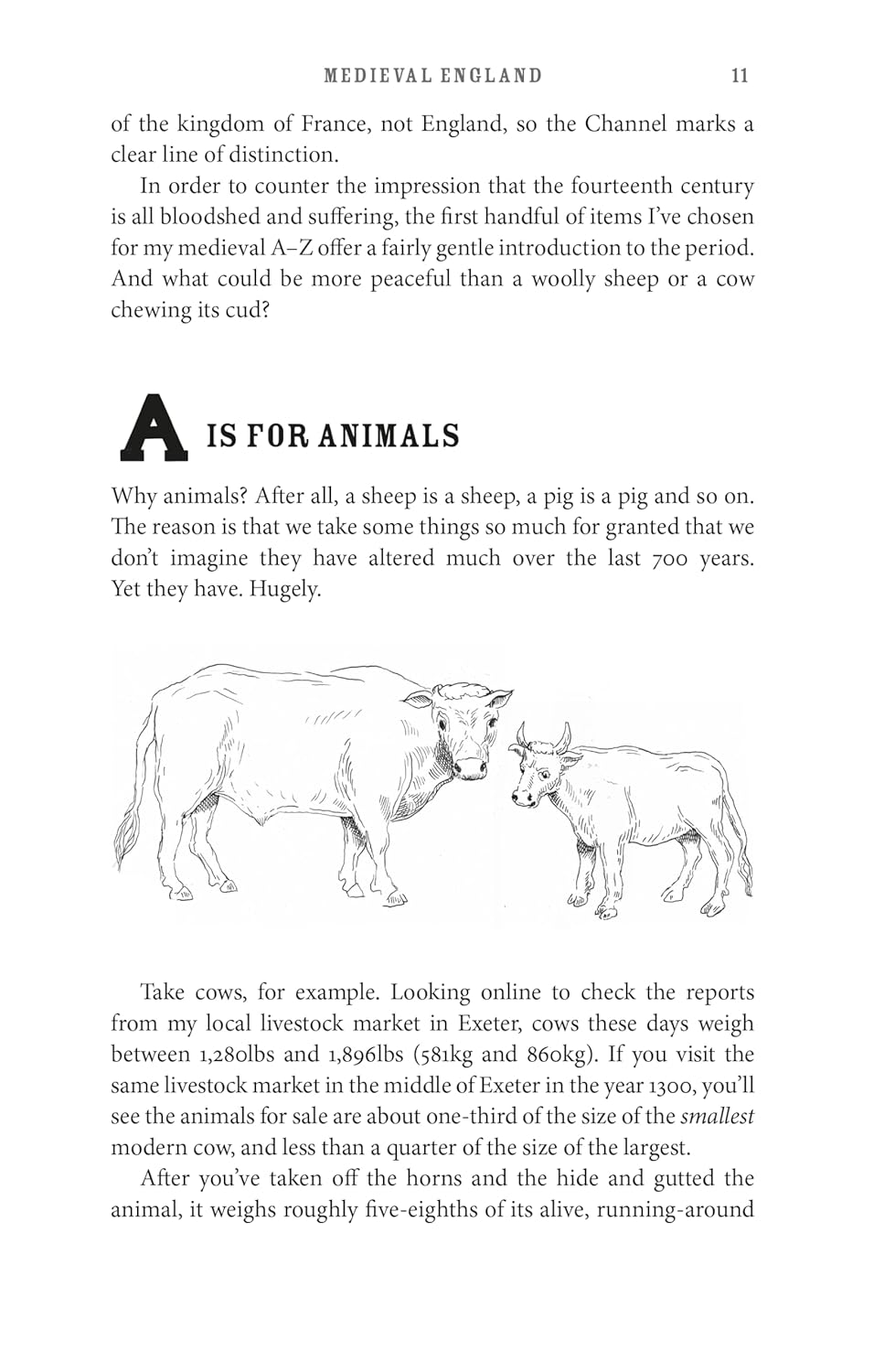
Who would have thought of buttons as causing a revolution in fashion? Did you know cows and sheep were smaller in medieval times? Ian Mortimer takes a look at the History we do not always consider: the everyday, the quirky, the mundane. He’s insightful; how much more would we have known about medieval women if they had been taught to write, allowed to tell their own stories?

If you have a History fan in your family, you should get them Mortimer’s A to Zs of English History for Christmas.

It is educational.

It is entertaining.

It is amusing.

It is revelatory.

It is a ‘must read’.

You will not look at History in the same way ever again. Get it. Read it. Devour it. And gift a copy to a friend. It is a fabulous resource for anyone with a love of History – and an amazing introduction for anyone you want to get hooked on History.

Buy Mortimer’s A to Zs of English History

About the author:
Ian Mortimer is the bestselling author of the Time Traveller’s Guides series, as well as Medieval Horizons: Why the Middle Ages Matter and four critically acclaimed biographies. He was elected a Fellow of the Royal Historical Society in 1998 and a Fellow of the Society of Antiquaries in 2015. His work on the social history of medicine won the Alexander Prize in 2004 and was published by the Royal Historical Society in 2009. He lives with his wife on the edge of Dartmoor.

*

My Books

Signed, dedicated copies of all my books are available through my online bookshop.

Out now: Scotland’s Medieval Queens

Books by Sharon Bennett Connolly

Scotland’s history is dramatic, violent and bloody. Being England’s northern neighbour has never been easy. Scotland’s queens have had to deal with war, murder, imprisonment, political rivalries and open betrayal. They have loved and lost, raised kings and queens, ruled and died for Scotland. From St Margaret, who became one of the patron saints of Scotland, to Elizabeth de Burgh and the dramatic story of the Scottish Wars of Independence, to the love story and tragedy of Joan Beaufort, to Margaret of Denmark and the dawn of the Renaissance, Scotland’s Medieval Queens have seen it all. This is the story of Scotland through their eyes.

Scotland’s Medieval Queens gives a thorough grounding in the history of the women who ruled Scotland at the side of its kings, often in the shadows, but just as interesting in their lives beyond the spotlight. It’s not a subject that has been widely covered, and Sharon is a pioneer in bringing that information into accessible history.’ Elizabeth Chadwick (New York Times bestselling author)

Available now from Amazon and Pen and Sword Books

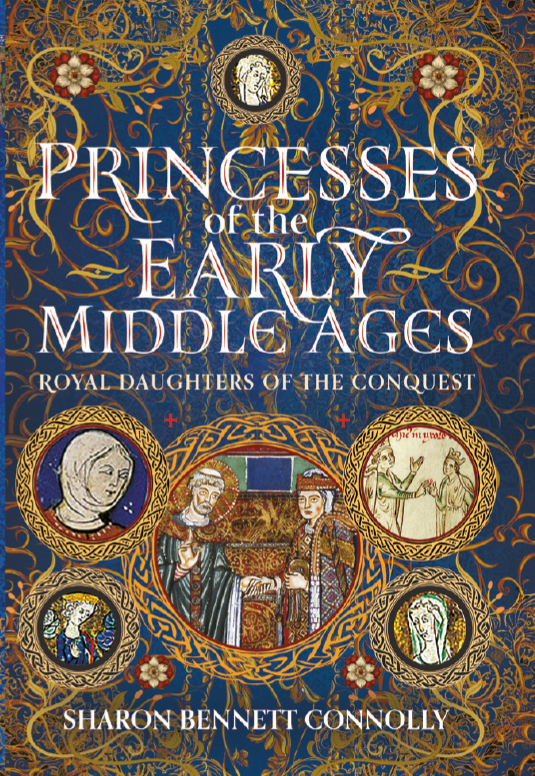
Coming 30 March 2026: Princesses of the Early Middle Ages
Books by Sharon Bennett Connolly

Daughters of kings were often used to seal treaty alliances and forge peace with England’s enemies. Princesses of the Early Middle Ages: Royal Daughters of the Conquest explores the lives of these young women, how they followed the stereotype, and how they sometimes managed to escape it. It will look at the world they lived in, and how their lives and marriages were affected by political necessity and the events of the time. Princesses of the Early Middle Ages will also examine how these girls, who were often political pawns, were able to control their own lives and fates. Whilst they were expected to obey their parents in their marriage choices, several princesses were able to exert their own influence on these choices, with some outright refusing the husbands offered to them.

Their stories are touching, inspiring and, at times, heartbreaking.

Princesses of the Early Middle Ages: Royal Daughters of the Conquest is now available for pre-order.

Also by Sharon Bennett Connolly:

Books by Sharon Bennett Connolly

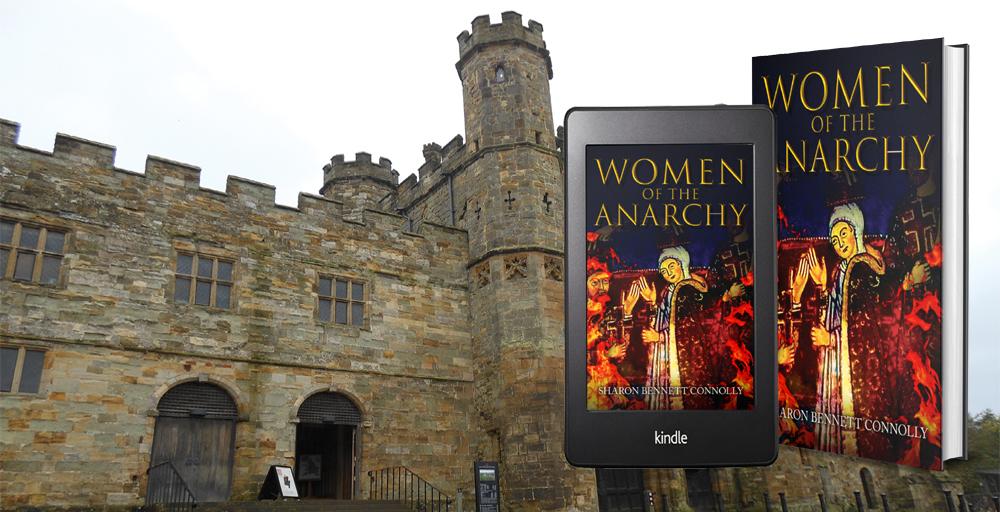
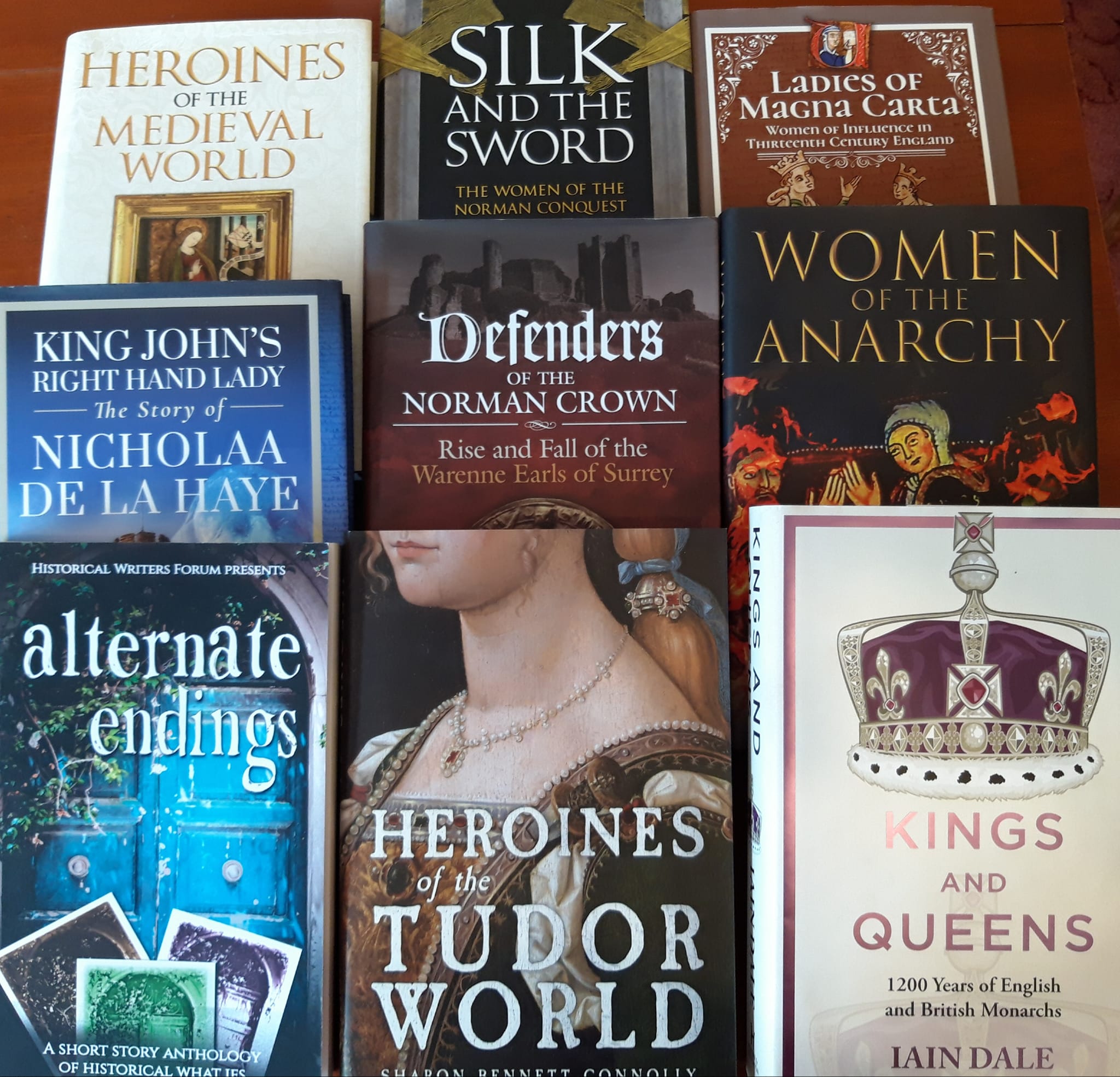
Heroines of the Tudor World tells the stories of the most remarkable women from European history in the time of the Tudor dynasty, 1485-1603. These are the women who ruled, the women who founded dynasties, the women who fought for religious freedom, their families and love. Heroines of the Tudor World is now available from Amberley Publishing and Amazon UK. Women of the Anarchy demonstrates how Empress Matilda and Matilda of Boulogne, unable to wield a sword themselves, were prime movers in this time of conflict and lawlessness. It shows how their strengths, weaknesses, and personal ambitions swung the fortunes of war one way – and then the other. Available from Bookshop.orgAmberley Publishing and Amazon UKKing John’s Right-Hand Lady: The Story of Nicholaa de la Haye is the story of a truly remarkable lady, the hereditary constable of Lincoln Castle and the first woman in England to be appointed sheriff in her own right. Available from all good bookshops Pen & Sword Booksbookshop.org and Amazon

Royal Historical Society

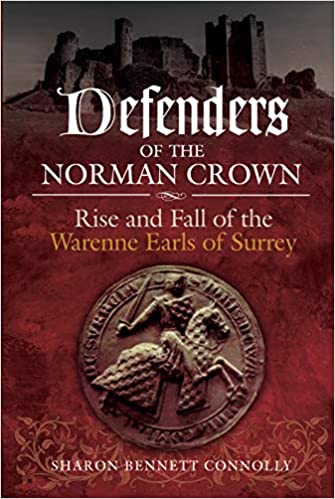
Defenders of the Norman Crown: The Rise and Fall of the Warenne Earls of Surrey tells the fascinating story of the Warenne dynasty, from its origins in Normandy, through the Conquest, Magna Carta, the wars and marriages that led to its ultimate demise in the reign of Edward III. Available from Pen & Sword BooksAmazon in the UK and US, and Bookshop.orgLadies of Magna Carta: Women of Influence in Thirteenth Century England looks into the relationships of the various noble families of the 13th century, and how they were affected by the Barons’ Wars, Magna Carta and its aftermath; the bonds that were formed and those that were broken. It is now available in paperback and hardback from Pen & SwordAmazon, and Bookshop.orgHeroines of the Medieval World tells the stories of some of the most remarkable women from Medieval history, from Eleanor of Aquitaine to Julian of Norwich. Available now from Amberley Publishing and Amazon, and Bookshop.orgSilk and the Sword: The Women of the Norman Conquest traces the fortunes of the women who had a significant role to play in the momentous events of 1066. Available now from Amazon,  Amberley Publishing, and Bookshop.org.

Alternate Endings: An anthology of historical fiction short stories including Long Live the King… which is my take what might have happened had King John not died in October 1216. Available in paperback and kindle from Amazon.

Podcast:
A Slice of Medieval

Have a listen to the A Slice of Medieval podcast, which I co-host with Historical fiction novelist Derek Birks. Derek and I welcome guests, such as Ian Mortimer, Bernard Cornwell, Elizabeth Chadwick and Scott Mariani, and discuss a wide range of topics in medieval history, from significant events to the personalities involved. 

There are now over 80 episodes to listen to!

Every episode is also now available on YouTube.

*

Don’t forget! Signed and dedicated copies of all my books are available through my online bookshop.

For forthcoming online and in-person talks, please check out my Events Page.

You can be the first to read new articles by clicking the ‘Follow’ button, liking our Facebook page or joining me on TwitterThreadsBluesky and Instagram.

*

©2025 Sharon Bennett Connolly FRHistS
Wordly Women: Samantha Wilcoxson

Today we are hopping across the pond for the next chat in my Wordly Women series. Joining me is Samantha Wilcoxson. Author of fiction novels mainly based in the late medieval and Tudor eras and and non-fiction books on the American Revolution, Samantha’s books – literally – span the Atlantic divide. Samantha has a knack for getting into the heads of the people she is writing about. Her book, Plantagenet Princess, Tudor Queen, about Elizabeth of York, is still one of the most insightful novels I have ever read.

Sharon: What got you into writing?

Samantha: What got you into writing? I have always loved reading and used to write dozens of book reviews every year. Many of those books were historical fiction and nonfiction. When I was considering ways to earn money while a stay-at-home mom, my husband suggested I write a book. I had never considered taking this step, so the first obstacle was deciding what I would want to write about. It didn’t take me long to settle on Elizabeth of York, and I quickly became passionate about the project. That novel turned into a series, and I’ve ventured into other historical eras since then.

Sharon: Tell us about your books.

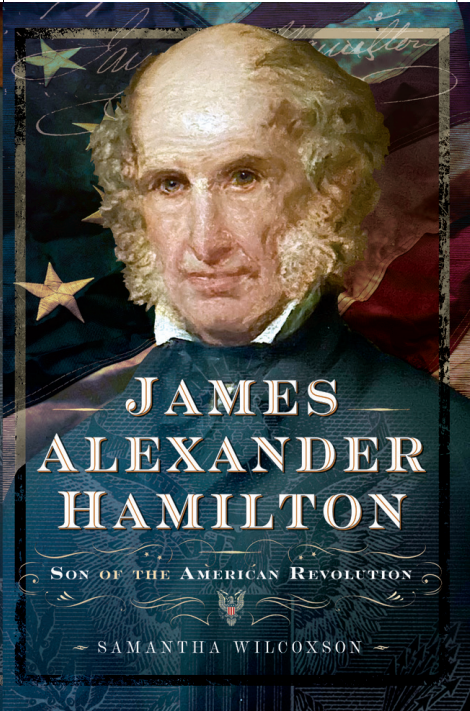
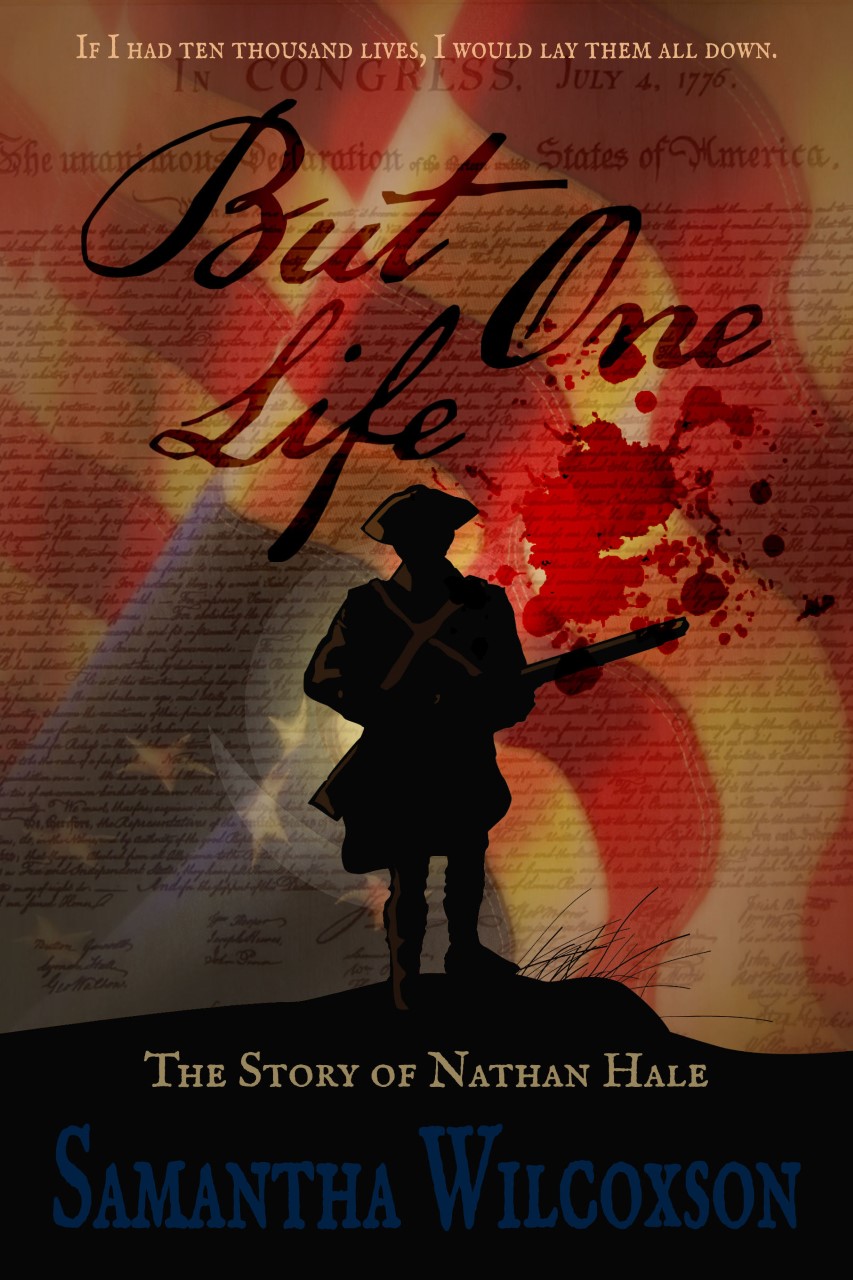
Samantha: Each of my novels explores the life of a real historical figure in a way that helps readers connect with them on a personal level. My Plantagenet Embers series includes three novels featuring Elizabeth of York, Margaret Pole, and Mary I. It also has three novellas that offer new points of view of the same events by focusing on Margaret Beaufort, Elizabeth Woodville, and Reginald Pole. Then I moved into US history with my next two novels. Luminous is biographical fiction of real life radium girl Catherine Wolfe Donohue, and But One Life explores the life of American Revolution soldier Nathan Hale. My nonfiction books are Women of the American Revolution and a newly released biography of James Alexander Hamilton.

Sharon: What attracted you to the Tudors?

Samantha: When I started writing the series that ended up covering the early Tudor era, I was actually obsessed with the Wars of the Roses. I thought Elizabeth of York was an unsung heroine, so I started with her with no real intention of writing about the Tudors! This is actually a great insight into my writing. I never know what is coming next.

Sharon: So, what is coming next?

Samantha: I am currently writing a trilogy set during the Wars of the Roses for Sapere Books. It includes multiple women’s points of view. For example, book one has chapters featuring Marguerite of Anjou, Cecily Neville, and Anne Beauchamp. That one is in editing, and I’m working on book two, which will add the perspective of Elizabeth Woodville and others.

Sharon: How do you approach researching your topic?

Samantha: This depends a lot on whether I’m writing fiction or nonfiction. For novels, I largely depend on biographies already written, but for nonfiction I look for more primary resources like personal letters and diaries. For either, I like to visit locations important to the people I’m writing about so that I can include details about the places they experienced.

Sharon: You also write US history non-fiction.

Samantha: Tell us your ‘favourite’ story you have come across in your research? My research into James Alexander Hamilton uncovered loads of interesting discoveries, partly because nobody else has really written about him. I held letters written between James and Andrew Jackson, Martin Van Buren, John Quincy Adams, and so many others. (Gotta admit, it was tempting to try sneak that JQA letter into my bag!) I think the most fun story I came across, besides John Quincy writing about being too old to stay up all night at a lively Hamilton party, was learning that James was part of the crew of the schooner America for which the America’s Cup is named.

Sharon: Tell us your least ‘favourite’ US history story you have come across in your research?

Samantha: I don’t know if I would call it a least favorite, but I decided to write a novel about Nathan Hale because I often came across quotes attributed to him such as, “I only regret that I have but one life to give for my country” but very little else about who Hale was. What happened in this young man’s life to create such bravery and patriotism? Few references to him offered much, so I decided to dig in and reveal the story of Nathan Hale before his famous execution during the American Revolution.

Sharon: Are there any other eras you would like to write about?

Samantha: I always have a few ideas brewing but am committed to the next couple of books on the Wars of the Roses right now. I have started a bit of research into a historical event that occurred near my home in Michigan in 1847 that I would like to consider for a future project. I’m not one of those writers who has the next five years planned out and I tend to impetuously strike out in new directions, so we’ll see what happens.

Sharon: And finally, what is the best thing about being a writer?

Samantha: Besides spending my day reading, writing, and learning about history, I love the flexibility of being a writer. I began as a stay-at-home mom, and I still appreciate the ability to easily set my work aside for a few days if one of my adult children needs anything. I’ve also made many friends in the writing community who make me feel less alone as a history nerd and have provided amazing support and encouragement for each of my book projects.

About the Author:

Samantha Wilcoxson is an author of emotive biographical fiction and nonfiction featuring history’s unsung heroes. Her novel Luminous has been named Book of the Year by Ruins & Reading and Yarde Book Reviews. Samantha’s most recent work is the first biography of James Alexander Hamilton, published by Pen & Sword History. She is currently writing a Wars of the Roses trilogy for Sapere Books. When not reading or writing, Samantha loves sharing trips to historic places with her family and spending time by the lake with a glass of wine.

Where to find Samantha Wilcoxson:

Website; Instagram; Amazon Author Page; Newsletter Signup; Goodreads; Pinterest; Twitter; Shop Direct; Audible

*

My books

Signed, dedicated copies of all my books are available through my online store.

Out now: Scotland’s Medieval Queens

Scotland’s history is dramatic, violent and bloody. Being England’s northern neighbour has never been easy. Scotland’s queens have had to deal with war, murder, imprisonment, political rivalries and open betrayal. They have loved and lost, raised kings and queens, ruled and died for Scotland. From St Margaret, who became one of the patron saints of Scotland, to Elizabeth de Burgh and the dramatic story of the Scottish Wars of Independence, to the love story and tragedy of Joan Beaufort, to Margaret of Denmark and the dawn of the Renaissance, Scotland’s Medieval Queens have seen it all. This is the story of Scotland through their eyes.

Scotland’s Medieval Queens gives a thorough grounding in the history of the women who ruled Scotland at the side of its kings, often in the shadows, but just as interesting in their lives beyond the spotlight. It’s not a subject that has been widely covered, and Sharon is a pioneer in bringing that information into accessible history.’ Elizabeth Chadwick (New York Times bestselling author)

Available now from Amazon and Pen and Sword Books

Also by Sharon Bennett Connolly:

Heroines of the Tudor World tells the stories of the most remarkable women from European history in the time of the Tudor dynasty, 1485-1603. These are the women who ruled, the women who founded dynasties, the women who fought for religious freedom, their families and love. Heroines of the Tudor World is now available from Amberley Publishing and Amazon UK. Women of the Anarchy demonstrates how Empress Matilda and Matilda of Boulogne, unable to wield a sword themselves, were prime movers in this time of conflict and lawlessness. It shows how their strengths, weaknesses, and personal ambitions swung the fortunes of war one way – and then the other. Available from Bookshop.orgAmberley Publishing and Amazon UKKing John’s Right-Hand Lady: The Story of Nicholaa de la Haye is the story of a truly remarkable lady, the hereditary constable of Lincoln Castle and the first woman in England to be appointed sheriff in her own right. Available from all good bookshops Pen & Sword Booksbookshop.org and Amazon

Defenders of the Norman Crown: The Rise and Fall of the Warenne Earls of Surrey tells the fascinating story of the Warenne dynasty, from its origins in Normandy, through the Conquest, Magna Carta, the wars and marriages that led to its ultimate demise in the reign of Edward III. Available from Pen & Sword BooksAmazon in the UK and US, and Bookshop.orgLadies of Magna Carta: Women of Influence in Thirteenth Century England looks into the relationships of the various noble families of the 13th century, and how they were affected by the Barons’ Wars, Magna Carta and its aftermath; the bonds that were formed and those that were broken. It is now available in paperback and hardback from Pen & SwordAmazon, and Bookshop.orgHeroines of the Medieval World tells the stories of some of the most remarkable women from Medieval history, from Eleanor of Aquitaine to Julian of Norwich. Available now from Amberley Publishing and Amazon, and Bookshop.orgSilk and the Sword: The Women of the Norman Conquest traces the fortunes of the women who had a significant role to play in the momentous events of 1066. Available now from Amazon,  Amberley Publishing, and Bookshop.org.

Alternate Endings: An anthology of historical fiction short stories including Long Live the King… which is my take what might have happened had King John not died in October 1216. Available in paperback and kindle from Amazon.

Podcast:

Have a listen to the A Slice of Medieval podcast, which I co-host with Historical fiction novelist Derek Birks. Derek and I welcome guests, such as Bernard Cornwell and Michael Jecks, and discuss a wide range of topics in medieval history, from significant events to the personalities involved. Every episode is also now available on YouTube.

*

Don’t forget! Signed and dedicated copies of all my books are available through my online store.

For forthcoming online and in-person talks, please check out my Events Page.

You can be the first to read new articles by clicking the ‘Follow’ button, liking our Facebook page or joining me on TwitterThreadsBluesky and Instagram.

*

©2025 Sharon Bennett Connolly, FRHistS and Samantha Wilcoxson

Guest Post: Sarah Siddons by Jo Willett

It is a pleasure to welcome Jo Willett back to History…the Interesting Bits with a guest post about the subject of her latest book, the Georgian actress Sarah Siddons:

The famous actress Sarah Siddons, the Muse of Tragedy and the Queen of Drury Lane as she was known, was an expert on what we would today call brand control. The characters she played on stage were almost without exception highly moral, upstanding and noble. So, it was important that Sarah’s fans were encouraged to see her in the same light. In an age where many of her contemporary actresses on the London stage were either former sex workers or the mistresses of wealthy men (or both) Sarah ensured that every opportunity was taken to project the message that she was, by contrast, a happily married woman and a devoted mother.

Sarah had met her husband-to-be, William Siddons, when he joined her parents’ travelling acting troupe. She was aged 11 and he was 23. Biographers have tended to gloss over how quickly it was before the two started having romantic feelings for each other, for obvious reasons, but her parents soon became aware that the two were in love. They were wary of the relationship, not because of the age difference – Sarah’s father was similarly several years older than her mother and they had also met when her mother was young – but because they could see that William was not a particularly good actor. The story of how Sarah’s parents attempted to separate the lovers bears all the hallmarks of having been romanticised by Sarah in later life. But whatever happened, Sarah’s parents eventually decided to give their reluctant consent, and Sarah and William Siddons were married in Coventry in November 1773, when Sarah was 18 years old. The Siddons would always affectionately refer to each other as Sal and Sid.

So, Sarah was a married woman by the time she acquired fame and fortune as the greatest tragic actress of her generation. She had a false start at Drury Lane in David Garrick’s final season, but then rebuilt her career and returned to appear on stage at Drury Lane again, this time with Richard Brinsley Sheridan as manager, in 1782. Her first night was said to be one of the greatest ever seen on the British stage and she continued for some thirty years as the highest paid performer of her generation, mobbed by fans wherever she went. By 1782 she was already the mother of four children.

Sarah Siddons as Euphrasia in The Grecian Daughter

Sarah’s success enabled William to give up acting and to become her manager. In this role he proved himself often to be over-zealous in his demands for the fees he asked for her. The more Sarah earned in performance fees as the star, particularly in the regional theatres she toured every summer, the less was available to pay other actors in the company. Inevitably resentments festered. This was made worse when it appeared as if William had got Sarah out of appearing in ‘benefit’ performances, where the night’s takings went to a deserving actor in the cast. Her reputation suffered as a result, and she earned herself the nickname Lady Sarah Save-All.

Even though Sarah was the sole breadwinner, everything she earned was legally in William’s name. There is no evidence she questioned this – it was just how things were at the time. But William was not always wise when it came to investing. One year, for instance, he lost nearly a third of Sarah’s annual earnings, speculating on a new building at Saddlers Wells. Sarah never complained but she did find herself increasingly exhausted by her punishing work schedule and her health certainly suffered as a result.

It must also have been difficult for William that Sarah had such star status, whilst he was relatively unknown. She became the darling of King George III and his wife Queen Charlotte, for instance, but no mention was ever made of William’s having been introduced to the king and queen. It was as if he didn’t exist. Perhaps inevitably, William began to seek solace elsewhere. A friend called at the Siddons’ house one day to find Sarah weeping as she burned some papers which had alerted her to the fact her husband now had a mistress.

In 1792, ten years after Sarah’s triumph at Drury Lane, Hester Piozzi, a friend of Sarah’s, wrote in a letter to a mutual friend that the famous actress’s recent bout of ill-health could be put down to the fact that William had given his wife a Sexually Transmitted Infection, probably syphilis. This was far from being an uncommon problem at the time, but without the wonders of modern medicine it was incurable. Despite this, the couple clearly patched things up between the two of them, as their final child, a daughter named Cecilia, was born the following year.

Sarah Siddons as Lady MacBeth

Sarah never seems to have mentioned her STI. The only hint at it remains to this day Hester Piozzi’s letter. She would have dreaded any news of it escaping into the public domain. Her reputation as a happily married woman, the essence of respectability, would have been dangerously undermined. She was attended by the Royal Physician, Sir Lucas Pepys, who advised her to spend time recuperating at a spa. From then on she often suffered from what her public were told was erisypelas, a condition of the skin. In my biography I suggest that this was a means of covering up the fact her syphilis was developing.

But this was not the only problematic area in the Siddons’ relationship. Their two eldest daughters both suffered from increasingly serious diseases of the lungs, from which both of them were to die, Maria in 1798 and Sally in 1803. Sarah was able to rush to Maria’s bedside to be with her daughter for her last few weeks of life. But when Sally began to sicken during what would prove to be her last few months, her mother was on a long tour of Ireland. William wrote to his wife assuring her that Sally was recovering. He urged her to extend her tour from Dublin to Cork, specifically because there were bills to be met at home. Family life in London was proving to be particularly expensive at the time. Inevitably, and tragically, Sally worsened and died before her mother could make it back to be at her bedside for her end.

Sarah was always exceptionally guarded in her personal correspondence about her feelings towards her husband, but she let her mask slip around this time. ‘I have suffered too much from a husband’s unkindness,’ she wrote, ‘not to detest the man who treats a creature ill that depends on her husband for all her comforts.’ Clearly she blamed William for what had happened.

But Sarah herself was not entirely blameless. During her tour of Ireland she had met a young Spanish fencing master, Philomen Galindo. At first she could persuade herself that she was equally fond of Philomen and of his wife Catherine. But as the relationship developed, Catherine began to feel increasingly excluded and paranoid. Infatuated with Philomen, Sarah did her best to procure acting jobs for the couple in the new company of actors Sarah’s brother, the actor/manager John Philip Kemble, was putting together at Covent Garden. But John Philip made it very clear immediately that the Galindos were not the sort of people his celebrated sister should be associating with. It is impossible to prove whether Sarah was having a sexual relationship with Philomen Galindo, but his wife clearly thought she was. And when, several years later, Catherine had a pamphlet published, arguing her case and making public her side of the story, Sarah declined to sue for libel.

Sarah Siddons as The Tragic Muse by Joshua Reynolds

How much William knew about this is again hard to know, but it was just a year after their daughter Sally’s death, and just as Sarah had encouraged the Galindos to come to London on the false promise of finding jobs for them, that William and Sarah Siddons finally decided to separate. Very little adverse comment appeared in the press about this. All Sarah’s biographers up until now have played the separation right down and praised the actress for the dignity with which she handled the end of her marriage. One who was writing during Sarah’s lifetime wrote that William ‘retained at all times the sincerest regard for his incomparable lady.’ But the truth remained that the Siddons could no longer live with each other.

William drew up his will at the same time. He had asked Sarah to tell him what she would like from it. But, as she herself put it: ‘I can expect nothing more than you yourself have designed’. Despite all her worldly success, her reputation as the greatest tragic actress of her generation, and her image as someone as morally upright as the tragic heroines she played each night on stage, in real life her future was just as in jeopardy as theirs, dependent for her security on the goodwill of the husband from whom she was parting.

About the book:

Sarah Siddons grew up as a member of a family troupe of travelling actors, always poor and often hungry, resorting to foraging for turnips to eat. But before she was 30 she had become a superstar, her fees greater than any actor – male or female – had previously achieved. Her rise was not easy. Her London debut, aged just 20, was a disaster and could have condemned her to poverty and anonymity. But the young actress – already a mother of two – rebuilt her career, returning triumphantly to the capital after years of remorseless provincial touring. She became Britain’s greatest tragic actress, electrifying audiences with her performances. Her shows were sell-outs. Adored by theatre audiences, writers, artists and the royal family alike, Sarah grasped the importance of her image. She made sure that every leading portrait painter captured her likeness, so that engravings could be sold to her adoring public. In an eighteenth-century world of vicious satire and gossip, she also battled to manage her reputation. Married young, she took constant pains to portray herself as a respectable and happily married woman, even though her marriage did not live up to this ideal. Sarah’s story is not just about rags to riches; this remarkable woman also redefined the world of theatre and became the first celebrity actress.

Sarah Siddons: The First Celebrity Actress is available from Amazon

About the author:

Jo Willett has been an award-winning TV drama and comedy producer all her working life. Her credits range from the recent Manhunt, starring Martin Clunes, to Birds of a Feather. Her most relevant productions include Brief Encounters (a fictionalised story of the first women who ran Ann Summers parties in the 1980s), The Making of a Lady (an adaption of the Frances Hodgson Burnett novel _The Making of a Marchioness_), Bertie and Elizabeth (telling the story of the Queen Mother’s marriage) and the BAFTA-and-RTS Award-Winning A Rather English Marriage (starring Albert Finney, Tom Courtenay and Joanna Lumley, adapted from the novel of the same name by Angela Lambert). She studied English at Queens’ College Cambridge and has an MA in Arts Policy. She is married with a daughter, a son and a step-son. She lives in London. www.devoniaroad.co.uk.

*

My Books

Signed, dedicated copies of all my books are available through my online bookshop.

Coming on 15 June 2024: Heroines of the Tudor World

Heroines of the Tudor World tells the stories of the most remarkable women from European history in the time of the Tudor dynasty, 1485-1603. These are the women who ruled, the women who founded dynasties, the women who fought for religious freedom, their families and love. These are the women who made a difference, who influenced countries, kings and the Reformation. In the era dominated by the Renaissance and Reformation, Heroines of the Tudor World examines the threats and challenges faced by the women of the era, and how they overcame them. From writers to regents, from nuns to queens, Heroines of the Tudor World shines the spotlight on the women helped to shape Early Modern Europe.

Heroines of the Tudor World is now available for pre-order from Amberley Publishing and Amazon UK.

Out Now! Women of the Anarchy

Two cousins. On the one side is Empress Matilda, or Maud. The sole surviving legitimate child of Henry I, she is fighting for her birthright and that of her children. On the other side is her cousin, Queen Matilda, supporting her husband, King Stephen, and fighting to see her own son inherit the English crown. Women of the Anarchy demonstrates how these women, unable to wield a sword, were prime movers in this time of conflict and lawlessness. It show how their strengths, weaknesses, and personal ambitions swung the fortunes of war one way – and then the other.

Available from Bookshop.orgAmberley Publishing and Amazon UK.

Also by Sharon Bennett Connolly:

King John’s Right-Hand Lady: The Story of Nicholaa de la Haye is the story of a truly remarkable lady, the hereditary constable of Lincoln Castle and the first woman in England to be appointed sheriff in her own right. Available from all good bookshops or direct from Pen & Sword Booksbookshop.org and AmazonDefenders of the Norman Crown: The Rise and Fall of the Warenne Earls of Surrey tells the fascinating story of the Warenne dynasty, from its origins in Normandy, through the Conquest, Magna Carta, the wars and marriages that led to its ultimate demise in the reign of Edward III. Available from Pen & Sword BooksAmazon in the UK and US, and Bookshop.org

Ladies of Magna Carta: Women of Influence in Thirteenth Century England looks into the relationships of the various noble families of the 13th century, and how they were affected by the Barons’ Wars, Magna Carta and its aftermath; the bonds that were formed and those that were broken. It is now available in paperback and hardback from Pen & Sword,  Amazon, and Bookshop.orgHeroines of the Medieval World tells the stories of some of the most remarkable women from Medieval history, from Eleanor of Aquitaine to Julian of Norwich. Available now from Amberley Publishing and Amazon, and Bookshop.orgSilk and the Sword: The Women of the Norman Conquest traces the fortunes of the women who had a significant role to play in the momentous events of 1066. Available now from Amazon,  Amberley Publishing, and Bookshop.org.

Alternate Endings: An anthology of historical fiction short stories including Long Live the King… which is my take what might have happened had King John not died in October 1216. Available in paperback and kindle from Amazon.

Podcast:

Have a listen to the A Slice of Medieval podcast, which I co-host with Historical fiction novelist Derek Birks. Derek and I welcome guests, such as Bernard Cornwell and discuss a wide range of topics in medieval history, from significant events to the personalities involved.

*

Don’t forget! Signed and dedicated copies of all my books are available through my online bookshop.

For forthcoming online and in-person talks, please check out my Events Page.

You can be the first to read new articles by clicking the ‘Follow’ button, liking our Facebook page or joining me on Twitter and Instagram.

*

©2024 Jo Willett and Sharon Bennett Connolly FRHistS.

Guest Post: The Ambassadress by Ronan Beckman

The Historical Writers Forum have released a new Anthology of short stories. You may remember that last year’s Anthology, Alternate Endings, included a short story about the final days of King John, by me! This year’s Anthology, Masterworks: Historical Fiction Inspired by Works of Art, will make you look at some famous artworks a little differently…

Today, I am joined by one of the contributors, Ronan Beckman, whose story is inspired by Emma Hamilton. Over to Ronan…

Do you remember what got you hooked onto a specific time period or aspect of history? I had just finished reading Amanda Foreman’s excellent biography Georgiana, The Duchess of Devonshire , which resulted in my addiction to everything about the Georgian-era but especially to women’s history in that time. Often relegated to the sidelines of history, Georgian times allowed women to begin to step into the spotlight – albeit in very slow, tiny steps. I began to voraciously read biographies of prominent ladies of that time. And one story that truly stood out for me was the life of a blacksmith’s daughter from Cheshire born as Amy Lyon. But the world knows her better as Emma, Lady Hamilton; lover of Admiral Nelson. Flora Fraser’s Beloved Emma laid out the incredible story of the amazing transformation of this pretty young woman into one of the most talked about celebrities of her age.

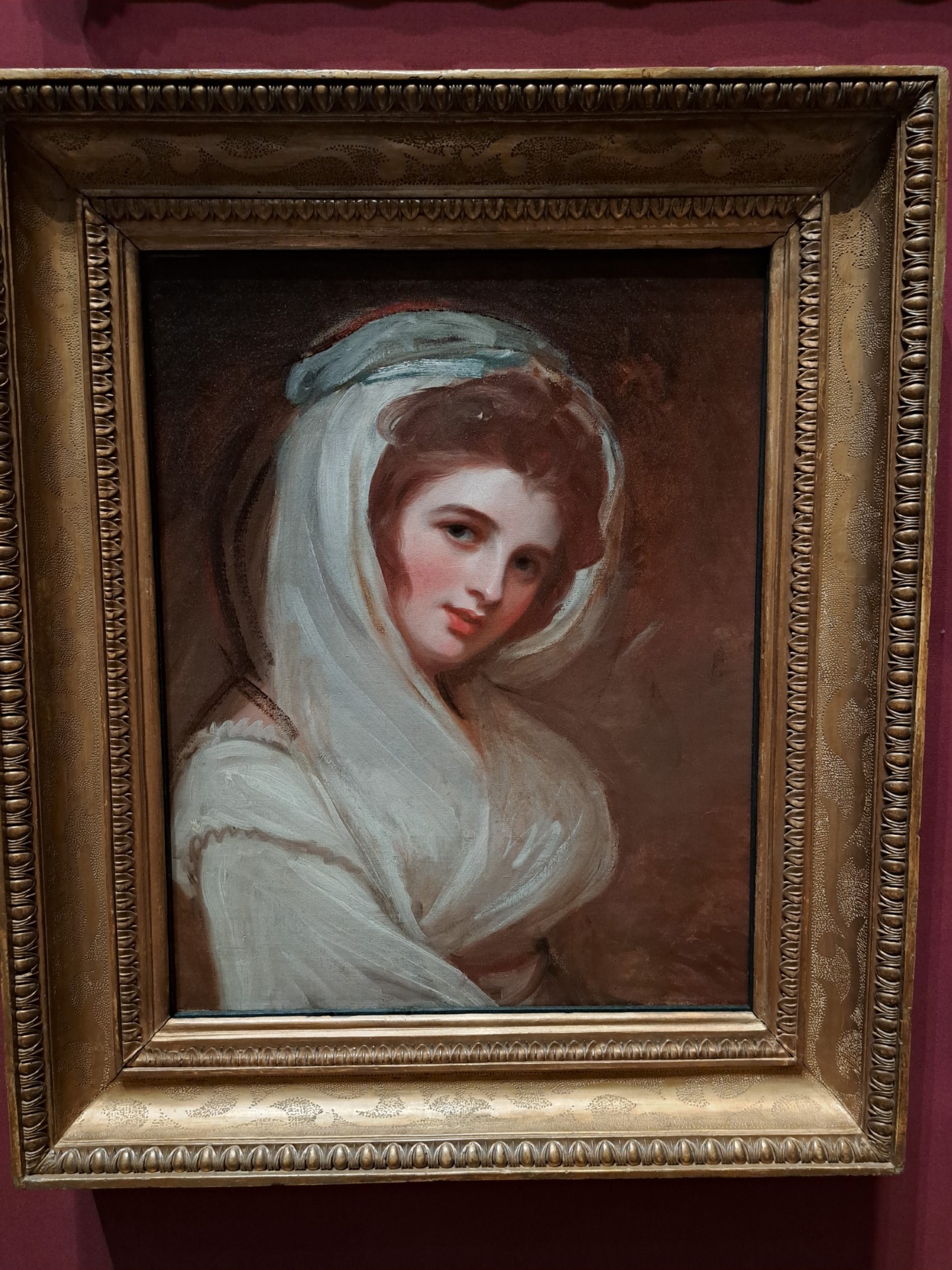
Portrait of Emma Hamilton by George Romney

Several years later, The National Maritime Museum in London put together a fabulous exhibition entitled Seduction & Celebrity that explored Emma Hamilton’s rise and fall, from beginning to end. One of the most noticeable aspects of the show was that there was ample material to display, primarily from one particular artist. George Romney was one of the most prominent society portrait painters of the late Georgian period. Although his talent was comparable to his well-respected contemporaries, such as Joshua Reynolds, Thomas Gainsborough and John Hoppner; he refused to participate in the antics associated with the Royal Academy of Arts and their annual exhibitions. Artists would become fiercely competitive as they all vied for the most prominent places within the show, hoping that their works would stand out from the rest. Romney wanted no part of this circus, and relied on his talent and reputation to gain custom amongst his wealthy clients. This worked out well for him, and he had no shortage of sitters. However, the tedium of producing staid portraiture of the elite classes began to prove tiresome.

How fortunate for Romney then that a customer, Sir Charles Greville, brought in a secret mistress that he had ensconced away in a humble, rural cottage in nearby Edgeware. The 16 year-old Amy Lyon had already experienced several tragedies in her young life; having found herself pregnant by another aristocratic man, Sir Henry Fetherstonhaugh, who promptly abandoned her. Greville came to the rescue, but on the proviso that she gave her baby away, living a life of thrift and economy whilst being at his beck and call. She had no room to negotiate and was grateful for this second chance. Greville sought to have her beauty be captured and admired on canvas, for him to be able to display to his friends. In effect, he wanted to boast “This heavenly goddess is mine, and you cannot even see her in the flesh. Don’t you envy me?”

Emma Hart by Romney

Romney was immediately enchanted by the charisma and stunning beauty of the newly renamed Emma Hart. Her presence reinvigorated his artwork. They embarked on a creative partnership that resulted in Romney’s finest and most creative output. In return, Emma was portrayed in various guises for posterity. She had to reinvent herself for each sitting, becoming a mythological creature or some historic character from long ago. Emma sat for dozens of paintings by Romney. She was his muse, allowing him to explore his craft beyond the confines of standard portraiture. Greville was happy to loan her modelling services to Romney, for it was increasing the value of his ‘ward’ that he had saved from a certain life of penury. Engravings had been made of some of Romney’s paintings, affording a glimpse of her allure to a wider audience. As her image was circulated, there was an increasing curiosity aroused throughout the capital city. Who was this charming being?

The drip-feed of artistic content provided opportunities for both Romney and Emma. Romney’s reputation and name was further advanced as well as inspiring his art to reach new levels of creativity. Emma became what may well be the very first Supermodel – a celebrity whose fame and notoriety was constantly on an upward trajectory. It seems apparent that Romney became infatuated with Emma. And perhaps Emma appreciated the advice and friendship of a man outside of the realm of the Ton, but who knew of the inner workings and mindset of the Upper Class who made up his clientele.

But this fame and notoriety was not appealing to Sir Charles Greville, who was seeking a wealthy heiress to supplement his dwindling finances. Being saddled with an infamous beauty as a mistress would not make him very appealing as a suitor to the respectable ladies that he wanted to pursue. Therefore, he duped Emma into travelling to Naples, to visit his uncle who was the serving British ambassador there. He had offered her to his uncle as a mistress, without her consent or knowledge. This separation severed the symbiotic artistic relationship between Emma and Romney for several years. Romney, who was prone to depression, was affected by her absence deeply. Although furious with Greville for abandoning her, Emma did make the best of her situation – enjoying her time in the royal court of Naples and eventually becoming quite fond of her ambassador.

In the summer of 1791, Emma returned to England to marry Sir William Hamilton and return to Naples as a respectable wife of the ambassador. During these brief few weeks, Emma reunited with her favourite artist, kick-starting a frenetic pace of artistic output as the painter and his muse were working together again. This brief slice in time intrigued me and I wanted to explore it further. I am fortunate enough to have seen many examples of Romney’s work with Emma as the model. You can feel the creative frisson embedded in these artworks. Romney’s paintings of Emma are seared with an energy that simply does not exist in his other portraits. There was something electric between these two individuals. Was it romantic? There is a feeling of magnetic attraction when one looks through Romney’s gaze in his portraits of Emma. I must say that even though Emma modelled for other great artists (Joshua Reynolds, Thomas Lawrence, Élisabeth Louise Vigée Le Brun, among many others), that spark of something special and extraordinary is just not there.

Romney self-portrait

The last painting that Romney painted of Emma was actually painted on her wedding day. Entitled The Ambassadress, the viewer is a witness to the complete transformation of Emma Hart into Lady Hamilton. As Vesuvius erupts in the dark background, one can imagine the well of emotions bursting forth from Romney’s paintbrush – being well aware that this was the last time that he would lay eyes upon the divine Emma he so cherished. Emma looks back at him, slightly pensive but very refined as she knows she is about to embark on a life of newfound respectability. There is so much wistful emotion silently conveyed in this moving portrait. What were those last moments like in Romney’s studio, as they parted ways for the final time?

The Ambassadress was the inspiration for my short story of the same name. It is one of eleven short stories in the Historical Writer Forum’s anthology entitled Masterworks. Eleven authors have written stories that have been influenced by a particular work of art. The result is a series of stories that takes the reader through time and place, from ancient Sumerian kingdoms to present day London. Available now through Amazon.

About the author:

Ronan Beckman is an American educator who has lived in the UK for over 30 years. His interest in history and genealogy helped to spark an interest in further developing the stories of some of the family he researched – resulting in his debut novel ‘An Actress of Repute’. Subsequently, he has become a bit obsessed with all things Georgian and Regency related. Further adventures are in the works for the character of Elizabeth Searle and her fellow actor friends. His latest project has been editing a transcript of a rare, out-of-print book by a Lancashire coal miner who became secretary of the TUC and a Member of Parliament. The new annotated version of Samuel Woods’ ‘Visions of the Mine’ contains biographical notes and historical images. Visit his blog at http://www.ronanbeckman.com.

*

My Books

Christmas is coming!

Signed, dedicated copies of all my books are available through my online bookshop.

Coming 15 January 2024: Women of the Anarchy

On the one side is Empress Matilda, or Maud. The sole surviving legitimate child of Henry I, she is fighting for her birthright and that of her children. On the other side is her cousin, Queen Matilda, supporting her husband, King Stephen, and fighting to see her own son inherit the English crown. Both women are granddaughters of St Margaret, Queen of Scotland and descendants of Alfred the Great of Wessex. Women of the Anarchy demonstrates how these women, unable to wield a sword, were prime movers in this time of conflict and lawlessness. It show how their strengths, weaknesses, and personal ambitions swung the fortunes of war one way – and then the other.

Available for pre-order from Amberley Publishing and Amazon UK.

Also by Sharon Bennett Connolly:

Out nowKing John’s Right-Hand Lady: The Story of Nicholaa de la Haye is the story of a truly remarkable lady. Nicholaa de la Haye was the hereditary constable of Lincoln Castle and the first woman in England to be appointed sheriff in her own right. Her strength and tenacity saved England at one of the lowest points in its history. Nicholaa de la Haye is one woman in English history whose story needs to be told…

King John’s Right-Hand Lady: The Story of Nicholaa de la Haye is now available from Pen & Sword Booksbookshop.org and Amazon.

Defenders of the Norman Crown: The Rise and Fall of the Warenne Earls of Surrey tells the fascinating story of the Warenne dynasty, of the successes and failures of one of the most powerful families in England, from its origins in Normandy, through the Conquest, Magna Carta, the wars and marriages that led to its ultimate demise in the reign of Edward III. Defenders of the Norman Crown: Rise and Fall of the Warenne Earls of Surrey is now available from Pen & Sword BooksAmazon in the UK and US, and Bookshop.org.

Ladies of Magna Carta: Women of Influence in Thirteenth Century England looks into the relationships of the various noble families of the 13th century, and how they were affected by the Barons’ Wars, Magna Carta and its aftermath; the bonds that were formed and those that were broken. It is now available in paperback and hardback from Pen & Sword,  Amazon, and Bookshop.org.

Heroines of the Medieval World tells the stories of some of the most remarkable women from Medieval history, from Eleanor of Aquitaine to Julian of Norwich. Available now from Amberley Publishing and Amazon, and Bookshop.org.

Silk and the Sword: The Women of the Norman Conquest traces the fortunes of the women who had a significant role to play in the momentous events of 1066. Available now from Amazon,  Amberley Publishing, and Bookshop.org.

Alternate Endings: An anthology of historical fiction short stories including Long Live the King… which is my take what might have happened had King John not died in October 1216. Available in paperback and kindle from Amazon.

Podcast:

Have a listen to the A Slice of Medieval podcast, which I co-host with Historical fiction novelist Derek Birks. Derek and I welcome guests, such as Bernard Cornwell, and discuss a wide range of topics in medieval history, from significant events to the personalities involved.

*

Don’t forget! Signed and dedicated copies of all my books are available through my online bookshop.

For forthcoming online and in-person talks, please check out my Events Page.

You can be the first to read new articles by clicking the ‘Follow’ button, liking our Facebook page or joining me on Twitter and Instagram.

*

©2023 Ronan Beckman and Sharon Bennett Connolly FRHistS

Book Corner: Women of the American Revolution

Women of the American Revolution will explore the trials of war and daily life for women in the United States during the War for Independence. What challenges were caused by the division within communities as some stayed loyal to the king and others became patriots? How much choice did women have as their loyalties were assumed to be that of their husbands or fathers? The lives of women of the American Revolution will be examined through an intimate look at some significant women of the era. Some names will be familiar, such as Martha Washington who travelled to winter camps to care for her husband and rally the troops or Abigail Adams who ran the family’s farms and raised children during John’s long absences. Elizabeth Schuyler Hamilton is popular for her role in Hamilton the musical, but did you know she was also an early activist working tirelessly for multiple social causes? Decide for yourself if the espionage of Agent 355 or the ride of Sybil Ludington are history or myth. Not all American women served the side of the revolutionaries. Peggy Shippen gambled on the loyalist side and paid severe consequences. From early historian Mercy Otis Warren to Dolley Madison, who defined what it means to be a US First Lady, women of the American Revolution strived to do more than they had previously thought possible during a time of hardship and civil war.
I have to admit, I stepped right out of my comfort zone with Women of the American Revolution by Samantha Wilcoxson. And I know very little about the period – except there was something to do with tea and Boston Harbour – Boston, Massachusetts rather than Boston, Lincolnshire (I am definitely more familiar with the latter!). There was some chap called George Washington, too…

So I was going into this book with a very open mind, eager to learn all I could about the women who helped – or sometimes hindered – in the creation of the United States of America. Women of the American Revolution will certainly give readers a greater understanding of the American Revolution and War of Independence; it fills a gap in the study of the period and is long overdue.

Most books on the American Revolution concentrate on the politics or the military actions, but Samantha Wilcoxson has approached the familiar story from an under represented angle; the women. And what incredible women they were. Some are well known, such as Martha Washington Abigail Adams and Dolley Madison. Others less so famous, such as the mysterious Agent 355. And there is the story of Margaret Shippen Arnold, who was considered incapable of being complicit in her husband’s defection to the British – because she was a woman.

In addition to her household skills, Martha [Washington] was taught to be a lady while confined in corsets that helped form her figure and correct her posture. Virginia ladies of Martha’s time were trained to mimic British aristocracy in their manners and decorum. Simply walking and sitting could be a challenge in the full skirts that were the fashion. Martha apparently learned these skills well, because she flawlessly played the role of hostess as a married woman, even when thrust into the public world as America’s original First Lady (although that title was not used during her husband’s time in office). Her parents ensured that she could ride elegantly in a sidesaddle while maintaining perfect posture. Physical control and poise were also vital when learning to dance, a skill not to be underestimated in its importance in eighteenth century Virginia.

The objective would have been for her to eventually obtain a satisfactory husband, and in this Martha most certainly made her parents proud. Daniel Parke Custis belonged to the closest America had to an aristocracy. Rich and possessing thousands of acres of land, the Custis family was such a step up for Martha that Daniel’s father initially forbade his son to marry her. This is where one gains the first insight into the woman Martha would become. Though only eighteen years old, Martha courageously stood up to her future father-in-law. He had threatened to disinherit Daniel and throw the family silver into the street rather than allow Martha to use it, but she managed to charm him into giving his reluctant blessing. The couple was married when Martha was nineteen years old and her bridegroom was twenty years her senior. This age difference was not uncommon or a barrier to their happiness. The skills Martha had learned at the Dandridge home made her a competent manager of the larger Custis plantation, prophetically named White House.

A large enslaved population made it possible for Daniel and Martha to profitably run the Custis estate. Ne evidence exists that Martha believed owning slaves was immoral or wrong in any way. While she did not support cruel treatment or sales that broke up families, Martha also could not understand when enslaved people ran away from what she felt was a comfortable home. It was a lifestyle she had been born into and never questioned, even as the colonies strived toward their freedom.

Women of the American Revolution is a wonderful collection of the stories of the most remarkable women of the era. Through the historical record and their own letters Samantha Wilcoxson has brought these women back to life, their stories as vivid as they must have been over 200 years ago. The books combines the women’s involvement in the national and international politics and events of the day with their day-to-day lives as wives and mothers. It is an illuminating and informative book on so many levels.

Women of the American Revolution tells the story of these remarkable women, warts and all, but does not try to attach modern-day morals on people who lived so many generations ago. In this way, Samantha Wilcoxson does not ignore the women’s attitude to slavery, or to female emancipation, but explains them in the context of the time. The abundance of letters written by some of the women provide a unique insight into their minds, and into the times they lived in.

And I have to say Samantha Wilcoxson has written an eminently accessible book, whether you are knowledgeable of the era or not. Her research is thorough and impeccable and presented in a beautifully written volume that will stand proud in any library. By focusing on the women, Women of the American Revolution fills a gap in the history and study of the American Revolution. Without a study of the women of the time, no history of any period is complete.

This is Samantha Wilcoxson’s first foray into non-fiction but I truly hope she will write more!

Women of the American Revolution by Samantha Wilcoxson is an informative and entertaining read. I loved this book! And I learned so much! I cannot recommend it highly enough.

To Buy the Book:

Women of the American Revolution by Samantha Wilcoxson is available now from Amazon and Pen and Sword in the UK. It is available for pre-order on Amazon in the US and is now available worldwide from Book Depository.

About the Author:

Samantha Wilcoxson is an author of historical fiction and administrator of a history blog. She has written four full-length novels, three novellas, and two middle grade chapter books. Topics of her writing have ranged from the Wars of the Roses to America’s Civil Rights Movement. Samantha is passionate about history and exploring the personal side of events. In her writing, she urges the reader to truly experience what it might have felt like to live through a moment in history. Samantha’s most recent novel is biographical fiction featuring Catherine Donohue, one of America’s “radium girls.” She is currently working on a novelization of the life of Nathan Hale, and features in Hauntings, an anthology published by the Historical Writers Forum.

*

My books:

Signed, dedicated copies of all my books are available, please get in touch by completing the contact me form.

Defenders of the Norman Crown: The Rise and Fall of the Warenne Earls of Surrey tells the fascinating story of the Warenne dynasty, of the successes and failures of one of the most powerful families in England, from its origins in Normandy, through the Conquest, Magna Carta, the wars and marriages that led to its ultimate demise in the reign of Edward III. Defenders of the Norman Crown: Rise and Fall of the Warenne Earls of Surrey is now available from Pen & Sword BooksAmazon in the UK and US, Bookshop.org and Book Depository.

1 family. 8 earls. 300 years of English history!

Also by Sharon Bennett Connolly:

Ladies of Magna Carta: Women of Influence in Thirteenth Century England looks into the relationships of the various noble families of the 13th century, and how they were affected by the Barons’ Wars, Magna Carta and its aftermath; the bonds that were formed and those that were broken. It is now available in paperback and hardback from Pen & Sword,  AmazonBookshop.org and from Book Depository worldwide.

Heroines of the Medieval World tells the stories of some of the most remarkable women from Medieval history, from Eleanor of Aquitaine to Julian of Norwich. Available now from Amberley Publishing and Amazon, Bookshop.org and Book Depository.

Silk and the Sword: The Women of the Norman Conquest traces the fortunes of the women who had a significant role to play in the momentous events of 1066.  Available now from Amazon,  Amberley Publishing, Bookshop.org and Book Depository.

Alternate endings: An anthology of historical fiction short stories including Long Live the King… which is my stake what might have happened had King John not died in October 1216. Available in paperback and kindle from Amazon.

*

You can be the first to read new articles by clicking the ‘Follow’ button, liking our Facebook page or joining me on Twitter and Instagram.

*

©2022 Sharon Bennett Connolly FRHistS.

Guest Post: Revolutionary Female Friends by Samantha Wilcoxson

Today it is a pleasure to welcome Samantha Wilcoxson to History the Interesting Bits…. with an article about Mercy Otis Warren and her friend Catharine Macauley. Samantha’s new book Women of the American Revolution – her first non-fiction – provides a fabulous insight into the often-overlooked and severely underestimated women of the period. It is truly illuminating!

Revolutionary Female Friends: Mercy Otis Warren and Catharine Macaulay

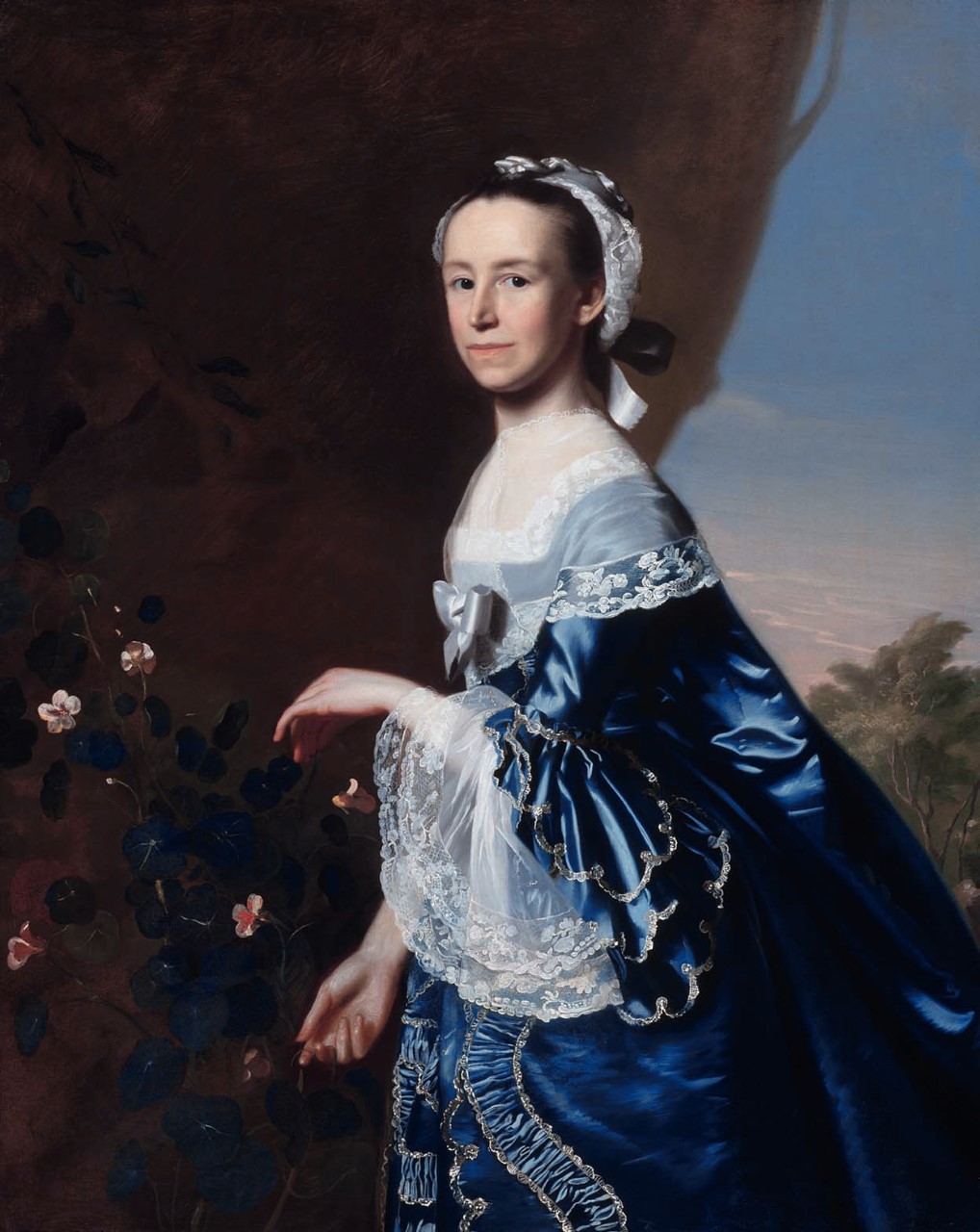
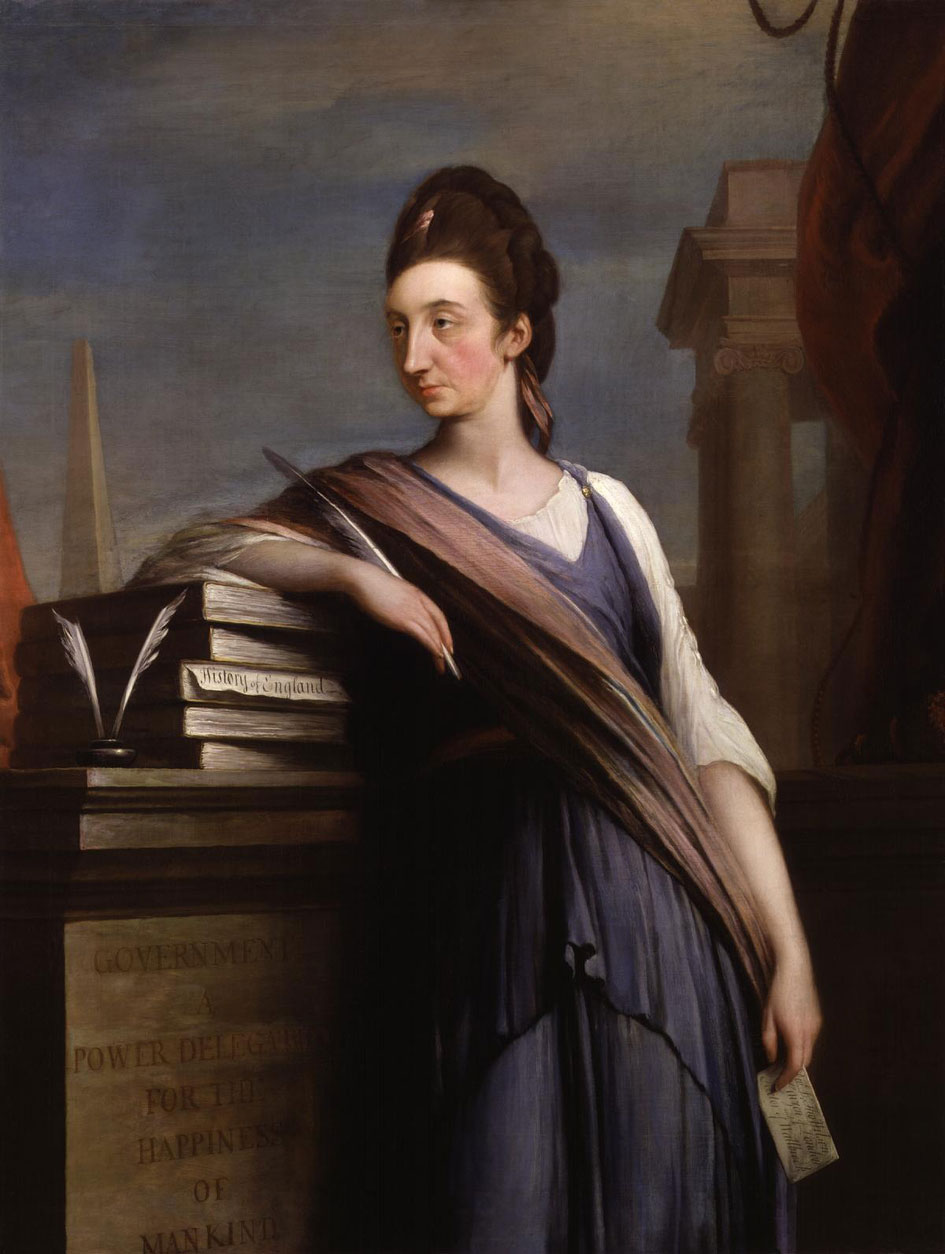
Mercy Otis Warren by John Singleton Copley

In July 1784, Catharine Macaulay arrived in America where she visited Mercy Otis Warren. One wonders if those around them appreciated the historic value of this meeting between two early female historians. Catharine in England and Mercy in America had each written multiple works responding to events of the day in an era when women were not expected to discuss politics let alone write about it. Finally meeting after years of letter writing, it must have been an exciting introduction.

Catharine was outspoken and published in her own name, while Mercy’s satirical plays had been published anonymously. Boldly writing to American patriots to offer her support, Catharine initially corresponded with Mercy’s brother, James Otis Jr, who Catharine wrote was ‘the great guardian of American liberty.’

When James suffered from mental instability following a beating by British customs agents, Mercy took over the correspondence. Both women made astute observations on the evolving political situation. In 1767, Macaulay prophetically wrote that a democratic republic was the ‘only form of government….capable of preserving dominion and freedom to the people.’ The following year, Mercy foresaw that when British soldiers arrived in Boston ‘The American War may be dated from the hostile parade of this day.’

Catharine watched the Revolution from a distance, supporting the American colonies and encouraging members of parliament to consider their position and negotiate rather than losing them altogether. The opposite course was taken with British troops sent to Boston in 1768 and the Coercive Acts passed in 1774. Mercy had an insider’s view of the Revolution. Her husband, another James, served as Paymaster-General, was appointed to the Continental Congress, and sat on the Continental Navy Board. While Mercy was a patriot, she worried about her five sons ‘who must buckle on the harness. And perhaps fall a sacrifice to the manes of liberty.’

Catharine Macauley

When Mercy met Catharine in person for the first time in 1784, she had lost no sons to war, though one had been severely wounded. Perhaps it was not until this meeting that the women realized how different they were. Through letters which focused on their shared political ideas and observations, they may have been convinced that they held more in common that they did.

Catharine arrived in America with a new, young husband. William Graham was twenty-one when he married the forty-seven-year-old Catharine six years earlier. Mercy, who frequently gave her sons moral lectures in her letters, would have been shocked by this relationship and the rumors that Catherine also had an affair with her brother-in-law. The values of simplicity and frugality held by Mercy were not as closely held by Catharine, who patronized the Sans Souci, a fashionable club that Mercy believed was the sort of establishment that would lead the new nation into a rapid decline.

Despite a falling out over their differences on morality, Mercy and Catharine salvaged their friendship before Catharine left America. They continued their correspondence, debating the strengths and weaknesses of the proposed US Constitution as fervently as the men in congress.

Mercy opposed the ratification of the Constitution and attempted to influence state leaders with a pamphlet titled Observations on the New Constitution, and on the Federal and State Conventions by a Columbian Patriot. She was concerned that individual rights were not established in the Constitution. While some states requested the addition of a Bill of Rights, none made their ratification dependent upon it. In a moment of frustration over the course the country was taking, Mercy wrote to Catharine in 1789, ‘we are too poor for Monarchy, too wise for Despotism, and too dissipated, selfish, and extravagant for Republicanism.’

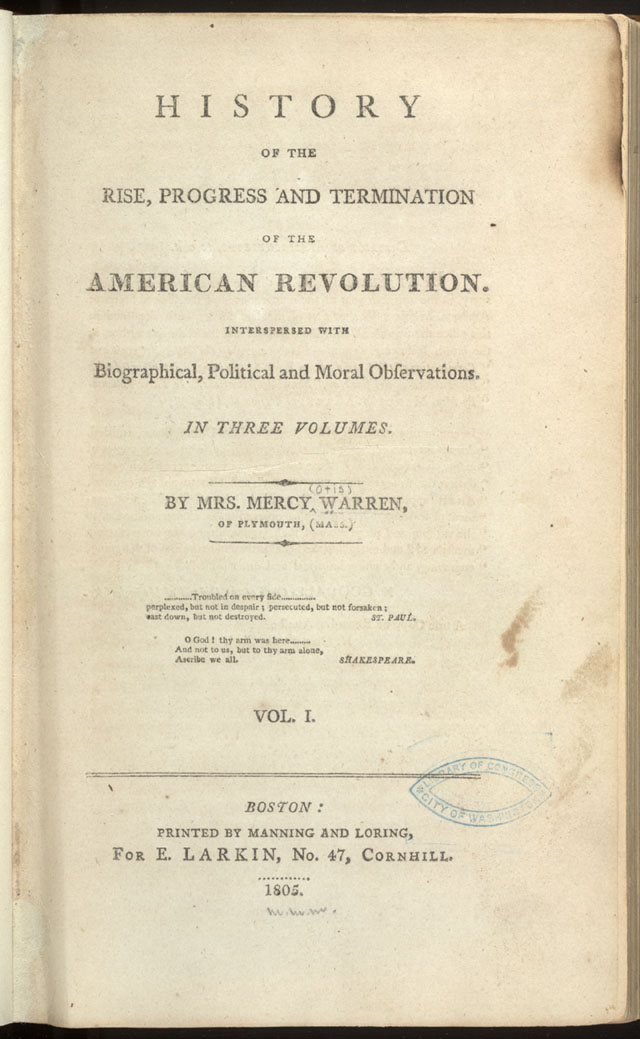
Mercy’s History

Catharine wrote a letter to George Washington, who she had met during her year in America, congratulating him ‘on the event which placed you at the head of the American government.’ She was also not afraid to share her opinions with him warning of growing inequality between two houses of legislature and the possibility of the ‘evils of Aristocracy’ which America had thus far been ‘exempt from.’

Mercy and Catharine, through their epistolatory relationship, discussed the French Revolution, the writing of Edmund Burke, women’s rights, and any number of topics that 18th century women were not meant to discuss. Their civil discourse came to an end with Catharine’s death on 22 June 1791. Mercy finally published her History of the Rise, Progress, and Termination of the American Revolution at age seventy-seven in 1805. She died on 19 October 1814 during the War of 1812, which solidified the independent status of the United States of America.

Sources:

The Muse of the Revolution: The Secret Pen of Mercy Otis Warren and the Founding of a Nation by Nancy Rubin Stuart https://www.mountvernon.org/library/digitalhistory/digital-encyclopedia/article/catharine-sawbridge-macaulay-graham-1731-1791/ https://allthingsliberty.com/2019/10/catharine-macaulay-her-final-gifts-to-america-and-france-1787-1791

To Buy the Book:

Women of the American Revolution by Samantha Wilcoxson is available now from Amazon and Pen and Sword in the UK. It is available for pre-order on Amazon in the US and is now available worldwide from Book Depository.

About the book:

Women of the American Revolution will explore the trials of war and daily life for women in the United States during the War for Independence. What challenges were caused by the division within communities as some stayed loyal to the king and others became patriots? How much choice did women have as their loyalties were assumed to be that of their husbands or fathers? The lives of women of the American Revolution will be examined through an intimate look at some significant women of the era.

Some names will be familiar, such as Martha Washington who travelled to winter camps to care for her husband and rally the troops or Abigail Adams who ran the family’s farms and raised children during John’s long absences. Elizabeth Schuyler Hamilton is popular for her role in Hamilton the musical, but did you know she was also an early activist working tirelessly for multiple social causes? Decide for yourself if the espionage of Agent 355 or the ride of Sybil Ludington are history or myth. Not all American women served the side of the revolutionaries. Peggy Shippen gambled on the loyalist side and paid severe consequences. From early historian Mercy Otis Warren to Dolley Madison, who defined what it means to be a US First Lady, women of the American Revolution strived to do more than they had previously thought possible during a time of hardship and civil war.

About the Author:

Samantha Wilcoxson is an author of historical fiction and administrator of a history blog. She has written four full-length novels, three novellas, and two middle grade chapter books. Topics of her writing have ranged from the Wars of the Roses to America’s Civil Rights Movement. Samantha is passionate about history and exploring the personal side of events. In her writing, she urges the reader to truly experience what it might have felt like to live through a moment in history. Samantha’s most recent novel is biographical fiction featuring Catherine Donohue, one of America’s “radium girls.” She is currently working on a novelization of the life of Nathan Hale, and features in Hauntings, an anthology published by the Historical Writers Forum.

*

My books:

Signed, dedicated copies of all my books are available, please get in touch by completing the contact me form.

Defenders of the Norman Crown: The Rise and Fall of the Warenne Earls of Surrey tells the fascinating story of the Warenne dynasty, of the successes and failures of one of the most powerful families in England, from its origins in Normandy, through the Conquest, Magna Carta, the wars and marriages that led to its ultimate demise in the reign of Edward III. Defenders of the Norman Crown: Rise and Fall of the Warenne Earls of Surrey is now available from Pen & Sword BooksAmazon in the UK and US, Bookshop.org and Book Depository.

1 family. 8 earls. 300 years of English history!

Also by Sharon Bennett Connolly:

Ladies of Magna Carta: Women of Influence in Thirteenth Century England looks into the relationships of the various noble families of the 13th century, and how they were affected by the Barons’ Wars, Magna Carta and its aftermath; the bonds that were formed and those that were broken. It is now available in paperback and hardback from Pen & Sword,  AmazonBookshop.org and from Book Depository worldwide.

Heroines of the Medieval World tells the stories of some of the most remarkable women from Medieval history, from Eleanor of Aquitaine to Julian of Norwich. Available now from Amberley Publishing and Amazon, Bookshop.org and Book Depository.

Silk and the Sword: The Women of the Norman Conquest traces the fortunes of the women who had a significant role to play in the momentous events of 1066.  Available now from Amazon,  Amberley Publishing, Bookshop.org and Book Depository.

*

You can be the first to read new articles by clicking the ‘Follow’ button, liking our Facebook page or joining me on Twitter and Instagram.

©2022 Sharon Bennett Connolly

Guest Post: Failed Spies: Hale and André by Samantha Wilcoxson

Today, is is a pleasure to welcome Samantha Wilcoxson to History … the Interesting Bits, with an article about the research into her latest novel, But One Life, set during the American Revolution.

Failed Spies: Hale and André

Espionage played an important role during the American Revolution, with both sides in the conflict experiencing some victories and tragic defeats in this area. British spymasters had the advantages of experience and expertise, while Americans benefited from working in their native land with a better idea of who could be trusted and who could not. Very early in the conflict, General George Washington stated his desperate need for knowledge of the enemy.

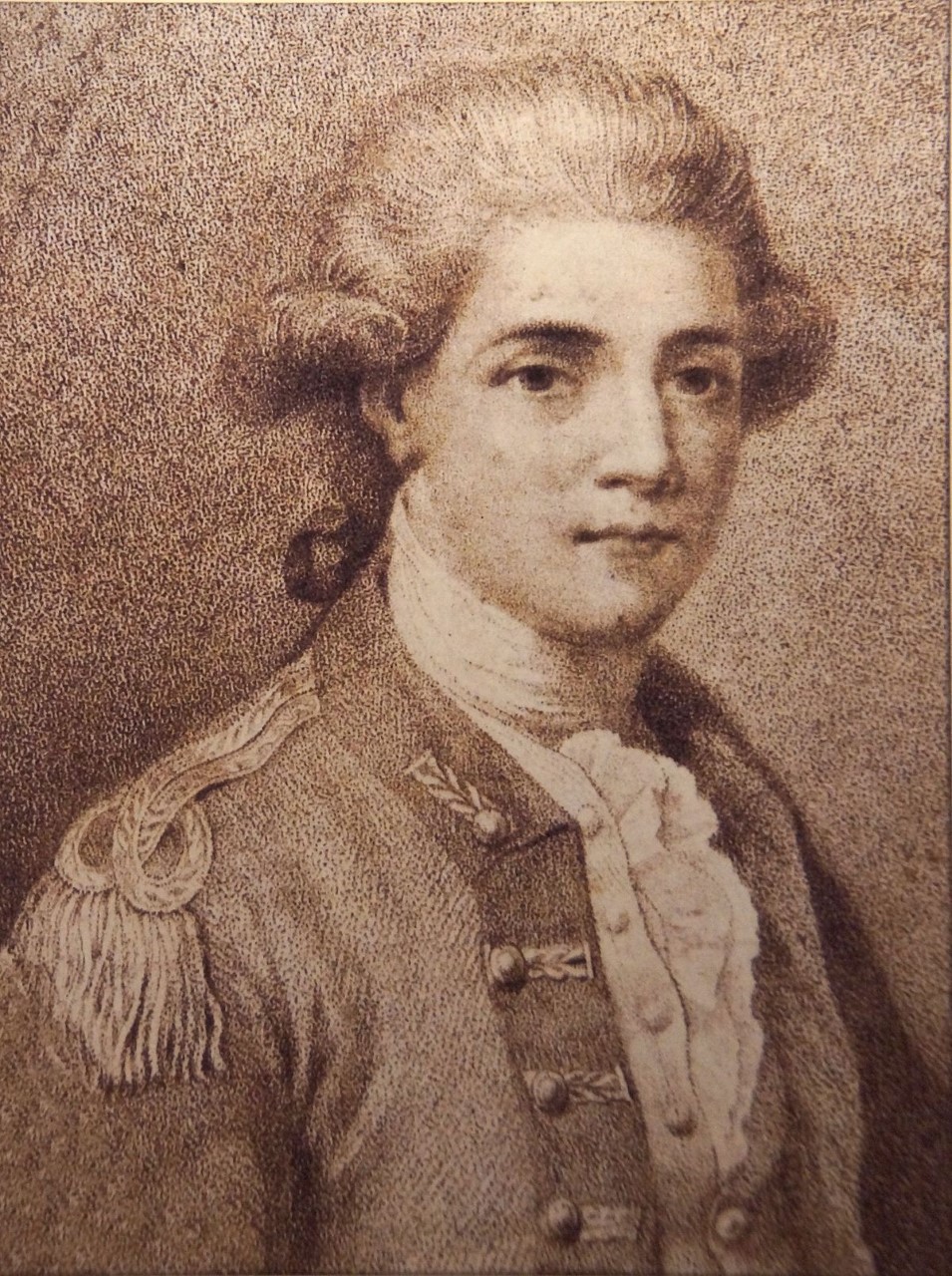
Major John André

‘I do most earnestly entreat you and General Clinton to exert yourselves to accomplish this most desirable end. Leave no stone unturned, nor do not stick at expense, to bring this to pass, as I was never more uneasy than on account of my want of knowledge on this score,’ Washington wrote to General William Heath seventeen days before Captain Nathan Hale was hanged as a rebel spy on 22 September 1776.

Today, Nathan Hale is remembered as the quintessential patriot. He was recently graduated from Yale when he joined the Continental Army with many other young men of his acquaintance. When he learned that a volunteer was needed to discover the information needed by Washington, he did not hesitate, despite the advice of many friends who insisted he was not well-suited to the mission.

It was not only because of his open, honest personality that they attempted to dissuade him. Spywork was considered a low, dishonorable duty. One friend, who tried to talk Hale out of his mission, reported later that Hale had insisted, ‘I wish to be useful, and every kind of service, necessary to the public good, becomes honorable by being necessary.’

Whether due to pride or excessive patriotism, Hale set forth upon a mission to Long Island, New York, his Yale diploma in hand to support his disguise as a Latin tutor. Hale had briefly served as a schoolmaster between graduation and army service, so his ruse should have come naturally to him. However, he was a trusting and friendly man, unlike the clever spy-catchers employed by the British. Within days of leaving his regiment, Hale was captured and executed, possibly with a paraphrase of Cato on his lips that his only regret was that he had but one life to give for his country. His body was left hanging for days to warn other would-be spies.

In the meantime, Major John André was making a name for himself in the British ranks as one who had connections and could get information. He was, like Hale, young, erudite, and eager to serve his country. André believed he had found the key to securing his future when he received correspondence from American General Benedict Arnold. The hero of Saratoga was willing to turn his coat for the right price.

Continental Commission for Nathan Hale

Arnold had married Peggy Shippen a month earlier, and she was friends, or possibly more, with André. Together, they convinced the general that the British would show him greater appreciation and compensation, and they were bound to win the war anyway. In the spring of 1780, Arnold informed André that he was expecting to gain command of West Point, an important series of forts that controlled traffic on the Hudson River. He was willing to turn it over to the British in return for cash and a position in British command.

On 21 September 1780, almost precisely four years after the death of Nathan Hale, John André was captured after a secret meeting with General Benedict Arnold to finalize their plan. He begged that Washington treat him as an officer rather than a spy.

‘Let me hope, Sir, that if aught in my character impresses you with esteem towards me, if aught in my misfortune marks me as the victim of policy and not resentment, I shall experience the operation of these feelings in your breast by being informed that I am not to die on a gibbet.’ Washington refused his request, and André was hanged on 2 October 1780.

Other American espionage efforts were more successful than Hale’s, most notably the Culper Spy Ring, managed by Hale’s good friend and Yale classmate, Benjamin Tallmadge. The names of those involved in this successful ring were not revealed until over a century after the war had ended. Tallmadge also played a part in John André’s capture. One can imagine he had a sense of justice served as Hale’s British counterpart shared his fate.

But One Life by Samantha Wilcoxson is now available from Amazon.

Sources:

Spies, Patriots, and Traitors: American Intelligence in the Revolutionary War by Kenneth A Daigler

Documentary Life of Nathan Hale by George D Seymour

The Life of John André: The Redcoat who Turned Benedict Arnold by DAB Ronald

To Buy the book:

But One Life is now available from Amazon

About the author:

Writer of historical fiction and sufferer of wanderlust, Samantha enjoys exploring the lives of historical figures through research and visiting historic places. Certain that no person is ever purely good or evil, she strives to reveal the deep emotions and motivations of historical figures, enabling readers to connect with them in a unique way. Samantha is an American writer with British roots and proud mother of three amazing young adults. She can frequently be found lakeside with a book in one hand and glass of wine in the other.

Samantha’s next project will take readers into the lives of women of the American Revolution – stay tuned!

*

My Books

Signed, dedicated copies of all my books are available, please get in touch by completing the contact me form.

Defenders of the Norman Crown: The Rise and Fall of the Warenne Earls of Surrey tells the fascinating story of the Warenne dynasty, of the successes and failures of one of the most powerful families in England, from its origins in Normandy, through the Conquest, Magna Carta, the wars and marriages that led to its ultimate demise in the reign of Edward III. Defenders of the Norman Crown: Rise and Fall of the Warenne Earls of Surrey is now available from Pen & Sword BooksAmazon in the UK and US, Bookshop.org and Book Depository.

1 family. 8 earls. 300 years of English history!

Also by Sharon Bennett Connolly:

Ladies of Magna Carta: Women of Influence in Thirteenth Century England looks into the relationships of the various noble families of the 13th century, and how they were affected by the Barons’ Wars, Magna Carta and its aftermath; the bonds that were formed and those that were broken. It is now available in paperback and hardback from Pen & Sword,  AmazonBookshop.org and from Book Depository worldwide.

Heroines of the Medieval World tells the stories of some of the most remarkable women from Medieval history, from Eleanor of Aquitaine to Julian of Norwich. Available now from Amberley Publishing and Amazon, Bookshop.org and Book Depository.

Silk and the Sword: The Women of the Norman Conquest traces the fortunes of the women who had a significant role to play in the momentous events of 1066.  Available now from Amazon,  Amberley Publishing, Bookshop.org and Book Depository.

*

You can be the first to read new articles by clicking the ‘Follow’ button, liking our Facebook page or joining me on Twitter and Instagram.

©2022 Sharon Bennett Connolly and Samantha Wilcoxson

Guest Post: Best Friends Turned Enemies by Jo Willet

Today it is a pleasure to welcome author Jo Willet to the blog. Jo has just released the biography The Pioneering Life of Mary Wortley Montagu: Scientist and Feminist. Lady Mary Wortley Montagu is remembered for her pioneering advocacy of smallpox inoculation – her 3 year-old daughter being the first westerner to be inoculated against the killer disease.

Mary Wortley Montagu and Alexander Pope – Best Friends turned Enemies

Lady Mary Wortley Montagu by Jonathan Richardson,

A friendship between a woman and a man which starts off as just that but develops into something altogether more dangerous  – despite #MeToo heightening our awareness, these kinds of problems have been with us since time immemorial.  The aristocrat Lady Mary Wortley Montagu and the poet Alexander Pope had just such a relationship. For both of them, it was one of the most powerful and ultimately the most damaging of their lives.

The two met in April 1715 in the London studio of a mutual friend, the artist Charles Jervas. Lady Mary was a 26-year old aristocrat, slight, dark and fiendishly intelligent.  Alexander Pope was a year older.  As a child he had suffered from tuberculosis of the bone, Potts Disease, which had stunted his growth and left him with a hunchback. He was only 1.2 metres in height, a bit smaller than Mary. Middle-class and Catholic, his background was very different from hers, but he had already found fame and fortune as a writer, which impressed her.  Both saw themselves as outsiders and used these feelings to express themselves with wit and irony. 

Mary and Pope were part of a group of friends all of whom liked to write and to share their writing with each other. Along with John Gay (who wrote The Beggars’ Opera) they began a shared project called The Town Eclogues.  The Latin poet Virgil had written six poems known as The Pastoral Eclogues, each linked to a day of the week, and the idea was to use these as an inspiration for contemporary, English poems, capturing a sense of life in London at the time. Pope described himself and Mary working together on writing one of the poems and Mary calling out: “No, Pope, no touching! For then, whatever is good for anything will pass for yours, and the rest for mine.”  Already there was an erotic undertone.

The poems were designed to be shown to friends, but they soon fell into the wrong hands.  One of Mary’s poems satirised two women desperate to serve at the court of Princess Caroline of Ansbach.  When the princess was shown a copy she was extremely displeased.  Then, even worse, the notorious Edmund Curll published an unauthorised version of the poems, which immediately became a best-seller.  None of them needed this kind of publicity. Furious, Pope arranged to meet Curll as if by chance at a drinking house. He introduced a powerful emetic into his drink, as revenge. We have no record of what Mary thought of this – but it probably felt good to have a friend protect her honour so powerfully.

Alexander Pope by Jonathan Richardson

Mary’s husband, Edward Wortley Montagu, was appointed British Ambassador to Turkey in 1716. Spirited as always, she decided to go with him.  Pope was distraught.  He pleaded with her to give him some of her ‘last Moments’ before leaving, as if she were not simply travelling but dying. That said, a journey such as this would be fraught with danger.  He gave her an album of their Town Eclogues bound in the finest red Turkey leatherand admitted: ‘indeed I find I begin to behave myself worse to you than to any other Woman, as I value you more.’  She left the album in London, said goodbye to Pope and set off on her travels.

It was expected that she would be away for five years.  In fact the trip only lasted half that time.  Pope wrote her a series of letters where it became increasingly obvious that his feelings for her had changed from friendship to something far more powerful.  The further away she travelled, the less inhibited he became. He and Mary were, he said, ‘like a couple who behave modestly when around other people, but who once by themselves can untie garters or take off Shifts without scruple.’  His physical limitations were something he was always acutely aware of.  He wrote to her imagining a place where women ‘best like the Ugliest fellows…and look upon Deformities as the Signatures of divine Favour.’

For her part, she was so excited by her adventures that she hardly seemed to notice what was going on.  But she was careful to transcribe copies of Pope’s letters into her journal. When she and her husband travelled across the battlefield of Petrograd, strewn with corpses, where the Austrians had been victorious over the Turks only a few months earlier, she wrote to Pope expressing her revulsion for war. She knew he would agree with her.


Alexander Pope declares his love for Lady Mary, who bursts into fits of laughter. William Powell Frith’s painting of 1852. 

Pope’s poems of the time were clearly inspired by his feelings for her. Eloisa and Abelard describes an impossible love which remains strong however many obstacles it encounters.  The poem is full of images of eyes, like Mary’s own.  He sent a copy, with a letter clarifying the source of his inspiration, out to Mary in Constantinople. She wrote ‘mine’ in the margin but at the same time dispatched a letter to their mutual friend, William Congreve, asking why he allowed Pope to go on making these ‘Lampoons’.

When the Wortley Montagus started their journey back to England in 1718, Pope offered to travel out to Italy to accompany Mary home. This was a conceit on his part. He would never be well enough to be able to travel. As she neared England, Mary became increasingly nervous as to how to handle things. When she landed in Dover a letter awaited her, expressing Pope’s longing to see her ‘Oriental self’. With it was a poem he had written about a pair of lovers from Stanton Harcourt, in Oxfordshire, who had both been struck by lightning and died simultaneously. The intensity of his feelings was clear.

Mary decided to respond by lightening the tone.  She sent Pope a satirical, cynical poem in response. If the two lovers had lived, she wrote, their future marriage might well have turned out to be a disappointment: ‘Now they are happy in their doom,/For P. has wrote upon their Tomb.’  Pope got the message.  Rather than rushing to greet Mary on her return to London, he held back.

By now Pope was living in Twickenham, outside London, and soon the Wortley Montagus rented a house nearby.  For about ten years the two friends rubbed along.  People noted that Pope tended to resort to over-elaborate puns whenever he was in Lady Mary’s presence but they had lots of mutual friends and enjoyed each other’s company.  Pope even commissioned a portrait of her,  which would hang in the ‘best room’ of his Twickenham house for the rest of his life. Then some time in the 1720s the two fell out spectacularly.  We do not know why.

Mary’s family always believed that Pope one day made the mistake of expressing his feelings for her and that she instinctively broke into gales of laughter at what he said.  An anonymous play, Mr Taste, the Poetical Fop, written a few years later, dramatised exactly this.  Another reason given for the rupture was that she asked him to collaborate with her on a satirical poem and he made it clear he disagreed with her attitude to the subject matter. Yet another suggestion is that she was the author of some cruel verses satirising his relationship with his nurse, who had just died.  Yet another was a rumour, spread by Horace Walpole, that she had borrowed some bedsheets from Pope and returned them unlaundered.

Mary’s friend, Lord John Hervey

Whatever the reason, the result was an unedifying, escalating row. In 1728 a published poem of Pope’s satirised Wortley as a sober yeoman living in Yorkshire whose wife owned a hen (Lady Mary) which attracted lots of cocks.  The innuendo was intentional.  Another longer poem of Pope’s published the same year, The Dunciad, described Lady Mary as a ‘sage dame, experienced in her trade’  – a prostitute.  Mary had been involved in bringing the process of inoculation against the smallpox back with her from Turkey.  Pope played on this by linking smallpox to the word ‘poxed’, implying Mary had syphilis. He also insinuated that she had behaved badly towards someone during the South Sea Bubble Crisis.  Her friends knew that Lady Mary had got into difficulty over some investments a French friend of hers had asked her to make on his behalf. But they would also have known she had behaved honourably throughout.

As an aristocratic woman, Mary risked undermining her reputation if she published anything in response.  So to begin with she simply wrote satirical poems about the situation, which were to be passed around among her friends.  In one the Goddess Dulness set up her headquarters in the famous shell grotto in Pope’s Twickenham garden.  Various more scurrilous verses about the breakdown of the relationship began circulating as well.  It is hard to ascertain whether either of them was the author of any of these. Pope wrote to a mutual friend of theirs claiming to have seen one of these poems in Lady Mary’s handwriting.  She denied she had written it and suggested instead that Pope had indulged in a bit of forgery to blacken her name.

Mary appealed to mutual friends for help – first to Lord Peterborough, whose letter in response read as if Pope had ghost-written it, and then to Sir Robert Walpole, the prime minister.  He asked Pope to remove a particularly nasty couplet about Mary. Pope refused, replying that it was Mary who had libelled him, not the other way round.

Mary then made the strategic mistake of collaborating with another friend of theirs, Lord John Hervey, in writing a satirical poem about Pope:  Verses Addressed to the Imitator of the First Satire of the Second Book of Horace.  Hervey was well-placed within society at the time, a close friend of the queen’s, an aristocrat like Mary and bisexual. The poem is vicious in its portrayal of Pope and ends by cursing him, predicting that he will be destined to wander the earth forever, like Cain, the first murderer in the Bible, ‘with the Emblem of thy crooked Mind/Marked on they Back.’ Somehow – and it was unclear how – the poem was published, with the claim that it was written ‘By a Lady’, with no mention of Hervey.

The gloves were off.  Pope upped his verse attacks on her, all published so everyone who wanted could read them.  And he ensured that even nastier, lewder verses of his were published anonymously.  Again and again he elided smallpox with the pox, or syphilis.  Though she normally charged ten per cent, he wrote, men could currently have Mary’s body for free. She was physically disgusting, ‘at her toilet’s greasy task’. Her dress sense was questionable, in ‘diamonds with her dirty smock’. He harboured ‘a Suspicion that she intended to ravish him.’

Mary could not retaliate with the same force.  She wrote an unpublished poem describing him as a ‘Toad-eater’, but most of their friends and acquaintances sided with Pope not with Mary.  Her friends Lord and Lady Oxford described Mary as having to check with them beforehand whenever she dined at their house that Pope would not be there. In the 1730s Mary went to live abroad, well away from ‘the wicked wasp of Twickenham’, as she called him.  When Pope died in 1744 she wrote home anxiously to be sent a copy of his will, just in case there were anything damaging there.  What a relief it was, she wrote to her husband, that now there was no-one in the whole world who wished them ill.

It feels a familiar story, when relationships turn sour, that the woman comes off worst.  Pope’s satirising of Mary has a distinctly misogynistic feel to it, reading his words today.  For her part, Mary was unable to defend herself satisfactorily.  Her only crime was to invoke feelings in him he could not control and then to reject his advances.

*

All images courtesy of Wikimedia Commons

I would like to express my thanks to Jo Willet for such a fabulous article, and to wish Jo my hearty congratulations on the release of The Pioneering Life of Mary Wortley Montagu: Scientist and Feminist.

To buy the book:

The Pioneering Life of Mary Wortley Montagu: Scientist and Feminist is now available from Pen & Sword Publishing and Amazon.

About the author:

Lavinya of the The Black Curriculum

Jo has been an award-winning TV drama and comedy producer all her working life.  Her credits range from the recent MANHUNT, starring Martin Clunes, to BIRDS OF A FEATHER. Her most relevant productions for this project include BRIEF ENCOUNTERS in 2016 (a fictionalised story of the first women who ran Anne Summers’ parties in the 1980s), THE MAKING OF A LADY in 2012 (an adaption of the Frances Hodgson Burnett novel The Making of a Marchioness), BERTIE AND ELIZABETH in 2002 (telling the story of the Queen Mother’s marriage) and the BAFTA-and-RTS-Award-Winning A RATHER ENGLISH MARRIAGE in 1998 (starring Albert Finney, Tom Courtenay and Joanna Lumley, adapted from the novel of the same name by Angela Lambert). She studied English at Queens College Cambridge and has an MA from Birkbeck in Arts Policy. She is married with a daughter, a son and a stepson. She lives in London and Dorset. www.devoniaroad.co.uk

You can find Jo at:

Twitter:  @Willettjo

Instagram: jowillett_biographer

Website:  www.devoniaroad.co.uk

*

My books

Coming 31st May:

Defenders of the Norman Crown: The Rise and Fall of the Warenne Earls of Surrey tells the fascinating story of the Warenne dynasty, of the successes and failures of one of the most powerful families in England, from its origins in Normandy, through the Conquest, Magna Carta, the wars and marriages that led to its ultimate demise in the reign of Edward III.

Defenders of the Norman Crown: Rise and Fall of the Warenne Earls of Surrey will be released in the UK on 31 May and in the US on 6 August. And it is now available for pre-order from Pen & Sword BooksAmazon in the UK and US and Book Depository.

Also by Sharon Bennett Connolly:

Ladies of Magna Carta: Women of Influence in Thirteenth Century England looks into the relationships of the various noble families of the 13th century, and how they were affected by the Barons’ Wars, Magna Carta and its aftermath; the bonds that were formed and those that were broken. It is now available from Pen & Sword,  Amazon and from Book Depository worldwide.

Heroines of the Medieval World tells the stories of some of the most remarkable women from Medieval history, from Eleanor of Aquitaine to Julian of Norwich. Available now from Amberley Publishing and Amazon and Book Depository.

Silk and the Sword: The Women of the Norman Conquest traces the fortunes of the women who had a significant role to play in the momentous events of 1066.  Available now from Amazon,  Amberley Publishing, Book Depository.

*

You can be the first to read new articles by clicking the ‘Follow’ button, liking our Facebook page or joining me on Twitter and Instagram.

©2021 Sharon Bennett Connolly and Jo Willet

Book Corner: Reading Round-up 1

I am well behind on the list of book reviews I still have to write up, so I though I would do a couple of articles that include mini-reviews of several books that I have read and enjoyed over the last few months, to clear the backlog and give you some fabulous ideas if you’re looking for that next read.

A Hidden History of the Tower of London by John Paul Davis

Famed as the ultimate penalty for traitors, heretics and royalty alike, being sent to the Tower is known to have been experienced by no less than 8,000 unfortunate souls. Many of those who were imprisoned in the Tower never returned to civilisation and those who did, often did so without their head! It is hardly surprising that the Tower has earned itself a reputation among the most infamous buildings on the planet. There have, of course, been other towers. Practically every castle ever built has consisted of at least one; indeed, even by the late 14th century, the Tower proudly boasted no less than 21. Yet even as early as the 1100s, the effect that the first Tower had on the psyche of the local population was considerable. The sight of the dark four-pointed citadel – at the time the largest building in London – as it appeared against the backdrop of the expanding city gave rise to many legends, ranging from the exact circumstances of its creation to what went on within its strong walls. In ten centuries what once consisted of a solitary keep has developed into a complex castle around which the history of England has continuously evolved. So revered has it become that legend has it that should the Tower fall, so would the kingdom. Beginning with the early tales surrounding its creation, this book investigates the private life of an English icon. Concentrating on the Tower’s developing role throughout the centuries, not in terms of its physical expansion into a site of unique architectural majesty or many purposes but through the eyes of those who experienced its darker side, it pieces together the, often seldom-told, human story and how the fates of many of those who stayed within its walls contributed to its lasting effect on England’s – and later the UK’s – destiny. From ruthless traitors to unjustly killed Jesuits, vanished treasures to disappeared princes and jaded wives to star-crossed lovers, this book provides a raw and at times unsettling insight into its unsolved mysteries and the lot of its unfortunate victims, thus explaining how this once typical castle came to be the place we will always remember as THE TOWER.

What a wonderful read!

Packed to the brim with the best stories from the Tower, and almost 1,000 years of history – some you will know and some you won’t. John Paul Davis tells the remarkable story of the Tower of London through the lives of the people who have resided under its roofs – some of them most unfortunate indeed! We hear the stories of those fortunate people who escaped – and the not-so-fortunate who died in the attempt. John Paul Davis examines every aspect of the Tower of London, its role as a royal fortress, prison and place of execution; and the national events in which it played apart, such as the Peasants’ Revolt and the executions of 2 of Henry VIII’s queens. Written in 23 chapters, the story of the Tower as a prison is told from its foundation in 1066 to the present day.

With these incredible and often heart breaking stories, John Paul Davis clearly demonstrates how the fortress acquired its sinister reputation.

A Hidden History of the Tower of London is a thoroughly enjoyable read, and impossible to put down.

Lost Heirs of the Medieval Crown by J.F. Andrews

When William the Conqueror died in 1087 he left the throne of England to William Rufus … his second son. The result was an immediate war as Rufus’s elder brother Robert fought to gain the crown he saw as rightfully his; this conflict marked the start of 400 years of bloody disputes as the English monarchy’s line of hereditary succession was bent, twisted and finally broken when the last Plantagenet king, Richard III, fell at Bosworth in 1485.

The Anglo-Norman and Plantagenet dynasties were renowned for their internecine strife, and in Lost Heirs we will unearth the hidden stories of fratricidal brothers, usurping cousins and murderous uncles; the many kings – and the occasional queen – who should have been but never were. History is written by the winners, but every game of thrones has its losers too, and their fascinating stories bring richness and depth to what is a colourful period of history. King John would not have gained the crown had he not murdered his young nephew, who was in line to become England’s first King Arthur; Henry V would never have been at Agincourt had his father not seized the throne by usurping and killing his cousin; and as the rival houses of York and Lancaster fought bloodily over the crown during the Wars of the Roses, life suddenly became very dangerous indeed for a young boy named Edmund.

With Lost Heirs of the Medieval Crown, author JF Andrews provides a fascinating study of the also-rans and almost-made-its of medieval history; those children of the kings of England who died before they could claim their birth-right, or were passed over due to the dynastic squabbles of the Norman and Plantagenet dynasties that ruled England from the Norman Conquest in 1066 to the advent of the Tudor age.

From the battles of Robert Curthose, eldest son of William the Conqueror, to the tragic lives of the Yorkist heirs, Edward V, Edward of Middleham and Edward Earl of Warwick, Lost Heirs of the Medieval Crown is a thoroughly engaging read, examining the lives of the heirs who were unable to claim their birthright, imprisoned for their royal blood, died before their time, or died in the attempt to claim the throne. Each individual story is brought into one volume, and demonstrates the struggle for power and supremacy in medieval England.

Beautifully written and well researched, it is an engaging read.

Decoding the Bayeux Tapestry by Arthur C. Wright

For the first time, a scholar reveals the meaning of the marginal images on the Bayeux Tapestry, unlocking a completely new meaning of the work.
 
The story of the Norman Conquest and the Battle of Hastings as shown in the Bayeux Tapestry is arguably the most widely-known in the panoply of English history, and over the last 200 years there have been hundreds of books on the Tapestry seeking to analyze its meanings. Yet, there is one aspect of the embroidery that has been virtually ignored or dismissed as unimportant by historians—the details in the margins.
 
The fables shown in the margins are neither just part of a decorative ribbon, nor are they discontinuous. They follow on in sequence. When this is understood, it becomes clear that they must relate to the action shown on the body of the Tapestry. After careful examination, the purpose of these images is to amplify, elaborate, or explain the main story.
 
In this groundbreaking study, Arthur Wright reveals the significance of the images in the margins. Now it is possible to see the “whole” story as never before, enabling a more complete picture of the Bayeux Tapestry to be constructed. Wright reexamines many of the scenes in the main body of the work, showing that a number of the basic assumptions, so often taught as facts, have been based on nothing more than reasoned conjecture.
 
It might be thought that after so much has been written about the Bayeux Tapestry there was nothing more to be said, but Decoding the Bayeux Tapestry shows how much there is still to be learned.

Decoding the Bayeux Tapestry: The Secrets of History’s Most Famous Embroidery Hidden in Plain Sight by Arthur C. Wright is a wonderful, engaging study of this most famous of embroideries, retelling the Norman Invasion in stunning, colourful needlework. Arthur C. Wright studies every aspect of the Tapestry, from the beasts in the margins to the story being played out in dramatic detail in the main part of the Tapestry. The author demonstrates how the images in the tapestry, even the animals and mystical creatures in the margin, serve to tell the story of the tapestry and the Norman Conquest.

An entertaining read and thoughtful study of the most famous of tapestries Decoding the Bayeux Tapestry is an illuminating work, beautifully illustrated along the way with images from the famous needlework.

Sex and Sexuality in Stuart Britain by Andrea Zuvich

Peek beneath the bedsheets of Stuart Britain in this frank, informative, and captivating look at the sexual lives of the peoples of the British Isles between 1603 and 1714. Popular Stuart historian Andrea Zuvich, The Seventeenth Century Lady , explores our ancestors’ ingenious, surprising, bizarre, and often entertaining beliefs and solutions to the challenges associated with maintaining a healthy sex life, along with the prevailing attitudes towards male and female sexual behaviour. The author sheds light not only on the saucy love lives of the Royal Stuarts, but also on the dark underbelly of the Stuart era with histories of prostitution, sexual violence, infanticide, and sexual deviance. What was considered sexually attractive in Stuart Britain? At which ages would people be old enough for marriage? What were the penalties for adultery, incest, and fornication? How did Stuart-era peoples deal with infertility, sexually-transmitted illnesses, and child mortality? Find out the answers to these questions – and more – as fashion, food, science, art, medicine, magic, literature, love, politics, faith and superstition of the day are all examined, leaving the reader with a new regard for the ingenuity and character of our seventeenth and early eighteenth-century ancestors.

Sex and Sexuality in Stuart Britain by Andrea Zuvich is a wonderful study of the bedroom exploits of the Stuart dynasty of the seventeenth century. Andrea Zuvich examines all aspects of Stuart sexual life, from attitudes to rape and pornography, to the notions of love and marriage. Zuvich also looks at the lives of the Stuart monarchs, examining the rumours around them, the various mistress and lovers and the perceptions they gave to their people and to history. This is a truly fascinating study of a part of life that is important to all of us – and necessary for our continued existence – but so rarely talked about. Sex and Sexuality in Stuart Britain is so much more than a study of sexual practices in Stuart Britain, it also analyses the effects of child mortality, the dangers of childbirth. It also looks at the seedier side of society, such as infanticide and sexually transmitted diseases.

Sex and Sexuality in Stuart Britain is fascinating! It is a book that needed to be written and provides a wonderful contrast to the usual books on Stuart Britain, which concentrate on the Civil Wars, rather than the lives, loves and desires of the people. Andrea Zuvich has written a marvelous study of Stuart attitudes towards sex and sexuality, leaving no stone unturned to give the reader a comprehensive view of Stuart life, including the legal, social and personal aspects and implications.

The Peasants Revolting Lives by Terry Deary

Today we are aware of how the rich and privileged have lived in the past because historians write about them endlessly. The poor have largely been ignored and, as a result, their contributions to our modern world are harder to unearth. Skilled raconteur TERRY DEARY takes us back through the centuries with a poignant but humorous look at how life treated the common folk who scratched out a living at the very bottom of society. Their world was one of foul food, terrible toilets, danger, disease and death the last, usually premature. Discover the stories of the teacher turned child-catcher who rounded up local waifs and strays and put them to work, and the thousands of children who descended into the hazardous depths to dig for coal. Read all about the agricultural workers who escaped the Black Death only to be thwarted by greedy landowners. And would you believe the one about the man who betrothed his 7-year-old daughter to a Holy Roman Emperor, or even the brothel that was run by a bishop? On the flip side, learn how cash-strapped citizens used animal droppings for house building and as a cure for baldness; how sparrow s brains were incorporated into aphrodisiacal brews; and how mixing tea with dried elder leaves could turn an extra profit. And of the milestones that brought some meaning to ordinary lives, here are the trials and tribulations of courtship and marriage; the ruthless terrors of the sporting arena; and the harsh disciplines of education all helping to alleviate the daily grind. The Peasants Revolting Lives celebrates those who have endured against the odds. From medieval miseries to the idiosyncrasies of being a twenty-first-century peasant, tragedy and comedy sit side by side in these tales of survival and endurance in the face of hardship.

Terry Deary’s The Peasants’ Revolting Lives is a fun and fascinating read for all the family. Whenever a Terry Deary book arrives on the doorstep, there is an inevitable squabble between myself and my son as to who should read it first – I tend to lose!

With stories that are often amusing, sometimes gruesome and all true, Terry Deary examines every aspect of the life of the peasant – throughout history – from work and religion, to sport, entertainment and education. The book is packed full of facts, each story or anecdote intended to inform and entertain – and they do!

The Peasants’ Revolting Lives is a wonderful reading experience for adult and child alike. The stories are so engaging and interesting that you don’t even realise you are learning about the trials and hardships of life as a peasant down the centuries. It is a must-read for any history lover.

All these books are available from Pen & Sword, with 30% off throughout December.

*

My Books

Ladies of Magna Carta: Women of Influence in Thirteenth Century England looks into the relationships of the various noble families of the 13th century, and how they were affected by the Barons’ Wars, Magna Carta and its aftermath; the bonds that were formed and those that were broken. It is now available from Pen & Sword,  Amazon and from Book Depository worldwide.

Also by Sharon Bennett Connolly:

Silk and the Sword: The Women of the Norman Conquest traces the fortunes of the women who had a significant role to play in the momentous events of 1066.  Available now from Amazon,  Amberley Publishing, Book Depository.

Heroines of the Medieval World tells the stories of some of the most remarkable women from Medieval history, from Eleanor of Aquitaine to Julian of Norwich. Available now from Amberley Publishing and Amazon and Book Depository.

*

You can be the first to read new articles by clicking the ‘Follow’ button, liking our Facebook page or joining me on Twitter and Instagram.

©2020 Sharon Bennett Connolly

Guest Post: Life in Miniature: A History of Dolls’ Houses by Nicola Lisle

It is a pleasure to welcome to History … the Interesting Bits today, Nicola Lisle, author of Life in Miniature: A History of Dolls’ Houses as part of her Blog Tour with Pen & Sword. A history of dolls’ houses is a little different to my usual type of post, but reading Life in Miniature brought back some very happy childhood memories of my sister and I playing with our dolls’ house in our grandparents’ attic. So I was very interested in finding out more of their history and origins. Nicola very kindly answered a few of my most pressing questions.

Dolls’ house at Charles Dickens’ House, Doughty Street, London

Hi Nicola, congratulations on the release of Life in Miniature and thank you for stopping by to chat.

1. When I heard about your book, I immediately thought of the dolls’ house my sister and I had as children – we used to play with it for hours. How long have you had a fascination for dolls’ houses? Did you have one as a child?

I did have a dolls’ house as a child, and my sister and I played with it a lot. It was apparently made for us by a distant relative, who also made wooden furniture for it. It’s all quite basic, but I love it because it’s unique and it was part of my childhood. We used to have some tiny dolls for it, and we also used to decorate it at Christmas. We had a Christmas tree and had to cut away a square of carpet to fit it in! Sadly, the dolls and Christmas decorations have been lost, but the original furniture and other bits and pieces are still there. As we grew up we lost interest in the dolls’ house and it was in my parents’ loft for many years gathering dust! It wasn’t until I started writing that I became interested in dolls’ houses again, and it was quite by chance. I subscribed to Writing Magazine and Writers’ News – and still do! – and in one issue there was a piece about Dolls House and Miniature Scene magazine, which was open to submissions from freelance writers. It caught my attention, and I got in touch with some ideas. My first piece for the magazine was about the Museum of Childhood at Sudbury Hall in Derbyshire, and it was published in 2004. I carried on writing for the magazine for many years, and it ignited a real passion in me for dolls’ houses. Eventually I rescued my childhood dolls’ house from my mum’s house, and I’m hoping at some point to find the time to give it a bit of TLC! It’s not in bad condition, but it could definitely do with a bit of a makeover!

2. The thing with dolls’ houses is that they are not just for children, are they? My mum has one!

Dolls’ house at Tolsey Museum, Burford

Dolls’ houses are definitely not just for children. I think a lot of adults who had them as children still treasure them, and collecting vintage and antique dolls’ houses is also popular. For children, they are great for stimulating the imagination, but for adults I think it’s more about appreciating the sheer delight of miniatures and the craftsmanship that went into creating them.

3. I think the most famous dolls’ house has to be Queen Mary’s in Windsor Castle, isn’t it? What is so special about it?

Reproduction of miniature of Conan Doyle’s ‘How Watson Learned the Trick’, written for Queen Mary’s Dolls’ House

Yes, I think Queen Mary’s dolls’ house is probably the most famous. It’s special because it captures a slice of 1920s England in such exquisite detail, from the furniture and soft furnishings right down to the food and drink that were popular at the time. It attracted international interest when it first appeared, and it was a showcase to the world, a display of some of the very finest British talent. I think it also restored some pride and optimism in the country during the immediate post-war years. The house and garden were designed by Sir Edwin Lutyens and Gertrude Jekyll, and among its highlights are miniature books, music scores and paintings by popular writers, composers and artists of the day. Many of the books contained original stories written exclusively for the dolls’ house. Two of these, Fougasse’s J. Smith and Conan Doyle’s How Watson Learned the Trick, have been reproduced as miniature replicas with booklets containing the stories in full-size print. Another, Vita Sackville-West’s A Note of Explanation – a story about a mischievous spirit who inhabits the dolls’ house – was also reproduced in full size. I treated myself to all three when I was researching my book, and they are now treasured items on my bookshelves!

4. How long have dolls’ houses been around, Nicola? I always associate them with the Victorians, but were they around earlier? Are dolls’ houses an English creation, or did they come from the continent?

Nicola’s childhood dolls’ house

Dolls’ houses have been around since at least the 16th century and originated in Germany, where they were known as baby houses. The first known dolls’ house was made for the Duke of Bavaria in 1557, and it was a miniature version of his ducal palace. By the 17th century, baby houses had become popular in Germany, particularly in Nuremberg. The idea caught on in Holland towards the end of the 17th century, but instead of baby houses the

Dutch favoured cabinet houses, which were grand, elaborately-carved cabinets containing exquisitely furnished miniature rooms. The earliest dolls’ houses in England appeared in the late 17th century and were similar to the Dutch cabinet houses. By the early 18th century they were beginning to look more like houses than cabinets, and they were often modelled on the great country houses and created by estate carpenters. It wasn’t until the Victorian era that they became regarded as toys for children, and mass production towards the end of the 19th century made them much more widely accessible.

5. And what was their original purpose, were they always aimed at children.

The earliest baby houses, cabinet houses and dolls’ houses were primarily display pieces, and they were very much the preserve of royalty and the aristocracy – each one was a statement of the owner’s wealth and social status. They also had an educational role, often being used to instruct young ladies and servants in efficient household management and domestic skills.

6. I am fascinated by dolls’ houses and have to admit that the first thing I did on getting your book was look at the pictures. The houses are beautiful and the furniture inside is so detailed and intricate, do you have a favourite?

Reproduction of miniature of J. Smith by Fougasse, written for Queen Mary’s Dolls’ House

I saw so many gorgeous dolls’ houses while writing and researching my book that it’s almost impossible to pick a favourite. I think all dolls’ houses have their own particular charm, from the grand, ornate ones to the very simplest, and often it’s the stories behind them that make them special. For this reason, I think the dolls’ house at Uppark in West Sussex is one of my favourites, partly because it’s one of the earliest surviving dolls’ houses from the early 18th century, reflecting the Palladian-style architecture that was popular at the time, and partly because it has a connection with H.G. Wells, and I always love literary connections! Wells’s mother was the housekeeper at Uppark during the late 19th century, and he drew on his childhood memories of Uppark in his novel Tono-Bungay, in which he refers to the “great dolls’ house on the nursery landing”.

Another with a literary connection is the dolls’ house at Charles Dickens’ House at Doughty Street in London. The house doesn’t actually have a connection with Dickens himself, but it was modelled on the Doughty Street house by dolls’ house maker Christopher Cole for his book Make Your Own Dolls’ House, which was published in 1976. It is a simplified version of the real thing, rather than an exact replica, but it is very similar, especially the outside, and it was one I particularly enjoyed going to see! It’s not on public display, but it can be viewed by appointment.

I also have special fondness for the dolls’ house at Overbeck’s in Devon. It was created during the 1980s by a lady called Mabel Hill, a very talented, self-taught craftswoman who used scraps of leftover material and other household odds and ends to make the furniture and soft furnishings. What’s particularly lovely is that Overbeck’s was used as a convalescent home for wounded soldiers during the First World War, and one of the activities they were encouraged to do as therapy was to make dolls’ house furniture. Although there’s no direct link between that and Mabel Hill’s house, it does feel as though there is a spiritual connection.

Others closer to home, in Oxfordshire, include the Regency-style dolls’ house at the Tolsey Museum in Burford, which was created during the 1930s by members of the local community and reflects the town’s rural industries (another fascination of mine!), and the Palladian-style house at Greys Court, near Henley, which was created by a local lady, Patricia Mackenzie, during the 1970s. Like Mabel Hill, she used old materials and household objects to create the house and its contents. She was inspired by the Carlisle Collection of Miniature Rooms, which she used to visit when it was displayed at Greys Court during the 1970s. The collection is now housed at Nunnington Hall in Yorkshire, and is another favourite of mine, with a fascinating history – as I said, there are so many favourites!

7. I am guessing that some of these dolls’ houses have fascinating histories – is there one that has a story that particularly caught your attention?

Interior of Dolls’ house at Charles Dickens’ House

Something I became fascinated with while researching the book was finding out about famous collectors, particularly Vivien Greene, wife of novelist Graham Greene. Her collection was once housed in a museum in Oxford, not far from where I live, so there’s a bit of a connection there! Tracking down Vivien Greene’s dolls’ houses almost became a project of its own – sadly, she decided to auction her collection during the late 1990s when her eyesight was deteriorating and most of it finished up in private hands. But one that is on public display is Whiteway at Saltram, a National Trust house in Devon, and its Victorian-style interior is exquisite. I particularly loved the library with its miniature books, all made from wood, and the dining room with its plush red furnishings. The provenance of the house is something of a mystery, and I do love a good mystery! There’s another Vivien Greene house on display at Ilkley Toy Museum in Yorkshire, which dates from the late Victorian era and used to belong to a lady in Abingdon, Oxfordshire – again, not far from where I live. At some point it was converted into an hotel and named The Original Swan after a pub in Cowley, just outside Oxford. It has lost some of its original contents, but it is in good condition and you can still see the mahogany bar and its wooden barrels and glass bottles.

8. What made you want to write a book on dolls’ houses?

The Original Swan at Ilkley Toy Museum

It was writing for Dolls House and Miniature Scene magazine for so many years that made me think it would be interesting to write a book on the subject. I had already accumulated a lot of information and pictures that I could use as the basis for a book, and I had a lot of fun building on that, visiting various museums and stately homes that had dolls’ houses on display and gathering up lots more fascinating facts about these wonderful miniatures. I enjoyed researching and writing the book so much – it was a real labour of love!

9. What is your next writing project?

I’ve been working on some possible new book ideas, but at the moment I’m very busy with other writing work. I have several article deadlines coming up, and I am also a tutor on four distance-learning courses with The Writers Bureau, so I’m having to work on my book pitches in between everything else! Hopefully, though, at some point I’ll get them finished and sent off!

10. Where can people find you? Do you have a website or blog? Are you on social media?

I’m on Twitter – you can find me at @NicolaLisle1. I did set up a blog a while ago but haven’t actually done anything with it for some time, so it’s due for a major overhaul – that’s probably going to be a Christmas holiday job!

Thank you, Nicola, for such a lovely chat!

Life in Miniature: A History of Dolls’ Houses is available from Amazon or direct from Pen & Sword and would make a perfect Christmas present.

About the author:

Nicola Lisle is a freelance journalist and author specialising in history and the arts. She has written numerous articles for family history magazines, including Who Do You Think You Are?, Your Family History and Discover Your Ancestors, and was a regular contributor to Dolls House and Miniature Scene magazine for many years. She is the author of Tracing Your Family History Made Easy (Which? Books, 2011) and Tracing Your Oxfordshire Ancestors (Pen & Sword, 2018).

*

My Books

Ladies of Magna Carta: Women of Influence in Thirteenth Century England  looks into the relationships of the various noble families of the 13th century, and how they were affected by the Barons’ Wars, Magna Carta and its aftermath; the bonds that were formed and those that were broken. It is now available from Pen & SwordAmazon and from Book Depository worldwide.

Also by Sharon Bennett Connolly:

Silk and the Sword: The Women of the Norman Conquest traces the fortunes of the women who had a significant role to play in the momentous events of 1066.  Available now from Amazon,  Amberley Publishing, Book Depository.

Heroines of the Medieval World tells the stories of some of the most remarkable women from Medieval history, from Eleanor of Aquitaine to Julian of Norwich. Available now from Amberley Publishing and Amazon and Book Depository.

*

You can be the first to read new articles by clicking the ‘Follow’ button, liking our Facebook page or joining me on Twitter and Instagram.

©2020 Sharon Bennett Connolly & Nicola Lisle