Author Spotlight: Scott Mariani

Do excuse me if a get a little giddy and fan girly with this one! One of my favourite thriller writers is about to release the first book in a new series – in historical fiction!

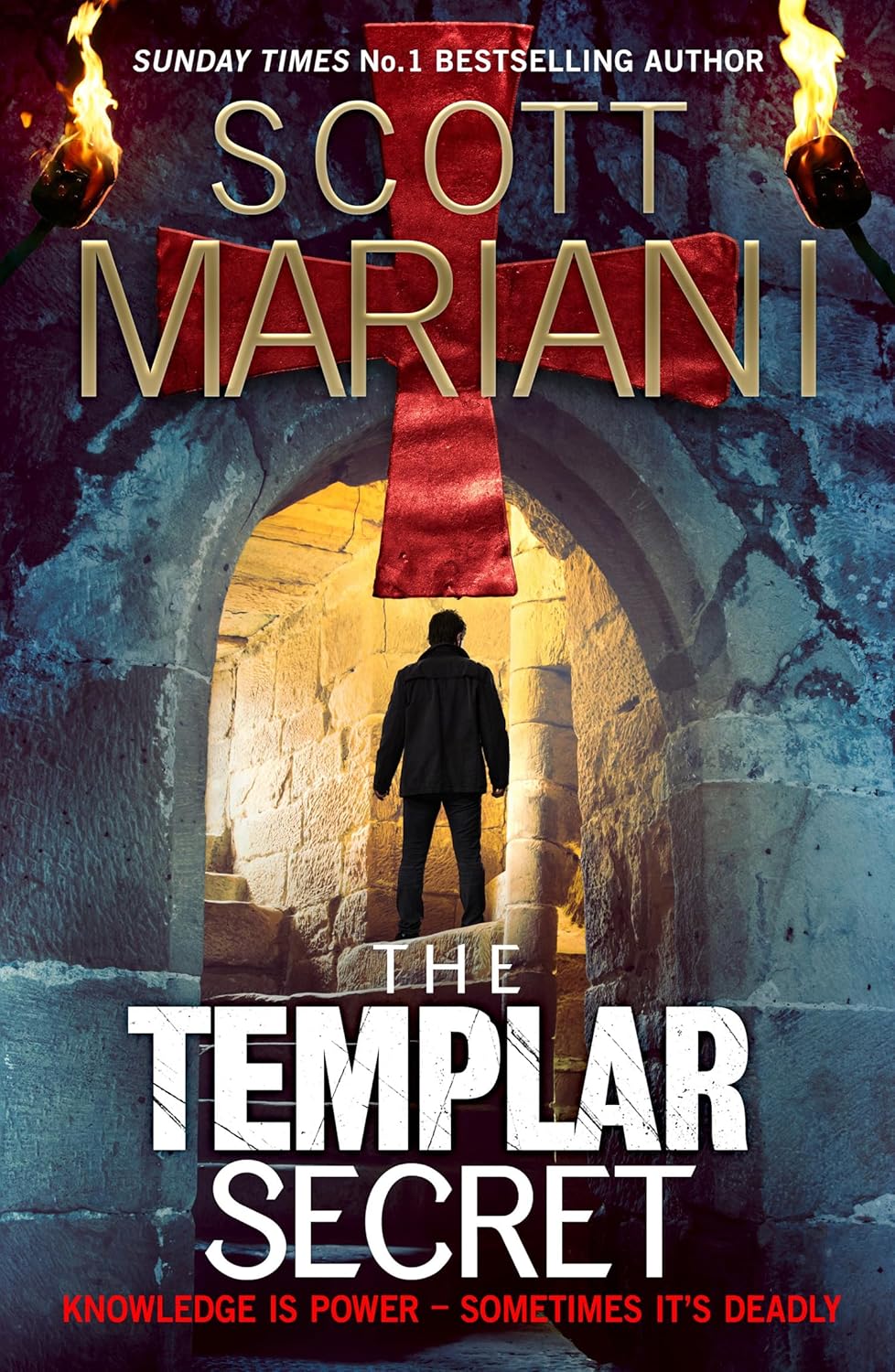
I absolutely love Scott’s Ben Hope books and got the last in the series, The Templar Secret, for Christmas. They are modern day thrillers with a historical twist – and are great fun to read.

And Scott agreed to do an interview with me!

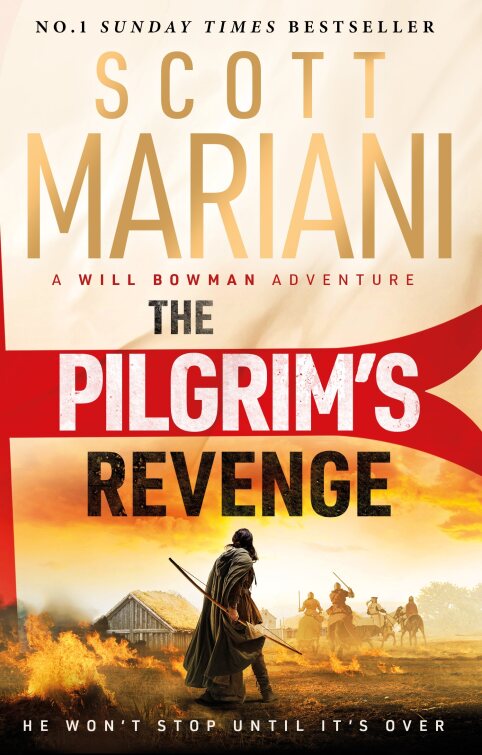
I also have an advance copy of the new novel, The Pilgrim’s Revenge, so expect a review shortly. And Scott will be joining Derek and I for a chat in an upcoming episode of A Slice of Medieval. But, in the meantime, Scott and I had a chat….

Hi Scott, thank you for joining me, how did you start your writing career?

It came about both gradually, and suddenly. I’d always been interested in stories – as a kid I used to mess around with drawing and writing, and sometimes combining the two to create my own stupid little cartoon strips which were usually pretty unoriginal rehashes of things like King Kong or Jaws or Tintin, as well as historical themes based on Ivanhoe or Chevalier Ardent – I was into all sorts of things at that young age! Aged about eight, I think, I wrote a sci-fi horror story in which the entire male population of the human race was wiped out in a war against giant robot dinosaur creatures; but we won in the end because ‘the women bred’ (that’s a quote) and repopulated the army so that humans could defeat the monsters. It was not a promising start to my career. Later, in my early twenties, I dabbled with various ideas and projects, one or two of which were completed but have never seen the light of day – for which the world can be thankful, as they weren’t very good either.

Then one day after moving to Wales – this is in about 2006 – while out walking the dogs in the fields the idea for a character called Ben Hope popped into my head more or less fully-formed. What emerged from that was a novel called The Fulcanelli Manuscript, which ended up in the hands of the world’s worst London literary agent and being published by a hardback-only library publisher who printed 400 copies and had no intention of ever doing more. That could have been, and nearly was, the end for me. The book lay dead and buried for a year until I (not the literary agent) managed to gain interest from Avon, then a new imprint of HarperCollins UK, for the paperback rights which, thank God, the library publisher hadn’t been interested in grabbing. Suddenly – overnight really – the Ben Hope series was rebooted with Avon offering a deal for four books. The Fulcanelli Manuscript became retitled The Alchemist’s Secret . . . and that’s how it all began. I still can’t believe the series ended up thirty books long!

What is the best thing about being a writer?

Assuming that you’re able to drag your way up to a reasonable level in the industry: working from home, setting your own hours, not having to commute anywhere, seldom needing to travel unless you’re into doing a lot of physical research, being about as free and independent as it’s possible to get whilst still remaining gainfully employed . . . and getting paid for indulging the interests and passions that you would be preoccupied with even if they were just a hobby. It suits me perfectly.

What is the worst thing about being a writer?

When you’re starting out, the competition is crushing – especially if you had a bad start as I did. Unless you’re fortunate to have strong backing from a good agent, you may feel you’re embarking on an impossible quest that will only end in heartbreak or madness: I know, I suffered from both at various times! It can also be a horribly cruel and unjust industry. So many talented writers get crushed under the wheels of the machine and never get anywhere, while success very often doesn’t depend on the quality of the work. While most editors are lovely folks, you may be unlucky enough to have to work with people who have great control and leverage over what you do, and don’t necessarily have your best interests at heart. I could talk a lot about the high number of truly decent writers I’ve known who have fallen by the wayside, some very sad stories among them. It is a tough world.

You have been writing modern thrillers with a historical twist for years, what made you take the leap into full-on historical fiction?

I’ve always loved history. I wish I had had the sense when I was seventeen to want to study it at university! And it was a fascinating, highly educational and satisfying experience to write all those Ben Hope novels, each featuring its own historical backstory or mystery to a greater or lesser degree. The downside was that, because I’ve always produced two books a year, every six months I would have to uproot myself from whatever fascinating historical world I’d been so immersed in, clear it all from my head and plunge straight into the next. One minute you’re delving into ancient Babylon or Egypt, the next you’re off to the Chinese Cultural Revolution or the American Civil War. All wonderful stuff, of course, but it’s like being a perpetual globetrotter, always on the move, and never being able to stay in one location for long even though you might have fallen in love with the place and wanted to live there forever. Then one day while I was working on Ben Hope 28, The Tudor Deception, and deep into all the intrigues of medieval England, I thought: ‘You know what, I really love being here reading and writing about all this medieval stuff. What if I could just keep on doing that, and remain in one setting rather than having to jump about all the time?’ So, to cut a long story short, that’s what I’ve done. It wasn’t as simple or easy a decision as I’m perhaps making it sound – and of course the end of the Ben Hope series has upset a lot of fans – but nonetheless I’m really happy that I took the plunge.

I’m going to miss Ben Hope…

What were your main challenges when you switched from thrillers (Ben Hope was excellent, by the way) to historical fiction?
Because you’re going much deeper into just one time setting, it becomes all the more important to get the details as correct and authentic as possible: hence the research process is that bit more intensive. The good news for me is that I love research! I’ve accrued such a library of books on my favourite areas of history that when I get stuck in, they pile up so high around me on the desk that it’s like being inside a canyon. Because I’ve picked a medieval time / place setting that’s so well chronicled (the events of the Third Crusade), and because I want to stay as faithful to the true facts and timelines as possible, my plotline is already laid out for me to some extent by the historical sources. That’s been an unusual experience for someone who’s used to having to make it all up themselves! But although it might make life easier in some regards, it also creates the new challenge having to insert, or you might say superimpose, a fictitious main protagonist into the mix, through whose eyes we experience those well-known events in a fresh and dramatic way. Having to blending the worlds of fiction and non-fiction together like that, so that the (non-historian) reader hopefully can’t see the joins, is a whole new kind of fun. I’ve enjoyed being able to create scenes where my fictitious character is in dialogue with famous real-life figures like King Richard I and Eleanor of Aquitaine.

Tell us about The Pilgrim’s Revenge. What attracted you to writing about the Crusades?

The Pilgrim’s Revenge is the first book in my new series introducing the character of Will the Bowman, or just Will Bowman. The story begins in the year 1190, when Will, a young Englishman, has his happy married life torn apart by marauding soldiers who raid his home, and he’s forced to join up with King Richard’s expedition to the Holy Land as a means of catching up with the villains who did it. Actually we don’t quite reach the Holy Land in Book 1 – that’s for the next. But I hope there’s plenty there to excite and interest the reader. I adore the medieval period – grew up in a historic town, wept as a child when taken to the spot in Rouen where they burned poor Jeanne d’Arc, later read medieval French at University, learned to play with great big swords and shoot a bow – but the whole crusades period has a particular fascination for me. And what could be more cool than the most iconic crusade of them all, the conquest that pitted Richard the Lionheart against the great Saladin? Will Bowman and his comrades get embroiled right in the thick of the drama, and it’s a ride! At any rate it has been for me. I hope readers will love it too . . .

How are you going to cope with the lack of guns? Will the body count be lower?

Are you kidding? We don’t need guns. We have bows and arrows that can pierce chain mail armour from a long way off; we have double-edged swords and scimitars that’ll whip off arms, legs and heads; we have great big siege catapults that can take down massive stone ramparts from two hundred paces; we have thundering great charges of heavy cavalry bearing down on the enemy with lances; we have crossbows and axes and flails and daggers and all sorts of goodies to play with! And did I mention Greek Fire? It’s like The Iliad out there . . . No question, the body count and general level of mayhem and destruction are considerably higher than anything in the Ben Hope books . . . not that that makes it better, of course!

Phew! That’s a relief!

What comes first, the story or the research?
When I was constantly hunting around for fresh material for the Ben Hope books, it was more a question of finding the basic idea first. That could come, and did come, from all kinds of possible places as I was (and am) constantly reading. The basic idea for The Mozart Conspiracy came about from an old book I’d had for years about Mozart’s last year and just happened to revisit one day. The Babylon Idol popped into my head while driving and listening to a Louis Armstrong gospel number about King Nebuchadnezzar’s golden idol. The Forgotten Holocaust, dealing with the Irish famine of 1847, was a subject I’d wanted to do for years and nearly did as a historical stand-alone because I’d no idea at first how to make it work as a Ben Hope book. But in general, that initial concept could come from anywhere. Then you’d have to delve a little deeper to see if your idea had any legs or not – sometimes it did, sometimes it didn’t and you’d need to go and find something else. From there, the story and the research would generally develop in parallel. There was no particular system, but I’m pleased to say it worked pretty well. Now with the Will Bowman series, the case is slightly altered: the historical backdrop dictates a lot about the trajectory of the storyline, and the depth of research required fleshes out what’s going on while also providing inspiration for new story and character angles. If you can get all those stars lined up for you, then it all happens in an organic kind of way that feels very natural.

Have you got the historical fiction bug now? What comes next?

This is going to be the shortest answer. Yes, for sure! What comes next? More Will Bowman books. I’ve got four to do to begin with, but I would like to do more. A lot more. Mustn’t jinx it by saying too much, though.

Are there any other eras – or writing genres – you would like to write about?

As I think anyone who’s read much of my backlist knows already, my historical interests are pretty wide-ranging. Who can say if something else would come up in the future? Never say never: and that goes for genres too. Right now, however, I’m very content to stay exactly where I am. I no longer have to worry about where I’m going next: I’m free to trace the story arc of Will Bowman for as long as I’m able to. What better way to create a truly immersive experience for readers interested in our rich and exciting past?

The Pilgrim’s Revenge will be available from 24 April 2025

Pre-order The Pilgrim’s Revenge.

About Scott Mariani:

Scott Mariani is the No.1 Sunday Times bestselling author of the multi-million-selling Ben Hope thrillers. From 2025 he is launching into a new historical adventure series featuring medieval English hero Will Bowman, who is forced from his home to join King Richard ‘the Lionheart’ on the Third Crusade and rises up to become a knight. Book 1,THE PILGRIM’S REVENGE, is available from April 2025 and is published by Hodder & Stoughton.

Scott lives and writes in west Wales, UK. You can find out more about his work by visiting his official website.

*

My books

Signed, dedicated copies of all my books are available through my online store.

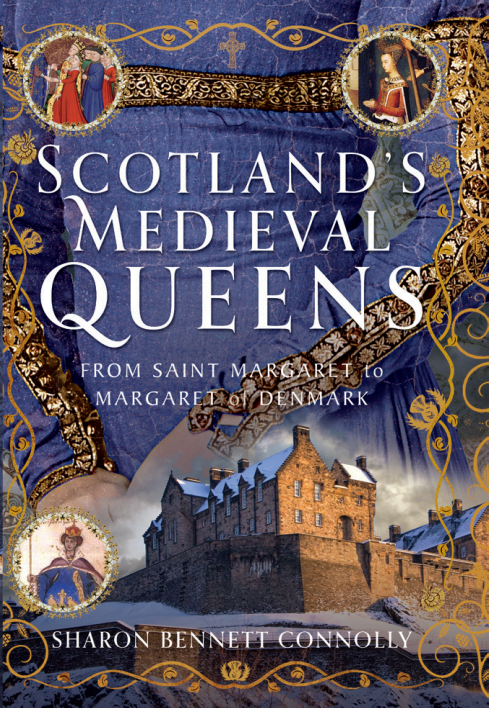
Out now: Scotland’s Medieval Queens

Scotland’s history is dramatic, violent and bloody. Being England’s northern neighbour has never been easy. Scotland’s queens have had to deal with war, murder, imprisonment, political rivalries and open betrayal. They have loved and lost, raised kings and queens, ruled and died for Scotland. From St Margaret, who became one of the patron saints of Scotland, to Elizabeth de Burgh and the dramatic story of the Scottish Wars of Independence, to the love story and tragedy of Joan Beaufort, to Margaret of Denmark and the dawn of the Renaissance, Scotland’s Medieval Queens have seen it all. This is the story of Scotland through their eyes.

Available now from Amazon and Pen and Sword Books

Also by Sharon Bennett Connolly:

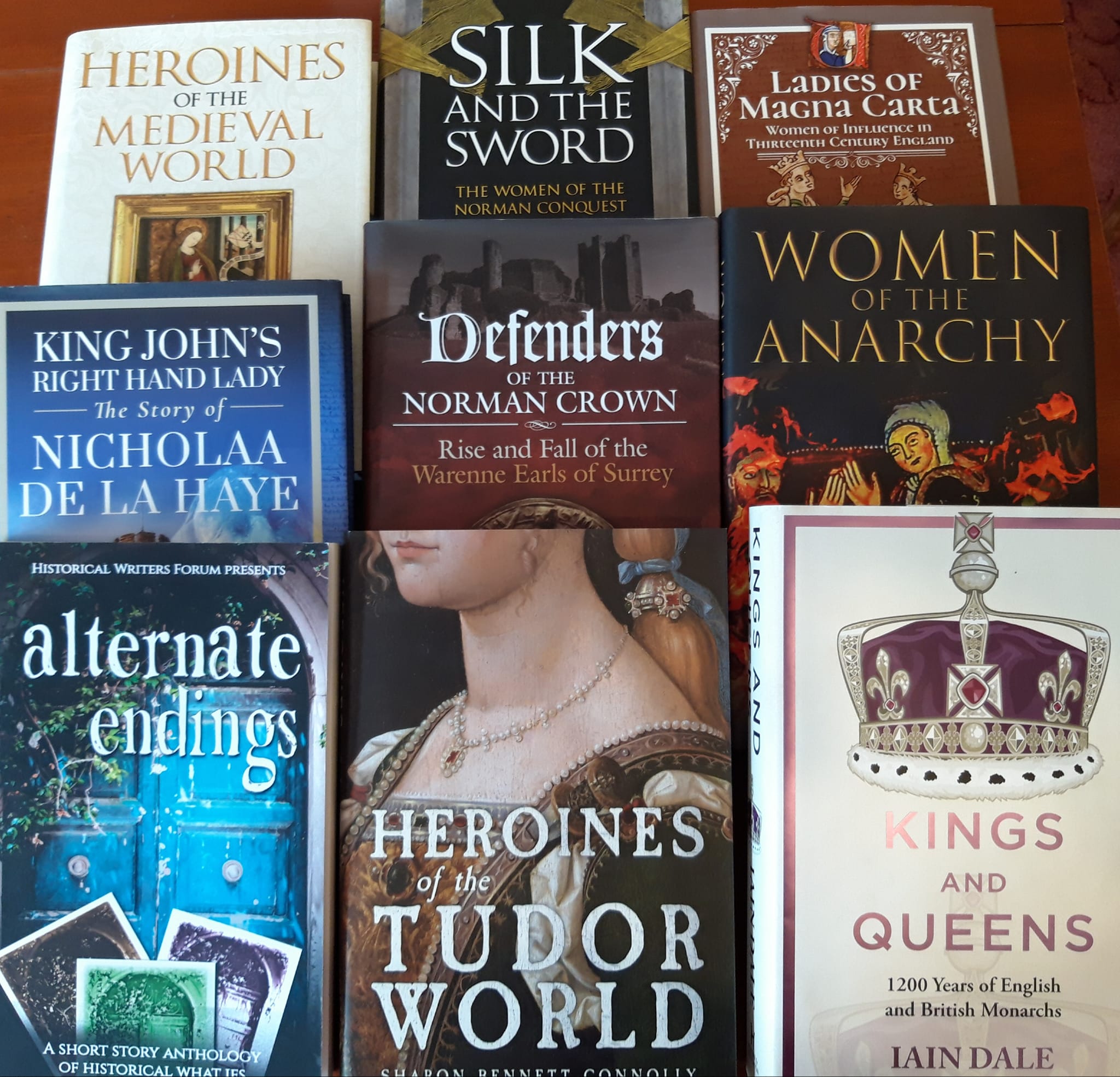
Heroines of the Tudor World tells the stories of the most remarkable women from European history in the time of the Tudor dynasty, 1485-1603. These are the women who ruled, the women who founded dynasties, the women who fought for religious freedom, their families and love. Heroines of the Tudor World is now available for pre-order from Amberley Publishing and Amazon UK. Women of the Anarchy demonstrates how Empress Matilda and Matilda of Boulogne, unable to wield a sword themselves, were prime movers in this time of conflict and lawlessness. It shows how their strengths, weaknesses, and personal ambitions swung the fortunes of war one way – and then the other. Available from Bookshop.orgAmberley Publishing and Amazon UKKing John’s Right-Hand Lady: The Story of Nicholaa de la Haye is the story of a truly remarkable lady, the hereditary constable of Lincoln Castle and the first woman in England to be appointed sheriff in her own right. Available from all good bookshops Pen & Sword Booksbookshop.org and Amazon

Defenders of the Norman Crown: The Rise and Fall of the Warenne Earls of Surrey tells the fascinating story of the Warenne dynasty, from its origins in Normandy, through the Conquest, Magna Carta, the wars and marriages that led to its ultimate demise in the reign of Edward III. Available from Pen & Sword BooksAmazon in the UK and US, and Bookshop.orgLadies of Magna Carta: Women of Influence in Thirteenth Century England looks into the relationships of the various noble families of the 13th century, and how they were affected by the Barons’ Wars, Magna Carta and its aftermath; the bonds that were formed and those that were broken. It is now available in paperback and hardback from Pen & SwordAmazon, and Bookshop.orgHeroines of the Medieval World tells the stories of some of the most remarkable women from Medieval history, from Eleanor of Aquitaine to Julian of Norwich. Available now from Amberley Publishing and Amazon, and Bookshop.orgSilk and the Sword: The Women of the Norman Conquest traces the fortunes of the women who had a significant role to play in the momentous events of 1066. Available now from Amazon,  Amberley Publishing, and Bookshop.org.

Alternate Endings: An anthology of historical fiction short stories including Long Live the King… which is my take what might have happened had King John not died in October 1216. Available in paperback and kindle from Amazon.

Podcast:

Have a listen to the A Slice of Medieval podcast, which I co-host with Historical fiction novelist Derek Birks. Derek and I welcome guests, such as Bernard Cornwell and Michael Jecks, and discuss a wide range of topics in medieval history, from significant events to the personalities involved. Every episode is also now available on YouTube.

*

Don’t forget! Signed and dedicated copies of all my books are available through my online store.

For forthcoming online and in-person talks, please check out my Events Page.

You can be the first to read new articles by clicking the ‘Follow’ button, liking our Facebook page or joining me on TwitterThreadsBluesky and Instagram.

*

©2025 Sharon Bennett Connolly, FRHistS and Scott Mariani
Guest Post: The Book and the Duchess by Katarzyna Ogrodnik-Fujcik

Last month, we lost one of the great historians of medieval history, Martin Aurell. A few years ago, I had the honour of translating one of Martin’s essays on Eleanor of Aquitaine for a compilation on England’s medieval queens. He had a wonderful insight into Eleanor and I would have loved to meet him. So, when my dear friend Kasia asked if I would publish her tribute to Martin, I jumped at the chance.

The Book and the Duchess: Eleanor of Aquitaine and her Artistic Legacy….

In memory of Professor Martin Aurell

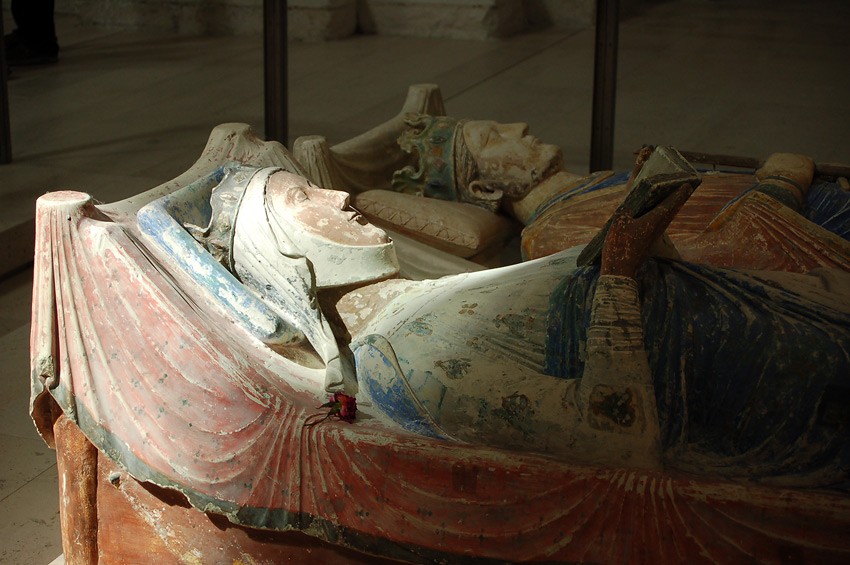
Eleanor of Aquitaine’s tomb effigy, Fontevraud Abbey

Richard of Devizes called her femina incomparabilis “a woman without compare” and in many respects she was. Queen of both France and England respectively, duchess of a great duchy in her own right, rebel wife who openly went to war against her husband, Eleanor of Aquitaine needs no introduction. And yet very little is actually known about one of the most famous women in history. Thus we should not find it surprising that all the myths and misconceptions about her got so firmly established in the popular consciousness. One of them is Eleanor as a very active artistic patron. However, if we raise the question, her artistic legacy is rather modest. There are only few surviving objects that can be safely associated with her.

First and foremost, there is her tomb effigy at Fontevraud Abbey, which is the earliest funerary monument that we know of to depict a woman with a book. Also, as it seems, it is the only one to depict a man or a woman in the act of reading. The book Eleanor is holding is a restoration. The original had been destroyed during the Revolution. It is probably devotional work…. book of prayers, psalter or gospel book.

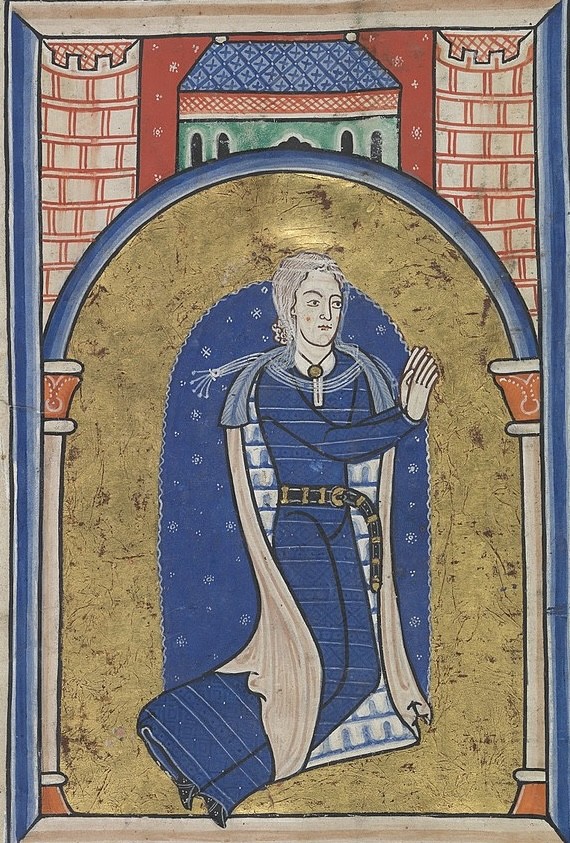
A noble lady kneeling in a psalter of Eleanor of Aquitaine

The effigy is one of the few instances when Eleanor can be safely identified as an artistic patron. She most probably commissioned it herself. Also the effigies of Henry II and Richard I the Lionheart (the one of Isabelle of Angouleme was commissioned more than forty years later) which were created at the same time (as stylistic similarities indicate). Made from tuffeau limestone from the Loire valley they successfully stood the test of time. despite different vagaries of history. What makes us believe Eleanor was a commissioner? First and foremost, Eleanor’s presence at Fontevraud Abbey at the time. After Richard’s death in 1199 she left the walls of the abbey, but stayed in Anjou, defending it for John. Later she retreated to the abbey again and spent her last years there. The effigies must have been created between the death of Richard and her own death in 1204 (also the year Anjou fell to the Capetians).

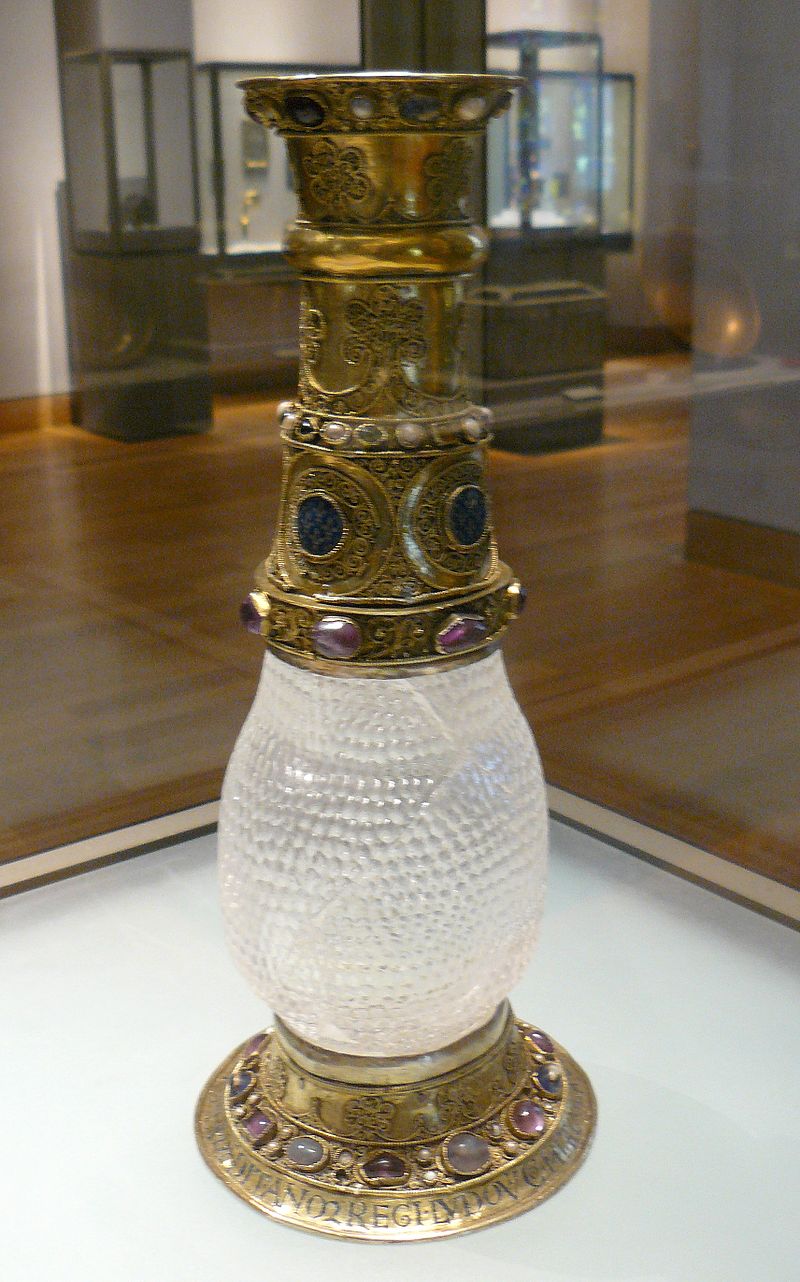
Another object connected with Eleanor is the afore-mentioned Eleanor’s vase, which was a wedding gift she presented to her first husband Louis VII of France. It had stayed in her family since the reign of her famous/infamous grandfather, William IX the Troubadour, who had brought it with him from Spain. Louis gave it to Abbot Suger as a gift for St Denis. Suger added all the ornamentation. It was a classic crystal rock vessel when Eleanor presented it to Louis.

Another work of art associated with Eleanor is the so-called Fecamp Psalter (or Psalter of Eleanor of Aquitaine), one of the oldest manuscripts preserved at the Dutch Royal Library at the Hague. With 27 full-page miniatures, 36 calendar miniatures depicting the Labours of the Months, and 11 historiated initials illustrating the major divisions of the psalter it is exquisitely beautiful. By the end of the 11th century Fécamp was a leading centre for manuscript copying in Normandy and in the late 12th century (c. 1180) this beautifully illuminated psalter was probably commissioned by Eleanor herself. In 2016 student Jesus Rodriguez Veijo identified the figure on the Beatus page of the psalter with Eleanor, relying in part on the scholarship relating to the Radegonde mural. You can view the manuscript on the official site of Koninklijke Bibliotheek, Hague.

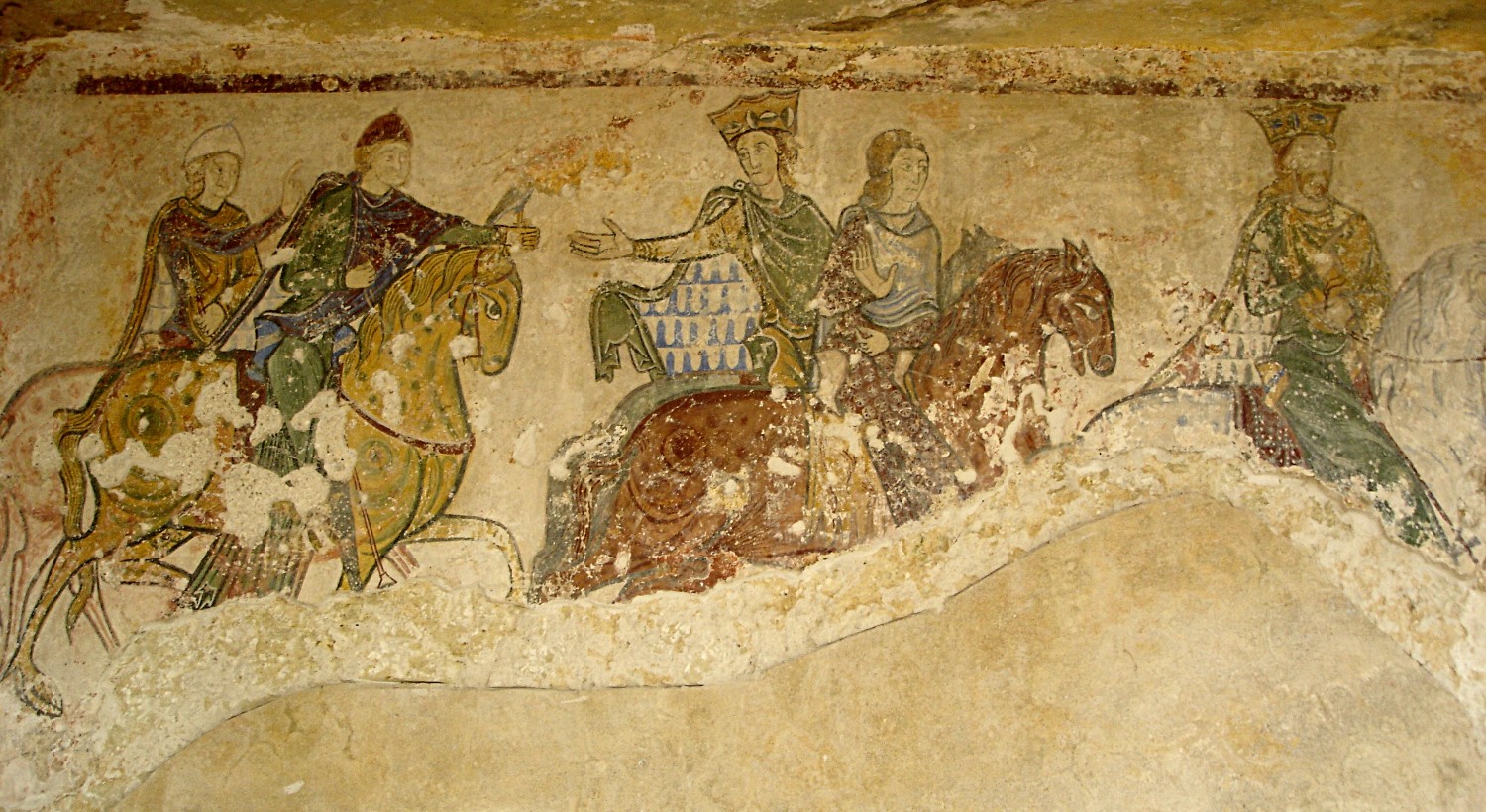
An image of the chase in a fresco in the chapel of St Radegonde

The so-called Poitiers Window is one of the few contemporary depictions of Eleanor. She, Henry and their four sons are shown in a small scene, being a part of a larger depiction of Crucifixion, in the area reserved for patrons. Eleanor and Henry hold an image that represents the window itself. This image is not a part of the original, but a result of 19th-century restoration by Adolphe Steiheil. The window must have been commissioned between 1166 and 1173, the birth of John and the outbreak of the Great Revolt, when the royal family was still undivided.

The famous Radegonde Mural preserved in the chapel of Sainte Radegonde, Chinon has been a subject of heated debates since its discovery in 1964 by Albert Heron. This representation has been widely accepted as a depiction of the Plantagenet family, identifying the central ”crowned” figure as Eleanor. Later research, however, helped to determine that all the figures were actually male. This led the historians to believe that the central crowned figure was in fact Eleanor’s eldest surviving son, Henry the Young King.

The Eleanor Vase

In her article entitled Two reputed representations of Eleanor of Aquitaine from her lifetime – a re-evaluation Sara Cockerill, the author of the latest Eleanor biography, revisits the evidence for both these representations and formulates yet one more theory that the scene is in fact a representation of the characters from St Radegonde’s legend. This led her to the following conclusion: while the same person may well have commissioned both depictions, only one, the Psalter, should be regarded as attempting to portray Eleanor herself.

By Katarzyna Ogrodnik-Fujcik

About the author:

Katarzyna Ogrodnik-Fujcik specializes in British literature and history, her area of expertise being the first Plantagenets (the Angevins). She lives in Poland. She writes for different magazines and websites on Polish and European Middle Ages. She runs a blog dedicated to Henry the Young King. She consulted a BBC documentary on William Marshal.

*

My books

Signed, dedicated copies of all my books are available through my online store.

Out now: Scotland’s Medieval Queens

Scotland’s history is dramatic, violent and bloody. Being England’s northern neighbour has never been easy. Scotland’s queens have had to deal with war, murder, imprisonment, political rivalries and open betrayal. They have loved and lost, raised kings and queens, ruled and died for Scotland. From St Margaret, who became one of the patron saints of Scotland, to Elizabeth de Burgh and the dramatic story of the Scottish Wars of Independence, to the love story and tragedy of Joan Beaufort, to Margaret of Denmark and the dawn of the Renaissance, Scotland’s Medieval Queens have seen it all. This is the story of Scotland through their eyes.

Available now from Amazon and Pen and Sword Books

Also by Sharon Bennett Connolly:

Heroines of the Tudor World tells the stories of the most remarkable women from European history in the time of the Tudor dynasty, 1485-1603. These are the women who ruled, the women who founded dynasties, the women who fought for religious freedom, their families and love. Heroines of the Tudor World is now available for pre-order from Amberley Publishing and Amazon UK. Women of the Anarchy demonstrates how Empress Matilda and Matilda of Boulogne, unable to wield a sword themselves, were prime movers in this time of conflict and lawlessness. It shows how their strengths, weaknesses, and personal ambitions swung the fortunes of war one way – and then the other. Available from Bookshop.orgAmberley Publishing and Amazon UKKing John’s Right-Hand Lady: The Story of Nicholaa de la Haye is the story of a truly remarkable lady, the hereditary constable of Lincoln Castle and the first woman in England to be appointed sheriff in her own right. Available from all good bookshops Pen & Sword Booksbookshop.org and Amazon

Defenders of the Norman Crown: The Rise and Fall of the Warenne Earls of Surrey tells the fascinating story of the Warenne dynasty, from its origins in Normandy, through the Conquest, Magna Carta, the wars and marriages that led to its ultimate demise in the reign of Edward III. Available from Pen & Sword BooksAmazon in the UK and US, and Bookshop.orgLadies of Magna Carta: Women of Influence in Thirteenth Century England looks into the relationships of the various noble families of the 13th century, and how they were affected by the Barons’ Wars, Magna Carta and its aftermath; the bonds that were formed and those that were broken. It is now available in paperback and hardback from Pen & SwordAmazon, and Bookshop.orgHeroines of the Medieval World tells the stories of some of the most remarkable women from Medieval history, from Eleanor of Aquitaine to Julian of Norwich. Available now from Amberley Publishing and Amazon, and Bookshop.orgSilk and the Sword: The Women of the Norman Conquest traces the fortunes of the women who had a significant role to play in the momentous events of 1066. Available now from Amazon,  Amberley Publishing, and Bookshop.org.

Alternate Endings: An anthology of historical fiction short stories including Long Live the King… which is my take what might have happened had King John not died in October 1216. Available in paperback and kindle from Amazon.

Podcast:

Have a listen to the A Slice of Medieval podcast, which I co-host with Historical fiction novelist Derek Birks. Derek and I welcome guests, such as Bernard Cornwell and Michael Jecks, and discuss a wide range of topics in medieval history, from significant events to the personalities involved. Every episode is also now available on YouTube.

*

Don’t forget! Signed and dedicated copies of all my books are available through my online store.

For forthcoming online and in-person talks, please check out my Events Page.

You can be the first to read new articles by clicking the ‘Follow’ button, liking our Facebook page or joining me on TwitterThreadsBluesky and Instagram.

*

©2025 Sharon Bennett Connolly, FRHistS and Katarzyna Ogrodnik-Fujcik

Wordly Women: Wendy J. Dunn

In the third edition of my Author Spotlight series, Wordly Women, I chat with Wendy J. Dunn, author of both historical fiction and non-fiction based in the Tudor period

Sharon: What got you into writing?

Wendy: I cannot remember a time in my life when I didn’t read – or love books. By eight, I knew I wanted to be an author. I was ten when a friend had given me a child’s book of English history for my tenth birthday. That book, or rather its chapter about Elizabeth I, changed the course of my life.

But claiming a writer’s mantle meant walking a hard, long and challenging road. I was born into a working-class family. My parents never encouraged me to write—or even to complete High School. They expected me to follow the normal narrative for a working-class girl: work until I found a husband. I found him at seventeen, married him at eighteen. Ten months later (LOL), we welcomed the first of our four children.

By the time I married, life had done a good job of knocking down my confidence about ever becoming a writer. I also had this silly, working-class imposed idea that I could not write because I was now a wife and mother. I believed my class and world would not allow it. As I say, I had a lot of silly ideas. But I was very young. It took the traumatic birth of my second son to wake me up at twenty-two and make me remember I had other choices, and my dreams of authoring books. A few months after that, I applied to a local university’s Early Leaver Scheme, and they accepted me. Completing my Bachelor of Arts restored my confidence and returned me to writing.

With raising a family, working as a primary teacher, and a lot of health challenges along the way, the road was still difficult. Also, my family always comes first. LOL – I can hear them protesting that is not how they see it, but I know it is true. I would have written far more books by this stage of my life if writing came first. While family is at the core of my existence, writing keeps me sane. Writing is also where I have found my authentic life.

Sharon: You write both fiction and non-fiction – is one harder than the other?

Wendy: Both are hard – but nonfiction is harder because I am far more passionate about writing fiction than writing nonfiction. I love surrendering to my imagination and being there – back then – with my characters. On a good writing day, I emerge feeling so alive, I could float on air.

But what makes me passionate about writing nonfiction is my love of research – of finding answers that deepen my understanding of people of the past and sharing that knowledge with others.

Sharon: Tell us about your books….

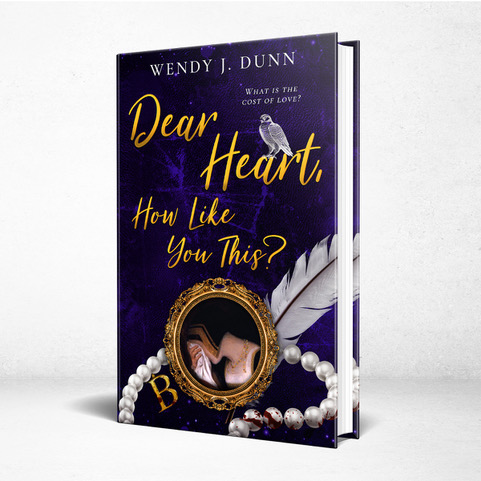
Dear Heart, How Like You This? was my first published novel, and so will forever hold a special place in my heart because it was the novel that proved I could complete a novel, and one also good enough to be published. It tells the story of Anne Boleyn from the point of view of Sir Thomas Wyatt, the elder. Tom and I developed an extraordinary relationship when I wrote that book. He became so real we often argued about the direction of the story – and the story would just come to a stop until he got his own way.

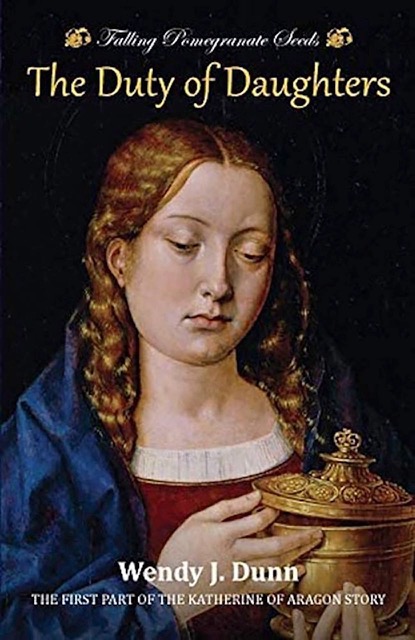
Dear Heart ignited my desire to write about the life of Katherine of Aragon. I wrote the first version of The Duty of Daughtersthe novel about Katherine of Aragon’s early life in Castille – through the point of view of the child Maria de Salinas and then faced the fact I needed to write it through an adult point of view. I knew it just had to be Beatriz Galindo, the scholar who may have been Katherine of Aragon’s tutor, but I despaired about pulling apart the book and starting again. So much so, it took completing my Masters of Writing and then my PhD – when I wrote The Light in the Labyrinth as my creative artefact – before I returned to this work, for it to be published in 2016.

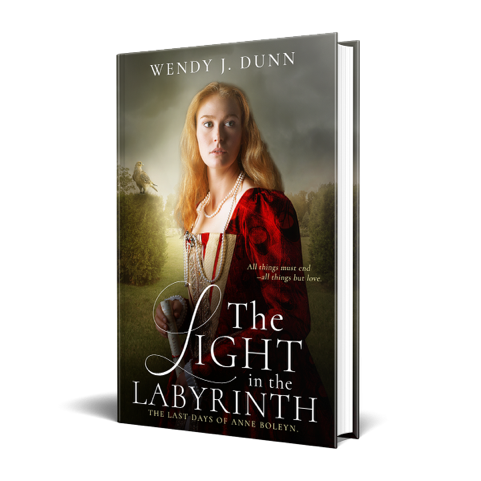
Dear Heart also ignited the inspiration for The Light in the Labyrinth because my first novel left me with so many questions about why Henry VIII murdered the woman he had turned his kingdom upside to marriage. I decided to target this novel to young adults, with the hope adults would like it, too. LOL – I suspect far more adults have read and enjoyed it than young adults. As it became a bestseller in its early published life, I have no complaints about that.

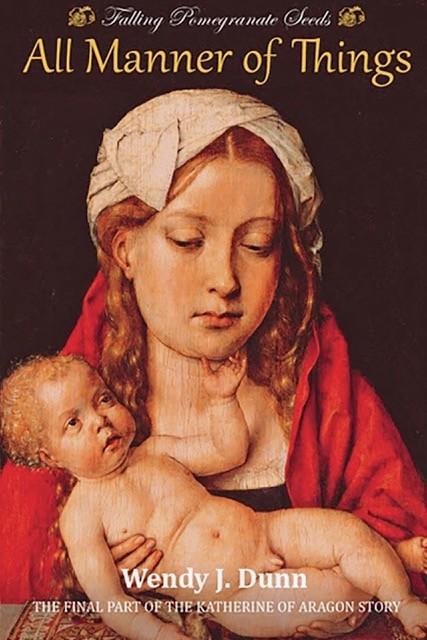
All Manner of Things is the conclusion to my Falling Pomegranate Seeds duology. All Manner of Things imagines Katherine of Aragon time in England from her arrival in 1501 to 1520, with an epilogue that takes the reader to her deathbed. I used Maria de Salinas, one of Katherine’s closest friends and a fellow Castilian exile, as my narrator, which offered a close view of Katherine’s life.

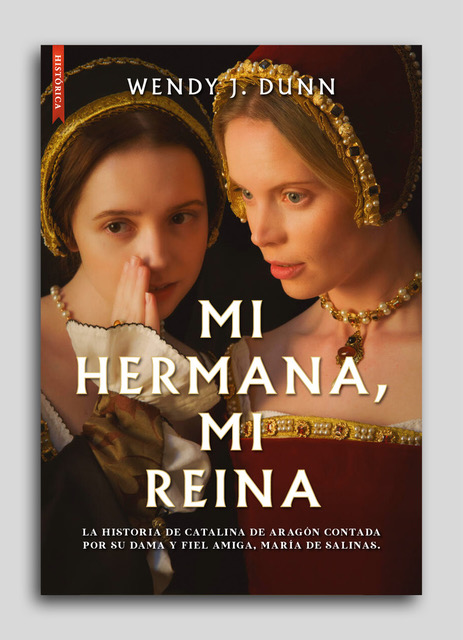
All Manner of Things has done me proud since its publication by gaining quite a few awards and being translated into Spanish and published as Mi Hermana, Mi Reina.

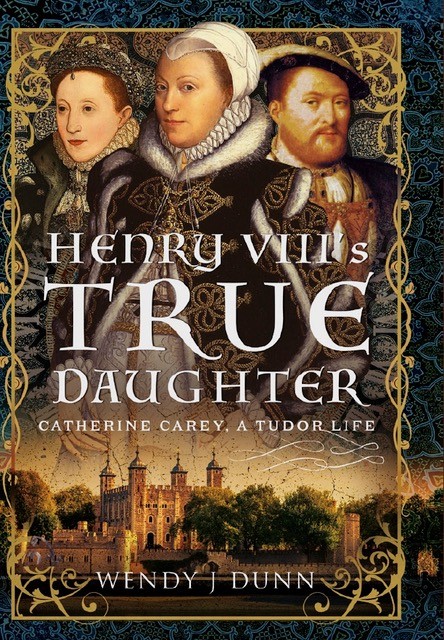
Henry VIII’s True Daughter: Catherine Carey, A Tudor Life is my first published major work of nonfiction. COVID lockdowns made researching that book difficult. I was stuck in Melbourne, Australia, when I should have been researching in England. But we are fortunate to have a wealth of archival material now available online.

Sharon: What attracts you to the Tudor period?

Wendy: I have loved the Tudor period since my childhood. It is a fascinating period with so many fascinating people. For me, this period offers a wealth of stories to draw from for my storytelling, with a cast of archetypes, heroes and villains, with stories of adultery, murder, lust, love, passion, betrayal, tragedy and triumph, family secrets, ambition and vainglory. The Tudors offer a treasure trove of multilayered tales that speak to our shared humanity.

Sharon: Who is your favourite Tudor and why?

Wendy: No question about it. Elizabeth I. I know she was not perfect, but she was an exceptionally intelligent human being. The fact she ended up the queen of England, after years of walking a road where any misstep could lead to her death, is such a story of triumph. And the triumph continued all through her life. Elizabeth remained queen for close to forty-four years, despite all the plots to bring her down.  

Sharon: Who is your least favourite Tudor and why?

Wendy: Henry VIII. I don’t think I could ever like any man who murders his wives. I confess I wrote The Light in the Labyrinth hoping I’d find him more likeable. Alas, I liked him far less after completing my second Anne Boleyn novel. He was a bully, a tyrant (especially after 1536), possessed little empathy, emotionally abused his eldest daughter and forced her to betray the memory of her mother, all of which broke her spirit, made it harder for women to work in professions – for example, a law early in his reign excluded women from the medical profession, and was, many times, simply cruel.  

OMG – he annulled his marriage to Anne Boleyn just days before her execution, so how could she be accused of adultery then? But he still executed her!

Sharon: How do you approach researching your topic?

Wendy: Books. Many books. And more books. Academic papers. Hours of searching for primary sources to help me with my topic. Living in hope of having funds to get to the places where my people once lived, just so I can walk in their footsteps.

I build my people – real and imagined – through thorough research. I love researching history and deepening my knowledge about people of the past, which means every book I write increases my own personal reference library.

Sharon: Tell us your ‘favourite’ Tudor story.

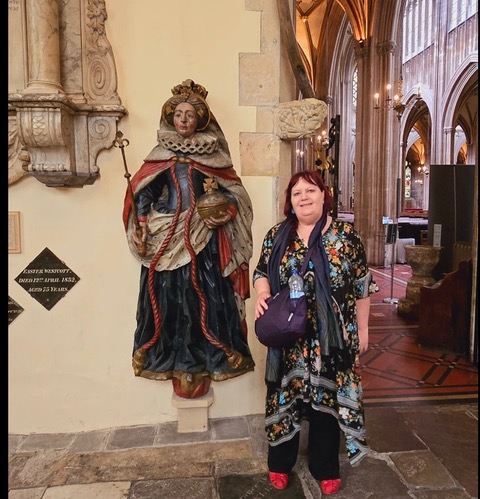
Wendy: The day they crowned Elizabeth. Whenever I read the primary sources about her coronation, I am always swept away by the joy of the day. By Elizabeth’s joy. And I get an extra shiver up and down my backbone to know Anne Boleyn was remembered on this day. What Elizabeth must have felt to see her mother included in the processional display that celebrated her lineage.

I have written about this day in Henry VIII’s True Daughter, and also touched on this scene in FIRE FROM THE COMET’S TAIL, one of my short stories:

One of the honoured women helping carry Elizabeth’s long, heavy mantle up the steps, Kate couldn’t resist doing a dancing step, far too excited and happy to mind the cold.

Drums rolled and trumpets blared. A thousand voices roared in triumph: Long live the queen. Long live the queen.

Bess looked over her shoulder at the crowds, and waved. In the sudden hushed silence, before the crowd shouted out as if in one voice, “Elizabeth! God Save Elizabeth!” the wind carried to Kate the well-remembered laugh of another queen. One more shout mounted up, God save the queen.

Out of the corner of her eye, her aunt seemed standing beside her. Love. Love never dies, or is forgotten, her aunt’s voice said in her mind. Strange. She had no memory of her saying that while she lived.

Snow-light blinding her again, Kate rubbed her eyes. When she opened them, Bess had entered the ancient doors of Westminster.

I really look forward to revisiting this day in the novel I am writing now.

Sharon: Tell us your least ‘favourite’ Tudor story.

Wendy: The execution of Anne Boleyn. Such an unjust end to her life. I also believe she only gave up hope of a reprieve in her last moments. How awful it must have been for her, knowing Henry wanted her dead so much he set in motion her execution. He may have given her the mercy of the French swordman, but he was merciless in other ways. And to die knowing she was leaving behind her infant daughter who would no longer have her protection. My heart breaks for her!

Sharon: Are there any other eras you would like to write about?

Wendy: I hope to live long enough to write about a few women from medieval Spanish history who have caught my attention. Researching Katherine of Aragon’s life has left me with a deep love of Spain and its history.

Sharon: What are you working on now?

Wendy: I’m working through the edits of Shades of Yellow, my novel about an Australian woman writing a Tudor novel (not me!), which is scheduled for publication on September 7th. I am also writing a novel inspired by the life of Frances Newton Brooke, a woman who served Elizabeth I even before she became queen until 1592. She is also subject I’m researching for my next nonfiction book for Pen& Sword Books

Sharon: And finally, what is the best thing about being a writer?

Wendy: Oh – finding kindred spirits, like you, Sharon! I feel so blessed with the friendships I have made along the way on this writing road of mine – and blessed to have this passion that helps me grow as a human being. Writing turned my life into a true adventure.

About the Author:

Wendy J. Dunn is an award-winning Australian writer fascinated by Tudor history – so much so she was not surprised to discover a family connection to the Tudors, not long after the publication of her first Anne Boleyn novel, which narrated the Anne Boleyn story through the eyes of Sir Thomas Wyatt, the elder. Her family tree reveals the intriguing fact that one of her ancestral families – possibly over three generations – had purchased land from both the Boleyn and Wyatt families to build up their own holdings. It seems very likely Wendy’s ancestors knew the Wyatts and Boleyns personally. Wendy is married, the mother of three sons and one daughter—named after a certain Tudor queen, surprisingly, not Anne. She is also the grandmother of two amazing small boys. She gained her PhD in 2014 and loves walking in the footsteps of the historical people she gives voice to in her novels. Wendy also tutors at Swinburne University of Technology, Australia.

Where to find Wendy’s books:.

Original version of Dear Heart, How Like You This?, New edition of Dear Heart, How like You This?

Original version of The Light in the Labyrinth. New version of The Light in the Labyrinth.

Falling Pomegranate Seeds duology: Part One, 
The Duty of Daughtershttps://mybook.to/FPS, Part two: All Manner of Things.

Pen and Sword Books: Henry VIIIs True Daughter: Catherine Carey, A Tudor Life

Mi hermana, mi reina: La historia de Catalina de Aragn contada por su dama y fiel amiga Mara de Salinas (Spanish Edition)

Where to find Wendy::

WebsiteNewsletter Facebook – Instagram: wendyjdunnauthor, Bluesky: wendyjdunn.bsky.social, LinkedIn: Dr Wendy Dunn – Academic Tutor and LecturerGoodreadsBookbub

*

My books

Signed, dedicated copies of all my books are available through my online store.

Out now: Scotland’s Medieval Queens

Scotland’s history is dramatic, violent and bloody. Being England’s northern neighbour has never been easy. Scotland’s queens have had to deal with war, murder, imprisonment, political rivalries and open betrayal. They have loved and lost, raised kings and queens, ruled and died for Scotland. From St Margaret, who became one of the patron saints of Scotland, to Elizabeth de Burgh and the dramatic story of the Scottish Wars of Independence, to the love story and tragedy of Joan Beaufort, to Margaret of Denmark and the dawn of the Renaissance, Scotland’s Medieval Queens have seen it all. This is the story of Scotland through their eyes.

Available now from Amazon and Pen and Sword Books

Also by Sharon Bennett Connolly:

Heroines of the Tudor World tells the stories of the most remarkable women from European history in the time of the Tudor dynasty, 1485-1603. These are the women who ruled, the women who founded dynasties, the women who fought for religious freedom, their families and love. Heroines of the Tudor World is now available for pre-order from Amberley Publishing and Amazon UK. Women of the Anarchy demonstrates how Empress Matilda and Matilda of Boulogne, unable to wield a sword themselves, were prime movers in this time of conflict and lawlessness. It shows how their strengths, weaknesses, and personal ambitions swung the fortunes of war one way – and then the other. Available from Bookshop.orgAmberley Publishing and Amazon UKKing John’s Right-Hand Lady: The Story of Nicholaa de la Haye is the story of a truly remarkable lady, the hereditary constable of Lincoln Castle and the first woman in England to be appointed sheriff in her own right. Available from all good bookshops Pen & Sword Booksbookshop.org and Amazon

Defenders of the Norman Crown: The Rise and Fall of the Warenne Earls of Surrey tells the fascinating story of the Warenne dynasty, from its origins in Normandy, through the Conquest, Magna Carta, the wars and marriages that led to its ultimate demise in the reign of Edward III. Available from Pen & Sword BooksAmazon in the UK and US, and Bookshop.orgLadies of Magna Carta: Women of Influence in Thirteenth Century England looks into the relationships of the various noble families of the 13th century, and how they were affected by the Barons’ Wars, Magna Carta and its aftermath; the bonds that were formed and those that were broken. It is now available in paperback and hardback from Pen & SwordAmazon, and Bookshop.orgHeroines of the Medieval World tells the stories of some of the most remarkable women from Medieval history, from Eleanor of Aquitaine to Julian of Norwich. Available now from Amberley Publishing and Amazon, and Bookshop.orgSilk and the Sword: The Women of the Norman Conquest traces the fortunes of the women who had a significant role to play in the momentous events of 1066. Available now from Amazon,  Amberley Publishing, and Bookshop.org.

Alternate Endings: An anthology of historical fiction short stories including Long Live the King… which is my take what might have happened had King John not died in October 1216. Available in paperback and kindle from Amazon.

Podcast:

Have a listen to the A Slice of Medieval podcast, which I co-host with Historical fiction novelist Derek Birks. Derek and I welcome guests, such as Bernard Cornwell and Michael Jecks, and discuss a wide range of topics in medieval history, from significant events to the personalities involved. Every episode is also now available on YouTube.

*

Don’t forget! Signed and dedicated copies of all my books are available through my online store.

For forthcoming online and in-person talks, please check out my Events Page.

You can be the first to read new articles by clicking the ‘Follow’ button, liking our Facebook page or joining me on TwitterThreadsBluesky and Instagram.

*

©2025 Sharon Bennett Connolly, FRHistS and Wendy J. Dunn

Wordly Women: Amy McElroy

After sharing the interview with Helene Harrison a couple of weeks ago and introducing my Author Spotlight series, Wordly Women, I was surprised and grateful for the amazing response from readers and writers alike. So, I am going to carry it on, hopefully for a whole year – or at least until I run out of astounding female authors – which could take a while! In the second of my Wordly Women interviews, I welcome Amy McElroy to History…the Interesting Bits to talk about her writing journey.

Hello Amy!

Sharon: What got you into writing non-fiction?

Amy: I had started a blog as a place to jot down my thoughts on books I had read, I did not really expect people to read it, I just wanted to be able to keep track of my reading and the books I had enjoyed. I often read other peoples blogs to find recommendations so thought it would be a good way to record my own thoughts. I ended up joining NetGalley where 99% of the books I requested were non-fiction, and many were published by Pen and Sword and continued to publish my reviews on my blog. Eventually I was approached by Pen and Sword and asked if I had ever considered writing my own book. I had absolutely not thought about it at that point despite my love of history and writing so it came as a complete surprise! After working my way through many thoughts of doubt and imposter syndrome I decided to go for it, why not? I was given an incredible opportunity that I will always be grateful for.

Sharon: Tell us about your books…

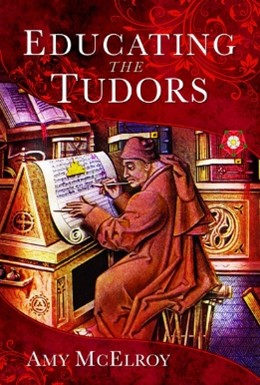
Amy: My first book Educating the Tudors was published in January 2023 and looks at the education of those well-known Tudor individuals we all know and love (or dislike), including Henry and his siblings, as well as his children. It also covers the education of the general public and the different opportunities available such as apprenticeships. Finally there is a little on who the tutors of the royal household were, and what people did for fun when they weren’t learning!

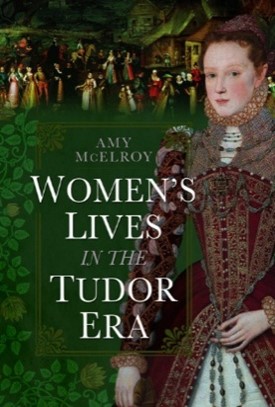
My second, Women’s Lives in the Tudor Era, was published in February 2024, the title pretty much gives everything away but it essentially discusses the milestones in the lives of Tudor women; childhood, courtship and marriage, motherhood, employment, widowhood, and death. I loved researching this book, although not all women left behind a Will, those that remain are fascinating!

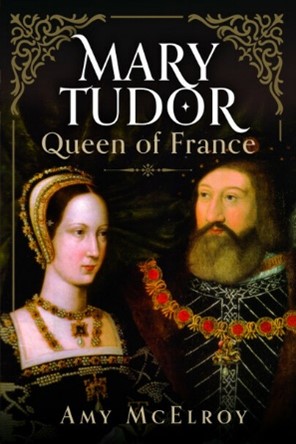
My most recent publication is Mary Tudor, Queen of France, which was due to be published 28 February 2025 but came out a little early on 30 January, so you and I now have a shared book birthday! Mary was the younger sister of Henry VIII, and aunt of Mary I. She began to interest me when I was researching my first book and I could not help but keep digging and rushing down rabbit-holes. I do hope I have done Mary justice as she was much more than just a sister to a king.

Sharon: What attracts you to the Tudor period?

Amy: There are so many events it is hard not to be interested! Not only are there many fascinating individuals but we have lots of marriages, executions, the Reformation, and events such as the Field of the Cloth of Gold, there is lots for people to read and research. I am also attracted to the Tudor period as it was at the centre of huge changes to education, the Renaissance was in full swing and how it impacted education in England continues to intrigue me.

Sharon: Who is your favourite Tudor and why?

Amy: Oh this is a difficult one! If we are referring to monarchs I would have to say Henry VIII. I know, I know, he was a tyrant, but he wasn’t always and he accomplished a lot as king. I am also a little biased in that I enjoy researching his education and continued learning as an adult. If we are referring to any individual in the Tudor era, then that would be Mary, I really enjoyed writing about her and found she is often overshadowed by her brother and whenever someone reads ‘Mary Tudor’ many will assume it to be Mary I. Hopefully my book and those of others will help in bringing Mary out of the shadows.

Sharon: Who is your least favourite Tudor and why?

Amy: Haha, Henry Grey, Duke of Suffolk, husband to Frances Brandon and father of Lady Jane, Lady Katherine, and Lady Mary Grey. I will just never understand his actions, especially once Jane was held in the Tower, you would think he would do everything he could to stay out of trouble but no!

Sharon: How do you approach researching your topic?

Amy: I generally write a rough chapter plan detailing what I want to cover. When I say rough, I really do mean that but it gives me a start on my research. I then look at what resources do I already have and what do I need. I live in the Midlands so I try to plan my research so that if I need to travel somewhere for a source e.g. National Archives or British Library then I have a clear plan of everything I need from there so I can try and make the most of my time there but giving myself enough time that I can go for another visit if I miss something or find something else I need. I am old school so I write most of my notes by hand which can then take me forever to type up, therefore I try to ensure I have everything I need before I start typing.

Sharon: Tell us your ‘favourite’ Tudor story.

Amy: I love the story of Thomas More and Erasmus visiting the royal children at Eltham. Erasmus did not know that was the plan so he was very surprised when they arrived at Eltham Palace and found Margaret, Henry, Mary and Edmund all there. Thomas More had prepared some writing for Henry but Erasmus had come unprepared so was not happy with More! They stayed for dinner and Henry actually challenged Erasmus to write something for him. Erasmus spent 3 days writing a poem which became Prosopopӕia Britanniӕ and praises Henry VII, the princes, and England. He dedicated the poem to  Prince Henry and it was printed in the first edition of Adages in 1500. I think this was both a surprising yet memorable event for Erasmus and was the beginning of his friendship with Henry.

Sharon: Tell us your ‘least favourite’ Tudor story.

Amy: I think I would have to say that I really dislike the stories that Henry VII was a miser. The records and accounts show he more than willing to spend a great deal of money when he wished to. He made gifts to his children, spent money on building and was certainly not afraid to show his wealth when it came to impressing ambassadors and visitors to the royal court. Yes, he was very intelligent when it came to money but I think it is unfair for him to have the reputation of a miser.

Sharon: Are there any other eras you would like to write about?

Amy: I think if I were to ever write about another era it would likely be the Plantagenets but I’m not sure if I ever will!

Sharon: What are you working on now?

Amy: I am finishing up writing a book on Desiderius Erasmus which is due to be published early 2026 then I will be moving on to my 5th book, Teaching the Tudors. This will expand on my first book and focus on some of the tutors we know so well and others that were extremely influential on education during the Tudor era but are maybe not so well known.

Sharon: And finally, what is the best thing about being a writer?

Amy: Another hard one! Firstly, getting to know so many incredible historians, I have been made to feel so welcome in the history community by historians I greatly admire such as yourself, Nathen Amin, and Estelle Paranque and others but I can’t name everyone or this may be a very long answer. I have made some wonderful friends including Rebecca Batley, Rebecca Larson, and Helene Harrison and had fantastic opportunities to appear on podcasts like Talking Tudors and Royals, Rebels, and Romantics. But overall, I love history, so I am doing something I love, does it get better than that?

About the Author:

Amy McElroy is the author of Educating the Tudors (2023), Women’s Lives in the Tudor Era (2024), and Mary Tudor, Queen of France (2025). Amy has long had an interest in history, beginning with a blog where she shared her love of books before culminating in her own book, Educating the Tudors. Amy is currently writing her fourth book, Desiderius Erasmus and has a fifth in the pipeline with many more ideas for the future. Amy co-hosts the blog, The Tudor Notebook on Substack. She has appeared on numerous podcasts including Talking Tudors, Royals, Rebels, and Romantics, and Tudors Dynasty. Amy has also spoken at events including the Wolves Literature Festival and After Hours at Shakespeare Birthplace Trust.

Where to find Amy:

Facebook – Amy McElroy; Instagram – @amymcelroy_author; Blue Sky – AmyMcElroy; Threads – amymcelroy_books; Twitter/X – @AmyMc_Books; Substack – The Tudor Notebook; Blog – website.

To Buy Amy’s Books:

Educating the Tudors: Pen and Sword Books: Educating the Tudors – Hardback. Women’s Lives in the Tudor Era: Pen and Sword Books: Women’s Lives in the Tudor Era – Hardback, and is also available to order with a signed bookplate at Fox Lane Books. Mary Tudor, Queen of France: Pen and Sword Books: Mary Tudor – Hardback and is also available to order with a signed and dedicated bookplate at Fox Lane Books

*

My books

Signed, dedicated copies of all my books are available through my online store.

Out now: Scotland’s Medieval Queens

Scotland’s history is dramatic, violent and bloody. Being England’s northern neighbour has never been easy. Scotland’s queens have had to deal with war, murder, imprisonment, political rivalries and open betrayal. They have loved and lost, raised kings and queens, ruled and died for Scotland. From St Margaret, who became one of the patron saints of Scotland, to Elizabeth de Burgh and the dramatic story of the Scottish Wars of Independence, to the love story and tragedy of Joan Beaufort, to Margaret of Denmark and the dawn of the Renaissance, Scotland’s Medieval Queens have seen it all. This is the story of Scotland through their eyes.

Available now from Amazon and Pen and Sword Books

Also by Sharon Bennett Connolly:

Heroines of the Tudor World tells the stories of the most remarkable women from European history in the time of the Tudor dynasty, 1485-1603. These are the women who ruled, the women who founded dynasties, the women who fought for religious freedom, their families and love. Heroines of the Tudor World is now available for pre-order from Amberley Publishing and Amazon UK. Women of the Anarchy demonstrates how Empress Matilda and Matilda of Boulogne, unable to wield a sword themselves, were prime movers in this time of conflict and lawlessness. It shows how their strengths, weaknesses, and personal ambitions swung the fortunes of war one way – and then the other. Available from Bookshop.orgAmberley Publishing and Amazon UKKing John’s Right-Hand Lady: The Story of Nicholaa de la Haye is the story of a truly remarkable lady, the hereditary constable of Lincoln Castle and the first woman in England to be appointed sheriff in her own right. Available from all good bookshops Pen & Sword Booksbookshop.org and Amazon

Defenders of the Norman Crown: The Rise and Fall of the Warenne Earls of Surrey tells the fascinating story of the Warenne dynasty, from its origins in Normandy, through the Conquest, Magna Carta, the wars and marriages that led to its ultimate demise in the reign of Edward III. Available from Pen & Sword BooksAmazon in the UK and US, and Bookshop.orgLadies of Magna Carta: Women of Influence in Thirteenth Century England looks into the relationships of the various noble families of the 13th century, and how they were affected by the Barons’ Wars, Magna Carta and its aftermath; the bonds that were formed and those that were broken. It is now available in paperback and hardback from Pen & SwordAmazon, and Bookshop.orgHeroines of the Medieval World tells the stories of some of the most remarkable women from Medieval history, from Eleanor of Aquitaine to Julian of Norwich. Available now from Amberley Publishing and Amazon, and Bookshop.orgSilk and the Sword: The Women of the Norman Conquest traces the fortunes of the women who had a significant role to play in the momentous events of 1066. Available now from Amazon,  Amberley Publishing, and Bookshop.org.

Alternate Endings: An anthology of historical fiction short stories including Long Live the King… which is my take what might have happened had King John not died in October 1216. Available in paperback and kindle from Amazon.

Podcast:

Have a listen to the A Slice of Medieval podcast, which I co-host with Historical fiction novelist Derek Birks. Derek and I welcome guests, such as Bernard Cornwell and Michael Jecks, and discuss a wide range of topics in medieval history, from significant events to the personalities involved. Every episode is also now available on YouTube.

*

Don’t forget! Signed and dedicated copies of all my books are available through my online store.

For forthcoming online and in-person talks, please check out my Events Page.

You can be the first to read new articles by clicking the ‘Follow’ button, liking our Facebook page or joining me on TwitterThreadsBluesky and Instagram.

*

©2025 Sharon Bennett Connolly, FRHistS and Amy McElroy

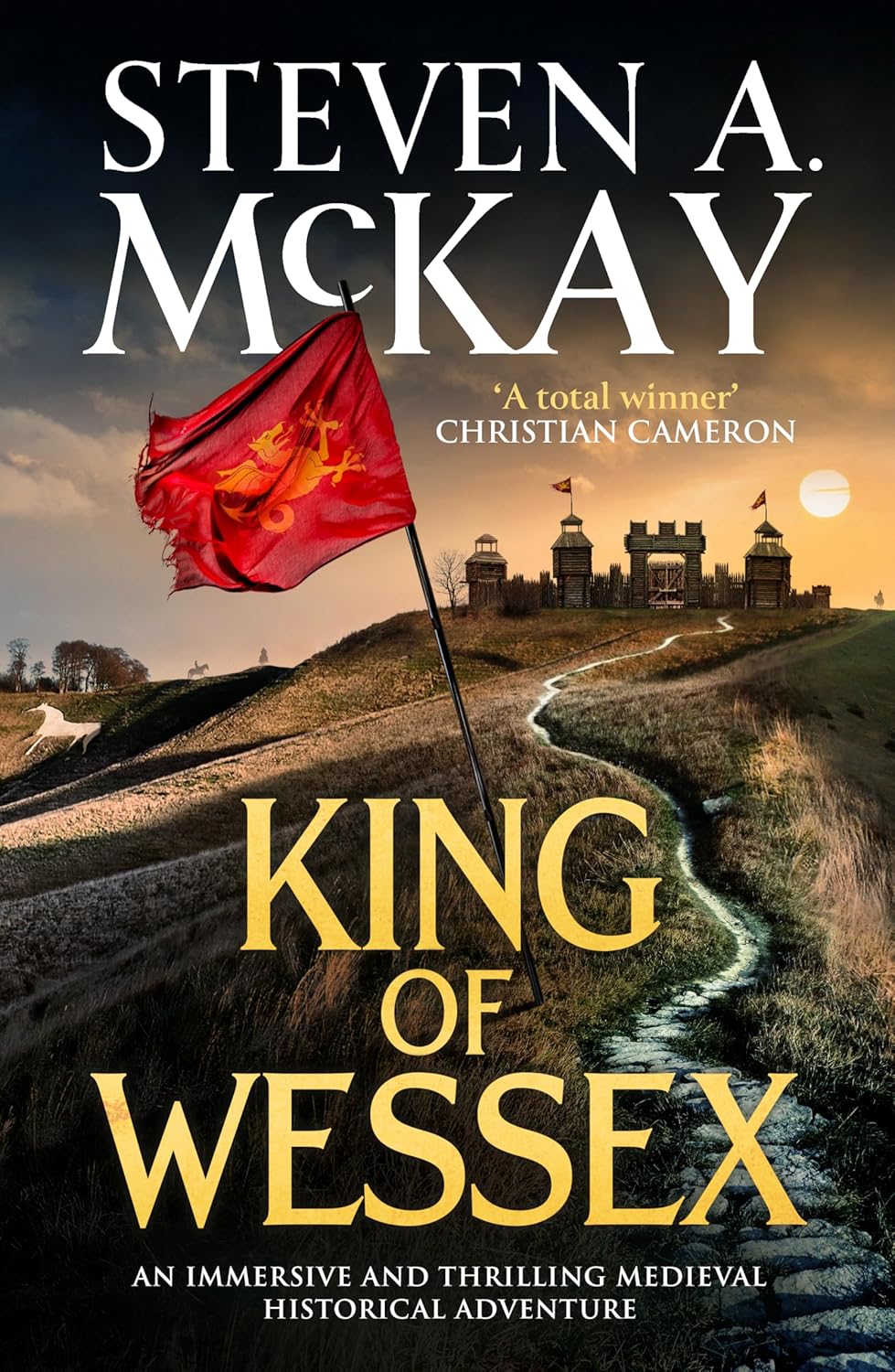
Book Corner: King of Wessex by Steven A. McKay

His reign must come to an end. But his legacy will live on forever.

After thwarting the scourge of the Viking hordes that had decimated Britain for decades, King Alfred assured a period of peace and prosperity for the kingdom of Wessex. The dream of uniting all Anglo-Saxons under one, noble banner seems closer than ever before.

But his enemies are not ones to be taken lightly. For even as Alfred works to ensure the fate of his descendants for centuries to come, a fearsome warlord, Haesten, gathers his warriors for a brutal assault upon the shores of Alfred’s territories.

As the battle lines are drawn, as the true power of this new and terrifying threat comes into its own, the ageing king knows in his heart that things will be different this time round. For as strong as his land, his birthright, his Wessex, has become, the consequences of defeat have never been more terrible.

For one who has gained everything… has everything to lose.

What an incredible adventure it has been!

In his Alfred the Great trilogy, Steven A. McKay has brought the late 9th century to life, retelling the story of Wessex’s stand against the constant incursions of the Norse and the Danes, known collectively as the Vikings. Many fans of Bernard Cornwell will recognise the great enemy of King of Wessex as having been a regular character in his The Last Kingdom series: Haesten. Haesten was the last great enemy that Alfred faced before his death, in a four-year war that ravaged Wessex.

But in King of Wessex, Alfred is no longer fighting alone. He has the help of his daughter, Æthelflæd, now Lady of Mercia, and her husband, Æthelred. His son, Edward, no longer a child, is leading armies of his own. This family affair allows Alfred to defend his kingdom from all sides at once, moving armies to face new threats, knowing his back is covered.

What sets this series apart, however, is the relationships of the characters and King of Wessex shows just how far these relationships have developed. Alfred’s friend and captain Wulfric is a constant by his side. His wife, Ealhswith, gives wise counsel and overlooks his flaws (I am not sure I could overlook the womanising!) And having watched his children mature, Alfred now has to trust them to be his captains and his allies. But Alfred, though getting older and still suffering from the same health issues that would often see him doubled over in pain, is still the man in command. And the man to be beaten.

There were men in Mercia’s Witan who offered, or perhaps demanded would be more accurate, to take control while Aethelred was unwell, but Aethelflaed was not having that.

‘You?’ The thane who asked the question gaped at her incredulously. ‘But you’re a woman!’

Aethelflaed’s lip curled, and she rolled her eyes at him. He was a tall man, very broad of shoulder with a thick, dark beard and hard eyes. She knew she had to deal with him in the right way, or the rest of the gathered Witan would never take her seriously. So much was riding on these next few moments. ‘I am indeed a woman, Morcar. Well spotted. Not much gets past you I see.’

Some of the other council members sniggered and Aethelflaed took note of them. She’d been taught that such information, the dynamics of the Witan such as who liked who and who would like to murder whom, was always useful to know. Similarly, Morcar’s reaction to her gentle but very public insult would also be worth noting.

‘No need to be glib, my lady,’ the big man replied dryly, rather surprising Aethelflaed for she’d half expected him to grow angry at her. That he didn’t was definitely a point in his favour and belied his fierce looks. ‘You know what I mean,’ he went on. ‘Women don’t usually rule in Mercia.’

‘It would only be temporary,’ Aerthelflaed replied, standing up and walking around the hall, eyeing the mostly middle-aged men who formed the Witan. ‘Until my husband is over his illness.’

‘And what if he does not get over it?’ a red-faced, bulbous-nosed man asked bluntly.

‘Then we’d need to look at the matter again, Edgar,’ Aethelflaed barked, annoyed at the question for she’d grown close to Aethelred in the relatively short time they’d been married. ‘But, for now,’ she stopped walking right behind Edgar who was forced to turn in his chair and crane his neck upwards to see her, ‘my husband is alive, and I shall take his place as head of the Witan.’

‘But you’re not even Mercian,’ Edgar argued.

‘I am Mercian now,’ Aethelflaed retorted, her patience growing thin with the dense thane who had actually got to his feet, forcing her to look up at him now. ‘I married your ealdorman, Aethelred, didn’t I? Or does marriage not count for anything these days?’

Edgar shook his head, clearly annoyed. He was only a little taller than her, with thinning white hair, and he ground his teeth as he glared at her, almost as if he wanted to take her over his knee and smack her backside like a naughty child. ‘You might have married Aethelred,’ he growled, ‘but you are your father’s daughter first and foremost. Your loyalty lies with Wessex, not Mercia.’

‘Surely it’s the same thing?’ Aethelflaed asked in a low voice, her steely eyes boring into his.

‘What? Because Alfred has declared himself king of all the Angles and Saxons?’ Edgar asked. His breath was sour and Aethelflaed realised he was drunk.

‘Yes,’ she replied, as if it was obvious. ‘My father is the only king Mercia has, since Aethelred is but an ealdorman. I would remind you, Edgar, that King Alfred, and his fyrd, are the only things standing in the way of the Danes overrunning Mercia completely.’

‘Are you calling us cowards now?’ the inebriated thane demanded, his flushed features contrasting deeply with his white hair. ‘You’re lucky you’re not a man, or I’d show you the men of Mercia are not afraid of anything.’

He was so angry at her that flecks of spittle struck her face as he ranted. And, as he went on, he actually reached out and grasped her sleeve, digging his fingers into her bicep.

Instinctively, Aethelflaed grabbed his hand, twisting his wrist and forcing him to spin around so he was facing the table again. Despite knowing she’d done enough, she could not keep her temper in check and thrust her knee into the back of his, making him stumble and, as he went down, she pushed his face, hard, into the trencher of meat and cheese that he’d been eating from.

I love Aethelflaed!

After three books, Steven A. McKay’s characters are so well developed that you know how they will react to certain situations. Alfred is thoughtful and looks for advice from his captains and churchmen. Edward is still learning, and looks to his father as an example. Aethelflaed is feisty whereas her mother is calm and dependable. Wulfric, the loyal captain, is good in a fight but has his own axe to grind and looks for ways to give Alfred the advantage.

Haesten and his wife, Ulfhild, are bloodthirsty, ruthless and, apparently, unstoppable.

It makes for a fascinating novel, with father, son, daughter and son-in-law each having a role to play in starting the fight back that would lead to a united England. Thanks to the legacy of The Last Kingdom, the story is familiar to many, but Steven A. McKay has made it all his own. King of Wessex, like The Heathen Horde before it and Sword of the Saxons before that, is a fabulously absorbing read. You can practically smell the blood and hear the noise of battle; the clash of swords, the screams of the dying and the shouted orders of Alfred and his captains.

My only regret is that the series is now over. I would have loved to see it continue to the reign of Athelstan and the Battle of Brunanburh – but then, I suppose, it wouldn’t be the story of King Alfred, would it?

As it is, Steven A. McKay has all the ingredients for a riveting good read and he uses them to his best advantage, to create a story that grabs the reader from the very first page. Itis exciting, thought-provoking and will bring a tear to your eye at the end. It is well worth the journey. King of Wessex is a novel that is not to be missed!

Buy the book!

About the author:

Steven A. McKay was born in Scotland in 1977. He is the author of two previous series of historical fiction, following Robin Hood and the warrior-druid Bellicus in post-Roman Britain. He plays the guitar, is the co-host of historical adventure podcast Rock, Paper, Swords! along with author Matthew Harffy, and lives just outside Glasgow with his wife and children.

*

My books

Signed, dedicated copies of all my books are available through my online store.

Out now: Scotland’s Medieval Queens

Scotland’s history is dramatic, violent and bloody. Being England’s northern neighbour has never been easy. Scotland’s queens have had to deal with war, murder, imprisonment, political rivalries and open betrayal. They have loved and lost, raised kings and queens, ruled and died for Scotland. From St Margaret, who became one of the patron saints of Scotland, to Elizabeth de Burgh and the dramatic story of the Scottish Wars of Independence, to the love story and tragedy of Joan Beaufort, to Margaret of Denmark and the dawn of the Renaissance, Scotland’s Medieval Queens have seen it all. This is the story of Scotland through their eyes.

Available now from Amazon and Pen and Sword Books

Also by Sharon Bennett Connolly:

Heroines of the Tudor World tells the stories of the most remarkable women from European history in the time of the Tudor dynasty, 1485-1603. These are the women who ruled, the women who founded dynasties, the women who fought for religious freedom, their families and love. Heroines of the Tudor World is now available for pre-order from Amberley Publishing and Amazon UK. Women of the Anarchy demonstrates how Empress Matilda and Matilda of Boulogne, unable to wield a sword themselves, were prime movers in this time of conflict and lawlessness. It shows how their strengths, weaknesses, and personal ambitions swung the fortunes of war one way – and then the other. Available from Bookshop.orgAmberley Publishing and Amazon UKKing John’s Right-Hand Lady: The Story of Nicholaa de la Haye is the story of a truly remarkable lady, the hereditary constable of Lincoln Castle and the first woman in England to be appointed sheriff in her own right. Available from all good bookshops Pen & Sword Booksbookshop.org and Amazon

Defenders of the Norman Crown: The Rise and Fall of the Warenne Earls of Surrey tells the fascinating story of the Warenne dynasty, from its origins in Normandy, through the Conquest, Magna Carta, the wars and marriages that led to its ultimate demise in the reign of Edward III. Available from Pen & Sword BooksAmazon in the UK and US, and Bookshop.orgLadies of Magna Carta: Women of Influence in Thirteenth Century England looks into the relationships of the various noble families of the 13th century, and how they were affected by the Barons’ Wars, Magna Carta and its aftermath; the bonds that were formed and those that were broken. It is now available in paperback and hardback from Pen & SwordAmazon, and Bookshop.orgHeroines of the Medieval World tells the stories of some of the most remarkable women from Medieval history, from Eleanor of Aquitaine to Julian of Norwich. Available now from Amberley Publishing and Amazon, and Bookshop.orgSilk and the Sword: The Women of the Norman Conquest traces the fortunes of the women who had a significant role to play in the momentous events of 1066. Available now from Amazon,  Amberley Publishing, and Bookshop.org.

Alternate Endings: An anthology of historical fiction short stories including Long Live the King… which is my take what might have happened had King John not died in October 1216. Available in paperback and kindle from Amazon.

Podcast:

Have a listen to the A Slice of Medieval podcast, which I co-host with Historical fiction novelist Derek Birks. Derek and I welcome guests, such as Bernard Cornwell and Michael Jecks, and discuss a wide range of topics in medieval history, from significant events to the personalities involved. Every episode is also now available on YouTube.

*

Don’t forget! Signed and dedicated copies of all my books are available through my online store.

For forthcoming online and in-person talks, please check out my Events Page.

You can be the first to read new articles by clicking the ‘Follow’ button, liking our Facebook page or joining me on TwitterThreadsBluesky and Instagram.

*

©2025 Sharon Bennett Connolly, FRHistS


Wordly Women: Helene Harrison

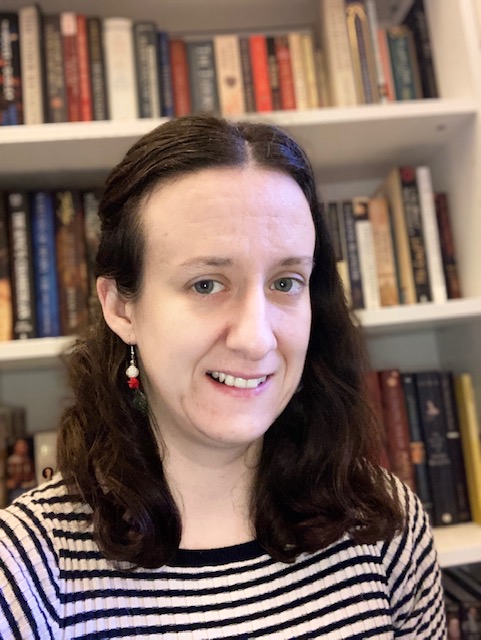
I have been inspired by the British Library’s Medieval women: In Their Own Words exhibition to launch a series of interviews featuring women writers of History, Wordly Women, to give us an insight into their books, their writing habits and themselves. My guinea pig – er, I mean – first Author Spotlight is the wonderful Helene Harrison, author of two fabulous books on the Tudors, with a third on the way.

So, over to my chat with Helene…

Sharon: What got you into writing non-fiction?

Helene: ’ve always enjoyed research, no matter on what topic. But it was during my A Levels that I really got into history, which then developed at university during my undergraduate and postgraduate degrees. When I finished my undergraduate degree in 2012, I started my blog, Tudor Blogger, because I felt a bit bereft, even though I was about to start my postgraduate degree. It took off from there really, as I started reviewing history books in my collection on my blog and then publishers started to send me books to review. I was then approached by my publisher to ask if I was interested in writing a book for them and that’s how writing non-fiction came about really. I’d always wanted to, but I didn’t think anyone would actually be interested in reading them.

Sharon: Tell us about your books.

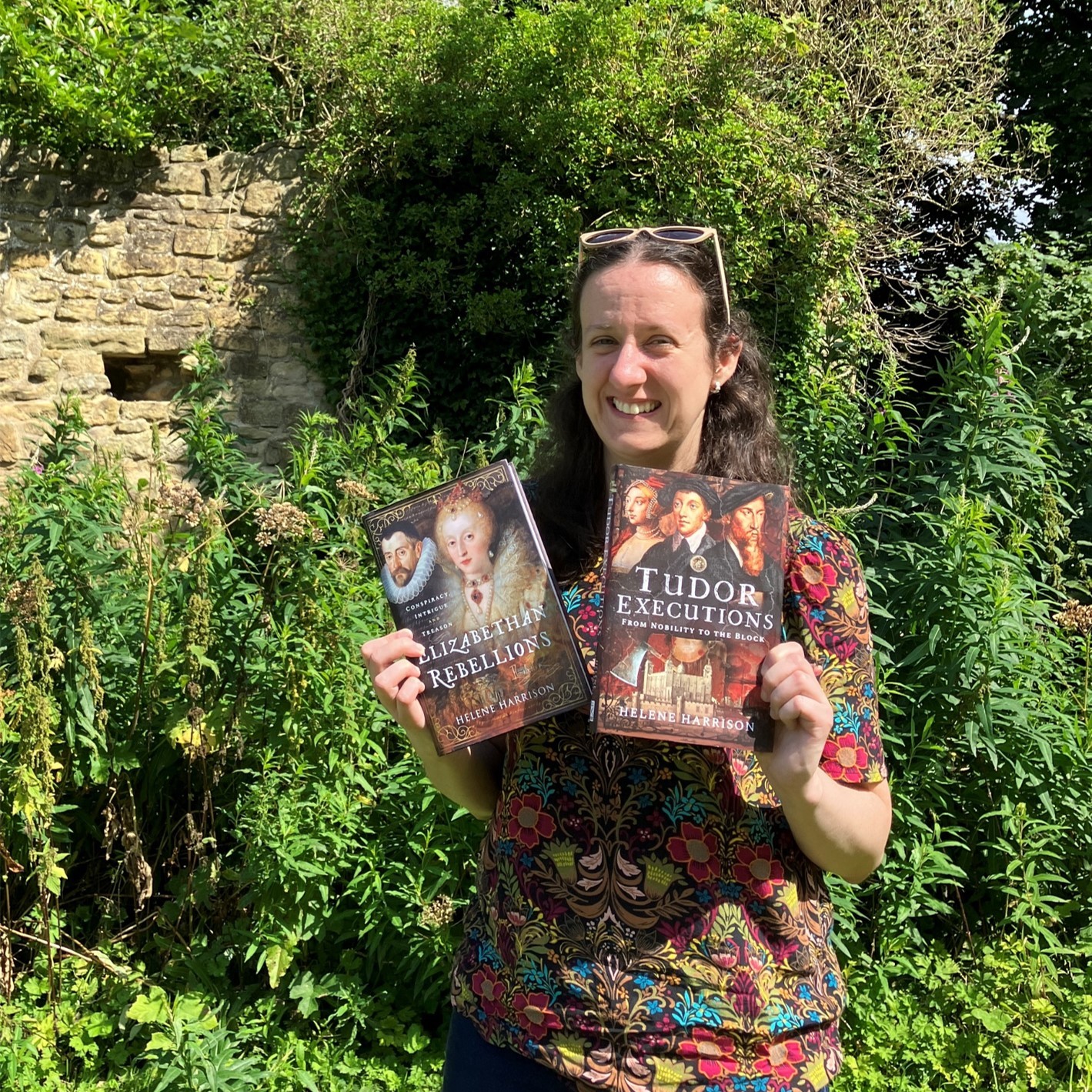
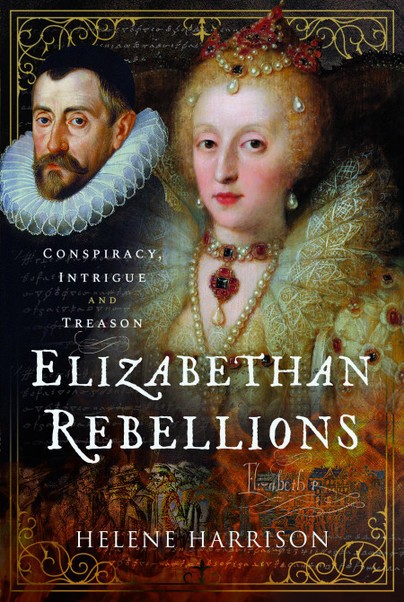
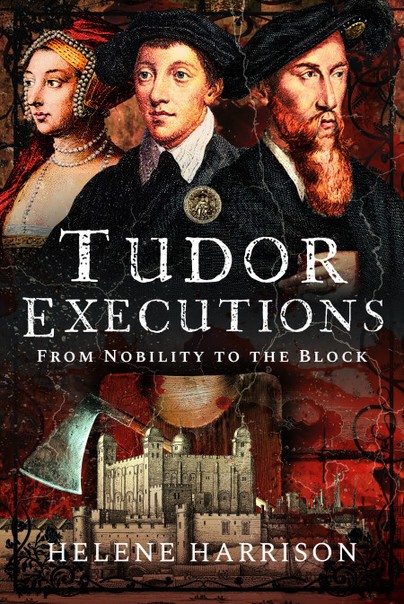
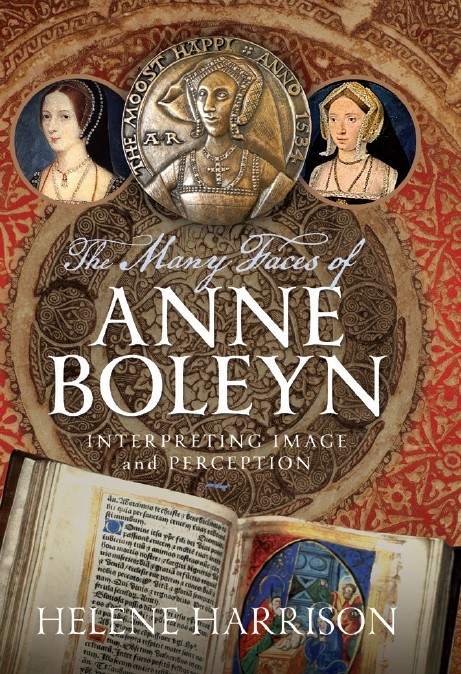
Helene: My first book was ‘Elizabethan Rebellions: Conspiracy, Intrigue and Treason’ which was published in January 2023. It still didn’t really feel real that I was a published author even when I held it in my hands! My second book ‘Tudor Executions: From Nobility to the Block’ was then published in July 2024. I’d been researching Tudor executions and treason as an interest for several years anyway, so I had a lot of the background in my head already. My third book ‘The Many Faces of Anne Boleyn: Interpreting Image and Perception’ is due to be released in July 2025 and is now available for preorder. This upcoming one is the one I’m, I think, most nervous about. It has developed from my undergraduate and postgraduate history degrees which looked at Anne Boleyn’s public image (undergraduate) and then at perceptions in literature and film (postgraduate). This book combines the two and builds more on it. I didn’t feel quite ready to write this book when I wrote my first two, but this felt like the right time.

Sharon: What attracts you to the Tudors?

Helene: When I was doing my A Levels, I did a module on Tudor Rebellions, which is really where I delved into Tudor research, though I had some very basic knowledge before that. My GCSE had been in modern world history, so I didn’t really have an earlier chance to do proper research on the Tudors. At university I did modules on early modern women’s history which included witchcraft and women in power which ignited my passion for Anne Boleyn and Elizabeth I. Showtime’s TV show, The Tudors finished its final series while I was at university, and that just added to my interest, wanting to know what was real and what was fiction, and that really fuelled the subjects of my dissertations. But I think that what really attracts me to the Tudors today is that they seem to be quite a unique dynasty, but that their blood still feeds down into the royal family today. The Tudors won the throne in battle, and that was the last time an English monarch died in battle, and we also see the advent of successful female monarchy. England rises as a global power, and we begin to see the reach extending beyond the British Isles in an age of exploration, great literature, and new ways of exercising power.

Sharon: Who is your favourite Tudor and why?

Helene: This will probably be the same answer as a lot of people, but Anne Boleyn. She is such a fascinating figure, more than the first beheaded wife of Henry VIII. Her upbringing was singular for a woman of her class, being raised at the courts of the Low Countries and France, exposed to new religious ideas and with an exoticism which marked her out at the English court. Anne was at the centre of massive changes happening in England, in many ways the catalyst for them, and that’s why she has held my interest for so many years. But I do also have a soft spot for Anne of Cleves, and I’m fascinated by Mary Boleyn and her daughter, Catherine Carey Knollys, as well.

Sharon: Who is your least favourite Tudor and why?

Helene: I often think it’s difficult to have a least favourite Tudor because they’re all fascinating in their own ways, even those that perhaps aren’t very likeable. I find Henry, Lord Darnley, the second husband of Mary Queen of Scots, quite difficult to like, but then the suspicious circumstances surrounding his death are so interesting! I also find it very difficult to find redeeming qualities in Thomas Howard, 3rd Duke of Norfolk, who saw two nieces, a nephew, and a niece-in-law, as well as his own son, executed, but always managed to save himself. In the sources he comes across as very cold and self-serving, willing to do whatever it took to save himself, even if it meant his own family being executed. But he was active over a large period of the first half of the long Tudor century, so he is important to study.

Sharon: How do you approach researching your topic?

Helene: Often it depends on the topic! With my second book ‘Tudor Executions’ I had a lot of the secondary source knowledge already, and quite a bit of the primary source knowledge. With my first book ‘Elizabethan Rebellions’ there was a lot more that I didn’t know, so I wanted to make sure that I covered as much as I could from both primary and secondary sources. But I always think it’s important to make sure that you go back to the original sources as much as possible and form your own opinions. Others might disagree with what you think, but I think that it’s important you know your own thoughts before reading those of others otherwise you might be unduly influenced by them. With my third book ‘The Many Faces of Anne Boleyn’, this was a very different approach to research because I knew the primary and secondary sources really well anyway from nearly 15 years of reading and research, but this book does a close analysis of a selection of sources including television, film, novels, and theatre, so there was a lot of analysis of those with comparisons to primary and secondary sources. I started by going back to my undergraduate and postgraduate dissertations, then branching out from there to know what I thought at the time and how my opinions have changed, which they have in some ways! So that was a really interesting way of approaching it, and very different to things I’ve done before!

Sharon: Tell us your ‘favourite’ Tudor execution story.

Helene: Hmm, tricky! Anne Boleyn is always an interesting one, but I know it so well that I thought it would be a relatively easy chapter to write, but I went so far over my word count on that chapter that I really had to work to trim it back! I was very aware that I wanted each chapter to be the same length so that one person wasn’t getting more attention than any other. I did achieve that! I find the Earl of Warwick’s story interesting, but also so sad to write about. Nathen Amin’s work on the Tudor Pretenders was invaluable in working on that chapter. It’s the first execution I discuss in the book and the only one under Henry VII so I was very aware of that, and of how unjust it was, so that may have been my favourite chapter to write actually. The Earl of Warwick was imprisoned in the Tower for fourteen years before his execution, and he was only 24 when he died. It just seems like such a wasted life.

Sharon: Tell us your ‘favourite’ Elizabethan rebellion story.

Helene: My favourite of the rebellions to write about was undoubtedly the Babington Plot of 1586. There was so much intrigue with that one. The Ridolfi and Throckmorton Plots never really quite got off the ground, and neither did Babington, but we have the added knowledge that it was the Babington Plot that led directly to the execution of Mary Queen of Scots, which was really a pivotal moment in Elizabeth’s reign, and in the history of monarchy in the British Isles as well. The Babington Plot had letters being smuggled in beer barrels, ciphers and codes, international conspiracy and plots to invade, and it all being known about seemingly from the beginning by the English government. How far was it all manipulated by Francis Walsingham? The early spy networks of Walsingham his codebreaker Thomas Phelippes I could have written so much more about!

Sharon: Are there any other eras you would like to write about?

Helene: I am fascinated by the royal women of the Wars of the Roses – Margaret of Anjou, Jacquetta of Luxembourg, Elizabeth Woodville, Margaret Beaufort, and Isobel and Anne Neville. I would like to write more about them in the future, perhaps just on my blog though, as there do seem to be more books about them coming out now, both fiction and non-fiction. But if I hadn’t done by undergraduate dissertation on Anne Boleyn and started all of this, my second choice was to do something on the Holocaust. Very different, I know! My grandma was Austro-Polish and was in a labour camp during the Second World War before she moved to England, so that personal connection, in a way, to it I think has just made me more interested. It’s the psychology that I struggle to understand more than anything. I also have an interest in the Jack the Ripper case, though there is so much written on that, I don’t think my kind of amateurish interest will merit much in the way of writing.

Sharon: What are you working on now?

Helene: I am currently waiting for my final set of edits for my third book ‘The Many Faces of Anne Boleyn: Interpreting Image and Perception’ which I then need to index, which is always time-consuming to do right. I am also currently writing my fourth book, also for Pen and Sword, which is about Henry VIII’s Great Matter and his quest for an heir, which has been really interesting to delve into; I wanted to look at it from a people perspective rather than the parliamentary and legal standpoint, how it affected the people involved at different stages and how Henry VIII changed throughout. I’m just over halfway writing that one now, and I am commissioned for a fifth book after that, though I’m keeping mum on the topic of that one for the time being, though it is still firmly in the Tudor period!

Sharon: And finally, what is the best thing about being a writer?

Helene: That one’s easy actually! The best thing I’ve found about being a writer is the history community. Blogging is one thing, but when you’re writing and publishing, you become part of this community, and everyone is so lovely and helpful, and I’ve made some wonderful friends and met some lovely people through it. Amy McElroy and I released our first books on the same day back in January 2023 and have since twice met up in person in London, going to exhibitions at the National Portrait Gallery and British Library. It is definitely the engagement with like-minded people that is so great, and though I was incredibly nervous doing podcast interviews at the start, now I’m a lot more relaxed and I think that’s because the people you’re talking to are just as passionate about history as you are, and they are just so great at putting you at ease and they want you to succeed.

Huge thanks to Helene for such a fascinating discussion. Do take a look at her books – the links are below.

About the Author:

Helene Harrison studied at the University of Northumbria in Newcastle, achieving both a BA and MA in History before going on to complete an MSc in Library Management. Her passion for Tudor history started when studying for A Levels and completing a module on Tudor rebellions. Her master’s dissertation focused on portrayals of Anne Boleyn through the centuries, from contemporary letters to modern TV and film adaptations. Now she writes two blogs, one Tudor history and one book-related, and works in the university library of her alma mater. In her spare time, she loves visiting royal palaces and snuggling up with a book or embroidery project. Her previous books are ‘Elizabethan Rebellions: Conspiracy, Intrigue and Treason’ and ‘Tudor Executions: From Nobility to the Block’, both published by Pen and Sword. Her third book, ‘The Many Faces of Anne Boleyn: Interpreting Image and Perception’, is due out in July 2025.

Where to find Helene:

Website Substack Facebook Instagram Blue SkyThreads

To buy Helene’s books:

Elizabethan Rebellions: Conspiracy, Intrigue and Treason is available from Pen & Sword Books (though you can contact me directly on social media or through my website if you would like a signed copy of Rebellions). Tudor Executions: From Nobility to the Block is also available from Pen & Sword Books. The Many Faces of Anne Boleyn: Interpreting Image and Perception is currently only available for preorder through Amazon and Waterstones

*

My books

Signed, dedicated copies of all my books are available through my online store.

Out now: Scotland’s Medieval Queens

Scotland’s history is dramatic, violent and bloody. Being England’s northern neighbour has never been easy. Scotland’s queens have had to deal with war, murder, imprisonment, political rivalries and open betrayal. They have loved and lost, raised kings and queens, ruled and died for Scotland. From St Margaret, who became one of the patron saints of Scotland, to Elizabeth de Burgh and the dramatic story of the Scottish Wars of Independence, to the love story and tragedy of Joan Beaufort, to Margaret of Denmark and the dawn of the Renaissance, Scotland’s Medieval Queens have seen it all. This is the story of Scotland through their eyes.

Available now from Amazon and Pen and Sword Books

Also by Sharon Bennett Connolly:

Heroines of the Tudor World tells the stories of the most remarkable women from European history in the time of the Tudor dynasty, 1485-1603. These are the women who ruled, the women who founded dynasties, the women who fought for religious freedom, their families and love. Heroines of the Tudor World is now available for pre-order from Amberley Publishing and Amazon UK. Women of the Anarchy demonstrates how Empress Matilda and Matilda of Boulogne, unable to wield a sword themselves, were prime movers in this time of conflict and lawlessness. It shows how their strengths, weaknesses, and personal ambitions swung the fortunes of war one way – and then the other. Available from Bookshop.orgAmberley Publishing and Amazon UKKing John’s Right-Hand Lady: The Story of Nicholaa de la Haye is the story of a truly remarkable lady, the hereditary constable of Lincoln Castle and the first woman in England to be appointed sheriff in her own right. Available from all good bookshops Pen & Sword Booksbookshop.org and Amazon

Defenders of the Norman Crown: The Rise and Fall of the Warenne Earls of Surrey tells the fascinating story of the Warenne dynasty, from its origins in Normandy, through the Conquest, Magna Carta, the wars and marriages that led to its ultimate demise in the reign of Edward III. Available from Pen & Sword BooksAmazon in the UK and US, and Bookshop.orgLadies of Magna Carta: Women of Influence in Thirteenth Century England looks into the relationships of the various noble families of the 13th century, and how they were affected by the Barons’ Wars, Magna Carta and its aftermath; the bonds that were formed and those that were broken. It is now available in paperback and hardback from Pen & SwordAmazon, and Bookshop.orgHeroines of the Medieval World tells the stories of some of the most remarkable women from Medieval history, from Eleanor of Aquitaine to Julian of Norwich. Available now from Amberley Publishing and Amazon, and Bookshop.orgSilk and the Sword: The Women of the Norman Conquest traces the fortunes of the women who had a significant role to play in the momentous events of 1066. Available now from Amazon,  Amberley Publishing, and Bookshop.org.

Alternate Endings: An anthology of historical fiction short stories including Long Live the King… which is my take what might have happened had King John not died in October 1216. Available in paperback and kindle from Amazon.

Podcast:

Have a listen to the A Slice of Medieval podcast, which I co-host with Historical fiction novelist Derek Birks. Derek and I welcome guests, such as Bernard Cornwell and Michael Jecks, and discuss a wide range of topics in medieval history, from significant events to the personalities involved. Every episode is also now available on YouTube.

*

Don’t forget! Signed and dedicated copies of all my books are available through my online store.

For forthcoming online and in-person talks, please check out my Events Page.

You can be the first to read new articles by clicking the ‘Follow’ button, liking our Facebook page or joining me on TwitterThreadsBluesky and Instagram.

*

©2025 Sharon Bennett Connolly, FRHistS and Helene Harrison

Guest Post: Was Harold of Royal Lineage? by Paula Lofting

What do you do when 3 friends have books coming out all on the same day? You arrange a mini blog tour, of course. Myself, Paula Lofting and Samantha Wilcoxson all have new non-fiction books published this week, with Pen & Sword Books, so the 3 of us are hosting each other across our blogs, with an article and an interview from each. And I’m kicking us off today.
It is a pleasure to welcome Paula Lofting to History…the Interesting Bits with an article on Harold Godwinson – King Harold II. Paula’s first foray into the realm of non-fiction, Searching for the Last Anglo-Saxon King, is now available.

Was Harold Godwinson of Royal Lineage

Some enthusiasts of the period have been quite taken with the idea that Harold Godwinson was able to trace his ancestry back to Æthelwulf, King of the West Saxons. The original idea came from historian, Alfred Anscombe, and later, genealogist, Lundie W. Barlow. It was taken up as authentic by author Frank Barlow, who has written many works on the period. From his book The House of Godwin, we can read his take on this. Through the will of Prince Æthelstan, son and heir of Æthelred the Unready, we are able pinpoint the man referred to as ‘Godwin, son of Wulfnoth’ being the father of Godwin. According to Frank Barlow, Lundie Barlow (no relation) studied the descent of some of the estates that Wulfnoth held. By treating Wulfnoth, as the son of Æthelmӕr Cild, ealdorman of the western provinces, Anscombe and Lundie believed that the Sussex thegn inherited Compton from his mother, suggesting that the royal blood was passed on through her.

But there is an issue with this theory. To make sense of the concept that Harold was descended from the royal House of Wessex, it was pertinent to explore theories that concern two males named Æthelmær. Both could be said to be candidates for Harold’s great-grandfather. The first Æthelmӕr listed in Anscombe and Lundie’s family tree we shall refer to as Cild. This chap was the son of Æthelweard the historian shown on the modified Anscombe/Barlow family tree.

This theory can be easily dispelled, for Æthelmær Cild was alive and active in the same generation as Wulfnoth himself, making him too young to have fathered Wulfnoth. Secondly, the interests of Æthelweard and Æthelmӕr Cild were concentrated in the areas west of Wessex, whilst Wulfnoth is specifically noted in the Anglo-Saxon Chronicle as a ‘Sussex thegn’.

The other Æthelmær, whom we shall refer to as Æthelmær Two, was one of several brothers of the infamous ealdorman, Eadric Sreona. Now their father was a man called Æthelric. The theory that this particular Æthelmær was the father of Wulfnoth Cild, originated with John of Worcester, which seems to have caused the confusion that led to Anscombe, then Lundie, being convinced that he was the father of Wulfnoth.

There is also a problem with this Æthelmær, as we shall see. Eadric and his brothers were the sons of a man called Æthelric and not Æthelweard the Historian, said to be the patriarch of the previous Æthelmær Cild, whose pedigree can be traced back to former kings of Wessex. Confused? Yes, so was I. But there is more.

‘Gytha and Godwin’ portrayed by me and Jeppe Christensen

Through the will left by Æthelstan, we have identified that Earl Godwin, (d. 1053) was the son of Wulfnoth Cild and Harold Godwinson’s father. Nothing is known of Godwin’s mother, but he has been cautiously accredited with possible siblings. One such sibling being the lady Æthelflӕd, named in the family tree that Barlow cites in his book. This woman was the owner of land in Buckinghamshire and was married to a man called Toki. The estate was gifted to his wife by her father, a man called Wulfnoth, who was connected to Godwin’s son, Leofwin, who held the estate thirty years later. This does not confirm, however, that this particular Wulfnoth was the chap who fathered Godwin. According to the Prosopography of Anglo-Saxon England data base, there were sixty-nine individuals with the name Wulfnoth. Most of them were in the money minting business, so it is somewhat difficult to identify the right man however the link to Godwin’s son owning the lands of Toki and Æthelflӕd is intriguing.
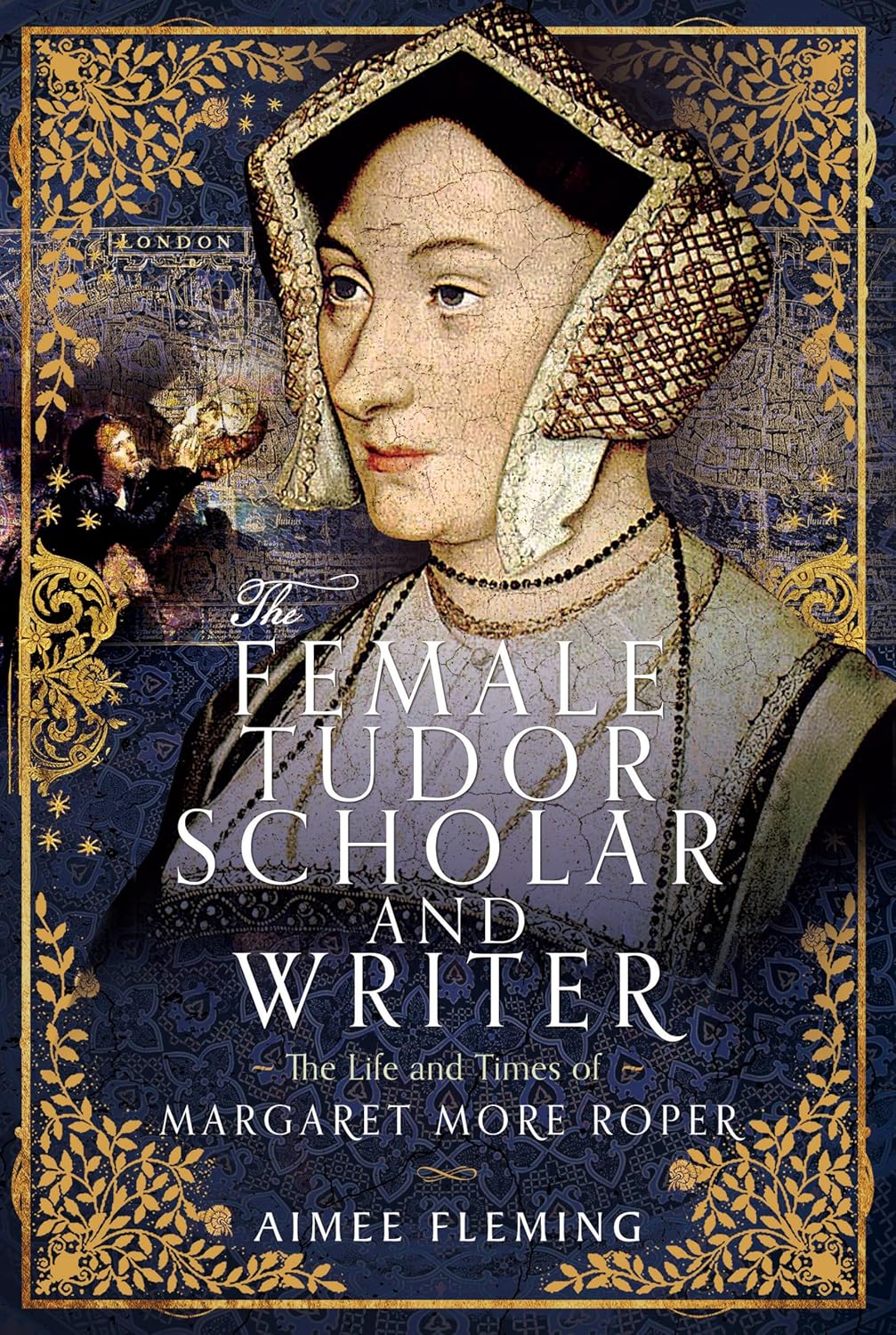
It has been mentioned that Godwin had a brother, Ælfwig, abbot of New Minster in Winchester. He is said to have died at Hastings and is referred to as an uncle of King Harold’s. If true, he would have been an old man to have fought in the battle, so it is unlikely he was the brother of Godwin.

As it stands it is difficult to find any solid ground for believing that the Godwinsons were of royal pedigree despite the evidence produced by A. Anscombe/L. Barlow, and Frank Barlow, and it is unrealistic to assume that the family would not have known and used it to their advantage, especially against King William the Conqueror (r. 1066‒1087). We could say it is not impossible that Harold did, and it was suppressed by the Normans, but there is no supporting evidence, which makes it doubtful. It also seems unlikely that either of the two Æthelmӕrs had fathered Wulfnoth. As Ann Williams confirms, Æthelmӕr Cild, who appears in the royal family’s tree, was of the same generation as Wulfnoth. Furthermore, he was from Devonshire. Wulfnoth was referred to as a Sussex thegn by the E version of the Anglo- Saxon Chronicle (ASC).

Harold and Eadith

Æthelmӕr number two, can also be discounted because the father of this Æthelmӕr was called Æthelric and Æthelmӕr Cild’s father was known as Æthelweard. Also, number two does not appear in the royal family tree of Wessex, suggesting that he had no royal heritage at all. He was also of the same generation as Wulfnoth. As we see, there is nothing to connect either Æthelmӕr with Wulfnoth, apart from an error made by John of Worcester, which many historians confuse as the same Æthelmӕr.

In contrast to efforts made to prove Anscombe’s and (Lundie) Barlow’s theory correct, Peter Rex, in his book on Harold’s life, refers to the Hyde Chronicle which describes Godwin as a man of low birth. This is not a contemporary source and was written in the thirteenth century for the de Warennes, whose dislike of Godwin is evident. Alternative stories of a ‘lowly’ Godwin’s rise to fame speak of him as a farmer’s boy, who, whilst cow–herding, came across a Dane called Ulf, lost and detached from his men after the Battle of Sherston. Godwin offered to help him, and a grateful Ulf took him into his service. These tales have more to do with myth than anything based in reality and do not account for Godwin being left land in Æthelstan’s will which is a whole other story for another time.

You might say that not having English royal pedigree should have dismissed Harold from any right the throne. He was not the son of a king, and therefore this lack of royal blood would have discounted him. In fact, Harold was descended from royal stock. It was just not the right one. His mother, Gytha, was the daughter of the fascinatingly named Thorgils Sprakaleggr (strut leg) who was the grandson of Harold Bluetooth making Gytha the great granddaughter of a King of Denmark and Norway and a second cousin of King Cnut the Great. So, although Harold was of royal lineage, it wasn’t the right one. Therefore, we could give the same consideration to Duke William of Normandy, who fought against King Harold and claimed victory over him on the 14 October 1066. But William had no connection to England, or the lands or the language. The boy Edgar Ætheling, who had been proclaimed as Edward’s heir was too young to face the invasions threatening Anglo-Saxon England. A strong leader was what was needed at the time, and royal blood or not, Harold was that man.

Do look out for the continuation of the blog tour tomorrow on Threads to the Past

*

About the book:

Harold Godwinson occupied his place in the chronicles for more than twenty years after bursting onto the political sphere when he was barely out of his teens. His role in English history has always been overshadowed by his failure to defend his crown and country against the might of William the Conqueror and his invaders. His demise at the hands of a Franco-Norman hit squad wrought the death knell of Anglo-Saxon rule. Reigning for just ten months, Harold’s accomplishments as dux Anglorum, and later king of England, were undermined by the Norman propaganda that was waged against his memory, long after his grisly end in 1066.

But just who was this man, who some historians recall as one of England’s greatest rulers? What were his origins? Is there any truth that he could trace his ancestry to the House of Wessex, and did he really usurp the throne from Duke William, the Bastard of Normandy? In this re-examining of this great historical figure of the eleventh century, we glean new theories and ideas not only about Harold’s life, but also questions historians have pondered upon for years. Did Edward really offer the throne to William? And how much of William’s claim was truth or fiction?

Paula Lofting presents a thoughtful and careful critique of the previous research. Examining his life through a telescopic view of the primary sources, she offers the reader a more accurate evaluation of who he was, how he died, and what happened to his remains after his death on a field near Hastings on October 1066.

About the author:

Paula Lofting is the author of an eleventh-century saga, Sons of the Wolf, and is working on book three in the series. She has also written articles for magazines like Historical Times and contributed to Iain Dale’s recent Kings and Queens with an essay on Edmund Ironside. Lofting’s love for Anglo-Saxon/Viking/Norman re-enactment with Regia Anglorum is a great tool for her writing. She is also a psychiatric nurse with nineteen years’ experience and enjoys spending time with her family, three grown-up children and two grandchildren. This is Lofting’s first foray into the realms of historical non-fiction, and she hopes it will not be her last. She also has been commissioned to write a biography on Edmund Ironside with Pen & Sword which is currently in progress.

Website : www.threadstothepast.com, Fb: https://www.facebook.com/Wulfsuna?locale=en_GB, Instagram: https://www.instagram.com/paulaloftingwilcox/, x: https://x.com/longshippub, mybook.to/Haroldpreorder

*

My Books

Signed, dedicated copies of all my books are available through my online store.

Out now: Scotland’s Medieval Queens

Scotland’s history is dramatic, violent and bloody. Being England’s northern neighbour has never been easy. Scotland’s queens have had to deal with war, murder, imprisonment, political rivalries and open betrayal. They have loved and lost, raised kings and queens, ruled and died for Scotland. From St Margaret, who became one of the patron saints of Scotland, to Elizabeth de Burgh and the dramatic story of the Scottish Wars of Independence, to the love story and tragedy of Joan Beaufort, to Margaret of Denmark and the dawn of the Renaissance, Scotland’s Medieval Queens have seen it all. This is the story of Scotland through their eyes.

Available now from Amazon and Pen and Sword Books

Also by Sharon Bennett Connolly:

Heroines of the Tudor World tells the stories of the most remarkable women from European history in the time of the Tudor dynasty, 1485-1603. These are the women who ruled, the women who founded dynasties, the women who fought for religious freedom, their families and love. Heroines of the Tudor World is now available for pre-order from Amberley Publishing and Amazon UK. Women of the Anarchy demonstrates how Empress Matilda and Matilda of Boulogne, unable to wield a sword themselves, were prime movers in this time of conflict and lawlessness. It shows how their strengths, weaknesses, and personal ambitions swung the fortunes of war one way – and then the other. Available from Bookshop.orgAmberley Publishing and Amazon UKKing John’s Right-Hand Lady: The Story of Nicholaa de la Haye is the story of a truly remarkable lady, the hereditary constable of Lincoln Castle and the first woman in England to be appointed sheriff in her own right. Available from all good bookshops Pen & Sword Booksbookshop.org and Amazon

Defenders of the Norman Crown: The Rise and Fall of the Warenne Earls of Surrey tells the fascinating story of the Warenne dynasty, from its origins in Normandy, through the Conquest, Magna Carta, the wars and marriages that led to its ultimate demise in the reign of Edward III. Available from Pen & Sword BooksAmazon in the UK and US, and Bookshop.orgLadies of Magna Carta: Women of Influence in Thirteenth Century England looks into the relationships of the various noble families of the 13th century, and how they were affected by the Barons’ Wars, Magna Carta and its aftermath; the bonds that were formed and those that were broken. It is now available in paperback and hardback from Pen & SwordAmazon, and Bookshop.orgHeroines of the Medieval World tells the stories of some of the most remarkable women from Medieval history, from Eleanor of Aquitaine to Julian of Norwich. Available now from Amberley Publishing and Amazon, and Bookshop.orgSilk and the Sword: The Women of the Norman Conquest traces the fortunes of the women who had a significant role to play in the momentous events of 1066. Available now from Amazon,  Amberley Publishing, and Bookshop.org.

Alternate Endings: An anthology of historical fiction short stories including Long Live the King… which is my take what might have happened had King John not died in October 1216. Available in paperback and kindle from Amazon.

Podcast:

Have a listen to the A Slice of Medieval podcast, which I co-host with Historical fiction novelist Derek Birks. Derek and I welcome guests, such as Bernard Cornwell, and discuss a wide range of topics in medieval history, from significant events to the personalities involved. Every episode is also now available on YouTube.

*

Don’t forget! Signed and dedicated copies of all my books are available through my online store.

For forthcoming online and in-person talks, please check out my Events Page.

You can be the first to read new articles by clicking the ‘Follow’ button, liking our Facebook page or joining me on TwitterThreadsBluesky and Instagram.

*

©2025 Sharon Bennett Connolly FRHistS and Paula Lofting

Anne de Vere: A Woman Unfortunate in her Husband

Thomas Howard, 2nd Duke of Norfolk

In Tudor times – well, in every era to be honest – not every woman could boast a husband who was capable of greatness. Or even of managing his own finances. Anne de Vere, Countess of Oxford, was one such, a woman who survived the scandals attached to her family only to be faced with a profligate husband who really should have heeded his wife’s advice. Born Anne Howard, daughter of Thomas Howard, 2nd Duke of Norfolk and his second wife, Agnes Tilney, she first appears in the historical record on 16 November 1511, when she is contracted to marry John de Vere, the 12-year-old nephew and heir of John de Vere, 12th Earl of Oxford. John was the only surviving son of George de Vere, who had been intended for the church until his father and oldest brother were both executed in 1462. He then became the heir of his surviving older brother, John de Vere, but died in 1503, leaving his 4-year-old son John as his brother’s heir.

The de Veres were an old, noble family and although the marriage was politically and economically advantageous to both sides, it was even more so to the Howards, whose relatively new nobility would be strengthened by links with the old families. Although the marriage took place in September 1512, the youth of Anne and John meant that the couple lived with Anne’s family, the Howards, and the marriage may not have been consummated for some time. A year later, John inherited his uncle’s earldom of Oxford but as he was a minor, he remained a royal ward, and in 1514 his wardship and lands were granted to his father-in-law, the duke of Norfolk.

Field of the Cloth of Gold, 1520

Anne and John de Vere attended the famous Field of the Cloth of Gold in June 1520 and two months afterwards, the earl attained his majority and was granted livery of his lands. The young couple set up home at Hedingham Castle. The marriage does not appear to have been a happy one and by April 1523, Anne was writing to Cardinal Wolsey, requesting help in managing her husband’s behaviour. Though masked in diplomatic terms, Anne’s letters complained that John was managing his estates badly and acting dishonestly, and he refused to allow her to take on some of the estate management. Anne wrote that ‘yf I shuld medyl in anny off these concerns further than I do I surteyne that I shuld never leue in rest.’1

Anne had taken control of the household finances and asked Wolsey to intervene in the matter of her husband’s debt. She was also worried about the negative influence of her husband’s heir, his second cousin, Sir John de Vere – later the 15th earl of Oxford. With the help of her father, the duke of Norfolk, and half-brother, Thomas Howard, then Earl of Surrey, Anne petitioned Henry VIII and in February 1524 an ordinance was enrolled in the court of Chancery to limit John’s control over his household and finances and to improve his behaviour towards Anne. He was to make no grants or annuities without the advice of Cardinal Wolsey. A noble had a duty to manage his lands sensibly, both to preserve them for future generations and as evidence that he was fit for public life.

John de Vere, Earl of Oxford, was warned against keeping wild and riotous company and drinking to excess. He was to moderate his hunting and be caring and considerate of his wife. He was ordered to return to his father-in-law’s household until further notice, his lands placed in Wolsey’s nominal keeping. However, as early as 16 February, Wolsey wrote:

My lorde, the young countess of Oxford has lately returned to the King and Council, alleging that his lordship still keeps her out of possession, although it was supposed that she had entered by force of the King’s writ. A new commandment is sent out to the justices for removing the said force, and restoring her to her former possession. Informs him of it, that he may suffer her to have her … ‘ordinary course and way, whereby your title, possession, nor entry can not … to abide the same to be done by an extraordinary way … by reason whereof further trouble might ensue … to the hindrance of your matter and you.2

Agnes Tilney, Duchess of Norfolk, Anne’s mother

When Anne’s father died in May 1524, she and John probably moved to the household of her half-brother Thomas, now Duke of Norfolk. When the earl of Oxford’s health began to fail in July 1525, he was induced to sign a jointure by the Howards, which passed the bulk of his lands to his wife. He died the following year on 14 July 1526, at just26 years of age. At the time, Anne was living at Castle Camps in Cambridgeshire. She again wrote to Wolsey, advising him of difficulties with her husband’s executors and again asking for his help:

Since she wrote, the executors of the late earl of Oxford have, with much ado, delivered the stuff and plate bequeathed according to the letter directed to them by [Wolsey], but not the 100 marks. They declare they can do no more, and are displeased with Sir Rob. Drowre for being so ready to grant it to [Wolsey]. ‘They squared with him afore me, and now I find him better than the remnant in divers causes; and I desired them to have their advice in ordering my lord’s house, and in other great causes concerning my lord’s business, and they said they would not meddle,’ although they speak fair before [Wolsey]. Regrets to trouble him on this matter considering his great affairs, but has few powerful friends.3

The new earl of Oxford was not happy with the increase to Anne’s jointure, considering the lands that had been passed to her in 1525 to be rightfully his. By 11 August, she was again writing to Wolsey, complaining that the earl had twice broken into her deer park at Lavenham in Suffolk:

Received his letters on Saturday last, when she wrote to inform him of my lord of Oxford’s coming hither. He entered this town about 11 o’clock with 50 horsemen, and Sir John Raynsforthe came the same day with 30 horse. My lord broke open the park, his men entered with their bows ready bent, and killed 17 of her deer. On Tuesday he entered the park with about 500 men, having sent to the neighbouring towns to cause the people to assemble, and they killed 100 deer. The justice of the peace bound him and her to keep the peace, but he has to-day broken open her house at Campys, accompanied with 300 persons, beaten her servants and taken her goods. Asks his and the King’s aid. Lavenham, 11 Aug. Signed: A. Oxynfford.4

Depiction of a medieval hunting park from a 15th-century manuscript version of The Master of Game, MS. Bodley 546 f. 3v

It was probably fortunate for Anne that she was absent from her home when the earl broke in, stole her goods and beat her servants. Had she been present, she may have been the subject of a kidnapping, or worse. Anne was not to give up in the face of such violence, however, and she set the wheels of the law in motion and appealed to her powerful relatives and friends for help. Charles Brandon, Duke of Suffolk, and Henry Courtney, Earl of Devon, were amongst those who appealed to Cardinal Wolsey on Anne’s behalf. She informed Brandon:

The writ she had from Wolsey for Cambridgeshire does not serve her, for the persons at the castle of Campys answered the justices that they would not depart till their master ordered them. The justices did not think they could remove them by their own power, or by raising the country, without greatly disturbing the King’s peace. They have proceeded no further in executing the said writ. Sheannot obtain her possessions without his help and her brother’s (Norfolk). Wyttysforthe, 22 Aug.5

In 1528, the king settled Lavenham on Anne, but the earl immediately invaded the park, stole deer and beat the keeper. Anne joined forces with other de Vere relatives, who stood to be disadvantaged by the earl’s claims. The case was brought to arbitration before peers in 1529 when Anne’s jointure was reduced and most of the disputed lands were granted to the earl. The final remnants of the dispute were settled by March 1532. Anne lived quietly in Cambridgeshire afterwards, occasionally visiting London and the court. She was at the coronation of her half niece Anne Boleyn in 1533 and was one of the mourners at Catherine of Aragon’s funeral in 1536 and at that of Jane Seymour in 1537. In 1541, on the arrest of her mother and her sister Katherine, Countess of Bridgewater, for misprision of treason following the discovery of the adulteries of her niece Katherine Howard, Anne was given custody of her niece Agnes ap Rhys, daughter of her sister Katherine.

Described as a woman of great wit, Anne was faced with a number of lawsuits later in life from servants and tenants. One servant complained that she had taken against him after fourteen years of service, not only dismissing him from her service but also ‘expelling him unlawfully from the land and tenement he was leasing from her, stolen livestock from him, put a new lock on his cottage, and taken a number of loads of hay, and all of the rye that was growing.’6 Unfortunately, we do not have the outcomes of any of the cases brought against Anne, but they do perhaps demonstrate that she was having difficulty managing her estates later in life.

Anne died in early 1559, and although we do not have a will, the diarist Henry Machyn recorded the transport of her hearse to Lambeth and her funeral at the Church of St Mary’s in Lambeth, where she was buried in the Howard family chapel.

A print of St Mary’s church, Lambeth, nin 1851 following its restoration

The xvij day of Feybruary was a herse of wax [erected] gorgyously, with armes, a ix dosen penselles and armes, [for the] old lade contes of Oxford, the syster to the old Thomas [duke of] Norffoke, at Lambeth…
The xxj day of Feybruary my lade was browth in-to Lambethe chyrche for the qwer and dobull reylyd, and hangyd with blake and armes; and she had iiij goodly whyt branchys and ij dosen of grett stayffes torchys, and ij haroldes of armes, master Garter and master Clarenshus, in ther cotte armurs; a-for a grett baner of armes, and iiij baners rolles, and iiij baners of santtes; and then cam the corsse, and after morners; the chyff morner was my lade chamberlen Haward, and dyvers odur of men (and) women; and after durge done to the dukes plasse; and the morow, masse of requiem done, my lade was bered a-for the he awtter.22

Anne de Vere, Countess of Oxford, had proved herself capable of defending her rights and property by using her wit and connections in order to solicit the support she needed to combat her husband’s profligacy. That she did not win out entirely against her husband’s successor is perhaps more a demonstration of the establishment’s desire to preserve earldoms with all their land, rather than of any failing on Anne’s part. Anne did prove that estate management was not the preserve of men!

Images:

Courtesy of Wikipedia

Notes:

1. TNA SP1/27, fols. 154v–155 quoted in Nicola Clark, ‘Vere [née Howard] Anne de, countess of Oxford’; 2. ‘Henry VIII: February 1524, 16-28’, in Letters and Papers, Foreign and Domestic, Henry VIII, Volume 4, 1524-1530, ed. J S Brewer (London, 1875), pp. 41-58. British History Online http://www.british-history.ac.uk/letters-papers-hen8/vol4/pp41-58 [accessed 6 April 2023]; 3. ibid; 4. ibid; 5. ibid; 6. Nicola Clark, ‘Vere [née Howard] Anne de, countess of Oxford’; 7. ‘Diary: 1559 (Jan-Jun)’, in The Diary of Henry Machyn, Citizen and Merchant-Taylor of London, 1550-1563, ed. J G Nichols (London, 1848), pp. 184-201.
British History Online http://www.british-history.ac.uk/camden-record-soc/vol42/pp184-201 [accessed 6 April 2023].

Select Bibliography:

Nicola Clark, ‘Vere [née Howard] Anne de, countess of Oxford’; Letters and Papers, Foreign and Domestic, Henry VIII, Volume 4, 1524-1530, ed. J S Brewer; The Diary of Henry Machyn, Citizen and Merchant-Taylor of London, 1550-1563, ed. J G Nichols; Amy, The Sixteenth Century in 100 Women; David Loades, editor, Chronicles of the Tudor Kings: The Tudor Dynasty from 1485 to 1553: Henry VII, Henry VIII and Edward VI in the Words of their Contemporaries; Elizabeth Norton, The Lives of Tudor Women; Victoria Sylvia Evans, Ladies-in-Waiting: Women who Served at the Tudor Court; Claiden-Yardley, Kirsten, The Man Behind the Tudors: Thomas Howard 2nd Duke of Norfolk; Gareth Russell, Young & Damned & Fair: The Life and Tragedy of Catherine Howard at the Court of Henry VIII; Josephine Wilkinson, Katherine Howard: The Tragic Story of Henry VIII’s Fifth Queen

*

My Books:

Signed, dedicated copies of all my books are available through my online bookshop.

Coming 30 January 2025: Scotland’s Medieval Queens

Scotland’s history is dramatic, violent and bloody. Being England’s northern neighbour has never been easy. Scotland’s queens have had to deal with war, murder, imprisonment, political rivalries and open betrayal. They have loved and lost, raised kings and queens, ruled and died for Scotland. From St Margaret, who became one of the patron saints of Scotland, to Elizabeth de Burgh and the dramatic story of the Scottish Wars of Independence, to the love story and tragedy of Joan Beaufort, to Margaret of Denmark and the dawn of the Renaissance, Scotland’s Medieval Queens have seen it all. This is the story of Scotland through their eyes.

Available for pre-order now.

Also by Sharon Bennett Connolly:

Heroines of the Tudor World tells the stories of the most remarkable women from European history in the time of the Tudor dynasty, 1485-1603. These are the women who ruled, the women who founded dynasties, the women who fought for religious freedom, their families and love. Heroines of the Tudor World is now available for pre-order from Amberley Publishing and Amazon UK. Women of the Anarchy demonstrates how Empress Matilda and Matilda of Boulogne, unable to wield a sword themselves, were prime movers in this time of conflict and lawlessness. It shows how their strengths, weaknesses, and personal ambitions swung the fortunes of war one way – and then the other. Available from Bookshop.orgAmberley Publishing and Amazon UKKing John’s Right-Hand Lady: The Story of Nicholaa de la Haye is the story of a truly remarkable lady, the hereditary constable of Lincoln Castle and the first woman in England to be appointed sheriff in her own right. Available from all good bookshops Pen & Sword Booksbookshop.org and Amazon

Defenders of the Norman Crown: The Rise and Fall of the Warenne Earls of Surrey tells the fascinating story of the Warenne dynasty, from its origins in Normandy, through the Conquest, Magna Carta, the wars and marriages that led to its ultimate demise in the reign of Edward III. Available from Pen & Sword BooksAmazon in the UK and US, and Bookshop.orgLadies of Magna Carta: Women of Influence in Thirteenth Century England looks into the relationships of the various noble families of the 13th century, and how they were affected by the Barons’ Wars, Magna Carta and its aftermath; the bonds that were formed and those that were broken. It is now available in paperback and hardback from Pen & SwordAmazon, and Bookshop.orgHeroines of the Medieval World tells the stories of some of the most remarkable women from Medieval history, from Eleanor of Aquitaine to Julian of Norwich. Available now from Amberley Publishing and Amazon, and Bookshop.orgSilk and the Sword: The Women of the Norman Conquest traces the fortunes of the women who had a significant role to play in the momentous events of 1066. Available now from Amazon,  Amberley Publishing, and Bookshop.org.

Alternate Endings: An anthology of historical fiction short stories including Long Live the King… which is my take what might have happened had King John not died in October 1216. Available in paperback and kindle from Amazon.

Podcast:

Have a listen to the A Slice of Medieval podcast, which I co-host with Historical fiction novelist Derek Birks. Derek and I welcome guests, such as Bernard Cornwell, and discuss a wide range of topics in medieval history, from significant events to the personalities involved. Our latest episode is a fascinating discussion with Dr Ian Mortimer about the speed of travel and communications in medieval times. Definitely worth a listen!

*

Don’t forget! Signed and dedicated copies of all my books are available through my online bookshop.

For forthcoming online and in-person talks, please check out my Events Page.

You can be the first to read new articles by clicking the ‘Follow’ button, liking our Facebook page or joining me on TwitterThreadsBluesky and Instagram.

©2024 Sharon Bennett Connolly FRHistS

Guest Post: Margaret More Roper by Aimee Fleming

Today, it is a pleasure to welcome Aimee Fleming to History…the Interesting Bits. Aimee’s first book, The Female Tudor Scholar and Writer: The Life and Times of Margaret More Roper came out earlier this year. Now, Margaret Roper, the daughter of Sir Thomas More, did appear in my own Heroines of the Tudor World, as a true Literary Heroine, but Aimee covers her in much greater detail. She is a fascinating character and it is about time that this remarkable woman gets her own biography.

So, I will leave it to Aimee to give you an introduction….

Margaret More Roper

Margaret More Roper is mostly known simply for being the eldest daughter of the stateman Sir Thomas More, and his influence on her is undeniable. However, she, alongside the rest of her extensive family, was important as an individual and for an array of different reasons.  

    Her Education

    Margaret Roper

    Thomas More, unusually for the time, insisted that his whole family received an education in a wide range of subjects. The range was far wider that traditionally given, and saw all of the children, including the girls, learn about classics, languages, and other subjects, in what came to be known as ‘The More School’. From the age of six or seven, when it was normal for the children to start their education, Margaret and her siblings were taught by tutors and others who came into the house and it was all overseen and coordinated by Thomas himself.

    Margaret was the eldest, and from an early age she showed an aptitude for learning; for languages and for writing generally. However, all the girls all learned mathematics and there are references to Margaret Giggs, the ward of the More family who grew up alongside Margaret and her sisters, having a ‘algorism stone’ for use in mathematical calculations. Astronomy was a particularly popular subject for the girls and in a letter home, Thomas writes about how they,

    ‘…are so far advances in that science that you can point out the pole-star or the dog star or any of the constellations.’

    The example set by the More school would go on to influence several other families who would loom large in Tudor history. The Grey sisters (one of whom was Queen Jane) and the Cooke sisters, and also Katherine Parr, Henry VIII’s sixth Queen, would all receive a broader education that women had traditionally done beforehand. Even Henry VIII himself was convinced by his friend’s activities and gave Princesses Mary and Elizabeth and education in the same fashion. All of this was influenced by what was seen of the More sisters, particularly Margaret.

    Her Writing

    Sir Thomas More his father his household and his descendants by Rowland Lockey after Hans Holbein the Younger

    Margaret’s example particularly came to the fore as she got older and began to build a reputation through her scholarly work. In 1524 she translated and then published her ‘Devout Treatise on the Paternoster’, a translation of Erasmus’s Precatio Domenica, a study of the Lord’s Prayer.

    While Margaret’s name does not appear overtly on the cover her identity was simple to figure out for those who were familiar with Sir Thomas and his family. The cover reads,

    A devout treatise upon the Paternoster made fyrst in latyn by the moost famous doctour mayster Erasmus Roterodamus and tourned into englisshe by a young vertuous and well lerned gentylwoman of nineteen yere of age.’

    The inclusion of details such as her age and other references to her perceived virtuousness, give us an insight into how Margaret was viewed, or wanted to be viewed, for her work. As much as Margaret may have tried to keep her identity away from the work, the Devout Treatise was the first work of this kind published by any woman, and this alone means that Margaret had broken new ground for Tudor women once again.

    Her Loyalty

    Sir Thomas More and his Daughter by Herbert John Rogers

    Perhaps though Margaret is best known for her devotion to her father, and his to her. He referred to her as his ‘Meg’ in their letters to one another, and he wrote constantly while he travelled around Europe while working for King Henry VIII, and also while he was imprisoned in the tower.

    While her was in the tower she wrote often to him, but also acted as his advocate, negotiating to make his conditions more comfortable, ensuring he had his books and writing things, as well as better food and access to doctors when he was ill. During his imprisonment it was Margaret who visited him often and helped him to write down his version of events.

    After his death her dedication to him continued when she retrieved his head from it’s spike on London Bridge. This was at great personal risk and when it was discovered that she had done this, she was brought to appear before the king’s council. According to Thomas Stapleton she defended herself by saying that she,

    ‘had saved her father’s head from being devoured by the fishes and with the intention of burying it.’

    When Margaret died the head was to be buried with her, and she eventually was laid to rest, next to her husband William, in the Roper family crypt in St Dunstan’s Church in Canterbury. In this crypt there is also a head, encased in lead, that is believed to be the head of Sir Thomas More.

    Her Legacy

    Sir Thomas More

    Sir Thomas’s head was not the only thing that Margaret preserved, as after his death she worked to collect and save her father’s work, letters and even some of his belongings. After Margaret’s death in 1544, the collections she had managed to bring together was broken up in an attempt to protect her family from persecution, or even prosecution, for having artefacts belonging to Sir Thomas, a traitor.

    However, this collection of work was then used, first by William Roper to write his biography of Sir Thomas More titled ‘A Man of Singular Virtue’. This was the first time Sir Thomas’s life story was written down and in order to write it he referred to the letters, books and documents that his wife had so meticulously curated.

    Historians and writers that have followed since have also relied on the same letters and books in order to write and learn about Sir Thomas and the wider world of the Tudor court. None of this research would have been possible had Margaret not worked so hard to preserve her father’s legacy for the generations to come. Without Margaret’s devotion our knowledge of the Tudor world would be severely diminished.

    While Margaret can often be overshadowed by her father, or portrayed merely as his loyal, devoted daughter, I believe she deserves a great deal more credit and attention. Her abilities, natural intellect, loyalty and bravery should not be underestimated in their important, and certainly not forgotten.

    About the author:

    Aimee Fleming is a historian and author from North Yorkshire. She is happily married, with three growing boys and a whole host of pets. She studied history at the University of Wales, Bangor and then later completed a masters in Early Modern History at the University of York as a mature student. She has a passion for history, particularly the Tudors, and worked for over a decade in the heritage industry in a wide variety of roles and historic places.

    Website: https://historyaimee.wordpress.com/; Social Media – On Threads, Blue Sky and Instagram: @historyaimee.

    Book link: https://mybook.to/FemaleTudorScholar

    *

    My Books:

    Signed, dedicated copies of all my books are available through my online bookshop.

    Coming 30 January 2025: Scotland’s Medieval Queens

    Scotland’s history is dramatic, violent and bloody. Being England’s northern neighbour has never been easy. Scotland’s queens have had to deal with war, murder, imprisonment, political rivalries and open betrayal. They have loved and lost, raised kings and queens, ruled and died for Scotland. From St Margaret, who became one of the patron saints of Scotland, to Elizabeth de Burgh and the dramatic story of the Scottish Wars of Independence, to the love story and tragedy of Joan Beaufort, to Margaret of Denmark and the dawn of the Renaissance, Scotland’s Medieval Queens have seen it all. This is the story of Scotland through their eyes.

    Available for pre-order now.

    Also by Sharon Bennett Connolly:

    Heroines of the Tudor World tells the stories of the most remarkable women from European history in the time of the Tudor dynasty, 1485-1603. These are the women who ruled, the women who founded dynasties, the women who fought for religious freedom, their families and love. Heroines of the Tudor World is now available for pre-order from Amberley Publishing and Amazon UK. Women of the Anarchy demonstrates how Empress Matilda and Matilda of Boulogne, unable to wield a sword themselves, were prime movers in this time of conflict and lawlessness. It shows how their strengths, weaknesses, and personal ambitions swung the fortunes of war one way – and then the other. Available from Bookshop.orgAmberley Publishing and Amazon UKKing John’s Right-Hand Lady: The Story of Nicholaa de la Haye is the story of a truly remarkable lady, the hereditary constable of Lincoln Castle and the first woman in England to be appointed sheriff in her own right. Available from all good bookshops Pen & Sword Booksbookshop.org and Amazon

    Defenders of the Norman Crown: The Rise and Fall of the Warenne Earls of Surrey tells the fascinating story of the Warenne dynasty, from its origins in Normandy, through the Conquest, Magna Carta, the wars and marriages that led to its ultimate demise in the reign of Edward III. Available from Pen & Sword BooksAmazon in the UK and US, and Bookshop.orgLadies of Magna Carta: Women of Influence in Thirteenth Century England looks into the relationships of the various noble families of the 13th century, and how they were affected by the Barons’ Wars, Magna Carta and its aftermath; the bonds that were formed and those that were broken. It is now available in paperback and hardback from Pen & SwordAmazon, and Bookshop.orgHeroines of the Medieval World tells the stories of some of the most remarkable women from Medieval history, from Eleanor of Aquitaine to Julian of Norwich. Available now from Amberley Publishing and Amazon, and Bookshop.orgSilk and the Sword: The Women of the Norman Conquest traces the fortunes of the women who had a significant role to play in the momentous events of 1066. Available now from Amazon,  Amberley Publishing, and Bookshop.org.

    Alternate Endings: An anthology of historical fiction short stories including Long Live the King… which is my take what might have happened had King John not died in October 1216. Available in paperback and kindle from Amazon.

    Podcast:

    Have a listen to the A Slice of Medieval podcast, which I co-host with Historical fiction novelist Derek Birks. Derek and I welcome guests, such as Bernard Cornwell, and discuss a wide range of topics in medieval history, from significant events to the personalities involved. Our latest episode is a fascinating discussion with Dr Ian Mortimer about the speed of travel and communications in medieval times. Definitely worth a listen!

    *

    Don’t forget! Signed and dedicated copies of all my books are available through my online bookshop.

    For forthcoming online and in-person talks, please check out my Events Page.

    You can be the first to read new articles by clicking the ‘Follow’ button, liking our Facebook page or joining me on TwitterThreadsBluesky and Instagram.

    ©2024 Sharon Bennett Connolly FRHistS

    Book Corner: The Royal Rebel by Elizabeth Chadwick

    1338: England has declared war on France, and Jeanette of Kent, cousin to King Edward III, says goodbye to her family and travels overseas with the royal court for the first time. Once in Antwerp, she is captivated by talented household knight Thomas Holland, just as he in turn is powerfully drawn to her.

    Although both know their romance is forbidden, their love for each other grows stronger than the danger they face, and they marry in secret. But before they can make their tryst known, Thomas has to leave for war, and in his absence, Jeanette is forced into a second marriage and locked away from the world.

    Then Thomas returns, and the real fight begins. As hostile family members battle to keep Jeanette and Thomas apart, the defiant lovers vow to be reunited – whatever the cost…

    It is always the sign of a good book if the author can leave me in tears and send me through a range of emotions from beginning to end. In The Royal Rebel, Elizabeth Chadwick has achieved this and then some!

    The controversy over Joan of Kent‘s first marriage is fascinating. There are so many possibilities and connotations. And so much politics! Girls in medieval times were not supposed to choose their own husbands. Marriage was a political alliance for noble families, not a love affair. Romance had nothing to do with it.

    The Royal Rebel is the story of the most famous ‘love triangle’ of the14th century. Joan, the daughter of the Earl of Kent, secretly married Thomas Holland, who then went off on crusade for a year. In the mean time, Joan’s mother arranged her daughter’s marriage to William Montague, the heir to the earldom of Salisbury. It was a mutually beneficial marriage. Joan had royal blood, but tainted by the fact her father had been executed. While Montague was the heir to a large earldom but would benefit from a closer connection to the crown. Thomas Holland, on the other hand, was a household knight with few prospects and whose father had been executed for treason. And when he returned from crusading in Eastern Europe, due to financial constraints, he did not immediately lay claim to his wife.

    It was a storyline worthy of a modern-day soap opera.

    Thomas Holland took his claims that he and Joan were married all the way to Rome. The investigation into the marriage was long, drawn-out legalese, mired in canon law and I did wonder how Elizabeth Chadwick was going to make it interesting. Of course! I needn’t have feared. She draws out the tension, adds in the human element, family dynamics and political considerations and keeps the reader gripped to the very end – even though I already knew the outcome!

    The next day, Jeanette [Joan of Kent], Joan, Hawise and several other ladies from the Queen’s chamber gathered to dole out arms to the poor at the monastery gates. Usually, the almoners and designated servants distributed the donations, but today, in thanksgiving, the Queen’s ladies were involved in the task, and as well as the food, small amounts of money and items of clothing were handed out.

    Jeanette played her part with a whole heart and a wide and ready smile. She was in charge of dispensing the bread, while Joan ladled pottage into the bowls people had brought them. Thomas and Otto arrived with their retinues to assist and stand guard, and the loaves of bread and jugs of beer were soon emptied, and all the money and clothing gone.

    ‘Thank you,’ Jeanette said, smiling at Thomas as she gathered up the empty baskets.

    ‘It has been my pleasure, demoiselle.’

    He had brought one of his old hoods and two thick blankets to give away and had provided a small purse of alms money. His manner towards the folk who had come to receive charity had been courteous and good-humoured. Jeanette had noted his common touch which did not detract from the authority he possessed to lead men and maintain his rank. He had tousled a small boy’s hair, and jested with a toothless old woman who had cackled at him with lecherous appreciation, saying if she had been thirty years younger…

    Once more, he escorted her and the ladies back to the royal apartments, and carried the baskets himself.

    ‘You look like a housewife going to market,’ she said, amused and very aware of his presence at her side. Their pace was a saunter, eking out the moment.

    ‘Looks can be deceptive,’ he replied. ‘It is what lies beneath that matters.’

    He leaned a little towards her, and Jeanette’s breath shortened.

    ‘Then I suppose that like all truth it is buried, and must be sought by diligent investigation,’ she said pertly, giving as good as she got, and was rewarded by a flash of his grin.

    ‘I have always found that to be the case, demoiselle,’ he said, as they came to the Queen’s door. ‘And usually well rewarded.’

    The Royal Rebel by Elizabeth Chadwick is no mere romance. It is the story of a trying decade in the reign of Edward III. Just as he embarks on the Hundred Years War with France (I wonder if he would have been so keen, if someone had told him the war’s eventual name?), plague ravages Europe and the court is gripped by the scandal of Joan’, Thomas and William’s marital situation. The detail is impressive.

    Elizabeth Chadwick is moving into a period new to her, the late medieval; away from the 12th and 13th centuries of which she is so familiar. Not that you would know it. Her research has been meticulous and her attention to detail, to the dress and customs of the period, is second-to-none. Elizabeth Chadwick has really thought about the circumstances involving the clandestine marriage of Joan of Kent and Tomas Holland – and the very public marriage of Joan and Willian Montague. And how all this came about! The plot is intricate but entirely plausible and answers several questions around the actions of the parties involved.

    The Royal Rebel also highlights the quandary over inheritance that would always hang over Joan’s marriage to Montague whilst the question mark remained over the validity of their marriage. Would any children have even been legitimate? Joan’s frustrations over her treatment is palpable; not being allowed to be with her true husband, being ignored by her elders, not being believed and even being prevented from freely giving her testimony in the court case. The Salisburys even locked her up!

    The Royal Rebel by Elizabeth Chadwick is not just a good read, it is an experience of life in the mid-14th century and not to be missed.

    The Royal Rebel by Elizabeth Chadwick is most definitely among my Top 5 books of 2024. I cannot recommend it highly enough!

    To Buy the Book:

    The Royal Rebel by Elizabeth Chadwick is now available from Amazon and all good bookshops.

    About the Author:

    New York Times bestselling author Elizabeth Chadwick lives in a cottage in the Vale of Belvoir in Nottinghamshire with her husband and their three dogs. Her first novel, The Wild Hunt, won a Betty Trask Award, To Defy a King won the Romantic Novelist Association’s Historical Novel Prize and The Scarlet Lion was nominated by Richard Lee – founder of the Historical Novel Society – as one of the top ten historical novels of the last decade. She often lectures at conferences and historical venues, has been consulted for television documentaries and is a member of the Royal Historical Society.

    Keep in touch with Elizabeth via her website, her blogs or on social media.

    http://www.elizabethchadwick.com
    twitter: @chadwickauthor
    facebook: ElizabethChadwick

    *

    My Books:

    Signed, dedicated copies of all my books are available through my online bookshop.

    Coming 30 January 2025: Scotland’s Medieval Queens

    Scotland’s history is dramatic, violent and bloody. Being England’s northern neighbour has never been easy. Scotland’s queens have had to deal with war, murder, imprisonment, political rivalries and open betrayal. They have loved and lost, raised kings and queens, ruled and died for Scotland. From St Margaret, who became one of the patron saints of Scotland, to Elizabeth de Burgh and the dramatic story of the Scottish Wars of Independence, to the love story and tragedy of Joan Beaufort, to Margaret of Denmark and the dawn of the Renaissance, Scotland’s Medieval Queens have seen it all. This is the story of Scotland through their eyes.

    Available for pre-order now.

    Also by Sharon Bennett Connolly:

    Heroines of the Tudor World tells the stories of the most remarkable women from European history in the time of the Tudor dynasty, 1485-1603. These are the women who ruled, the women who founded dynasties, the women who fought for religious freedom, their families and love. Heroines of the Tudor World is now available for pre-order from Amberley Publishing and Amazon UK. Women of the Anarchy demonstrates how Empress Matilda and Matilda of Boulogne, unable to wield a sword themselves, were prime movers in this time of conflict and lawlessness. It shows how their strengths, weaknesses, and personal ambitions swung the fortunes of war one way – and then the other. Available from Bookshop.orgAmberley Publishing and Amazon UKKing John’s Right-Hand Lady: The Story of Nicholaa de la Haye is the story of a truly remarkable lady, the hereditary constable of Lincoln Castle and the first woman in England to be appointed sheriff in her own right. Available from all good bookshops Pen & Sword Booksbookshop.org and Amazon

    Defenders of the Norman Crown: The Rise and Fall of the Warenne Earls of Surrey tells the fascinating story of the Warenne dynasty, from its origins in Normandy, through the Conquest, Magna Carta, the wars and marriages that led to its ultimate demise in the reign of Edward III. Available from Pen & Sword BooksAmazon in the UK and US, and Bookshop.orgLadies of Magna Carta: Women of Influence in Thirteenth Century England looks into the relationships of the various noble families of the 13th century, and how they were affected by the Barons’ Wars, Magna Carta and its aftermath; the bonds that were formed and those that were broken. It is now available in paperback and hardback from Pen & SwordAmazon, and Bookshop.orgHeroines of the Medieval World tells the stories of some of the most remarkable women from Medieval history, from Eleanor of Aquitaine to Julian of Norwich. Available now from Amberley Publishing and Amazon, and Bookshop.orgSilk and the Sword: The Women of the Norman Conquest traces the fortunes of the women who had a significant role to play in the momentous events of 1066. Available now from Amazon,  Amberley Publishing, and Bookshop.org.

    Alternate Endings: An anthology of historical fiction short stories including Long Live the King… which is my take what might have happened had King John not died in October 1216. Available in paperback and kindle from Amazon.

    Podcast:

    Have a listen to the A Slice of Medieval podcast, which I co-host with Historical fiction novelist Derek Birks. Derek and I welcome guests, such as Bernard Cornwell, and discuss a wide range of topics in medieval history, from significant events to the personalities involved, including Elizabeth Chadwick discussing her writing of The Royal Rebel as a guest for the 2024 HNS Conference’s Writing Medieval panel, alongside Matthew Harffy and David Gilman.

    *

    Don’t forget! Signed and dedicated copies of all my books are available through my online bookshop.

    For forthcoming online and in-person talks, please check out my Events Page.

    You can be the first to read new articles by clicking the ‘Follow’ button, liking our Facebook page or joining me on TwitterThreadsBluesky and Instagram.

    ©2024 Sharon Bennett Connolly FRHistS