When I started writing my blog way back in 2015, Susan Abernethy already had a successful website telling the stories from History. Despite that, she never saw me as competition. Susan offered me advice and encouragement. And I will never forget that. So, today, it is so nice to be able to pay a little of that back by welcoming Susan to my author spotlight series, Wordly Women, to tell us a little of her writing journey – and about her two books, the second of which, The Formidable Women who Shaped Medieval Europe: Power and Patronage at the Burgundian Court, hits the shops at the end of October.
Welcome Susan!
Sharon: So, What got you into writing?
Susan: A friend of mine from high school started a women’s history blog in 2012 and put out a call for someone to join her in writing articles. I didn’t even know if I could write but I answered and wrote an article on Queen Emma of Normandy. It got a really good reception, and the writing took off from there. Later, I decided it would be good to write not only about women, but other topics in history and so The Freelance History Writer blog began.
Sharon: Tell us about your books.

Susan: Many years ago, I found the books of Jean Plaidy in the library and read every one I could get my hands on. This included The Merry Monarch’s Wife, about Catherine of Braganza, wife of King Charles II. When I started the blog in 2012, one of my plans was to write an article about every Queen of England. While doing some research on Catherine of Braganza, it seemed like there wasn’t a great deal of information about her available, especially in English. It turned out most of the biographies were old, published in 1915 and in the 1930’s and 40’s.
Also, people, including myself, believed Catherine was miserable and nearly forgotten because of her unfaithful husband and his glamourous mistresses. I wondered if this was true. Having very little knowledge of Portuguese history, I ended up reading dozens of history books about the country and their seaborne empire, which is pretty fascinating stuff. This research was necessary to put Catherine in historical context and to explain why the ports of Tangier and Bombay were included in her dowry.
So the adventure began. Charles II’s Portuguese Queen: The Legacy of Catherine of Braganza is my debut book which was published in April 2025 in the UK and June 2025 in the US.
The second book is called The Formidable Women Who Shaped Medieval Europe: Power and Patronage in the Burgundian Court. This is the result of a mountain of research beginning with an article about Isabel of Portugal. She was the daughter of King John I of Portugal and his wife, Philippa of Lancaster, the daughter of John of Gaunt and Blanche of Lancaster and the only English queen of Portugal.
Isabel, at the age of thirty, married Philip the Good, the third Valois Duke of Burgundy and was the mother of the fourth duke, Charles the Bold. After reading biographies of Isabel and Charles, they seemed to me to be captivating characters, both strong and powerful. Charles also appeared to be a real character and possibly suffering from some kind of mental illness. After writing articles about both of them, I decided to delve further into Burgundian history, which covers the Low Countries, northern France and part of the Holy Roman Empire. Richard Vaughan wrote excellent biographies of all four of the Valois Dukes so that is where the research started.
Philip the Bold, one of the greatest diplomats in his era, began a program of amassing an empire which included the marriages of his daughters, granddaughters, nieces and many others into various houses of Europe. This book is a collection of 31 women related to the Valois dukes by blood and marriage. It includes the wives of kings, dauphins, dukes, counts, and others along with a few queens and a queen regnant, even a saint. In telling their stories, you discover a great variety of history of many principalities of western Europe.
Sharon: Is there a book you’ve read recently that influenced your research?
Susan: A year or so ago, I read Sharon L Jansen’s book The Monstrous Regiment of Women: Female Rulers in Early Modern Europe. Her main point is that historical family trees basically only show the descendants of men. If the women are mentioned at all, it is as the wife or maybe the daughter if she married an important man. She says we need to look at the women and their connections, not just their husbands and children. How did they interact with other women? A total eye-opener for me, now I cannot look at history in any other way. It really guided me in the research and writing of my second book on the Valois royal and aristocratic women. Some of these women lived in luxurious comfort while others had to scrape and fight to keep their patrimonies from being wrested from them by powerful men.
Sharon: This is soooooo true!
Sharon: Who is your favorite historical person and why?

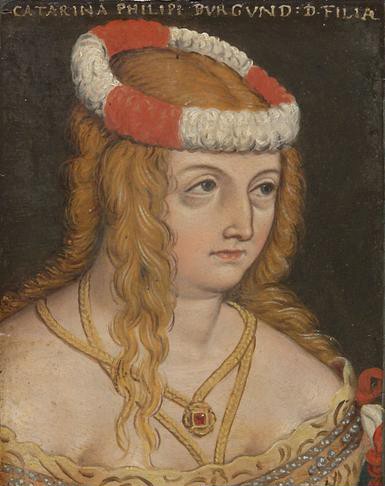
Susan: I have many favorites so it’s hard to choose one. Margaret of Austria, Regent of the Netherlands and Anne de Beaujeu, Duchess of Bourbon and Regent of France, come to mind, both of whom are in the second book. But while I was researching the formidable women, I came across Catherine of Burgundy, Duchess of Austria and Countess of Ferrette, the daughter of Philp the Bold. Her life really captivated me for several reasons. When her father didn’t pay the balance of her dowry, she convinced her husband to give her the county of Ferrette, not just for the income but to rule on her own.
Catherine took full advantage of this opportunity. She acted as diplomat for her brother, John the Fearless and her nephew Philip the Good. She engaged in feuds and even started a small conflict with the city of Basel. She must have had remarkable charisma and a forceful personality. But the best part is she made a marriage without the permission of her brother. I haven’t come across many women who did such a thing. She may have done it to have an ally for her feuds and to maintain her position as countess. But she also may have been in love with the man. When her nephew Philip forced her to back out of the marriage, she seems to have lost her will to live which is pretty sad. But she’s my current favorite medieval historical person.
Sharon: Who is your least favorite historical person and why?
Susan: At the moment, I’m going to say Ferdinand of Aragon for several reasons. One the one hand, I have to admire his political acumen and diplomatic panache. In the era of Isabella of Castile, King Henry VIII, King Francis I and Holy Roman Emperor Charles V, he held his own. But his treatment of women is abominable.
He appears to have navigated his relationship with Isabella really well. They were on equal footing and managed to share their responsibilities. But once Isabella was gone, he engaged in antics like marrying again to try to have another child to displace his daughter Juana as queen of Aragon, as well as not supporting his younger daughter Katherine of Aragon once her husband Arthur Tudor died. He also is responsible, along with her husband Philip as well as her son HRE Charles V, for spreading terrible rumors about Juana of Castile’s mental health and for her eventual captivity which lasted for 45 years. It’s not a pretty story.
Sharon: How do you approach researching your topic?
Susan: The process of research starts with reading. Lots of reading. After finding as many books as I can on my topic, I start reading and find more resources. This process also involves searches on the internet for sources. Then, I make notes from my reading. I treat each chapter of the book as if it were an extended post for my blog. The notes are combined into a narrative which then becomes a chapter, and the chapters are assimilated into the book.
Sharon: Tell us your ‘favourite’ story you have come across in your research.
Susan: This is a good one! Many years ago, I read a turn of the century biography of Philippa of Hainault, queen of King Edward III of England. The king and queen arranged a marriage for their eldest daughter Isabella to Louis II, Count of Flanders, also known as Louis of Male. The author relates the story of how Louis jilted Isabella at the altar, fleeing to France to avoid the wedding ceremony. Louis had promised his ally, King Philip VI of France that he would marry Margaret, the middle daughter of the Duke of Brabant and he eventually did.
Now Louis was not a faithful husband to Margaret and had something along the lines of 18 illegitimate children. Margaret was 7 years older than Louis. She gave birth to her daughter Margaret of Male in 1350 who eventually married the first Duke of Burgundy, Philip the Bold in 1369. Two years later, Countess Margaret deserted the court of Flanders to live in the country.
The author of the biography of Philippa of Hainault casually mentions that Margaret, Countess of Flanders, ordered the nose of Louis’ mistress cut off after the mistress gave birth to twins. As a result of her injuries, the mistress died. She insinuates this was the reason for Margaret abandoning the court. This sensational story really piqued my curiosity, and I searched for the truth for a long time.
Why did Margaret desert the Flemish court, something Belgian historians have debated for years? Did Louis abandon her? Did she abandon him? Was she mentally ill? Is there a history of mental illness in the House of Reginar of Brabant?
It seems an unknown chronicler from Bruges, in 1430, is the instigator of the report of Margaret cutting off the nose of Louis’ lover. He wrote this sixty years after the alleged event. It is entirely possible he spoke with someone who knew the truth of the matter from oral tradition. It is also possible he made up the entire scenario. Since then, a chronicler restated the story in 1531, and popular historians have repeated it down through the ages. While there is still the possibility the story is true, it is highly unlikely, and these chroniclers may have had their own agenda in spreading the rumors.
The stories of the jilting of Isabella, the marriage of Margaret of Brabant to Louis, Count of Flanders and her daughter Margaret of Male, wife of Philip the Bold, Duke of Burgundy, are all in the Formidable Women book.
Sharon: Tell us your least ‘favourite’ story you have come across in your research.
Susan: That has to be the story of Blanche II, Titular Queen of Navarre. Her father was King Juan II of Aragon, and her mother was Blanche I, Queen of Navarre. King Juan was crafty and sly and ruled Navarre by right of his wife. But once Blanche I died, a family feud ensued and King Juan did everything in his power to retain the governance of Navarre, even going so far as to ignore the rights of Blanche II and her brother Charles who had both gained the approval of the Cortes of Navarre as the legal heirs of Blanche I.
This state of affairs lasted for years. Blanche II had been married to Enrique IV of Castile, but the marriage was not a happy one and eventually, the union was annulled and Blanche II returned to Aragon. Her father locked her up in prison to prevent her from gaining the throne of Navarre to which she was legally entitled. Blanche remained in prison from 1453 until her death under suspicious circumstances in December 1464.
What makes this story even sadder is the fact that King Juan II of Aragon married again and had a son, Ferdinand of Aragon, who married Isabella of Castile and was the father of Queen Juana of Castile. In an eerie twist of fate, similar to Blanche II of Navarre, Ferdinand managed to declare his daughter Juana mentally unstable and locked her up for 45 years in Tordesillas. History repeats itself.
Sharon: Are there any other eras you would like to write about?
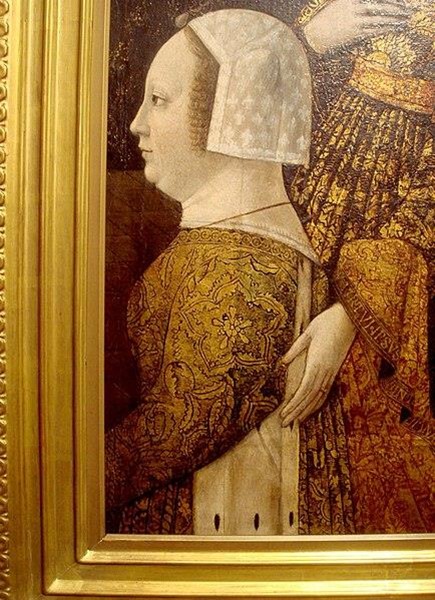
Susan: My interest in the medieval, early modern and Renaissance eras is pretty passionate and I’ve been out of my element by writing about the Stuart era. But the Stuart’s need an update and more scrutiny. If I did look at a different era, it might be Italian medieval and Renaissance history, a subject I’ve tried to avoid for many years because I found it to be meandering and complicated. But recently, I’ve delved into the stories of women such as Bona of Savoy, who features in my second book, as well as Bianca Maria Visconti, mother of Bona’s husband, Galeazzo Maria Sforza, Duke of Milan, and Valentina Visconti, wife of Louis I, Duke of Orleans who was assassinated by John the Fearless, Duke of Burgundy. These are tremendous women’s stories and pique my interest for more.
Sharon: What are you working on now?
Susan: I’m currently in the research stage of writing a biography of Mary Beatrice d’Este, second wife of King James II of England. She was the sister-in-law of Catherine of Braganza and the only Italian Queen of England. This book will be along the same lines as the biography of Catherine.
The research into Mary Beatrice brought up another intriguing subject. Her mother was Laura Martinozzi, Duchess of Modena, one of the many nieces of Cardinal Mazarin, the prime minister of Kings Louis XIII and XIV of France. Seems like another intriguing topic to look into.
Sharon: What is the best thing about being writer?
Susan: Having been an avid reader all my life, being a writer allows me to keep reading and to read about any topic that interests me. I love learning! I probably should have been a history teacher but never pursued it. By writing books and for the blog it allows me to educate people who are interested in the fascinating stories of history. My main goal is to get someone to read a book and hopefully enjoy the history as much as I do.
About the Author:
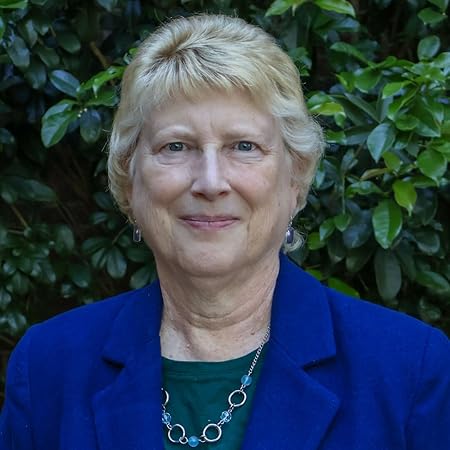
Susan Abernethy’s passion for history dates back fifty years and led her to study for a Bachelor of Arts degree in history at the University of North Carolina at Charlotte. She is currently a member of the Rocky Mountain Medieval and Renaissance Association, the Society for Renaissance Studies and the Historical Association. Her work has appeared on several historical websites and in magazines and includes guest appearances on historical podcasts. Her blog, The Freelance History Writer, has continuously published over five hundred historical articles since 2012, with an emphasis on European, Tudor, Medieval, Renaissance, Early Modern and women’s history. She is currently working on her third non-fiction book.
Buy the books:
Charles II’s Portuguese Queen: The Legacy of Catherine of Braganza; The Formidable Women Who Shaped Medieval Europe: Power and Patronage in the Burgundian Court
*
My Books:
Signed, dedicated copies of all my books are available through my online bookshop.
Out now: Scotland’s Medieval Queens

Scotland’s history is dramatic, violent and bloody. Being England’s northern neighbour has never been easy. Scotland’s queens have had to deal with war, murder, imprisonment, political rivalries and open betrayal. They have loved and lost, raised kings and queens, ruled and died for Scotland. From St Margaret, who became one of the patron saints of Scotland, to Elizabeth de Burgh and the dramatic story of the Scottish Wars of Independence, to the love story and tragedy of Joan Beaufort, to Margaret of Denmark and the dawn of the Renaissance, Scotland’s Medieval Queens have seen it all. This is the story of Scotland through their eyes.
‘Scotland’s Medieval Queens gives a thorough grounding in the history of the women who ruled Scotland at the side of its kings, often in the shadows, but just as interesting in their lives beyond the spotlight. It’s not a subject that has been widely covered, and Sharon is a pioneer in bringing that information into accessible history.’ Elizabeth Chadwick (New York Times bestselling author)
Available now from Amazon and Pen and Sword Books
Also by Sharon Bennett Connolly:

Heroines of the Tudor World tells the stories of the most remarkable women from European history in the time of the Tudor dynasty, 1485-1603. These are the women who ruled, the women who founded dynasties, the women who fought for religious freedom, their families and love. Heroines of the Tudor World is now available for pre-order from Amberley Publishing and Amazon UK. Women of the Anarchy demonstrates how Empress Matilda and Matilda of Boulogne, unable to wield a sword themselves, were prime movers in this time of conflict and lawlessness. It shows how their strengths, weaknesses, and personal ambitions swung the fortunes of war one way – and then the other. Available from Bookshop.org, Amberley Publishing and Amazon UK. King John’s Right-Hand Lady: The Story of Nicholaa de la Haye is the story of a truly remarkable lady, the hereditary constable of Lincoln Castle and the first woman in England to be appointed sheriff in her own right. Available from all good bookshops Pen & Sword Books, bookshop.org and Amazon.
Defenders of the Norman Crown: The Rise and Fall of the Warenne Earls of Surrey tells the fascinating story of the Warenne dynasty, from its origins in Normandy, through the Conquest, Magna Carta, the wars and marriages that led to its ultimate demise in the reign of Edward III. Available from Pen & Sword Books, Amazon in the UK and US, and Bookshop.org. Ladies of Magna Carta: Women of Influence in Thirteenth Century England looks into the relationships of the various noble families of the 13th century, and how they were affected by the Barons’ Wars, Magna Carta and its aftermath; the bonds that were formed and those that were broken. It is now available in paperback and hardback from Pen & Sword, Amazon, and Bookshop.org. Heroines of the Medieval World tells the stories of some of the most remarkable women from Medieval history, from Eleanor of Aquitaine to Julian of Norwich. Available now from Amberley Publishing and Amazon, and Bookshop.org. Silk and the Sword: The Women of the Norman Conquest traces the fortunes of the women who had a significant role to play in the momentous events of 1066. Available now from Amazon, Amberley Publishing, and Bookshop.org.
Alternate Endings: An anthology of historical fiction short stories including Long Live the King… which is my take what might have happened had King John not died in October 1216. Available in paperback and kindle from Amazon.
Podcast:

Have a listen to the A Slice of Medieval podcast, which I co-host with Historical fiction novelist Derek Birks. Derek and I welcome guests, such as Bernard Cornwell and Elizabeth Chadwick, and discuss a wide range of topics in medieval history, from significant events to the personalities involved.
Every episode is also now available on YouTube.
*
Don’t forget! Signed and dedicated copies of all my books are available through my online bookshop.
For forthcoming online and in-person talks, please check out my Events Page.
You can be the first to read new articles by clicking the ‘Follow’ button, liking our Facebook page or joining me on Twitter, Threads, Bluesky and Instagram.
*
©2025 Susan Abernethy and Sharon Bennett Connolly FRHistS.
 History... the interesting bits!
Very interesting, and inspiring. It’s good to see female historical figures being explored in detail like this. I agree that we need to understand the role they played historically and the influence they had. Sadly its too often overlooked.
LikeLiked by 1 person
Thank you Brenda. It’s definitely a developing discipline in history – which I’m hoping I’ve had some influence over. There is a lot more work being done on the role of women throughout history than there was 10 years ago, that’s for sure!
LikeLiked by 1 person
Im really just starting to explore, but im really enjoying investigating. I think my curiosity keeps me searching. Reading your pista and the interviews you share with other writers is helping enormously
LikeLiked by 1 person
Enjoy! Its great fun. So many rabbit holes to go down with some very interesting women. Keep me posted with how you get on. Always happy to talk history. Xx
LikeLiked by 1 person