I would just like to take this opportunity to wish all of my readers, near and far, a very MERRY CHRISTMAS and a wonderfully HAPPY NEW YEAR.
And to THANK YOU all for your support and encouragement over the last 10 years.
See you in 2025!
With love and Best Wishes
Sharon xxx
Christmas Podcast:
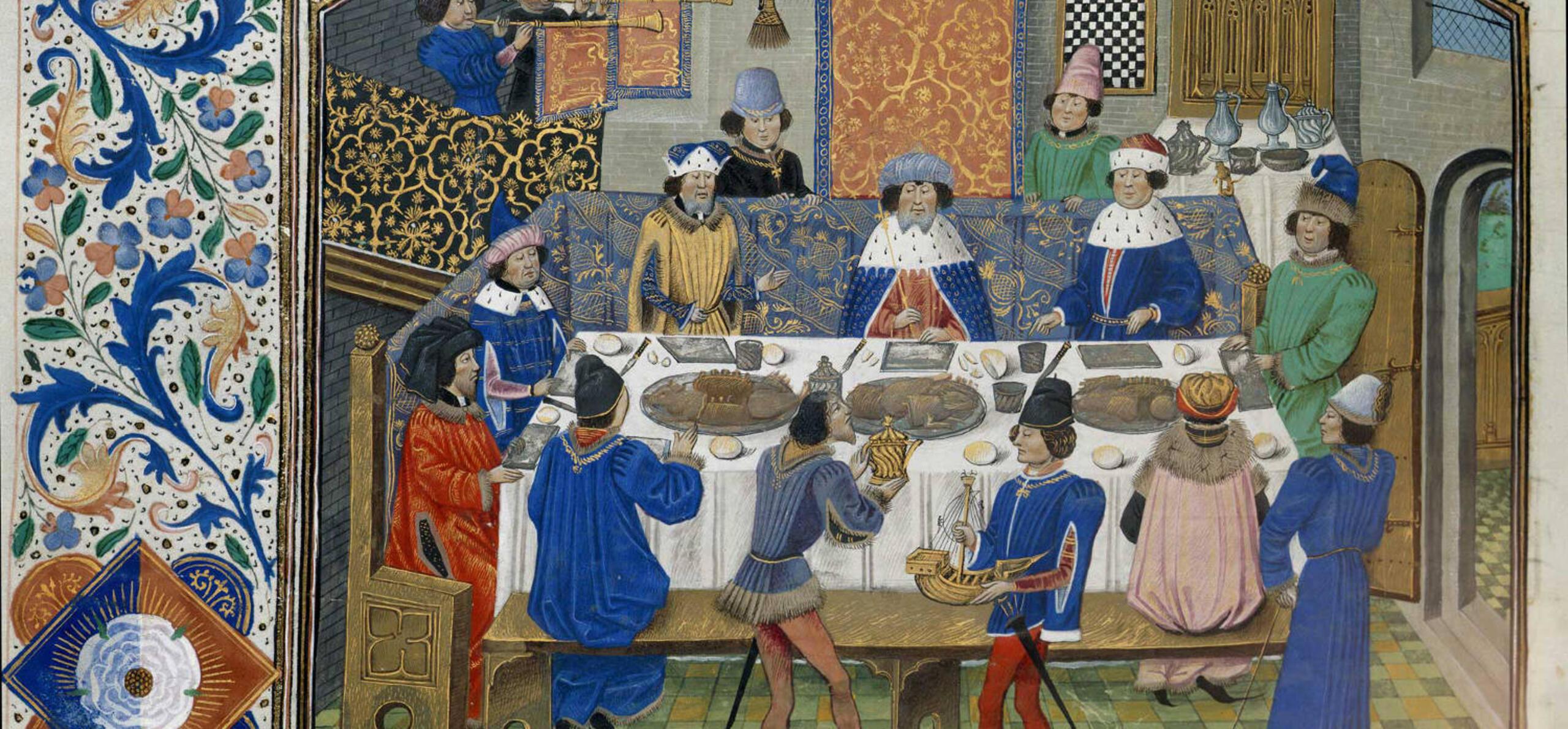
Have a listen to the 2024 A Slice of Medieval Christmas Special. Derek and I talk pantomime dames, mince pies, feasting and gift giving and a whole host medieval Christmas traditions with author and historian Toni Mount. It is great fun!
*
Don’t forget!Signed and dedicated copies of all my books are available through my online bookshop.
For forthcoming online and in-person talks, please check out my Events Page.
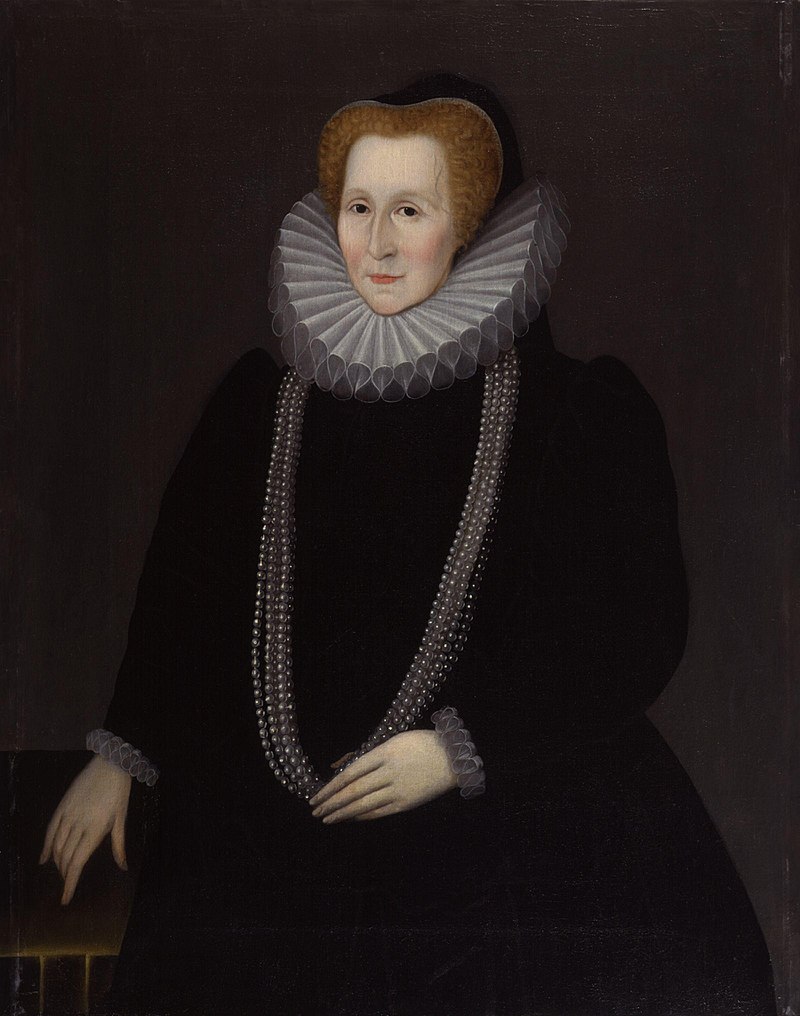
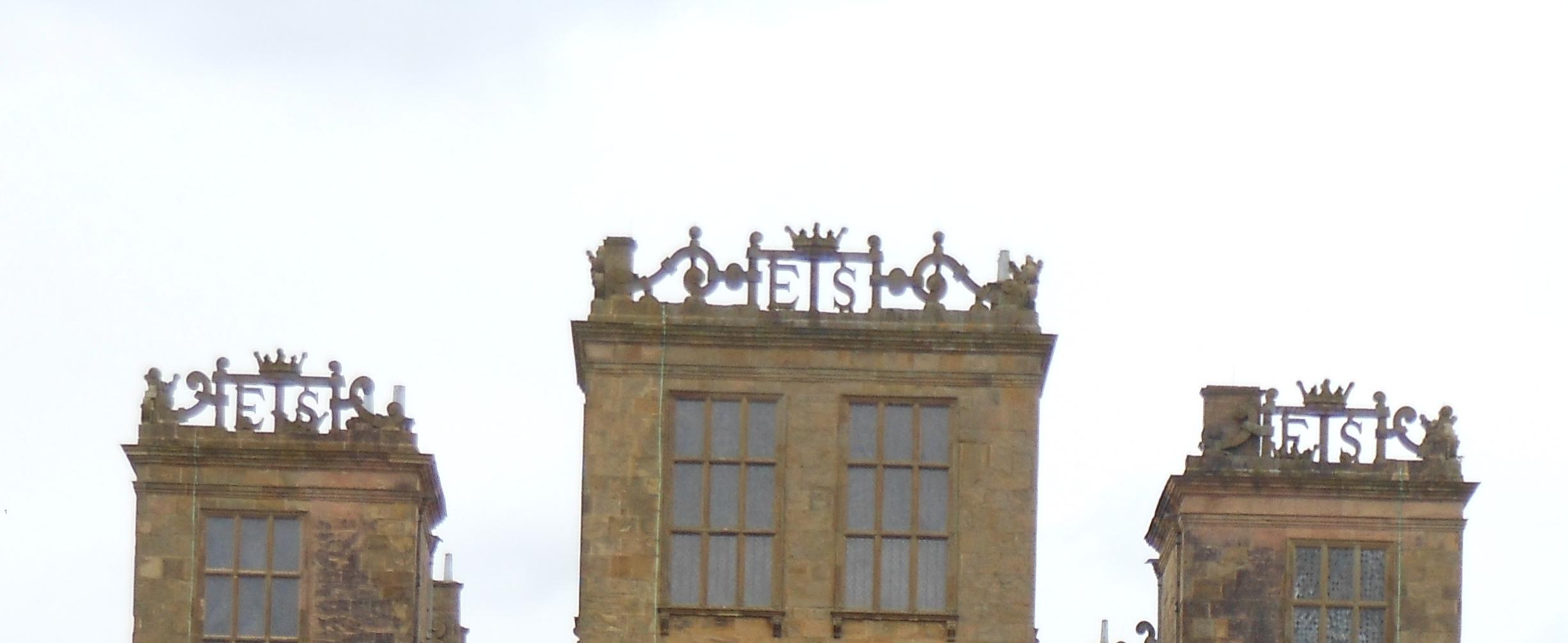
Bess of Hardwick is perhaps the most famous Tudor woman, outside of the extended Tudor royal family. A friend of Queen Elizabeth I, and confidant of Katherine Grey, she was also gaoler to Mary, Queen of Scots. An accomplished needlewoman, she is probably best known having built Chatsworth House and Hardwick Hall in Derbyshire; indeed, Hardwick Hall even bears her initials ES (Elizabeth Shrewsbury) in its external stonework.
Bess’s marital history is just as remarkable.
Bess was born around 1527, one of four daughters and a son born to John Hardwick of Hardwick, Derbyshire. It was a moderately prosperous gentry family. When her father died in 1528, When her father died in 1528, most of the family lands were taken into royal wardship until her brother James came of age. Bess’s mother, Elizabeth Leeke, remarried around 1529, to Ralph Leche of nearby Chatsworth, and had three more children, stretching the family finances even tighter. Leche’s constant problems with money meant that Leche spent the years from 1538 to 1544 in the Fleet Prison for debt and in 1545 he was committed to the debtors’ prison in Derby
With no dowry to attract a husband, 11-year-old Bess was sent into service in the household of Sir George and Lady Anne Zouche of Codnor Castle, a neighbouring family. Lady Zouche was a distant cousin of both of Bess’s parents and a friend and lady-in-waiting to Queen Anne Boleyn; following the queen’s downfall, she served her successor, Jane Seymour. Sir George was a gentleman pensioner to the king. It was in this household that Bess would have learned the ways of the aristocracy, whilst acting as a lady-in-waiting. Bess would have also made connections with various families through the other young people of the household.
Husband no. 1.
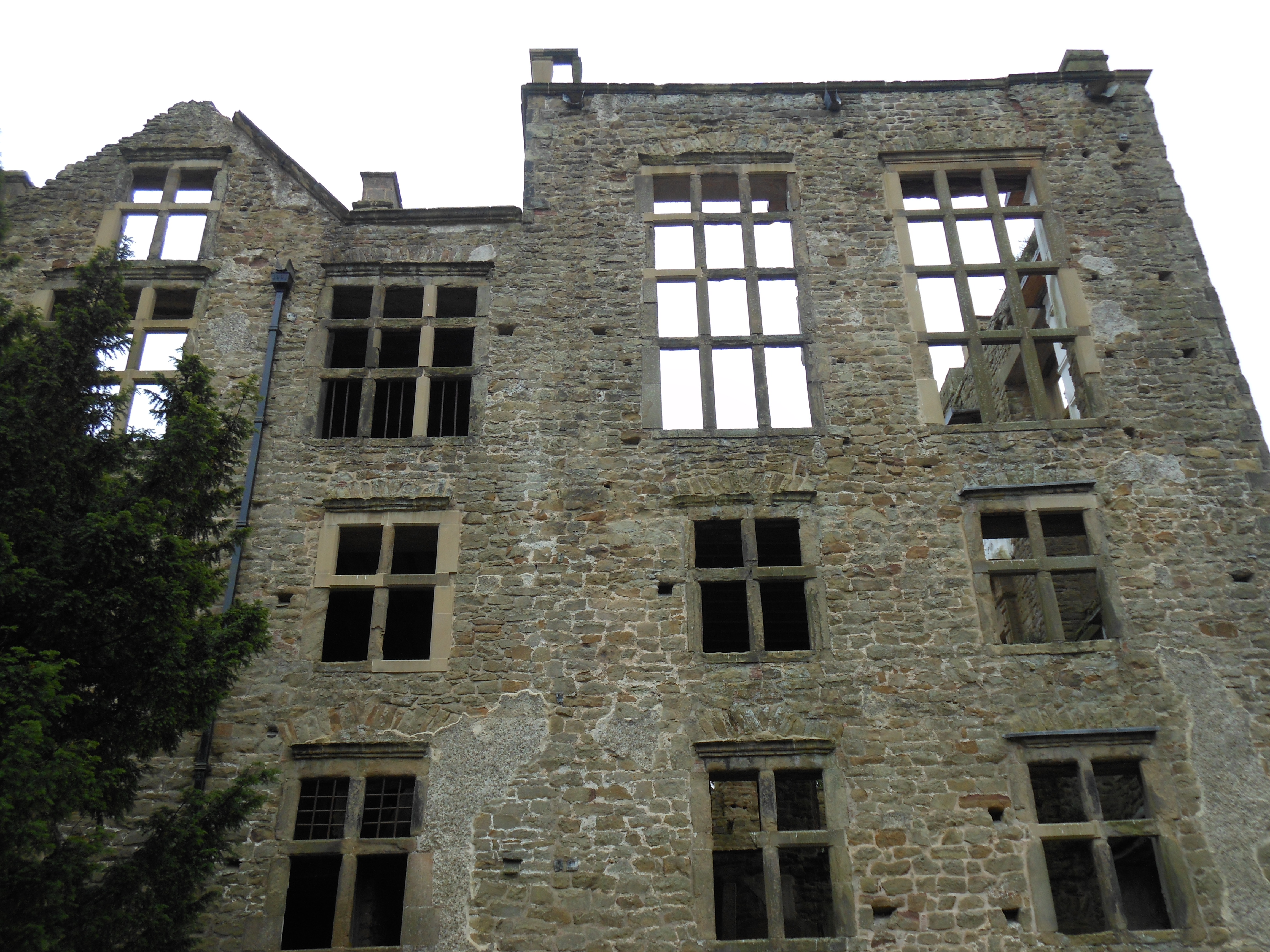
The ‘old’ Hardwick Hall
It was while she was living in the Zouche’s household that Bess met her first husband, Robert Barlow. The Barlows were acquainted with Bess’s stepfather, who was owed money on a land deal by Robert’s father, Arthur Barlow. It may well be that Arthur offered his oldest son and heir in marriage to Bess, with the amount owing from the court case written off in lieu of Bess’s dowry. Bess and Robert were married in the spring of 1543, with Bess being about fifteen and Robert a couple of months short of his fourteenth birthday.
The marriage was short-lived and possibly unconsummated, given their ages. Robert fell ill and died within eighteen months of their wedding day, on Christmas Eve 1544. When Bess applied to the Barlows for her widow’s dower, one-third of the income in rents and revenues from her husband’s estates, she was refused and a lengthy court battle ensued. A settlement was finally in 1546. It did not make her rich, but the annual income of £30 gave Bess a measure of independence when she was only 17 years of age.
Husband no. 2.
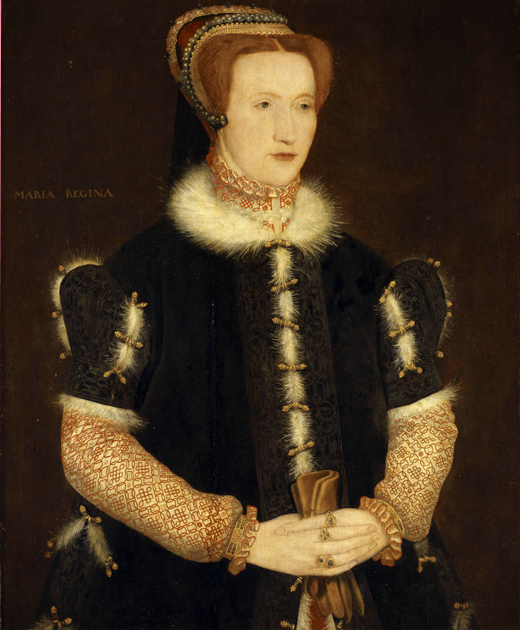
Bess of Hardwick, 1550s
Bess may have met Sir William Cavendish, while staying at Bradgate Park with Lady Frances Brandon, Marchioness of Dorset. Frances was a granddaughter of King Henry VII and the mother of the ill-fated Lady Jane Grey, the Nine Days Queen. Cavendish was twice-widowed, mature and rather rich, with 3 surviving daughters and no male heir. An experienced government official, he had been appointed Treasurer of the King’s Chamber in 1546 and had been knighted by the king on Easter Sunday of the same year. He had a portfolio of properties throughout the Midlands and a fine house in London.
When he met Bess in 1547, she was 19 and he was 40. A strong friendship developed, despite the age gap. They were married in the family chapel at Bradgate Park on 20 August 1547. Bess had a deep interest in astrology and the timing of the wedding, at two in the morning, was calculated as being the most propitious. Cavendish recorded the event in his notebook:
‘Memorandum. That I was married unto Elizabeth Hardwicke my third wife in Leestersheer at Bradgate House, on 20th August in the first year of King Edward’s reign, at two of the clock after midnight.’1
After the wedding, the couple travelled to Sir William’s manor at Northaw in Hertfordshire where Bess probably met her three stepdaughters for the first time, Catherine, Mary and Anne. At twelve, the eldest was only seven years younger than Bess. Though managing a household and acting as stepmother to 3 girls not much younger than herself must have been a daunting prospect, within a year Bess was keeping the books, paying bills and recording rents. The proximity of the manor to London also meant that shortly after the wedding Bess was presented at court to the young king Edward VI.
Bess and Cavendish would have 8 children together, of which 6 would survive childhood, including 3 boys. And it was with Cavendish that Bess acquired the lands of her stepfather at Chatsworth for £600. There was an old manor house on the property that the family lived in until the completion of Chatsworth House. Bess and Sir William continued to buy land in Derbyshire, including 8,000 acres from the earl of Westmorland. All the Derbyshire properties were in both their names, which meant that when Sir William died before his heir came of age, the properties remained in Bess’s hands rather than being taken into wardship. Sir William died in October 1557, leaving Bess in a precarious financial position, owing £5,237 to the crown over funds that had disappeared during his time at the Exchequer, apparently pilfered by an assistant.
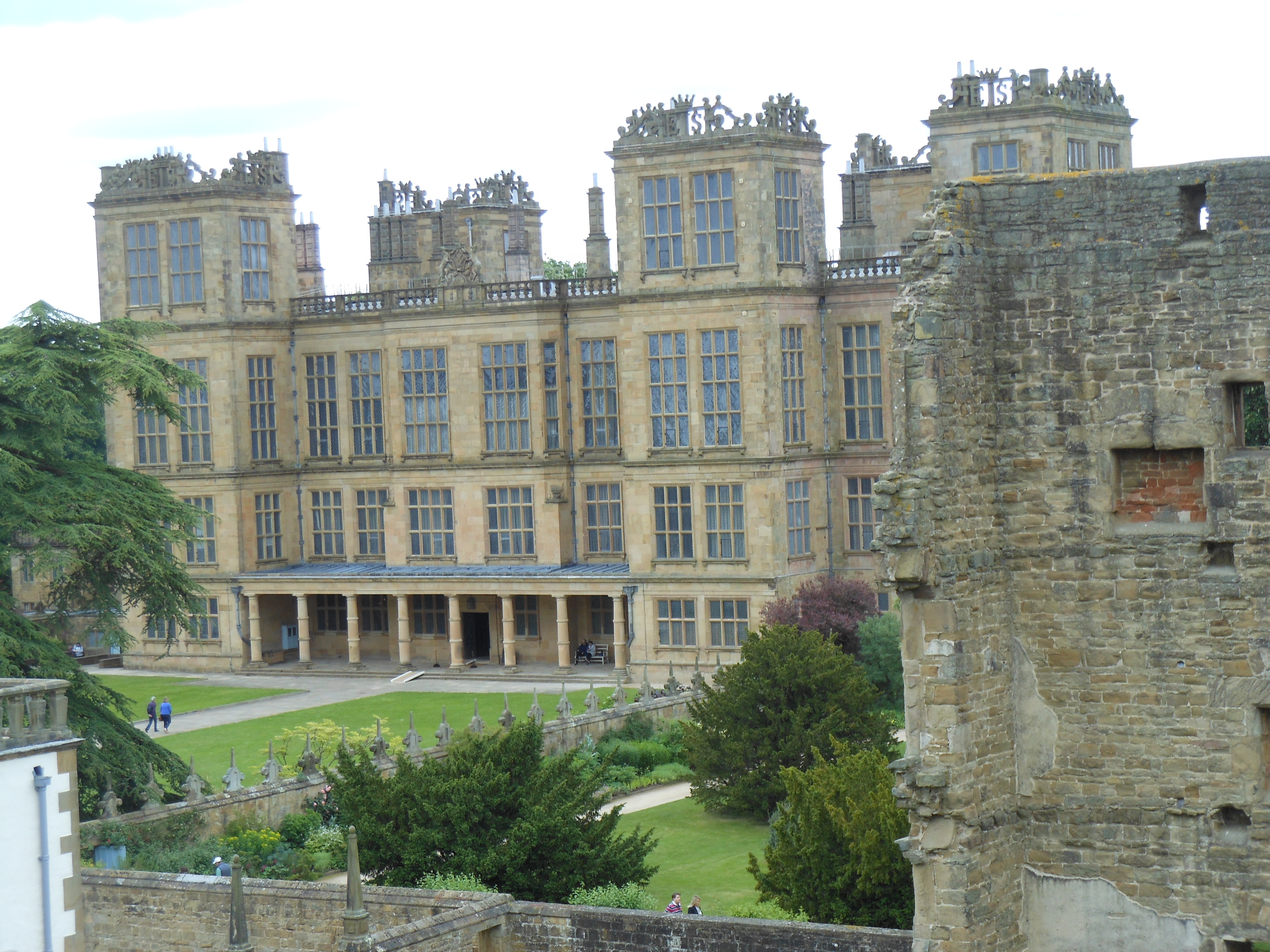
The ‘new’ Hardwick Hall, taken from the old hall
Facing bankruptcy, Bess only avoided the confiscation of her lands by writing to many of her husband’s friends asking for their help and support. These friends voted against the bill when it was presented to Parliament. Her lands were safe, but she still owed the money. Bess made the final entry in Sir William’s notebook:
‘Sir William Cavendish Knight, my most dear and well-loved husband, departed this present life on Monday, being the 25th day of October … on whose soul I most humbly beseech the Lord to have mercy, and to rid me and his poor children of our great misery.’2
Husband no. 3.
In 1559, Bess married her late husband’s friend Sir William St Loe, a widower with 2 surviving daughters, Mary and Margaret. From an ancient and noble family and considerably wealthier than Cavendish had been, St Loe was Captain of Elizabeth I’s Yeoman Guard. St Loe’s father, Sir John St Loe, died and Bess took the opportunity to visit her husband’s old friend and offer her condolences. As the months progressed, so did their relationship. In January 1559, Sir William St Loe played a major role in Queen Elizabeth’s coronation, seeing to her security and, as Chief Butler of England, it was St Loe who ceremonially offered the first cup of wine to the new sovereign.
In July 1559, Sir William St Loe announced his betrothal to Bess and a wedding invitation sent by the groom to Bess’s old friend, Sir John Thynne, still exists:
Saving your promise … and not forgetting your friendship, these lines are to satisfy you that the day of my marriage is by my Mistress appointed upon Sunday this sennight [27 August]. At which time both her ladyship and myself [hope] to see you there. She hath with terrible threatenings commanded me not to forget making of her hearty commendations unto you and to my lady your wife, unto whom I pray you let me also commended … from Somerset this Tuesday 15th August. William Seyntlo.3
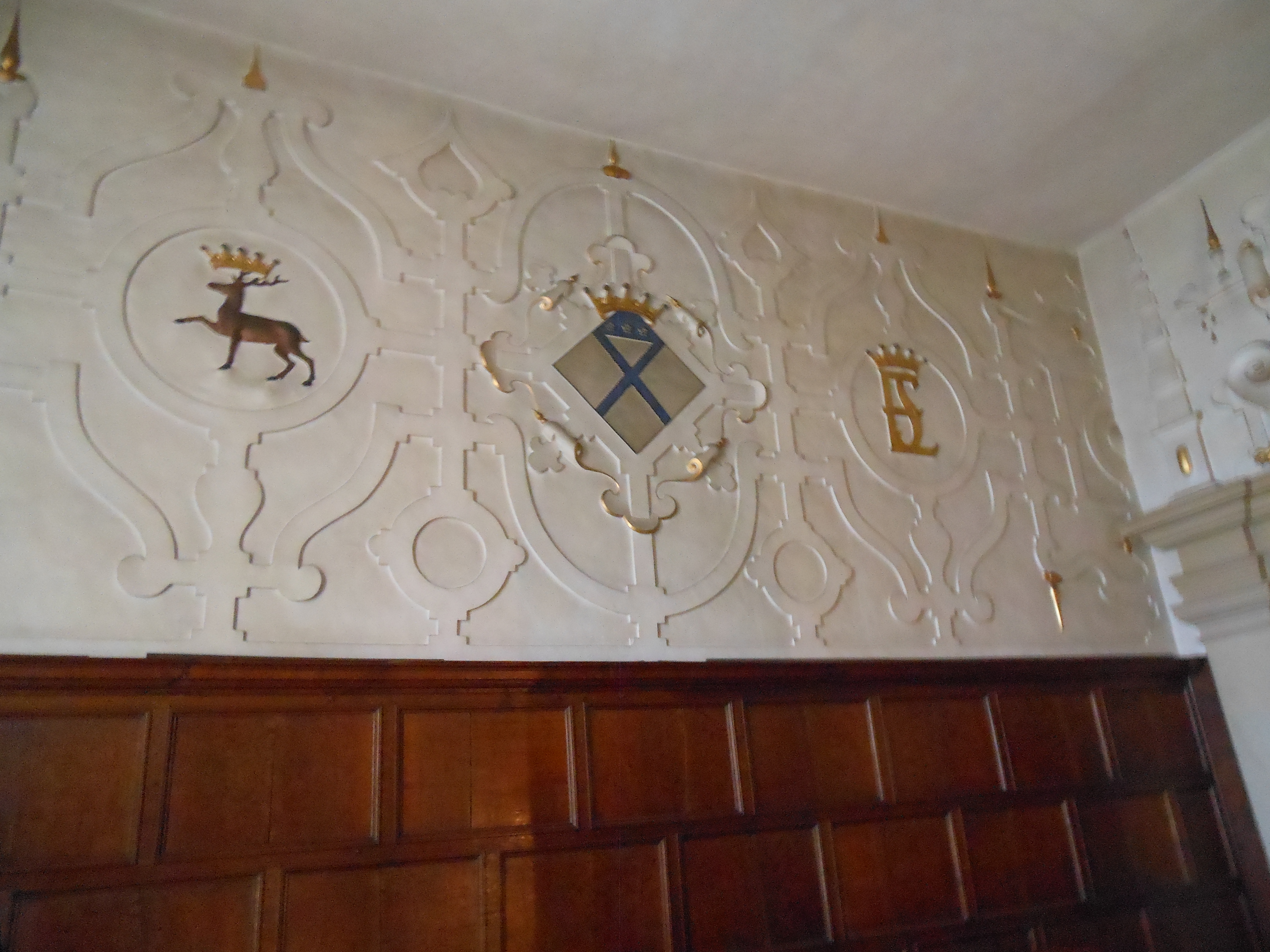
Bess’s initials and the Talbot dog, Hardwick Hall
Once married, St Loe’s duties often separated the couple, until Bess was appointed a Lady of the Privy Chamber. Due to his relationship with Queen Elizabeth, St Loe was able to reduce the debt Bess owed and paid the £1,000 fine on her behalf. The marriage of Bess and St Loe was a happy one and he treated Bess’s children as his own. However, Sir William and his younger brother, Edward, became involved in a property dispute. Edward visited Sir William and Bess in London to resolve the issue but shortly after the visit, Bess fell ill, poisoned. William St Loe suspected his brother Edward and 3 of Edward’s associates were punished, though Edward was not.
Bess was visiting her family in Derbyshire in 1565 when she received a note from London informing her that St Loe was critically ill. By the time she arrived back in the city, her husband was dead. As his brother Edward had visited recently, poison was suspected but could not be proven. St Loe had left everything to Bess. His will was unequivocal, though the fact St Loe had left nothing to his daughters meant that it was challenged, and Bess found herself fighting yet another court case for her rights.
Husband no. 4.
Bess of Hardwick’s initials on Hardwick Hall, Derbyshire
On 1 November 1567, Bess married her fourth and final husband, George Talbot, Earl of Shrewsbury. At the same time, four of their children were married, with Bess’s daughter Mary marrying George’s second son, Gilbert, and Henry Cavendish marrying George’s daughter, Grace. A wealthy widow until that point, Bess was well aware that all her lands and property would be controlled by Shrewsbury from the moment of their marriage. However, Bess had a clause written into the marriage contract that in exchange for this, one-third of Shrewsbury’s unsettled income would go to Bess on his death. Arrangements were also made regarding Chatsworth, which would automatically go to Henry Cavendish on Bess’s death.
Bess and Shrewsbury spent the first few months of their married life away from court but sent the queen a gift of venison through Bess’s nephew, Anthony Wingfield. When the young man said he did not know when Bess would be returning to court, the queen said,
‘I am assured that if she have her own will she would not be long before she would see me. I have been glad to see my lady St Loe, but am I now more desirous to see my Lady Shrewsbury. I hope my Lady hath known my good opinion of her… I assure you there is no Lady in this land that I better love and like.’4
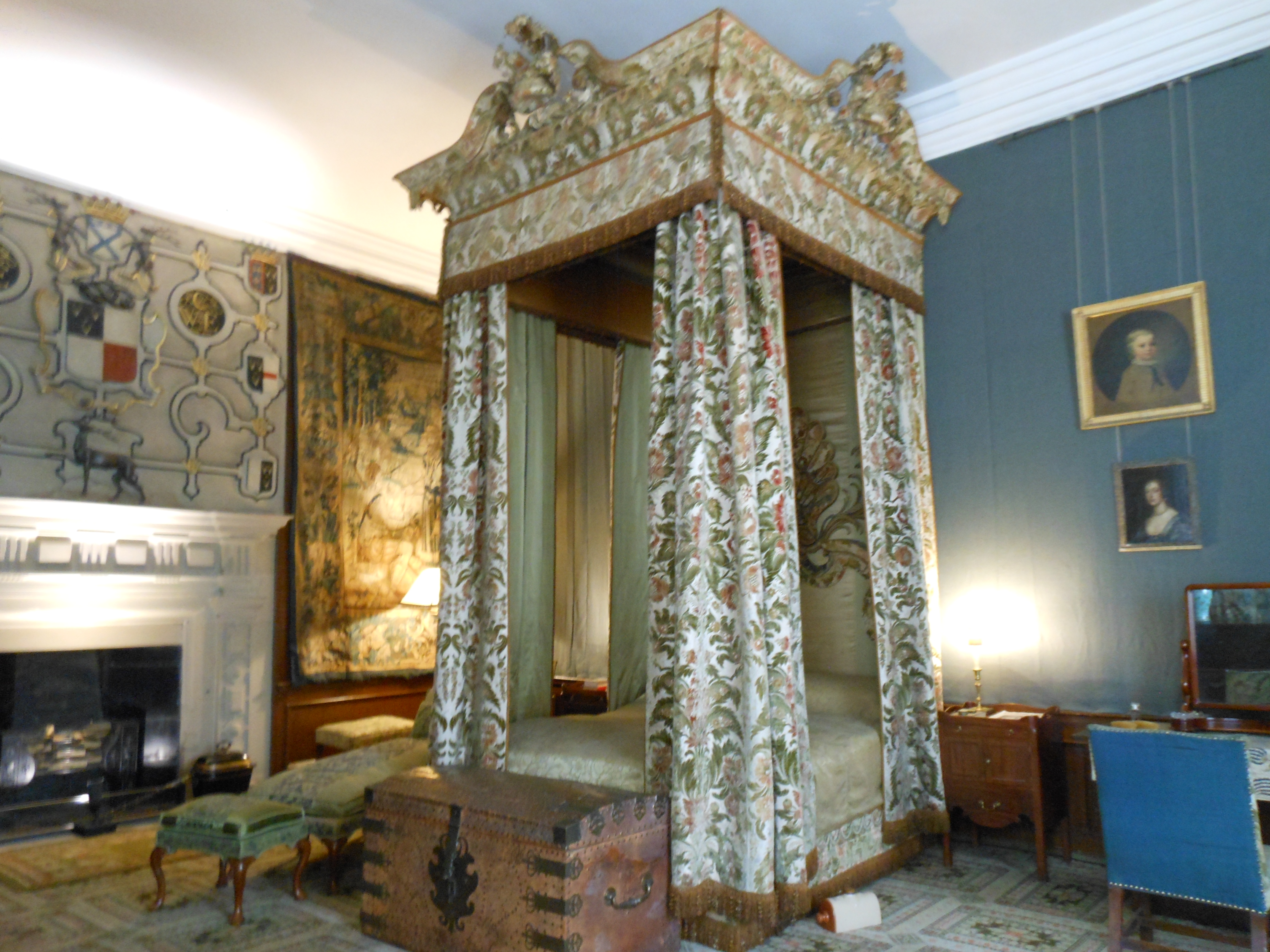
Bess of Hardwick’s bedchamber, Hardwick Hall
In 1568, Shrewsbury and Bess were given the custody of Mary, Queen of Scots, who remained in their charge until 1584. Famed for her needlework, Bess and Queen Mary would work on samples together. It was whilst they had custody of the Scots queen that Bess and Shrewsbury’s relationship began to break down. Bess repeatedly accused the earl of infidelities, including with their queenly prisoner, and Shrewsbury was feeling the strain of acting gaoler, with mounting debts as a result of the expenses incurred. In 1584, Bess separated from Shrewsbury and went to live at Chatsworth. She had to fight yet another legal battle when Shrewsbury claimed Chatsworth was his under the terms of their marriage settlement, but the court found in Bess’s favour, awarding her Chatsworth and a sizeable income from her husband.
By the time of the settlement, however, Bess had already moved on from Chatsworth and started a new building project at Hardwick, rebuilding her family’s old Hall, which was completed by 1591. Her estranged husband, Shrewsbury, died in 1590, leaving Bess with a third of his disposable lands. As a result, as soon as the Old Hall was completed, Bess embarked on a new project, building an entirely new Hardwick Hall right next door. Bess’s final years were occupied with building and furnishing the new hall.
In 1601, she made her will, leaving Hardwick to her second and favourite son, William, while her eldest son Henry was to have Chatsworth. Bess also made provision for her other children and her grandchildren, as well as her servants and the residents of the almshouse that she had founded in Derby. However, she altered the will in March 1603, after quarrelling with both Henry and her granddaughter Arbella, both of whom she now disinherited.
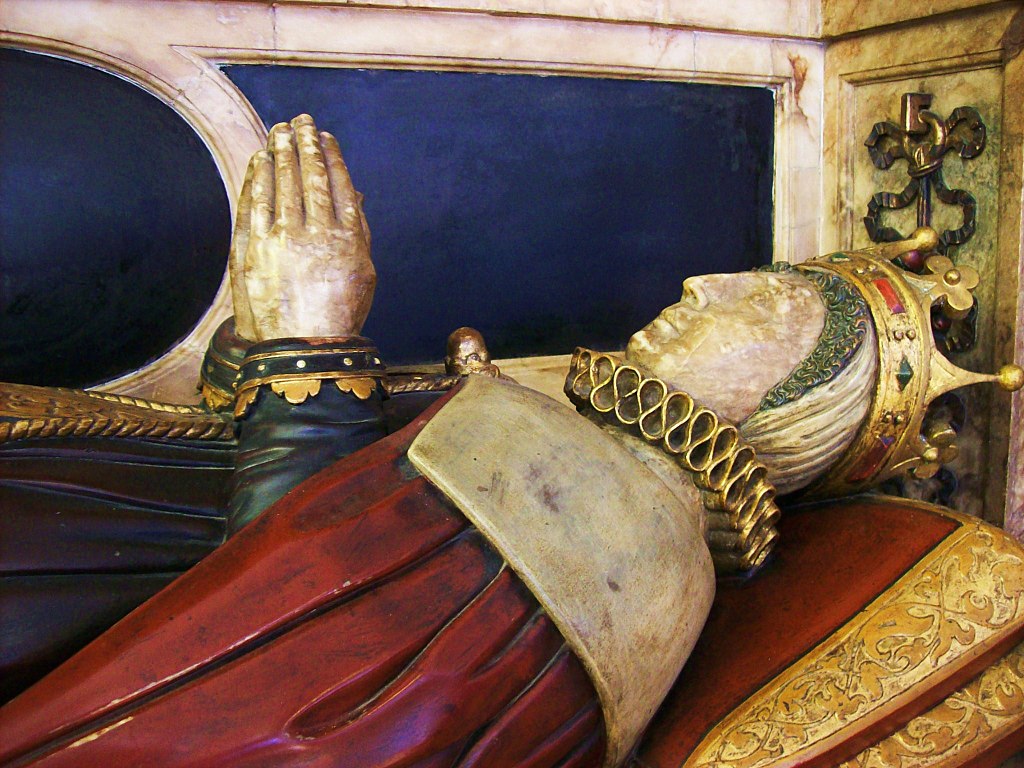
Effigy of Bess of Hardwick wearing a coronet of a countess. Derby Cathedral
At the time of her death, Bess was one of the richest people in England. She had survived childbirth eight times and the rollercoaster that was the English Reformation. She is famed both as the builder of Chatsworth House and Hardwick Hall and as the founder of a great dynasty. Her descendant, Peregrine Cavendish, the twelfth and current duke of Devonshire, still resides at Chatsworth House. Bess is also famed for her needlework, many examples of it still survive in her various properties. She and Mary, Queen of Scots would work on samples together when the Scots queen was in the custody of Bess and her husband.
Having survived all four husbands, various legal challenges, poisoning and scandal, Bess died at Hardwick on 13 February 1610 and was buried at All Hallows, Derby, now Derby Cathedral.
Notes:
1. Collins, Historical Collections of the Noble Families of Cavendish quoted in Mary S. Lovell, Bess of Hardwick, p. 36; 2. Collins, Historical Collections of the Noble Families of Cavendish, quoted in Jill Armitage, Four Queens and a Countess, p. 93; 3. Mary S. Lovell, Bess of Hardwick, p. 147; 4. Jill Armitage, Four Queens and a Countess, p. 125
Sources;
Mary S. Lovell, Bess of Hardwick: First Lady of Chatsworth; Jill Armitage, Four Queens and a Countess: Mary Queen of Scots, Elizabeth I, Mary I, Lady Jane Grey and Bess of Hardwick; Nathaniel Johnson, Lives of the Earls of Shrewsbury; Arthur Barlow’s Inquisition Post Mortem; Calendar of State Papers, Letters and Papers September 1536; Lisa Hilton, Elizabeth I: Renaissance Prince, A Biography; Annie Bullen, Hardwick Hall (guidebook); Tracy Borman, Elizabeth’s Women; Leanda de Lisle, The Sisters Who Would Be Queen: The Tragedy of Mary, Katherine and Jane Grey; Nicola Tallis, Crown of Blood: The Deadly Inheritance of Lady Jane Grey; Alison Weir, Elizabeth the Queen; Elizabeth Norton, The Lives of Tudor Women; Victoria Sylvia Evans, Ladies-in-Waiting: Women who Served at the Tudor Court; Amy Licence, The Sixteenth Century in 100 Women.
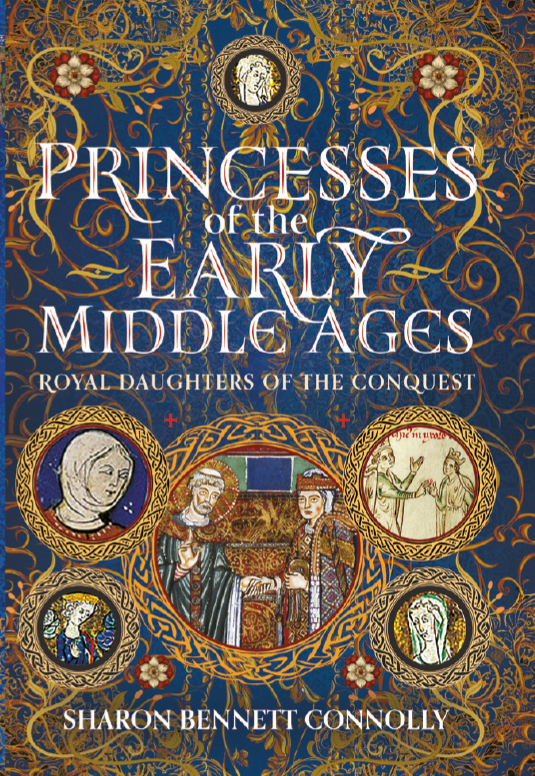
Coming 30 March: Princesses of the Early Middle Ages
Daughters of kings were often used to seal treaty alliances and forge peace with England’s enemies. Princesses of the Early Middle Ages: Royal Daughters of the Conquest explores the lives of these young women, how they followed the stereotype, and how they sometimes managed to escape it. It will look at the world they lived in, and how their lives and marriages were affected by political necessity and the events of the time. Princesses of the Early Middle Ages will also examine how these girls, who were often political pawns, were able to control their own lives and fates. Whilst they were expected to obey their parents in their marriage choices, several princesses were able to exert their own influence on these choices, with some outright refusing the husbands offered to them.
Their stories are touching, inspiring and, at times, heartbreaking.
Princesses of the Early Middle Ages: Royal Daughters of the Conquest is now available for pre-order from Pen & Sword and Amazon.
Also by Sharon Bennett Connolly:
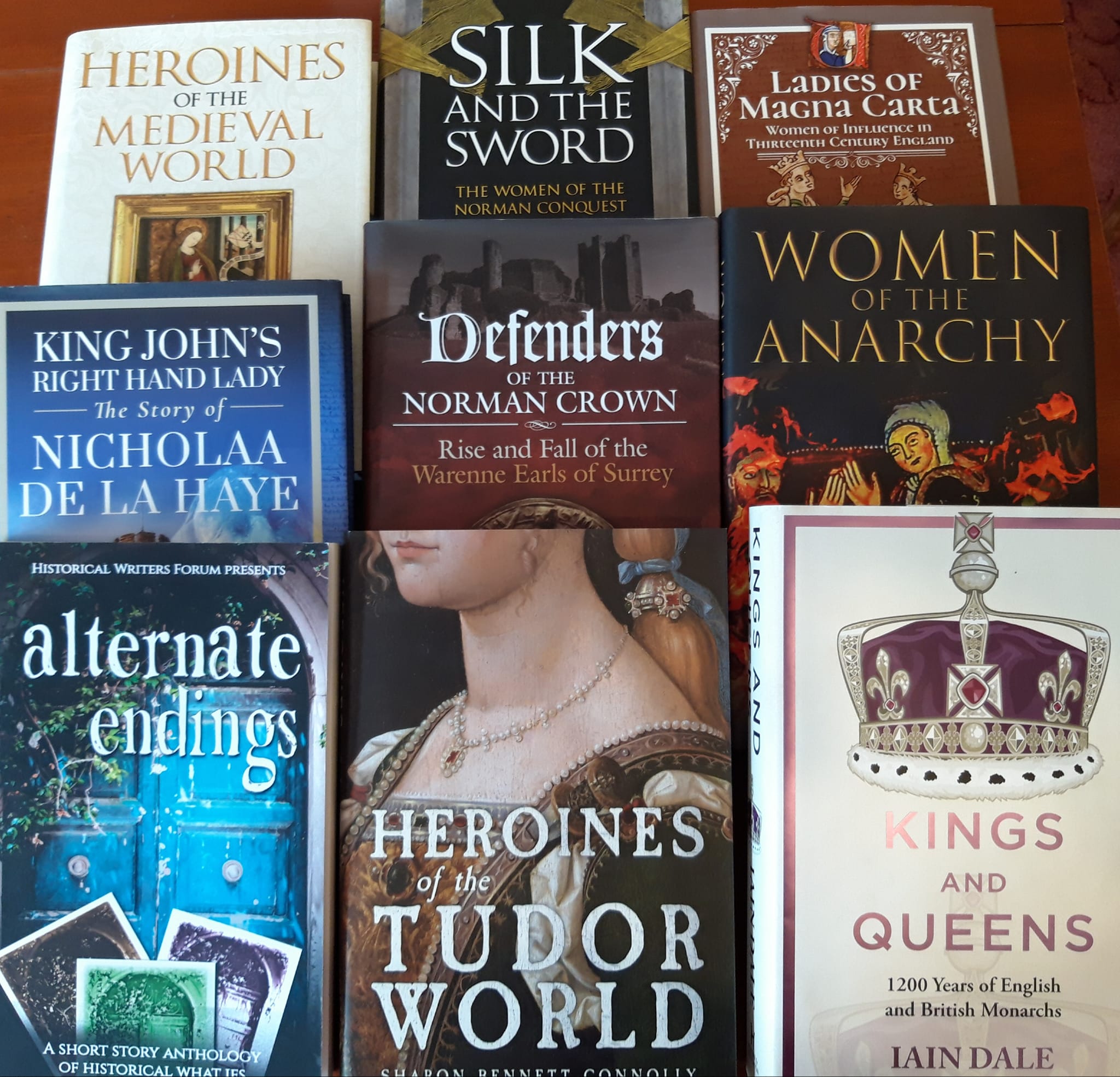
Scotland’s history is dramatic, violent and bloody and Scotland’s Medieval Queens have seen it all. This is the story of Scotland through their eyes. Available now fromAmazon and Pen and Sword Books. Heroines of the Tudor World tells the stories of the most remarkable women from European history in the time of the Tudor dynasty, 1485-1603. These are the women who ruled, the women who founded dynasties, the women who fought for religious freedom, their families and love. Heroines of the Tudor World is now available from Amberley Publishing and Amazon UK.Women of the Anarchy demonstrates how Empress Matilda and Matilda of Boulogne, unable to wield a sword themselves, were prime movers in this time of conflict and lawlessness. It shows how their strengths, weaknesses, and personal ambitions swung the fortunes of war one way – and then the other. Available from Bookshop.org, Amberley Publishing and Amazon UK. King John’s Right-Hand Lady: The Story of Nicholaa de la Haye is the story of a truly remarkable lady, the hereditary constable of Lincoln Castle and the first woman in England to be appointed sheriff in her own right. Available from all good bookshops Pen & Sword Books, bookshop.org and Amazon.
Alternate Endings: An anthology of historical fiction short stories including Long Live the King… which is my take what might have happened had King John not died in October 1216. Available in paperback and kindle from Amazon.
Podcast:
Have a listen to theA Slice of Medieval podcast, which I co-host with Historical fiction novelist Derek Birks. Derek and I welcome guests, such as Ian Mortimer, Bernard Cornwell, Elizabeth Chadwick and Scott Mariani, and discuss a wide range of topics in medieval history, from significant events to the personalities involved.
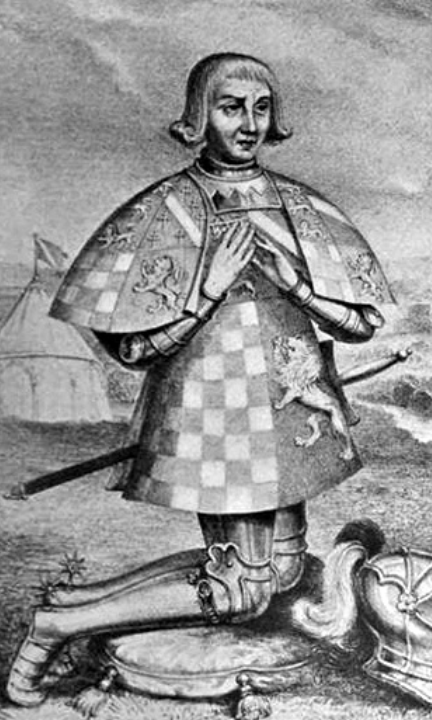
In Tudor times – well, in every era to be honest – not every woman could boast a husband who was capable of greatness. Or even of managing his own finances. Anne de Vere, Countess of Oxford, was one such, a woman who survived the scandals attached to her family only to be faced with a profligate husband who really should have heeded his wife’s advice. Born Anne Howard, daughter of Thomas Howard, 2nd Duke of Norfolk and his second wife, Agnes Tilney, she first appears in the historical record on 16 November 1511, when she is contracted to marry John de Vere, the 12-year-old nephew and heir of John de Vere, 12th Earl of Oxford. John was the only surviving son of George de Vere, who had been intended for the church until his father and oldest brother were both executed in 1462. He then became the heir of his surviving older brother, John de Vere, but died in 1503, leaving his 4-year-old son John as his brother’s heir.
The de Veres were an old, noble family and although the marriage was politically and economically advantageous to both sides, it was even more so to the Howards, whose relatively new nobility would be strengthened by links with the old families. Although the marriage took place in September 1512, the youth of Anne and John meant that the couple lived with Anne’s family, the Howards, and the marriage may not have been consummated for some time. A year later, John inherited his uncle’s earldom of Oxford but as he was a minor, he remained a royal ward, and in 1514 his wardship and lands were granted to his father-in-law, the duke of Norfolk.
Field of the Cloth of Gold, 1520
Anne and John de Vere attended the famous Field of the Cloth of Gold in June 1520 and two months afterwards, the earl attained his majority and was granted livery of his lands. The young couple set up home at Hedingham Castle. The marriage does not appear to have been a happy one and by April 1523, Anne was writing to Cardinal Wolsey, requesting help in managing her husband’s behaviour. Though masked in diplomatic terms, Anne’s letters complained that John was managing his estates badly and acting dishonestly, and he refused to allow her to take on some of the estate management. Anne wrote that ‘yf I shuld medyl in anny off these concerns further than I do I surteyne that I shuld never leue in rest.’1
Anne had taken control of the household finances and asked Wolsey to intervene in the matter of her husband’s debt. She was also worried about the negative influence of her husband’s heir, his second cousin, Sir John de Vere – later the 15th earl of Oxford. With the help of her father, the duke of Norfolk, and half-brother, Thomas Howard, then Earl of Surrey, Anne petitioned Henry VIII and in February 1524 an ordinance was enrolled in the court of Chancery to limit John’s control over his household and finances and to improve his behaviour towards Anne. He was to make no grants or annuities without the advice of Cardinal Wolsey. A noble had a duty to manage his lands sensibly, both to preserve them for future generations and as evidence that he was fit for public life.
John de Vere, Earl of Oxford, was warned against keeping wild and riotous company and drinking to excess. He was to moderate his hunting and be caring and considerate of his wife. He was ordered to return to his father-in-law’s household until further notice, his lands placed in Wolsey’s nominal keeping. However, as early as 16 February, Wolsey wrote:
My lorde, the young countess of Oxford has lately returned to the King and Council, alleging that his lordship still keeps her out of possession, although it was supposed that she had entered by force of the King’s writ. A new commandment is sent out to the justices for removing the said force, and restoring her to her former possession. Informs him of it, that he may suffer her to have her … ‘ordinary course and way, whereby your title, possession, nor entry can not … to abide the same to be done by an extraordinary way … by reason whereof further trouble might ensue … to the hindrance of your matter and you.2
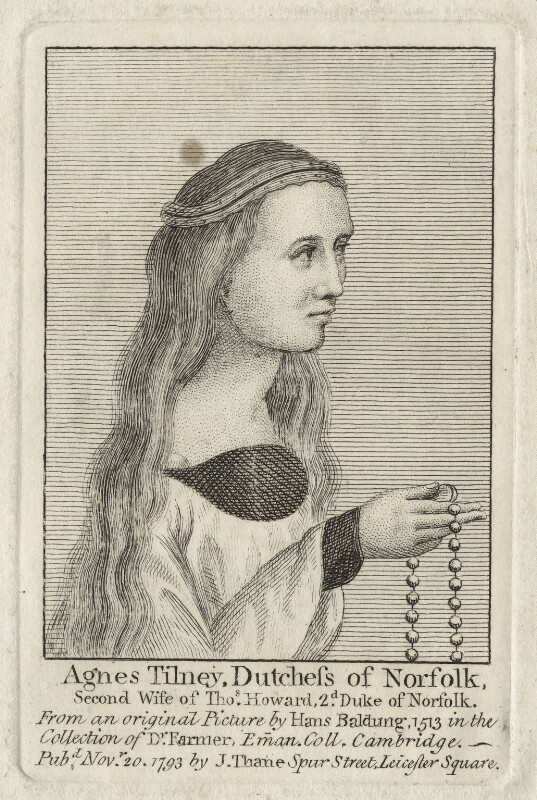
Agnes Tilney, Duchess of Norfolk, Anne’s mother
When Anne’s father died in May 1524, she and John probably moved to the household of her half-brother Thomas, now Duke of Norfolk. When the earl of Oxford’s health began to fail in July 1525, he was induced to sign a jointure by the Howards, which passed the bulk of his lands to his wife. He died the following year on 14 July 1526, at just26 years of age. At the time, Anne was living at Castle Camps in Cambridgeshire. She again wrote to Wolsey, advising him of difficulties with her husband’s executors and again asking for his help:
Since she wrote, the executors of the late earl of Oxford have, with much ado, delivered the stuff and plate bequeathed according to the letter directed to them by [Wolsey], but not the 100 marks. They declare they can do no more, and are displeased with Sir Rob. Drowre for being so ready to grant it to [Wolsey]. ‘They squared with him afore me, and now I find him better than the remnant in divers causes; and I desired them to have their advice in ordering my lord’s house, and in other great causes concerning my lord’s business, and they said they would not meddle,’ although they speak fair before [Wolsey]. Regrets to trouble him on this matter considering his great affairs, but has few powerful friends.3
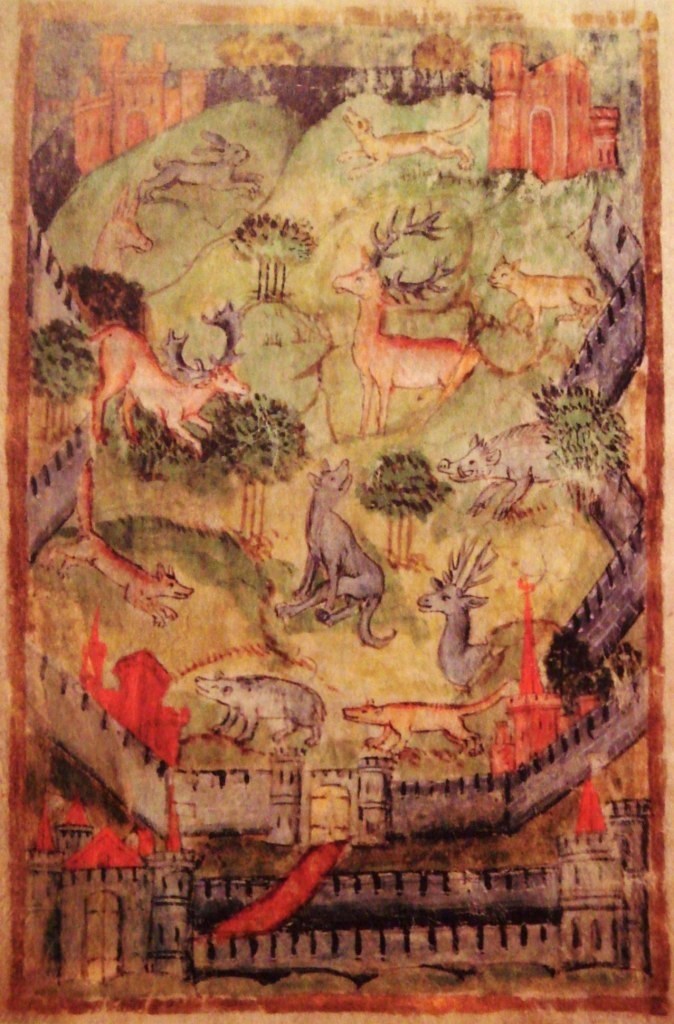
The new earl of Oxford was not happy with the increase to Anne’s jointure, considering the lands that had been passed to her in 1525 to be rightfully his. By 11 August, she was again writing to Wolsey, complaining that the earl had twice broken into her deer park at Lavenham in Suffolk:
Received his letters on Saturday last, when she wrote to inform him of my lord of Oxford’s coming hither. He entered this town about 11 o’clock with 50 horsemen, and Sir John Raynsforthe came the same day with 30 horse. My lord broke open the park, his men entered with their bows ready bent, and killed 17 of her deer. On Tuesday he entered the park with about 500 men, having sent to the neighbouring towns to cause the people to assemble, and they killed 100 deer. The justice of the peace bound him and her to keep the peace, but he has to-day broken open her house at Campys, accompanied with 300 persons, beaten her servants and taken her goods. Asks his and the King’s aid. Lavenham, 11 Aug. Signed: A. Oxynfford.4
Depiction of a medieval hunting park from a 15th-century manuscript version of The Master of Game, MS. Bodley 546 f. 3v
It was probably fortunate for Anne that she was absent from her home when the earl broke in, stole her goods and beat her servants. Had she been present, she may have been the subject of a kidnapping, or worse. Anne was not to give up in the face of such violence, however, and she set the wheels of the law in motion and appealed to her powerful relatives and friends for help. Charles Brandon, Duke of Suffolk, and Henry Courtney, Earl of Devon, were amongst those who appealed to Cardinal Wolsey on Anne’s behalf. She informed Brandon:
The writ she had from Wolsey for Cambridgeshire does not serve her, for the persons at the castle of Campys answered the justices that they would not depart till their master ordered them. The justices did not think they could remove them by their own power, or by raising the country, without greatly disturbing the King’s peace. They have proceeded no further in executing the said writ. Sheannot obtain her possessions without his help and her brother’s (Norfolk). Wyttysforthe, 22 Aug.5
In 1528, the king settled Lavenham on Anne, but the earl immediately invaded the park, stole deer and beat the keeper. Anne joined forces with other de Vere relatives, who stood to be disadvantaged by the earl’s claims. The case was brought to arbitration before peers in 1529 when Anne’s jointure was reduced and most of the disputed lands were granted to the earl. The final remnants of the dispute were settled by March 1532. Anne lived quietly in Cambridgeshire afterwards, occasionally visiting London and the court. She was at the coronation of her half niece Anne Boleyn in 1533 and was one of the mourners at Catherine of Aragon’s funeral in 1536 and at that of Jane Seymour in 1537. In 1541, on the arrest of her mother and her sister Katherine, Countess of Bridgewater, for misprision of treason following the discovery of the adulteries of her niece Katherine Howard, Anne was given custody of her niece Agnes ap Rhys, daughter of her sister Katherine.
Described as a woman of great wit, Anne was faced with a number of lawsuits later in life from servants and tenants. One servant complained that she had taken against him after fourteen years of service, not only dismissing him from her service but also ‘expelling him unlawfully from the land and tenement he was leasing from her, stolen livestock from him, put a new lock on his cottage, and taken a number of loads of hay, and all of the rye that was growing.’6 Unfortunately, we do not have the outcomes of any of the cases brought against Anne, but they do perhaps demonstrate that she was having difficulty managing her estates later in life.
Anne died in early 1559, and although we do not have a will, the diarist Henry Machyn recorded the transport of her hearse to Lambeth and her funeral at the Church of St Mary’s in Lambeth, where she was buried in the Howard family chapel.
A print of St Mary’s church, Lambeth, nin 1851 following its restoration
The xvij day of Feybruary was a herse of wax [erected] gorgyously, with armes, a ix dosen penselles and armes, [for the] old lade contes of Oxford, the syster to the old Thomas [duke of] Norffoke, at Lambeth… The xxj day of Feybruary my lade was browth in-to Lambethe chyrche for the qwer and dobull reylyd, and hangyd with blake and armes; and she had iiij goodly whyt branchys and ij dosen of grett stayffes torchys, and ij haroldes of armes, master Garter and master Clarenshus, in ther cotte armurs; a-for a grett baner of armes, and iiij baners rolles, and iiij baners of santtes; and then cam the corsse, and after morners; the chyff morner was my lade chamberlen Haward, and dyvers odur of men (and) women; and after durge done to the dukes plasse; and the morow, masse of requiem done, my lade was bered a-for the he awtter.22
Anne de Vere, Countess of Oxford, had proved herself capable of defending her rights and property by using her wit and connections in order to solicit the support she needed to combat her husband’s profligacy. That she did not win out entirely against her husband’s successor is perhaps more a demonstration of the establishment’s desire to preserve earldoms with all their land, rather than of any failing on Anne’s part. Anne did prove that estate management was not the preserve of men!
Images:
Courtesy of Wikipedia
Notes:
1. TNA SP1/27, fols. 154v–155 quoted in Nicola Clark, ‘Vere [née Howard] Anne de, countess of Oxford’; 2. ‘Henry VIII: February 1524, 16-28’, in Letters and Papers, Foreign and Domestic, Henry VIII, Volume 4, 1524-1530, ed. J S Brewer (London, 1875), pp. 41-58. British History Online http://www.british-history.ac.uk/letters-papers-hen8/vol4/pp41-58 [accessed 6 April 2023]; 3. ibid; 4. ibid; 5. ibid; 6. Nicola Clark, ‘Vere [née Howard] Anne de, countess of Oxford’; 7. ‘Diary: 1559 (Jan-Jun)’, in The Diary of Henry Machyn, Citizen and Merchant-Taylor of London, 1550-1563, ed. J G Nichols (London, 1848), pp. 184-201. British History Online http://www.british-history.ac.uk/camden-record-soc/vol42/pp184-201 [accessed 6 April 2023].
Select Bibliography:
Nicola Clark, ‘Vere [née Howard] Anne de, countess of Oxford’; Letters and Papers, Foreign and Domestic, Henry VIII, Volume 4, 1524-1530, ed. J S Brewer; The Diary of Henry Machyn, Citizen and Merchant-Taylor of London, 1550-1563, ed. J G Nichols; Amy, The Sixteenth Century in 100 Women; David Loades, editor, Chronicles of the Tudor Kings: The Tudor Dynasty from 1485 to 1553: Henry VII, Henry VIII and Edward VI in the Words of their Contemporaries; Elizabeth Norton, The Lives of Tudor Women; Victoria Sylvia Evans, Ladies-in-Waiting: Women who Served at the Tudor Court; Claiden-Yardley, Kirsten, The Man Behind the Tudors: Thomas Howard 2nd Duke of Norfolk; Gareth Russell, Young & Damned & Fair: The Life and Tragedy of CatherineHoward at the Court of Henry VIII; Josephine Wilkinson, Katherine Howard: The Tragic Story of Henry VIII’s Fifth Queen
*
My Books:
Signed, dedicated copies of all my books are available through my online bookshop.
Coming 30 January 2025: Scotland’s Medieval Queens
Scotland’s history is dramatic, violent and bloody. Being England’s northern neighbour has never been easy. Scotland’s queens have had to deal with war, murder, imprisonment, political rivalries and open betrayal. They have loved and lost, raised kings and queens, ruled and died for Scotland. From St Margaret, who became one of the patron saints of Scotland, to Elizabeth de Burgh and the dramatic story of the Scottish Wars of Independence, to the love story and tragedy of Joan Beaufort, to Margaret of Denmark and the dawn of the Renaissance, Scotland’s Medieval Queens have seen it all. This is the story of Scotland through their eyes.
Heroines of the Tudor World tells the stories of the most remarkable women from European history in the time of the Tudor dynasty, 1485-1603. These are the women who ruled, the women who founded dynasties, the women who fought for religious freedom, their families and love. Heroines of the Tudor World is now available for pre-order from Amberley Publishing and Amazon UK.Women of the Anarchy demonstrates how Empress Matilda and Matilda of Boulogne, unable to wield a sword themselves, were prime movers in this time of conflict and lawlessness. It shows how their strengths, weaknesses, and personal ambitions swung the fortunes of war one way – and then the other. Available from Bookshop.org, Amberley Publishing and Amazon UK. King John’s Right-Hand Lady: The Story of Nicholaa de la Haye is the story of a truly remarkable lady, the hereditary constable of Lincoln Castle and the first woman in England to be appointed sheriff in her own right. Available from all good bookshops Pen & Sword Books, bookshop.org and Amazon.
Alternate Endings: An anthology of historical fiction short stories including Long Live the King… which is my take what might have happened had King John not died in October 1216. Available in paperback and kindle from Amazon.
Podcast:
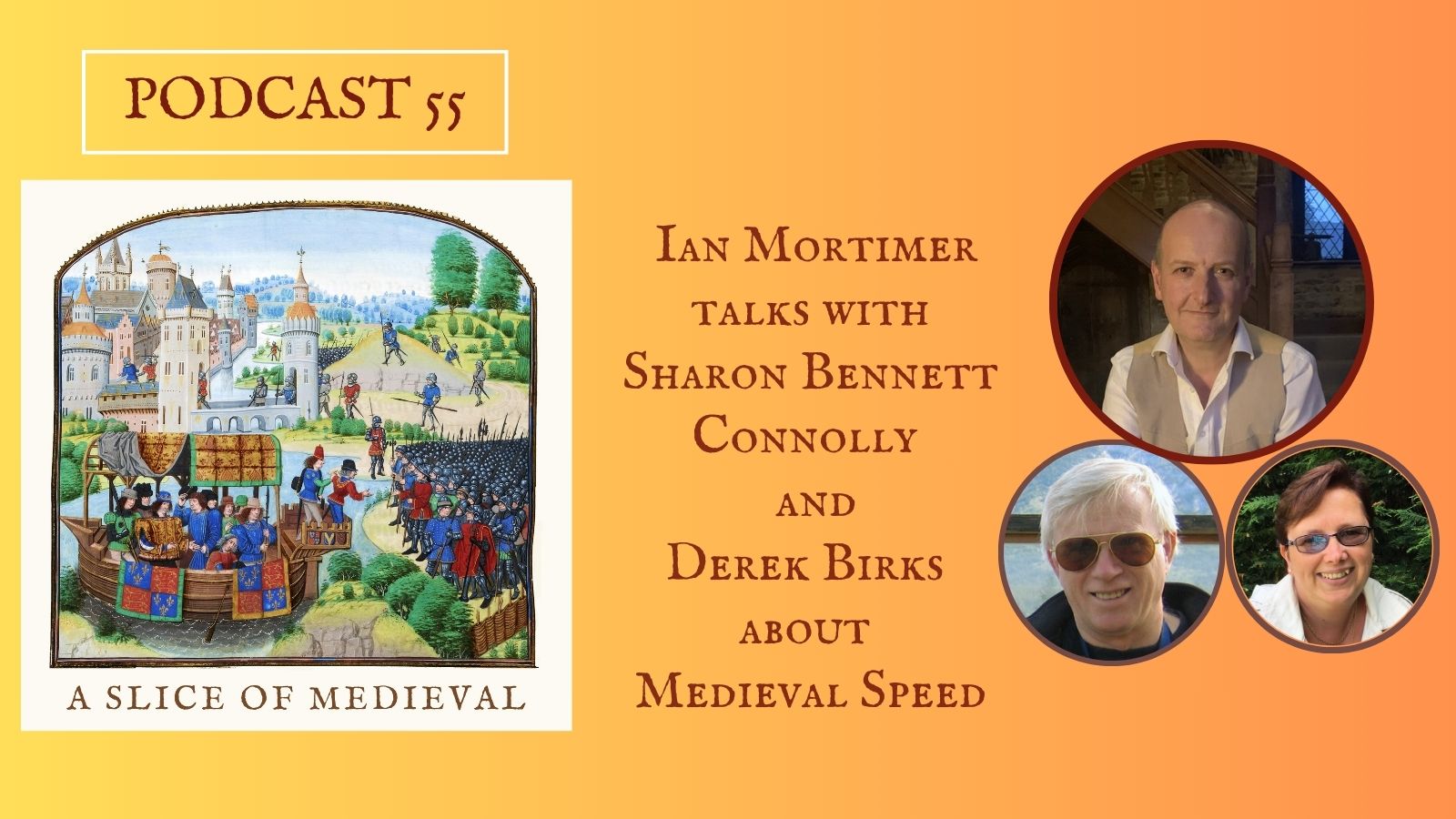
Have a listen to theA Slice of Medieval podcast, which I co-host with Historical fiction novelist Derek Birks. Derek and I welcome guests, such as Bernard Cornwell, and discuss a wide range of topics in medieval history, from significant events to the personalities involved. Our latest episode is a fascinating discussion with Dr Ian Mortimer about the speed of travel and communications in medieval times. Definitely worth a listen!
*
Don’t forget!Signed and dedicated copies of all my books are available through my online bookshop.
For forthcoming online and in-person talks, please check out my Events Page.
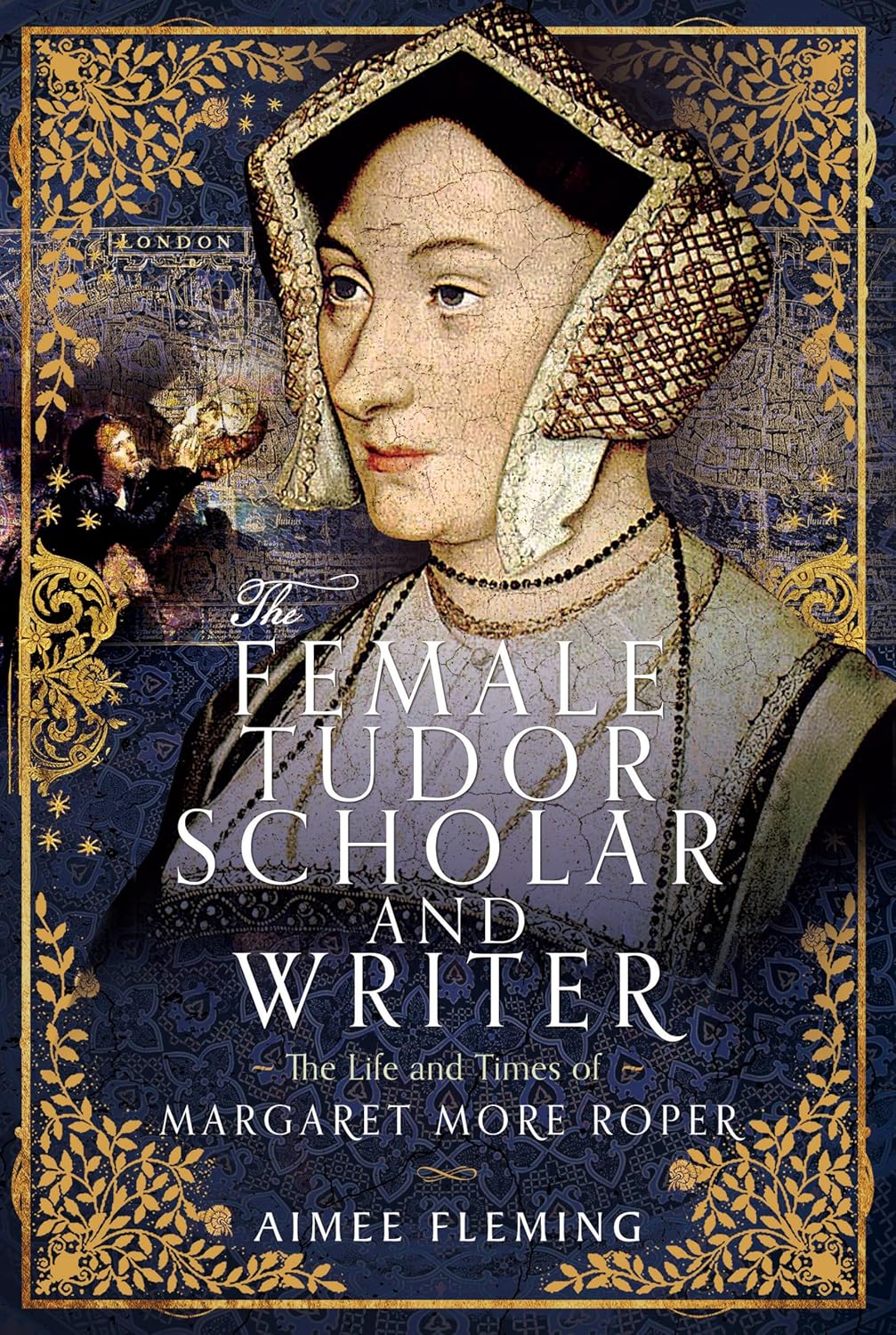
Today, it is a pleasure to welcome Aimee Fleming to History…the Interesting Bits. Aimee’s first book, The Female Tudor Scholar and Writer: The Life and Times of Margaret More Roper came out earlier this year. Now, Margaret Roper, the daughter of Sir Thomas More, did appear in my own Heroines of the Tudor World, as a true Literary Heroine, but Aimee covers her in much greater detail. She is a fascinating character and it is about time that this remarkable woman gets her own biography.
So, I will leave it to Aimee to give you an introduction….
Margaret More Roper
Margaret More Roper is mostly known simply for being the eldest daughter of the stateman Sir Thomas More, and his influence on her is undeniable. However, she, alongside the rest of her extensive family, was important as an individual and for an array of different reasons.
Her Education
Margaret Roper
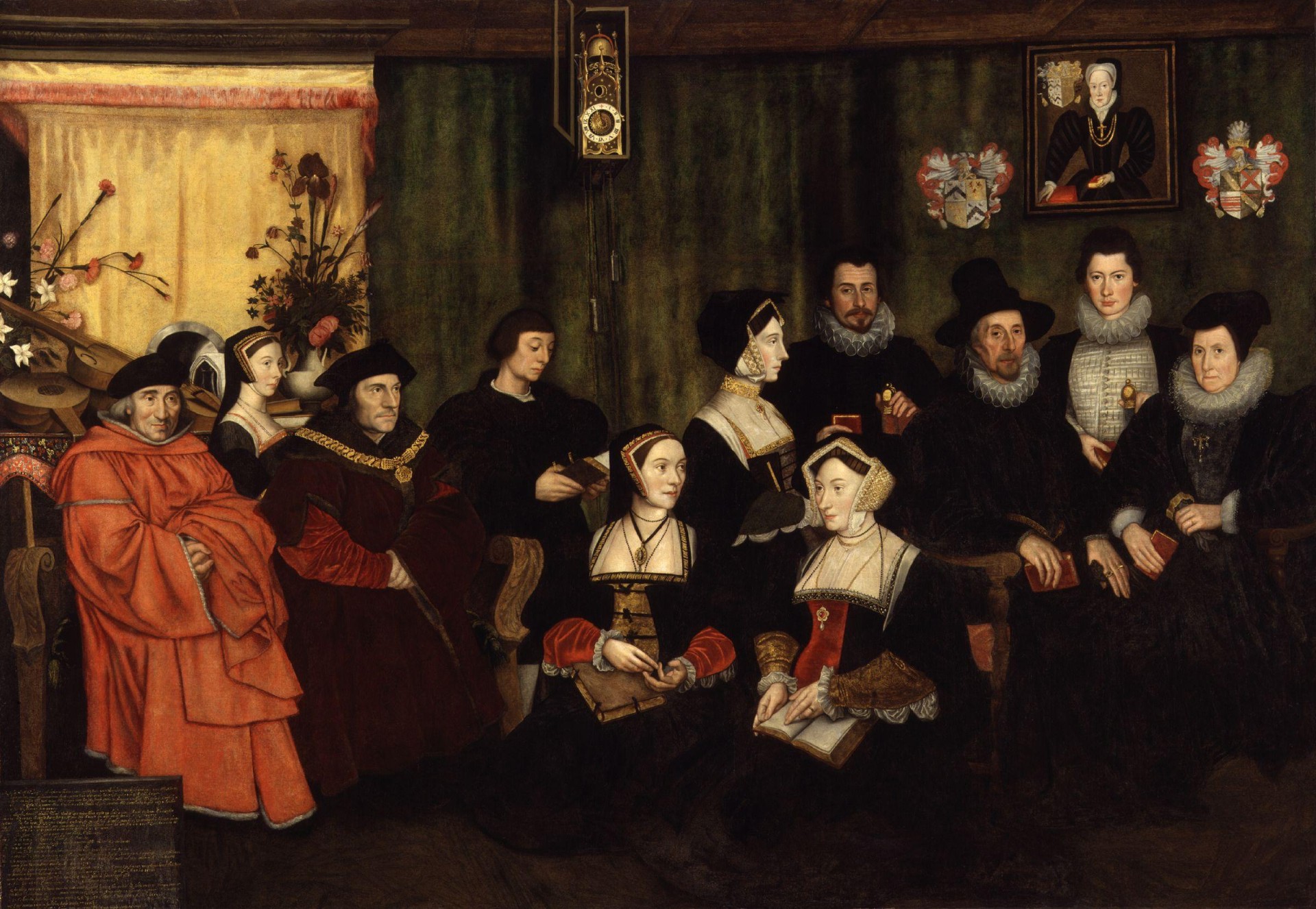
Thomas More, unusually for the time, insisted that his whole family received an education in a wide range of subjects. The range was far wider that traditionally given, and saw all of the children, including the girls, learn about classics, languages, and other subjects, in what came to be known as ‘The More School’. From the age of six or seven, when it was normal for the children to start their education, Margaret and her siblings were taught by tutors and others who came into the house and it was all overseen and coordinated by Thomas himself.
Margaret was the eldest, and from an early age she showed an aptitude for learning; for languages and for writing generally. However, all the girls all learned mathematics and there are references to Margaret Giggs, the ward of the More family who grew up alongside Margaret and her sisters, having a ‘algorism stone’ for use in mathematical calculations. Astronomy was a particularly popular subject for the girls and in a letter home, Thomas writes about how they,
‘…are so far advances in that science that you can point out the pole-star or the dog star or any of the constellations.’
The example set by the More school would go on to influence several other families who would loom large in Tudor history. The Grey sisters (one of whom was Queen Jane) and the Cooke sisters, and also Katherine Parr, Henry VIII’s sixth Queen, would all receive a broader education that women had traditionally done beforehand. Even Henry VIII himself was convinced by his friend’s activities and gave Princesses Mary and Elizabeth and education in the same fashion. All of this was influenced by what was seen of the More sisters, particularly Margaret.
Her Writing
Sir Thomas More his father his household and his descendantsby Rowland Lockey after Hans Holbein the Younger
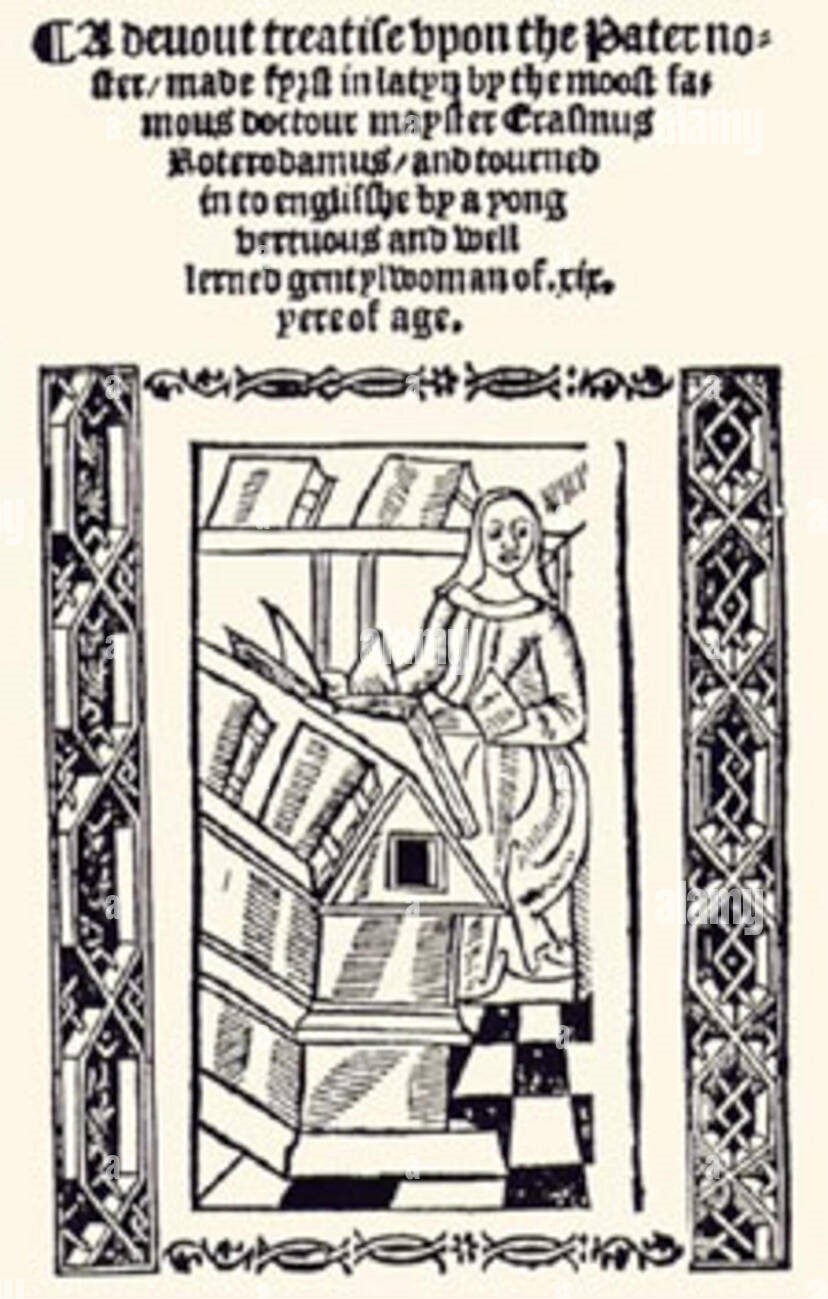
Margaret’s example particularly came to the fore as she got older and began to build a reputation through her scholarly work. In 1524 she translated and then published her ‘Devout Treatise on the Paternoster’, a translation of Erasmus’s Precatio Domenica, a study of the Lord’s Prayer.
While Margaret’s name does not appear overtly on the cover her identity was simple to figure out for those who were familiar with Sir Thomas and his family. The cover reads,
‘A devout treatise upon the Paternoster made fyrst in latyn by the moost famous doctour mayster Erasmus Roterodamus and tourned into englisshe by a young vertuous and well lerned gentylwoman of nineteen yere of age.’
The inclusion of details such as her age and other references to her perceived virtuousness, give us an insight into how Margaret was viewed, or wanted to be viewed, for her work. As much as Margaret may have tried to keep her identity away from the work, the Devout Treatise was the first work of this kind published by any woman, and this alone means that Margaret had broken new ground for Tudor women once again.
Her Loyalty
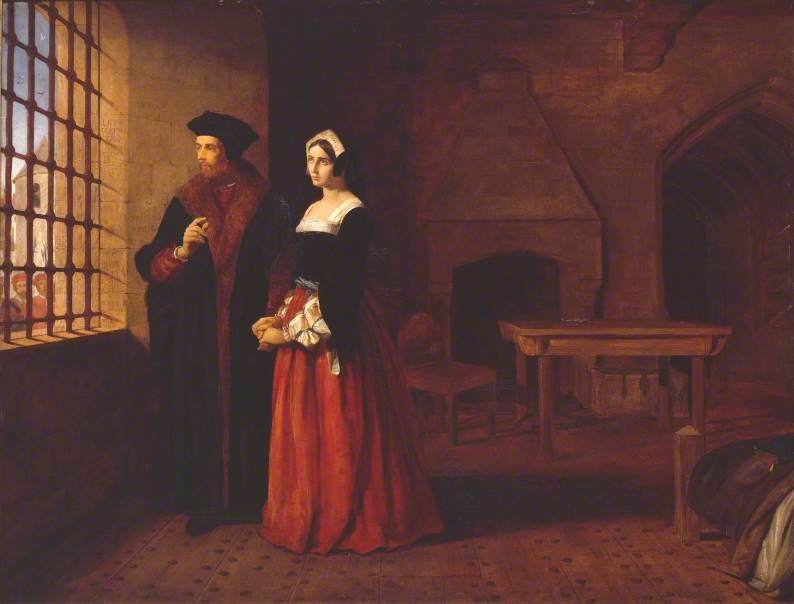
Sir Thomas More and his Daughter by Herbert John Rogers
Perhaps though Margaret is best known for her devotion to her father, and his to her. He referred to her as his ‘Meg’ in their letters to one another, and he wrote constantly while he travelled around Europe while working for King Henry VIII, and also while he was imprisoned in the tower.
While her was in the tower she wrote often to him, but also acted as his advocate, negotiating to make his conditions more comfortable, ensuring he had his books and writing things, as well as better food and access to doctors when he was ill. During his imprisonment it was Margaret who visited him often and helped him to write down his version of events.
After his death her dedication to him continued when she retrieved his head from it’s spike on London Bridge. This was at great personal risk and when it was discovered that she had done this, she was brought to appear before the king’s council. According to Thomas Stapleton she defended herself by saying that she,
‘had saved her father’s head from being devoured by the fishes and with theintention of burying it.’
When Margaret died the head was to be buried with her, and she eventually was laid to rest, next to her husband William, in the Roper family crypt in St Dunstan’s Church in Canterbury. In this crypt there is also a head, encased in lead, that is believed to be the head of Sir Thomas More.
Her Legacy
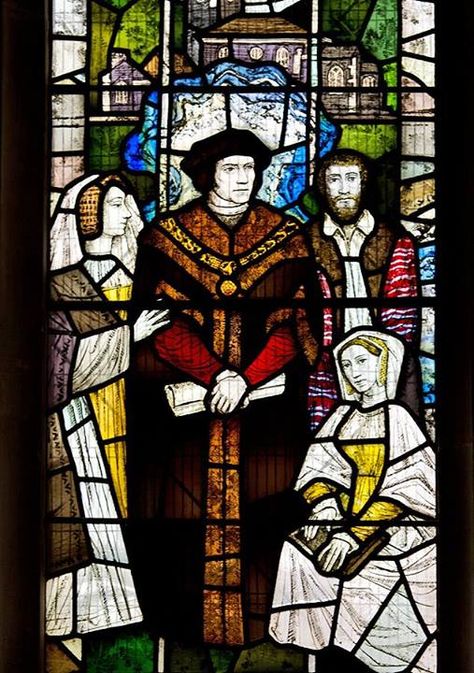
Sir Thomas More
Sir Thomas’s head was not the only thing that Margaret preserved, as after his death she worked to collect and save her father’s work, letters and even some of his belongings. After Margaret’s death in 1544, the collections she had managed to bring together was broken up in an attempt to protect her family from persecution, or even prosecution, for having artefacts belonging to Sir Thomas, a traitor.
However, this collection of work was then used, first by William Roper to write his biography of Sir Thomas More titled ‘A Man of Singular Virtue’. This was the first time Sir Thomas’s life story was written down and in order to write it he referred to the letters, books and documents that his wife had so meticulously curated.
Historians and writers that have followed since have also relied on the same letters and books in order to write and learn about Sir Thomas and the wider world of the Tudor court. None of this research would have been possible had Margaret not worked so hard to preserve her father’s legacy for the generations to come. Without Margaret’s devotion our knowledge of the Tudor world would be severely diminished.
While Margaret can often be overshadowed by her father, or portrayed merely as his loyal, devoted daughter, I believe she deserves a great deal more credit and attention. Her abilities, natural intellect, loyalty and bravery should not be underestimated in their important, and certainly not forgotten.
About the author:
Aimee Fleming is a historian and author from North Yorkshire. She is happily married, with three growing boys and a whole host of pets. She studied history at the University of Wales, Bangor and then later completed a masters in Early Modern History at the University of York as a mature student. She has a passion for history, particularly the Tudors, and worked for over a decade in the heritage industry in a wide variety of roles and historic places.
Signed, dedicated copies of all my books are available through my online bookshop.
Coming 30 January 2025: Scotland’s Medieval Queens
Scotland’s history is dramatic, violent and bloody. Being England’s northern neighbour has never been easy. Scotland’s queens have had to deal with war, murder, imprisonment, political rivalries and open betrayal. They have loved and lost, raised kings and queens, ruled and died for Scotland. From St Margaret, who became one of the patron saints of Scotland, to Elizabeth de Burgh and the dramatic story of the Scottish Wars of Independence, to the love story and tragedy of Joan Beaufort, to Margaret of Denmark and the dawn of the Renaissance, Scotland’s Medieval Queens have seen it all. This is the story of Scotland through their eyes.
Heroines of the Tudor World tells the stories of the most remarkable women from European history in the time of the Tudor dynasty, 1485-1603. These are the women who ruled, the women who founded dynasties, the women who fought for religious freedom, their families and love. Heroines of the Tudor World is now available for pre-order from Amberley Publishing and Amazon UK.Women of the Anarchy demonstrates how Empress Matilda and Matilda of Boulogne, unable to wield a sword themselves, were prime movers in this time of conflict and lawlessness. It shows how their strengths, weaknesses, and personal ambitions swung the fortunes of war one way – and then the other. Available from Bookshop.org, Amberley Publishing and Amazon UK. King John’s Right-Hand Lady: The Story of Nicholaa de la Haye is the story of a truly remarkable lady, the hereditary constable of Lincoln Castle and the first woman in England to be appointed sheriff in her own right. Available from all good bookshops Pen & Sword Books, bookshop.org and Amazon.
Alternate Endings: An anthology of historical fiction short stories including Long Live the King… which is my take what might have happened had King John not died in October 1216. Available in paperback and kindle from Amazon.
Podcast:
Have a listen to theA Slice of Medieval podcast, which I co-host with Historical fiction novelist Derek Birks. Derek and I welcome guests, such as Bernard Cornwell, and discuss a wide range of topics in medieval history, from significant events to the personalities involved. Our latest episode is a fascinating discussion with Dr Ian Mortimer about the speed of travel and communications in medieval times. Definitely worth a listen!
*
Don’t forget!Signed and dedicated copies of all my books are available through my online bookshop.
For forthcoming online and in-person talks, please check out my Events Page.
1338: England has declared war on France, and Jeanette of Kent, cousin to King Edward III, says goodbye to her family and travels overseas with the royal court for the first time. Once in Antwerp, she is captivated by talented household knight Thomas Holland, just as he in turn is powerfully drawn to her.
Although both know their romance is forbidden, their love for each other grows stronger than the danger they face, and they marry in secret. But before they can make their tryst known, Thomas has to leave for war, and in his absence, Jeanette is forced into a second marriage and locked away from the world.
Then Thomas returns, and the real fight begins. As hostile family members battle to keep Jeanette and Thomas apart, the defiant lovers vow to be reunited – whatever the cost…
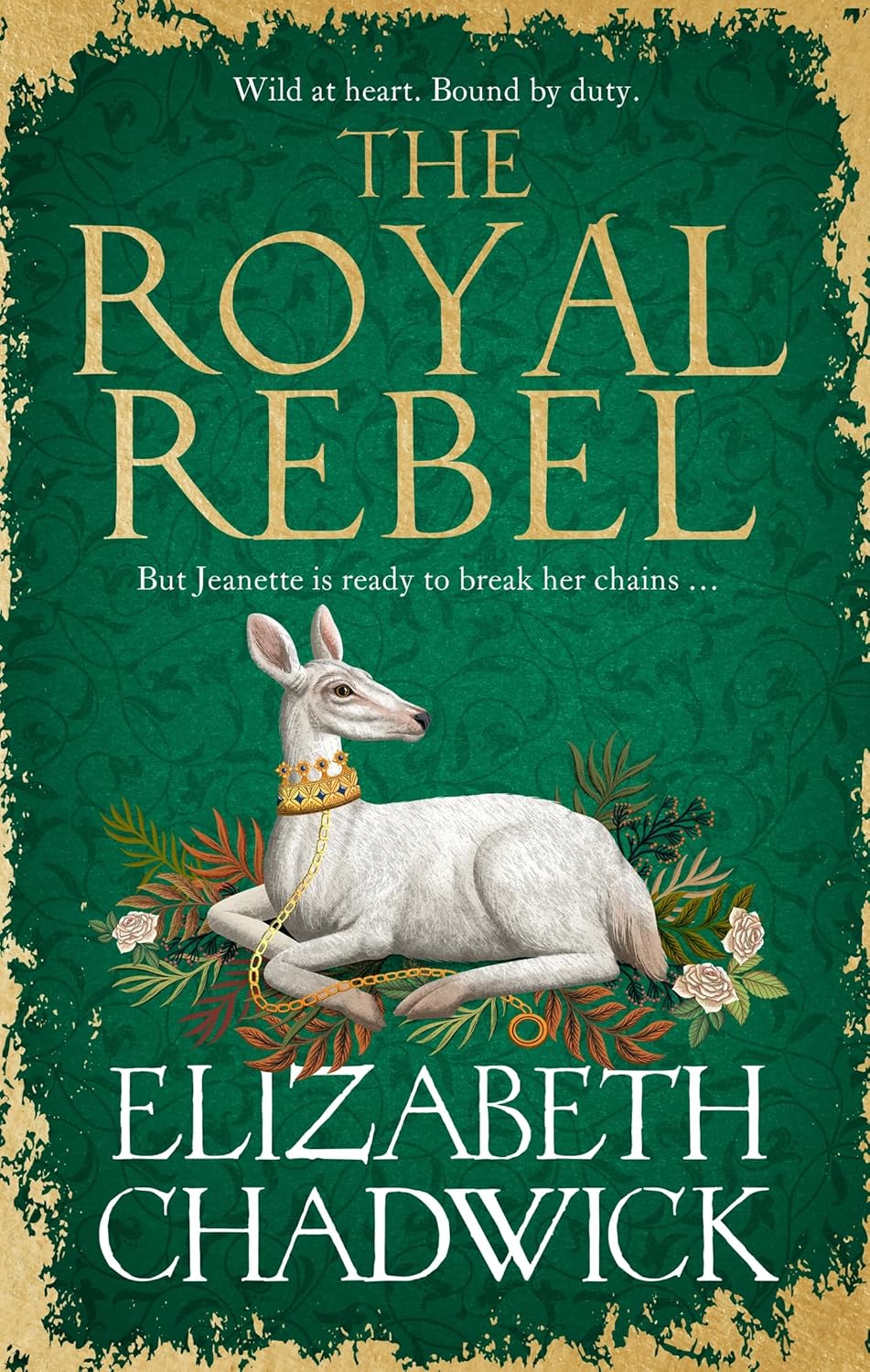
It is always the sign of a good book if the author can leave me in tears and send me through a range of emotions from beginning to end. In The Royal Rebel, Elizabeth Chadwick has achieved this and then some!
The controversy over Joan of Kent‘s first marriage is fascinating. There are so many possibilities and connotations. And so much politics! Girls in medieval times were not supposed to choose their own husbands. Marriage was a political alliance for noble families, not a love affair. Romance had nothing to do with it.
The Royal Rebel is the story of the most famous ‘love triangle’ of the14th century. Joan, the daughter of the Earl of Kent, secretly married Thomas Holland, who then went off on crusade for a year. In the mean time, Joan’s mother arranged her daughter’s marriage to William Montague, the heir to the earldom of Salisbury. It was a mutually beneficial marriage. Joan had royal blood, but tainted by the fact her father had been executed. While Montague was the heir to a large earldom but would benefit from a closer connection to the crown. Thomas Holland, on the other hand, was a household knight with few prospects and whose father had been executed for treason. And when he returned from crusading in Eastern Europe, due to financial constraints, he did not immediately lay claim to his wife.
It was a storyline worthy of a modern-day soap opera.
Thomas Holland took his claims that he and Joan were married all the way to Rome. The investigation into the marriage was long, drawn-out legalese, mired in canon law and I did wonder how Elizabeth Chadwick was going to make it interesting. Of course! I needn’t have feared. She draws out the tension, adds in the human element, family dynamics and political considerations and keeps the reader gripped to the very end – even though I already knew the outcome!
The next day, Jeanette [Joan of Kent], Joan, Hawise and several other ladies from the Queen’s chamber gathered to dole out arms to the poor at the monastery gates. Usually, the almoners and designated servants distributed the donations, but today, in thanksgiving, the Queen’s ladies were involved in the task, and as well as the food, small amounts of money and items of clothing were handed out.
Jeanette played her part with a whole heart and a wide and ready smile. She was in charge of dispensing the bread, while Joan ladled pottage into the bowls people had brought them. Thomas and Otto arrived with their retinues to assist and stand guard, and the loaves of bread and jugs of beer were soon emptied, and all the money and clothing gone.
‘Thank you,’ Jeanette said, smiling at Thomas as she gathered up the empty baskets.
‘It has been my pleasure, demoiselle.’
He had brought one of his old hoods and two thick blankets to give away and had provided a small purse of alms money. His manner towards the folk who had come to receive charity had been courteous and good-humoured. Jeanette had noted his common touch which did not detract from the authority he possessed to lead men and maintain his rank. He had tousled a small boy’s hair, and jested with a toothless old woman who had cackled at him with lecherous appreciation, saying if she had been thirty years younger…
Once more, he escorted her and the ladies back to the royal apartments, and carried the baskets himself.
‘You look like a housewife going to market,’ she said, amused and very aware of his presence at her side. Their pace was a saunter, eking out the moment.
‘Looks can be deceptive,’ he replied. ‘It is what lies beneath that matters.’
He leaned a little towards her, and Jeanette’s breath shortened.
‘Then I suppose that like all truth it is buried, and must be sought by diligent investigation,’ she said pertly, giving as good as she got, and was rewarded by a flash of his grin.
‘I have always found that to be the case, demoiselle,’ he said, as they came to the Queen’s door. ‘And usually well rewarded.’
The Royal Rebel by Elizabeth Chadwick is no mere romance. It is the story of a trying decade in the reign of Edward III. Just as he embarks on the Hundred Years War with France (I wonder if he would have been so keen, if someone had told him the war’s eventual name?), plague ravages Europe and the court is gripped by the scandal of Joan’, Thomas and William’s marital situation. The detail is impressive.
Elizabeth Chadwick is moving into a period new to her, the late medieval; away from the 12th and 13th centuries of which she is so familiar. Not that you would know it. Her research has been meticulous and her attention to detail, to the dress and customs of the period, is second-to-none. Elizabeth Chadwick has really thought about the circumstances involving the clandestine marriage of Joan of Kent and Tomas Holland – and the very public marriage of Joan and Willian Montague. And how all this came about! The plot is intricate but entirely plausible and answers several questions around the actions of the parties involved.
The Royal Rebel also highlights the quandary over inheritance that would always hang over Joan’s marriage to Montague whilst the question mark remained over the validity of their marriage. Would any children have even been legitimate? Joan’s frustrations over her treatment is palpable; not being allowed to be with her true husband, being ignored by her elders, not being believed and even being prevented from freely giving her testimony in the court case. The Salisburys even locked her up!
The Royal Rebel by Elizabeth Chadwick is not just a good read, it is an experience of life in the mid-14th century and not to be missed.
The Royal Rebel by Elizabeth Chadwick is most definitely among my Top 5 books of 2024. I cannot recommend it highly enough!
To Buy the Book:
The Royal Rebel by Elizabeth Chadwick is now available from Amazon and all good bookshops.
About the Author:
New York Times bestselling author Elizabeth Chadwick lives in a cottage in the Vale of Belvoir in Nottinghamshire with her husband and their three dogs. Her first novel, The Wild Hunt, won a Betty Trask Award, To Defy a King won the Romantic Novelist Association’s Historical Novel Prize and The Scarlet Lion was nominated by Richard Lee – founder of the Historical Novel Society – as one of the top ten historical novels of the last decade. She often lectures at conferences and historical venues, has been consulted for television documentaries and is a member of the Royal Historical Society.
Keep in touch with Elizabeth via her website, her blogs or on social media.
Signed, dedicated copies of all my books are available through my online bookshop.
Coming 30 January 2025: Scotland’s Medieval Queens
Scotland’s history is dramatic, violent and bloody. Being England’s northern neighbour has never been easy. Scotland’s queens have had to deal with war, murder, imprisonment, political rivalries and open betrayal. They have loved and lost, raised kings and queens, ruled and died for Scotland. From St Margaret, who became one of the patron saints of Scotland, to Elizabeth de Burgh and the dramatic story of the Scottish Wars of Independence, to the love story and tragedy of Joan Beaufort, to Margaret of Denmark and the dawn of the Renaissance, Scotland’s Medieval Queens have seen it all. This is the story of Scotland through their eyes.
Heroines of the Tudor World tells the stories of the most remarkable women from European history in the time of the Tudor dynasty, 1485-1603. These are the women who ruled, the women who founded dynasties, the women who fought for religious freedom, their families and love. Heroines of the Tudor World is now available for pre-order from Amberley Publishing and Amazon UK.Women of the Anarchy demonstrates how Empress Matilda and Matilda of Boulogne, unable to wield a sword themselves, were prime movers in this time of conflict and lawlessness. It shows how their strengths, weaknesses, and personal ambitions swung the fortunes of war one way – and then the other. Available from Bookshop.org, Amberley Publishing and Amazon UK. King John’s Right-Hand Lady: The Story of Nicholaa de la Haye is the story of a truly remarkable lady, the hereditary constable of Lincoln Castle and the first woman in England to be appointed sheriff in her own right. Available from all good bookshops Pen & Sword Books, bookshop.org and Amazon.
Alternate Endings: An anthology of historical fiction short stories including Long Live the King… which is my take what might have happened had King John not died in October 1216. Available in paperback and kindle from Amazon.
Podcast:
Have a listen to theA Slice of Medieval podcast, which I co-host with Historical fiction novelist Derek Birks. Derek and I welcome guests, such as Bernard Cornwell, and discuss a wide range of topics in medieval history, from significant events to the personalities involved, including Elizabeth Chadwick discussing her writing of The Royal Rebel as a guest for the 2024 HNS Conference’s Writing Medieval panel, alongside Matthew Harffy and David Gilman.
*
Don’t forget!Signed and dedicated copies of all my books are available through my online bookshop.
For forthcoming online and in-person talks, please check out my Events Page.
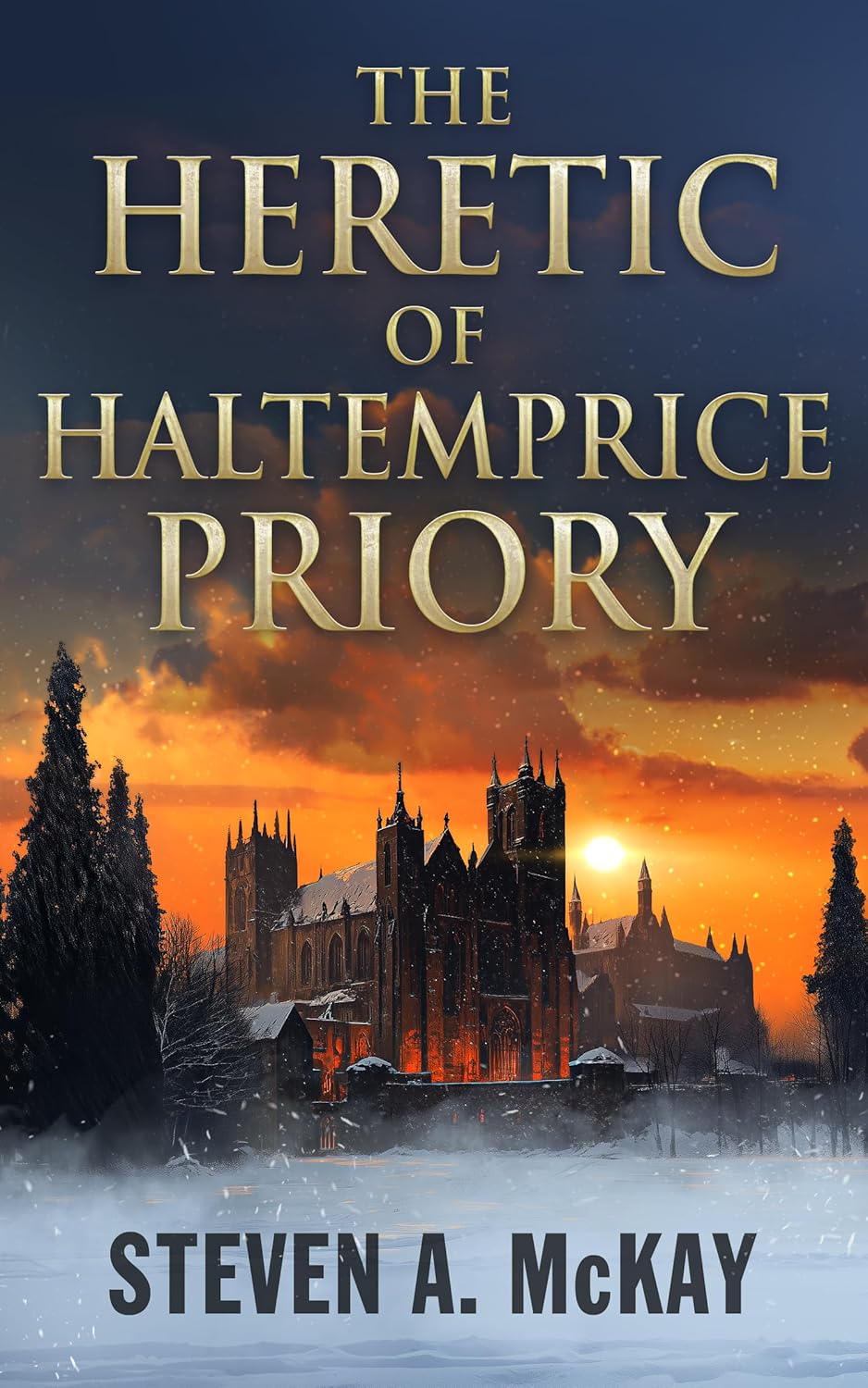
England, c. AD 1330 Winter fast approaches in East Yorkshire and the dark, cold nights have brought more than just frost to the newly founded Haltemprice Priory. An oppressive pall hangs over the area like a smothering blanket, prompting one of the anxious monks to seek help from an old friend. Robert Stafford, a friar from nearby Wakefield, has some experience in dealing with strange mysteries, having helped solve a number over the past few years. As he settles into Haltemprice however, things begin to escalate and the friar fears he might have bitten off far more than he can chew this time. Calling on his friends Will Scaflock and the bailiff John Little to work with him it seems they may face more than just earthly enemies as they battle the gloom crushing the spirit, and perhaps the very life, from the inhabitants of the priory. One monk with a library of eldritch books seems to know much about the progressively more deadly troubles afflicting windswept, frostbitten Haltemprice, but is he a lunatic, a heretic, a murderer, or perhaps something even more terrifying?
Steven A. McKay’s idea of a “novella” stretches the truth a tad with The Heretic of Haltemprice Priory. It must be close to 50,000 words!
But who’s complaining?
Certainly not me!
I have been saying for years that Steven should do a full-length detective/mystery novel featuring Friar Tuck, Little John and Will Scarlet. And I suspect, this is as close as I’m going to get to one.
In The Heretic of Haltemprice Priory, Friar Tuck is called in by an old friend to discover the malaise that afflicts his priory. It is hard to pin down, but a sense of doom and gloom appears to infect not only the monks, but everyone within the priory’s walls. When Tuck realises the depths of the mystery, and the strange happenings that border on the occult, he calls for his old friends, Will and John, to help him solve the mystery.
“This is a very impressive priory,” he said, peering up and gesturing vaguely around, his hand casting long shadows in the candlelight. “I’d have thought the brothers and lay people living here would be happy with their new surroundings.”
“And yet…” Simon de Poher breathed, chewing his lip.
“And yet.” Tuck nodded. “I’ve hardly seen anyone so far, as if everyone is hiding, and those I have met seem nervous about something. Frightened even.”
The door to the cloister rattled at his words, pushed against the latch by the gusting wind outside.
De Poher swallowed again and looked up at the ceiling, as if he were begging God for guidance.
Tuck stood and walked to the nearest bookcase. He knew some of the library’s collection was valuable as some of the books were actually chained to the shelves so that they could not be lost or stolen. The shelves themselves were Brand new and had clearly been made by skilled carpenters, but many of the books on show were very old and Tuck hesitated to draw any out in case he damaged them.
“You’re right,” de Poher said behind him. “Everyone in Haltemprice seems to be anxious, including me.”
“Why?” Tuck asked, turning back to face him.
“Well, that’s the thing,” the cantor chuckled bleakly. “I have no idea.”
Tuck’s brow lifted and he leaned back thoughtfully. “You must have some clue, ” he stated.
“No,” the cantor said, shaking his head. Nothing has happened as far as I’m aware. No one has died violently, or threatened us, or, well, anything like that at all in the time we’ve been here. This place…” He trailed off, casting wary glances into the dark corners and atone particular section of books. “This place just seems to crush the spirit, which is unfathomable given it’s a house of God!” He cringed as he said the last few words, as if fearing he’s be struck down by a divine bolt of lightning or, perhaps, something less holy…
It is a strange tale.
But it is one that grabs you.
Steven A. McKay’s wonderful characters certainly keep you entertained. The strange goings-on are freaky, from sacrificed pigs to disturbed ancient graves. And books that border on the heretical. The reader will be as discomfited as the heroes themselves. And as determined to uncover the truth behind the priory’s place at the centre of events. Full of dark imagery and breathless suspense, The Heretic of Haltemprice Priory will keep you on the edge of your seat (and possibly behind it!).
Ok, I’m exaggerating a little. It is not too scary, rather it allows the reader to let his or her imagination wander into the dark corners of a monk’s cell – and mind. The supernatural elements leave the reader wondering if the mystery will ever – can ever – be solved. It also leaves the reader wanting more from Tuck, Scarlet and Little John. And with the arrival of a mysterious tinker at the end of the book, the hope is that we are going to get it!
The Heretic of Haltemprice Priory is perfect reading for a cold winter night by an open fire. But with all the lights on, just in case!
To Buy the Book:
The Heretic of Haltemprice Priory is now available from Amazon on Kindle and in paperback.
About the author:
Steven A McKay was born in Scotland in 1977 and always enjoyed studying history. He decided to write his Forest Lord novels after seeing a house called “Sherwood” when out at work one day. Since then he’s started a new series, the Warrior Druid of Britain Chronicles, and just completed a trilogy about Alfred the Great.
Steven used to be in a heavy metal band although he tend to just play guitar in his study these days. He did use those guitars to write the theme song for the podcast he co-hosts, Rock, Paper, Swords! with Matthew Harffy, though. Give it a listen, they’ve interviewed great guests like Diana Gabaldon, Simon Scarrow, Bernard Cornwell, Dan Jones and more.
*
My Books:
Signed, dedicated copies of all my books are available through my online bookshop.
Coming 30 January 2025: Scotland’s Medieval Queens
Scotland’s history is dramatic, violent and bloody. Being England’s northern neighbour has never been easy. Scotland’s queens have had to deal with war, murder, imprisonment, political rivalries and open betrayal. They have loved and lost, raised kings and queens, ruled and died for Scotland. From St Margaret, who became one of the patron saints of Scotland, to Elizabeth de Burgh and the dramatic story of the Scottish Wars of Independence, to the love story and tragedy of Joan Beaufort, to Margaret of Denmark and the dawn of the Renaissance, Scotland’s Medieval Queens have seen it all. This is the story of Scotland through their eyes.
Heroines of the Tudor World tells the stories of the most remarkable women from European history in the time of the Tudor dynasty, 1485-1603. These are the women who ruled, the women who founded dynasties, the women who fought for religious freedom, their families and love. Heroines of the Tudor World is now available for pre-order from Amberley Publishing and Amazon UK.Women of the Anarchy demonstrates how Empress Matilda and Matilda of Boulogne, unable to wield a sword themselves, were prime movers in this time of conflict and lawlessness. It shows how their strengths, weaknesses, and personal ambitions swung the fortunes of war one way – and then the other. Available from Bookshop.org, Amberley Publishing and Amazon UK. King John’s Right-Hand Lady: The Story of Nicholaa de la Haye is the story of a truly remarkable lady, the hereditary constable of Lincoln Castle and the first woman in England to be appointed sheriff in her own right. Available from all good bookshops Pen & Sword Books, bookshop.org and Amazon.
Alternate Endings: An anthology of historical fiction short stories including Long Live the King… which is my take what might have happened had King John not died in October 1216. Available in paperback and kindle from Amazon.
Podcast:
Have a listen to theA Slice of Medieval podcast, which I co-host with Historical fiction novelist Derek Birks. Now at over 50 episodes, Derek and I welcome guests, such as Bernard Cornwell, and discuss a wide range of topics in medieval history, from significant events to the personalities involved. In episode 18, Steven A. McKay joined us to discuss his Forest Lord series, and the legend of Robin Hood.
*
Don’t forget!Signed and dedicated copies of all my books are available through my online bookshop.
For forthcoming online and in-person talks, please check out my Events Page.
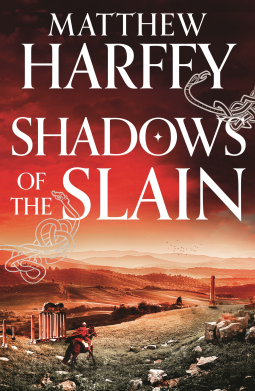
AD 652. After surviving dark intrigues at the Merovingian court of Frankia, Beobrand is finally able to undertake the mission his queen set him: to escort a party of pilgrims to the holy city of Rome.
But Beobrand’s life is never easy. His party includes a scheming novice churchman whose ambition is boundless, and a mysterious envoy from Frankia.
Entering the lands of the Langobards, Beobrand discovers unexpected similarities to his native Northumbria in their speech and customs… and their willingness to spill blood.
The roads heading south are filled with danger. Meeting other pilgrims who have been attacked and robbed, Beobrand soon finds himself reluctantly responsible for their safety. Confronting brigands and robbers at every turn, they press on towards their goal.
But when Beobrand reaches the snakepit of ruins and relics that is Rome, his difficulties truly begin… and his homeland has never been further away.
In Shadows of the Slain, Matthew Harffy has once again given readers a fabulous adventure to devour in the latest instalment from the Bernicia Chronicles. Beobrand continues his journey to Rome and, as usual, he finds trouble along the way.
It is interesting to see Beobrand out of his comfort zone, in a place where he does not know the language and is relying on others to convey his needs and wishes. What he does discover is that politics and the pursuit of power is the same the world over. Beobrand has to navigate this in Rome – not always successfully. And it is hard to know who to trust when some are pursuing their own agendas and a supposed enemy may be a friend – or may not!
The one thing that you can say about Beobrand is that life is never boring!
“Do you think Wilfrid will cause more trouble?” Beobrand asked after they had ridden on in silence for a short while.
Coenred pondered for a moment.
“I don’t think he will risk Wulfwyn’s ire and public humiliation again.”
“Good,” said Beobrand. “We’ve had more tan enough strife on this trip.”
Coenred shifted in the saddle and looked at Wilfrid who rode apart from the others. After the encounter with the bandits in the mountains he had been persuaded to remove his gold rings and the gaudy chain he liked to wear around his neck, but he still stood out from the others with his bright clothes, a gift from the monarchs of Neustria. Beobrand and the others had also been presented with fine garments of silk and linen, but favoured plain travel garb for the journey.
“I don’t think he will repeat his mistake with Wulfwyn,” said Coenred. “I didn’t say he wouldn’t cause any trouble.”
Beobrand looked askance at him.
“That’s what I’m afraid of. Has this journey not already been punishment enough?”
Coenred knew Beobrand was thinking about his part in the death of Oswine, King of Deira and Queen Eanfled’s cousin. It was clear to any who knew of the events surrounding the king’s death that the queen, who had previously been warmly disposed towards Beobrand, had ordered him to escort Wilfrid to Roma as a form of chastisement. Beobrand had accepted the order without complaint. And Coenred knew that whatever the truth of the matter, Beobrand blamed himself just as much as anyone else for what had happened in Hunwald’s hall.
Coenred looked up at the pale sky. There was not a single cloud to be seen. He groaned as he stretched his back. He ached from so much riding. Perhaps he should walk in the afternoon.
Beobrand and his small band of gesithas, including the loyal Cynan, have been charged with escorting the ambitious monk, Wilfrid, to Rome. Wilfrid seems to be able to smell out power and influence and attach himself to the priests and nobles who can best serve his ambition, regardless of the trouble that causes everyone else. He is little liked among Beobrand’s small warband and even Coenred, the affable monk who is a long-time friend of Beobrand’s, finds Wilfrid hard to work with.
Shadows of the Slain is a wonderful, fast-paced read that keeps the reader engrossed to the very end. The action comes thick and fast. And Matthew very cleverly weaves within the storyline a reference to his other series, involving Hunlaf from his wonderful A Time for Swords series, but I will say no more on that…
In Shadows of the Slain, Matthew Harffy again brings the Dark Ages to life, demonstrating how colourful and diverse the 7th century could be. That Beobrand could even contemplate travelling from Northumberland to Rome is quite a feat; a journey that would have taken months to complete, and for which there would have been few maps.
And once his objective is achieved, he will have to start the return journey, which I am anticipating with great relish!
Matthew Harffy lived in Northumberland as a child and the area had a great impact on him. The rugged terrain, ruined castles and rocky coastline made it easy to imagine the past. Decades later, a documentary about Northumbria’s Golden Age sowed the kernel of an idea for a series of historical fiction novels. The first of them is the action-packed tale of vengeance and coming of age, THE SERPENT SWORD.
Matthew has worked in the IT industry, where he spent all day writing and editing, just not the words that most interested him. Prior to that he worked in Spain as an English teacher and translator. Matthew lives in Wiltshire, England, with his wife and their two daughters.
Signed, dedicated copies of all my books are available through my online bookshop.
Coming 30 January 2025: Scotland’s Medieval Queens
Scotland’s history is dramatic, violent and bloody. Being England’s northern neighbour has never been easy. Scotland’s queens have had to deal with war, murder, imprisonment, political rivalries and open betrayal. They have loved and lost, raised kings and queens, ruled and died for Scotland. From St Margaret, who became one of the patron saints of Scotland, to Elizabeth de Burgh and the dramatic story of the Scottish Wars of Independence, to the love story and tragedy of Joan Beaufort, to Margaret of Denmark and the dawn of the Renaissance, Scotland’s Medieval Queens have seen it all. This is the story of Scotland through their eyes.
Heroines of the Tudor World tells the stories of the most remarkable women from European history in the time of the Tudor dynasty, 1485-1603. These are the women who ruled, the women who founded dynasties, the women who fought for religious freedom, their families and love. Heroines of the Tudor World is now available for pre-order from Amberley Publishing and Amazon UK.Women of the Anarchy demonstrates how Empress Matilda and Matilda of Boulogne, unable to wield a sword themselves, were prime movers in this time of conflict and lawlessness. It shows how their strengths, weaknesses, and personal ambitions swung the fortunes of war one way – and then the other. Available from Bookshop.org, Amberley Publishing and Amazon UK. King John’s Right-Hand Lady: The Story of Nicholaa de la Haye is the story of a truly remarkable lady, the hereditary constable of Lincoln Castle and the first woman in England to be appointed sheriff in her own right. Available from all good bookshops Pen & Sword Books, bookshop.org and Amazon.
Alternate Endings: An anthology of historical fiction short stories including Long Live the King… which is my take what might have happened had King John not died in October 1216. Available in paperback and kindle from Amazon.
Podcast:
Have a listen to theA Slice of Medieval podcast, which I co-host with Historical fiction novelist Derek Birks. Derek and I welcome guests, such as Bernard Cornwell, and discuss a wide range of topics in medieval history, from significant events to the personalities involved, including episodes with Matthew Harffy as our guest, discussing the Saxons and as a guest for the 2024 HNS Conference’s Writing Medieval panel, alongside Elizabeth Chadwick and David Gilman
*
Don’t forget!Signed and dedicated copies of all my books are available through my online bookshop.
For forthcoming online and in-person talks, please check out my Events Page.







 History... the interesting bits!