Book Corner: Crime and Punishment in Tudor England: From Alchemists to Zealots by April Taylor

Crime and Punishment in Tudor England: From Alchemists to Zealots tells the story of the enactment of law and its penalties from Henry VII to Elizabeth I.

The sixteenth century was remarkable in many ways. In England, it was the century of the Tudor Dynasty. It heralded the Reformation, William Shakespeare, the first appearance of bottled beer in London pubs, Sir Francis Drake, and the Renaissance. Oh, and the Spanish Armadas―all five of them! Yes, five armadas and all failures.

It was a watershed century for crime and punishment. Henry VII’s paranoia about the loyalty of the nobility led to military-trained vagrants causing mayhem and murder. Henry VIII’s Reformation meant executions of those refusing to take the Oath of Supremacy. State-controlled religion―summed up through the five reigns as Roman Catholic; Anglo-Catholic; Protestant; Roman Catholic, and Sort of Protestant but I don’t mind so long as you swear the Oath of Supremacy―became an increasingly complex, not to say confusing, issue for ordinary people.

Although primary sources are rare and sometimes incomplete, the life of criminals and the punishments meted out to them still fascinates.

Read about: John Daniell and how he tried to blackmail the Earl of Essex. The Stafford insurrection of 1486, the first serious opposition to the new king. The activities of con-man extraordinaire, Gregory Wisdom, and many more.

Crime and punishment didn’t start with the Tudors and this book summarises judicial practices built on tradition from the Roman occupation. It covers often gory details―what happens to the body when it is beheaded, burned, boiled, or hanged?

Arranged in alphabetical order of crimes, it recounts tales of blackmail, infanticide, kidnapping, heresy, and sumptuary laws. Told with occasional low-key humour, the book also includes Tavern Talk, snippets of quirky information.

Dip into it at your pleasure.

I have to admit, Crime and Punishment in Tudor England: From Alchemists to Zealots by April Taylor is one of the best non-fiction books I have had the pleasure of reading this year. I have always had a fascination for the law – I was even considering it as a career at one stage, until I realised I couldn’t stand the 9 to 5 lifestyle. Give me shift work and odd hours any day! So, I have been looking forward to this book ever since I heard April was writing it.

Opening with a fabulous history of the development of England’s legal system, Crime and Punishment in Tudor England explains not only the crimes committed, but also the various legal processes under different monarchs and at different social levels. Every crime imaginable is covered, from infanticide to treason. And so are the punishments and the reasons behind them; and how often such punishments were intended to fit the crime – or to shame the perpetrator. Every part of the criminal justice system is analysed, from religious offenders to witchcraft, from capital punishment to torture, prison condition and labour camps. Crime and Punishment in Tudor England also looks into the influences on crime, such as the impact of economic and social conditions, in a century of religious and political upheaval throughout Europe.

I do have to warn you: this book is not to be read while eating, unless you have a strong stomach. April Taylor includes descriptions of the various methods of execution, including beheading, hanging, burning and the particularly gruesome method of boiling alive!

Boiling to Death

Boiling to death was not often used in Tudor England to be fair, although it was the designated punishment for coiners on the continent. The method is self-explanatory. The offender would be put into a large container which might be filled with water, oil, molten lead, wax or sometimes wine, heated to boiling point.

The most famous victim was Richard Roose, cook to the Bishop of Rochester, John Fisher. It was established that Roose had decided to poison his master and guests by serving them pottage for dinner. Fisher was known to be abstemious and did not partake of the pottage, and nobody can blame him since it sounds less than appetising.

Pottage was a kind of thick porridge that peasants relied on for centuries as a staple food. For them, it would consist of grains and vegetables, boiled in a pot and often kept simmering for hours or days to make sure it was safe to eat. If rich households ate it, often meat or fish was added, but if you can imagine a kind of hearty soup full of heaven knows what that has been boiled to extinction, you have an idea of what pottage was like.

This case became something of a political ‘hot potato’(even though nobody had yet encountered one in 1531 in England). Sixteen of Fisher’s guests became ill, one of them, a man called Curwen, died. The rest of the poisoned pottage was given to the poor, at which point Alice Trypptt also died from eating it.

Bishop Fisher had been Margaret Beaufort’s confessor and it was he who had taught the young Henry VIII the tenets of theology. However, and here is the political bit, at the time Roose conducted his ‘jest’, thinking the powder he had put in the pottage was a laxative that would make his fellow servants ill, Bishop Fisher was a vocal opponent of Henry VIII’s marriage to Anne Boleyn. Moreover, there were rumours that the Boleyn family had engineered the poisoning. Obviously they all liked pottage.

The Spanish ambassador, Chapuys, and Thomas More, neither of whom were sympathetic to Anne, told Henry of the rumours accusing her, to which Henry is alleged to have answered that she was blamed for everything.

Henry decided he must act with speed to make sure any such rumour was quashed and that neither his beloved’s character nor her family were sullied (a bit of a non-starter since she was already known as the ‘goggleeyed whore’ by the majority of the population who adored Katherine of Aragon).

Back to Henry. He immediately told Parliament he wanted a bill passing that any servant found guilty of poisoning or attempting to poison their master or mistress should be attainted for high treason and executed.

Henry was quite clever in some ways. Because he made the crime one of high treason, it meant there was no need for prior judicial process or a jury to determine the guilt or otherwise of the defendant. This was not to be the first time Henry dispensed justice with the tenets of common law.

While some of the more sensational and high profile cases are discussed – such as Anne Boleyn and Catherine Howard – April also introduces cases far less familiar to the reader. Encompassing murder, fraud, blackmail and all manner of crimes, April Taylor presents a fascinating insight into Tudor crimes, ably supported by actual – and fascinating – case studies. Theses case studies not only demonstrate the nature of crimes and their punishment, but also the changing attitudes to crime, and the shifting emphasis on punishments, from the dawn of the Tudor period to the royal dynasty’s demise in 1603.

Crime and Punishment in Tudor England also highlights various miscarriages of justice, including where officials accused innocent victims with the aim of appropriating their goods and property. There are some truly harrowing tales, such as the youngest felon executed in the Tudor era – a girl of the tender age of 11 – and the general treatment of children who fell foul of the criminal justice system. It makes you happy to be living in the 21st century!

April Taylor has managed to cram so much information into Crime and Punishment in Tudor England: From Alchemists to Zealots it really is an impressive tome. It is thorough and well referenced and is written in a lively, entertaining writing style, with a fair amount of wit thrown in for good measure.

I cannot recommend it highly enough. Crime and Punishment in Tudor England: From Alchemists to Zealots is a pleasure to read!

To buy the book:

Crime and Punishment in Tudor England: From Alchemists to Zealots by April Taylor is now available from Amazon and Pen and Sword Books.

About the author:

April Taylor was born in the historic county of Lincolnshire in the UK. Having caught the history bug from a young age, April has always been fascinated by the physical manifestation of times past in particularly the Tudor period. This interest deepened when she discovered one of the most important events of Henry VIII’s reign, the Lincolnshire Rebellion that led to the Pilgrimage of Grace in 1536, started eight miles from where April was born. April has always ensured her research is as meticulous as possible. During her study of the Tudors for her fictional Luke Ballard books, April was intrigued by frequent references to Henry VIII’s charisma. Choosing a career in librarianship, April honed her research skills but always leant towards the history of the area in which she lived. This led to numerous talks to schools and local groups, especially in Worcester, yet another place of historic importance in the UK. April Taylor now lives near the rugged coast of north-east England in close proximity to one of the priories that fell victim to Henry VIII’s Reformation. She frequently walks her golden retriever in local forests using that time to work through complicated plotlines. She sings in the medieval church and occupies her down-time dressmaking and cross-stitching.

My Books

Signed, dedicated copies of all my books are available through my online bookshop.
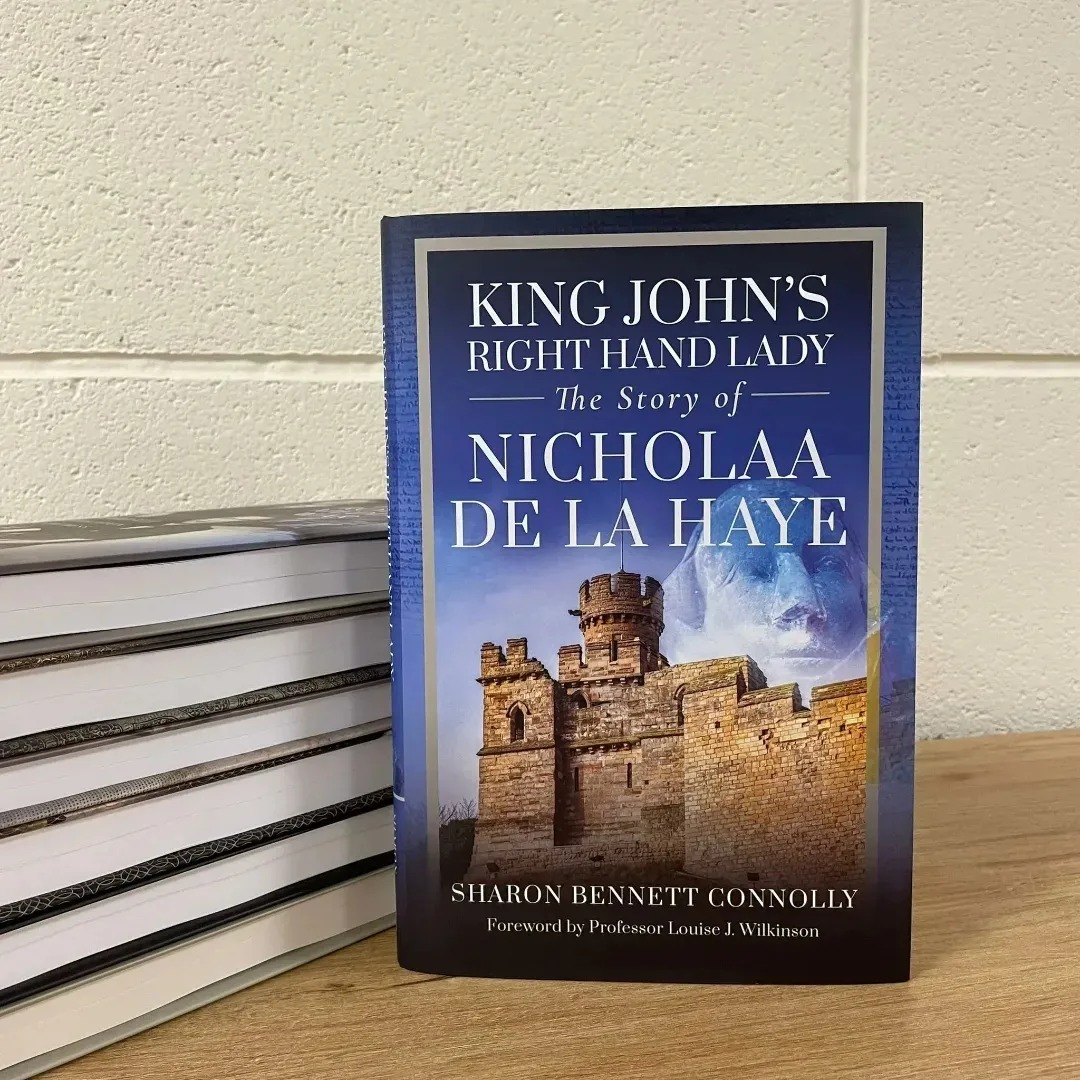
Out nowKing John’s Right-Hand Lady: The Story of Nicholaa de la Haye

In a time when men fought and women stayed home, Nicholaa de la Haye held Lincoln Castle against all-comers, gaining prominence in the First Baron’s War, the civil war that followed the sealing of Magna Carta in 1215. A truly remarkable lady, Nicholaa was the first woman to be appointed sheriff in her own right. Her strength and tenacity saved England at one of the lowest points in its history. Nicholaa de la Haye is one woman in English history whose story needs to be told…

King John’s Right-Hand Lady: The Story of Nicholaa de la Haye is now available from Pen & Sword Booksbookshop.org and Amazon.

Coming 15 January 2024: Women of the Anarchy

On the one side is Empress Matilda, or Maud. The sole surviving legitimate child of Henry I, she is fighting for her birthright and that of her children. On the other side is her cousin, Queen Matilda, supporting her husband, King Stephen, and fighting to see her own son inherit the English crown. Both women are granddaughters of St Margaret, Queen of Scotland and descendants of Alfred the Great of Wessex. Women of the Anarchy demonstrates how these women, unable to wield a sword, were prime movers in this time of conflict and lawlessness. It show how their strengths, weaknesses, and personal ambitions swung the fortunes of war one way – and then the other.

Available for pre-order from Amberley Publishing and Amazon UK.

Also by Sharon Bennett Connolly:

Defenders of the Norman Crown: The Rise and Fall of the Warenne Earls of Surrey tells the fascinating story of the Warenne dynasty, of the successes and failures of one of the most powerful families in England, from its origins in Normandy, through the Conquest, Magna Carta, the wars and marriages that led to its ultimate demise in the reign of Edward III. Defenders of the Norman Crown: Rise and Fall of the Warenne Earls of Surrey is now available from Pen & Sword BooksAmazon in the UK and US, and  Bookshop.org.

Ladies of Magna Carta: Women of Influence in Thirteenth Century England looks into the relationships of the various noble families of the 13th century, and how they were affected by the Barons’ Wars, Magna Carta and its aftermath; the bonds that were formed and those that were broken. It is now available in paperback and hardback from Pen & Sword,  Amazon, and Bookshop.org.
Heroines of the Medieval World tells the stories of some of the most remarkable women from Medieval history, from Eleanor of Aquitaine to Julian of Norwich. Available now from Amberley Publishing and Amazon, and Bookshop.org.

Silk and the Sword: The Women of the Norman Conquest traces the fortunes of the women who had a significant role to play in the momentous events of 1066. Available now from Amazon,  Amberley Publishing, and Bookshop.org.

Alternate Endings: An anthology of historical fiction short stories including Long Live the King… which is my take what might have happened had King John not died in October 1216. Available in paperback and kindle from Amazon.

Podcast:

Have a listen to the A Slice of Medieval podcast, which I co-host with Historical fiction novelist Derek Birks. Derek and I welcome guests, such as Bernard Cornwell, and discuss a wide range of topics in medieval history, from significant events to the personalities involved.

*

Don’t forget! Signed and dedicated copies of all my books are available through my online bookshop.

For forthcoming online and in-person talks, please check out my Events Page.

You can be the first to read new articles by clicking the ‘Follow’ button, liking our Facebook page or joining me on Twitter and Instagram.

©2023 Sharon Bennett Connolly FRHistS

Book Corner: The Tudors by Numbers by Carol Ann Lloyd

The Tudors by Numbers is a fresh look at a well-known dynasty ― through its numbers. Take a new look at old friends by learning the complicated path to 1 possible king symbolized by 1 rose, viewing the extraordinary 42 percent of the dynasty under the rule of 2 women, and considering the impact of 4 English language translations of the Bible printed in England. The Tudors by Numbers takes you behind the scenes through a different path and reveals new ways of seeing the Tudors.

The Tudors by Numbers: The Stories and Statistics Behind England’s Most Infamous Royal Dynasty by Carol Ann Lloyd is a new way of looking at the Tudors, giving a refreshing insight into the family and the 16th century.

When you think about ‘numbers’ as they relate to the Tudor dynasty, I am sure the first thig that comes to mind is ‘Henry VIII had six wives’ and I have to admit, that’s exactly where I went as soon as I saw the title of the book. I expected Carol Ann to dwell on Henry and his wives and, perhaps, add a few more numbers in the mix to flesh out the book. I actually thought there was not much breadth to looking at numbers with regard to the Tudors.

How wrong I was!

Carol Ann Lloyd presents the Tudors in a whole new light, looking at where numbers played a prominent role in England’s most famous dynasty.

It is illuminating!

The Tudors by Numbers: The Stories and Statistics Behind England’s Most Infamous Royal Dynasty by Carol Ann Lloyd is a fun, engaging volume that will make you look at the Tudors in a different light. Written in short, easy to absorb chapters, the author guides the reader through the the Tudor era, highlighting where numbers had a significant influence on the dynasty, not just in the number of wives of Henry VII or the number of ruling queens, and not just in the years.

Did Henry VII really end the Wars of the Roses by marrying Elizabeth of York, daughter of Edward IV, and creating the Tudor dynasty?

Let’s find out. Let’s roll the numbers!

The Story of a Rose by the Numbers

The numbers tell us that the path to one single rose and the establishment of the Tudor dynasty was a long and treacherous road made up of many complications. The numbers tell us the real story of the beginning of the Tudor Dynasty. The most important number in Henry   VII’s narrative is one. He based his claim and the establishment of his dynasty on there being:

•one heir to the Lancastrian claim to the throne: Henry himself

•one heir to the Yorkist claim to the throne: Elizabeth of York

•one marriage that united those two claimants

•one option for king, based on the above.

So, the question of who should be rightful king of England, which had rocked the country since 1399 when Richard II had been deposed, all came down to one man in 1485: Henry Tudor. Henry needed to tell his story. He decided to do so with red and white roses.

The white rose had a long history with Edward IV. It’s found on his manuscripts and features prominently in his genealogical roll, which was probably created to celebrate his coronation as King of England. After all, he had not inherited the throne from a royal father; instead, he had seized it from an anointed king in battle. To demonstrate the superiority of his family claim to the throne, his supporters created an elaborate genealogical roll filled with symbols to validate his divine right to the throne: three suns representing the holy trinity and white roses. Perpetuating the story that Elizabeth’s two brothers had died during the reign of Richard III, Henry recognised Elizabeth as the heir to the Yorkist claim. He seized on the white rose and passed the symbol on to Edward’s eldest daughter.

The red rose proved a trickier A few previous Lancastrians had used a gold rose, but not consistently. Henry Tudor’s Lancastrian predecessor, Henry VI, had used the antelope. Henry Tudor himself had initially used the symbol of the red dragon of Wales, associating himself with the mythical British King Cadwalladr. We don’t see any evidence of Henry using the red rose before Bosworth. But once he was king, he realised the power of symbolism and settled upon something that would allow him to put his stamp on the country forever. It was a masterstroke. The combination of the red and white rose was powerful in its simplicity and effective in its message. The king then went about carving that rose into buildings, emblazoning it on royal documents, and including it in portraits.

The Tudors by Numbers: The Stories and Statistics Behind England’s Most Infamous Royal Dynasty by Carol Ann Lloyd is a must-read for any Tudor enthusiast. All the great characters of the time are put in the spotlight, from the kings and queens to those who served them, from the likes of William Cecil, Queen Elizabeth’s right-hand man, to Thomas Cranmer, Thomas Wolsey and Thomas Cromwell, men whose careers helped to usher in the Reformation and the foundation of the Church of England. As a consequence of which, Edward VI – that much desired male heir – was the first king of England to be crowned as the supreme head of the Church of England.

Every aspect of the Tudor dynasty is examined – and the numbers rolled. If you love the story of Mary Queen of Scots, Anne Boleyn and Catherine of Aragon, you will find them here – presented in a new light.

Carol Ann Lloyd delves deep into the history of the time and uses her incredible knowledge of the dynasty in order to give the reader a fascinating insight into the Tudors. A study of the numbers highlights the great events of the period, from the dawn of the dynasty, through the pretenders who threatened Henry VII’s rule, Henry VIII’s obsession with having a male heir, to the great Elizabeth I and the twilight of the era.

The Tudors by Numbers: The Stories and Statistics Behind England’s Most Infamous Royal Dynasty by Carol Ann Lloyd is an enjoyable read and a valuable edition to the library of any Tudor enthusiast. I cannot recommend it highly enough!

To buy the book:

The Tudors by Numbers: The Stories and Statistics Behind England’s Most Infamous Royal Dynasty by Carol Ann Lloyd is now available on Amazon.

About the author:

Carol Ann Lloyd turned an obsession with the Tudors into a speaking and writing career. She shares her love of history with Smithsonian Associates, Royal Oak Foundation, Agecroft Hall, Folger Shakespeare Library and other organizations. She holds degrees in Literature and Education and hosts a popular podcast, British History: Royals, Rebels, and Romantics. She also offers workshops about using Shakespeare strategies to improve communication skills and is a member of National Speakers Association.

My Books

Signed, dedicated copies of all my books are available through my online bookshop.

Out nowKing John’s Right-Hand Lady: The Story of Nicholaa de la Haye

In a time when men fought and women stayed home, Nicholaa de la Haye held Lincoln Castle against all-comers, gaining prominence in the First Baron’s War, the civil war that followed the sealing of Magna Carta in 1215. A truly remarkable lady, Nicholaa was the first woman to be appointed sheriff in her own right. Her strength and tenacity saved England at one of the lowest points in its history. Nicholaa de la Haye is one woman in English history whose story needs to be told…

King John’s Right-Hand Lady: The Story of Nicholaa de la Haye is now available from Pen & Sword Booksbookshop.org and Amazon.

Coming 15 January 2024: Women of the Anarchy

On the one side is Empress Matilda, or Maud. The sole surviving legitimate child of Henry I, she is fighting for her birthright and that of her children. On the other side is her cousin, Queen Matilda, supporting her husband, King Stephen, and fighting to see her own son inherit the English crown. Both women are granddaughters of St Margaret, Queen of Scotland and descendants of Alfred the Great of Wessex. Women of the Anarchy demonstrates how these women, unable to wield a sword, were prime movers in this time of conflict and lawlessness. It show how their strengths, weaknesses, and personal ambitions swung the fortunes of war one way – and then the other.

Available for pre-order from Amberley Publishing and Amazon UK.

Also by Sharon Bennett Connolly:

Defenders of the Norman Crown: The Rise and Fall of the Warenne Earls of Surrey tells the fascinating story of the Warenne dynasty, of the successes and failures of one of the most powerful families in England, from its origins in Normandy, through the Conquest, Magna Carta, the wars and marriages that led to its ultimate demise in the reign of Edward III. Defenders of the Norman Crown: Rise and Fall of the Warenne Earls of Surrey is now available from Pen & Sword BooksAmazon in the UK and US, and  Bookshop.org.

Ladies of Magna Carta: Women of Influence in Thirteenth Century England looks into the relationships of the various noble families of the 13th century, and how they were affected by the Barons’ Wars, Magna Carta and its aftermath; the bonds that were formed and those that were broken. It is now available in paperback and hardback from Pen & Sword,  Amazon, and Bookshop.org.

Heroines of the Medieval World tells the stories of some of the most remarkable women from Medieval history, from Eleanor of Aquitaine to Julian of Norwich. Available now from Amberley Publishing and Amazon, and Bookshop.org.

Silk and the Sword: The Women of the Norman Conquest traces the fortunes of the women who had a significant role to play in the momentous events of 1066. Available now from Amazon,  Amberley Publishing, and Bookshop.org.

Alternate Endings: An anthology of historical fiction short stories including Long Live the King… which is my take what might have happened had King John not died in October 1216. Available in paperback and kindle from Amazon.

Podcast:

Have a listen to the A Slice of Medieval podcast, which I co-host with Historical fiction novelist Derek Birks. Derek and I welcome guests, such as Bernard Cornwell, and discuss a wide range of topics in medieval history, from significant events to the personalities involved.

*

Don’t forget! Signed and dedicated copies of all my books are available through my online bookshop.

For forthcoming online and in-person talks, please check out my Events Page.

You can be the first to read new articles by clicking the ‘Follow’ button, liking our Facebook page or joining me on Twitter and Instagram.

©2023 Sharon Bennett Connolly FRHistS
Just a little News

First and foremost, I would like to extend a huge THANK YOU to all my readers for sticking with me through the years. I really appreciate your support and messages of encouragement. And I hope you will continue to read and enjoy my articles and books.

I have a few things happening at the moment, so thought I would just do a short post sharing my news, just so you don’t miss it!

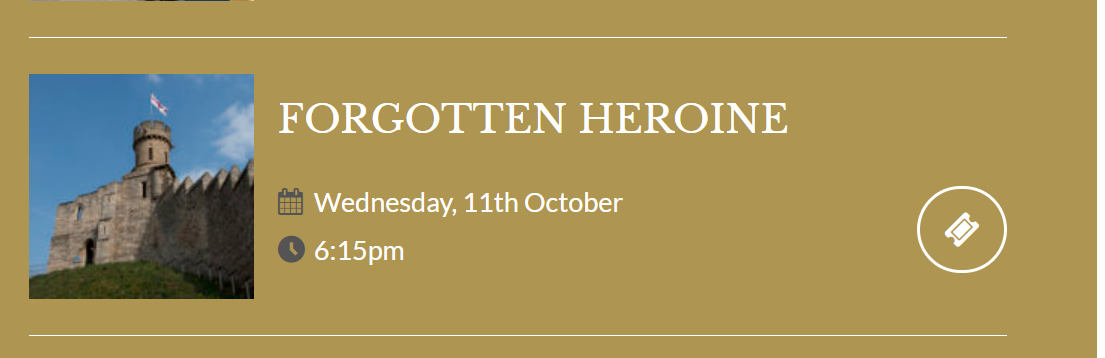
LAST EVENT OF THE YEAR!

11 October 2023

Rounding off a fabulous year, my last event is part of the amazing Lincoln Book Festival and -appropriately enough – is about Nicholaa de la Haye!

Forgotten Heroine will be held in the gorgeous lecture theatre at the Lincoln Museum (formerly known as The Collection), on 11 October, 2023, at 6.16pm.

Tickets are just £7!

Tickets are on sale now from the Lincoln Book Festival website, just click HERE!

Book News

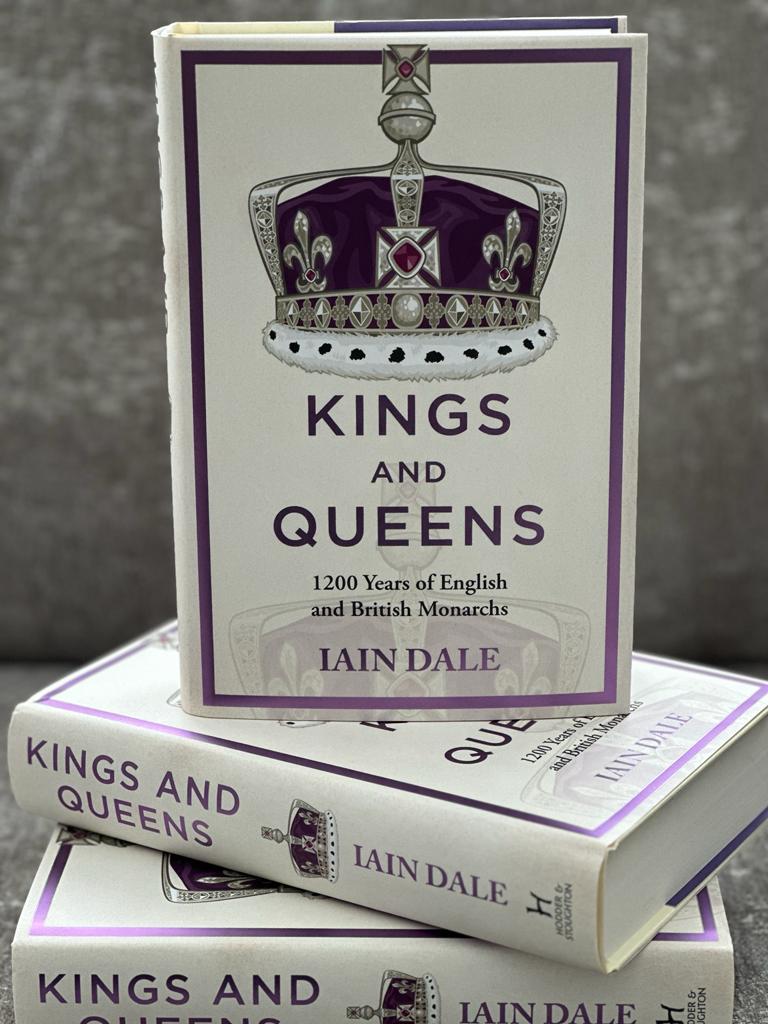
Kings and Queens: 1200 Years of English and British Monarchs

14 September sees the release of a new book I have collaborated on, Iain Dale’s Kings and Queens: 1200 Years of English and British Monarchs draws together some of the best historians around today (and me).

An essay on every individual who sat on the British and English throne, compiled and edited by Iain Dale.

‘We all know about Queen Victoria, Edward VIII and Queen Elizabeth II, but how much do we really know about other monarchs? Yes, we know William the Conqueror beat King Harold at the Battle of Hastings. We know George III was mad, but what else do we know about his 60 year long reign? We know Henry VIII famously had six wives, but do we know much more about him, other than he was very fat?’

From Alfred the Great to Charles III, each essay examines the monarch, their role and what they tell us about British history. Why has the British monarchy, unlike so many others, endured? Kings and Queens will attempt to answer this question, and many others, providing valuable insight into British history and how Britain is ruled today.

Buy Kings and Queens!

Women of the Anarchy

In 1135 Stephen of Blois usurped the throne, stealing it from his cousin, Empress Matilda (Maud), and sparking a 19-year civil war that would become known as The Anarchy, one of the bloodiest periods in English history. On the one side is Empress Matilda, or Maud. The sole surviving legitimate child of Henry I, she is fighting for her birthright and that of her children. On the other side is her cousin, Queen Matilda, supporting her husband, King Stephen, and fighting to see her own son inherit the English crown.

Both women are granddaughters of St Margaret, Queen of Scotland and descendants of Alfred the Great of Wessex. Empress Matilda was the first woman to claim the throne of England in her own right, but did not gain the support of the barons. When Queen Matilda’s husband King Stephen was captured by the Empress’s forces, it was down to her to keep the fight going, and to negotiate for her husband’s release. ‘Women of the Anarchy’ demonstrates how these women, unable to wield a sword, were prime movers in this time of conflict and lawlessness. It show how their strengths, weaknesses, and personal ambitions swung the fortunes of war one way – and then the other.

Coming 15 January 2024

Available for pre-order from Amberley Publishing and Amazon UK.

My new online shop is now open!

Signed books available with just a few clicks!

Well, I have finally taken the plunge and set up an online store for all my books – they will be signed, of course. Purchases will be despatched within 24 hours (48 hours on a weekend) of placing your order – guaranteed. If you already have the book, you can also order signed bookplates.

Please do visit and let me know what you think.

Books by Sharon Bennett Connolly

Podcast:

If you haven’t yet, have a listen to the A Slice of Medieval podcast, which I co-host with Historical fiction novelist Derek Birks. Derek and I welcome guests, such as Bernard Cornwell, and discuss a wide range of topics in medieval history, from significant events to the personalities involved. We now have 23 episodes in our library, with many more to come, including discussions on Christine de Pisan and Æthelflæd, Lady of the Mercians (with guest Annie Witehead).

My Books

Signed, dedicated copies of all my books are available through my online store.

Out nowKing John’s Right-Hand Lady: The Story of Nicholaa de la Haye

In a time when men fought and women stayed home, Nicholaa de la Haye held Lincoln Castle against all-comers, gaining prominence in the First Baron’s War, the civil war that followed the sealing of Magna Carta in 1215. A truly remarkable lady, Nicholaa was the first woman to be appointed sheriff in her own right. Her strength and tenacity saved England at one of the lowest points in its history. Nicholaa de la Haye is one woman in English history whose story needs to be told…

King John’s Right-Hand Lady: The Story of Nicholaa de la Haye is now available from Pen & Sword Booksbookshop.org and Amazon.

Defenders of the Norman Crown: The Rise and Fall of the Warenne Earls of Surrey tells the fascinating story of the Warenne dynasty, of the successes and failures of one of the most powerful families in England, from its origins in Normandy, through the Conquest, Magna Carta, the wars and marriages that led to its ultimate demise in the reign of Edward III. Defenders of the Norman Crown: Rise and Fall of the Warenne Earls of Surrey is now available from Pen & Sword BooksAmazon in the UK and US, and  Bookshop.org.

Ladies of Magna Carta: Women of Influence in Thirteenth Century England looks into the relationships of the various noble families of the 13th century, and how they were affected by the Barons’ Wars, Magna Carta and its aftermath; the bonds that were formed and those that were broken. It is now available in paperback and hardback from Pen & Sword,  Amazon, and Bookshop.org.

Heroines of the Medieval World tells the stories of some of the most remarkable women from Medieval history, from Eleanor of Aquitaine to Julian of Norwich. Available now from Amberley Publishing and Amazon, and Bookshop.org.

Silk and the Sword: The Women of the Norman Conquest traces the fortunes of the women who had a significant role to play in the momentous events of 1066. Available now from Amazon,  Amberley Publishing, and Bookshop.org.

Alternate Endings: An anthology of historical fiction short stories including Long Live the King… which is my take what might have happened had King John not died in October 1216. Available in paperback and kindle from Amazon.

*

Don’t forget! Signed and dedicated copies of all my books are available through my online store.

For forthcoming online and in-person talks, please check out my Events Page.

You can be the first to read new articles by clicking the ‘Follow’ button, liking our Facebook page or joining me on Twitter and Instagram.

©2023 Sharon Bennett Connolly FRHistS