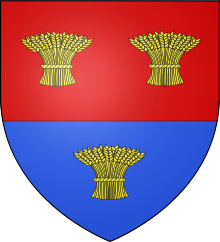
Matilda de Braose was probably born in the early 1150s in Saint-Valery-en-Caux, France, to Bernard IV, Seigneur de Saint-Valery and his wife, Matilda. Contemporary records describe her as tall and beautiful, wise and vigorous.
Matilda’s story was made famous by the de Braose’s spectacular falling-out with King John – and the manner of her death. Very little is known of Matilda’s early years; though she probably spent time at her family’s manor of Hinton Waldrist in Berkshire. Sometime around 1166 she married William de Braose, 4th Lord of Bramber, a Norman lord with land on the Welsh Marches. William was highly favoured by both Richard I and, later his brother King John.
Whilst William was away campaigning in Normandy, Matilda would be left to manage their estates in Wales. In 1198, Matilda defended Painscastle in Elfael against a massive Welsh attack by Gwenwynyn, Prince of Powys. She held out for 3 weeks until English reinforcements arrived, earning the castle its nickname of Matilda’s Castle.
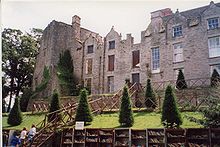
Matilda’s exploits were legendary. One of her titles was the Lady of Hay and Welsh folklore has her building the Castle of Hay in one night, single-handed, carrying the stones in her skirts.
The couple had around 16 children together, who married into some of the most powerful families of the time. Their eldest son, William, married Maud de Clare, daughter of the Earl of Hertford. Another son, Giles, became Bishop of Hereford. Of their daughters Loretta, married Robert de Breteuil, 4th Earl of Leicester and another, Margaret, married Walter de Lacy, Lord of Meath in Ireland.
A third son, Reginald, married, as his second wife, Gwladus Ddu, daughter of Llewelyn the Great, Prince of Wales. Reginald’s son by his first wife, William, was married Eva Marshal, daughter of the great knight, William Marshal, Earl of Pembroke and regent for King Henry III. It was this William de Braose who was ignominiously hanged by Llewelyn the Great, after being found in the bedchamber of Llewelyn’s wife Joan, the Lady of Wales and natural daughter of King John. William had been at the Welsh court to arrange the marriage of his daughter, Isabel, to Llewelyn and Joan’s son, David. Interestingly, the marriage still went ahead, although it was to be childless.
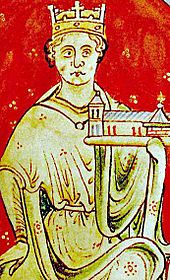
William de Braose was greatly favoured by King John in the early part of his reign. He was given Limerick in Ireland for 5,000 marks and also received the castle at Glamorgan and the lordship of Gower. William de Braose was the knight who captured the rival to John’s throne, Arthur of Brittany, at the Siege of Mirebeau in 1202 and possibly witnessed Arthur’s murder at Rouen at Easter 1203.
It was following Arthur’s murder that things started to go wrong for the Lord and Lady of Bramber. John became increasingly suspicious of de Braose’s loyalty and turned against him. This could have been for several reasons, not least being de Braose’s knowledge of Arthur’s fate.
Elsewhere, de Braose had fallen behind in his payments to the Exchequer for the honour of Limerick, but he had also sided with his friend William Marshal in his disagreements with the king. In addition, de Braose’s son, Giles had been one of the bishops to approve an Interdict against John; Giles fled into exile in France to escape the king’s reprisals.
Whatever the reason, in 1207 King John moved to make a public example of one of his most powerful barons, and punish him for his debts to the Exchequer. John demanded William and Matilda give up their sons as hostages.
Matilda refused and Roger of Wendover recorded her response to the soldiers sent to collect the boys, as;
“I will not deliver my sons to your lord, King John, for he foully murdered his nephew Arthur, whom he should have cared for honourably.”
Roger of Wendover
William is said to have admonished his wife for speaking so harshly of the king; but what mother wouldn’t react rashly when in fear for her children’s lives? William and Matilda realised she had gone too far, and tried to placate John with gifts. Matilda sent a herd of cows and a prized whit bull to John’s queen, Isabella of Angouleme.
But it was too late.
John took possession of de Braose’s castles and moved to arrest William. Forewarned, the couple fled to Ireland with 2 of their sons, where they took refuge with Walter de Lacy, their son-in-law and Lord of Meath. John followed after them, mounting an invasion of Ireland and bringing other recalcitrant barons to heal along the way. While William de Braose tried to come to terms with the king, Matilda and their eldest son, William, escaped by taking ship for Scotland.
However, Matilda and her son were captured in Galloway by Duncan of Carrick, and, having been returned to England in chains, they were imprisoned in Bristol Castle. King John made an agreement with both William and Matilda; freedom for her and a pardon for William in return for 40,000 marks.
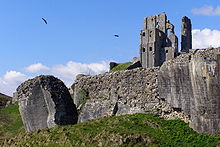
However, being either unwilling or unable to pay, Matilda and her son remained in prison – either at Windsor or Corfe Castle – and William was outlawed, eventually escaping into exile in France, disguised as a beggar, where he died in 1211.
Matilda’s fate was more gruesome; she and her son were left to starve to death in John’s dungeons (though whether this was at Corfe or Windsor is unclear). Tradition has it, that when their bodies were found, William’s cheeks bore his mother’s bite marks, where she had tried to stay alive following his death:
‘On the eleventh day the mother was found dead between her son’s legs, still upright but leaning back against her son’s chest as a dead woman. The son, who was also dead, sat upright, leaning against the wall as a dead man. So desperate was the mother that she had eaten her son’s cheeks. When William de Braose, who was in Paris, heard this news, he died soon afterwards, many asserting that it was through grief.’
Anonymous of Bethune
In another version,
‘When the King returned to England he imprisoned Matilda de Braose and her son William in the castle of Corfe; they were given a sheaf of oats and a flitch of raw bacon ; this was all the meat they were allowed. On the eleventh day the mother was found dead between the knees of her son, sitting upright except that she leaned back against her son like a dead woman. The son was dead in like manner, except that he was leaning back against the wall; and his cheeks had been gnawed by his mother in her anguish.’ (Histoire des ducs de Normandie)
John’s treatment of the de Braose family did not lead to the submission of his barons, as John had intended, and the remainder of his reign was marred by civil war.
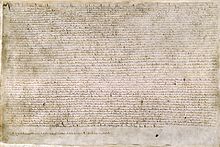
However when Magna Carta was written in 1215, Clause 39 may well have been included with Matilda and her family in mind:
“No man shall be taken, imprisoned, outlawed, banished or in any way destroyed, nor will we proceed against or prosecute him, except by the lawful judgement of his peers or by the law of the land.”
Magna Carta 1215
In his final days John may have felt some remorse at his relentless pursuit of the destruction of Matilda and her family, as shortly after the onset of his final, fatal illness, on 10 October 1216, the king gave permission to Matilda’s daughter, Margaret, to found a religious house in Herefordshire in memory of her father, mother and brother William. John died at Newark on the night of 18/19 October 1216.
*
The story of Matilda and her family features in my book, Ladies of Magna Carta; Women of Influence in Thirteenth Century England, which was released in the UK in May 2020.
*
Sources: sussexcastles.com; genie.com; steyningmuseum.org.uk; berkshirehistory.com; England Under the Norman and Angevin Kings 1075-1225 by Robert Bartlett; Oxford Companion to British History Edited by John Cannon; The Story of Britain by Roy Strong; The Plantagenets; the Kings who Made England by Dan Jones; The Life and Times of King John by Maurice Ashley; The Plantagenet Chronicles Edited by Elizabeth Hallam.
Pictures courtesy of Wikipedia
*
My Books:
Signed, dedicated copies of all my books are available through my online store.
Out now: Scotland’s Medieval Queens

Scotland’s history is dramatic, violent and bloody. Being England’s northern neighbour has never been easy. Scotland’s queens have had to deal with war, murder, imprisonment, political rivalries and open betrayal. They have loved and lost, raised kings and queens, ruled and died for Scotland. From St Margaret, who became one of the patron saints of Scotland, to Elizabeth de Burgh and the dramatic story of the Scottish Wars of Independence, to the love story and tragedy of Joan Beaufort, to Margaret of Denmark and the dawn of the Renaissance, Scotland’s Medieval Queens have seen it all. This is the story of Scotland through their eyes.
‘Scotland’s Medieval Queens gives a thorough grounding in the history of the women who ruled Scotland at the side of its kings, often in the shadows, but just as interesting in their lives beyond the spotlight. It’s not a subject that has been widely covered, and Sharon is a pioneer in bringing that information into accessible history.’ Elizabeth Chadwick (New York Times bestselling author)
Available now from Amazon and Pen and Sword Books
Also by Sharon Bennett Connolly:

Heroines of the Tudor World tells the stories of the most remarkable women from European history in the time of the Tudor dynasty, 1485-1603. These are the women who ruled, the women who founded dynasties, the women who fought for religious freedom, their families and love. Heroines of the Tudor World is now available from Amberley Publishing and Amazon UK. Women of the Anarchy demonstrates how Empress Matilda and Matilda of Boulogne, unable to wield a sword themselves, were prime movers in this time of conflict and lawlessness. It shows how their strengths, weaknesses, and personal ambitions swung the fortunes of war one way – and then the other. Available from Bookshop.org, Amberley Publishing and Amazon UK. King John’s Right-Hand Lady: The Story of Nicholaa de la Haye is the story of a truly remarkable lady, the hereditary constable of Lincoln Castle and the first woman in England to be appointed sheriff in her own right. Available from all good bookshops Pen & Sword Books, bookshop.org and Amazon.

Defenders of the Norman Crown: The Rise and Fall of the Warenne Earls of Surrey tells the fascinating story of the Warenne dynasty, from its origins in Normandy, through the Conquest, Magna Carta, the wars and marriages that led to its ultimate demise in the reign of Edward III. Available from Pen & Sword Books, Amazon in the UK and US, and Bookshop.org. Ladies of Magna Carta: Women of Influence in Thirteenth Century England looks into the relationships of the various noble families of the 13th century, and how they were affected by the Barons’ Wars, Magna Carta and its aftermath; the bonds that were formed and those that were broken. It is now available in paperback and hardback from Pen & Sword, Amazon, and Bookshop.org. Heroines of the Medieval World tells the stories of some of the most remarkable women from Medieval history, from Eleanor of Aquitaine to Julian of Norwich. Available now from Amberley Publishing and Amazon, and Bookshop.org. Silk and the Sword: The Women of the Norman Conquest traces the fortunes of the women who had a significant role to play in the momentous events of 1066. Available now from Amazon, Amberley Publishing, and Bookshop.org.
Alternate Endings: An anthology of historical fiction short stories including Long Live the King… which is my take what might have happened had King John not died in October 1216. Available in paperback and kindle from Amazon.
Podcast

Have a listen to the A Slice of Medieval podcast, which I co-host with Historical fiction novelist Derek Birks. Derek and I welcome guests, such as Bernard Cornwell and Michael Jecks, and discuss a wide range of topics in medieval history, from significant events to the personalities involved.
Every episode is also now available on YouTube.
*
Don’t forget! Signed and dedicated copies of all my books are available through my online store.
For forthcoming online and in-person talks, please check out my Events Page.
You can be the first to read new articles by clicking the ‘Follow’ button, liking our Facebook page or joining me on Twitter, Threads, Bluesky and Instagram.
*
©2015 Sharon Bennett Connolly FRHistS
 History... the interesting bits!
Reblogged this on karenstoneblog and commented:
One hell of a woman…knew about her imprisonment with her son how tragic that was. Great blog
LikeLike
I’d heard story before and it is horrific, but your account made me look at it from John’s point of view. Whatever the truth of Arthur’s death her accusation could not go unchallenged. John set a ransom, did he expect it to be paid? If paid they would have to have been freed. Her husband managed to escape, but was unable to raise ransom or provide aid for wife and son. John is stuck with woman and son, what are his options? He’s king this woman has slandered his reputation, he can not be seen to be weak. Locking them away and forgetting about them is an inadequate response but that seems to be the course John took. Like with Arthur’s death he seems to believe somehow his problems will go away. They do but he seems unawares the onsequences could create more problems than they solve.
LikeLike
Interesting thought Denise. Thank you. It’s true that we tend to look at things from the viewpoint of John’s victims. I think he was backed into a corner by Braose not paying the ransom, that’s true. And medieval kings did have to be ruthless in order to maintain their power, but they could also be merciful; I’m not sure John knew how to be merciful without losing face, though. His paranoia didn’t help things either.
LikeLiked by 1 person
Matilda Maud Saint Valery, De Braose, Lady de la Hay
My 27th great grandmother
Birth 1155 in Bramber, Sussex, England
Death 9 Apr 1211 in Corfe Castle, Dorset, England
LikeLike
Reblogged this on Frank Parker's author site and commented:
And here’s another. I’ve written about Maud and the de Braose crowd in Hereford and Ireland History on here.
LikeLike
Thank you, Frank. Much appreciated 🙂
LikeLike
Reblogged this on evelynralph and commented:
Very interesting. I had picked up bits of information regading the name De Braose ftom readiing Elizabeth Chadwick books, but thus had expanded my knowledge somewhat more, and I am grateful for that knowledge, just to try to understand a little bit more if our English hetitage.
LikeLike
Wonderful! Thank you so much. 🙂
LikeLike
Very interesting, I am reblogging because I think we need to know what our ancestors were like, good and bad. Persinally, I do not like King John very much, yes, he has a bad press, this end of history but, some must be true. Mud sticks, I think he was mercenery and that perhaps the fact that the ransom was not paid hurt him more than the slander. Times were tough in those days, the rich were powerful, did what they wanted.
Nevertheless, nice to know as much as possible, from them we come or are affected.
Evelyn
LikeLike
Indeed Evelyn. They were very interesting times – I think John had a lot of challenges and wasn’t exactly sure how to face them. But that’s what makes his reign so fascinating. Best wishes, Sharon
LikeLike
Reblogged this on History's Untold Treasures and commented:
H/T History … the Interesting Bits
LikeLiked by 1 person
Thank you 😀
LikeLike
I’m looking for more information on 4th Lord of Bramber and his family. More specifically, his millitary career, and his endeavors as Lord of Bramber.
Do you have any leads?
LikeLiked by 1 person
A lot of it is covered in my book Ladies of Magna Carta, Carl. I don’t think there is a book specifically about William, but he gets extensive coverage in any book on King John – Marc Morris’s book on John is a good read, as is the one by Stephen Church. The Oxford Dictionary of National Biography also has a pretty good entry for William. Hope that helps.
LikeLike