Last year, I discovered two novels by an author who was previously unknown to me, Wheel of Fortune and Sun Ascendant and I read them one after the other. I loved them. Set just down the road from me in Tickhill, I loved the details of the countryside I had grown up in. Then, in September, I had the pleasure of meeting the author Claire Dunn, writing as C.F. Dunn, at the Historical Novel Society conference. Claire joined our dinner party, which also included Derek Birks, Elizabeth Chadwick, Matthew Harffy and Steven A. McKay. As you can imagine, the talk was all about history! But I did also get the chance to chat with Claire on her own, and grill her about her characters and her love of the Wars of the Roses. So, I had to ask her to take part in my Wordly Women author interviews.
Welcome Claire!
Sharon: What got you into writing?
Claire: I can’t remember a time when I didn’t write. Even before I learned how to commit thoughts to paper, I wrote stories in my head. I devoured books as soon as I learned, late, how to read, so it wasn’t ever a question of whether I would write one day, but rather when. There were obstacles to that ambition, however, the major one being dyslexia. It was more a problem of other people’s perceptions than my own limitations. Growing up when I did, a career immersed in history and literature for someone who had initially struggled to read and write, was considered untenable. I wasn’t deterred; the stories were in my head and it was only a matter of time before one escaped onto paper.
Sharon: Tell us about your books.
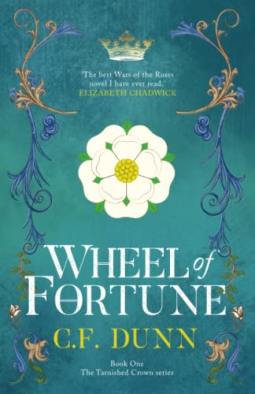
Claire: As a child and young adult, I loved books with historical action and a mystery at their core, whatever the period in which they were set. I also enjoyed cold war thrillers and, later, classic 19th century British and European literature. It was the combination of a strong story, believable characters and powerfully evocative language that was all important. So, when I came to write my own books, I suppose all those years of being drip fed such fiction found its way into my work. I didn’t start committing ideas to paper until much later and during one of the busiest times of my life running a school. In 2009, in Avila cathedral, I told my daughter about an idea I had for a story. That became my debut novel Mortal Fire (published by Lion Fiction) which went on to win a gold medal for Best Adult Romance in 2012. That was the first of five books in my contemporary gothic Secret of the Journal series, featuring a young historian, a hidden 17th century journal, and a historic anomaly that needed solving.
Almost as soon as I started the Secret of the Journal series, I also began work on my current historical series The Tarnished Crown. It took over a decade of research before Wheel of Fortune was ready for publication. The new edition of the second book – Sun Ascendant – is out in April 2025. There are going to be about 8 books in the series. I like writing longer stories and enjoy establishing characters that grow and develop throughout the series. This is especially the case when dealing with highly involved periods. I don’t see the Wars of the Roses as a succession of battles and memorable names, but a complex web of relationships affecting the highest to the lowest in the land, and stretching across the country and to the realms beyond.
By bringing fictional characters into real events with historical individuals, I’m able to explore different scenarios and outcomes while always keeping as close to what is known as possible. I don’t play fast and loose with facts and I won’t change something that has been established for the sake of the story. Sometimes, though, I have to take a fair stab at it if details are a bit sketchy, but that’s just part of the territory a fiction writer has to negotiate.
Sharon: What attracts you to the Wars of the Roses?
Claire: It’s fair to say that I am slightly obsessed. The last decades of the Plantagenet dynasty have been the bedrock of my historical interest. It has led to a degree in Medieval History and a lifetime of research. It’s a period packed with contention – both then and now – and individuals whose personalities spring from the page. Intense loyalties, treachery, ambiguous allegiances – as a writer, what more could anyone want?
Sharon: Who is your favourite 15th century person and why?
Claire: It has always been Richard III. I first became aware of the controversy surrounding him when about 8 or 9 and was hooked on history from then on. There have been brief flirtations with other people and periods along the way, but he has remained the reason for my fascination with the Wars of the Roses and the focus of my research. I wish I could say why; it’s not as if there isn’t an abundance of enigmatic figures dotted throughout history; but it was he who caught my imagination as a child, and so it has remained. It isn’t the controversy that I find interesting, however, but the complex personality and the weaving of relationships that I mentioned before. Richard’s life as Duke of Gloucester is far more revealing of the man than his few years as king.
Sharon: Who is your least favourite 15th century person and why?
Claire: Without a doubt it’s Henry VII. I have never forgiven him for winning Bosworth and even less so for almost succeeding in destroying Richard III’s reputation.
Sharon: How do you approach researching your topic?

Claire: I do acres of research, and then research the research just to make sure. I have a real thing about doing justice to the people of the past – they were just people after all – but a stroke of a pen can make or break a reputation. I believe I have a responsibility to represent them as accurately and fairly as possible, and try to do so while keeping the story gripping. Depending upon the period I’m researching, I’ll start with the historical record and delve into as many contemporary accounts as I can. If they are thin on the ground, as they often are in earlier periods or where written records have been destroyed, then I’ll look at archaeological reports. Here, geography and topography can play their role, as an understanding of the land and human interaction with it can speak volumes.
Primary physical and pictorial sources are also important – sculpture, buildings, paintings, and made artefacts such as jewellery, ceramics, textiles, represent the cultures that created them. There’s a place for ‘living’ history as well, something re-enactors understand, because nothing beats living in the past for understanding the practicalities of life in another era. How do you collect water, make fire, survive a harsh winter? Sometimes I’ll run my own experiments. I’ve been growing saffron for the past 5 years (saffron crops up – pun intended – in one of my future books). I didn’t know that mice could be a problem until a few days ago when I discovered that nearly all my corms have been eaten. Imagine that happening to someone whose livelihood depended upon bringing in a decent harvest. My corm-munching mice might very well feature in a future book.
Sharon: Are there any other eras in History you would like to write about?
Claire: My first series – a contemporary gothic mystery – had a 17th century twist, a period I find interesting and which I would like to explore further. Otherwise, it’s back to the fifteenth century and other people and themes that are begging to be explored.
Sharon: What are you working on now?
Claire: I’m currently writing the first book in a Victorian Gothic series, an eerie tale set in Scotland where not everything is as it seems. It’s one of those stories which has me checking the shadows and keeping the lights on in the evening. I am really enjoying researching all sorts of aspects of life in the later part of the nineteenth century, although I sometimes have to take stock when I remember that my Scottish grandfather was born in 1880. The past is not so very far away.
Sharon: And finally, what is the best thing about being a writer?
Claire: I’ve spent my life in a sort of nether world of betwixt and between. On the one hand I’ve been rooted in reality, running a school for neurodiverse children and young adults. On the other, I’m attached to a past that at times has felt more real than reality. No longer running the school, I now explore all manner of themes, topics, people and places, and get to call it work.
About the author:
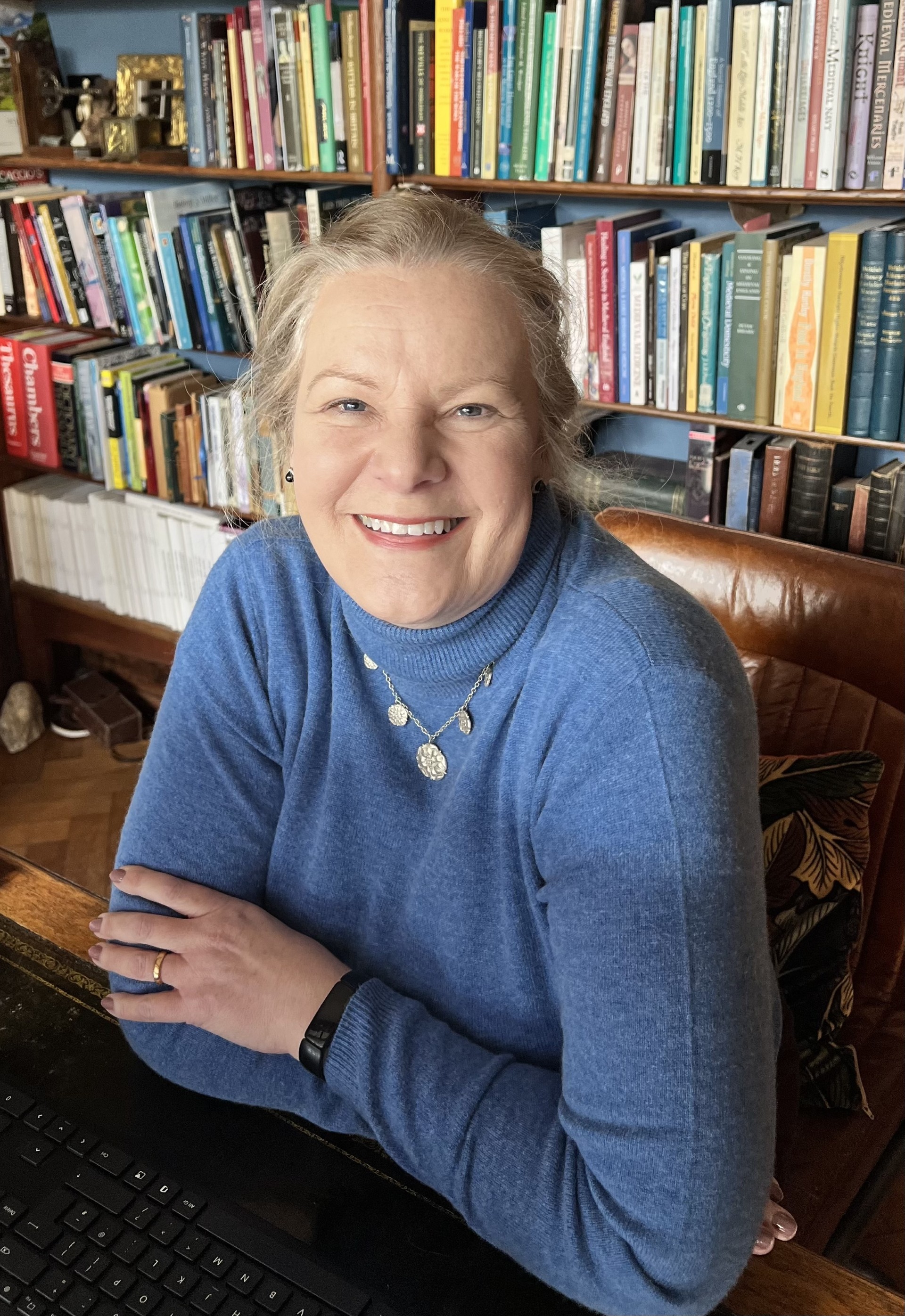
CF Dunn is an award-winning novelist of history, mystery and suspense.
Acutely aware of the impact of the past, Claire’s vibrant characters and meticulous research weave threads of history to bring an authenticity to her suspenseful stories of love, treachery and loyalty.
She is currently writing The Tarnished Crown series, the first of which, Wheel of Fortune, is described by renowned historical novelist, Elizabeth Chadwick as ‘The best Wars of the Roses novel I have ever read. ’
Now living in the South West of England, Claire frequently tries out new plot ideas on her clutch of chickens. Her love of history is equaled only by her delight in the natural world and the unruly sea by which she lives with her family, assorted animals, and overworked coffee machine.
The Tarnished Crown series:
Wheel of Fortune – ‘Dunn’s world is utterly believable, the research meticulous, the characters deep and rich. A triumph.’ Matthew Lewis. To buy Wheel of Fortune.
Sun Ascendant. – ‘Vivid, engaging and so incredibly captivating.’ The Book Magnet. To buy Sun Ascendant.
Degrees of Affinity – (October 2025)
Where to find C.F. Dunn:
You can find Claire on Instagram at @claire.f.dunn, on Facebook at CF Dunn and sign up for her quarterly newsletter on her website.
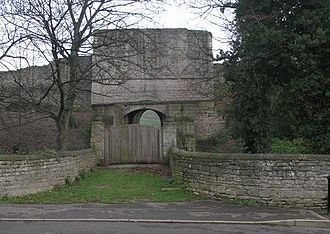
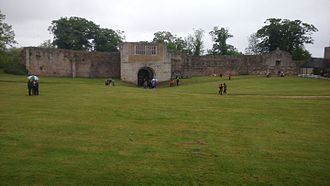
Tickhill Castle images are ©Sharon Bennett Connolly 2025
*
My books
Signed, dedicated copies of all my books are available through my online store.
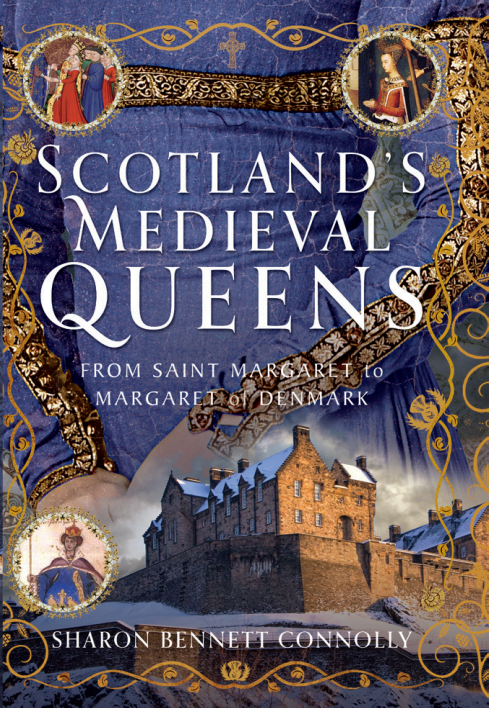
Out now: Scotland’s Medieval Queens

Scotland’s history is dramatic, violent and bloody. Being England’s northern neighbour has never been easy. Scotland’s queens have had to deal with war, murder, imprisonment, political rivalries and open betrayal. They have loved and lost, raised kings and queens, ruled and died for Scotland. From St Margaret, who became one of the patron saints of Scotland, to Elizabeth de Burgh and the dramatic story of the Scottish Wars of Independence, to the love story and tragedy of Joan Beaufort, to Margaret of Denmark and the dawn of the Renaissance, Scotland’s Medieval Queens have seen it all. This is the story of Scotland through their eyes.
‘Scotland’s Medieval Queens gives a thorough grounding in the history of the women who ruled Scotland at the side of its kings, often in the shadows, but just as interesting in their lives beyond the spotlight. It’s not a subject that has been widely covered, and Sharon is a pioneer in bringing that information into accessible history.’ Elizabeth Chadwick (New York Times bestselling author)
Available now from Amazon and Pen and Sword Books
Also by Sharon Bennett Connolly:

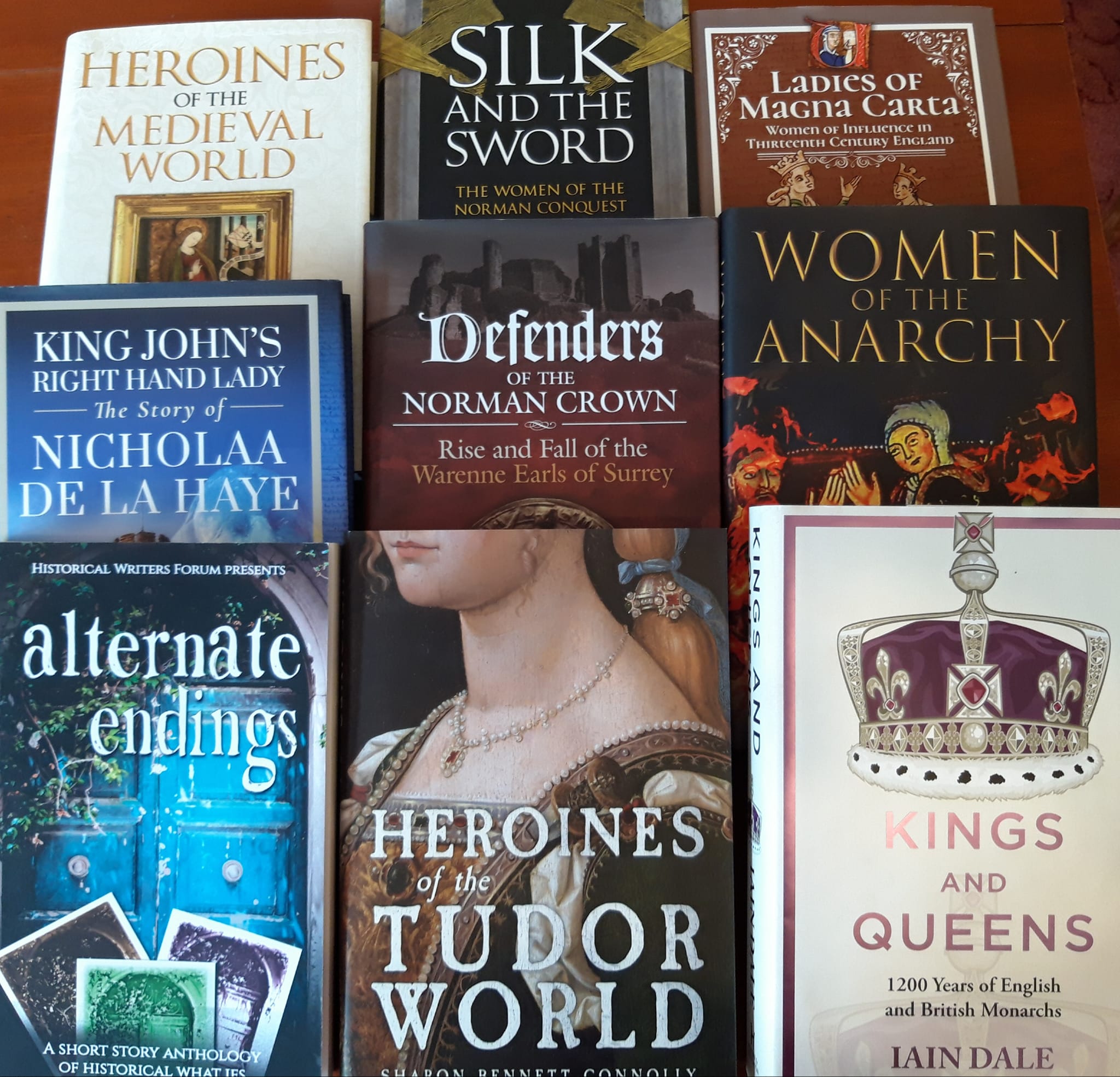
Heroines of the Tudor World tells the stories of the most remarkable women from European history in the time of the Tudor dynasty, 1485-1603. These are the women who ruled, the women who founded dynasties, the women who fought for religious freedom, their families and love. Heroines of the Tudor World is now available from Amberley Publishing and Amazon UK. Women of the Anarchy demonstrates how Empress Matilda and Matilda of Boulogne, unable to wield a sword themselves, were prime movers in this time of conflict and lawlessness. It shows how their strengths, weaknesses, and personal ambitions swung the fortunes of war one way – and then the other. Available from Bookshop.org, Amberley Publishing and Amazon UK. King John’s Right-Hand Lady: The Story of Nicholaa de la Haye is the story of a truly remarkable lady, the hereditary constable of Lincoln Castle and the first woman in England to be appointed sheriff in her own right. Available from all good bookshops Pen & Sword Books, bookshop.org and Amazon.
Defenders of the Norman Crown: The Rise and Fall of the Warenne Earls of Surrey tells the fascinating story of the Warenne dynasty, from its origins in Normandy, through the Conquest, Magna Carta, the wars and marriages that led to its ultimate demise in the reign of Edward III. Available from Pen & Sword Books, Amazon in the UK and US, and Bookshop.org. Ladies of Magna Carta: Women of Influence in Thirteenth Century England looks into the relationships of the various noble families of the 13th century, and how they were affected by the Barons’ Wars, Magna Carta and its aftermath; the bonds that were formed and those that were broken. It is now available in paperback and hardback from Pen & Sword, Amazon, and Bookshop.org. Heroines of the Medieval World tells the stories of some of the most remarkable women from Medieval history, from Eleanor of Aquitaine to Julian of Norwich. Available now from Amberley Publishing and Amazon, and Bookshop.org. Silk and the Sword: The Women of the Norman Conquest traces the fortunes of the women who had a significant role to play in the momentous events of 1066. Available now from Amazon, Amberley Publishing, and Bookshop.org.
Alternate Endings: An anthology of historical fiction short stories including Long Live the King… which is my take what might have happened had King John not died in October 1216. Available in paperback and kindle from Amazon.
Podcast:

Have a listen to the A Slice of Medieval podcast, which I co-host with Historical fiction novelist Derek Birks. Derek and I welcome guests, such as Bernard Cornwell and Michael Jecks, and discuss a wide range of topics in medieval history, from significant events to the personalities involved. Every episode is also now available on YouTube.
*
Don’t forget! Signed and dedicated copies of all my books are available through my online store.
For forthcoming online and in-person talks, please check out my Events Page.
You can be the first to read new articles by clicking the ‘Follow’ button, liking our Facebook page or joining me on Twitter, Threads, Bluesky and Instagram.
*
©2025 Sharon Bennett Connolly, FRHistS and C.F. Dunn
 History... the interesting bits!