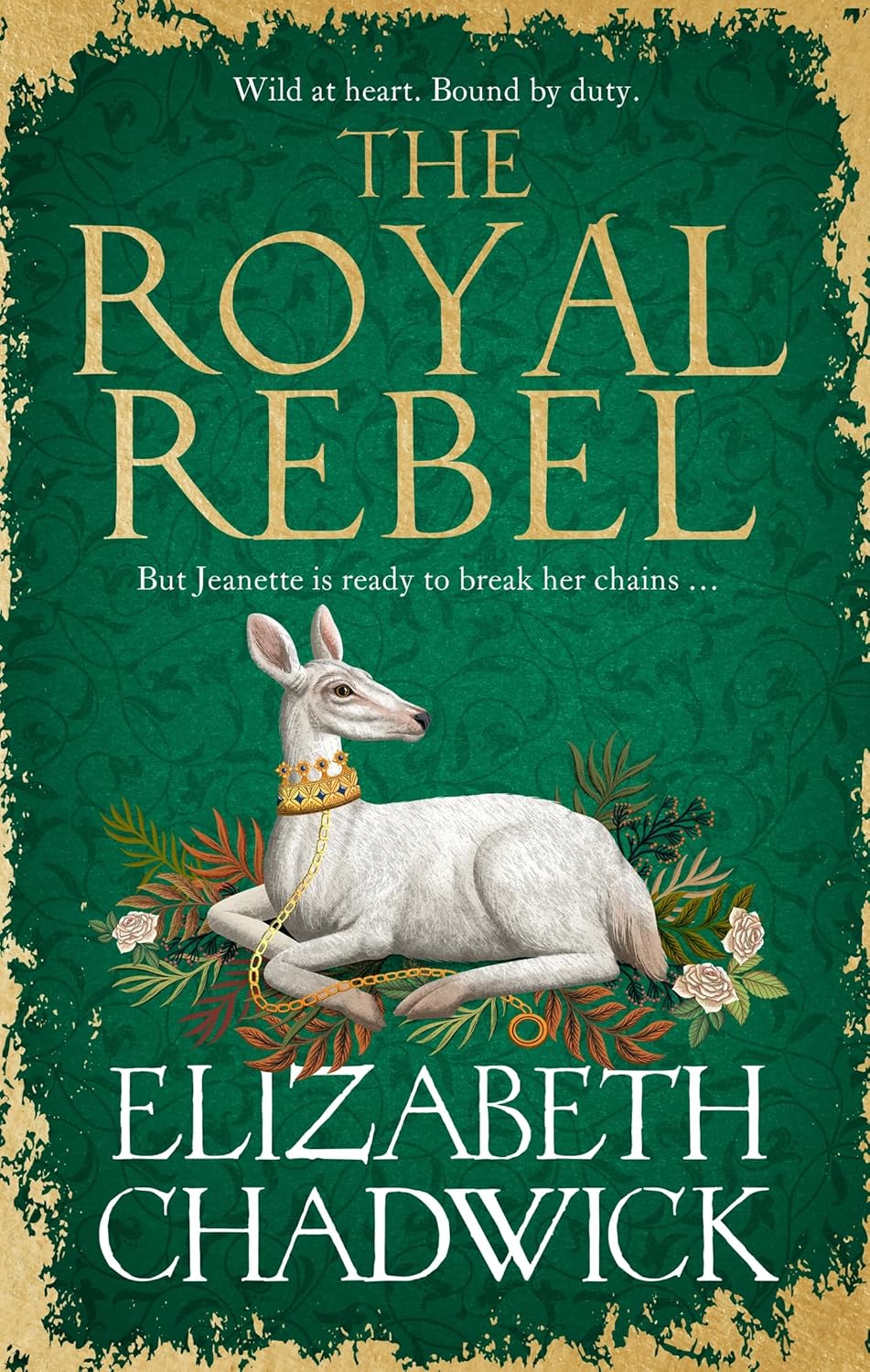
Book Corner: The Royal Rebel by Elizabeth Chadwick

1338: England has declared war on France, and Jeanette of Kent, cousin to King Edward III, says goodbye to her family and travels overseas with the royal court for the first time. Once in Antwerp, she is captivated by talented household knight Thomas Holland, just as he in turn is powerfully drawn to her.

Although both know their romance is forbidden, their love for each other grows stronger than the danger they face, and they marry in secret. But before they can make their tryst known, Thomas has to leave for war, and in his absence, Jeanette is forced into a second marriage and locked away from the world.

Then Thomas returns, and the real fight begins. As hostile family members battle to keep Jeanette and Thomas apart, the defiant lovers vow to be reunited – whatever the cost…

It is always the sign of a good book if the author can leave me in tears and send me through a range of emotions from beginning to end. In The Royal Rebel, Elizabeth Chadwick has achieved this and then some!

The controversy over Joan of Kent‘s first marriage is fascinating. There are so many possibilities and connotations. And so much politics! Girls in medieval times were not supposed to choose their own husbands. Marriage was a political alliance for noble families, not a love affair. Romance had nothing to do with it.

The Royal Rebel is the story of the most famous ‘love triangle’ of the14th century. Joan, the daughter of the Earl of Kent, secretly married Thomas Holland, who then went off on crusade for a year. In the mean time, Joan’s mother arranged her daughter’s marriage to William Montague, the heir to the earldom of Salisbury. It was a mutually beneficial marriage. Joan had royal blood, but tainted by the fact her father had been executed. While Montague was the heir to a large earldom but would benefit from a closer connection to the crown. Thomas Holland, on the other hand, was a household knight with few prospects and whose father had been executed for treason. And when he returned from crusading in Eastern Europe, due to financial constraints, he did not immediately lay claim to his wife.

It was a storyline worthy of a modern-day soap opera.

Thomas Holland took his claims that he and Joan were married all the way to Rome. The investigation into the marriage was long, drawn-out legalese, mired in canon law and I did wonder how Elizabeth Chadwick was going to make it interesting. Of course! I needn’t have feared. She draws out the tension, adds in the human element, family dynamics and political considerations and keeps the reader gripped to the very end – even though I already knew the outcome!

The next day, Jeanette [Joan of Kent], Joan, Hawise and several other ladies from the Queen’s chamber gathered to dole out arms to the poor at the monastery gates. Usually, the almoners and designated servants distributed the donations, but today, in thanksgiving, the Queen’s ladies were involved in the task, and as well as the food, small amounts of money and items of clothing were handed out.

Jeanette played her part with a whole heart and a wide and ready smile. She was in charge of dispensing the bread, while Joan ladled pottage into the bowls people had brought them. Thomas and Otto arrived with their retinues to assist and stand guard, and the loaves of bread and jugs of beer were soon emptied, and all the money and clothing gone.

‘Thank you,’ Jeanette said, smiling at Thomas as she gathered up the empty baskets.

‘It has been my pleasure, demoiselle.’

He had brought one of his old hoods and two thick blankets to give away and had provided a small purse of alms money. His manner towards the folk who had come to receive charity had been courteous and good-humoured. Jeanette had noted his common touch which did not detract from the authority he possessed to lead men and maintain his rank. He had tousled a small boy’s hair, and jested with a toothless old woman who had cackled at him with lecherous appreciation, saying if she had been thirty years younger…

Once more, he escorted her and the ladies back to the royal apartments, and carried the baskets himself.

‘You look like a housewife going to market,’ she said, amused and very aware of his presence at her side. Their pace was a saunter, eking out the moment.

‘Looks can be deceptive,’ he replied. ‘It is what lies beneath that matters.’

He leaned a little towards her, and Jeanette’s breath shortened.

‘Then I suppose that like all truth it is buried, and must be sought by diligent investigation,’ she said pertly, giving as good as she got, and was rewarded by a flash of his grin.

‘I have always found that to be the case, demoiselle,’ he said, as they came to the Queen’s door. ‘And usually well rewarded.’

The Royal Rebel by Elizabeth Chadwick is no mere romance. It is the story of a trying decade in the reign of Edward III. Just as he embarks on the Hundred Years War with France (I wonder if he would have been so keen, if someone had told him the war’s eventual name?), plague ravages Europe and the court is gripped by the scandal of Joan’, Thomas and William’s marital situation. The detail is impressive.

Elizabeth Chadwick is moving into a period new to her, the late medieval; away from the 12th and 13th centuries of which she is so familiar. Not that you would know it. Her research has been meticulous and her attention to detail, to the dress and customs of the period, is second-to-none. Elizabeth Chadwick has really thought about the circumstances involving the clandestine marriage of Joan of Kent and Tomas Holland – and the very public marriage of Joan and Willian Montague. And how all this came about! The plot is intricate but entirely plausible and answers several questions around the actions of the parties involved.

The Royal Rebel also highlights the quandary over inheritance that would always hang over Joan’s marriage to Montague whilst the question mark remained over the validity of their marriage. Would any children have even been legitimate? Joan’s frustrations over her treatment is palpable; not being allowed to be with her true husband, being ignored by her elders, not being believed and even being prevented from freely giving her testimony in the court case. The Salisburys even locked her up!

The Royal Rebel by Elizabeth Chadwick is not just a good read, it is an experience of life in the mid-14th century and not to be missed.

The Royal Rebel by Elizabeth Chadwick is most definitely among my Top 5 books of 2024. I cannot recommend it highly enough!

To Buy the Book:

The Royal Rebel by Elizabeth Chadwick is now available from Amazon and all good bookshops.

About the Author:

New York Times bestselling author Elizabeth Chadwick lives in a cottage in the Vale of Belvoir in Nottinghamshire with her husband and their three dogs. Her first novel, The Wild Hunt, won a Betty Trask Award, To Defy a King won the Romantic Novelist Association’s Historical Novel Prize and The Scarlet Lion was nominated by Richard Lee – founder of the Historical Novel Society – as one of the top ten historical novels of the last decade. She often lectures at conferences and historical venues, has been consulted for television documentaries and is a member of the Royal Historical Society.

Keep in touch with Elizabeth via her website, her blogs or on social media.

http://www.elizabethchadwick.com
twitter: @chadwickauthor
facebook: ElizabethChadwick

*

My Books:

Signed, dedicated copies of all my books are available through my online bookshop.

Coming 30 January 2025: Scotland’s Medieval Queens
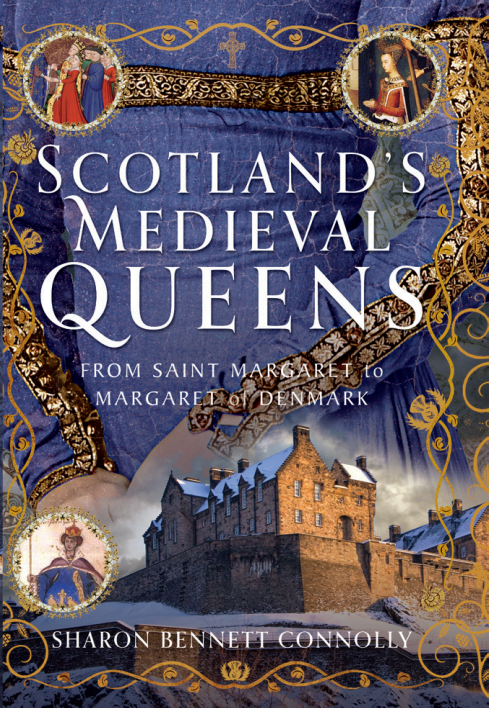
Scotland’s history is dramatic, violent and bloody. Being England’s northern neighbour has never been easy. Scotland’s queens have had to deal with war, murder, imprisonment, political rivalries and open betrayal. They have loved and lost, raised kings and queens, ruled and died for Scotland. From St Margaret, who became one of the patron saints of Scotland, to Elizabeth de Burgh and the dramatic story of the Scottish Wars of Independence, to the love story and tragedy of Joan Beaufort, to Margaret of Denmark and the dawn of the Renaissance, Scotland’s Medieval Queens have seen it all. This is the story of Scotland through their eyes.

Available for pre-order now.

Also by Sharon Bennett Connolly:
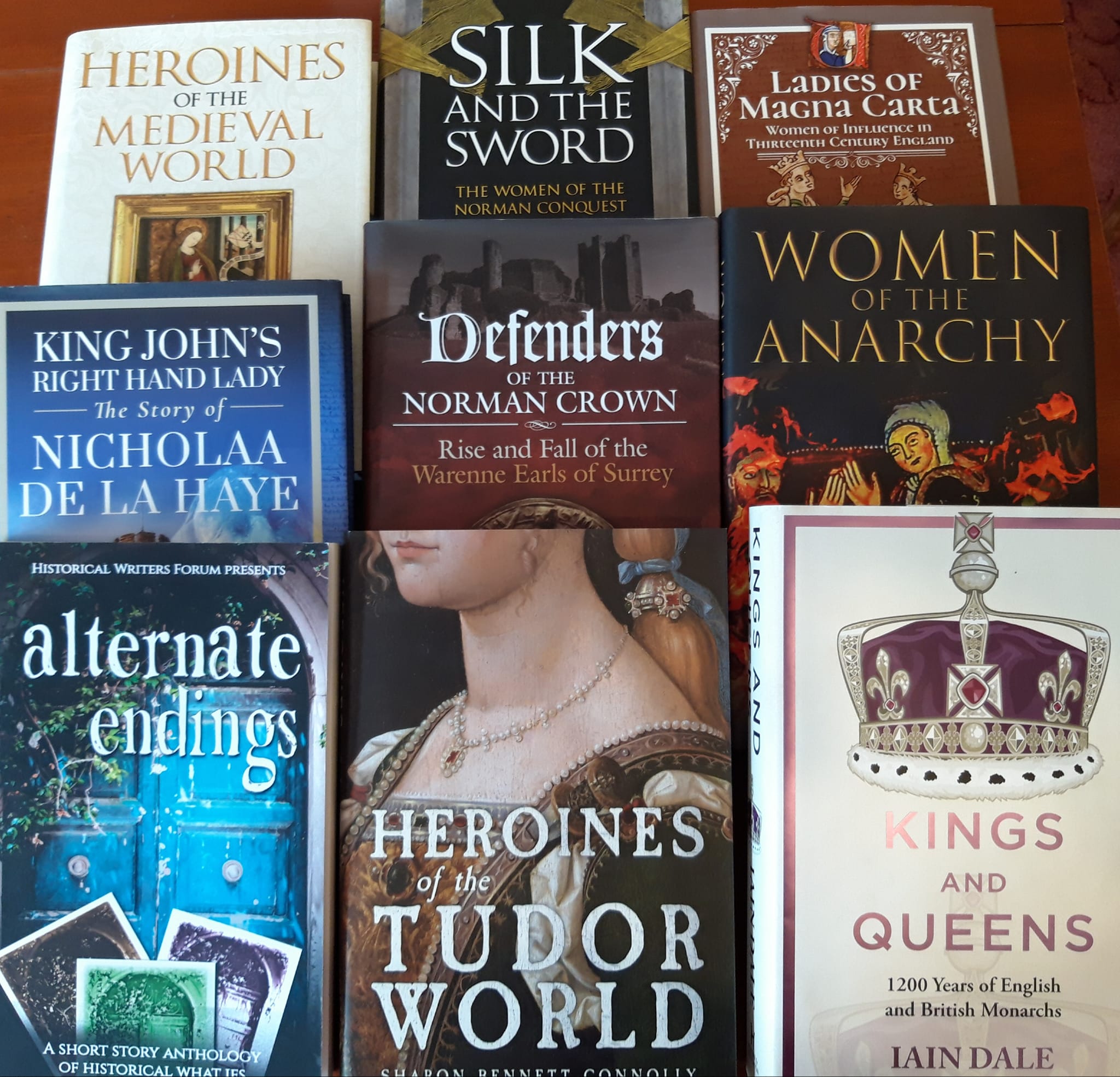
Heroines of the Tudor World tells the stories of the most remarkable women from European history in the time of the Tudor dynasty, 1485-1603. These are the women who ruled, the women who founded dynasties, the women who fought for religious freedom, their families and love. Heroines of the Tudor World is now available for pre-order from Amberley Publishing and Amazon UK. Women of the Anarchy demonstrates how Empress Matilda and Matilda of Boulogne, unable to wield a sword themselves, were prime movers in this time of conflict and lawlessness. It shows how their strengths, weaknesses, and personal ambitions swung the fortunes of war one way – and then the other. Available from Bookshop.orgAmberley Publishing and Amazon UKKing John’s Right-Hand Lady: The Story of Nicholaa de la Haye is the story of a truly remarkable lady, the hereditary constable of Lincoln Castle and the first woman in England to be appointed sheriff in her own right. Available from all good bookshops Pen & Sword Booksbookshop.org and Amazon

Defenders of the Norman Crown: The Rise and Fall of the Warenne Earls of Surrey tells the fascinating story of the Warenne dynasty, from its origins in Normandy, through the Conquest, Magna Carta, the wars and marriages that led to its ultimate demise in the reign of Edward III. Available from Pen & Sword BooksAmazon in the UK and US, and Bookshop.orgLadies of Magna Carta: Women of Influence in Thirteenth Century England looks into the relationships of the various noble families of the 13th century, and how they were affected by the Barons’ Wars, Magna Carta and its aftermath; the bonds that were formed and those that were broken. It is now available in paperback and hardback from Pen & SwordAmazon, and Bookshop.orgHeroines of the Medieval World tells the stories of some of the most remarkable women from Medieval history, from Eleanor of Aquitaine to Julian of Norwich. Available now from Amberley Publishing and Amazon, and Bookshop.orgSilk and the Sword: The Women of the Norman Conquest traces the fortunes of the women who had a significant role to play in the momentous events of 1066. Available now from Amazon,  Amberley Publishing, and Bookshop.org.

Alternate Endings: An anthology of historical fiction short stories including Long Live the King… which is my take what might have happened had King John not died in October 1216. Available in paperback and kindle from Amazon.

Podcast:

Have a listen to the A Slice of Medieval podcast, which I co-host with Historical fiction novelist Derek Birks. Derek and I welcome guests, such as Bernard Cornwell, and discuss a wide range of topics in medieval history, from significant events to the personalities involved, including Elizabeth Chadwick discussing her writing of The Royal Rebel as a guest for the 2024 HNS Conference’s Writing Medieval panel, alongside Matthew Harffy and David Gilman.

*

Don’t forget! Signed and dedicated copies of all my books are available through my online bookshop.

For forthcoming online and in-person talks, please check out my Events Page.

You can be the first to read new articles by clicking the ‘Follow’ button, liking our Facebook page or joining me on TwitterThreadsBluesky and Instagram.

©2024 Sharon Bennett Connolly FRHistS
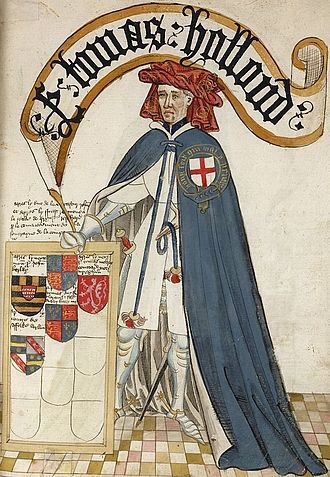
The Man who Won the Hand of the Fair Maid of Kent

330px-Thomas_Holland_1430
Sir Thomas Holland, Earl of Kent

Having recently written about William Montagu, 2nd Earl of Salisbury and husband of Joan of Kent, I thought it only fair to write an article on William’s love rival, Thomas Holland.

The second son of Robert Holland, Lord Holland of Upholland, Lancashire, Thomas was born around 1315 and grew up to be quite a renowned soldier. His mother was Maud, daughter and co-heiress of Alan Zouche, Lord Zouche of Ashby. Thomas grew up with 3 brothers and 3 sisters. His older brother, Robert, succeeded to the Holland estates and  resided at Thorpe Waterville in Northamptonshire. Thomas’s 2 younger brothers, Alan and Otto, followed their brother into military service, and are often noted as having accompanied him on campaign.

The number of sisters seems to be confused; some sources put it at 5, while others mention only 3. Of the 3 known sisters the eldest, Isabella, became the mistress of John de Warenne, 7th Earl of Surrey who had married to Edward II’s cousin, Joan of Bar.  Another sister, Margaret, died in 1349 and had been married to John de la Warr, while the last, Matilda or Maud, had been the wife of John (II) Mowbray, Lord Mowbray.

Thomas Holland’s father had been a chief supporter of Thomas, Earl of Lancaster, who had attempted to curb the malevolent influence of Hugh le Despenser the Younger on King Edward II and, by extension, the country. Holland, however, turned his coat at the last-minute and joined the king’s faction just months before Lancaster was defeated at the Battle of Boroughbridge in 1322.

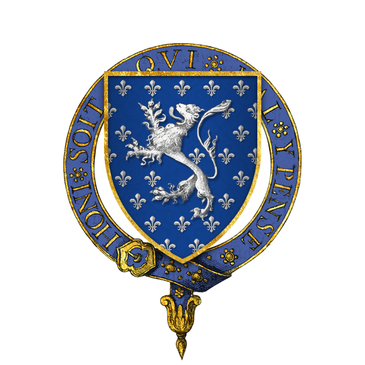
Coat_of_Arms_of_Sir_Thomas_Holland,_KG
Coat of arms of Sir Thomas Holland, Knight of the Garter

Lancaster was executed but Robert Holland did not get the reward he was probably expecting; he was imprisoned, with his lands confiscated. It was only in 1327, after Edward II’s deposition and the accession of Edward III, that Holland’s lands were restored. However, in October 1328 Robert Holland was murdered in Borehamwood, Hertfordshire, probably by supporters of the new Earl of Lancaster, Thomas’s brother Henry.

A landless young knight, and the son of a disgraced lord, Thomas Holland had very little going for him when he started his soldiering career, probably in Scotland in the early 1330s. However, as the 1330s progressed he was making a reputation as an able soldier. In 1337 he was fighting in Bordeaux with Robert d’Artois, but by 1338 he was a knight of the royal household; serving in Flanders the following year and at Sluys in 1340.

In 1339 Thomas managed to pull off the marriage coup of the century – but no one was to know about it for 10 years. At the age of 24 Thomas married Joan Plantagenet, daughter of Edmund, earl of Kent, granddaughter of Edward I and cousin of King Edward III, who is reported as being as young as 11 years of age at the time. Despite her family links, at the time of the marriage Joan was no great heiress; her brother was earl of Kent and it was only his death in 1352 and the earlier death-without-heirs of her maternal uncle, Thomas Lord Wake, in 1349, that made her a wealthy woman in her own right.

Joan_of_Kent
Joan of Kent

Modern sensibilities will make us cringe at Joan’s tender age, but, although it was young even for the period an 11-year-old bride was not unheard of. We know, from Joan’s later testimony, that the marriage was consummated almost immediately; however, the couple did not settle down to marital bliss and Holland was soon on his travels.

In 1341, while Holland was away crusading in Prussia, Joan’s mother, Margaret Wake, arranged an advantageous marriage for her daughter to William Montagu, 2nd earl of Salisbury. Whether Margaret knew about the extent of Joan’s relationship with Holland is uncertain – maybe she believed Joan was infatuated with the landless knight and hoped that marrying her to Montagu would cure the pre-teen of this puppy love?

By February 1341 Joan and Montagu were married.

Thomas Holland, however, didn’t appear to be in a rush to return to claim his wife, though this was probably due to the fact he was in no financial position to fight a costly court case. He spent the next few years campaigning in Europe. In 1342-3 he fought in Brittany with the king and was probably in Granada with the earl of Derby by 1343. In 1345 he was back in Brittany and was at the Siege of Caen in 1346; a battle in which Joan’s other husband, Montagu, may also have taken part – awkward!

Holland played a prominent part in the Siege of Caen, capturing the Count of Eu, constable of France, who surrendered himself to Holland based on the knight’s chivalrous reputation. The count was then sold to Edward III for 80,000 florins, possibly making Holland very wealthy indeed (if he ever received the full balance owed). Thomas Holland’s eminence rose further during the 1346 Crecy campaign, seeing action at Amiens and Rouen; he was wounded at a castle on the Seine and commanded the rearguard on the march from Caen.

300px-Holland_1430 Otto
Otto Holland – Thomas’s brother and lieutenant

Recognition of his exploits came from the King in 1348, when Holland was made one of the Founder Knights of the Order of the Garter. His brother and lieutenant, Otto, was also awarded with the same honour – as was William Montagu, earl of Salisbury and the ‘other’ husband of the fair Joan. Montagu was also, at this  time, employing Thomas Holland as his steward – I wonder if Joan had had a hand in the appointment?

Holland now found himself in a position to petition the papal court to confirm the validity of his marriage and have Joan returned to him. The inaugural Garter tournament on St George’s Day, 1349 must have caused great interest, seeing Joan’s current husband, the Earl of Salisbury, fighting on the king’s team, while Sir Thomas Holland was on the side of Prince Edward, the Black Prince (Joan’s future husband, just to make things more confusing). It is not hard to imagine the highly charged atmosphere, with Joan’s two husbands facing each other across the tournament field, with the object of their affection watching from the stands.

If you’re wondering who Joan cheered for, my guess is Thomas Holland as, when called to testify to her marriage with Holland, Joan confirmed that, not only had she married Holland but the marriage had also been consummated. After lengthy court proceedings, in which Holland had travelled to the papal court at Avignon on more than one occasion, and with Joan being under house arrest and denied access to lawyers by the Montagu family, in November 1349 the papal court finally publicised the verdict; Joan’s marriage to Montagu was declared null and void and she was ordered to return to Holland.

Despite the testimony of both Joan and Thomas Holland, there will always be a question mark over their claims to have married in 1339. The more cynical of observers may think that their relationship started much later, when Joan was already married to William Montagu, and that they employed the concept of an earlier marriage in order to free Joan from her unwanted husband and allow her to marry her lover. However, it must be remembered that Joan swore in front of a church court that she had married Thomas when she was 11, and lying to the church would bring the hefty penalty of eternal damnation. I doubt we will ever truly know the truth, but I personally lean towards the argument for the earlier marriage rather than a subsequent adulterous affair.

Holland’s fortunes were certainly on the rise,  his wife restored to him, and with her brother’s death in 1352, Joan inherited estates in 16 counties, making Holland (by right of his wife) a lord of vast estates. His military career blossomed, he was given independent commands and in August  1352 was made Captain of Calais Castle; from 1354 he was summoned to parliament as Lord Holland.

Joan and Sir Thomas Holland had 5 children together; 3 sons and 2 daughters. Their first son, Thomas, Earl of Kent, was born in 1350 and married Alice, the daughter of Richard FitzAlan, 10th Earl of Arundel; he died in 1397.  Edmund was born in 1352 and died young. Their third son, John, was created Duke of Exeter in 1397 by his younger half-brother, King Richard II. He married Elizabeth of Lancaster, daughter of John of Gaunt and Blanche of Lancaster, but was executed in 1400 for his involvement in a plot to assassinate Henry IV and return his brother to the throne.

330px-Arms_of_Edmund_of_Woodstock,_1st_Earl_of_Kent.svg
Arms of Thomas Holland, 2nd Earl of Kent

Of their daughters, Joan married John V, Duke of Brittany (who would marry Joanna of Navarre as his second wife, the future queen-consort of Henry IV), but died in 1384. Their youngest child, Matilda, was born in 1359 and married twice; Sir Hugh de Courtenay, who died in 1377, and then Waleran of Luxembourg, Count of St Pol and Ligny. Matilda died in 1391.

Thomas Holland’s military prestige continued to rise throughout the 1350s, with his appointment as the King’s lieutenant in Brittany in 1353-4, receiving funding from the local revenues. Thomas also had custody of the young heir to the duchy, John V, who was later married to the Holland’s daughter, Joan.

In June 1356 Holland was appointed Keeper of the Channel Islands and tasked with the recovery of the Islands’ Castle Cornet, then in French hands; Holland’s brother, Otto, soon recaptured it for the English. In the subsequent years, Holland was placed in charge of various castles in Normandy; until October 1359 when he was appointed joint lieutenant of Normandy with Philip of Navarre.

The apotheosis of Holland’s military career came in September 1360 when he was appointed the king’s captain and lieutenant in France and Normandy. It was at this time, also, that he was finally given the title earl of Kent – to bolster his authority and prestige among friends and enemies alike, in order to  aid in his task of carrying out the provisions of the Treaty of Bretigny of October 1360.

330px-Hospital_gatehouse_-_geograph.org.uk_-_487443
Gatehouse of the Greyfriars at Stamford, Lincolnshire

However, before this duty could be fulfilled, and at the height of his fame and prestige, Thomas Holland, earl of Kent, contracted an illness and died at Rouen on the 26th or 28th December 13601, depending on the source. He was buried in the church of the Friars Minor at Rouen, but was later moved to the Church of the Greyfriars at Stamford in Lincolnshire.

His widow, Joan, would marry Prince Edward, the Black Prince and heir of Edward III, in the following year and their son, Richard, would be crowned in 1377 as King Richard II. Holland’s children by Joan would be half-siblings to the King of England.

When Joan herself died in 1385 she chose to be buried beside her first husband in Lincolnshire, rather than with her prince in Canterbury Cathedral.

*

Footnote: 1 Stansfield, Oxforddnb.com

Pictures taken from Wikipedia.

*

Sources: The Perfect King, the Life of Edward III by Ian Mortimer; The Life and Time of Edward III by Paul Johnson; The Reign of Edward III  by WM Ormrod; The Mammoth Book of British kings & Queens by Mike Ashley; Britain’s’ Royal Families, the Complete Genealogy by Alison Weir; Brewer’s British Royalty by David Williamson; The Plantagenets, the Kings Who Made Britain by Dan Jones; englishmonarchs.co.uk; The Oxford Companion to British History edited by John Cannon; Chronicles of the Age of Chivalry Edited by Elizabeth Hallam; oxforddnb.com; britannia.com; themcs.org; Oxforddnb.com.

*

My books:

Signed, dedicated copies of all my books are available through my online bookshop.

Coming 30 January 2025: Scotland’s Medieval Queens

Scotland’s history is dramatic, violent and bloody. Being England’s northern neighbour has never been easy. Scotland’s queens have had to deal with war, murder, imprisonment, political rivalries and open betrayal. They have loved and lost, raised kings and queens, ruled and died for Scotland. From St Margaret, who became one of the patron saints of Scotland, to Elizabeth de Burgh and the dramatic story of the Scottish Wars of Independence, to the love story and tragedy of Joan Beaufort, to Margaret of Denmark and the dawn of the Renaissance, Scotland’s Medieval Queens have seen it all. This is the story of Scotland through their eyes.

Available for pre-order now.

Also by Sharon Bennett Connolly:

Heroines of the Tudor World tells the stories of the most remarkable women from European history in the time of the Tudor dynasty, 1485-1603. These are the women who ruled, the women who founded dynasties, the women who fought for religious freedom, their families and love. Heroines of the Tudor World is now available for pre-order from Amberley Publishing and Amazon UK. Women of the Anarchy demonstrates how Empress Matilda and Matilda of Boulogne, unable to wield a sword themselves, were prime movers in this time of conflict and lawlessness. It shows how their strengths, weaknesses, and personal ambitions swung the fortunes of war one way – and then the other. Available from Bookshop.orgAmberley Publishing and Amazon UKKing John’s Right-Hand Lady: The Story of Nicholaa de la Haye is the story of a truly remarkable lady, the hereditary constable of Lincoln Castle and the first woman in England to be appointed sheriff in her own right. Available from all good bookshops Pen & Sword Booksbookshop.org and Amazon

Defenders of the Norman Crown: The Rise and Fall of the Warenne Earls of Surrey tells the fascinating story of the Warenne dynasty, from its origins in Normandy, through the Conquest, Magna Carta, the wars and marriages that led to its ultimate demise in the reign of Edward III. Available from Pen & Sword BooksAmazon in the UK and US, and Bookshop.orgLadies of Magna Carta: Women of Influence in Thirteenth Century England looks into the relationships of the various noble families of the 13th century, and how they were affected by the Barons’ Wars, Magna Carta and its aftermath; the bonds that were formed and those that were broken. It is now available in paperback and hardback from Pen & SwordAmazon, and Bookshop.orgHeroines of the Medieval World tells the stories of some of the most remarkable women from Medieval history, from Eleanor of Aquitaine to Julian of Norwich. Available now from Amberley Publishing and Amazon, and Bookshop.orgSilk and the Sword: The Women of the Norman Conquest traces the fortunes of the women who had a significant role to play in the momentous events of 1066. Available now from Amazon,  Amberley Publishing, and Bookshop.org.

Alternate Endings: An anthology of historical fiction short stories including Long Live the King… which is my take what might have happened had King John not died in October 1216. Available in paperback and kindle from Amazon.

Podcast:

Have a listen to the A Slice of Medieval podcast, which I co-host with Historical fiction novelist Derek Birks. Derek and I welcome guests, such as Bernard Cornwell and Ian Mortimer, and discuss a wide range of topics in medieval history, from significant events to the personalities involved. 

*

Don’t forget! Signed and dedicated copies of all my books are available through my online bookshop.

For forthcoming online and in-person talks, please check out my Events Page.

You can be the first to read new articles by clicking the ‘Follow’ button, liking our Facebook page or joining me on TwitterThreadsBluesky and Instagram.

©2015 Sharon Bennett Connolly FRHistS
William Montagu, the Man Who Married – and Lost – the Fair Maid of Kent

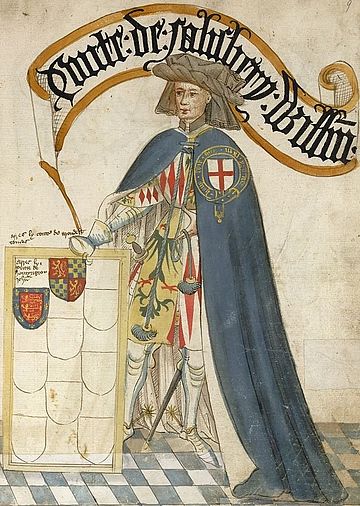
salisbury_1430
William Montagu, 2nd Earl of Salisbury

Born on the 28th June, 1328, at Donyatt in Somerset, William Montagu – or Montacute – was the son of William Montagu, 1st Earl of Salisbury and Katherine Grandison (died 1349), 3rd daughter of William Lord Grandison. Young William was the eldest of the couple’s 2 sons and 4 daughters.

William Montagu was a friend and contemporary of Edward, the Black Prince, son and heir of Edward III, who was raised alongside William in the Salisbury household. Also among the young aristocrats in the care of the Earl of Salisbury was Joan of Kent, daughter and heir of Edmund, Earl of Kent.

Before 10th February, 1341, young Montagu and Joan were married; a union arranged by the couple’s parents and the King, Edward III, seeing as they were both only 12 years old at the time. It is unlikely that Montagu and Joan lived together as husband and wife from the moment of their marriage, they were still very young and may well have delayed consummating the marriage for at least another year or two. It is more than likely that they carried on with their education, much the same as before, with Lady Joan learning how to manage a  noble household and Montagu continuing his knightly training.

On 30th January 1344, still only 15, Montagu became the 2nd Earl of Salisbury when his father died after receiving heavy bruising in the Windsor jousts. The new earl was knighted at La Hogue, during the 1346 expedition to France, though whether this was by the King or the Prince of Wales seems to be in question. During the hostilities Montagu assisted in the Siege of Caen and may have been at the Battle of Crécy.

Joan_of_Kent
Joan of Kent

Following the successes of the French campaign, Montagu became one of the Founders of the Order of the Garter when it was created by Edward III in April 1348. However, in the following month poor Montagu became embroiled in the biggest bigamy scandal to hit medieval England, when Thomas Holland, Montagu’s steward, recently returned from crusading in Eastern Europe, petitioned the pope for the nullification of the marriage between Montagu and Joan, on the grounds of his prior marriage to Joan.

William contested the annulment; after all, Joan was only 12 when he married her and Holland was claiming that his marriage to Joan had been consummated about 2 years earlier, making Joan 9 or 10 at the time. However, when it came time for Joan to testify, she supported Holland’s claims; the annulment was granted on 17th November 1349 and Joan returned to her first husband.

Montagu wasted little time in finding himself another wife and married Elizabeth de Mohun shortly after the annulment had been granted. Elizabeth was the daughter of John, Lord Mohun of Dunster and, given that she was born around 1343, was only 6 or 7 at the time of the marriage. They would have one child, a son, William, who was born in 1361.

No longer a minor, in 1349 William Montagu had made proof of his age and was given the livery of his lands, as Earl of Salisbury. His mother passed away in the same year and he succeeded to her dower lands.

300px-Battle-poitiers(1356)
Battle of Poitiers

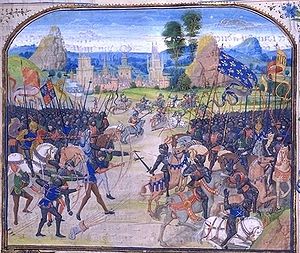
The 1350s saw Montagu pursuing a highly successful military career. In 1350 he had served at Winchelsea, which saw the defeat of the Castilian fleet. In 1356 he distinguished himself serving as commander of the rearguard, alongside the Earl of Suffolk, in the Black Prince’s march through southern France; however, it was Montagu alone who commanded the rearguard during the English victory at the battle of Poitiers. Some sources credit Montagu with having chosen the English defensive position, along the gap of a hedge, which proved invaluable to the Black Prince’s forces. He defeated the first major French attack, led by the marshals, Clermont and d’Audenham; Clermont was killed and the other leaders captured.

William Montagu saw more fighting with the king, Edward III, in his expedition of 1359, before taking part in the negotiations for the Treaty of Brétigny in 1360.

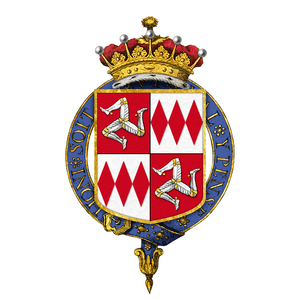
Coat of Arms of Sir William Montagu, 2nd Earl of Salisbury

During the relative peace of the 1360s Montagu served as a justice of the peace, at various times, in Hampshire, Somerset and Devon; and he served on a number of commissions in Somerset and Devon. He was also embroiled in a legal dispute with the Mortimer earls of March over Denbigh, which had originally been a Mortimer possession, but was given to Montagu’s father for his part in the overthrow of Roger Mortimer in 1330. Montagu had done homage for it in 1353, but by 1355, due to his gaining royal favour, it was back in the hands of the Mortimer heir, Roger.

The dispute rumbled on during the minority of the next Mortimer heir, Edmund, earl of March. Resolution was delayed even after Mortimer came of age, due to technicalities and Mortimer’s subsequent departure for duties in Ireland; where he died, and the Mortimer lands fell subject to yet another minority. By 1396 the earl of Salisbury was prepared to give the Mortimer’s a quitclaim, but this remained undelivered at William’s death and was left to his heir to resolve.

By the late 1360s war had resumed and William Montagu was sent to Calais with the earl of Warwick, in a futile raid commanded by John of Gaunt, Duke of Lancaster. He was part of the king’s 1372 expedition to the relief of Thouars, which was forced to return to England due to unfavourable winds. In 1373 after commanding the English fleet which destroyed 7 Spanish ships in the harbour of St Malo, he relieved Brest; which had promised to yield if not relieved within 40 days. Negotiations ensued, thus avoiding a battle but enabling Montagu to resupply Brest and prevent its capture.

Still fighting the French, in 1377 Montagu served alongside the Earl of Arundel in a raid around la Rochelle, but was beaten off by local forces. By 1379, following the accession of Richard II, he was serving as Captain of Calais when he captured and burned the French fortified monastery of Beaulieu.

Montagu must have wondered at the strange twist of fate that had him serving a king, Richard II, who just happened to be the son of his first wife, Joan of Kent, and his childhood companion, Edward, the Black Prince.

On a personal front, 1378 had seen the marriage of Montagu’s son and heir, another William, to Elizabeth Fitzalan, daughter of the earl’s companion in arms Richard, Earl of Arundel. Their happiness was short-lived, however, when William died after only 4 years of marriage. In a tragedy that must have rocked Montagu to the core, on 6th August 1382 at Windsor, young William was killed in a tilting match by his own father, the earl. It must have been a horrendous scene to behold.

In the same year, 1382, Montagu had become involved in a legal dispute with his younger brother, John, concerning a statute merchant whose conditions were violated by John. The proceedings would rumble on and on; although a court of chivalry was established, with John Montagu being steward of the king’s household, no one was in a hurry to pronounce judgement on him. The case was not settled until after John’s death in 1390 and John’s son surrendered the disputed statute merchant in 1391.

The family disputes appear to have prevented Montagu from playing a major role in the reign of Richard II, as you might expect from the earl of Salisbury. He is thought to have stayed with the king throughout the Peasants Revolt of June 1381, and advised Richard II to show mercy to the rebels. Loyalty to the crown was a family tradition, but he seems to have been well-regarded by the Lords Apellant who opposed Richard’s favourites from the late 1380s onwards. And when Richard II resumed power on a more moderate basis, Montagu cooperated with him. He served in various commissions during the 1390s, but appears only on the periphery of national politics.

330px-Bisham-29Ag9-wyrd1
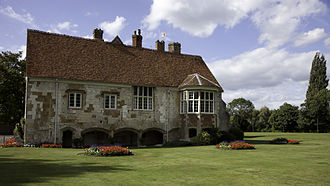
Bisham Abbey Berkshire

Unfortunately the court case had served to alienate William Montagu from his brother and nephew – both called John – who were also his heirs. As a result, Montagu started selling off substantial parts of his property, in order to keep them out of his brother’s hands. In 1393 he sold the Isle of Man to William Scrope and in his will, he left half of his goods to his wife and the rest to servants and the church, leaving nothing of his disposable property to his nephew, the new earl. John Montagu was left to inherit the title and landed estates not mentioned in the will.

Montagu had lived through the worst years of plague and the resultant Peasants’ Revolt; he had survived war with France on numerous occasions and suffered the personal tragedy of accidentally killing his only child. The last survivor of Edward III’s great captains of the Hundred Years War, William Montagu died on 3rd June 1397, just shy of his 69th birthday. He was buried at Montacute Priory at Bisham in Berkshire; unfortunately nothing remains of his tomb. His wife, Elizabeth, survived him by 18 years, later becoming a nun; she was received into the sisterhood of the convent of St Albans on 10th October. Having made her will in 1414, leaving her sister, Philippa, Duchess of York, and her nephew Richard, Lord Strange of Knockyn, as her heirs, she died on 14th January 1415.

*

Pictures taken from Wikipedia.

*

Sources: The Perfect King, the Life of Edward III by Ian Mortimer; The Life and Time of Edward III by Paul Johnson; The Reign of Edward III  by WM Ormrod; The Mammoth Book of British kings & Queens by Mike Ashley; Britain’s’ Royal Families, the Complete Genealogy by Alison Weir; Brewer’s British Royalty by David Williamson; The Plantagenets, the Kings Who Made Britain by Dan Jones; englishmonarchs.co.uk; The Oxford Companion to British History edited by John Cannon; Chronicles of the Age of Chivalry Edited by Elizabeth Hallam; oxforddnb.com; britannia.com; themcs.org.

*

My Books

Signed, dedicated copies of all my books are available through my online bookshop.

Coming on 15 June 2024: Heroines of the Tudor World

Heroines of the Tudor World tells the stories of the most remarkable women from European history in the time of the Tudor dynasty, 1485-1603. These are the women who ruled, the women who founded dynasties, the women who fought for religious freedom, their families and love. These are the women who made a difference, who influenced countries, kings and the Reformation. In the era dominated by the Renaissance and Reformation, Heroines of the Tudor World examines the threats and challenges faced by the women of the era, and how they overcame them. From writers to regents, from nuns to queens, Heroines of the Tudor World shines the spotlight on the women helped to shape Early Modern Europe.

Heroines of the Tudor World is now available for pre-order from Amberley Publishing and Amazon UK.

Out Now! Women of the Anarchy

Two cousins. On the one side is Empress Matilda, or Maud. The sole surviving legitimate child of Henry I, she is fighting for her birthright and that of her children. On the other side is her cousin, Queen Matilda, supporting her husband, King Stephen, and fighting to see her own son inherit the English crown. Women of the Anarchy demonstrates how these women, unable to wield a sword, were prime movers in this time of conflict and lawlessness. It show how their strengths, weaknesses, and personal ambitions swung the fortunes of war one way – and then the other.

Available from Bookshop.orgAmberley Publishing and Amazon UK.

Also by Sharon Bennett Connolly:

King John’s Right-Hand Lady: The Story of Nicholaa de la Haye is the story of a truly remarkable lady, the hereditary constable of Lincoln Castle and the first woman in England to be appointed sheriff in her own right. It is is available from King John’s Right-Hand Lady: The Story of Nicholaa de la Haye is the story of a truly remarkable lady, the hereditary constable of Lincoln Castle and the first woman in England to be appointed sheriff in her own right. Available from all good bookshops or direct from Pen & Sword Booksbookshop.org and AmazonDefenders of the Norman Crown: The Rise and Fall of the Warenne Earls of Surrey tells the fascinating story of the Warenne dynasty, from its origins in Normandy, through the Conquest, Magna Carta, the wars and marriages that led to its ultimate demise in the reign of Edward III. Available from Pen & Sword BooksAmazon in the UK and US, and Bookshop.org

Ladies of Magna Carta: Women of Influence in Thirteenth Century England looks into the relationships of the various noble families of the 13th century, and how they were affected by the Barons’ Wars, Magna Carta and its aftermath; the bonds that were formed and those that were broken. It is now available in paperback and hardback from Pen & Sword,  Amazon, and Bookshop.orgHeroines of the Medieval World tells the stories of some of the most remarkable women from Medieval history, from Eleanor of Aquitaine to Julian of Norwich. Available now from Amberley Publishing and Amazon, and Bookshop.orgSilk and the Sword: The Women of the Norman Conquest traces the fortunes of the women who had a significant role to play in the momentous events of 1066. Available now from Amazon,  Amberley Publishing, and Bookshop.org.

Alternate Endings: An anthology of historical fiction short stories including Long Live the King… which is my take what might have happened had King John not died in October 1216. Available in paperback and kindle from Amazon.

Podcast:

Have a listen to the A Slice of Medieval podcast, which I co-host with Historical fiction novelist Derek Birks. Derek and I welcome guests, such as Bernard Cornwell and discuss a wide range of topics in medieval history, from significant events to the personalities involved.

*

Don’t forget! Signed and dedicated copies of all my books are available through my online bookshop.

For forthcoming online and in-person talks, please check out my Events Page.

You can be the first to read new articles by clicking the ‘Follow’ button, liking our Facebook page or joining me on Twitter and Instagram.

*

©2016 Sharon Bennett Connolly FRHistS