Guest Post: Sarah Siddons by Jo Willett

It is a pleasure to welcome Jo Willett back to History…the Interesting Bits with a guest post about the subject of her latest book, the Georgian actress Sarah Siddons:

The famous actress Sarah Siddons, the Muse of Tragedy and the Queen of Drury Lane as she was known, was an expert on what we would today call brand control. The characters she played on stage were almost without exception highly moral, upstanding and noble. So, it was important that Sarah’s fans were encouraged to see her in the same light. In an age where many of her contemporary actresses on the London stage were either former sex workers or the mistresses of wealthy men (or both) Sarah ensured that every opportunity was taken to project the message that she was, by contrast, a happily married woman and a devoted mother.

Sarah had met her husband-to-be, William Siddons, when he joined her parents’ travelling acting troupe. She was aged 11 and he was 23. Biographers have tended to gloss over how quickly it was before the two started having romantic feelings for each other, for obvious reasons, but her parents soon became aware that the two were in love. They were wary of the relationship, not because of the age difference – Sarah’s father was similarly several years older than her mother and they had also met when her mother was young – but because they could see that William was not a particularly good actor. The story of how Sarah’s parents attempted to separate the lovers bears all the hallmarks of having been romanticised by Sarah in later life. But whatever happened, Sarah’s parents eventually decided to give their reluctant consent, and Sarah and William Siddons were married in Coventry in November 1773, when Sarah was 18 years old. The Siddons would always affectionately refer to each other as Sal and Sid.

So, Sarah was a married woman by the time she acquired fame and fortune as the greatest tragic actress of her generation. She had a false start at Drury Lane in David Garrick’s final season, but then rebuilt her career and returned to appear on stage at Drury Lane again, this time with Richard Brinsley Sheridan as manager, in 1782. Her first night was said to be one of the greatest ever seen on the British stage and she continued for some thirty years as the highest paid performer of her generation, mobbed by fans wherever she went. By 1782 she was already the mother of four children.

Sarah Siddons as Euphrasia in The Grecian Daughter

Sarah’s success enabled William to give up acting and to become her manager. In this role he proved himself often to be over-zealous in his demands for the fees he asked for her. The more Sarah earned in performance fees as the star, particularly in the regional theatres she toured every summer, the less was available to pay other actors in the company. Inevitably resentments festered. This was made worse when it appeared as if William had got Sarah out of appearing in ‘benefit’ performances, where the night’s takings went to a deserving actor in the cast. Her reputation suffered as a result, and she earned herself the nickname Lady Sarah Save-All.

Even though Sarah was the sole breadwinner, everything she earned was legally in William’s name. There is no evidence she questioned this – it was just how things were at the time. But William was not always wise when it came to investing. One year, for instance, he lost nearly a third of Sarah’s annual earnings, speculating on a new building at Saddlers Wells. Sarah never complained but she did find herself increasingly exhausted by her punishing work schedule and her health certainly suffered as a result.

It must also have been difficult for William that Sarah had such star status, whilst he was relatively unknown. She became the darling of King George III and his wife Queen Charlotte, for instance, but no mention was ever made of William’s having been introduced to the king and queen. It was as if he didn’t exist. Perhaps inevitably, William began to seek solace elsewhere. A friend called at the Siddons’ house one day to find Sarah weeping as she burned some papers which had alerted her to the fact her husband now had a mistress.

In 1792, ten years after Sarah’s triumph at Drury Lane, Hester Piozzi, a friend of Sarah’s, wrote in a letter to a mutual friend that the famous actress’s recent bout of ill-health could be put down to the fact that William had given his wife a Sexually Transmitted Infection, probably syphilis. This was far from being an uncommon problem at the time, but without the wonders of modern medicine it was incurable. Despite this, the couple clearly patched things up between the two of them, as their final child, a daughter named Cecilia, was born the following year.

Sarah Siddons as Lady MacBeth

Sarah never seems to have mentioned her STI. The only hint at it remains to this day Hester Piozzi’s letter. She would have dreaded any news of it escaping into the public domain. Her reputation as a happily married woman, the essence of respectability, would have been dangerously undermined. She was attended by the Royal Physician, Sir Lucas Pepys, who advised her to spend time recuperating at a spa. From then on she often suffered from what her public were told was erisypelas, a condition of the skin. In my biography I suggest that this was a means of covering up the fact her syphilis was developing.

But this was not the only problematic area in the Siddons’ relationship. Their two eldest daughters both suffered from increasingly serious diseases of the lungs, from which both of them were to die, Maria in 1798 and Sally in 1803. Sarah was able to rush to Maria’s bedside to be with her daughter for her last few weeks of life. But when Sally began to sicken during what would prove to be her last few months, her mother was on a long tour of Ireland. William wrote to his wife assuring her that Sally was recovering. He urged her to extend her tour from Dublin to Cork, specifically because there were bills to be met at home. Family life in London was proving to be particularly expensive at the time. Inevitably, and tragically, Sally worsened and died before her mother could make it back to be at her bedside for her end.

Sarah was always exceptionally guarded in her personal correspondence about her feelings towards her husband, but she let her mask slip around this time. ‘I have suffered too much from a husband’s unkindness,’ she wrote, ‘not to detest the man who treats a creature ill that depends on her husband for all her comforts.’ Clearly she blamed William for what had happened.

But Sarah herself was not entirely blameless. During her tour of Ireland she had met a young Spanish fencing master, Philomen Galindo. At first she could persuade herself that she was equally fond of Philomen and of his wife Catherine. But as the relationship developed, Catherine began to feel increasingly excluded and paranoid. Infatuated with Philomen, Sarah did her best to procure acting jobs for the couple in the new company of actors Sarah’s brother, the actor/manager John Philip Kemble, was putting together at Covent Garden. But John Philip made it very clear immediately that the Galindos were not the sort of people his celebrated sister should be associating with. It is impossible to prove whether Sarah was having a sexual relationship with Philomen Galindo, but his wife clearly thought she was. And when, several years later, Catherine had a pamphlet published, arguing her case and making public her side of the story, Sarah declined to sue for libel.

Sarah Siddons as The Tragic Muse by Joshua Reynolds

How much William knew about this is again hard to know, but it was just a year after their daughter Sally’s death, and just as Sarah had encouraged the Galindos to come to London on the false promise of finding jobs for them, that William and Sarah Siddons finally decided to separate. Very little adverse comment appeared in the press about this. All Sarah’s biographers up until now have played the separation right down and praised the actress for the dignity with which she handled the end of her marriage. One who was writing during Sarah’s lifetime wrote that William ‘retained at all times the sincerest regard for his incomparable lady.’ But the truth remained that the Siddons could no longer live with each other.

William drew up his will at the same time. He had asked Sarah to tell him what she would like from it. But, as she herself put it: ‘I can expect nothing more than you yourself have designed’. Despite all her worldly success, her reputation as the greatest tragic actress of her generation, and her image as someone as morally upright as the tragic heroines she played each night on stage, in real life her future was just as in jeopardy as theirs, dependent for her security on the goodwill of the husband from whom she was parting.

About the book:

Sarah Siddons grew up as a member of a family troupe of travelling actors, always poor and often hungry, resorting to foraging for turnips to eat. But before she was 30 she had become a superstar, her fees greater than any actor – male or female – had previously achieved. Her rise was not easy. Her London debut, aged just 20, was a disaster and could have condemned her to poverty and anonymity. But the young actress – already a mother of two – rebuilt her career, returning triumphantly to the capital after years of remorseless provincial touring. She became Britain’s greatest tragic actress, electrifying audiences with her performances. Her shows were sell-outs. Adored by theatre audiences, writers, artists and the royal family alike, Sarah grasped the importance of her image. She made sure that every leading portrait painter captured her likeness, so that engravings could be sold to her adoring public. In an eighteenth-century world of vicious satire and gossip, she also battled to manage her reputation. Married young, she took constant pains to portray herself as a respectable and happily married woman, even though her marriage did not live up to this ideal. Sarah’s story is not just about rags to riches; this remarkable woman also redefined the world of theatre and became the first celebrity actress.

Sarah Siddons: The First Celebrity Actress is available from Amazon

About the author:

Jo Willett has been an award-winning TV drama and comedy producer all her working life. Her credits range from the recent Manhunt, starring Martin Clunes, to Birds of a Feather. Her most relevant productions include Brief Encounters (a fictionalised story of the first women who ran Ann Summers parties in the 1980s), The Making of a Lady (an adaption of the Frances Hodgson Burnett novel _The Making of a Marchioness_), Bertie and Elizabeth (telling the story of the Queen Mother’s marriage) and the BAFTA-and-RTS Award-Winning A Rather English Marriage (starring Albert Finney, Tom Courtenay and Joanna Lumley, adapted from the novel of the same name by Angela Lambert). She studied English at Queens’ College Cambridge and has an MA in Arts Policy. She is married with a daughter, a son and a step-son. She lives in London. www.devoniaroad.co.uk.

*

My Books

Signed, dedicated copies of all my books are available through my online bookshop.

Coming on 15 June 2024: Heroines of the Tudor World
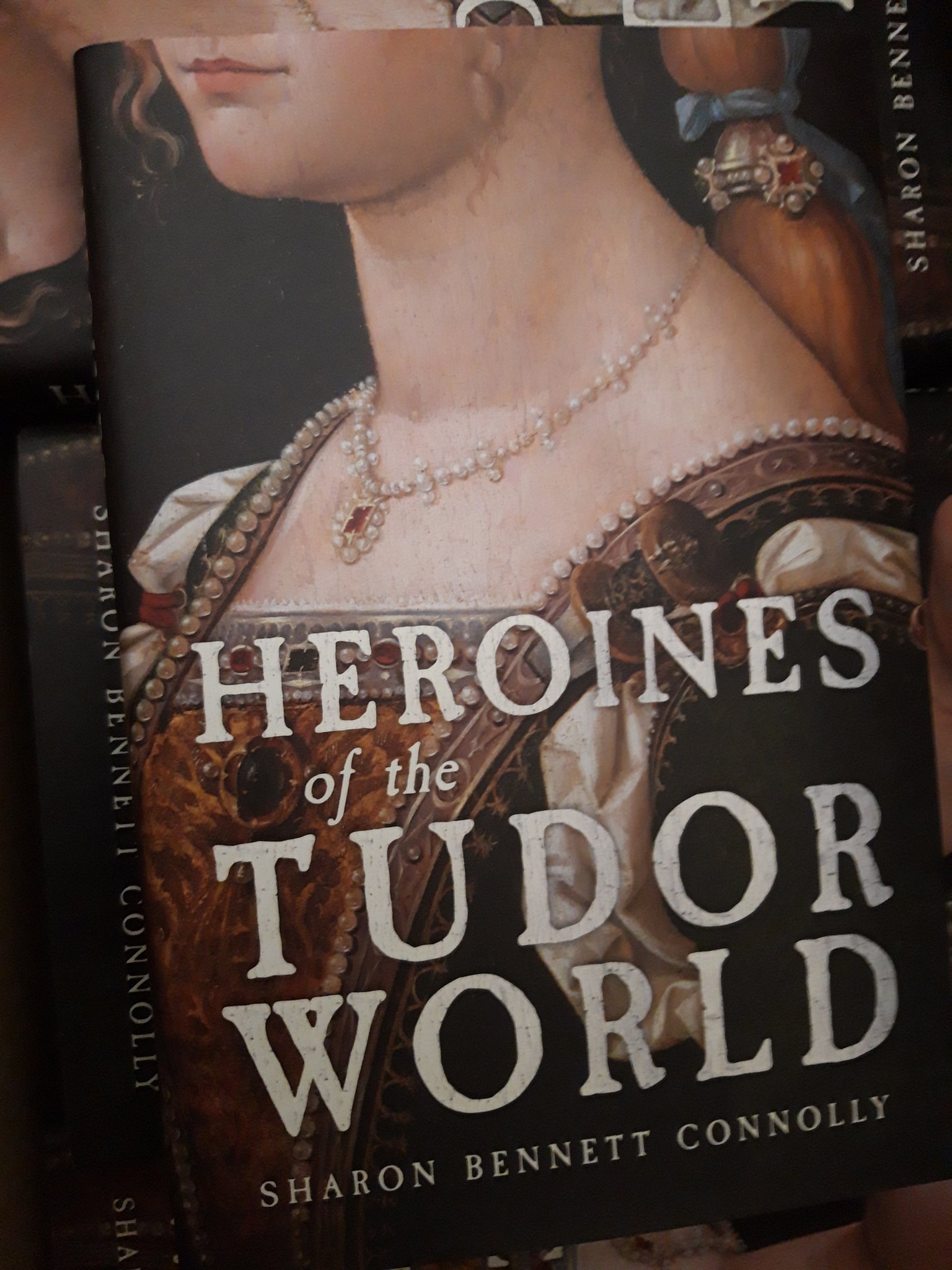
Heroines of the Tudor World tells the stories of the most remarkable women from European history in the time of the Tudor dynasty, 1485-1603. These are the women who ruled, the women who founded dynasties, the women who fought for religious freedom, their families and love. These are the women who made a difference, who influenced countries, kings and the Reformation. In the era dominated by the Renaissance and Reformation, Heroines of the Tudor World examines the threats and challenges faced by the women of the era, and how they overcame them. From writers to regents, from nuns to queens, Heroines of the Tudor World shines the spotlight on the women helped to shape Early Modern Europe.

Heroines of the Tudor World is now available for pre-order from Amberley Publishing and Amazon UK.

Out Now! Women of the Anarchy
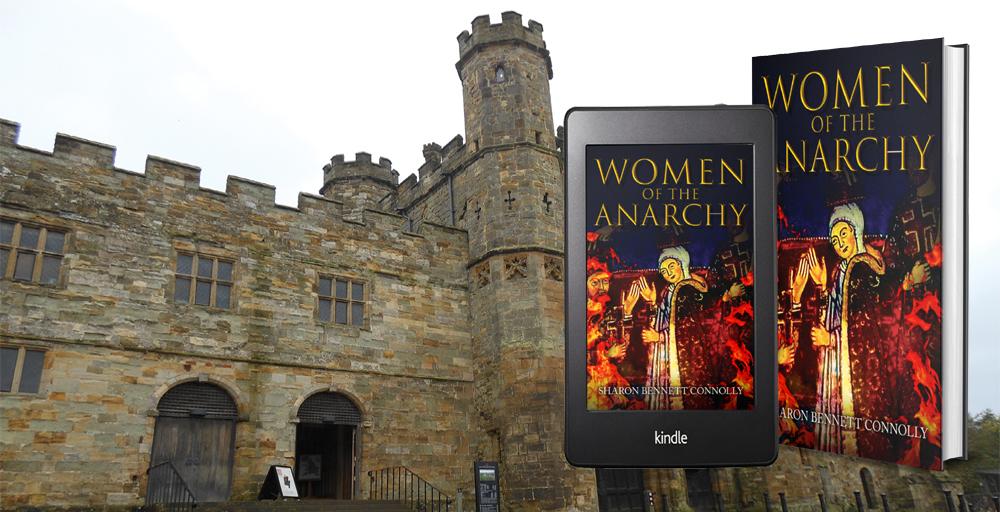
Two cousins. On the one side is Empress Matilda, or Maud. The sole surviving legitimate child of Henry I, she is fighting for her birthright and that of her children. On the other side is her cousin, Queen Matilda, supporting her husband, King Stephen, and fighting to see her own son inherit the English crown. Women of the Anarchy demonstrates how these women, unable to wield a sword, were prime movers in this time of conflict and lawlessness. It show how their strengths, weaknesses, and personal ambitions swung the fortunes of war one way – and then the other.

Available from Bookshop.orgAmberley Publishing and Amazon UK.

Also by Sharon Bennett Connolly:
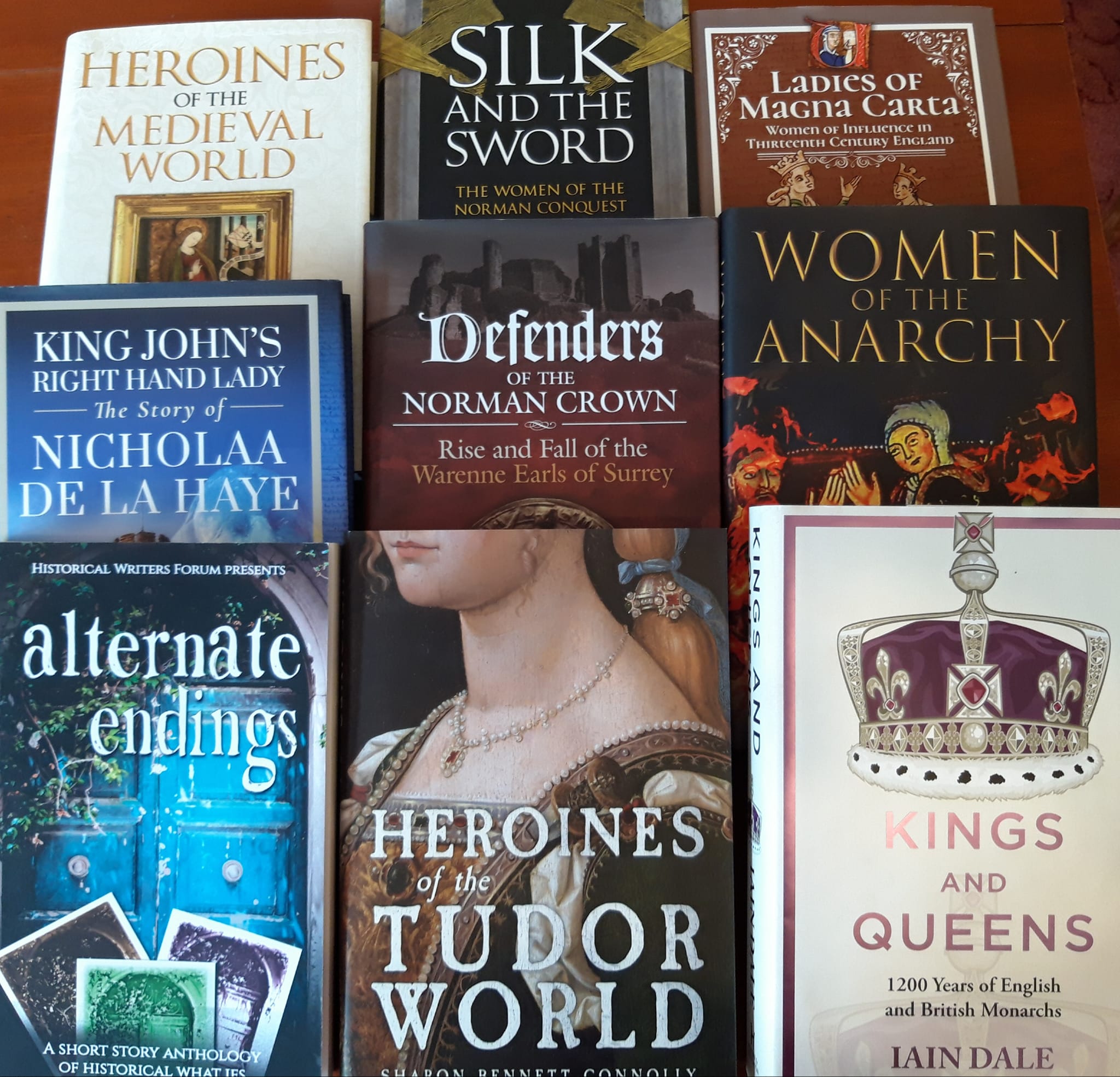
King John’s Right-Hand Lady: The Story of Nicholaa de la Haye is the story of a truly remarkable lady, the hereditary constable of Lincoln Castle and the first woman in England to be appointed sheriff in her own right. Available from all good bookshops or direct from Pen & Sword Booksbookshop.org and AmazonDefenders of the Norman Crown: The Rise and Fall of the Warenne Earls of Surrey tells the fascinating story of the Warenne dynasty, from its origins in Normandy, through the Conquest, Magna Carta, the wars and marriages that led to its ultimate demise in the reign of Edward III. Available from Pen & Sword BooksAmazon in the UK and US, and Bookshop.org

Ladies of Magna Carta: Women of Influence in Thirteenth Century England looks into the relationships of the various noble families of the 13th century, and how they were affected by the Barons’ Wars, Magna Carta and its aftermath; the bonds that were formed and those that were broken. It is now available in paperback and hardback from Pen & Sword,  Amazon, and Bookshop.orgHeroines of the Medieval World tells the stories of some of the most remarkable women from Medieval history, from Eleanor of Aquitaine to Julian of Norwich. Available now from Amberley Publishing and Amazon, and Bookshop.orgSilk and the Sword: The Women of the Norman Conquest traces the fortunes of the women who had a significant role to play in the momentous events of 1066. Available now from Amazon,  Amberley Publishing, and Bookshop.org.

Alternate Endings: An anthology of historical fiction short stories including Long Live the King… which is my take what might have happened had King John not died in October 1216. Available in paperback and kindle from Amazon.

Podcast:

Have a listen to the A Slice of Medieval podcast, which I co-host with Historical fiction novelist Derek Birks. Derek and I welcome guests, such as Bernard Cornwell and discuss a wide range of topics in medieval history, from significant events to the personalities involved.

*

Don’t forget! Signed and dedicated copies of all my books are available through my online bookshop.

For forthcoming online and in-person talks, please check out my Events Page.

You can be the first to read new articles by clicking the ‘Follow’ button, liking our Facebook page or joining me on Twitter and Instagram.

*

©2024 Jo Willett and Sharon Bennett Connolly FRHistS.
Guest Post: Best Friends Turned Enemies by Jo Willet

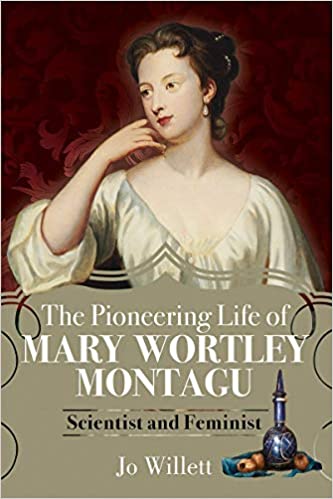
Today it is a pleasure to welcome author Jo Willet to the blog. Jo has just released the biography The Pioneering Life of Mary Wortley Montagu: Scientist and Feminist. Lady Mary Wortley Montagu is remembered for her pioneering advocacy of smallpox inoculation – her 3 year-old daughter being the first westerner to be inoculated against the killer disease.

Mary Wortley Montagu and Alexander Pope – Best Friends turned Enemies

Lady Mary Wortley Montagu by Jonathan Richardson,

A friendship between a woman and a man which starts off as just that but develops into something altogether more dangerous  – despite #MeToo heightening our awareness, these kinds of problems have been with us since time immemorial.  The aristocrat Lady Mary Wortley Montagu and the poet Alexander Pope had just such a relationship. For both of them, it was one of the most powerful and ultimately the most damaging of their lives.

The two met in April 1715 in the London studio of a mutual friend, the artist Charles Jervas. Lady Mary was a 26-year old aristocrat, slight, dark and fiendishly intelligent.  Alexander Pope was a year older.  As a child he had suffered from tuberculosis of the bone, Potts Disease, which had stunted his growth and left him with a hunchback. He was only 1.2 metres in height, a bit smaller than Mary. Middle-class and Catholic, his background was very different from hers, but he had already found fame and fortune as a writer, which impressed her.  Both saw themselves as outsiders and used these feelings to express themselves with wit and irony. 

Mary and Pope were part of a group of friends all of whom liked to write and to share their writing with each other. Along with John Gay (who wrote The Beggars’ Opera) they began a shared project called The Town Eclogues.  The Latin poet Virgil had written six poems known as The Pastoral Eclogues, each linked to a day of the week, and the idea was to use these as an inspiration for contemporary, English poems, capturing a sense of life in London at the time. Pope described himself and Mary working together on writing one of the poems and Mary calling out: “No, Pope, no touching! For then, whatever is good for anything will pass for yours, and the rest for mine.”  Already there was an erotic undertone.

The poems were designed to be shown to friends, but they soon fell into the wrong hands.  One of Mary’s poems satirised two women desperate to serve at the court of Princess Caroline of Ansbach.  When the princess was shown a copy she was extremely displeased.  Then, even worse, the notorious Edmund Curll published an unauthorised version of the poems, which immediately became a best-seller.  None of them needed this kind of publicity. Furious, Pope arranged to meet Curll as if by chance at a drinking house. He introduced a powerful emetic into his drink, as revenge. We have no record of what Mary thought of this – but it probably felt good to have a friend protect her honour so powerfully.

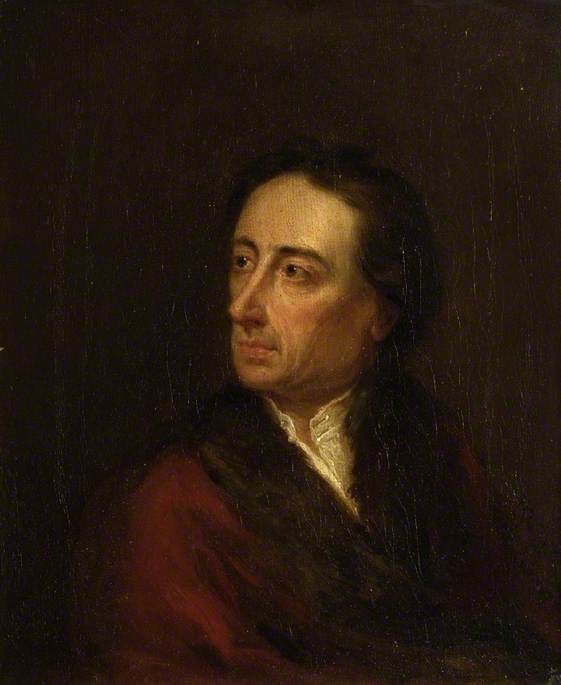
Alexander Pope by Jonathan Richardson

Mary’s husband, Edward Wortley Montagu, was appointed British Ambassador to Turkey in 1716. Spirited as always, she decided to go with him.  Pope was distraught.  He pleaded with her to give him some of her ‘last Moments’ before leaving, as if she were not simply travelling but dying. That said, a journey such as this would be fraught with danger.  He gave her an album of their Town Eclogues bound in the finest red Turkey leatherand admitted: ‘indeed I find I begin to behave myself worse to you than to any other Woman, as I value you more.’  She left the album in London, said goodbye to Pope and set off on her travels.

It was expected that she would be away for five years.  In fact the trip only lasted half that time.  Pope wrote her a series of letters where it became increasingly obvious that his feelings for her had changed from friendship to something far more powerful.  The further away she travelled, the less inhibited he became. He and Mary were, he said, ‘like a couple who behave modestly when around other people, but who once by themselves can untie garters or take off Shifts without scruple.’  His physical limitations were something he was always acutely aware of.  He wrote to her imagining a place where women ‘best like the Ugliest fellows…and look upon Deformities as the Signatures of divine Favour.’

For her part, she was so excited by her adventures that she hardly seemed to notice what was going on.  But she was careful to transcribe copies of Pope’s letters into her journal. When she and her husband travelled across the battlefield of Petrograd, strewn with corpses, where the Austrians had been victorious over the Turks only a few months earlier, she wrote to Pope expressing her revulsion for war. She knew he would agree with her.


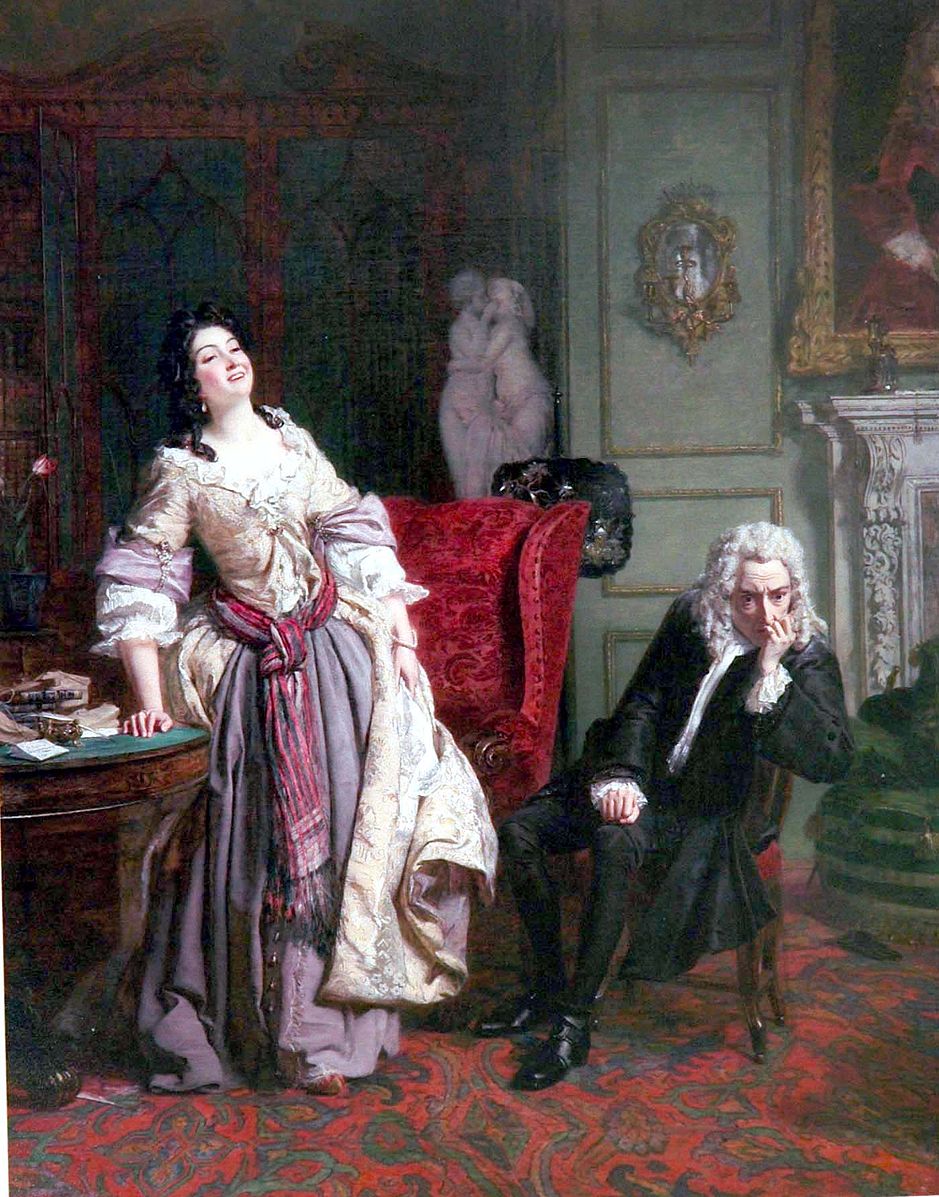
Alexander Pope declares his love for Lady Mary, who bursts into fits of laughter. William Powell Frith’s painting of 1852. 

Pope’s poems of the time were clearly inspired by his feelings for her. Eloisa and Abelard describes an impossible love which remains strong however many obstacles it encounters.  The poem is full of images of eyes, like Mary’s own.  He sent a copy, with a letter clarifying the source of his inspiration, out to Mary in Constantinople. She wrote ‘mine’ in the margin but at the same time dispatched a letter to their mutual friend, William Congreve, asking why he allowed Pope to go on making these ‘Lampoons’.

When the Wortley Montagus started their journey back to England in 1718, Pope offered to travel out to Italy to accompany Mary home. This was a conceit on his part. He would never be well enough to be able to travel. As she neared England, Mary became increasingly nervous as to how to handle things. When she landed in Dover a letter awaited her, expressing Pope’s longing to see her ‘Oriental self’. With it was a poem he had written about a pair of lovers from Stanton Harcourt, in Oxfordshire, who had both been struck by lightning and died simultaneously. The intensity of his feelings was clear.

Mary decided to respond by lightening the tone.  She sent Pope a satirical, cynical poem in response. If the two lovers had lived, she wrote, their future marriage might well have turned out to be a disappointment: ‘Now they are happy in their doom,/For P. has wrote upon their Tomb.’  Pope got the message.  Rather than rushing to greet Mary on her return to London, he held back.

By now Pope was living in Twickenham, outside London, and soon the Wortley Montagus rented a house nearby.  For about ten years the two friends rubbed along.  People noted that Pope tended to resort to over-elaborate puns whenever he was in Lady Mary’s presence but they had lots of mutual friends and enjoyed each other’s company.  Pope even commissioned a portrait of her,  which would hang in the ‘best room’ of his Twickenham house for the rest of his life. Then some time in the 1720s the two fell out spectacularly.  We do not know why.

Mary’s family always believed that Pope one day made the mistake of expressing his feelings for her and that she instinctively broke into gales of laughter at what he said.  An anonymous play, Mr Taste, the Poetical Fop, written a few years later, dramatised exactly this.  Another reason given for the rupture was that she asked him to collaborate with her on a satirical poem and he made it clear he disagreed with her attitude to the subject matter. Yet another suggestion is that she was the author of some cruel verses satirising his relationship with his nurse, who had just died.  Yet another was a rumour, spread by Horace Walpole, that she had borrowed some bedsheets from Pope and returned them unlaundered.

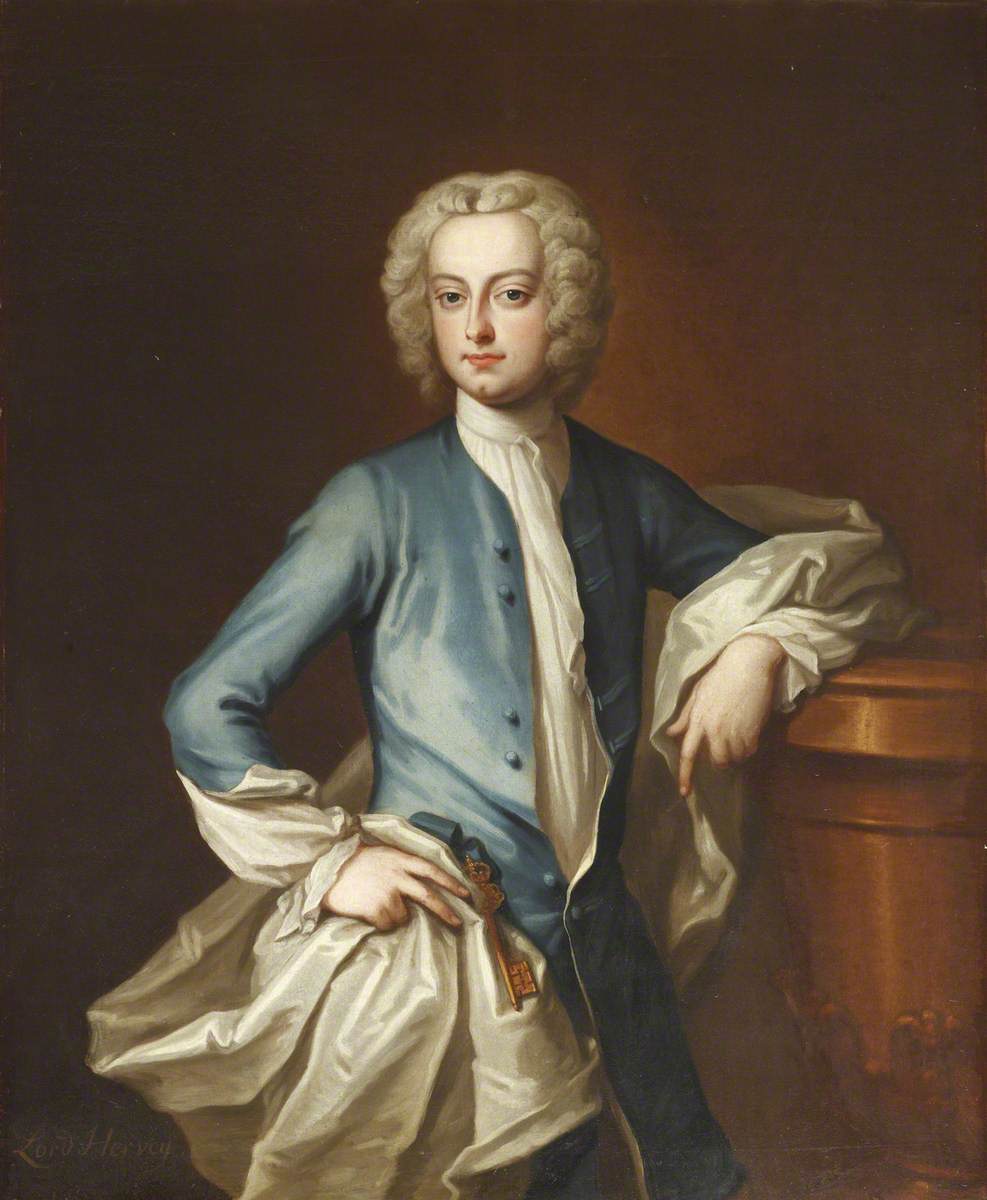
Mary’s friend, Lord John Hervey

Whatever the reason, the result was an unedifying, escalating row. In 1728 a published poem of Pope’s satirised Wortley as a sober yeoman living in Yorkshire whose wife owned a hen (Lady Mary) which attracted lots of cocks.  The innuendo was intentional.  Another longer poem of Pope’s published the same year, The Dunciad, described Lady Mary as a ‘sage dame, experienced in her trade’  – a prostitute.  Mary had been involved in bringing the process of inoculation against the smallpox back with her from Turkey.  Pope played on this by linking smallpox to the word ‘poxed’, implying Mary had syphilis. He also insinuated that she had behaved badly towards someone during the South Sea Bubble Crisis.  Her friends knew that Lady Mary had got into difficulty over some investments a French friend of hers had asked her to make on his behalf. But they would also have known she had behaved honourably throughout.

As an aristocratic woman, Mary risked undermining her reputation if she published anything in response.  So to begin with she simply wrote satirical poems about the situation, which were to be passed around among her friends.  In one the Goddess Dulness set up her headquarters in the famous shell grotto in Pope’s Twickenham garden.  Various more scurrilous verses about the breakdown of the relationship began circulating as well.  It is hard to ascertain whether either of them was the author of any of these. Pope wrote to a mutual friend of theirs claiming to have seen one of these poems in Lady Mary’s handwriting.  She denied she had written it and suggested instead that Pope had indulged in a bit of forgery to blacken her name.

Mary appealed to mutual friends for help – first to Lord Peterborough, whose letter in response read as if Pope had ghost-written it, and then to Sir Robert Walpole, the prime minister.  He asked Pope to remove a particularly nasty couplet about Mary. Pope refused, replying that it was Mary who had libelled him, not the other way round.

Mary then made the strategic mistake of collaborating with another friend of theirs, Lord John Hervey, in writing a satirical poem about Pope:  Verses Addressed to the Imitator of the First Satire of the Second Book of Horace.  Hervey was well-placed within society at the time, a close friend of the queen’s, an aristocrat like Mary and bisexual. The poem is vicious in its portrayal of Pope and ends by cursing him, predicting that he will be destined to wander the earth forever, like Cain, the first murderer in the Bible, ‘with the Emblem of thy crooked Mind/Marked on they Back.’ Somehow – and it was unclear how – the poem was published, with the claim that it was written ‘By a Lady’, with no mention of Hervey.

The gloves were off.  Pope upped his verse attacks on her, all published so everyone who wanted could read them.  And he ensured that even nastier, lewder verses of his were published anonymously.  Again and again he elided smallpox with the pox, or syphilis.  Though she normally charged ten per cent, he wrote, men could currently have Mary’s body for free. She was physically disgusting, ‘at her toilet’s greasy task’. Her dress sense was questionable, in ‘diamonds with her dirty smock’. He harboured ‘a Suspicion that she intended to ravish him.’

Mary could not retaliate with the same force.  She wrote an unpublished poem describing him as a ‘Toad-eater’, but most of their friends and acquaintances sided with Pope not with Mary.  Her friends Lord and Lady Oxford described Mary as having to check with them beforehand whenever she dined at their house that Pope would not be there. In the 1730s Mary went to live abroad, well away from ‘the wicked wasp of Twickenham’, as she called him.  When Pope died in 1744 she wrote home anxiously to be sent a copy of his will, just in case there were anything damaging there.  What a relief it was, she wrote to her husband, that now there was no-one in the whole world who wished them ill.

It feels a familiar story, when relationships turn sour, that the woman comes off worst.  Pope’s satirising of Mary has a distinctly misogynistic feel to it, reading his words today.  For her part, Mary was unable to defend herself satisfactorily.  Her only crime was to invoke feelings in him he could not control and then to reject his advances.

*

All images courtesy of Wikimedia Commons

I would like to express my thanks to Jo Willet for such a fabulous article, and to wish Jo my hearty congratulations on the release of The Pioneering Life of Mary Wortley Montagu: Scientist and Feminist.

To buy the book:

The Pioneering Life of Mary Wortley Montagu: Scientist and Feminist is now available from Pen & Sword Publishing and Amazon.

About the author:

Lavinya of the The Black Curriculum

Jo has been an award-winning TV drama and comedy producer all her working life.  Her credits range from the recent MANHUNT, starring Martin Clunes, to BIRDS OF A FEATHER. Her most relevant productions for this project include BRIEF ENCOUNTERS in 2016 (a fictionalised story of the first women who ran Anne Summers’ parties in the 1980s), THE MAKING OF A LADY in 2012 (an adaption of the Frances Hodgson Burnett novel The Making of a Marchioness), BERTIE AND ELIZABETH in 2002 (telling the story of the Queen Mother’s marriage) and the BAFTA-and-RTS-Award-Winning A RATHER ENGLISH MARRIAGE in 1998 (starring Albert Finney, Tom Courtenay and Joanna Lumley, adapted from the novel of the same name by Angela Lambert). She studied English at Queens College Cambridge and has an MA from Birkbeck in Arts Policy. She is married with a daughter, a son and a stepson. She lives in London and Dorset. www.devoniaroad.co.uk

You can find Jo at:

Twitter:  @Willettjo

Instagram: jowillett_biographer

Website:  www.devoniaroad.co.uk

*

My books

Coming 31st May:

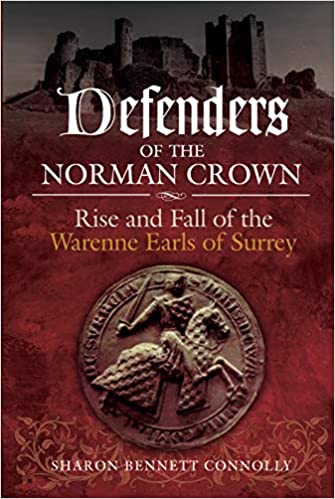
Defenders of the Norman Crown: The Rise and Fall of the Warenne Earls of Surrey tells the fascinating story of the Warenne dynasty, of the successes and failures of one of the most powerful families in England, from its origins in Normandy, through the Conquest, Magna Carta, the wars and marriages that led to its ultimate demise in the reign of Edward III.

Defenders of the Norman Crown: Rise and Fall of the Warenne Earls of Surrey will be released in the UK on 31 May and in the US on 6 August. And it is now available for pre-order from Pen & Sword BooksAmazon in the UK and US and Book Depository.

Also by Sharon Bennett Connolly:

Ladies of Magna Carta: Women of Influence in Thirteenth Century England looks into the relationships of the various noble families of the 13th century, and how they were affected by the Barons’ Wars, Magna Carta and its aftermath; the bonds that were formed and those that were broken. It is now available from Pen & Sword,  Amazon and from Book Depository worldwide.

Heroines of the Medieval World tells the stories of some of the most remarkable women from Medieval history, from Eleanor of Aquitaine to Julian of Norwich. Available now from Amberley Publishing and Amazon and Book Depository.

Silk and the Sword: The Women of the Norman Conquest traces the fortunes of the women who had a significant role to play in the momentous events of 1066.  Available now from Amazon,  Amberley Publishing, Book Depository.

*

You can be the first to read new articles by clicking the ‘Follow’ button, liking our Facebook page or joining me on Twitter and Instagram.

©2021 Sharon Bennett Connolly and Jo Willet