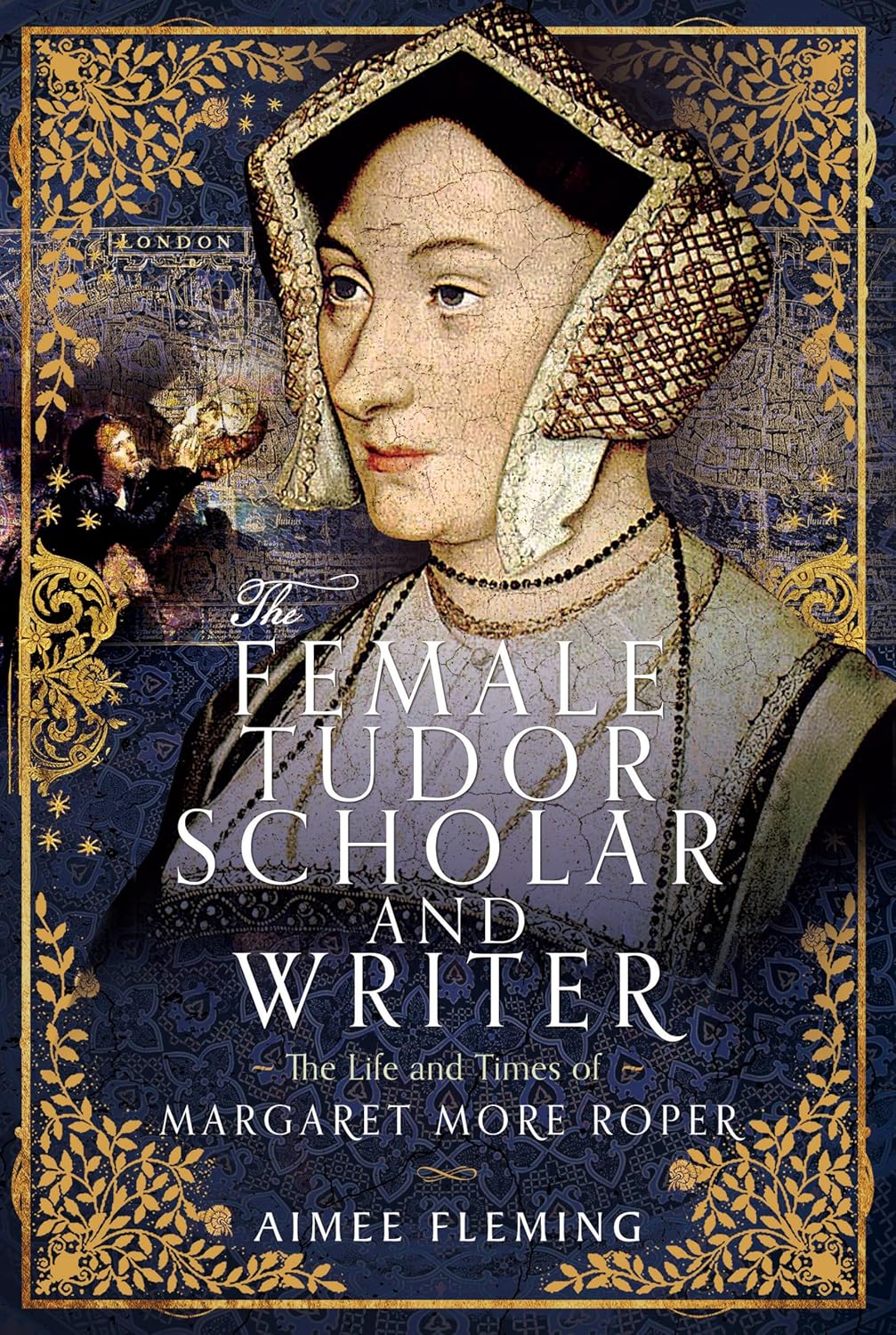
Today, it is a pleasure to welcome Aimee Fleming to History…the Interesting Bits. Aimee’s first book, The Female Tudor Scholar and Writer: The Life and Times of Margaret More Roper came out earlier this year. Now, Margaret Roper, the daughter of Sir Thomas More, did appear in my own Heroines of the Tudor World, as a true Literary Heroine, but Aimee covers her in much greater detail. She is a fascinating character and it is about time that this remarkable woman gets her own biography.
So, I will leave it to Aimee to give you an introduction….
Margaret More Roper
Margaret More Roper is mostly known simply for being the eldest daughter of the stateman Sir Thomas More, and his influence on her is undeniable. However, she, alongside the rest of her extensive family, was important as an individual and for an array of different reasons.
Her Education
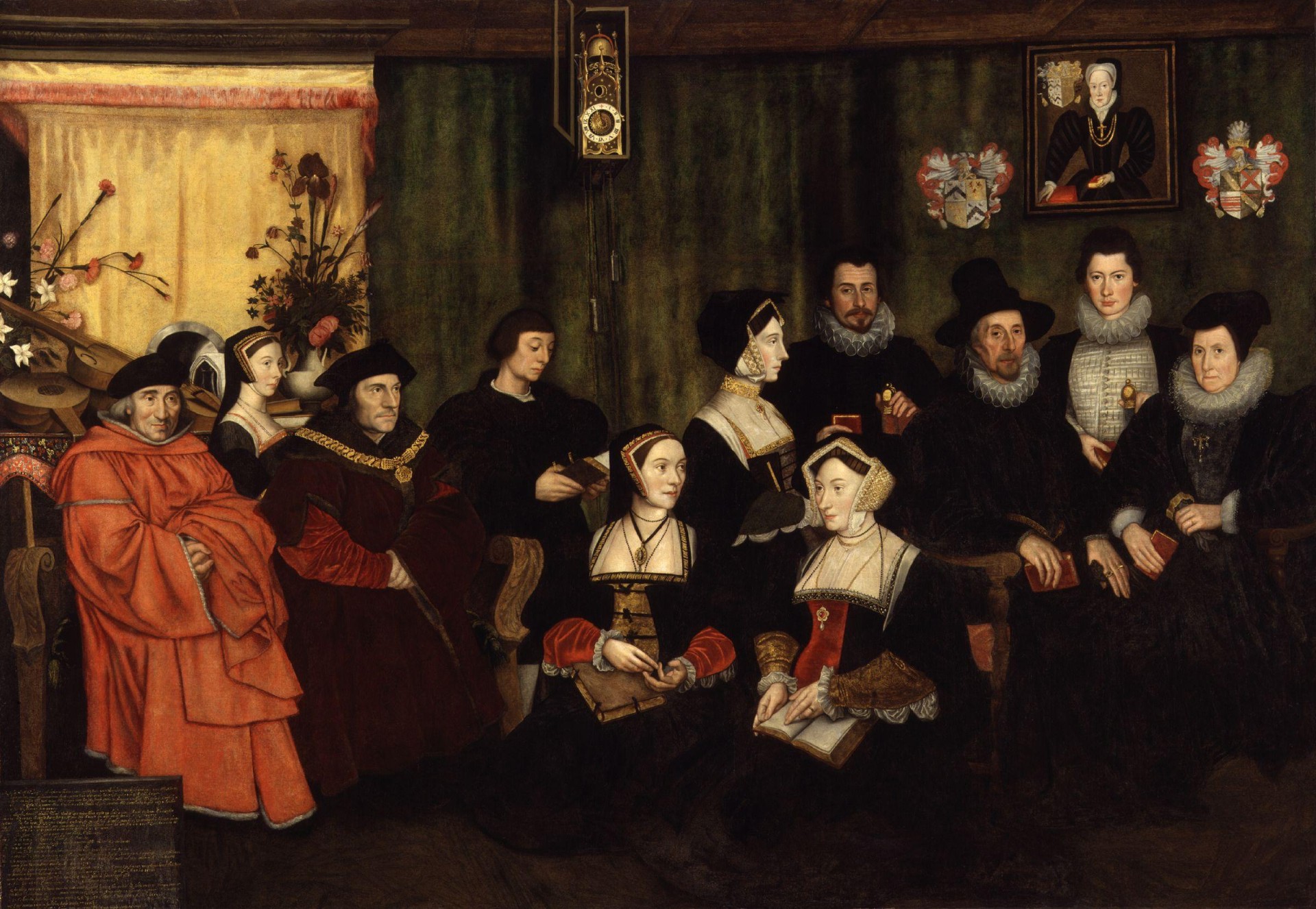
Thomas More, unusually for the time, insisted that his whole family received an education in a wide range of subjects. The range was far wider that traditionally given, and saw all of the children, including the girls, learn about classics, languages, and other subjects, in what came to be known as ‘The More School’. From the age of six or seven, when it was normal for the children to start their education, Margaret and her siblings were taught by tutors and others who came into the house and it was all overseen and coordinated by Thomas himself.
Margaret was the eldest, and from an early age she showed an aptitude for learning; for languages and for writing generally. However, all the girls all learned mathematics and there are references to Margaret Giggs, the ward of the More family who grew up alongside Margaret and her sisters, having a ‘algorism stone’ for use in mathematical calculations. Astronomy was a particularly popular subject for the girls and in a letter home, Thomas writes about how they,
‘…are so far advances in that science that you can point out the pole-star or the dog star or any of the constellations.’
The example set by the More school would go on to influence several other families who would loom large in Tudor history. The Grey sisters (one of whom was Queen Jane) and the Cooke sisters, and also Katherine Parr, Henry VIII’s sixth Queen, would all receive a broader education that women had traditionally done beforehand. Even Henry VIII himself was convinced by his friend’s activities and gave Princesses Mary and Elizabeth and education in the same fashion. All of this was influenced by what was seen of the More sisters, particularly Margaret.
Her Writing
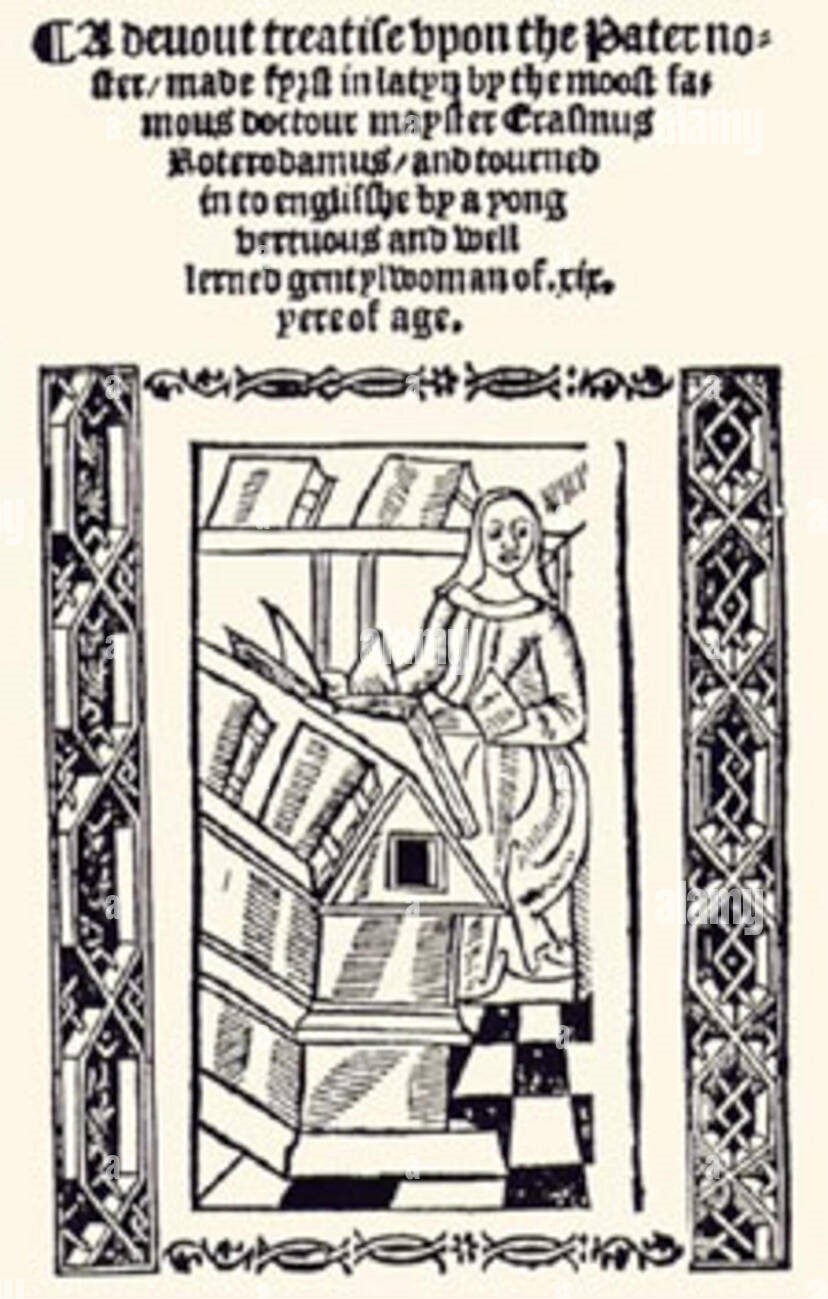
Margaret’s example particularly came to the fore as she got older and began to build a reputation through her scholarly work. In 1524 she translated and then published her ‘Devout Treatise on the Paternoster’, a translation of Erasmus’s Precatio Domenica, a study of the Lord’s Prayer.
While Margaret’s name does not appear overtly on the cover her identity was simple to figure out for those who were familiar with Sir Thomas and his family. The cover reads,
‘A devout treatise upon the Paternoster made fyrst in latyn by the moost famous doctour mayster Erasmus Roterodamus and tourned into englisshe by a young vertuous and well lerned gentylwoman of nineteen yere of age.’
The inclusion of details such as her age and other references to her perceived virtuousness, give us an insight into how Margaret was viewed, or wanted to be viewed, for her work. As much as Margaret may have tried to keep her identity away from the work, the Devout Treatise was the first work of this kind published by any woman, and this alone means that Margaret had broken new ground for Tudor women once again.
Her Loyalty
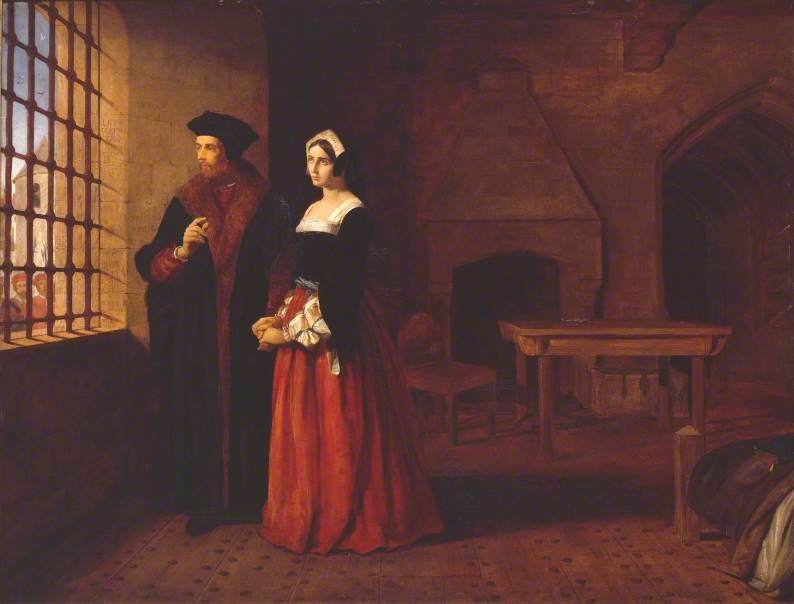
Perhaps though Margaret is best known for her devotion to her father, and his to her. He referred to her as his ‘Meg’ in their letters to one another, and he wrote constantly while he travelled around Europe while working for King Henry VIII, and also while he was imprisoned in the tower.
While her was in the tower she wrote often to him, but also acted as his advocate, negotiating to make his conditions more comfortable, ensuring he had his books and writing things, as well as better food and access to doctors when he was ill. During his imprisonment it was Margaret who visited him often and helped him to write down his version of events.
After his death her dedication to him continued when she retrieved his head from it’s spike on London Bridge. This was at great personal risk and when it was discovered that she had done this, she was brought to appear before the king’s council. According to Thomas Stapleton she defended herself by saying that she,
‘had saved her father’s head from being devoured by the fishes and with the intention of burying it.’
When Margaret died the head was to be buried with her, and she eventually was laid to rest, next to her husband William, in the Roper family crypt in St Dunstan’s Church in Canterbury. In this crypt there is also a head, encased in lead, that is believed to be the head of Sir Thomas More.
Her Legacy
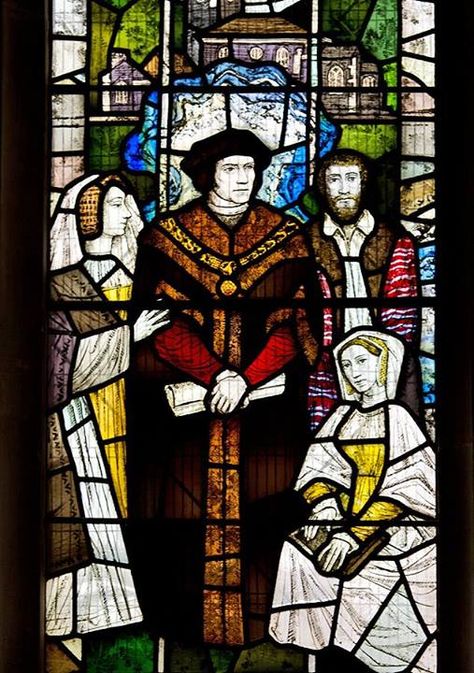
Sir Thomas’s head was not the only thing that Margaret preserved, as after his death she worked to collect and save her father’s work, letters and even some of his belongings. After Margaret’s death in 1544, the collections she had managed to bring together was broken up in an attempt to protect her family from persecution, or even prosecution, for having artefacts belonging to Sir Thomas, a traitor.
However, this collection of work was then used, first by William Roper to write his biography of Sir Thomas More titled ‘A Man of Singular Virtue’. This was the first time Sir Thomas’s life story was written down and in order to write it he referred to the letters, books and documents that his wife had so meticulously curated.
Historians and writers that have followed since have also relied on the same letters and books in order to write and learn about Sir Thomas and the wider world of the Tudor court. None of this research would have been possible had Margaret not worked so hard to preserve her father’s legacy for the generations to come. Without Margaret’s devotion our knowledge of the Tudor world would be severely diminished.
While Margaret can often be overshadowed by her father, or portrayed merely as his loyal, devoted daughter, I believe she deserves a great deal more credit and attention. Her abilities, natural intellect, loyalty and bravery should not be underestimated in their important, and certainly not forgotten.
About the author:
Aimee Fleming is a historian and author from North Yorkshire. She is happily married, with three growing boys and a whole host of pets. She studied history at the University of Wales, Bangor and then later completed a masters in Early Modern History at the University of York as a mature student. She has a passion for history, particularly the Tudors, and worked for over a decade in the heritage industry in a wide variety of roles and historic places.
Website: https://historyaimee.wordpress.com/; Social Media – On Threads, Blue Sky and Instagram: @historyaimee.
Book link: https://mybook.to/FemaleTudorScholar
*
My Books:
Signed, dedicated copies of all my books are available through my online bookshop.
Coming 30 January 2025: Scotland’s Medieval Queens
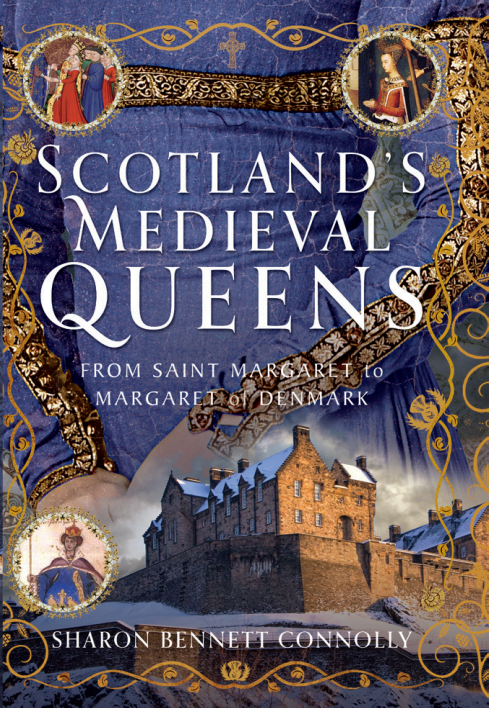
Scotland’s history is dramatic, violent and bloody. Being England’s northern neighbour has never been easy. Scotland’s queens have had to deal with war, murder, imprisonment, political rivalries and open betrayal. They have loved and lost, raised kings and queens, ruled and died for Scotland. From St Margaret, who became one of the patron saints of Scotland, to Elizabeth de Burgh and the dramatic story of the Scottish Wars of Independence, to the love story and tragedy of Joan Beaufort, to Margaret of Denmark and the dawn of the Renaissance, Scotland’s Medieval Queens have seen it all. This is the story of Scotland through their eyes.
Available for pre-order now.
Also by Sharon Bennett Connolly:
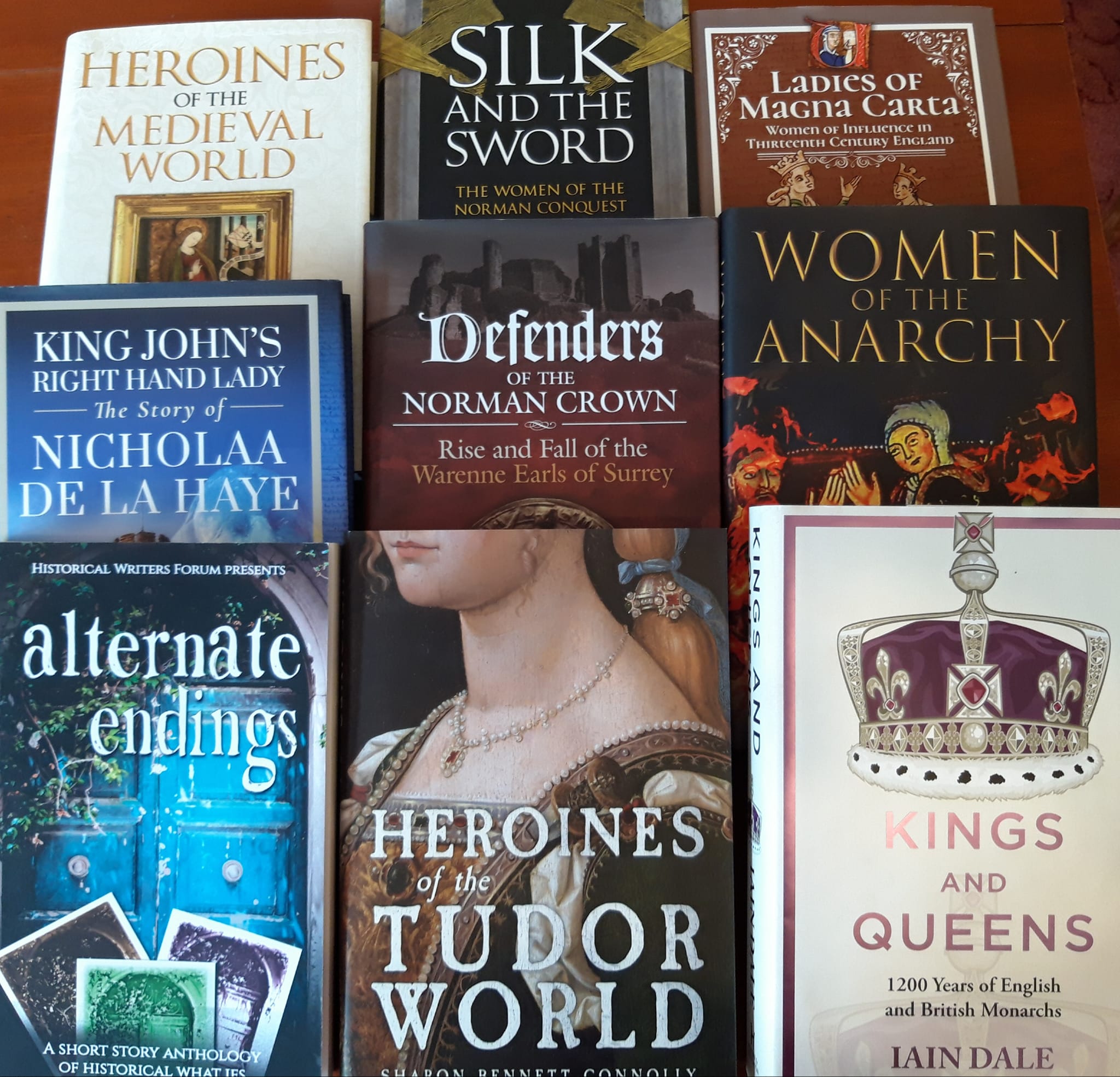
Heroines of the Tudor World tells the stories of the most remarkable women from European history in the time of the Tudor dynasty, 1485-1603. These are the women who ruled, the women who founded dynasties, the women who fought for religious freedom, their families and love. Heroines of the Tudor World is now available for pre-order from Amberley Publishing and Amazon UK. Women of the Anarchy demonstrates how Empress Matilda and Matilda of Boulogne, unable to wield a sword themselves, were prime movers in this time of conflict and lawlessness. It shows how their strengths, weaknesses, and personal ambitions swung the fortunes of war one way – and then the other. Available from Bookshop.org, Amberley Publishing and Amazon UK. King John’s Right-Hand Lady: The Story of Nicholaa de la Haye is the story of a truly remarkable lady, the hereditary constable of Lincoln Castle and the first woman in England to be appointed sheriff in her own right. Available from all good bookshops Pen & Sword Books, bookshop.org and Amazon.
Defenders of the Norman Crown: The Rise and Fall of the Warenne Earls of Surrey tells the fascinating story of the Warenne dynasty, from its origins in Normandy, through the Conquest, Magna Carta, the wars and marriages that led to its ultimate demise in the reign of Edward III. Available from Pen & Sword Books, Amazon in the UK and US, and Bookshop.org. Ladies of Magna Carta: Women of Influence in Thirteenth Century England looks into the relationships of the various noble families of the 13th century, and how they were affected by the Barons’ Wars, Magna Carta and its aftermath; the bonds that were formed and those that were broken. It is now available in paperback and hardback from Pen & Sword, Amazon, and Bookshop.org. Heroines of the Medieval World tells the stories of some of the most remarkable women from Medieval history, from Eleanor of Aquitaine to Julian of Norwich. Available now from Amberley Publishing and Amazon, and Bookshop.org. Silk and the Sword: The Women of the Norman Conquest traces the fortunes of the women who had a significant role to play in the momentous events of 1066. Available now from Amazon, Amberley Publishing, and Bookshop.org.
Alternate Endings: An anthology of historical fiction short stories including Long Live the King… which is my take what might have happened had King John not died in October 1216. Available in paperback and kindle from Amazon.
Podcast:
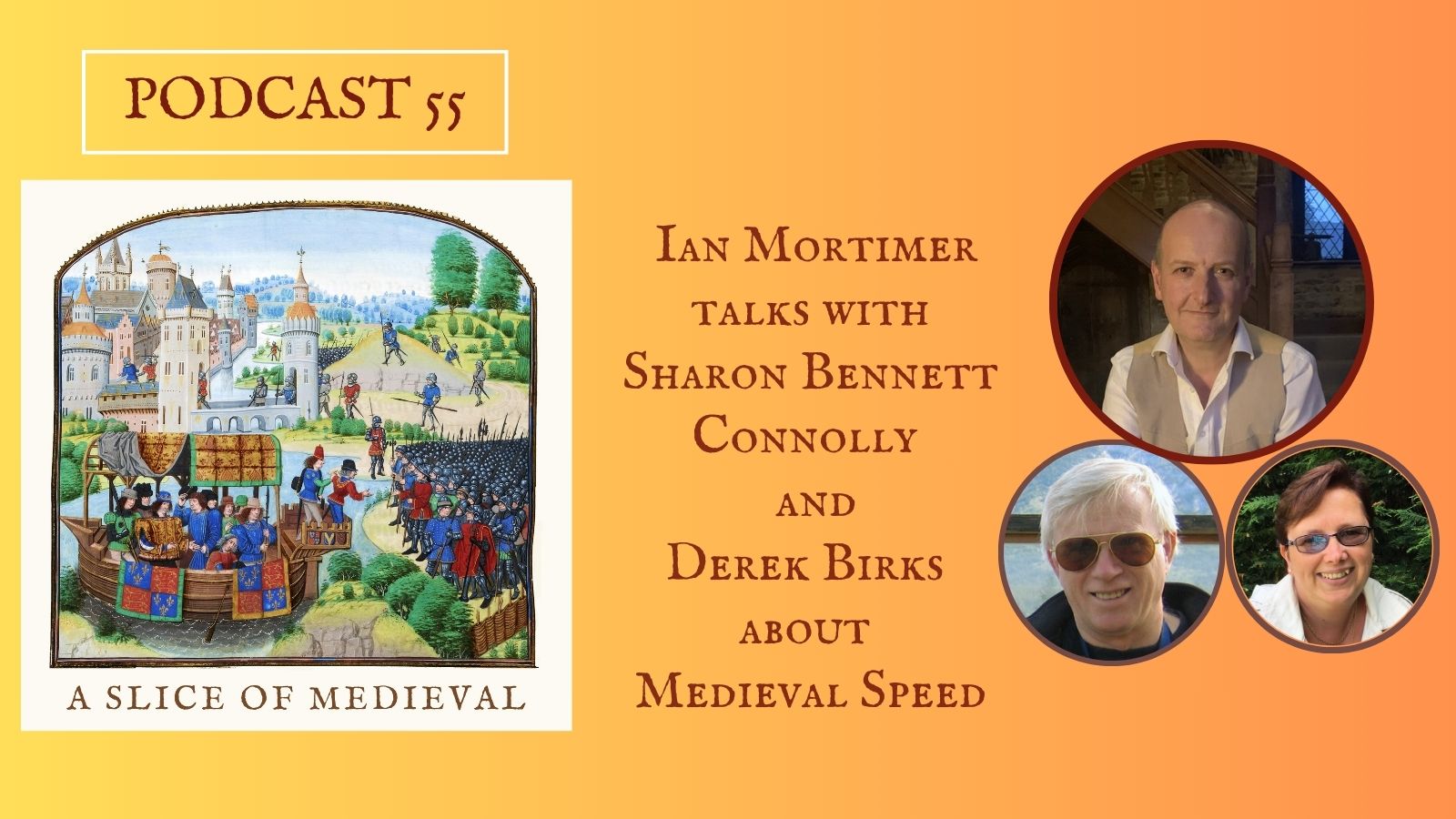
Have a listen to the A Slice of Medieval podcast, which I co-host with Historical fiction novelist Derek Birks. Derek and I welcome guests, such as Bernard Cornwell, and discuss a wide range of topics in medieval history, from significant events to the personalities involved. Our latest episode is a fascinating discussion with Dr Ian Mortimer about the speed of travel and communications in medieval times. Definitely worth a listen!
*
Don’t forget! Signed and dedicated copies of all my books are available through my online bookshop.
For forthcoming online and in-person talks, please check out my Events Page.
You can be the first to read new articles by clicking the ‘Follow’ button, liking our Facebook page or joining me on Twitter, Threads, Bluesky and Instagram.
©2024 Sharon Bennett Connolly FRHistS
 History... the interesting bits!