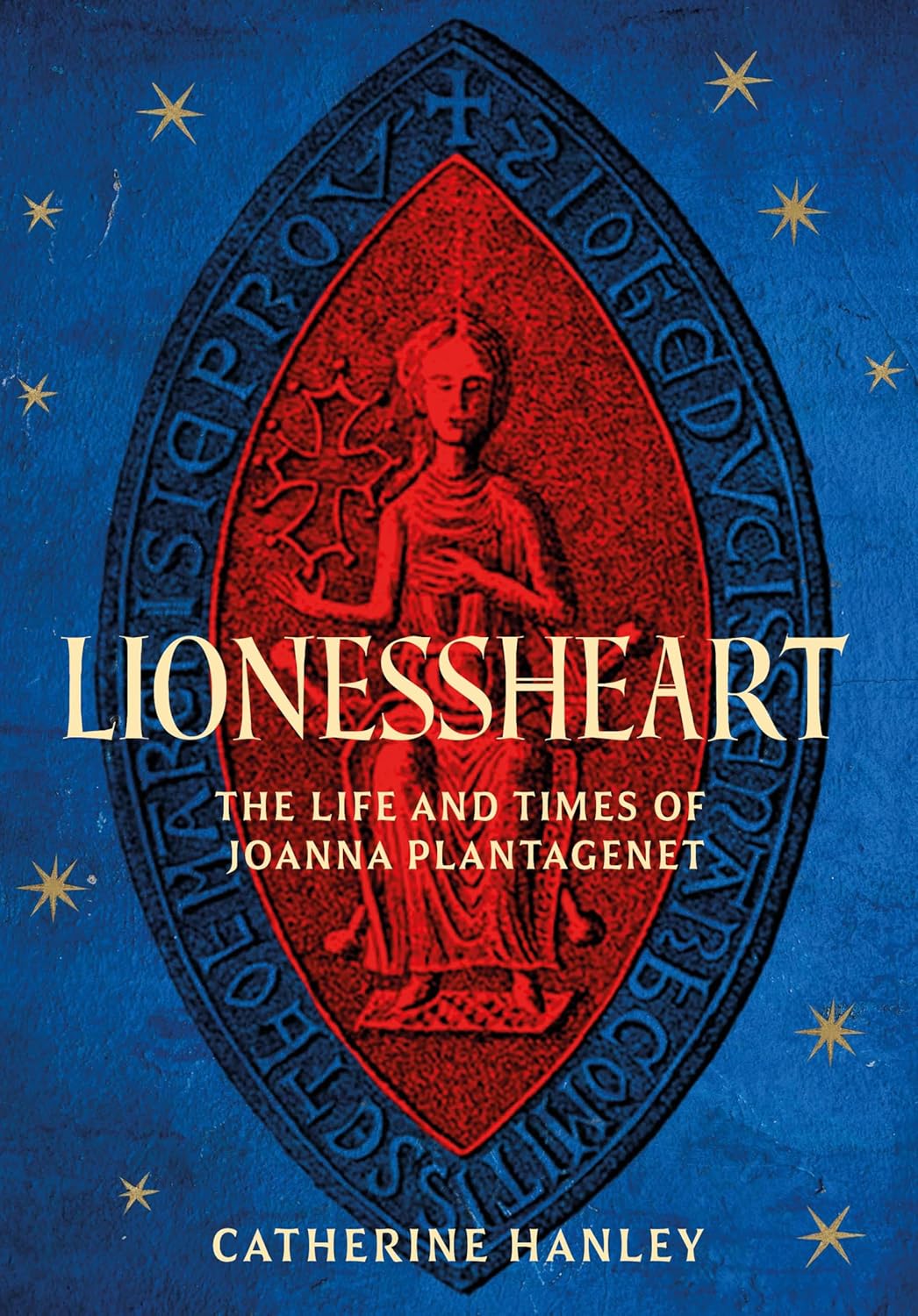
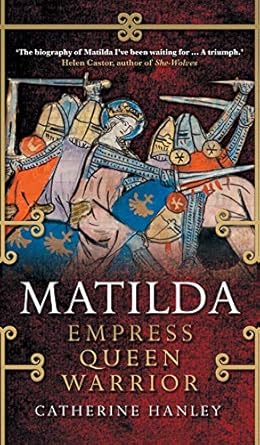
I am very happy today to welcome historian Catherine Hanley to History…the Interesting Bits in a new instalment of my Author Spotlight series, Wordly Women. Catherine is the author of Matilda, 1217 and her latest book, Lionessheart, about Joanna, the sister of Richard the Lionheart. Catherine also writes a historical fiction A Medieval Mystery series under the name C.B. Hanley, following the adventures of Edwin Weaver, bailiff of Conisbrough Castle and its lord, William de Warenne, 5th Earl of Warenne and Surrey. It is a fabulous series that I can highly recommend!
Sharon: So, Catherine, what got you into writing?
Catherine: Oddly, that question is kind of the wrong way round for me. When I did my PhD I was reading and writing all day every day for years; after it was finished and I got a full-time job that didn’t involve writing, I missed it so much that I just had to take it up on top of work. As the cliché goes, I write because I simply can’t *not* write. Eventually, over the years, it came to replace the day job rather than being an add-on.
Sharon: You write both fiction and non-fiction – is one harder than the other?
Catherine: On a day when I’m writing fiction, I’d say non-fiction was easier, and vice versa …
Sharon: Tell us about your books.
Catherine: My non-fiction mainly explores different facets of war and politics in the twelfth and thirteenth centuries – sometimes via biographies of individuals, and sometimes in the form of more wide-ranging surveys.
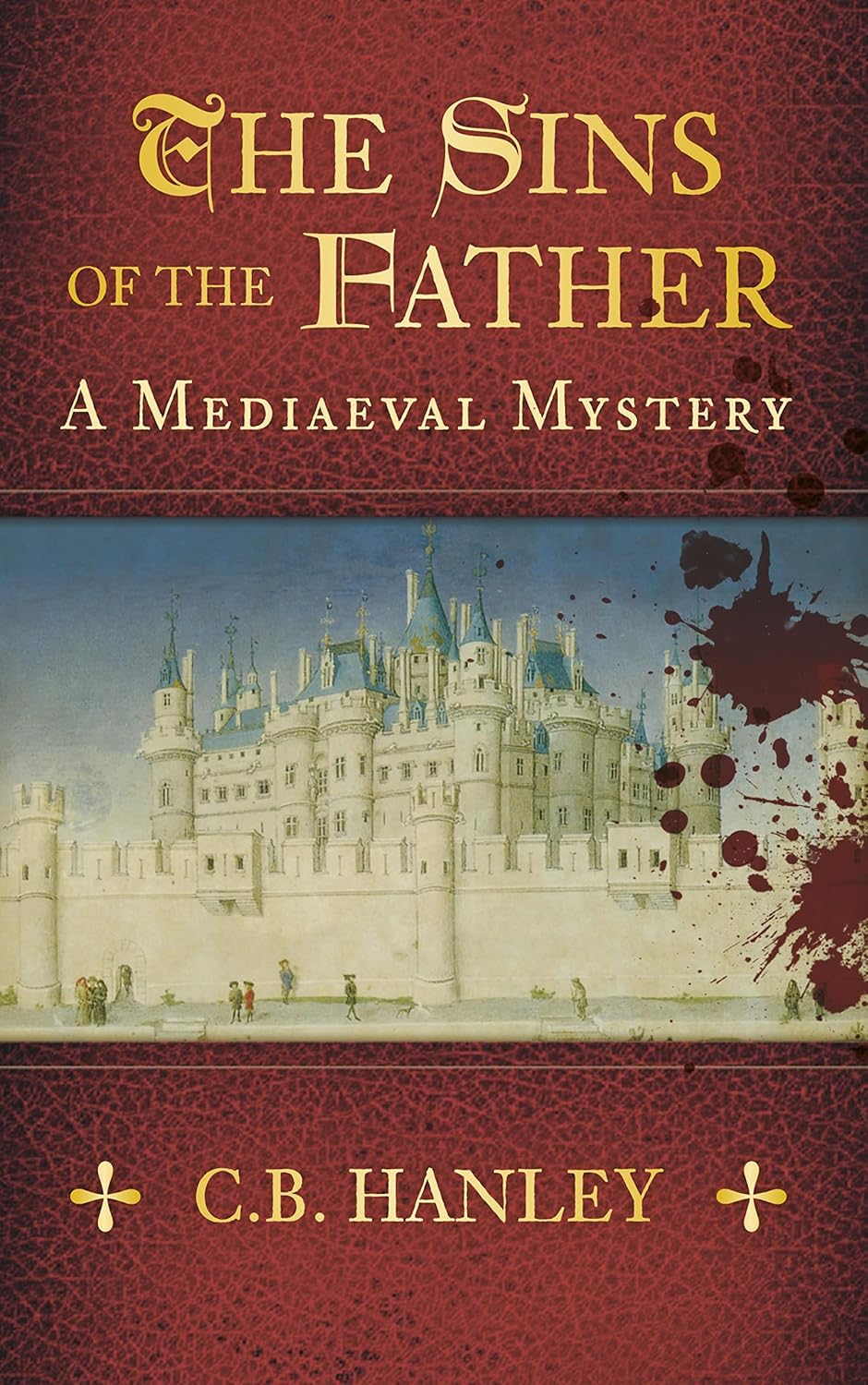
My fiction is a series of murder mysteries set during the early thirteenth century, during and just after the French invasion that followed the Magna Carta wars. My main characters are fictional, but the stories are set against a factual backdrop, with some real people in the background. It all started because, during some academic research, I discovered that a certain high-profile individual had changed sides twice during that war, but nobody knew why. So I decided to make up a (plausible!) story about why this had happened, and then once I’d started I just kept going.
Sharon: What attracts you to the 13th century?
Catherine: It is the best century, and I will be taking no further questions and entering into no arguments on this subject. (Sharon: no argument from me! I totally agree with this analysis!)
Sharon: Who is your favourite 13th century personality and why?
Catherine: OK, so this is very niche, but it’s Philip of Dreux, a member of a cadet branch of the Capetian royal house, who was the bishop of Beauvais in France. He was a younger son, so he’d been ‘donated’ to the Church by his family early in life. Unfortunately for him this had been done purely on the basis of birth order rather than aptitude or inclination, and he was one of the most bellicose men you could imagine. He fought in the Third Crusade, during which he travelled to Cyprus to tell Richard the Lionheart to his face that he should stop ‘arrogantly persecuting innocent Christians when close by there were still so many thousands of Saracens whom he should be attacking’, which went down about as well as you might expect. He was still going decades later, and fought in battle of Bouvines when aged in his sixties; there he battered the much younger earl of Salisbury to the ground with a mace ‘that he happened to have in his hand’, which is one of the best primary-source lines you’ll ever read.
If I ever decide to write a new series of novels when my current one is finished, the bishop of Beauvais and his mace are going to have starring roles …
Sharon: Who is your least favourite 13th century personality and why?
Catherine: It’s unfortunate for the purposes of this question that Richard the Lionheart died in 1199, thus making him a personality of the twelfth century, so I can’t nominate him! I also think that William Marshal has been vastly overrated.
Sharon: How do you approach researching your topic?
Catherine: I read A LOT, making sure that I’m consulting a wide range of primary sources rather than merely relying on what other people have said in secondary sources.
Sharon: Tell us your ‘favourite’ medieval story you have come across in your research.
Catherine: Basically the entire career of Philip Augustus of France, but I can’t give you too many spoilers on that just now …
Sharon: Tell us your least ‘favourite’ medieval story you have come across in your research.
Catherine: It’s always difficult reading about the many atrocities that took place in the past. One that got to me quite recently was the sad tale of Owain ap Dafydd, the son of Welsh prince Dafydd ap Gruffudd. Dafydd was captured by Edward I and then hanged, drawn and quartered, and his two sons were sentenced to harsh imprisonment. The elder of them died not long afterwards, but Owain, who was 7 when he was incarcerated, lived on for more than 40 years. He was kept in solitary confinement (and, as an adult, actually in a cage), and this stunted his mental as well as his physical development. A sad letter was later sent on his behalf asking if he could please have more adequate food and clothing, and whether he might be allowed out of his cell occasionally ‘to play’. He was at that point 37.
Sharon: Are there any other eras you would like to write about?
Catherine: Not really. There’s still so much to be discovered and said about the twelfth and thirteenth centuries that I can happily spend the rest of my career there, although I do venture occasionally into the fourteenth. The thought of writing about anything post-medieval gives me a nosebleed.
Sharon: What are you working on now?
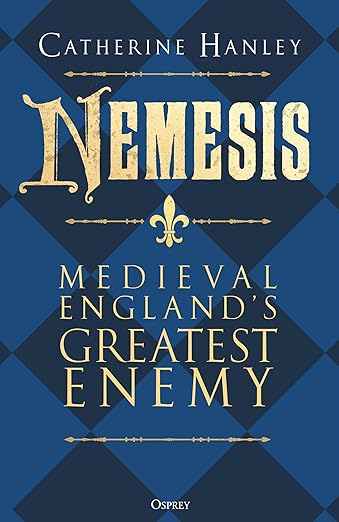
Catherine: *Takes a deep breath* As ever, I have several projects on the go, all at different stages. In non-fiction, I’m at page-proof stage for Nemesis: Medieval England’s Greatest Enemy (about the French king Philip Augustus), for publication in September 2025; almost at manuscript delivery stage for Women in Medieval Families (for 2026 publication) and in the early stages of a whopping volume called The English at War in the Middle Ages for 2027.
In fiction, A Pale Horse, number 9 in my series of medieval mysteries, is due out in June 2025, and I’m having some initial thoughts about book 10.
That’s probably enough to be getting on with!
Sharon: And finally, what is the best thing about being a writer?
Catherine: Being able to sit in a roomful of books by myself all day and lose myself in the Middle Ages. It’s such a privilege that I can still hardly believe it’s happening.
About the Author:
Dr Catherine Hanley holds a PhD in Medieval Studies and is a Fellow of the Royal Historical Society. After producing several scholarly publications she decided to write something more interesting, and she now splits her time between writing popular history and historical fiction.
Catherine: I have no social media (anyone who wants to contact me may do so by writing in ink on parchment and then sending it via a messenger on a fast horse).
Bookshop link: https://uk.bookshop.org/shop/catherinehanley
*
My books
Signed, dedicated copies of all my books are available through my online store.
Out now: Scotland’s Medieval Queens

Scotland’s history is dramatic, violent and bloody. Being England’s northern neighbour has never been easy. Scotland’s queens have had to deal with war, murder, imprisonment, political rivalries and open betrayal. They have loved and lost, raised kings and queens, ruled and died for Scotland. From St Margaret, who became one of the patron saints of Scotland, to Elizabeth de Burgh and the dramatic story of the Scottish Wars of Independence, to the love story and tragedy of Joan Beaufort, to Margaret of Denmark and the dawn of the Renaissance, Scotland’s Medieval Queens have seen it all. This is the story of Scotland through their eyes.
‘Scotland’s Medieval Queens gives a thorough grounding in the history of the women who ruled Scotland at the side of its kings, often in the shadows, but just as interesting in their lives beyond the spotlight. It’s not a subject that has been widely covered, and Sharon is a pioneer in bringing that information into accessible history.’ Elizabeth Chadwick (New York Times bestselling author)
Available now from Amazon and Pen and Sword Books
Also by Sharon Bennett Connolly:

Heroines of the Tudor World tells the stories of the most remarkable women from European history in the time of the Tudor dynasty, 1485-1603. These are the women who ruled, the women who founded dynasties, the women who fought for religious freedom, their families and love. Heroines of the Tudor World is now available for pre-order from Amberley Publishing and Amazon UK. Women of the Anarchy demonstrates how Empress Matilda and Matilda of Boulogne, unable to wield a sword themselves, were prime movers in this time of conflict and lawlessness. It shows how their strengths, weaknesses, and personal ambitions swung the fortunes of war one way – and then the other. Available from Bookshop.org, Amberley Publishing and Amazon UK. King John’s Right-Hand Lady: The Story of Nicholaa de la Haye is the story of a truly remarkable lady, the hereditary constable of Lincoln Castle and the first woman in England to be appointed sheriff in her own right. Available from all good bookshops Pen & Sword Books, bookshop.org and Amazon.

Defenders of the Norman Crown: The Rise and Fall of the Warenne Earls of Surrey tells the fascinating story of the Warenne dynasty, from its origins in Normandy, through the Conquest, Magna Carta, the wars and marriages that led to its ultimate demise in the reign of Edward III. Available from Pen & Sword Books, Amazon in the UK and US, and Bookshop.org. Ladies of Magna Carta: Women of Influence in Thirteenth Century England looks into the relationships of the various noble families of the 13th century, and how they were affected by the Barons’ Wars, Magna Carta and its aftermath; the bonds that were formed and those that were broken. It is now available in paperback and hardback from Pen & Sword, Amazon, and Bookshop.org. Heroines of the Medieval World tells the stories of some of the most remarkable women from Medieval history, from Eleanor of Aquitaine to Julian of Norwich. Available now from Amberley Publishing and Amazon, and Bookshop.org. Silk and the Sword: The Women of the Norman Conquest traces the fortunes of the women who had a significant role to play in the momentous events of 1066. Available now from Amazon, Amberley Publishing, and Bookshop.org.
Alternate Endings: An anthology of historical fiction short stories including Long Live the King… which is my take what might have happened had King John not died in October 1216. Available in paperback and kindle from Amazon.
Podcast:

Have a listen to the A Slice of Medieval podcast, which I co-host with Historical fiction novelist Derek Birks. Derek and I welcome guests, such as Bernard Cornwell and Michael Jecks, and discuss a wide range of topics in medieval history, from significant events to the personalities involved. Every episode is also now available on YouTube.
And we will be chatting with Catherine Hanley about Joanna Plantagenet, Lionessheart, in a couple of months!
*
Don’t forget! Signed and dedicated copies of all my books are available through my online store.
For forthcoming online and in-person talks, please check out my Events Page.
You can be the first to read new articles by clicking the ‘Follow’ button, liking our Facebook page or joining me on Twitter, Threads, Bluesky and Instagram.
*
©2025 Sharon Bennett Connolly, FRHistS and Dr Catherine Hanley, FRHistS
 History... the interesting bits!