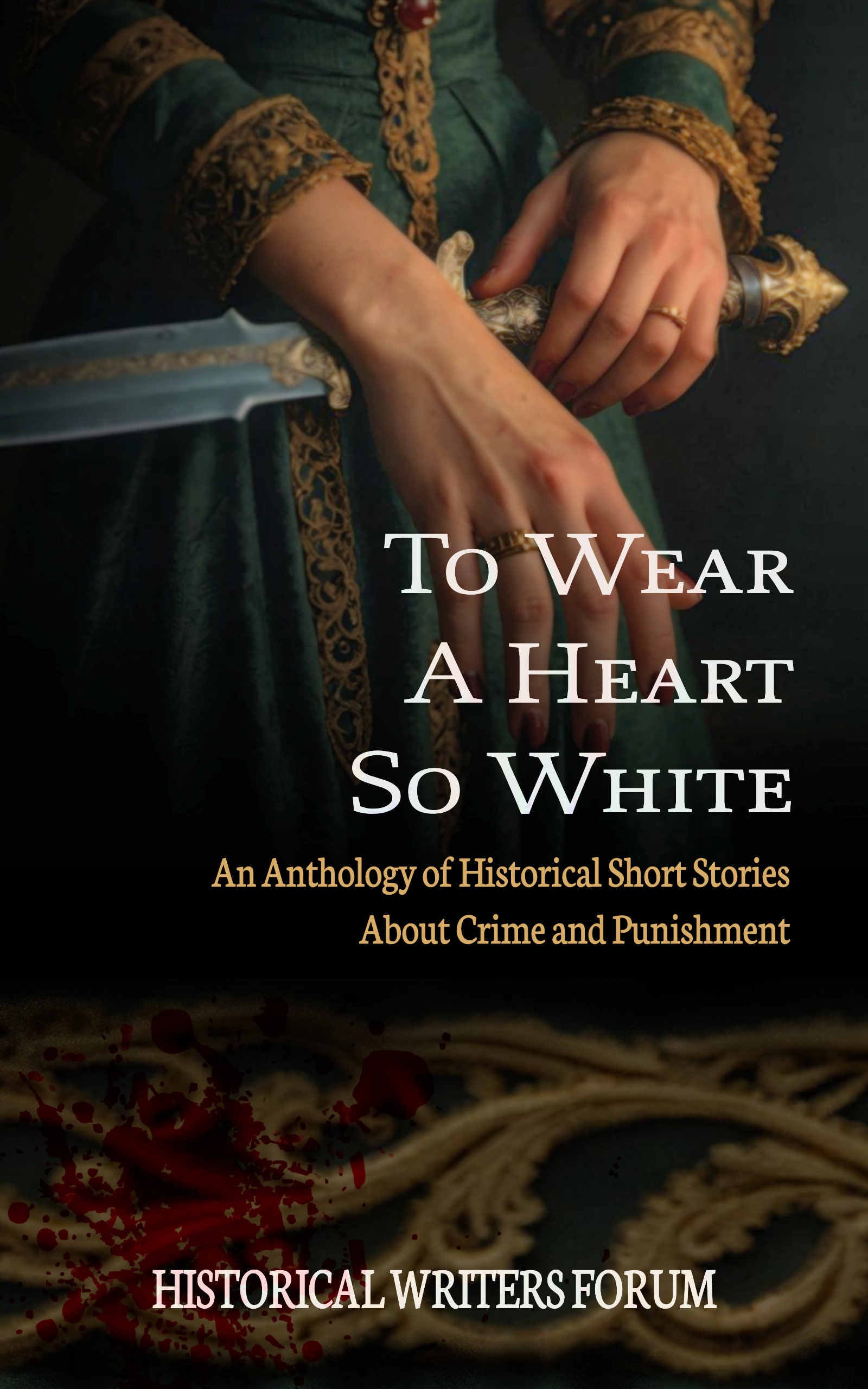
Book Corner: The Vengeance of Merlin by Steven A McKay

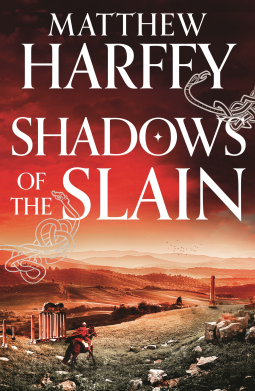
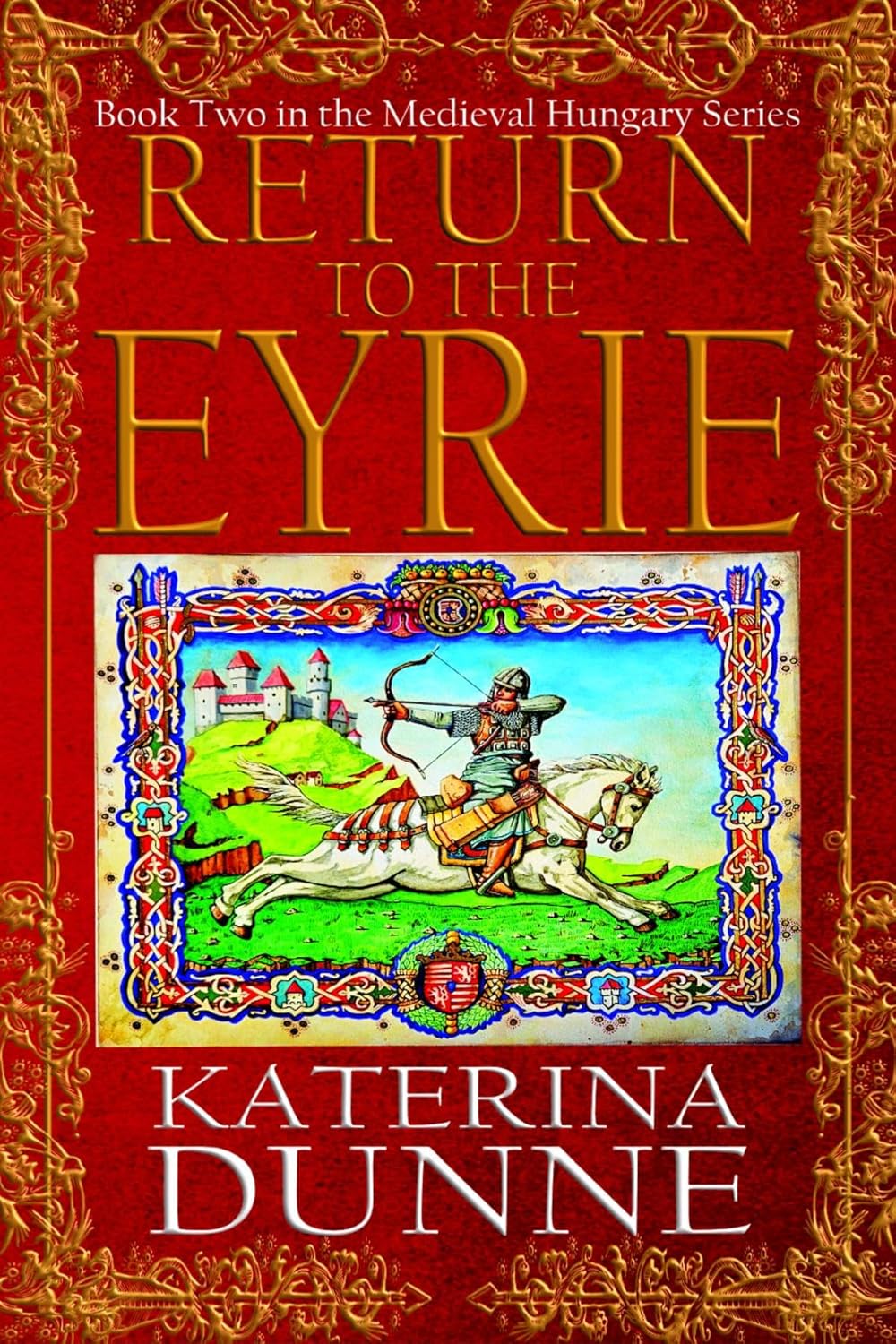
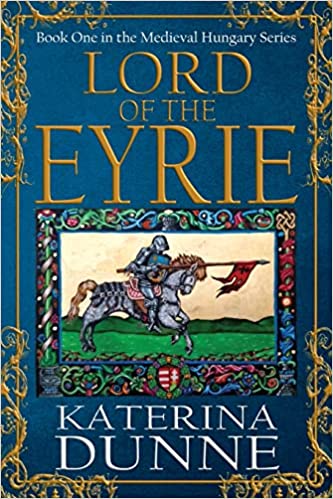
A heinous crime is perpetrated against the druids of Britain and a grief-stricken Bellicus suddenly finds his world changing in ways he never expected. Before he can begin to make sense of things the terrible news that the Picts have allied with the Saxons and now march on Dun Breatann together spurs the warrior-druid into action, and soon he and his companions are racing homewards. Horsa, fearsome leader of the sea-wolves, promises to use any tactic – including torture and dark magic – against Bellicus’s terrified Damnonii people who are being slaughtered and dragged from their burnt out villages to please the Saxons’ brutal gods.
Bellicus, his friend Duro, and the great war-dog Cai will need all their bravery, experience, and cunning to stand against the insane cruelty of the raiders which even shocks their own allies in the Pictish army.
Many will fall as the fighting rages, but can bonds of loyalty, friendship, and family be enough to save Queen Narina and the people of Dun Breatann from the grim fate their enemies have planned for them?
This new Warrior Druid of Britain adventure is sure to delight lovers of fast-paced historical fiction, especially readers of Peter Gibbons, Griff Hosker, and Bernard Cornwell.

Saxons and Picts come together to conquer Northern Britain, but when the war is over they must face the vengeance of Merlin!

The best Bellicus adventure yet!

Another thrilling adventure!

Vengeance of Merlin by Steven A. McKay is the 6th book in his excellent Warrior Druid of Britain series. The books follow the adventures of Bellicus the druid and his friend Duro, a former Roman soldier. King Arthur, Merlin and Lancelot are all supporting actors. Together they face the Saxon onslaught, headed by the infamous brothers Hengist and Horsa.

While Bellicus is distracted by the Moot – a meeting of all the druids in Britain which comes with its own drama – Hengist joins forces with Dun Breatann’s enemy, Drest, to launch an attack on the stronghold. The uneasy alliance between Drest and Hengist is stretched thin by the unsavoury methods of the Saxon forces. The tension is further exacerbated by the fact Dun Breatann is virtually impregnable and resisting.

With murder, sacrifice and intrigue aplenty, The Vengeance of Merlin has all the ingredients for a fantastic story.

“What’s wrong with these people?” Duro demanded as silence followed them along the town’s main thoroughfare. “Have they never seen a druid before?”

“Be fair,” Bellicus laughed. “Nemias, Qunavo, Ria, Lugotorix – none of them look anything like I do.”

“You’ve got the eagle-topped staff,” Duro groused, throwing a fierce look at a man who scurried off as they went by. “Isn’t that enough?”

“Maybe, on my own,” Bellicus said, still laughing at his friend’s bemusement. “But with you at my side? No wonder the people here think trouble must be brewing. They probably think you’re the ghost of some legionary that was part of the garrison here.”

The centurion opened his mouth to make an angry retort, then he realised he was being made fun off and broke off, shaking his head and sharing in the druid’s amusement.

“Look,” Bellicus said, pointing at an old tombstone that was just lying on the ground, abandoned. “See what I mean?”

The stone had been carved to show a Roman optio, with the inscription beneath naming him as Caecilius Avitus of the Twentieth Legion Valeria Victrix.

Duro paused, reading, and then grunted. “Fifteen years service. Died when he was thirty-four. Mithras protect him.”

A stocky, middle-aged man with sunbrowned skin appeared on the road before them then, and he did not appear frightened by their presence, although he did peer warily at Cai.

“You a druid?” he asked, pointing at Bellicus’s staff, his eyes moving smoothly across Duro and the mastiff before returning to the shaven-headed giant atop the great black horse.

“I am. Bellicus of Dun Breatann. You must be the headman.”

The fellow nodded, his stance and demeanour telling of a history as a soldier, either in the local militia or perhaps even, like Duro, as a legionary.

“Your friends are at the old shrine of Minerva,” the headman informed them, gesturing along the road. “It’s not far along this way. Just keep following the road and you’ll see it to the south, across the bridge.” He paused and it seemed he wanted to ask them more about their business in Caer Legion, but respect for the druid’s office kept him silent and the riders moved on, saluting him and receiving the same gesture in return.

“He looked like he was expecting trouble,” Duro muttered when they were some distance away from the headman, who still stood watching them ride on.

Bellicus snorted with laughter. “Duro,” he said, “you have the exact same look about you. You always do. It’s just something old soldiers have.”

The characters make The Vengeance of Merlin. Princess Catia is maturing into a brave, adventurous leader, though with still that childish curiosity. Aife is divided by her loyalties between her father, her friends and what is right- and knowing that doing the right thing means going against her father. Even Bellicus has a big career decision to make; one that will affect his love life. Every character has their own challenges and issues, struggles they must overcome and decisions that need to be taken.

Steven A. McKay takes the reader back to the time when the Romans had left Britain and the Saxons were just arriving. The vivid landscape, the attitudes of the people and the meeting of history and legend, together with the mystery that surrounds the druids, all serve to transport the reader back to a time when the veil between magic and reality was not so thick and distinct as it is today.

Steven is setting us up for a great war against the Saxons. Hopefully, that means we will not only get to see more of Bellicus and Duro, but also more of Arthur!

The twists and turns in the story makes The Vengeance of Merlin a tense but addictive read. The gripping storyline keeps the reader enthralled to the very last page – even if it does take you until 1 in the morning to get there!

I loved it!

To Buy the book:

Vengeance of Merlin is available in paperback and ebook from Amazon

About the author:

Steven A McKay was born in Scotland in 1977 and always enjoyed studying history. He decided to write his Forest Lord novels after seeing a house called “Sherwood” when out at work one day. Since then he’s started a new series, the Warrior Druid of Britain Chronicles, and just completed a trilogy about Alfred the Great.

Steven used to be in a heavy metal band although he tend to just play guitar in his study these days. He did use those guitars to write the theme song for the podcast he co-hosts, Rock, Paper, Swords! with Matthew Harffy, though. Give it a listen, they’ve interviewed great guests like Diana Gabaldon, Simon Scarrow, Bernard Cornwell, Dan Jones and more.

My Books:

Signed, dedicated copies of all my books are available through my online store.

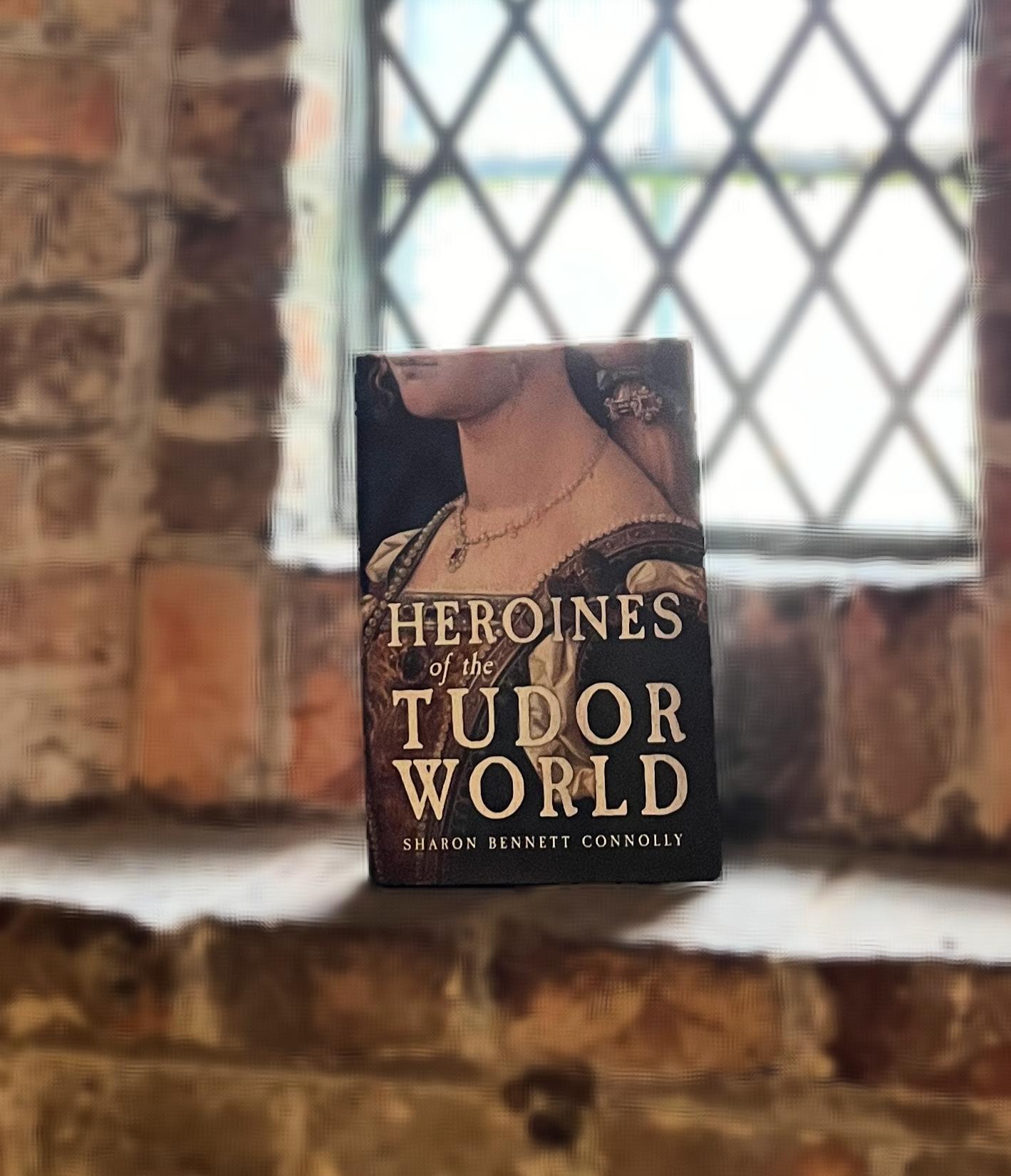
OUT NOW! Heroines of the Tudor World

Heroines of the Tudor World tells the stories of the most remarkable women from European history in the time of the Tudor dynasty, 1485-1603. These are the women who ruled, the women who founded dynasties, the women who fought for religious freedom, their families and love. These are the women who made a difference, who influenced countries, kings and the Reformation. In the era dominated by the Renaissance and Reformation, Heroines of the Tudor World examines the threats and challenges faced by the women of the era, and how they overcame them. From writers to regents, from nuns to queens, Heroines of the Tudor World shines the spotlight on the women helped to shape Early Modern Europe.

Heroines of the Tudor World is now available for pre-order from Amberley Publishing and Amazon UK.

Coming 30 January 2025: Scotland’s Medieval Queens
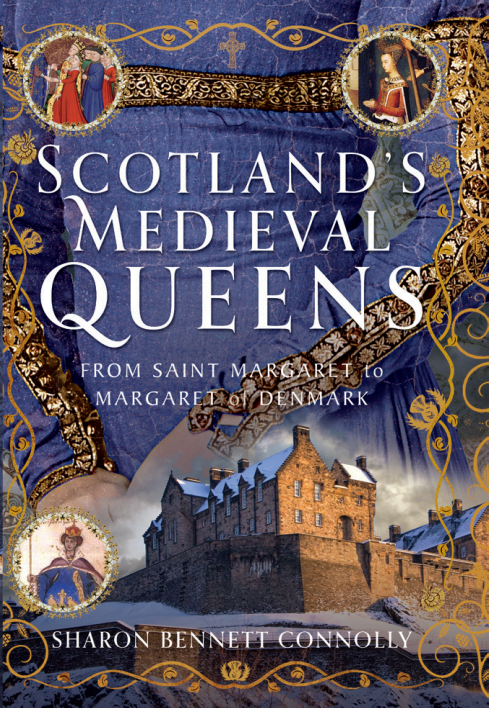
Scotland’s history is dramatic, violent and bloody. Being England’s northern neighbour has never been easy. Scotland’s queens have had to deal with war, murder, imprisonment, political rivalries and open betrayal. They have loved and lost, raised kings and queens, ruled and died for Scotland. From St Margaret, who became one of the patron saints of Scotland, to Elizabeth de Burgh and the dramatic story of the Scottish Wars of Independence, to the love story and tragedy of Joan Beaufort, to Margaret of Denmark and the dawn of the Renaissance, Scotland’s Medieval Queens have seen it all. This is the story of Scotland through their eyes.

Available for pre-order now.

Also by Sharon Bennett Connolly:

Women of the Anarchy demonstrates how Empress Matilda and Matilda of Boulogne, unable to wield a sword themselves, were prime movers in this time of conflict and lawlessness. It shows how their strengths, weaknesses, and personal ambitions swung the fortunes of war one way – and then the other. Available from Bookshop.orgAmberley Publishing and Amazon UKKing John’s Right-Hand Lady: The Story of Nicholaa de la Haye is the story of a truly remarkable lady, the hereditary constable of Lincoln Castle and the first woman in England to be appointed sheriff in her own right. Available from all good bookshops Pen & Sword Booksbookshop.org and AmazonDefenders of the Norman Crown: The Rise and Fall of the Warenne Earls of Surrey tells the fascinating story of the Warenne dynasty, from its origins in Normandy, through the Conquest, Magna Carta, the wars and marriages that led to its ultimate demise in the reign of Edward III. Available from Pen & Sword BooksAmazon in the UK and US, and Bookshop.org

Ladies of Magna Carta: Women of Influence in Thirteenth Century England looks into the relationships of the various noble families of the 13th century, and how they were affected by the Barons’ Wars, Magna Carta and its aftermath; the bonds that were formed and those that were broken. It is now available in paperback and hardback from Pen & Sword,  Amazon, and Bookshop.orgHeroines of the Medieval World tells the stories of some of the most remarkable women from Medieval history, from Eleanor of Aquitaine to Julian of Norwich. Available now from Amberley Publishing and Amazon, and Bookshop.orgSilk and the Sword: The Women of the Norman Conquest traces the fortunes of the women who had a significant role to play in the momentous events of 1066. Available now from Amazon,  Amberley Publishing, and Bookshop.org.

Alternate Endings: An anthology of historical fiction short stories including Long Live the King… which is my take what might have happened had King John not died in October 1216. Available in paperback and kindle from Amazon.

Podcast:
Have a listen to the A Slice of Medieval podcast, which I co-host with Historical fiction novelist Derek Birks. Derek and I welcome guests, such as Bernard Cornwell, and discuss a wide range of topics in medieval history, from significant events to the personalities involved.

*

Don’t forget! Signed and dedicated copies of all my books are available through my online store.

For forthcoming online and in-person talks, please check out my Events Page.

You can be the first to read new articles by clicking the ‘Follow’ button, liking our Facebook page or joining me on TwitterThreads and Instagram.

*

©2024 Sharon Bennett Connolly FRHistS.

Book Corner: 2 Books About Tudor Heirs

It is time for me to get back to some serious book reviewing. So, in order to catch up, I thought I’d do two reviews in one post. Both books are from the Tudor period and look into the heirs to the Tudor throne, and the impact of Henry VIII’s actions on those children. Each books provide a fascinating insight into the lives of prominent Tudors and shows a side of Henry VIII that is often overlooked.

Henry VIII’s Children by Caroline Angus

Of the five Tudor monarchs, only one was ever born to rule. While much of King Henry VIII’s reign is centred on his reckless marriage choices, it was the foundations laid by Henry and Queen Katherine of Aragon that shaped the future of the crown. Among the suffering of five lost heirs, the royal couple placed all their hopes in the surviving Princess Mary. Her early life weaves a tale of promise, diplomacy, and pageantry never again seen in King Henry’s life, but a deep-rooted desire for a son, a legacy of his own scattered childhood, pushed Henry VIII to smother Mary’s chance to rule. An affair soon produced an unlikely heir in Henry Fitzroy, and while one child was pure royalty, the other illegitimate, the comparison of their childhoods would show a race to throne closer than many wished to admit.

King Henry’s cruelty saw his heirs’ fates pivot as wives came and went, and the birth Princess Elizabeth, saw long-term plans upended for short-term desires. With the death of one heir hidden from view, the birth of Prince Edward finally gave the realm an heir born to rule, but King Henry’s personal desires and paranoia left his heirs facing constant uncertainty for another decade until his death. Behind the narrative of Henry VIII’s wives, wars, reformation and ruthlessness, there were children, living lives of education among people who cared for them, surrounded by items in generous locations which symbolised their place in their father’s heart. They faced excitement, struggles, and isolation which would shape their own reigns. From the heights of a surviving princess destined and decreed to influence Europe, to illegitimate children scattered to the winds of fortune, the childhoods of Henry VIII’s heirs is one of ambition, destiny, heartache, and triumph.

Henry VIII left a long shadow, especially for his children. Caroline Angus looks into the lives and experiences of Henry’s 3 legitimate children, Edward VI, Mary I and Elizabeth I, alongside his only recognised illegitimate child, Henry Fitzroy, Duke of Richmond. And the other possible candidates to be Henry’s offspring, including Catherine Carey.

Henry VIII’s Children is a very easy and enjoyable read. You get absorbed into Caroline Angus’s love of her subject. Her research is thorough and all her arguments are supported by evidence. Where there is conjecture, the author presents both sides and lets the reader find their own conclusion, while presenting what she thinks most likely. I did not agree with all her conclusions, particularly when it comes to Catherine Carey – I am not convinced she was Henry VIII’s daughter, not that Henry’s relationship with Mary Boleyn lasted as long as some historians suggest. I just don’t think we have enough information. But it was interesting to read Caroline’s thoughts on the subject and see how she came to her conclusions.
It certainly gave me food for thought!

The Tudors are always a fascinating subject and Caroline Angus does a wonderful job of igniting the reader’s passion in her subject.

The strength of Henry VIII’s Children lies in its fascinating investigation into the lives of Henry’s 3 ‘legitimate’ children and how their fates were manipulated and directed by Henry’s obsession for a male heir, and his multiple marriages. Poor Mary I had 5 stepmothers! just imagine how she must have felt, watching her mother shunned and sidelined by the father she adored, not being allowed to visit her on her deathbed, nor being allowed to receive her mother’s comfort when she was ill and scared. The mind games Henry VIII played with his eldest child, in order to get her acquiescence, are something to behold.

And then there’s poor Elizabeth, her mother executed before her 3rd birthday, and yet she is the one who surpassed all Henry’s dreams for his children. Elizabeth is the one who had a golden age named after her. She is also the one who always lived in the shadow of her mother’s fate. Caroline Angus looks into all aspects of Elizabeth’s life, especially the childhood and adolescence that shaped her future.

And Edward! the golden boy. The heir who was so desired that his father broke with Rome to get. A boy who was the hope of a nation but died so tragically young.

Caroline Angus looks at them all with such enthusiasm and animation that they jump off the page.

An eminently readable nook that I have no hesitation in recommending.

To Buy Henry VIII’s Children

About the Author:

Caroline Angus is a New Zealand-based author raising four sons. Caroline studied history at Universitat de València, Spain, spending ten years dedicated to the Spanish Civil War and the resulting dictatorship. Caroline went on to study with King’s College London, specialising in Shakespeare and British royal history. After a decade of writing fiction, including the Secrets of Spain series, focusing on the lives of Valencian interviewees between 1939 and 1975, and the more recent Queenmaker Trilogy, eleven years of Thomas Cromwell and his fictional attendant Nicòla Frescobaldi, Caroline is now creating non-fiction works on the surviving papers of Thomas Cromwell.

Henry VIII’s True Daughter by Wendy J Dunn

The lives of Tudor women often offer faint but fascinating footnotes on the pages of history. The life of Catherine – or Katryn as her husband would one day pen her name – Carey, the daughter of Mary Boleyn and, as the weight of evidence suggests, Henry VIII, is one of those footnotes.

As the possible daughter of Henry VIII, the niece of Anne Boleyn and the favourite of Elizabeth I, Catherine’s life offers us a unique perspective on the reigns of Henry and his children. In this book, Wendy J. Dunn takes these brief details of Catherine’s life and turns them into a rich account of a woman who deserves her story told. Following the faint trail provided of her life from her earliest years to her death in service to Queen Elizabeth, Dunn examines the evidence of Catherine’s parentage and views her world through the lens of her relationship with the royal family she served.

This book presents an important story of a woman who saw and experienced much tragedy and political turmoil during the reigns of Henry VIII, Edward VI, and Mary I – all of which prepared her to take on the vital role of one of Elizabeth I closest and most trusted women. It also prepared her to become the wife of one of Elizabeth’s privy councillors – a man also trusted and relied on by the queen. Catherine served Elizabeth during the uncertain and challenging first years of her reign, a time when there was a question mark over whether she would succeed as queen regnant after the failures of England’s first crowned regnant, her sister Mary.

Through immense research and placing her in the context of her period, HENRY VIII’S TRUE DAUGHTER: CATHERINE CAREY, A TUDOR LIFE draws Catherine out of the shadows of history to take her true place as the daughter of Henry VIII and shows how vital women like Catherine were to Elizabeth and the ultimate victory of her reign.

Henry VIII’s True Daughter: Catherine Carey, A Tudor Life by Wendy J. Dunn is a perfect accompaniment to Henry VIII’s Children. Focusing on the eldest child of Mary Boleyn and William Carey, Wendy J. Dunn investigates Catherine’s origins and the stories around her conception and birth – in particular, her mother’s relationship with Henry VIII. It has long been thought possible that Catherine was Henry’s daughter and that Mary Boleyn’s marriage to William Carey was arranged to conceal the king’s affair. Henry himself admitted he had slept with Mary Boleyn when he was once accused of sleeping with Anne Boleyn’s mother, replying along the lines of ‘the sister but never the mother.’

So, we know they had a relationship, but how long it lasted and whether Catherine was the result of that relationship is still uncertain. Wendy attempts to lift away that uncertainty and presents all the evidence and conjecture that has been gather over the years to give us her own conclusions.

But this book is so much more! Henry VIII’s True Daughter gives us insights into the life of a prominent Tudor woman. Whether or not she was the daughter of Henry VIII, she was still at the heart of the Tudor court, especially in the reign of her sister/cousin, Elizabeth I. Catherine was one of Elizabeth’s favourites and was loyal to the queen to the very end of her life. Wendy gives stunning insight into Catherine’s life and career, as well as her marriage and family.

Even if I don’t necessarily agree with all its conclusion, Henry VIII’s True Daughter by Wendy J Dunn is a wonderful, engaging book, giving the reader ample food for thought in her theories and explanations of the life and origins of Catherine Carey. It is a must-read for any fan of Tudor history.

To Buy Henry VIII’s True Daughter

About the Author:

Wendy J. Dunn is an award-winning Australian writer fascinated by Tudor history – so much so she was not surprised to discover a family connection to the Tudors, not long after the publication of her first Anne Boleyn novel, which narrated the Anne Boleyn story through the eyes of Sir Thomas Wyatt, the elder. Her family tree reveals the intriguing fact that one of her ancestral families – possibly over three generations – had purchased land from both the Boleyn and Wyatt families to build up their holdings. It seems very likely Wendy’s ancestors knew the Wyatts and Boleyns personally. Wendy is married, the mother of four adult children and the grandmother of two amazing small boys. She gained her PhD in 2014 and loves walking in the footsteps of the historical people she gives voice to in her books. Wendy also tutors writing at Swinburne University of Technology, Australia. HENRY VIII’S TRUE DAUGHTER: CATHERINE CAREY, A TUDOR LIFE is her first full-length nonfiction work.

*

My Books:

Signed, dedicated copies of all my books are available through my online store.

OUT NOW! Heroines of the Tudor World

Heroines of the Tudor World tells the stories of the most remarkable women from European history in the time of the Tudor dynasty, 1485-1603. These are the women who ruled, the women who founded dynasties, the women who fought for religious freedom, their families and love. These are the women who made a difference, who influenced countries, kings and the Reformation. In the era dominated by the Renaissance and Reformation, Heroines of the Tudor World examines the threats and challenges faced by the women of the era, and how they overcame them. From writers to regents, from nuns to queens, Heroines of the Tudor World shines the spotlight on the women helped to shape Early Modern Europe.

Heroines of the Tudor World is now available for pre-order from Amberley Publishing and Amazon UK.

Coming 30 January 2025: Scotland’s Medieval Queens

Scotland’s history is dramatic, violent and bloody. Being England’s northern neighbour has never been easy. Scotland’s queens have had to deal with war, murder, imprisonment, political rivalries and open betrayal. They have loved and lost, raised kings and queens, ruled and died for Scotland. From St Margaret, who became one of the patron saints of Scotland, to Elizabeth de Burgh and the dramatic story of the Scottish Wars of Independence, to the love story and tragedy of Joan Beaufort, to Margaret of Denmark and the dawn of the Renaissance, Scotland’s Medieval Queens have seen it all. This is the story of Scotland through their eyes.

Available for pre-order now.

Also by Sharon Bennett Connolly:

Women of the Anarchy demonstrates how Empress Matilda and Matilda of Boulogne, unable to wield a sword themselves, were prime movers in this time of conflict and lawlessness. It shows how their strengths, weaknesses, and personal ambitions swung the fortunes of war one way – and then the other. Available from Bookshop.orgAmberley Publishing and Amazon UKKing John’s Right-Hand Lady: The Story of Nicholaa de la Haye is the story of a truly remarkable lady, the hereditary constable of Lincoln Castle and the first woman in England to be appointed sheriff in her own right. Available from all good bookshops Pen & Sword Booksbookshop.org and AmazonDefenders of the Norman Crown: The Rise and Fall of the Warenne Earls of Surrey tells the fascinating story of the Warenne dynasty, from its origins in Normandy, through the Conquest, Magna Carta, the wars and marriages that led to its ultimate demise in the reign of Edward III. Available from Pen & Sword BooksAmazon in the UK and US, and Bookshop.org

Ladies of Magna Carta: Women of Influence in Thirteenth Century England looks into the relationships of the various noble families of the 13th century, and how they were affected by the Barons’ Wars, Magna Carta and its aftermath; the bonds that were formed and those that were broken. It is now available in paperback and hardback from Pen & Sword, Amazon, and Bookshop.orgHeroines of the Medieval World tells the stories of some of the most remarkable women from Medieval history, from Eleanor of Aquitaine to Julian of Norwich. Available now from Amberley Publishing and Amazon, and Bookshop.orgSilk and the Sword: The Women of the Norman Conquest traces the fortunes of the women who had a significant role to play in the momentous events of 1066. Available now from Amazon,  Amberley Publishing, and Bookshop.org.

Alternate Endings: An anthology of historical fiction short stories including Long Live the King… which is my take what might have happened had King John not died in October 1216. Available in paperback and kindle from Amazon.

Podcast:

Have a listen to the A Slice of Medieval podcast, which I co-host with Historical fiction novelist Derek Birks. Derek and I welcome guests, such as Bernard Cornwell, and discuss a wide range of topics in medieval history, from significant events to the personalities involved.

*

Don’t forget! Signed and dedicated copies of all my books are available through my online store.

For forthcoming online and in-person talks, please check out my Events Page.

You can be the first to read new articles by clicking the ‘Follow’ button, liking our Facebook page or joining me on TwitterThreads and Instagram.

*

©2024 Sharon Bennett Connolly FRHistS.

Lady Mary Seymour, the Queen’s Orphan Daughter

Katherine Parr by an unknown artist, NPG

Little Lady Mary Seymour was the daughter of dowager Queen Kateryn Parr and her fourth, and final, husband, Thomas Seymour, Baron Seymour of Sudeley. Kateryn Parr was widowed for a third time with the death of Henry VIII in January 1547. By May of the same year, Queen Kateryn was married to the new king Edward VI’s uncle, Thomas Seymour, Lord High Admiral of England and Baron Seymour of Sudeley. This was said to be a love match and within months Kateryn found herself pregnant for what may have been the first time in her life. In the months before the birth, the queen had fitted out a nursery for her baby, decorated in Kateryn’s favourite colours of crimson and gold: the nursery had views of the gardens and the castle’s chapel. The queen’s joy was tempered by the scandal that had arisen from her husband’s attentions towards Kateryn’s stepdaughter, Elizabeth.

She wrote to Thomas Seymour of how active the unborn child was:

I gave your little knave your blessing, who like an honest man stirred apace after and before. For Mary Odell [one of her ladies] being abed with me had laid her hand upon my belly to feel it stir. It hath stirred these three days every morning and evening so that I trust when you come it will make you some pastime. And thus I end bidding my sweetheart and loving husband better to fare than myself.1

Kateryn gave birth to her only child, Mary, named after the dowager queen’s stepdaughter, Princess Mary, on 30 August 1548. At the age of 37, Kateryn was old to be having her first child, but both she and the baby had come through the labour safely and there doesn’t appear to have been any disappointment that the child was a girl rather than a boy.

Thomas Seymour painted by Nicolas Denisot

Within just a few days of the birth, Kateryn was showing signs of puerperal fever, a bacterial complication of childbirth that was very dangerous in the centuries before antibiotics. As her condition worsened, Kateryn suffered bouts of delirium and moments of calm, when she appeared to rally. In her delirium, Kateryn railed against her husband, saying

‘I am not well handled, for those that be about me careth not for me but standith laughing at my grief and the more good I will to them, the less good they will to me.’2

Strongly denying her accusations, Seymour replied

‘Why, sweetheart, I would you no hurt.’3

Whether Kateryn truly believed Seymour wanted her dead, or was still smarting from how close he had got to the Princess Elizabeth, or the words, reported by Lady Tyrwitt, who was not a friend of Seymour’s, were misinterpreted, we will never know. Her pain, delirium and suspicion of her husband made Kateryn’s last days even more wretched.

Kateryn Parr died 6 days after little Mary’s birth, on 5 September 1548, at Sudeley Castle. She was laid to rest beneath the floor of St Mary’s Chapel in the castle grounds, with Lady Jane Grey acting as her chief mourner. Despite her fears that her husband had poisoned her, in her will, dictated as she was close to death, she left everything to Seymour, making him a very wealthy man.

Thomas Seymour was stunned by Kateryn’s death and grieved deeply. He abandoned Sudeley Castle and returned to London, seeking refuge at Syon House, the home of his brother, Edward Seymour, Duke of Somerset and his wife. Little Lady Mary was placed in the care of his mother, Margery Seymour.

St Mary’s Chapel, Sudeley Castle

Mary was eventually taken into the care of Edward Seymour and his wife, Duchess Anne. Anne had herself given birth to a little boy shortly before Mary’s birth and had a house full of children, little Mary’s cousins. However, when her father was arrested for treason, having plotted to marry the Princess Elizabeth, and was being held in the Tower awaiting execution, he asked that his daughter should be given into the care of Katherine Willoughby (now Brandon), Duchess of Suffolk. Katherine had been a good friend of Kateryn Parr. She had herself been widowed in 1545 and was the mother of 2 teenage boys, Henry and Charles Brandon.

Mary could have been given into the care of Kateryn Parr’s brother, William Parr, Marquess of Northampton, but he had recently found himself out of favour with Edward Seymour, the Lord Protector, as he had tried to divorce his wife, Anne Bourchier, in order to marry Elisabeth Brooks, who had served Seymour’s sister Jane when she was queen. This remarriage was considered illegal and outrageous and so, with such a scandal attached to him, Parr was not a suitable guardian to his niece; not that he appears to have paid any attention to Mary, nor expressed any desire to play a part in her life. Neither did Kateryn’s sister, Anne Herbert, Countess of Pembroke, show any interest in taking care of her niece, despite her own children being close in age to Mary.

With Thomas Seymour’s execution on 20 March 1549, Lady Mary Seymour, at just short of 7 months old, was a dispossessed orphan. Three days before her father’s death, whilst she was still in the custody of her uncle at Syon House, Mary had been granted £500 a year by the Privy Council. The money was for ‘dyettes, wages and lyvereyes of the household of Mistres Mary Seymour for a yere and a half ended at the Feast of the annunciation of Our Lady next cummyng [25 March].’4 However, that income was not transferred to Katherine Willoughby when the baby was moved to her residence at Grimsthorpe Castle in Lincolnshire. This left the duchess short of funds. The daughter of a queen, though not royal, was expected to be maintained to a certain standard. The little orphan arrived at Grimsthorpe Castle with her own household; her full complement of staff included her governess, a nurse and two maids. And it was left to Katherine, Duchess of Suffolk, to pay their wages.

Katherine Willoughby, Duchess of Suffolk, Mary Seymour’s guardian

By 24 July 1549, Katherine was writing to William Cecil, a secretary in Edward Seymour’s household at the time, in the hope that he may assist her in recovering payment for her expenses. She wrote:

‘It is said that the best means of remedy to the sick is first plainly to confess and disclose the disease, wherefore, both for remedy and again for that my disease is so strong that it will not be hidden. … All the world knoweth … what a very beggar I am.’5

Katherine said that her finances were worsening for numerous reasons but,

‘amongst others … if you will understand, not least the queen’s child hath layen, and still doth lie at my house, with her company about her, wholly at my charges. I have written to my lady of Somerset at large, that there be some pension allotted unto her according to my lord grace’s promise. Now, good Cecil, help at a pinch all that you may help.’6

The duchess included a list of items that Duchess Anne had promised to send on, including the plate and other items that had been intended for Mary’s nursery at Sudeley Castle. The duchess also complained that the baby’s governess, ‘with the maid’s nurse and others, daily call for their wages, whose voices my ears can hardly bear, but my coffers much worse.’7

It is saddening to read how little affection is given to this child who was so wanted by her parents. That she went from being the centre of Kateryn Parr’s world to being an unwanted burden on the late queen’s good friend. It seems that Katherine Willoughby’s pleas did eventually have an effect. In January 1550, application was made to the House of Commons for the restitution of Lady Mary Seymour, ‘daughter of Thomas Seymour, knight, late Lord Seymour of Sudeley and late High Admiral of England, begotten of the body of Queen Katherine, late queen of England’.8

Grimsthorpe Castle, Lincolnshire

By this act, the little girl, now 16 months old, was permitted to inherit any remaining property that had not been returned to the crown by her father’s attainder. This did not particularly improve Mary’s situation, as most of the property she would be allowed to inherit had already passed into the hands of others. This Act of Parliament is the last mention we have of Lady Mary Seymour in the historical record. The grant was not renewed when it became due in September 1550 and Lady Mary never claimed any of the remaining portion of her father’s estate.

It seems likely that the little orphan had died at Grimsthorpe Castle before her second birthday, her burial place now unknown. There are traditions that she survived. One such has her raised by her governess, eventually marrying Sir Edward Bushell, while a family in Sussex also claims to be descended from her. While neither of these scenarios are impossible, there is no historical record to substantiate the claims.

That we cannot say for certain is one more sad note in the life of a little girl whose birth was met with such joy by both her parents, but whose short life was replete with tragedy. She was a little pawn in the machinations of her elders.

Images:

Courtesy of Wikipedia except Grimsthorpe Castle which is ©2024 Sharon Bennett Connolly FRHistS

Notes:

1. Linda Porter, Katherine the Queen: The Remarkable Life of Katherine Parr, the Last Wife of Henry VIII, p. 318; 2. ibid, p. 322; 3. ibid, p. 323; 4. Rebecca Larson, ‘The Disappearance of Lady Mary Seymour’, tudorsdynasty.com; 5. Linda Porter, Katherine the Queen, p. 341; 6. ibid, pp. 341-342; 7. ibid, p. 342; 8. ibid

Sources:

Linda Porter, Katherine the Queen: The Remarkable Life of Katherine Parr, the Last Wife of Henry VIII; Rebecca Larson, ‘The Disappearance of Lady Mary Seymour’, tudorsdynasty.com; Don Matzat, Katherine Parr: Opportunist, Queen, Reformer; Amy Licence, The Sixteenth Century in 100 Women; Anne Crawford, editor, Letters of the Queens of England; Oxforddnb.com; Elizabeth Norton, Catherine Parr; Elizabeth Norton, The Lives of Tudor Women; Sarah Morris and Natalie Grueninger, In the Footsteps of the Six Wives of Henry VIII.

*

My Books:

Signed, dedicated copies of all my books are available through my online store.

OUT NOW! Heroines of the Tudor World

Heroines of the Tudor World tells the stories of the most remarkable women from European history in the time of the Tudor dynasty, 1485-1603. These are the women who ruled, the women who founded dynasties, the women who fought for religious freedom, their families and love. These are the women who made a difference, who influenced countries, kings and the Reformation. In the era dominated by the Renaissance and Reformation, Heroines of the Tudor World examines the threats and challenges faced by the women of the era, and how they overcame them. From writers to regents, from nuns to queens, Heroines of the Tudor World shines the spotlight on the women helped to shape Early Modern Europe.

Heroines of the Tudor World is now available for pre-order from Amberley Publishing and Amazon UK.

Coming 30 January 2025: Scotland’s Medieval Queens

Scotland’s history is dramatic, violent and bloody. Being England’s northern neighbour has never been easy. Scotland’s queens have had to deal with war, murder, imprisonment, political rivalries and open betrayal. They have loved and lost, raised kings and queens, ruled and died for Scotland. From St Margaret, who became one of the patron saints of Scotland, to Elizabeth de Burgh and the dramatic story of the Scottish Wars of Independence, to the love story and tragedy of Joan Beaufort, to Margaret of Denmark and the dawn of the Renaissance, Scotland’s Medieval Queens have seen it all. This is the story of Scotland through their eyes.

Available for pre-order now.

Also by Sharon Bennett Connolly:

Women of the Anarchy demonstrates how Empress Matilda and Matilda of Boulogne, unable to wield a sword themselves, were prime movers in this time of conflict and lawlessness. It shows how their strengths, weaknesses, and personal ambitions swung the fortunes of war one way – and then the other. Available from Bookshop.orgAmberley Publishing and Amazon UKKing John’s Right-Hand Lady: The Story of Nicholaa de la Haye is the story of a truly remarkable lady, the hereditary constable of Lincoln Castle and the first woman in England to be appointed sheriff in her own right. Available from all good bookshops Pen & Sword Booksbookshop.org and AmazonDefenders of the Norman Crown: The Rise and Fall of the Warenne Earls of Surrey tells the fascinating story of the Warenne dynasty, from its origins in Normandy, through the Conquest, Magna Carta, the wars and marriages that led to its ultimate demise in the reign of Edward III. Available from Pen & Sword BooksAmazon in the UK and US, and Bookshop.org

Ladies of Magna Carta: Women of Influence in Thirteenth Century England looks into the relationships of the various noble families of the 13th century, and how they were affected by the Barons’ Wars, Magna Carta and its aftermath; the bonds that were formed and those that were broken. It is now available in paperback and hardback from Pen & Sword,  Amazon, and Bookshop.orgHeroines of the Medieval World tells the stories of some of the most remarkable women from Medieval history, from Eleanor of Aquitaine to Julian of Norwich. Available now from Amberley Publishing and Amazon, and Bookshop.orgSilk and the Sword: The Women of the Norman Conquest traces the fortunes of the women who had a significant role to play in the momentous events of 1066. Available now from Amazon,  Amberley Publishing, and Bookshop.org.

Alternate Endings: An anthology of historical fiction short stories including Long Live the King… which is my take what might have happened had King John not died in October 1216. Available in paperback and kindle from Amazon.

Podcast:

Have a listen to the A Slice of Medieval podcast, which I co-host with Historical fiction novelist Derek Birks. Derek and I welcome guests, such as Bernard Cornwell, and discuss a wide range of topics in medieval history, from significant events to the personalities involved.

*

Don’t forget! Signed and dedicated copies of all my books are available through my online store.

For forthcoming online and in-person talks, please check out my Events Page.

You can be the first to read new articles by clicking the ‘Follow’ button, liking our Facebook page or joining me on TwitterThreads and Instagram.

*

©2024 Sharon Bennett Connolly FRHistS.

My Latest News

Well, it is September and we are already into the last third of the year. Wow! 2024 has gone quickly and I would like to thank all my readers for your continuing support. It has been an amazing and hectic year, so far.

I even made the national papers in the UK! I was interviewed for an article on the new Amazon Prime tv show, My Lady Jane for The Mirror, separating the facts from the fiction. You can still read the article here.

Book News

I don’t think I would ever choose to put 2 books out within 6 months of each other. That was my publisher’s choice and I did manage to roll with it, thankfully. I had a fabulous book launch for Women of the Anarchy at Oxford Castle in February and another amazing launch for Heroines of the Tudor World in Lincoln in June. Both books have been incredibly well received and had some amazing reviews.

And for those of you in the USA, Canada and Australia, the wait is almost over, Heroines of the Tudor World will be released on 10 September.

Praise for Heroines of the Tudor World:

“Bennett Connolly has an easy, conversation style of writing which welcomes you from the opening pages and draws you into her story. This is her seventh book and her craft is polished and professional.”

“Bennett Connolly’s way with words shows us a picture of that world, colourful, vibrant, and violent.”

“This book should be a staple for those who wish to understand the changing roles of women in society.”

“Sharon Bennett Connolly writes engaging history and is obviously passionate about exploring the lives of women from all backgrounds and different periods of history. Her knowledge and expertise in women’s history really shines through, making this book an absolute joy to read.”

To order Heroines of the Tudor World, click here.

And I have new book news too!

Scotland’s Medieval Queens will by my 8th book and will be released in the UK on 30 January 2025. It is now available for pre-order. Here’s what it’s about:

Scotland’s history is dramatic, violent and bloody. Being England’s northern neighbour has never been easy. Scotland’s queens have had to deal with war, murder, imprisonment, political rivalries and open betrayal. They have loved and lost, raised kings and queens, ruled and died for Scotland. From St Margaret, who became one of the patron saints of Scotland, to Elizabeth de Burgh and the dramatic story of the Scottish Wars of Independence, to the love story and tragedy of Joan Beaufort, to Margaret of Denmark and the dawn of the Renaissance, Scotland’s Medieval Queens have seen it all.

This is the story of Scotland through their eyes.

I love Scottish History and am so proud of this book and cannot wait for you all to read it!

To pre-order Scotland’s Medieval Queens, click here!

Event News

September is rather a busy month for me, with 3 events in one week at the end of the month! So, here’s what’s coming up:

Saturday 7 September:

I shall be co-hosting a panel with Derek Birks at the Historical Novel Society Conference 2024. Held at Dartington Hall in Devon, a whole host of authors a book lovers will be gathering to talk about books. Derek and I have the pleasure of hosting 3 giants of Historical Fiction, Elizabeth Chadwick, David Gilman and Matthew Harffy, to discuss the highs and lows of Writing Medieval.

The in-person event is sold out, but there are still online tickets available here.

Saturday 14 September:

As part of Heritage Open Days in the UK, I shall be putting my tour guide hat back on and giving guided tours around my local – Conisbrough Castlehome of the Warennes and one of the most stunning medieval keeps in England. The ‘Storming Normans’ event will also include children’s’ activities and a medieval re-enactment from the fabulous team at Sudjorvik. And, as its a Heritage Open Day weekend, entry to the castle and access to the events and guided tours is FREE!

Doors open at 10am, with my Castle Tours taking place at 11am and 2pm.

So, do come along if you are in the area.

Saturday 21 September:

I will be in Manchester at a conference for History teachers, presenting a talk entitled ‘Where Were the Women,’ focusing on putting the women back into History.

It is billed as ‘A great day of free History CPD and geekery.’

Hosted by Teachers Talk History, it takes place at the Friends’ Meeting House, 6 Mount Street Manchester M2 5NS

If you are a History teacher in the UK, the event is free – you just need to book your place.

Thursday 26 September:

I will be in Leicester, presenting the annual Scarborough Lecture for the Leicestershire Archaeological and Historical Society.

Women and Magna Carta will look at those women who influenced Magna Carta, or lived through it – and those who used it to assert their rights. They include Matilda de Braose, Nicholaa de la Haye, Ela of Salisbury and Isabel d’Aubigny. 

The LAHS Scarborough Lecture is named after the late John Scarborough, Local Leicester man, who after joining LAHS at the age of 21 became a life-long member and supporter of the Society for over 45 years. He was particularly interested in the High Medieval Period.

No booking necessary. Entry to the talk is free of charge.

Doors open from 7.00pm, with tea and coffee available. The lecture will take place at 7.30pm, at the Rattray Lecture Theatre, University of Leicester, University Road, Leicester (LE1 7RH).

For more information, click here.

Sunday 29 September:

I will be back in Lincoln for the 2024 Lincoln Book Festival!

Presenting a talk, Lincolnshire Women in History, I will be looking at notable women from Lincoln – and Lincolnshire – in the Medieval and Tudor periods. Highlighting women including the formidable Nicholaa de la Haye, castellan of Lincoln Castle and Sheriff of Lincolnshire, Katherine Swynford, grandmother of the Tudor dynasty, Katherine Willoughby a Tudor duchess who encouraged the spread of Puritanism in Lincolnshire and Protestant martyr Anne Askew, one of only two women to be tortured in the Tower of London.

The talk is at 12 noon and will take place at the Lincoln Arts Centre: University of Lincoln, Brayford Pool Lincoln, LN6 7TS.

Tickets are £7 or £5 for those with a Live Pass, and can be booked online through the Lincoln Book Festival.

7 October:

Looking forward to returning the the Towton Battlefield Society for a talk on my hero, Nicholaa de la Haye. The Society meet at 7pm in Saxton Village Hall. They are very welcoming and only charge a small fee if you are not a member. So, if you want to come along, please do. I thoroughly enjoyed my visit there last year!

28 November:

I will be returning to Northampton, for the first time since my graduation there in 1992 and talking about the Women of the Anarchy, focusing on Empress Matilda and her rival, Queen Matilda of Boulogne and highlighting how these two women, unable to wield swords, were still highly influential in the battle for the crown between the Empress and King Stephen.

Tickets will be available from 1 November 2024 and can be booked online here.

Starting at7.30pm, the talk will be held at  Delapre Abbey Preservation Trust, Northampton, NN4 8AW.

And that will be all for my programme of talks in 2024. There will be more to come in 2025, with talks already booked at Wallingford, Dorking and Gainsborough Old Hall, among others. But more of that later!

Podcast News

The A Slice of Medieval podcast that I co-host with my friend and fellow author, Derek Birks, is now 2 years old and has gone from strength to strength. We recently recorded our 50th – yes, 50th – episode, which will be out at the end of the month, and just happens to be on one of my favourite topics. If you haven’t tuned in yet, do give us a listen. Derek and I welcome guests, such as Bernard Cornwell and Elizabeth Chadwick or take a deep dive into a wide range of topics in medieval history, from significant events to the personalities involved.

*

Have a great September! My very best wishes, Sharon xx

*

My Books

Signed, dedicated copies of all my books are available through my online bookshop.

OUT NOW! Heroines of the Tudor World

Heroines of the Tudor World tells the stories of the most remarkable women from European history in the time of the Tudor dynasty, 1485-1603. These are the women who ruled, the women who founded dynasties, the women who fought for religious freedom, their families and love. These are the women who made a difference, who influenced countries, kings and the Reformation. In the era dominated by the Renaissance and Reformation, Heroines of the Tudor World examines the threats and challenges faced by the women of the era, and how they overcame them. From writers to regents, from nuns to queens, Heroines of the Tudor World shines the spotlight on the women helped to shape Early Modern Europe.

Heroines of the Tudor World is now available for pre-order from Amberley Publishing and Amazon UK.

Also by Sharon Bennett Connolly:

Women of the Anarchy demonstrates how Empress Matilda and Matilda of Boulogne, unable to wield a sword themselves, were prime movers in this time of conflict and lawlessness. It shows how their strengths, weaknesses, and personal ambitions swung the fortunes of war one way – and then the other. Available from Bookshop.orgAmberley Publishing and Amazon UKKing John’s Right-Hand Lady: The Story of Nicholaa de la Haye is the story of a truly remarkable lady, the hereditary constable of Lincoln Castle and the first woman in England to be appointed sheriff in her own right. Available from all good bookshops Pen & Sword Booksbookshop.org and AmazonDefenders of the Norman Crown: The Rise and Fall of the Warenne Earls of Surrey tells the fascinating story of the Warenne dynasty, from its origins in Normandy, through the Conquest, Magna Carta, the wars and marriages that led to its ultimate demise in the reign of Edward III. Available from Pen & Sword BooksAmazon in the UK and US, and Bookshop.org

Ladies of Magna Carta: Women of Influence in Thirteenth Century England looks into the relationships of the various noble families of the 13th century, and how they were affected by the Barons’ Wars, Magna Carta and its aftermath; the bonds that were formed and those that were broken. It is now available in paperback and hardback from Pen & Sword,  Amazon, and Bookshop.orgHeroines of the Medieval World tells the stories of some of the most remarkable women from Medieval history, from Eleanor of Aquitaine to Julian of Norwich. Available now from Amberley Publishing and Amazon, and Bookshop.orgSilk and the Sword: The Women of the Norman Conquest traces the fortunes of the women who had a significant role to play in the momentous events of 1066. Available now from Amazon,  Amberley Publishing, and Bookshop.org.

Alternate Endings: An anthology of historical fiction short stories including Long Live the King… which is my take what might have happened had King John not died in October 1216. Available in paperback and kindle from Amazon.

*

Don’t forget! Signed and dedicated copies of all my books are available through my online bookshop.

For forthcoming online and in-person talks, please check out my Events Page.

You can be the first to read new articles by clicking the ‘Follow’ button, liking our Facebook page or joining me on Twitter and Instagram.

©2024 Sharon Bennett Connolly FRHistS
The Battle of the Standard

History ... the Interesting Bits
King Stephen

22 August is a famous date in history. The Battle of Bosworth, on 22 August 1485 is often seen as the end of one era and the beginning of another: the end of the medieval age and the beginning of the early modern. It was the end of the royal line of the Plantagenets, begun under Henry II in 1154 and ended with the death of Richard III on that fateful August day. It was the advent of, arguably, the most famous royal house in history: the house of Tudor, which ruled England from 1485 to 1603.

But Bosworth was not the only battle fought on English soil on 22 August. 347 years before, during the period known to history as the Anarchy, when King Stephen stole the English throne from his cousin Empress Matilda. At Northallerton in North Yorkshire, an English army faced a Scots army in what would come to be known as the Battle of the Standard; between the forces of King Stephen and those of his wife’s uncle – and also the uncle of Empress Matilda – David I, King of Scots.

On his marriage to Matilda de Senlis, arranged by his brother-in-law King Henry, David acquired lands in Northampton, Bedford, Cambridge and Huntingdon, as well as lands stretching from South Yorkshire to Middlesbrough, which would become known as the ‘honour of Huntingdon’. By the first Treaty of Durham, agreed in February 1136, at which David had refused to do homage to Stephen but allowed his son to do so, young Henry was given Doncaster and the lordship of Carlisle. He also received his mother’s inheritance, the honour and earldom of Huntingdon, paying homage for these lands to King Stephen at York. At Stephen’s Easter court that same year, Henry sat at the king’s right hand, his royal birth giving him precedence ahead of the English earls. This infuriated Earl Ranulf of Chester, who had wanted Carlisle for himself, and Simon (II) de Senlis, Henry’s older half-brother, who maintained a rival claim to the Huntingdon lands.

History ... the Interesting Bits
David I King of Scots

The two barons withdrew from the court in disgust. As the grandson of Earl Waltheof, Henry also demanded the earldom of Northumberland. When Stephen refused to relinquish it, Scottish raids into Northumberland were renewed. David was ostensibly arguing that he was supporting his niece, Empress Matilda, in her struggle with Stephen over the English crown, though his actual motives were far from selfless. The Gesta Stephani was generous in assessing the Scots king’s dilemma:

In Scotland, which borders on England, with a river fixing the boundary between the two kingdoms, there was a king of a gentle heart, born of religious parents and equal to them in his just way of living. Since he had in the presence of King Henry, together with the other magnates of the kingdom, or rather first of all of them, bound himself with an oath that on King Henry’s death he would recognise no-one as his successor except his daughter or her heir, he was greatly vexed that Stephen had come to take the tiller of the kingdom of the English. But because it had been planned and carried out by the barons themselves without consulting him he wisely pondered the ultimate result and waited quietly for some time to see what end the enterprise would come.1

In the early months of 1138, David had exploited Stephen’s preoccupation with the siege of Bedford Castle to lead a foray into Northumberland. The Scots king was apparently spurred on by a letter from Empress Matilda ‘stating that she had been disinherited and deprived of the kingdom promised to her on oath, that the laws had been made of no account, justice trampled under foot, the fealty of the barons of England and the compact to which they had sworn broken and utterly disregarded, and therefore she humbly and mournfully besought him to aid her as a relation, since she was abandoned, and assist her as one bound to her by oath, since she was in distress’.2

History ... the Interesting Bits
Empress Matilda depicted in an image from the Gospels of Henry the Lion.

Whether acting in response to his niece’s pleas or to pursue his own interests, David had moved south in January 1138. He had besieged Wark Castle and led a chevauchée further south. However, he had retreated into the Scottish borders when Stephen brought a substantial force against him. From Roxburgh, David awaited the departure of the English army before renewing his campaign. The Scots ventured across the border, once again, on 8 April, this time targeting the coastal regions of Northumberland and County Durham in a campaign of plunder and waste. Stephen was now tied up in the south in campaigns against various rebel barons, including William Fitz Alan, who was married to a niece of Robert, Earl of Gloucester, and Arnulf of Hesdin, who held Shrewsbury Castle against the king.

Robert of Gloucester, Empress Matilda’s illegitimate half-brother, had finally made a move in favour of his sister, issuing Stephen with a diffidatio, a chivalric device which was a formal statement of renunciation of allegiance and homage. According to William of Malmesbury, Robert ‘sent representatives and abandoned friendship and faith with the king in the traditional way, also renouncing homage, giving as the reason that his action was just, because the king had both unlawfully claimed the throne and disregarded, not to say betrayed, all the faith he had sworn to him’.3

David took advantage of these distractions and again crossed the River Tees with a Scottish army in July. He sent two Scottish barons to lay siege to Wark Castle while he headed further south. Eustace fitz John, deprived of Bamburgh Castle by King Stephen but still in control of Alnwick, chose to add his own forces to those of King David. The army marched past Bamburgh until the garrison, believing themselves impregnable, taunted the Scots from the safety of the castle’s formidable walls. The Scots promptly attacked, breaking down the barricades and killing everyone in the castle. Bernard de Baliol was then sent north by King Stephen and he and Robert de Bruce were tasked with discussing terms with the Scots. The proposal was that if the Scots went home, Prince Henry would be given the earldom of Northumberland. David rejected the offer.

Stephen, it seems, was beset on all sides, with invaders on his northern borders, rebellion within his kingdom and trouble across the Channel in Normandy. He employed all his senior commanders in putting out the fires – including his wife, Queen Matilda. In the late summer of 1138, following the capitulation of Shrewsbury, Stephen had hanged that town’s entire garrison, learning from his leniency at Exeter. He then ‘besieged Dover with a strong force on the landward side, and sent word to [Queen Matilda’s] friends and kinsmen and dependents in Boulogne to blockade the force by sea. The people of Boulogne proved obedient, gladly carried out their lady’s commands and, with a great fleet of ships, closed the narrow strait to prevent the garrison receiving any supplies.’4 This military pressure, combined with the persuasive power of Robert de Ferrers, father-in-law of the rebel garrison’s commander, Walchelin Maminot, caused Walchelin to surrender to the queen, in late August or early September. The retribution meted out to the Shrewsbury garrison was probably another persuasive argument to the recalcitrant defenders.

History ... the Interesting Bits
Coin of Prince Henry of Scotland

David had overplayed his hand by allowing his troops from Galloway to plunder the countryside, thus uniting the northern barons in their determination to put an end to these all-too-frequent Scottish forays into England. With Stephen, his loyal generals and his wife occupied with rebels in the south of England, the defence of the north fell to Thurstan, Archbishop of York since 1115 and nearing his seventieth year. Placing the archbishop in command was a move which would prevent baronial squabbling over seniority. Thurstan called for a crusade against the Scots and mustered his army at York. The Scots refused all offers of negotiations, so the archbishop marched his force to Northallerton in Yorkshire, just 30 miles north-west of York. Calling upon holy favour, the army was preceded by the banners of St Peter, St John of Beverly and St Wilfrid of Ripon, flying on a mast which itself was mounted on a carriage.

On 22 August 1138, with the carriage supporting the standards placed on the summit of the southernmost of two hillocks next to the Darlington road, the troops were arrayed to the front of their standards. Above the emblems of the saints a banner read, ‘Body of the Lord, to be their standard-bearer and the leader of their battle.’5 It is from this pious display that the ensuing clash, the Battle of the Standard, would get its name. The English forces were formed in three groups, with dismounted men-at-arms in the front rank, a body of knights around the standards and the shire levies deployed at the rear and on both flanks. The Scots were drawn up on the northern hillock, with men-at-arms and archers in the front and the poorly equipped men from Galloway and the Highlanders in the rear. The unarmoured men from Galloway complained bitterly about being placed in the rear and demanded the rightful place of honour in the front of the battleline, to the extent that King David, against his better judgement, granted them their wish to spearhead the attack. Prince Henry took command of the right flank, comprising the troops from Strathclyde and the eastern Lowlands and a body of mounted knights. The left was formed of men from the western Highlands. The king led the small reserve, made up of the men from Moray and the eastern Highlands.

The presence of the apostle and two Yorkshire saints in their force, arrayed against a foe containing a contingent of Picts, led to a sense among the English that they were on a noble crusade. According to Henry of Huntingdon, the Bishop of Durham then gave a stirring speech before the bishops and priests retreated from the field:

History ... the Interesting Bits
Memorial to the Battle of the Standard, Northallerton

… Rouse yourselves, then, gallant soldiers, and bear down on an accursed enemy with the courage of your race and in the presence of God. Let not their impetuosity shake you, since the many tokens of our valour do not deter them. They do not cover themselves with armour in war; you are in the constant practice of arms in time of peace, that you may be at no loss in the chances at the day of battle. Your head is covered with the helmet, your breast with a coat of mail, your legs with greaves and your whole body with shield. Where can the enemy strike you when he finds you sheathed in steel … It is not so much the multitude of a host, as the valour of a few which is decisive. Numbers, without discipline, are a hindrance to success in the attack and to retreat in defeat. Your ancestors were often victorious when they were but a few against many…6

As the English soldiers shouted out ‘Amen! Amen!’ in response to the bishop’s speech, the Scottish army advanced with their own battle cry of ‘Alban! Alban!’ on their lips. The men of Galloway launched the initial attack and ‘bore down on the English mailed knights with a cloud of darts and their long spears’.7 The unclothed Galwegians had no protection against the hail of arrows and English swords, though their sheer ferocity saw them temporarily breach the English front rank. Even so, they could get no further: ‘The whole army of English and Normans stood fast around the Standard in one solid body.’8 It was a stalemate that Prince Henry attempted to break by leading a mounted charge against the English forces. Although he sustained heavy losses, the prince broke through the English ranks and continued towards the enemy’s rear, reaching the horse lines. The English closed ranks before the Scots foot soldiers could take advantage of the gap created by the prince’s charge.

Henry of Huntingdon reserves praise for the prince: ‘[David’s] brave son, heedless of what his countrymen were doing, and inspired only by his ardour for the fight and for glory, made a fierce attack, with the remnant of the fugitives on the enemy’s ranks … But this body of cavalry could by no means make any impression against men sheathed in armour, and fighting on foot in a close column; so that they were compelled to retire with wounded horses and shattered lances, after a brilliant but unsuccessful attack.’9 Finding himself marooned behind enemy lines, the prince ordered his men to discard any identifying badges and mingle with the English forces until they could escape. The ruse worked and the prince was able to make his way back to Carlisle.

According to Huntingdon, the men of Galloway were put to flight when their chief fell, pierced by an arrow. Fighting along the line, and having seen what befell the Galwegians, the remainder of the Scots army began to falter. Seeing that the battle was lost, men began to flee. It began as a trickle, but soon the greater part of the army was in retreat. King David had chosen the greatest of the Scottish knights as his personal guard, and they remained steadfast almost to the last. Once they saw the battle was lost, they persuaded the king to call for his horse and retreat rather than risk death or capture. Henry of Huntingdon reports 11,000 Scottish dead against few English casualties, with Gilbert de Lacy’s brother the only English knight to fall on the field of battle.

The English, however, failed to pursue the fleeing Scots. David was therefore able to march his surviving army north to join the forces that had been besieging Wark Castle since June. Satisfied that they had seen off the Scottish threat, the English had withdrawn, leaving only a small contingent in the field to reduce Eustace fitz John’s castle at Malton. Negotiations for peace could then begin:

History ... the Interesting Bits
Durham Cathedral

After the war between the two kings had lasted for a long time, created terrible disorder, and brought widespread calamity, a peace mission was sent out by God’s will; travelling to and fro between the two kings, who were exhausted by the slaughter, destruction, ceaseless anxieties, and hardships, the envoys succeeded in restoring harmony between them.10

A truce was arranged at Carlisle at the end of September 1138 and negotiations for a lasting peace began in earnest. On 9 April 1139, the Treaty of Durham was concluded between King Stephen and David of Scotland. As part of the treaty, Henry of Scotland would marry Ada de Warenne, daughter of William de Warenne, 2nd Earl of Warenne and Surrey. Not that peace would prevent King David from continuing to aid his niece, Empress Matilda, in her struggles against King Stephen, but that is another story.

Notes:

1. K. R. Potter (trans.), Gesta Stephani; 2. ibid; 3. William of Malmesbury quoted in Matthew Lewis, Stephen and Matilda’s Civil War: Cousins of Anarchy; 4. John of Worcester quoted in Patricia A. Dark, The Career of Matilda of Boulogne as Countess and Queen in England, 1135-1152; 5. Matthew Lewis, Stephen and Matilda’s Civil War; 6. Thomas Forester (trans. and ed.), The Chronicle of Henry of Huntingdon. Comprising the history of England, from the invasion of Julius Caesar to the accession of Henry II. Also,the Acts of Stephen, King of England and Duke of Normandy; 7. ibid; 8. ibid; 9. ibid; 10. Ordericus Vitalis, The Ecclesiastical History of Orderic Vitalis, 1075-1143, book XIII.

Images:

King David, King Stephen, Empress Matilda and the coin of Prince Henry of Scotland are courtesy of Wikipedia. All photos are ©2024 Sharon Bennett Connolly FRHistS
Sources:

Potter, K. R. (trans.), Gesta Stephani; Matthew Lewis, Stephen and Matilda’s Civil War: Cousins of Anarchy; Patricia A. Dark, The Career of Matilda of Boulogne as Countess and Queen in England, 1135-1152; Thomas Forester (trans. and ed.), The Chronicle of Henry of Huntingdon. Comprising the history of England, from the invasion of Julius Caesar to the accession of Henry II. Also, the Acts of Stephen, King of England and Duke of Normandy; David Smurthwaite, The Complete Guide to the Battlefields of Britain; David Crouch, The Reign of King Stephen; Keith Stringer, ‘Henry, Earl of Northumberland (c. 1115-1152)’, Oxforddnb.com; G.W.S. Barrow, ‘David I (c. 1185-1153)’, Oxforddnb.com; Keith Stringer, ‘Ada [née Ada de Warenne], countess of Northumberland (c. 1123-1178)’, Oxforddnb.com; Victoria Chandler, ‘Ada de Warenne, Queen Mother of Scotland (c. 1123-1178)’, The Scottish Historical Review, Vol. 60, no. 170; Farrer, W. and C. T. Clay (eds), Early Yorkshire Charters, Volume 8: The Honour of Warenne; Henry of Huntingdon, The History of the English People 1000–1154; Catherine Hanley, Matilda: Empress, Queen, Warrior; Marjorie Chibnall, The Empress Matilda: Queen Consort, Queen Mother and Lady of the English; Edmund King, King Stephen.

*

My Books

Signed, dedicated copies of all my books are available through my online store.

Out now: Scotland’s Medieval Queens

Books by Sharon Bennett Connolly

Scotland’s history is dramatic, violent and bloody. Being England’s northern neighbour has never been easy. Scotland’s queens have had to deal with war, murder, imprisonment, political rivalries and open betrayal. They have loved and lost, raised kings and queens, ruled and died for Scotland. From St Margaret, who became one of the patron saints of Scotland, to Elizabeth de Burgh and the dramatic story of the Scottish Wars of Independence, to the love story and tragedy of Joan Beaufort, to Margaret of Denmark and the dawn of the Renaissance, Scotland’s Medieval Queens have seen it all. This is the story of Scotland through their eyes.

Scotland’s Medieval Queens gives a thorough grounding in the history of the women who ruled Scotland at the side of its kings, often in the shadows, but just as interesting in their lives beyond the spotlight. It’s not a subject that has been widely covered, and Sharon is a pioneer in bringing that information into accessible history.’ Elizabeth Chadwick (New York Times bestselling author)

Available now from Amazon and Pen and Sword Books

Also by Sharon Bennett Connolly:

Books by Sharon Bennett Connolly

Heroines of the Tudor World tells the stories of the most remarkable women from European history in the time of the Tudor dynasty, 1485-1603. These are the women who ruled, the women who founded dynasties, the women who fought for religious freedom, their families and love. Heroines of the Tudor World is now available from Amberley Publishing and Amazon UK. Women of the Anarchy demonstrates how Empress Matilda and Matilda of Boulogne, unable to wield a sword themselves, were prime movers in this time of conflict and lawlessness. It shows how their strengths, weaknesses, and personal ambitions swung the fortunes of war one way – and then the other. Available from Bookshop.orgAmberley Publishing and Amazon UKKing John’s Right-Hand Lady: The Story of Nicholaa de la Haye is the story of a truly remarkable lady, the hereditary constable of Lincoln Castle and the first woman in England to be appointed sheriff in her own right. Available from all good bookshops Pen & Sword Booksbookshop.org and Amazon

Defenders of the Norman Crown: The Rise and Fall of the Warenne Earls of Surrey tells the fascinating story of the Warenne dynasty, from its origins in Normandy, through the Conquest, Magna Carta, the wars and marriages that led to its ultimate demise in the reign of Edward III. Available from Pen & Sword BooksAmazon in the UK and US, and Bookshop.orgLadies of Magna Carta: Women of Influence in Thirteenth Century England looks into the relationships of the various noble families of the 13th century, and how they were affected by the Barons’ Wars, Magna Carta and its aftermath; the bonds that were formed and those that were broken. It is now available in paperback and hardback from Pen & SwordAmazon, and Bookshop.orgHeroines of the Medieval World tells the stories of some of the most remarkable women from Medieval history, from Eleanor of Aquitaine to Julian of Norwich. Available now from Amberley Publishing and Amazon, and Bookshop.orgSilk and the Sword: The Women of the Norman Conquest traces the fortunes of the women who had a significant role to play in the momentous events of 1066. Available now from Amazon,  Amberley Publishing, and Bookshop.org.

Alternate Endings: An anthology of historical fiction short stories including Long Live the King… which is my take what might have happened had King John not died in October 1216. Available in paperback and kindle from Amazon.

Podcast:

Have a listen to the A Slice of Medieval podcast, which I co-host with Historical fiction novelist Derek Birks. Derek and I welcome guests, such as Bernard Cornwell and discuss a wide range of topics in medieval history, from significant events to the personalities involved. There are now over 70 episodes to listen to!

Every episode is also now available on YouTube.

*

Don’t forget! Signed and dedicated copies of all my books are available through my online bookshop.

For forthcoming online and in-person talks, please check out my Events Page.

You can be the first to read new articles by clicking the ‘Follow’ button, liking our Facebook page or joining me on TwitterThreadsLinkedIn, Bluesky and Instagram.

©2024 Sharon Bennett Connolly FRHistS
Book Corner: In the Shadows of Castles by G.K. Holloway

It’s the 1060s, and William of Normandy is establishing a new and brutal regime in England, but there are those who would defy him. As Norman soldiers spread like a plague across the land, resistance builds, but will it be enough to topple William and restore the rightful king to his throne? The English have the courage to fight, but the Normans, already victorious at Hastings, now build castles seeking to secure their tenuous foothold in these lands.

And what of the people caught up in these catastrophic events? Dispossessed but not defeated, their lives ripped apart, the English struggle for freedom from tyranny; amongst them, caught up in the turmoil, are a soldier, a thane and two sisters. As events unfold, their destinies become intertwined, bringing drastic changes that alter their lives forever.

Firmly embedded in the history of the Conquest, ‘In the Shadows of Castles’ is ultimately a story of love, hope and survival in a time of war.

A few years ago I read and reviewed G.K. Holloway’s fabulous novel 1066: What Fates Impose. It was the story of the most fateful year in English history, of Harold II, William the Conqueror and the Norman Conquest of England. The story revolved around the relationship between William and Harold and their ultimate, fatal confrontation at the Battle of Hastings. In the Shadows of Castles opens where 1066: What Fates Impose ended, with the English defeated and William the Conqueror receiving the submission of England’s earls and the atheling Edgar, who had hoped to take the crown himself.

In the Shadows of Castles feels more personal than did 1066: What Fates Impose. It is less concerned with the great events in history and concentrates more on the life and experience of Bondi, a housecarl who had been in the service of King Harold and was now a part of the English ‘resistance’. Bondi’s experiences in trying to halt the wholesale takeover of England contrast with King William’s systematic replacement of English lords with Norman ones and of handing out the lands, of those English killed at Hastings, to hie faithful followers.

In the Shadows of Castles follows the experiences of the English resistance, which culminates in the Harrying of the North over the winter of 1069-1070. The English fight back wherever and whenever they can against the relentless onslaught of the Norman army. Helped – and hindered – by the Danes, Bondi and his friends are forced to become fugitives after being separated from their forces. But there are lighter moments, where Bondi finds friendship and love in those surrounding him. And support from locals who risk everything to help the cause.

By mid-afternoon, everyone in London knew of the housecarls’ fate. People wondered if the future held the same in store for them. One of those unaware of the slaughter was Bondi Wynstanton. At the Blue Anchor, a small group talked animatedly at the bar.

‘The Normans set fire to Berkamsted barracks,’ one man said.

‘What?’

‘They burned down the barracks, and no one’s left alive,’ the man said.

‘Nobody? Are you sure?’

‘I am. I’d make myself scarce,’ the man said, looking at the dragon tattoos on Bondi’s arms. ‘Go to the great hall. Somebody might help you.’

Bondi was still coming to terms with the news as he slinked across London’s back streets. The town seemed divided. One half contained the English, sullen and resentful behind their walls. The other was a Norman city, composed of two motte-and-bailey fortifications. It was as if each part of the city held the other under siege. In this atmosphere, Merleswein called the thanes together in London’s great hall. Bondi arrived just as the meeting started. It was a heated affair, acrimonious and loud.

Merleswein stood up. ‘Thank you all for coming,’ he said. Gradually, the noise abated.

‘You’re all aware of what happened the other night,’ Merleswein said. ‘We need to decide what we are to do next. I, for one, will leave London at the earliest opportunity. If you want to come with me or join me in Lincoln, you’re welcome. If you meet any housecarls, bring them with you.’

‘What of Edgar and the earls? Why aren’t they here?’ an old thane said.

‘William is keeping them close, but don’t concern yourself. They will have word of what’s happening and know they can join us if they escape.’

‘So, they are prisoners, then?’ the old thane said. ‘What are we going to do?’

‘Those who are able should go to Lincoln. William won’t bother us there. He would have to send his entire army to bring us back, and he won’t do that. When we’ve formed up there, we’ll make plans.’

‘What if we can’t get away? Some of us have families and work here,’ someone yelled.

‘All I can do for now is offer hospitality in Lincoln. Everyone is welcome,’ Merleswein said.

There was a general stir as people discussed what to do.

Merleswein took his seat and turned to Waltheof. ‘Do you think many of them will accept my invitation?’ he said.

‘No. Not unless they’ve lost everything. Those who still have a home or a business will stay here, hoping it won’t happen again. It will be those who have nothing to lose who follow you.’

While they were talking, Bondi made his way over to them.

‘Excuse me, my lord.’

Merleswein looked down at him from the dais. ‘Bondi, isn’t it?’

‘That’s right, my lord.’

‘If I were you, I’d get as far away from London as possible.’

‘I’ve considered that, so I’m going to Ireland.’

‘Why Ireland?’ Merleswein said.

‘I was there with King Harold when I was a boy. I heard his mother, Lady Gytha and Edyth, his wife, were going there to join his sons. My guess is they’ll be coming back with an atmy, so I thought I’d join them.’

‘And avenge your fallen comrades?’

G.K. Holloway brilliantly captures the confusion among the English as the implications of their defeat at Hastings dawns upon them. He expertly captures the hope, despair and confusion that must have been rife among the conquered English. He does not shy away from the hard facts and more unpleasant aspects of war, nor of conquest, especially for the women. His knowledge of the history of the period has been used to recreate the world of 1066 and the years following.

Although the Normans are the bad guys in In the Shadows of Castles it was good to see William de Warenne, one of the subjects of my own research, given a prominent role among William the Conqueror‘s retinue. Indeed, G.K. Holloway has ensured that he used historical personages wherever possible and staying true to their story, which adds a sense of authenticity to the novel.

G.K Holloway takes us on a sweeping trek through England and even into Scotland and Denmark, following the story of the conquered English and triumphant Normans. The post-Conquest years were years of struggle and betrayal on both sides and In the Shadows of Castles draws the reader into this amazing story. The characters are authentic, deep and beautifully written. You can almost imagine yourself in the Yorkshire of a thousand years ago!

And entertaining and engaging novel, In the Shadows of Castles is an excellent read and I cannot wait to read the next instalment in the story, Fire in the Fens.

About the Author:

G. K. Holloway did several jobs after leaving school before taking A Levels at his local college and later a degree in History and Politics at Coventry University. Once he had graduated, he spent the next twenty years working in education in and around Bristol. After reading a biography about Harold Godwinson, he studied the late Anglo-Saxon era in detail and discovered a time of papal plots, court intrigues, family feuds, loyalties, betrayals, assassinations and a few battles. When he had enough material to weave together fact and fiction, he produced his award-winning novel, ‘1066: What Fates Impose’, the first in a series about the Norman Conquest. G. K. Holloway lives in Bristol with his wife and two children.

Visit G K Holloway’s website http://www.gkholloway.co.uk

GK Holloway’s books on Amazon

*

My Books

Signed, dedicated copies of all my books are available through my online bookshop.

OUT NOW! Heroines of the Tudor World

Heroines of the Tudor World tells the stories of the most remarkable women from European history in the time of the Tudor dynasty, 1485-1603. These are the women who ruled, the women who founded dynasties, the women who fought for religious freedom, their families and love. These are the women who made a difference, who influenced countries, kings and the Reformation. In the era dominated by the Renaissance and Reformation, Heroines of the Tudor World examines the threats and challenges faced by the women of the era, and how they overcame them. From writers to regents, from nuns to queens, Heroines of the Tudor World shines the spotlight on the women helped to shape Early Modern Europe.

Heroines of the Tudor World is now available for pre-order from Amberley Publishing and Amazon UK.

Also by Sharon Bennett Connolly:

Women of the Anarchy demonstrates how Empress Matilda and Matilda of Boulogne, unable to wield a sword themselves, were prime movers in this time of conflict and lawlessness. It shows how their strengths, weaknesses, and personal ambitions swung the fortunes of war one way – and then the other. Available from Bookshop.orgAmberley Publishing and Amazon UKKing John’s Right-Hand Lady: The Story of Nicholaa de la Haye is the story of a truly remarkable lady, the hereditary constable of Lincoln Castle and the first woman in England to be appointed sheriff in her own right. Available from all good bookshops Pen & Sword Booksbookshop.org and AmazonDefenders of the Norman Crown: The Rise and Fall of the Warenne Earls of Surrey tells the fascinating story of the Warenne dynasty, from its origins in Normandy, through the Conquest, Magna Carta, the wars and marriages that led to its ultimate demise in the reign of Edward III. Available from Pen & Sword BooksAmazon in the UK and US, and Bookshop.org

Ladies of Magna Carta: Women of Influence in Thirteenth Century England looks into the relationships of the various noble families of the 13th century, and how they were affected by the Barons’ Wars, Magna Carta and its aftermath; the bonds that were formed and those that were broken. It is now available in paperback and hardback from Pen & Sword,  Amazon, and Bookshop.orgHeroines of the Medieval World tells the stories of some of the most remarkable women from Medieval history, from Eleanor of Aquitaine to Julian of Norwich. Available now from Amberley Publishing and Amazon, and Bookshop.orgSilk and the Sword: The Women of the Norman Conquest traces the fortunes of the women who had a significant role to play in the momentous events of 1066. Available now from Amazon,  Amberley Publishing, and Bookshop.org.

Alternate Endings: An anthology of historical fiction short stories including Long Live the King… which is my take what might have happened had King John not died in October 1216. Available in paperback and kindle from Amazon.

Podcast:

Have a listen to the A Slice of Medieval podcast, which I co-host with Historical fiction novelist Derek Birks. Derek and I welcome guests, such as Bernard Cornwell and discuss a wide range of topics in medieval history, from significant events to the personalities involved. There’s even an episode on Robin Hood from Steven A. McKay. There are now over 40 episodes to listen to!

*

Don’t forget! Signed and dedicated copies of all my books are available through my online bookshop.

For forthcoming online and in-person talks, please check out my Events Page.

You can be the first to read new articles by clicking the ‘Follow’ button, liking our Facebook page or joining me on Twitter and Instagram.

©2024 Sharon Bennett Connolly FRHistS
The Remarkable Courage of Anne Askew

Portrait of Henry VIII after Hans Holbein the Younger

When Henry VIII decided to break with Rome, he was making that decision not just for himself but for his entire nation. But Henry was still a conservative Catholic and while others embraced the Reformation and the tenets of Calvinism or Lutheranism, Henry remained Catholic to his dying day, just not Roman Catholic. His break with Rome led to the Dissolution of the Monasteries, where monastic institutions and communities were broken up and sold off.

This, in turn led to the Pilgrimage of Grace, a popular revolt in Yorkshire in October 1536, led by Robert Aske, which spread to other parts of northern England. The rebellion was inspired by the failed Lincolnshire Rising, which had started on 1 October 1536 and it was said 22,000 people followed a monk and shoemaker, the vicar of Louth and Nicholas Melton (known as Captain Cobbler) to protest against the closing of the monasteries and the seizure of church land and plate. The figure was probably much smaller, perhaps some 3,000 rebels. However, by the time they marched on Lincoln and occupied Lincoln Cathedral, some 40,000 rebels were demanding the right to worship as Roman Catholics and protection for the treasures of Lincolnshire’s churches. The Rising was all but over by 4 October, when Henry sent word that the protesters should disperse or face retribution at the hands of Charles Brandon, Duke of Suffolk, who had mobilised his troops to put down the revolt.

By 14 October, most of the host had returned home. The two ringleaders were hanged at Tyburn, while other leading rebels were executed in the following days. It was against this background and the fear that the Rising must have invoked throughout Lincolnshire, that Anne Askew came to the fore. Anne Askew, also spelt Ayscough or Ainscough, was born around 1521, probably at the family home at Stallingborough, near Grimsby in Lincolnshire. She was the daughter of Sir William Askew and his first wife, Elizabeth Wrottesley.

Portrait of Anne Askew by Hans Eworth

Anne was the second oldest of five children, with an older sister Martha, a younger sister Jane, and two younger brothers, Francis and Edward. Her father, a landowner in Lincolnshire and Nottinghamshire, was knighted in 1513. He attended the king at the Field of the Cloth of Gold in France in 1520 and in 1521 he was appointed High Sheriff of Lincolnshire. From 1529, he was a member of Parliament for Grimsby. After the death of Anne’s mother, he married twice more. He married the daughter of a Struxley or Streichley of Nottinghamshire, whose name is sadly now lost to history and married again in 1522 to Elizabeth, the daughter of John Hutton of Tudhoe, Co. Durham and the widow of Sir William Hansard of South Kelsey, Lincolnshire, with whom he had two more sons, Christopher and Thomas.

By about 1523, the family had moved to South Kelsey, just 20 miles from Lincoln. Anne was well educated, possibly by tutors, though we do not know the specifics of her education. Anne’s writings were published posthumously by reformist scholar John Bale, and it is from these that we get most of her story.

Anne’s future was decided following the tragic early death of her older sister, Martha. Sir William had arranged for Martha to marry Thomas Kyme of Friskney, the son and heir of a neighbouring landowner. Sadly, Martha died before the wedding could take place. Rather than suffer a financial loss with the failure of the arrangement, Sir William offered 15-year-old Anne as a replacement bride, ‘so that in the ende she was compelled against her will or fre consent to marrye with hym,’ and, as John Bale put it, Anne ‘demeaned her selfe lyke a Christen wife’.1 Anne and Thomas had two children together.

It was about the time that Anne was preparing for her wedding, in 1536, that the Lincolnshire Rising erupted, starting in Louth and making its way towards Lincoln. Her father Sir William was one of the commissioners for the king’s tax subsidy who were due to sit in Caistor as the rebels arrived in the town. Sir William attempted to ride for home, ahead of the rebellious host. He was soon captured, aware that his own servants who were accompanying him supported the rebels. Anne’s brothers were also arrested by the rebels and their house watched. Sir William was then forced to write to the king to inform him of what had happened, with the complaint that ‘the common voice and fame was that all jewels and goods of the churches of the country should be taken from them and brought to Your Grace’s Council, and also that your said loving and faithful subjects should be put off new enhancements and other importunate charges.’2

With the failure of the rebellion, Sir William and his sons returned home. One wonders if the treatment of her menfolk, at the hands of those who were defending Roman Catholicism, was not a factor in Anne turning to the reformed faith. However the transformation came about, and in spite of her husband’s devout Catholicism, Anne did become a committed Protestant. She acquired a copy of an English Bible and began reading aloud from it, though her husband and brother had both forbidden her to do so. Anne explained that ‘in processe of tyme by oft reading of the sacred Bible, she fell clerelye from all olde superstycyons of papystrye, to a perfyght believe in Jhesus Christ.’3

Lincoln Cathedral

In May 1543, the Act for the Advancement of True Religion was passed, forbidding any woman below the rank of noblewoman or gentlewoman from reading the Bible; and forbidding any woman, of any rank, from reading the Bible aloud. Anne was a gentlewoman and therefore still permitted to read the Bible, but only in private. She wanted to travel to Lincoln to see the cathedral’s Bible, but Kyme forbade it. Anne had been apprised of the hostility this would engender: ‘For my fryndes told me, if I ded come to Lyncolne, the prestes wolde assault me and put me to great trouble, as thereof they had made their boast.’4 Anne did travel to Lincoln and stayed there for about six days, reading her Bible in the cathedral. She said that one man confronted her, but he had said so little of significance that she could not recall his words.

This incident, and the fact that Anne continued to read aloud to whoever would listen, to such an extent that the local priest complained to her husband, infuriated Thomas Kyme. Angry and embarrassed at his wife’s actions, Kyme drove her from the house, with some violence. Driven from hearth and home – and from her children, Anne resumed her maiden name and sought a divorce. In late 1544 she travelled to London, accompanied by only a maid, in order to obtain a legal separation in the court of chancery. Two of her brothers were already in London. Edward, who had previously been in the service of Archbishop Thomas Cranmer, was cup-bearer to Henry VIII and her half-brother, Christopher, who died around this time, was a Gentleman of the Privy Chamber.

Her cousin, Christopher Brittayn, was a lawyer at the Temple and Anne’s sister Jane was married to George St Poll, a lawyer in the service of the duke and duchess of Suffolk. Anne lodged in a house close to the Temple, London’s legal centre, and soon met others with like-minded religious views, many with connections. Several gentlewomen gave Anne money, including the countess of Hertford and the wife of Sir Anthony Denny. They both sent messengers to Anne with money.

Queen Kateryn Parr

Anne found herself moving in exalted circles, these ladies were close friends of Henry VIII’s new queen, Kateryn Parr, though whether the queen and Anne ever met is uncertain. Anne made other connections in the city, including her religious advisor John Lascels and the chronicler Edward Hall. She was also close to the Kentish Anabaptist Joan Bocher, who would be executed in 1550.

After preaching publicly in the streets of the capital, Anne came to the attention of the authorities. According to Anne’s nephew, writing after her death, she was arrested following the interception of a letter she was trying to send, while attempting to communicate with the queen. She was detained on 10 March 1545, under the Six Articles Act, which made deviation from the official tenets of the English church a civil offence. Anne was brought before Sir Martin Bowes, Lord Mayor of London, and the bishop of London’s chancellor, and interrogated as to her beliefs. She was told that St Paul forbade women from talking of the word of God, but Anne countered that St Paul only barred women from instructing a congregation.

Still only 24 years of age, Anne was confident, fearless and bold in dealing with the great men of the city of London. Women were not meant to behave in such a way, they were supposed to be contrite and accept the superior intellect and authority of the men in charge. As a consequence, the Lord Mayor ordered her imprisonment. She spent 12 days in prison, visited daily by a priest sent by Edmund Bonner, Bishop of London. Her cousin, Brittayn, failed in his petition to have her released on bail, but succeeded in having her examined before the bishop himself, on 25 March. She was accused of subscribing to reformist beliefs concerning transubstantiation and the other sacraments and the dominion of the priesthood and asked to sign a declaration of orthodox faith.

Anne took the paper and wrote ‘I, Anne Askewe do beleve all maner thynges contayned in the faythe of the Catholyck churche.’5 Bishop Bonner flew into a fury, but her cousin, Brittayn, persuaded him that she acted from her ‘weak woman’s wit’ and with the added voices of her friends, Hall, Hugh Weston and Francis Spilman, Anne was returned to prison for one more night before being freed on bail the next day. Whether or not Anne abjured is open to interpretation; the authorities say she did, Anne denied it.

The torture of Anne Askew

Once freed, Anne continued to pursue her divorce from Thomas Kyme. The Privy Council became involved and ordered both Anne and Thomas to appear before them within ten days. Anne and Kyme were brought before the Council at Greenwich and were questioned about their relationship. The questioning, under the direction of Stephen Gardiner, Bishop of Winchester, turned to the matter of Anne’s views in the sacrament and after an exchange of words whereby Anne evaded Gardiner’s questions, she was again committed to prison for the night, this time to Newgate, a harrowing place. Kyme returned home. Anne was brought before the Council the next day and questioned further by Bishop Gardiner, who declared that she should be burnt.

According to Anne herself, they charged her ‘upon my obedience to show them if I knew any man or woman of my sect. Answered that I knew none. Then they asked me of my lady of Suffolk, my lady of Sussex, my lady of Hertford, my lady Denny and my lady Fitzwilliam.’6 These women were close associates of the queen, Kateryn Parr. The queen’s chambers were searched for heretical texts, though none were found.

On 28 June 1546, Anne Askew was arraigned for heresy at the Guildhall in London, alongside Nicholas Shaxton, former Bishop of Salisbury, and two other men. Shaxton abjured but Anne was condemned ‘without any triall of a jurie’.7

The next day, Anne was sent to the Tower and subjected to further questioning. It was hoped that this would force Anne to reveal her associates at court and, by extension, their husbands. When she refused to name anyone, her interrogators, Thomas Wriothesley and Richard Rich, took the exceptional step of having her undress to her shift and fastened to the rack. In Anne’s own words:

Woodcut of the burning of Anne Askew

Then they put me on the rack because I confessed no ladies or gentlewomen to be of my opinion; and there they kept me a long time, and because I lay still and did not cry, my lord chancellor and Master Rich took pains to rack me with their own hands till I was nigh dead. Then the lieutenant (of the Tower) caused me to be loosed from the rack. Immediately, I swooned away, and then they recovered me again. After that I sat two long hours reasoning with my lord chancellor upon the bare floor.8

As a woman, gently born and already condemned, Anne should have been exempt from such treatment. Anne was so severely tortured that by the end of it her body was broken, all four limbs were dislocated and she was unable to stand. She was eventually returned to Newgate from where, on 16 July 1546, Anne was carried to the site of her execution at Smithfield, sat on a chair in a cart, every movement causing her more pain. She was tied to another chair at the stake, where she was given one more chance to recant and receive a pardon.

She refused.

She died alongside three other Protestants, John Lascels, John Hadlam, who was a tailor, and John Hemley, formerly an Observant friar.

The Martyrdom of Anne Askew

Anne Askew holds the terrible distinction of being one of only two women to have ever been tortured in the Tower of London, the other being Margaret Cheyne, who had been involved in the Pilgrimage of Grace and was also burnt for heresy. Anne died bravely, never revealing her connections at court, thus, perhaps, saving a queen of England from the same fate. She was 25 years old.

On a national level, her death was a consequence of the growing fear that accompanied Henry’s failing health. On a personal level, although Anne’s journey to London had arisen from her marriage troubles, these troubles were always entwined within her own spiritual journey. Anne’s supreme confidence in her faith and her courage under torture deservedly earned her a place in the Protestant martyrology. Her own, first-hand account of her story was edited and published by John Bale and reprinted in John Foxe’s Book of Martyrs, ensuring her legacy would pass down through the generations.

*

Notes:

1. The examinations of Anne Askew, edited by E. V. Beilin, quoted in Diane Watt, ‘Askew [married name Kyme], Anne’, Oxforddnb.com; 2. & P, Vol XI, p. 534, quoted in Elizabeth Norton, The Lives of Tudor Women; 3. The examinations of Anne Askew, edited by E. V. Beilin, quoted in Diane Watt, ‘Askew [married name Kyme], Anne’; 4. ibid; 5. ibid; 6. The examinations of Anne Askew, quoted in Amy Licence, The Sixteenth Century in 100 Women; 7. Thomas Wriothesley quoted in Diane Watt, ‘Askew [married name Kyme], Anne’; 8. Mickey Mayhew, House of Tudor: A Grisly History

Sources:

Diane Watt, ‘Askew [married name Kyme], Anne’, Oxforddnb.com; Amy Licence, The Sixteenth Century in 100 Women; The examinations of Anne Askew, edited by E. V. Beilin; Elizabeth Norton, The Lives of Tudor Women; Don Matzat, Katherine Parr: Opportunist, Queen, Reformer; Mickey Mayhew, House of Tudor: A Grisly History; J.D. Mackie, The Earlier Tudors 1485-1558; Arthur D. Innes, A History of England Under the Tudors; Sarah Bryson, The Brandon Men: In the Shadow of Kings; Steven Gunn, Charles Brandon: Henry VIII’s Closest Friend; Sarah Bryson, La Reine Blanche: Mary Tudor, A Life in Letters; John Paul Davis, A Hidden History of the Tower of London: England’s Most; Robert Lacey, The Life and Times of Henry VIII; David Loades, editor, Chronicles of the Tudor Kings: The Tudor Dynasty from 1485 to 1553: Henry VII, Henry VIII and Edward VI in the Words of their Contemporaries.

Images:

Courtesy of Wikipedia except Lincoln Cathedral which is ©2024 Sharon Bennett Connolly FRHistS
*

My Books

Signed, dedicated copies of all my books are available through my online bookshop.

Out now: Scotland’s Medieval Queens

Books by Sharon Bennett Connolly

Scotland’s history is dramatic, violent and bloody. Being England’s northern neighbour has never been easy. Scotland’s queens have had to deal with war, murder, imprisonment, political rivalries and open betrayal. They have loved and lost, raised kings and queens, ruled and died for Scotland. From St Margaret, who became one of the patron saints of Scotland, to Elizabeth de Burgh and the dramatic story of the Scottish Wars of Independence, to the love story and tragedy of Joan Beaufort, to Margaret of Denmark and the dawn of the Renaissance, Scotland’s Medieval Queens have seen it all. This is the story of Scotland through their eyes.

Scotland’s Medieval Queens gives a thorough grounding in the history of the women who ruled Scotland at the side of its kings, often in the shadows, but just as interesting in their lives beyond the spotlight. It’s not a subject that has been widely covered, and Sharon is a pioneer in bringing that information into accessible history.’ Elizabeth Chadwick (New York Times bestselling author)

Available now from Amazon and Pen and Sword Books

Also by Sharon Bennett Connolly:

Books by Sharon Bennett Connolly

Heroines of the Tudor World tells the stories of the most remarkable women from European history in the time of the Tudor dynasty, 1485-1603. These are the women who ruled, the women who founded dynasties, the women who fought for religious freedom, their families and love. Heroines of the Tudor World is now available for pre-order from Amberley Publishing and Amazon UK. Women of the Anarchy demonstrates how Empress Matilda and Matilda of Boulogne, unable to wield a sword themselves, were prime movers in this time of conflict and lawlessness. It shows how their strengths, weaknesses, and personal ambitions swung the fortunes of war one way – and then the other. Available from Bookshop.orgAmberley Publishing and Amazon UKKing John’s Right-Hand Lady: The Story of Nicholaa de la Haye is the story of a truly remarkable lady, the hereditary constable of Lincoln Castle and the first woman in England to be appointed sheriff in her own right. Available from all good bookshops Pen & Sword Booksbookshop.org and Amazon

Defenders of the Norman Crown: The Rise and Fall of the Warenne Earls of Surrey tells the fascinating story of the Warenne dynasty, from its origins in Normandy, through the Conquest, Magna Carta, the wars and marriages that led to its ultimate demise in the reign of Edward III. Available from Pen & Sword BooksAmazon in the UK and US, and Bookshop.orgLadies of Magna Carta: Women of Influence in Thirteenth Century England looks into the relationships of the various noble families of the 13th century, and how they were affected by the Barons’ Wars, Magna Carta and its aftermath; the bonds that were formed and those that were broken. It is now available in paperback and hardback from Pen & SwordAmazon, and Bookshop.orgHeroines of the Medieval World tells the stories of some of the most remarkable women from Medieval history, from Eleanor of Aquitaine to Julian of Norwich. Available now from Amberley Publishing and Amazon, and Bookshop.orgSilk and the Sword: The Women of the Norman Conquest traces the fortunes of the women who had a significant role to play in the momentous events of 1066. Available now from Amazon,  Amberley Publishing, and Bookshop.org.

Alternate Endings: An anthology of historical fiction short stories including Long Live the King… which is my take what might have happened had King John not died in October 1216. Available in paperback and kindle from Amazon.

Podcast:

Have a listen to the A Slice of Medieval podcast, which I co-host with Historical fiction novelist Derek Birks. Derek and I welcome guests, such as Bernard Cornwell and Elizabeth Chadwick, and discuss a wide range of topics in medieval history, from significant events to the personalities involved.

There are now over 70 episodes to listen to!

Every episode is also now available on YouTube.

*

Don’t forget! Signed and dedicated copies of all my books are available through my online bookshop.

For forthcoming online and in-person talks, please check out my Events Page.

You can be the first to read new articles by clicking the ‘Follow’ button, liking our Facebook page or joining me on TwitterThreadsBluesky and Instagram.

©2024 Sharon Bennett Connolly FRHistS
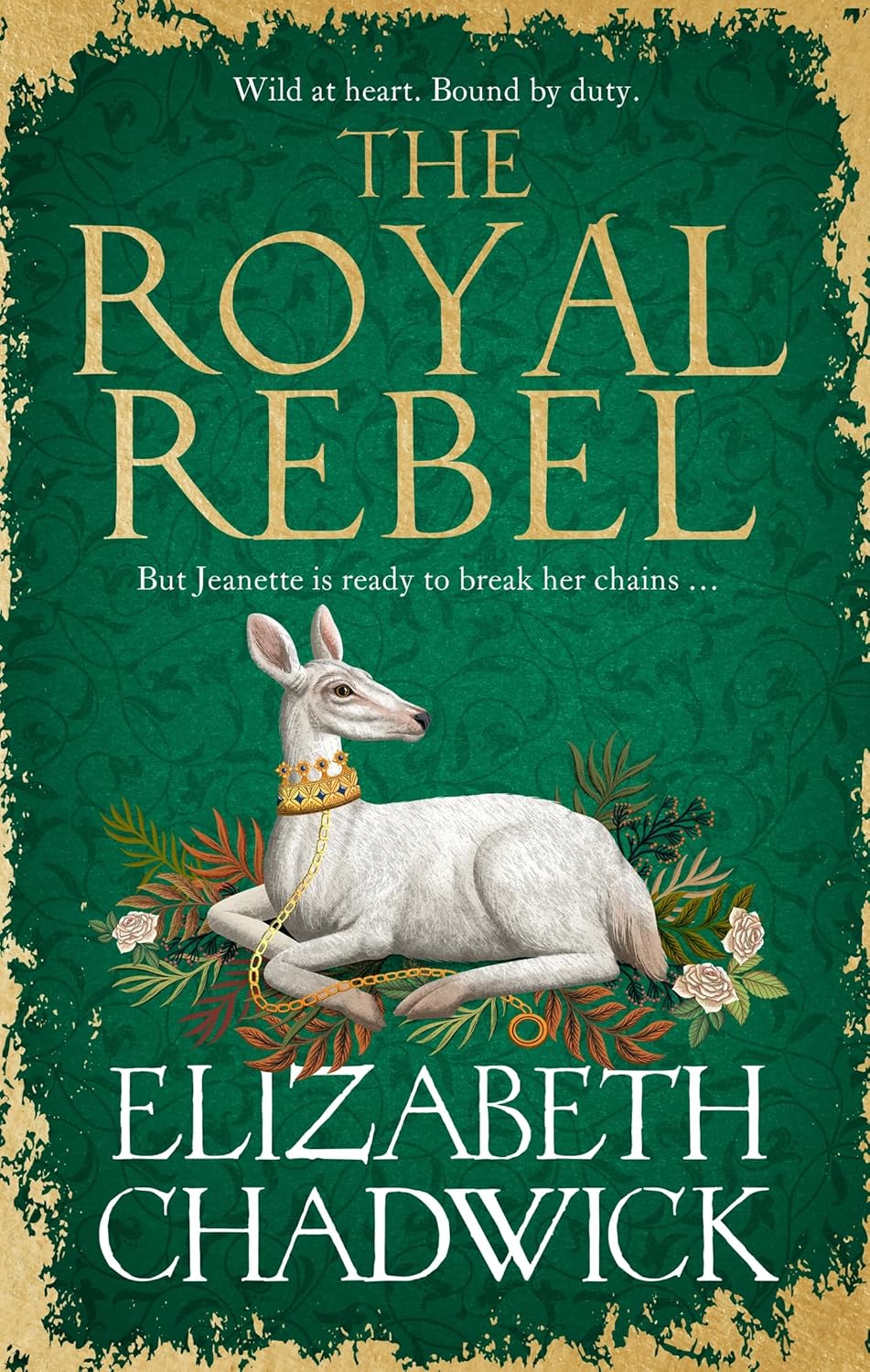

Book Corner: Sword of the Saxons by Steven A. McKay

A war to shape the future of a nation.

Betrayed by his kinsmen, his forces overrun by Danes, King Alfred of Wessex has retreated deep into the marshes of his homeland, lying in wait for his chance at redemption.

The scourge of the heathen horde that has ravaged the kingdom for decades is at its peak. Led by the fearsome Viking warlord Guthrum, the fate of the men, women, and children at their mercy appears all but sealed. But underestimate the great king at your peril…

Gathering allies and bannermen to his cause, and building a strategy that will hopefully ensure victory, Alfred sets out to undermine the strength of the complacent invaders, and establish Wessex as the greatest territory in the British Isles.

A final showdown awaits. Not only with Guthrum and his savage warriors, but with destiny. As the battle lines are drawn, the destiny of not just Wessex, but of every Anglo-Saxon in Britain, rests firmly on Alfred’s shoulders.

An utterly ferocious and gripping adventure, covering the fascinating middle years of Alfred the Great’s reign, one of Britain’s most influential monarchs.

War is coming!

At last! the second book in Steven A McKay’s new Alfred the Great series has arrived. To be fair to Steven, we haven’t had long to wait, even though it felt like an age. The problem was, we left King Alfred at the end of The Heathen Horde, rather down on his luck and looking like things could only get even worse. So it has been agony, waiting for Sword of the Saxons, to see how Steven would get Alfred out of it. We all know the history, Alfred is defeated and seeks shelter in the marshes of Athelney, burns some cakes in order to learn patience and then comes back with a vengeance. So we did know that Alfred’s defeat was not the end of the matter. However, when you get caught up in the story, you need more!

And leaving Alfred, defeated and a fugitive, was a difficult pill to swallow.

King Alfred is the hero who fought to defeat the Danish and Norse invaders – collectively known as the Vikings by many – and unite the disparate kingdoms of England under one king. The kingdom of England would not come to pass in his lifetime, but he started the fight that would be continued by his son and daughter – Edward the Elder and Æthelflæd, Lady of the Mercians – and completed by his grandson, Athelstan, the first King of England.

Sword of the Saxons picks up where The Heathen Horde left off and takes us on Alfred’s journey to not only survive in the marshes, but rebuild his army, renew alliances and begin the fight back. In Sword of the Saxons, King Alfred becomes the leader that England needed, and demonstrates the abilities, both martial and political, that justify his epithet of ‘the Great’.

‘I can almost – almost! – understand Ealdorman Wealdmar giving in to the Danes without a fight,’ Wulfric said to Alfred as they rode towards the little coastal village of Bryn on the outskirts of the Somerset marshes. ‘But his son, Diuma? Refusing to let us into the town when he knew the Danes were hunting us? Gods, I was starting to like the an, and I believed he was a fiercely loyal thane to you, my lord.’

Alfred cleared his throat and spat into the bushes on the side of the road, disgust twisting his features at the memory of the night Wulfric was referring to. ‘So did I,’ he growled. ‘But it seems Diuma was only ever loyal to himself.’ He shook his head and made a cutting motion with his hand. ‘I might possibly be able to forgive some of the men who’ve betrayed me, like Ealdorman Wulfhere. Perhaps they felt like they had no choice. But Diuma? I treated him like a friend. And Brycgstow? That was far enough away from any of Guthrum’s forces to be a target for them! No, Diuma has no excuse for what he’s done. I hope the sea-wolves bleed him and his father dry, and then, eventually, I’ll come face to face with them and hear their excuses before…’ He trailed off, jaw clenched, knuckles white as he gripped his horse’s reins.

There were only two other men with them that morning, for they were merely riding to collect a few supplies but, more importantly, to make sure the good people of Bryn knew that Alfred was still very much alive and hadn’t abandoned his kingdom despite Guthrum’s invasion. The king believed it did the people good to see him in person, rather than his hearth-warriors simply carrying word of his survival to the towns and villages located around Athelney’s marshes. He was a man, after all, not a myth.

‘When are we going to send out word to gather the fyrd, lord?’ The question came from one of the other riders who’d accompanied them, a small but sturdily built warrior called Dunstan. He’d been thane of a village in the north of Wessex which had been utterly destroyed six years earlier, by a party of Northmen led by Jarl Ubba. After that, Dunstan pledged himself to Alfred and now served as one of his fiercest hearth-warriors.

The fourth man in the small group was the sentry from the previous night, Aedan, and he too looked with interest at Alfred, wondering what his reply would be to Dunstan’s question.

The king shook his head slowly. ‘In truth, I don’t know,’ he admitted. ‘I’d like to make sure we have the support of as many people as possible in these nearby settlements. We need to know we can call upon a decent sized fyrd from the lands around Athelney before we look at enlisting people in towns further away.’ He noticed Dunstan and Aedan sharing uncertain glances. ‘I know you two are desperate to take the fight to Guthrum, but we can’t afford to act rashly. First, we build our foundation here in Sumosaete, and then we move on from there.’

With The Heathen Horde, it took me a few chapters to get into the story, to stop comparing Steven A. McKay’s version of King Alfred with the Alfred of Bernard Cornwell – and it took me a while to stop expected Uhtred of Bebbanburg to turn up and save the day, but in Sword of the Saxons Steven has made King Alfred his own. He portrays the great battles his way, has created a hero in Alfred that the reader can get behind wholeheartedly. He is much more likeable than Bernard Cornwell’s King Alfred! Less judgmental…

Alongside Alfred the Great and his family, Steven A. McKay has created a wealth of characters with varying degrees of loyalty to the king. All must be moulded together to fight Guthrum and his men. I have to admit, I love the portrayal of Æthelflæd, Alfred’s oldest daughter and soon to be the Lady of the Mercians. She is a young woman who knows her duty – but also knows her worth and her abilities. She is very much the Æthelflæd I imagine.

Sword of the Saxons is the beginning of the fight back against the invaders. It shows King Alfred coming into his own, becoming the great leader who we know today. He has setbacks, he has doubts, and he has to overcome illness. But this is the Alfred who will lead the reconquest of England that will be completed by his grandson. Steven A. Mckay achieves a wonderful balance, between telling the personal stories of his characters and presenting the great history that they are living through.

It is a gripping read. The fast-paced story leaves the reader breathless – and reading into the early hours! I have no hesitation in recommending Sword of the Saxons to anyone and everyone. Read it! you will not be disappointed.

Buy Sword of the Saxons

About the author:

Steven A. McKay was born in Scotland in 1977 and always enjoyed studying history. He decided to write his Forest Lord novels after seeing a house called “Sherwood” when he was out at work one day. Since then he’s started a new series, the Warrior Druid of Britain Chronicles. In 2021 the Xbox game HOOD: Outlaws and Legends was released, featuring his writing, which Steven says was just a fantastic experience. Steven used to be in a heavy metal band although he tends to just play guitar in his study these days. He did use those guitars to write the theme song for the podcast he co-host, Rock, Paper, Swords! with Matthew Harffy, though.

*

My Books

Signed, dedicated copies of all my books are available through my online bookshop.

OUT NOW! Heroines of the Tudor World

Heroines of the Tudor World tells the stories of the most remarkable women from European history in the time of the Tudor dynasty, 1485-1603. These are the women who ruled, the women who founded dynasties, the women who fought for religious freedom, their families and love. These are the women who made a difference, who influenced countries, kings and the Reformation. In the era dominated by the Renaissance and Reformation, Heroines of the Tudor World examines the threats and challenges faced by the women of the era, and how they overcame them. From writers to regents, from nuns to queens, Heroines of the Tudor World shines the spotlight on the women helped to shape Early Modern Europe.

Heroines of the Tudor World is now available for pre-order from Amberley Publishing and Amazon UK.

Also by Sharon Bennett Connolly:

Women of the Anarchy demonstrates how Empress Matilda and Matilda of Boulogne, unable to wield a sword themselves, were prime movers in this time of conflict and lawlessness. It shows how their strengths, weaknesses, and personal ambitions swung the fortunes of war one way – and then the other. Available from Bookshop.orgAmberley Publishing and Amazon UKKing John’s Right-Hand Lady: The Story of Nicholaa de la Haye is the story of a truly remarkable lady, the hereditary constable of Lincoln Castle and the first woman in England to be appointed sheriff in her own right. Available from all good bookshops Pen & Sword Booksbookshop.org and AmazonDefenders of the Norman Crown: The Rise and Fall of the Warenne Earls of Surrey tells the fascinating story of the Warenne dynasty, from its origins in Normandy, through the Conquest, Magna Carta, the wars and marriages that led to its ultimate demise in the reign of Edward III. Available from Pen & Sword BooksAmazon in the UK and US, and Bookshop.org

Ladies of Magna Carta: Women of Influence in Thirteenth Century England looks into the relationships of the various noble families of the 13th century, and how they were affected by the Barons’ Wars, Magna Carta and its aftermath; the bonds that were formed and those that were broken. It is now available in paperback and hardback from Pen & Sword,  Amazon, and Bookshop.orgHeroines of the Medieval World tells the stories of some of the most remarkable women from Medieval history, from Eleanor of Aquitaine to Julian of Norwich. Available now from Amberley Publishing and Amazon, and Bookshop.orgSilk and the Sword: The Women of the Norman Conquest traces the fortunes of the women who had a significant role to play in the momentous events of 1066. Available now from Amazon,  Amberley Publishing, and Bookshop.org.

Alternate Endings: An anthology of historical fiction short stories including Long Live the King… which is my take what might have happened had King John not died in October 1216. Available in paperback and kindle from Amazon.

Podcast:

Have a listen to the A Slice of Medieval podcast, which I co-host with Historical fiction novelist Derek Birks. Derek and I welcome guests, such as Bernard Cornwell and discuss a wide range of topics in medieval history, from significant events to the personalities involved. There’s even an episode on Robin Hood from Steven A. McKay. There are now over 40 episodes to listen to!

*

Don’t forget! Signed and dedicated copies of all my books are available through my online bookshop.

For forthcoming online and in-person talks, please check out my Events Page.

You can be the first to read new articles by clicking the ‘Follow’ button, liking our Facebook page or joining me on Twitter and Instagram.

©2024 Sharon Bennett Connolly FRHistS

Diane de Poitiers: Maitresse en Titre

Diane de Poitiers by Jean Clouet

Born in 1499, Diane de Poitiers was the widow of Louis de Brézé, Grand-Sénéschal of Normandy, 39 years her senior and a grandson of King Charles VII by his mistress, Agnes Sorèl; he was also reputedly the ugliest man in France. Diane de Poitiers had joined the court at the age of 14 and had married to Louis de Brézé, a rich and powerful widower, the following year. An attractive young woman, Diane had a natural elegance and was careful of her looks. She never used make-up to enhance her appearance, using only cold water on her face and body; she went to bed early and took regular outdoor exercise, avoiding excesses of any sort. When she came to court, Diane was a lady-in-waiting to Queen Claude of France. When Claude died, she served Francis I’s mother, Louise de Savoie and the Queen Eleanor of Austria, King Francis’ second wife. Widowed in 1531, Diane wore black and white – the colour of mourning – for the rest of her life, and she retained control of her husband’s finances, the king allowing her to manage all her inherited estates without the supervision of a male guardian or relative, thus allowing Diane to be financially independent.

The younger son of Francis I and Queen Claude, Henri had spent 4 years in captivity in Spain from the age of 7. Following Francis I’s defeat at the Battle of Pavia in 1525, in order to obtain his own freedom, the French king had agreed to give up his 2 sons, Henri and his older brother, Francis, as hostages and had them despatched to captivity in Madrid. It was, perhaps, not surprising that Henri had returned from his four years in Spain at the age of eleven ‘an unpolished and silent boy.’1 The king asked Diane de Poitiers to become his son’s tutor. She and the prince developed a strong bond which would eventually develop into a romantic relationship, despite the fact she was 19 years older than Henri.

In 1533, Henri was married to Catherine de Medici and a year later, Diane became one of his mistresses. And in 1536, at the age of 18, Henri’s older brother, Francis, died suddenly, making the young prince dauphin of France. Two years later, Henri fathered a daughter on another mistress, Filipa Duci, who was the sister of one of his Piedmontese grooms. The baby girl was named Diane de France, in tribute to Henri’s favourite mistress. With his marriage to Catherine de Medici still childless, the birth of an illegitimate daughter was proof, as far as Henri was concerned, that the fault did not lay with him. It was, however, a humiliation for Catherine.

Henri II, King of France

Once Henri became dauphin, the apparent barrenness of the prince and his wife became a serious concern. Talk at court began to centre around the possible repudiation of Catherine. Diane and Catherine, mistress and wife, formed a truce in order to ward off any attempts to force Henri and Catherine to divorce; concerned that Catherine was failing in her duty to produce an heir and that, although Henri liked Catherine well enough, he was not passionate with her. Aware that her own position would be threatened by the arrival of a new bride for Henri, Diane determined to help Catherine. To resolve the situation, Diane offered the dauphine advice on Henri’s preferred sexual positions and how to arouse the prince’s passion. Awkward! When this did not work, Catherine had spy holes made in her chamber floor so that she could watch Henri, in the chamber below, with Diane. Historian Estelle Paranque explains that; ‘the sight of their intimate encounter only succeeded in deeply hurting the dauphine, however, who realised that Henri did not perform the sexual act the same way with her as he did with his mistress.’2

Diane continued to offer advice to Catherine, before eventually offering to stimulate the prince before sending him to his wife’s bedchamber. However awkward this must have been for both women, it apparently worked, with Catherine herself admitting to Henri showing more passion in their lovemaking. And by June 1543, Catherine was pregnant. A baby boy arrived on 19 January 1544, named Francis after his grandfather. And a year later, a baby girl named Elisabeth joined the little prince in the nursery. Catherine was finally able to feel safe from being discarded and abandoned. Ten children eventually filled the royal nursery, seven of whom reached adulthood.

In the autumn of 1544, probably somewhat to Catherine’s satisfaction, King Francis’ mistress, the duchesse d’Étampes, with whom Diane had a bitter rivalry, succeeded in arranging her banishment from court, after Henri had replaced one of the duchess’s protégés while campaigning against the English in Picardy. Diane retreated to her château at Anet, closely followed by a sulking Henri. She received permission to return to court the following year.

Catherine de Medicis, Queen of France

In spite of this, Catherine would remain in the shadow of Henri and Diane’s love throughout their marriage, with Henri continuing to shower his favourite mistress with patronage. He even had a monogram designed, interlacing the H and D of their names, and placed them everywhere he could. King Francis I died in 1547, and Henri was now King Henri II of France. But, while Catherine was now queen of France, she wielded little political influence and it was Diane’s star that rose still higher. She was made maitresse en titre and a permanent member of Henri’s privy council. She was showered with jewels and offices, as well as estates and other honours. The Venetian ambassador, Marino Cavalli noted Diane’s influence over the new king, stating that ‘this lady has made sure to indoctrinate, to correct, and counsel’ Henri.3 Wherever the king and queen were found, so too was Diane de Poitiers, walking right behind Catherine. In Paris, Diane was named in the same rank as the princesses of France, while in Rouen the aldermen brought her jewels and gifts made of gold and laid them at her feet. King Henri gave her the royal Château of Chenonceau, despite the protestations of Catherine, who thought it should be hers. Henri ignored Catherine’s pleas. Yet another slight the young queen had to endure due to her husband’s infatuation with Diane de Poitiers.

And it was to Diane that the responsibility of impressing foreign ambassadors fell. In 1550 the English ambassador, William Pickering, was staying at the French court, at that time at Diane’s Château of Anet. After his audience with the king, Diane entertained the ambassador, showing him the magnificence of her château. And in 1552, Venetian ambassador Lorenzo Contarini remarked on Diane’s influence at court; ‘she knows about everything and every single day, after dinner, the king looks for her and spends an hour and a half with her to discuss everything that has happened.’4 At tournaments, it was Diane’s colours that the king displayed, not those of his queen. Created Duchess of Valentinois by Henri II, she was, quite literally, the love of his life. Although the king never had children with his maitresse en titre, he did have children with other mistresses and, of course, his wife.

As Henri’s reign progressed, he began to show greater confidence in his queen, but Diane still managed to thwart the Catherine achieving significant power. In 1548 and in 1552, when Henri was out of the country on campaign, he entrusted Catherine with the regency of France. However, in 1548 Diane managed to persuade Henri to appoint Anne de Montmorency (a man) as co-regent and in 1552, she had Chancellor Bertrandi named as co-regent, effectively forcing Catherine to answer to him.

Château of Chenonceau, France

Catherine would, eventually get the upper hand.

The rivalry between Catherine de Medici and Diane de Poitiers would come to an abrupt end in the summer of 1559. In the March of that year, Henri had turned 40. He had spent the last 26 years of his life married to Catherine de Medici; for 25 of those years, he had been in love with Diane de Poitiers. On 22 June, Catherine and Henri’s daughter, Elisabeth, was married to Philip II, King of Spain, by proxy in Notre Dame Cathedral in Paris. The wedding was followed by a series of celebratory tournaments. In 1552, Catherine had been warned by Simeoni, the famous astrologer, that Henri would die in a duel in his 40th year, and that the wound would first blind him. This knowledge made a superstitious Catherine quite anxious as the jousts started. However, the king was always eager to impress his mistress with his prowess in the lists, wearing her colours of black and white. The king performed admirably against his first opponent, winning when he hit his brother-in-law, the duke of Savoy, in the chest and unhorsed him. The second bout was a draw, and it was after this that Catherine asked him to retire, but Diane de Poitiers encouraged the king to continue and in the next joust, though unhurt, Henri fell off his horse. The king insisted on going again, against the same opponent, Gabriel de Montgomery, and it was at this moment that King Henri II’s luck ran out.

Montgomery’s lance struck the king’s helmet, a fragment of the splintered lance having pierced Henri’s eye. Henri had fallen from his horse, and as his squires removed his helmet they revealed a face covered in blood. The mortally wounded king was carried to his chambers and placed in his bed, joined by Diane and Catherine, one at either side, both sobbing. Catherine called the renowned surgeon Ambroise Paré to attend the king, but after practicing the required surgery on executed prisoners, Paré had to tell the queen that the king could not be saved. Henri II lingered for 10 days, in agonising pain, before dying on 10 July 1559. He had been attended throughout by his queen. Henri is said to have called out for Diane, but she was not allowed to see him, nor attend the funeral. Diane was banished from court. Her influence ended with the king’s death and power now rested firmly in the hands of Queen Catherine, mother and regent to the new king, Francis II.

Diane’s tomb in the chapel at the Château d’Anet

On hearing of Henri’s death, Diane wrote to Catherine asking for ‘pardon for my past offences against your person’ and signing the letter ‘your most obedient and loyal subject.’5 Diane sent back some crown jewels, items that had been gifted to her by Henri, in the hope that the queen would be compassionate. Diane de Poitiers knew that without the king’s protection, she was vulnerable to Catherine’s malice. The queen was not spiteful, however, and allowed Diane to keep all that she had acquired in her years at court. Except for the Château of Chenonceau. Diane retreated to her château at Anet, where she had once entertained ambassadors and lived there, a virtual exile. She would die there in 1566, following a fall from her horse the year before. For a quarter of a century, Diane de Poitiers had enjoyed more influence as the king’s mistress than any other woman in France, including the queen. Henri II had showered affection, riches and power on the woman  who had held his heart, choosing to ignore the humiliations that he was heaping upon his wife.

The scandalous ménage-a-trois only ended with the king’s death.

*

Images:

Courtesy of Wikipedia

Notes:

1. Leonie Frieda, Catherine de Medici; 2. Estelle Paranque, Blood, Fire & Gold; 3. ibid; 4. ibid; 5. ibid

Select Bibliography:

Leonie Frieda, Catherine de Medici: A Biography; Estelle Paranque, Blood, Fire & Gold: The Story of Elizabeth I and Catherine de Medici; Jill Armitage, Four Queens and a Countess: Mary Queen of Scots, Elizabeth I, Mary I, Lady Jane Grey and Bess of Hardwick; Amy Licence, In Bed with the Tudors; Amy Licence, The Sixteenth Century in 100 Women; Erin Lawless, Forgotten Royal Women: The King and I; Estelle Paranque, ‘The French Royal Mistresses who made it about more than sex’, historyextra.com; Susan Abernethy, ‘Claude de Valois, Queen of France,’ thefreelancehistorywriter.com; ‘Queen Claude of France’ Royal Armouries.org; Sylvia Barbara Soberton, ‘Claude de France: Anne Boleyn’s Mistress,’ onthetudortrail.com; Goldstone, Nancy, The Rival Queens: Catherine de Medici, Her Daughter Marguerite de Valois and the Betrayal that Ignited a Kingdom

*

My Books

Signed, dedicated copies of all my books are available through my online bookshop.

OUT NOW! Heroines of the Tudor World

Heroines of the Tudor World tells the stories of the most remarkable women from European history in the time of the Tudor dynasty, 1485-1603. These are the women who ruled, the women who founded dynasties, the women who fought for religious freedom, their families and love. These are the women who made a difference, who influenced countries, kings and the Reformation. In the era dominated by the Renaissance and Reformation, Heroines of the Tudor World examines the threats and challenges faced by the women of the era, and how they overcame them. From writers to regents, from nuns to queens, Heroines of the Tudor World shines the spotlight on the women helped to shape Early Modern Europe.

Heroines of the Tudor World is now available for pre-order from Amberley Publishing and Amazon UK.

Also by Sharon Bennett Connolly:

Women of the Anarchy demonstrates how Empress Matilda and Matilda of Boulogne, unable to wield a sword themselves, were prime movers in this time of conflict and lawlessness. It shows how their strengths, weaknesses, and personal ambitions swung the fortunes of war one way – and then the other. Available from Bookshop.orgAmberley Publishing and Amazon UKKing John’s Right-Hand Lady: The Story of Nicholaa de la Haye is the story of a truly remarkable lady, the hereditary constable of Lincoln Castle and the first woman in England to be appointed sheriff in her own right. Available from all good bookshops Pen & Sword Booksbookshop.org and AmazonDefenders of the Norman Crown: The Rise and Fall of the Warenne Earls of Surrey tells the fascinating story of the Warenne dynasty, from its origins in Normandy, through the Conquest, Magna Carta, the wars and marriages that led to its ultimate demise in the reign of Edward III. Available from Pen & Sword BooksAmazon in the UK and US, and Bookshop.org

Ladies of Magna Carta: Women of Influence in Thirteenth Century England looks into the relationships of the various noble families of the 13th century, and how they were affected by the Barons’ Wars, Magna Carta and its aftermath; the bonds that were formed and those that were broken. It is now available in paperback and hardback from Pen & Sword,  Amazon, and Bookshop.orgHeroines of the Medieval World tells the stories of some of the most remarkable women from Medieval history, from Eleanor of Aquitaine to Julian of Norwich. Available now from Amberley Publishing and Amazon, and Bookshop.orgSilk and the Sword: The Women of the Norman Conquest traces the fortunes of the women who had a significant role to play in the momentous events of 1066. Available now from Amazon,  Amberley Publishing, and Bookshop.org.

Alternate Endings: An anthology of historical fiction short stories including Long Live the King… which is my take what might have happened had King John not died in October 1216. Available in paperback and kindle from Amazon.

Podcast:

Have a listen to the A Slice of Medieval podcast, which I co-host with Historical fiction novelist Derek Birks. Derek and I welcome guests, such as Bernard Cornwell and discuss a wide range of topics in medieval history, from significant events to the personalities involved. There are now over 40 episodes to listen to!

*

Don’t forget! Signed and dedicated copies of all my books are available through my online bookshop.

For forthcoming online and in-person talks, please check out my Events Page.

You can be the first to read new articles by clicking the ‘Follow’ button, liking our Facebook page or joining me on Twitter and Instagram.

©2024 Sharon Bennett Connolly FRHistS
    Guest post: All the Queen’s Men by Carol Ann Lloyd

    Today, it is a pleasure to welcome my dear friend, Carol Ann Lloyd, to History… the Interesting Bits, with an article on the love life of Queen Elizabeth I. Carol Ann’s new book Courting the Virgin Queen: Queen Elizabeth I and Her Suitors is due to be released on 30 July by Pen and Sword. If it is anything like her first book, The Tudors By Numbers: The Stories and Statistics Behind England’s Most Infamous Royal Dynasty, it will be a fabulous read!

    “All the Queen’s Men: The Courtships of the Virgin Queen”

    Carol Ann Lloyd

    Elizabeth I, aged 14

    It’s ironic that the child of the most-married English monarch ever is the only English monarch to rule as an adult and never marry! Elizabeth I, daughter of the famous (infamous?) Henry VIII never married. But it was not for lack of options.

    The big question is “Why?” Did Elizabeth really want to marry anyone? What kept her from marrying? Did she ever intend to marry, or was she just keeping all her options open as she navigated the perilous landscape of European politics on her own?

    I think there are many ways on answering this question. Let’s start at the beginning of her reign. Elizabeth was the least likely of Henry VIII’s children to come to the throne, and when she did everyone had the same question on their mind. As the Spanish Ambassador, the Count of Feria, reflected in the early days of the reign, “The more I think over this business the more certain I am that everything depends upon the husband this woman may take.” Elizabeth was questioned about her choice of husband by her council, ambassadors, and parliament. It was considered a public not a private matter, and the queen was repeatedly encouraged and counseled to get married and produce an heir for the good of the kingdom.

    So, if everything depended on the husband her would take, what realistically were her options?

    Some people might be surprised to learn that one of her first suitors was the husband of her recently deceased sister. Philip of Spain had been married to Mary I until her death, and the couple had no children. Still committed to bringing England back into the Catholic fold, Philip believed he could marry and control Elizabeth. I was surprised as I read his correspondence how convinced Philip was that Elizabeth was desperate for a husband and eager for his offer. Many Catholics never accepted the validity of the marriage between Henry VIII and Anne Boleyn, so Elizabeth’s hold on the throne was possibly tenuous. Philip believed he was the answer to Elizabeth’s problem. He thought she would jump at the chance.

    Robert Dudley, Earl of Leicester

    Philip could not have been more wrong. Elizabeth knew very well that Philip would seek to involve England in Spain’s wars, as he had during Mary I’s reign. Using her skills in language, Elizabeth dallied with Feria and postponed giving a firm answer until it suited her. That answer was a definite “no.”

    The offer from Philip was only the beginning. I discovered in my research that Elizabeth used the many marriage possibilities as a way of strengthening her position with the international community. She managed to keep several foreign leaders eager for an alliance with England and a marriage with her. Over the years, the king of Sweden, European dukes and archdukes, and even all three of Catherine de Medici’s sons in France were offered as possible husband. And that doesn’t take into account the Scottish and English nobles who wanted to marry the queen.

    Speaking of men in England, was it really Robert Dudley who kept Elizabeth from marrying? He most likely was the love of her life, perhaps the only man she might have married if she had not been the queen. He was at the center of her life, from the day she learned Mary I had died, and she was queen. He became Elizabeth’s Master of the Horse, which meant he was always with her when she went riding, one of her favorite activities. And he was the only man in the kingdom with permission to touch the queen as he helped her onto and off horse.

    Queen Elizabeth I

    Even with Dudley’s favored position, there were a few problems in the way. For one thing, he was married. And then his wife died in very suspicious circumstances, making a future marriage potentially devastating for Elizabeth’s reputation. Dudley was unpopular among the council. And ultimately, I believe Elizabeth meant what she is reported to have shouted at him in anger: “I will have but one mistress here and no master.”

    So, did everything depend upon the husband Elizabeth took? Yes, it turns out it did. I realized through the research that the one suitor that Elizabeth courted throughout her reign was the husband she had declared herself wed to when she became queen: her country and her people. Early in her reign, Elizabeth had responded to parliament’s request that she marry by responding that she was “already bound unto a husband which is the kingdom of England.” From the time she became queen, Elizabeth wooed her nation and her people, seeking their approval, favor, and love. That was the husband she took, and it meant everything to her.

    About the book:

    The many courtships of the woman who became Elizabeth I began when she was an infant, displayed before foreign ambassadors who considered her as a possible clause of a contract between England and France. From such an unromantic beginning, Elizabeth grew to see her father marry multiple times and experienced frequent changes in stepmothers and status in the family. Eventually, she became the most eligible woman in Europe. From start to finish, her marriage prospects were as much political as they were personal.

    When she came to the throne in 1558, the primary question facing everyone from foreign monarchs to English nobles and ministers was which of her many suitors would finally win her hand. Through the longest Tudor reign, Elizabeth used courtship as a tool to consider foreign alliances, hold ambitious English courtiers in check, and navigate her role as a woman ruler in a world that considered her unnatural without a man at her side.

    Elizabeth was, in fact, always the ‘Virgin Queen’, from the early days as a twenty-five-year-old presenting herself as a potential royal bride to her final years as an ageing and unmarried woman who was destined to end the Tudor dynasty. Ultimately, she became the only monarch in England to rule as an adult and never marry. Through it all, as friends and potential lovers faded away, she clung to the one true love of her life: England.

    Courting the Virgin Queen: Queen Elizabeth I and Her Suitors is available from Pen and Sword and Amazon.

    About the author:

    Carol Ann Lloyd turned an obsession with the Tudors into a speaking and writing career. She shares her love of history with Smithsonian Associates, Royal Oak Foundation, Agecroft Hall, Folger Shakespeare Library and other organizations. She holds degrees in Literature and Education and hosts a popular podcast, _British History: Royals, Rebels, and Romantics_. She also offers workshops about using Shakespeare strategies to improve communication skills and is a member of National Speakers Association.

    *

    My Books

    Signed, dedicated copies of all my books are available through my online bookshop.

    OUT NOW! Heroines of the Tudor World

    Heroines of the Tudor World tells the stories of the most remarkable women from European history in the time of the Tudor dynasty, 1485-1603. These are the women who ruled, the women who founded dynasties, the women who fought for religious freedom, their families and love. These are the women who made a difference, who influenced countries, kings and the Reformation. In the era dominated by the Renaissance and Reformation, Heroines of the Tudor World examines the threats and challenges faced by the women of the era, and how they overcame them. From writers to regents, from nuns to queens, Heroines of the Tudor World shines the spotlight on the women helped to shape Early Modern Europe.

    Heroines of the Tudor World is now available for pre-order from Amberley Publishing and Amazon UK.

    Also by Sharon Bennett Connolly:

    Women of the Anarchy demonstrates how Empress Matilda and Matilda of Boulogne, unable to wield a sword themselves, were prime movers in this time of conflict and lawlessness. It shows how their strengths, weaknesses, and personal ambitions swung the fortunes of war one way – and then the other. Available from Bookshop.orgAmberley Publishing and Amazon UKKing John’s Right-Hand Lady: The Story of Nicholaa de la Haye is the story of a truly remarkable lady, the hereditary constable of Lincoln Castle and the first woman in England to be appointed sheriff in her own right. Available from all good bookshops Pen & Sword Booksbookshop.org and AmazonDefenders of the Norman Crown: The Rise and Fall of the Warenne Earls of Surrey tells the fascinating story of the Warenne dynasty, from its origins in Normandy, through the Conquest, Magna Carta, the wars and marriages that led to its ultimate demise in the reign of Edward III. Available from Pen & Sword BooksAmazon in the UK and US, and Bookshop.org

    Ladies of Magna Carta: Women of Influence in Thirteenth Century England looks into the relationships of the various noble families of the 13th century, and how they were affected by the Barons’ Wars, Magna Carta and its aftermath; the bonds that were formed and those that were broken. It is now available in paperback and hardback from Pen & Sword,  Amazon, and Bookshop.orgHeroines of the Medieval World tells the stories of some of the most remarkable women from Medieval history, from Eleanor of Aquitaine to Julian of Norwich. Available now from Amberley Publishing and Amazon, and Bookshop.orgSilk and the Sword: The Women of the Norman Conquest traces the fortunes of the women who had a significant role to play in the momentous events of 1066. Available now from Amazon,  Amberley Publishing, and Bookshop.org.

    Alternate Endings: An anthology of historical fiction short stories including Long Live the King… which is my take what might have happened had King John not died in October 1216. Available in paperback and kindle from Amazon.

    Podcast:

    Have a listen to the A Slice of Medieval podcast, which I co-host with Historical fiction novelist Derek Birks. Derek and I welcome guests, such as Bernard Cornwell and discuss a wide range of topics in medieval history, from significant events to the personalities involved. There are now over 40 episodes to listen to!

    *

    Don’t forget! Signed and dedicated copies of all my books are available through my online bookshop.

    For forthcoming online and in-person talks, please check out my Events Page.

    You can be the first to read new articles by clicking the ‘Follow’ button, liking our Facebook page or joining me on Twitter and Instagram.

    ©2024 Sharon Bennett Connolly FRHistS