In a special episode of my Wordly Women interview series, Heather R. Darsie drops by on her blog tour celebrating the publication of her new book, Katharine of Aragon, Spanish Princess: ‘I am Not as Simple as I May Seem’. Do have a look at the other stops on the tour to geta taste of this wonderful new biography.
So, Heather, What got you into writing?
Heather: As silly as this sounds, I can’t remember originally. My dad had an electric typewriter that he let me use to write stories beginning when I was probably eight years old. I continued writing stories and poems through high school (14 to 18 years old in the USA), which culminated in a play based off Edgar Allen Poe’s “Annabel Lee” when I was in my final year of high school. My play was called Annalise, wherein the wife was dying of amyotrophic lateral sclerosis of which my paternal grandfather passed away. The husband slowly went mad, to the point where the wife’s had to intervene. The theme of the play was tragedy. My high school put on the play, I was in the local newspaper, and invited to host a workshop at the statewide high school theatre festival.
After graduating from high school, I went to university and majored in German Languages and Literature, then pursued my Juris Doctorate in American Jurisprudence. Along the way, I studied abroad in Costa Rica and France, learning Spanish and French, too. I have had numerous opportunities to travel to France, Spain, Germany, and various countries in Central America, which have all contributed to keeping my language skills sharp.
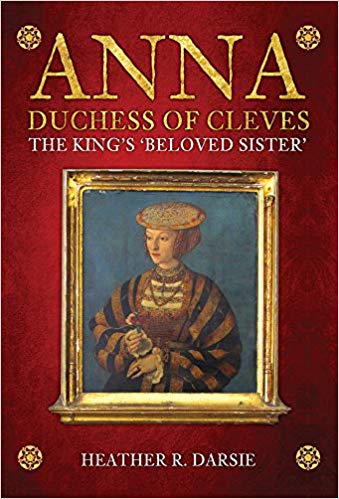
I became heavily interested in Tudor history in around 2010. By early 2015, I grew tired of reading the same-old, same-old about Anna of Cleves, a German woman. I asked Claire Ridgeway of the Anne Boleyn Files if I could contribute a post on Anna to her website, to which Claire kindly agreed. Thereafter encouraged and emboldened, I sent a letter in my very best German to the mayor of the current City of Cleves, and my research took off from there. The combination of a life-long interest in writing, linguistic education, research and analytical skills from my juris doctorate, combined with the history community’s encouragement is how I arrived here, ten years on.
Sharon: Tell us about your books.
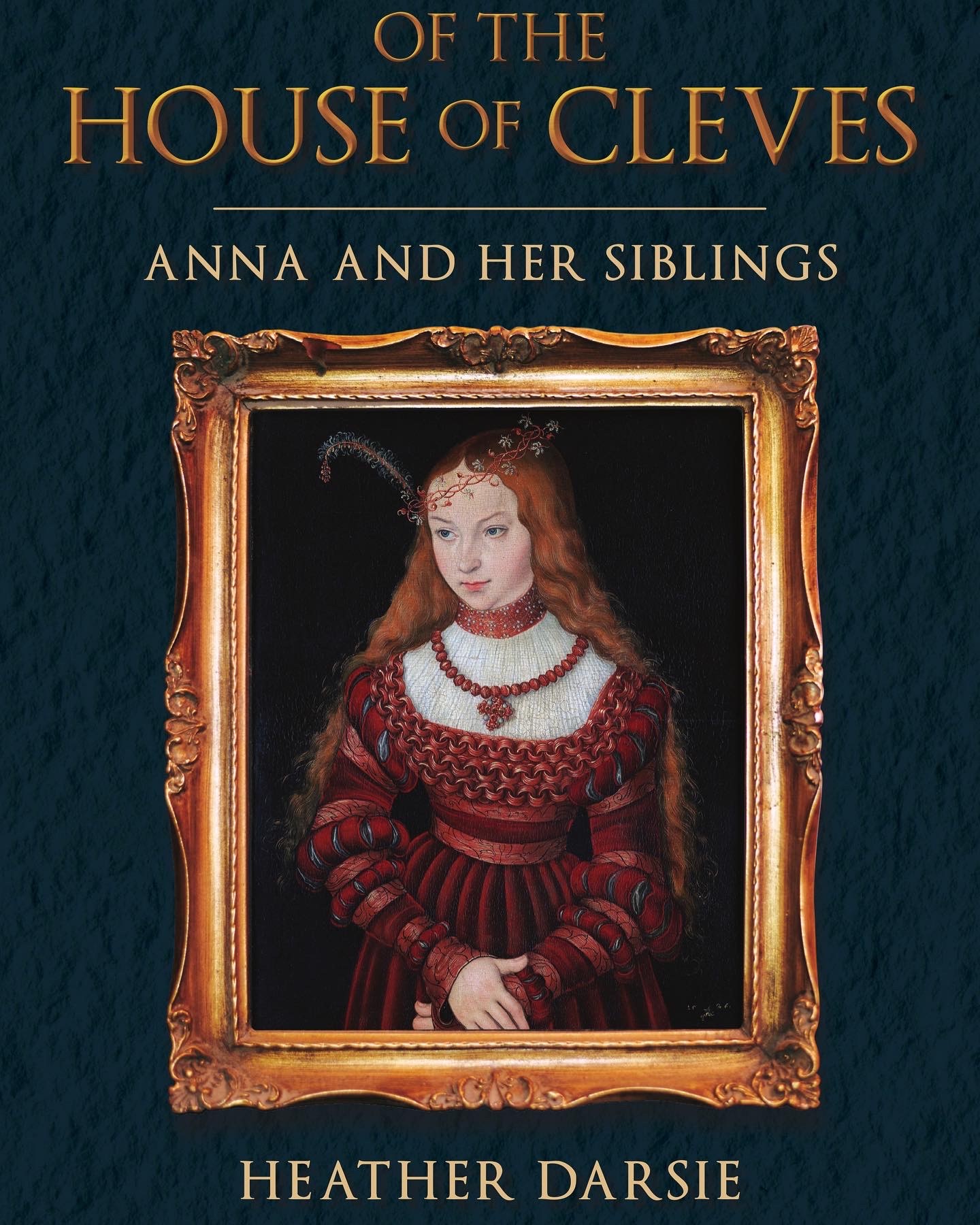
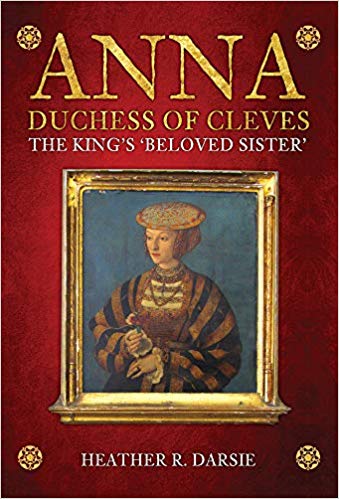
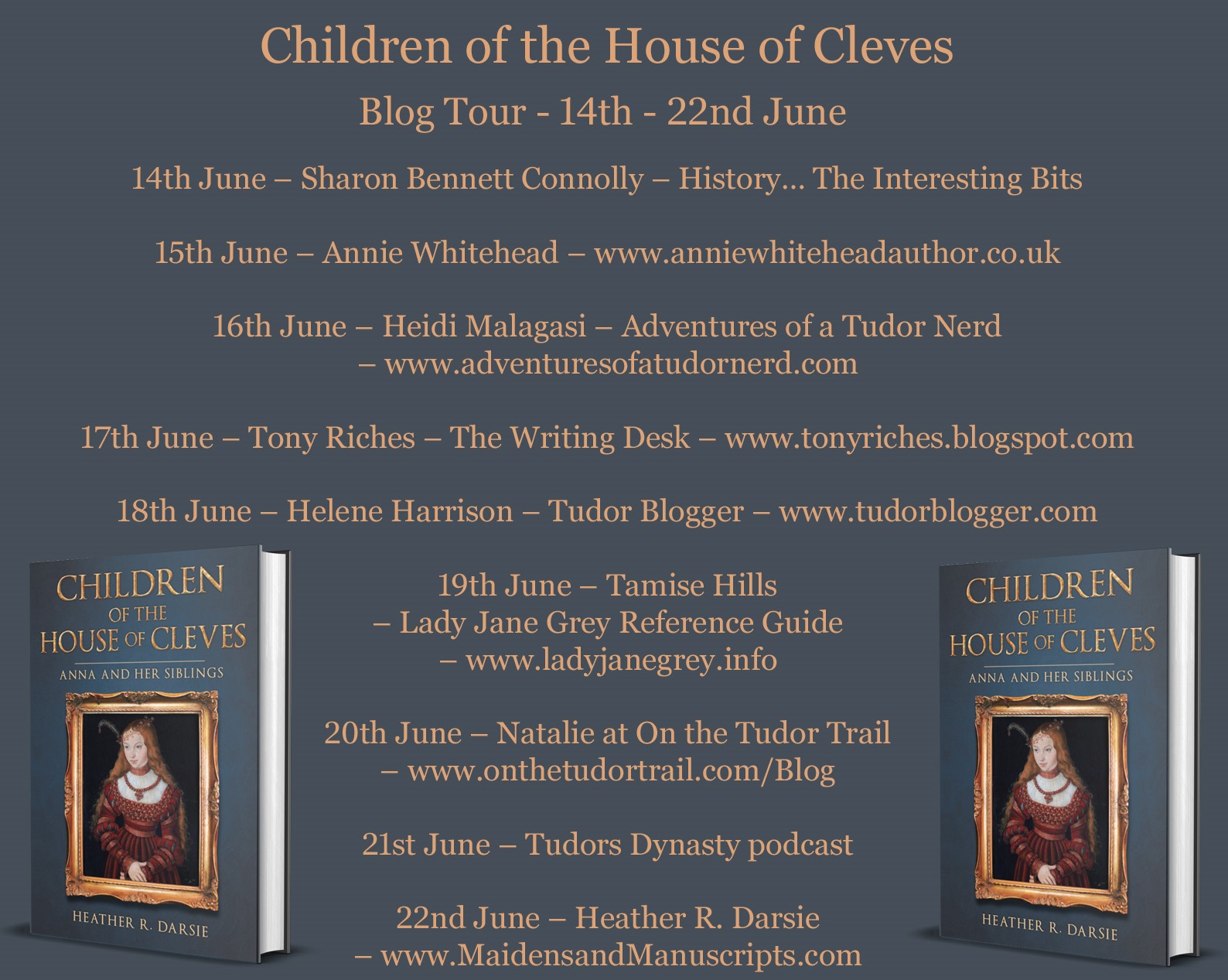
Heather: I view myself as a Tudor-adjacent historian. The persons and events I choose to focus on should be recognizable am most interested in the Holy Roman Empire of the German Nation, which began recognizing itself that way in the early 16th century. Specifically, anyone or anything connected to the von der Marks, which is Anna of Cleves’ family (she was “of Cleves” much like Princess Mary Tudor would be “Mary of England” in another country) or the Habsburgs. My first two nonfiction books, Anna, Duchess of Cleves: The King’s Beloved Sister and Children of the House of Cleves: Anna and Her Siblings are effectively German history books. My third nonfiction book, Stuart Spouses: A Compendium of Consorts from James I of Scotland to Queen Anne of Great Britain looks at just that, the husbands and wives of the Scottish-to-English Stuart dynasty. The dynastic intermingling with continental European families is fascinating. I wrote a novella during the pandemic, Diary of a Plague Doctor’s Wife, set during the last outbreak of the Black Death in 1720s Marseille. The parallels to our own experiences 300 years later with Covid-19 were eerie to me at the time of writing.
Sharon: What attracts you to the Catherine of Aragon?
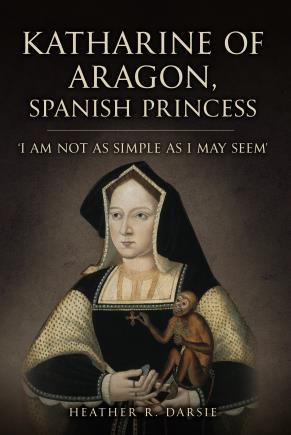
Heather: Like Anna of Cleves, I felt there was more to her than the end of her marriage with Henry VIII. Specifically, I wanted to know more about Katharine’s family dynasty and Katharine’s early time in England, and share that with readers.
Sharon: Who is your favourite Tudor and why?
Heather: For queens, I am drawn to Catherine Parr. She seemed the most savvy when it came to navigating Henry VIII and the dangerous politics of the Tudor court. I am very intrigued by Thomas Cromwell in his position as a lawyer. He was very clever; I hope to write about him someday.
Sharon: Who is your least favourite Tudor and why?
Heather: I do not have a least favorite, but I do think the most tragic was Anne Boleyn, who was foisted by her own petard. I am finding that more and more as I work on my next book, If any Person will Meddle with My Cause: The Judicial Murder of Anne Boleyn.
Sharon: How do you approach researching your topic, especially when most of the sources are Spanish?
Heather: I start with finding articles on JSTOR, then checking the footnotes for sources. From there, I go to Google Play, Archive.org, the Spanish library websites, etc. for old manuscripts. Like many English books, several of the old, out-of-copyright ones are available for free. The Spanish language is not a barrier for me, since I hear or read it most days a week at work.
Sharon: Tell us your ‘favourite’ Catherine of Aragon story you have come across in your research.
Heather: I really enjoyed reading about all of the pageants she viewed during her formal entry into London. It must have been quite the time for her.
Sharon: Tell us your least ‘favourite’ Catherine of Aragon story you have come across in your research.
Heather: Katharine was having a difficult time with Spanish grammar in her letters toward the very late 1520s and early 1530s. This could be indicative of the extreme stress that she was under during that time, or the isolation she was experiencing and being unable to speak Spanish with anyone, or both. I found it tragic and poignant. I don’t believe I remarked on that in my book.
Sharon: Are there any other eras you would like to write about?
Heather: I am interested in doing a little more on the late 16th to early 17th century. Otherwise, I am fairly happy with the time frame that I work in now, but exploring more individuals and courts.
Sharon: What are you working on now?
Heather: I am finishing up the aforementioned book, If any Person will Meddle with My Cause: The Judicial Murder of Anne Boleyn. I am completing an epic as well, which I will self publish likely later this year, that has heavy Greek mythology themes. Our heroes go on a quest to bring back the Olympians and restore justice to the human world. The epic is clocking in at about 3, 600 lines right now. I suppose it makes me a poet along with an author.
Sharon: And finally, what is the best thing about being a writer?
Heather: Sharing knowledge.
About the book:
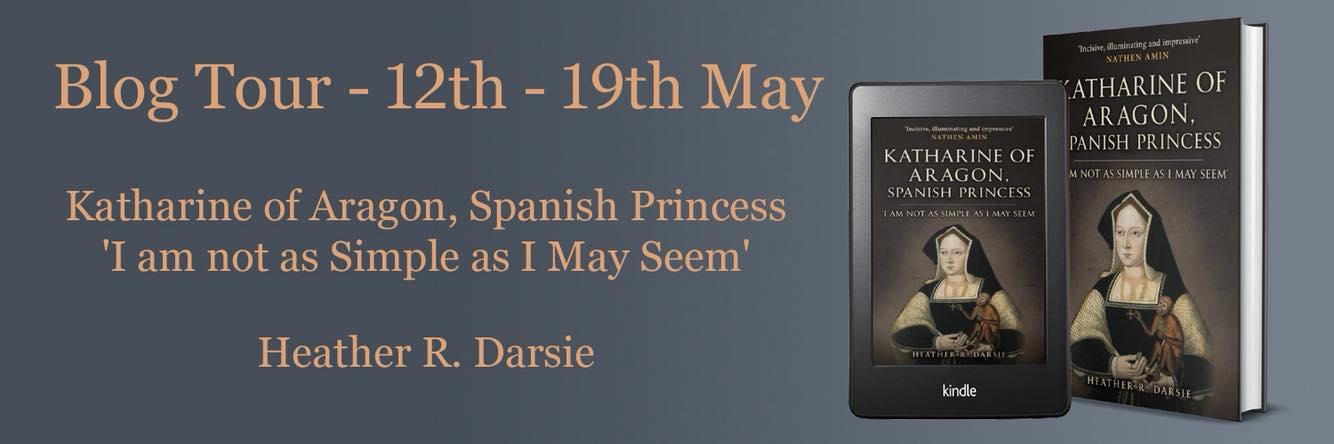
Katharine of Aragon is more in the public consciousness now due to the TV show ‘Spanish Princess’. Katharine has of course been an interesting historical figure for quite some time because she is the first wife of the infamous Henry VIII. This book provides a new perspective on Katharine because it includes far more background on her Spanish upbringing, Spanish culture, and how that continued to define her in England during her first fifteen years in the country. Additionally, Heather uses rich primary sources, such as ‘The Receyt of Ladie Kateryne’, which have either not been sourced or infrequently referred to in other biographies about Katharine. In this, Heather’s multilingual abilities – especially her fluent Spanish – are put to good use. No one, for example, has considered he rippling impact of terminating Katharine’s marriage on the Trastamara and Habsburg dynasties in Europe. Katherine was as important abroad as she was in England.
Buy Katharine of Aragon, Spanish Princess: ‘I am Not as Simple as I May Seem’
About the author:
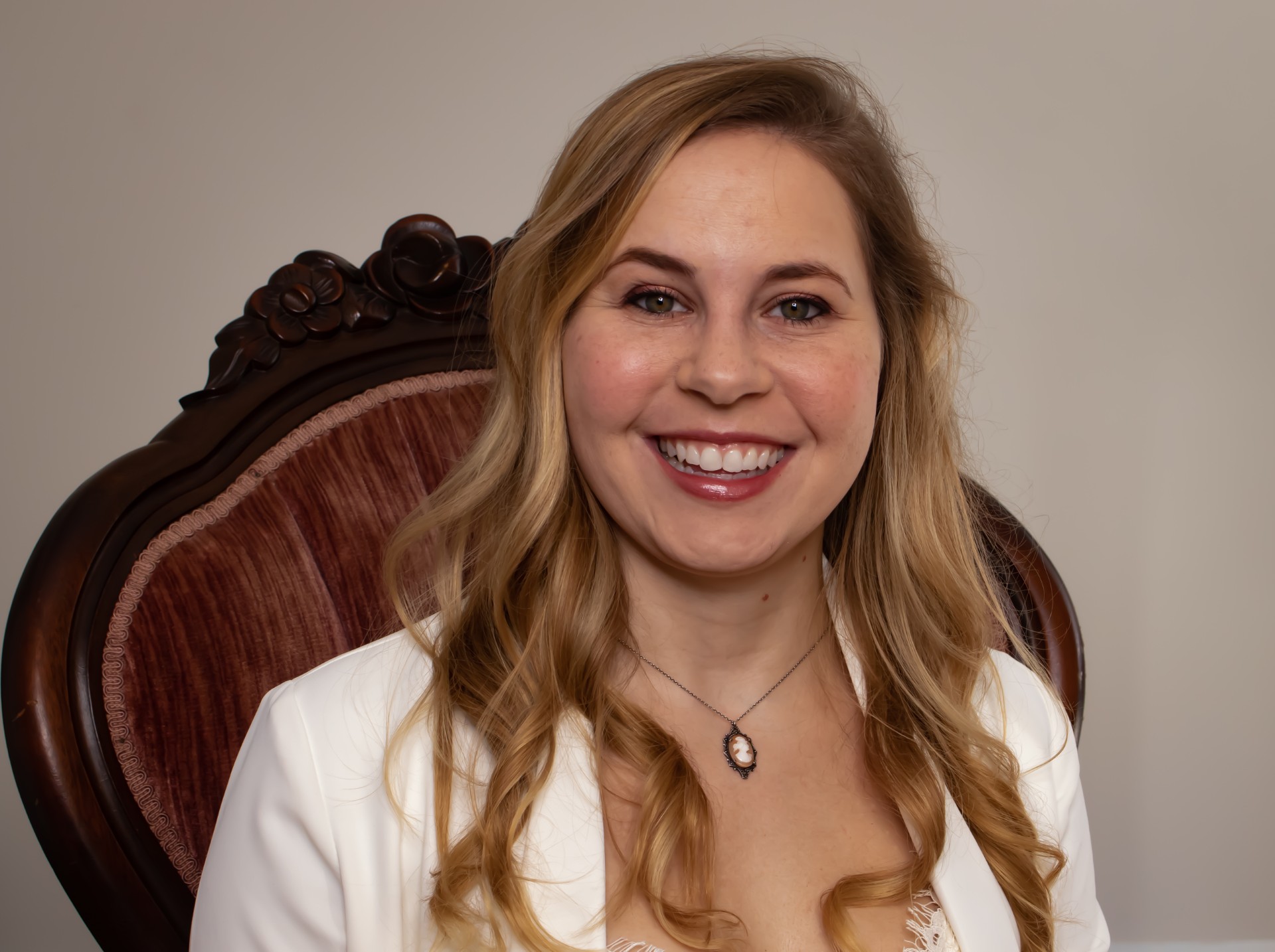
Heather R. Darsie, J. D. is an independent researcher specializing in early modern history. She describes herself as a “Tudor-adjacent” historian, focusing on the Holy Roman Empire and England in the early 16th century. She is the author of four nonfiction books: Anna, Duchess of Cleves: The King’s Beloved Sister, Children of the House of Cleves: Anna and Her Siblings, Stuart Spouses: A Compendium of Consorts from James I of Scotland to Queen Anne of Great Britain, and Katharine of Aragon, Spanish Princess: I am not as Simple as I May Seem. She self-published the novella Diary of a Plague Doctor’s Wife. Her primary career is as an attorney. Heather lives in Illinois with her loving husband, wonderful stepchildren, and three raucous parrots.
Where to find Heather:
Website: MaidensAndManuscripts.com; Instagram: @hdarsiehistory; X: @hrdarsiehistory; Threads: hdarsiehistory; Facebook: Heather R. Darsie, Historian; BlueSky: @hrdarsiehistory.bsky.social
*
My books
Signed, dedicated copies of all my books are available through my online store.
Out now: Scotland’s Medieval Queens

Scotland’s history is dramatic, violent and bloody. Being England’s northern neighbour has never been easy. Scotland’s queens have had to deal with war, murder, imprisonment, political rivalries and open betrayal. They have loved and lost, raised kings and queens, ruled and died for Scotland. From St Margaret, who became one of the patron saints of Scotland, to Elizabeth de Burgh and the dramatic story of the Scottish Wars of Independence, to the love story and tragedy of Joan Beaufort, to Margaret of Denmark and the dawn of the Renaissance, Scotland’s Medieval Queens have seen it all. This is the story of Scotland through their eyes.
‘Scotland’s Medieval Queens gives a thorough grounding in the history of the women who ruled Scotland at the side of its kings, often in the shadows, but just as interesting in their lives beyond the spotlight. It’s not a subject that has been widely covered, and Sharon is a pioneer in bringing that information into accessible history.’ Elizabeth Chadwick (New York Times bestselling author)
Available now from Amazon and Pen and Sword Books
Also by Sharon Bennett Connolly:

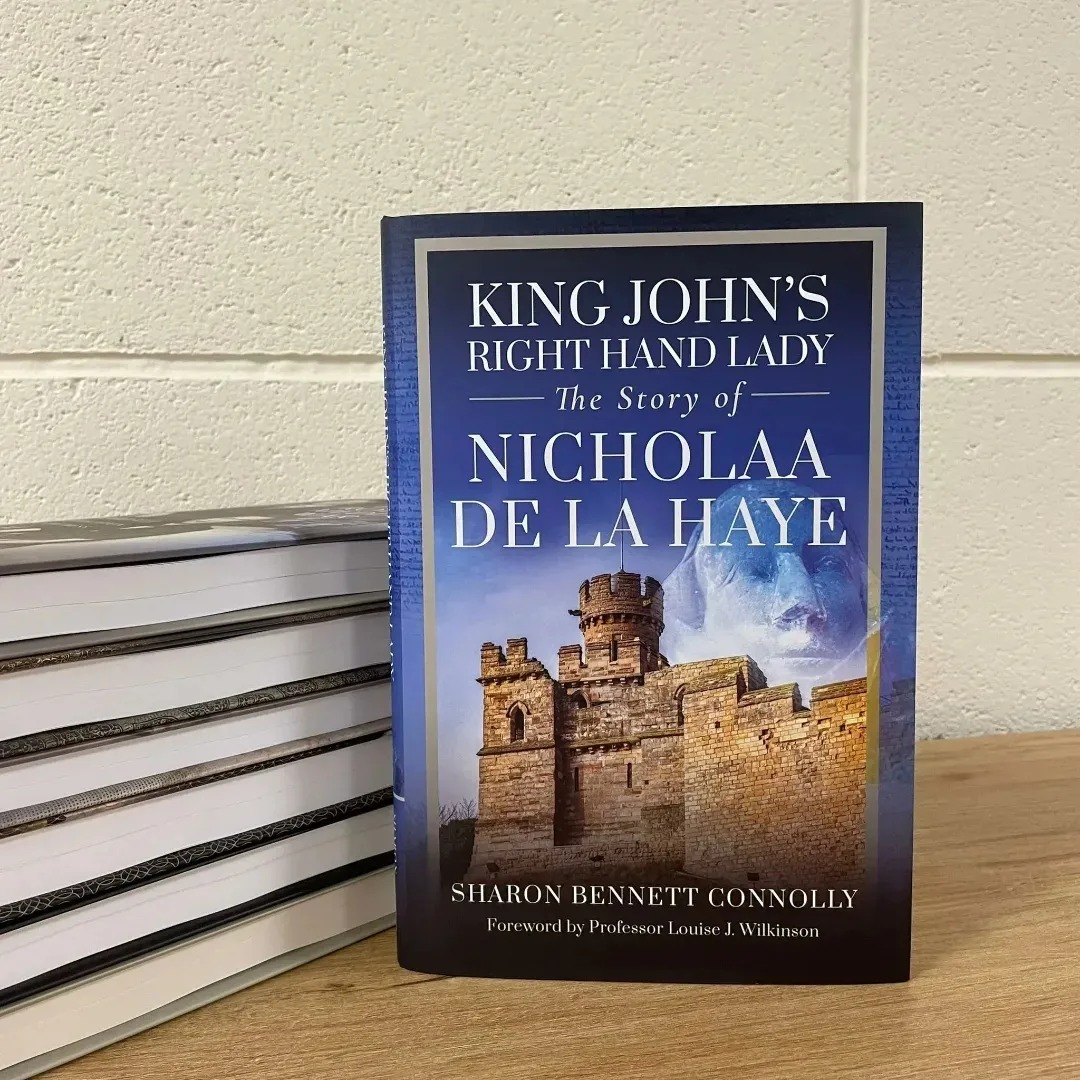
Heroines of the Tudor World tells the stories of the most remarkable women from European history in the time of the Tudor dynasty, 1485-1603. These are the women who ruled, the women who founded dynasties, the women who fought for religious freedom, their families and love. Heroines of the Tudor World is now available from Amberley Publishing and Amazon UK. Women of the Anarchy demonstrates how Empress Matilda and Matilda of Boulogne, unable to wield a sword themselves, were prime movers in this time of conflict and lawlessness. It shows how their strengths, weaknesses, and personal ambitions swung the fortunes of war one way – and then the other. Available from Bookshop.org, Amberley Publishing and Amazon UK. King John’s Right-Hand Lady: The Story of Nicholaa de la Haye is the story of a truly remarkable lady, the hereditary constable of Lincoln Castle and the first woman in England to be appointed sheriff in her own right. Available from all good bookshops Pen & Sword Books, bookshop.org and Amazon.

Defenders of the Norman Crown: The Rise and Fall of the Warenne Earls of Surrey tells the fascinating story of the Warenne dynasty, from its origins in Normandy, through the Conquest, Magna Carta, the wars and marriages that led to its ultimate demise in the reign of Edward III. Available from Pen & Sword Books, Amazon in the UK and US, and Bookshop.org. Ladies of Magna Carta: Women of Influence in Thirteenth Century England looks into the relationships of the various noble families of the 13th century, and how they were affected by the Barons’ Wars, Magna Carta and its aftermath; the bonds that were formed and those that were broken. It is now available in paperback and hardback from Pen & Sword, Amazon, and Bookshop.org. Heroines of the Medieval World tells the stories of some of the most remarkable women from Medieval history, from Eleanor of Aquitaine to Julian of Norwich. Available now from Amberley Publishing and Amazon, and Bookshop.org. Silk and the Sword: The Women of the Norman Conquest traces the fortunes of the women who had a significant role to play in the momentous events of 1066. Available now from Amazon, Amberley Publishing, and Bookshop.org.
Alternate Endings: An anthology of historical fiction short stories including Long Live the King… which is my take what might have happened had King John not died in October 1216. Available in paperback and kindle from Amazon.
Podcast:

Have a listen to the A Slice of Medieval podcast, which I co-host with Historical fiction novelist Derek Birks. Derek and I welcome guests, such as Bernard Cornwell and Michael Jecks, and discuss a wide range of topics in medieval history, from significant events to the personalities involved. Every episode is also now available on YouTube.
*
Don’t forget! Signed and dedicated copies of all my books are available through my online store.
For forthcoming online and in-person talks, please check out my Events Page.
You can be the first to read new articles by clicking the ‘Follow’ button, liking our Facebook page or joining me on Twitter, Threads, Bluesky and Instagram.
*
©2025 Sharon Bennett Connolly, FRHistS and Heather R. Darsie




 History... the interesting bits!