Book Corner: Agricola: Invader by Simon Turney

The first volume in a thrilling new historical adventure series by Simon Turney, critically acclaimed author of Legion XXII and Sons of Rome.

58 AD, Rome. Agricola, teenage son of an impoverished yet distinguished noble family, has staked all his resources and reputation on a military career. His reward? A posting as tribune in the far-off northern province of Britannia.

Serving under renowned general Suetonius Paulinus, Agricola soon learns the brutality of life on the very edges of the empire, for the Celtic tribes of Britannia are far from vanquished.

To take control of the province, the Romans must defeat the ancient might of the druids – and the fury of the Iceni, warriors in their thousands led by a redoubtable queen named Boudicca…

I do like a good Simon Turney novel, and this is one of his best! I was a little dubious about Agricola: Invader, wondering if I would appreciate a book set in Roman Britain where the native Britons are the enemy. But the author drew me in with his first scenes, of sword practice and then an imaginary dinner party with some of the great and the good, including Vespasian, Paulinus and Agricola himself. It must have been a fun scene to write and you can tell that Simon Turney is enjoying himself. The scene serves another purpose, it sets up the greater story, whereby Agricola’s mother calls in old favours, using her dead husband’s connections to secure her 18-year-old son his first position in the Roman legions.

From those first scenes, Agricola leaves Rome to take up his appointment in Britannia. He faces jealousy and prejudice within the military hierarchy, while battling the druids and the native tribes, who are chafing under the Roman yoke. We do not meet Boudicca, although Agricola faces her revolt, which is a shame, to e honest. I was looking forward to Agricola and Boudicca staring each other down in a fictitious face-to-face. But no matter. This is Agricola’s story. We see Britannia’s history through his eyes, from the point of view of the great Roman war machine and the Pax Romana. Of the victors.

One cannot help but sympathise with our ancient ancestors but that does not diminish the story.

So, once they were settled onto a new ship, a trireme of the classis Britannica, he began to ask about their destination.

‘Tell me about Britannia,’ he began.

‘Firstly, stop calling it that.’

‘Why?’

‘Because Britannia is a Roman invention. If you want to understand my people you have to stop thinking like their conqueror. To my people it is just “the land” and we are “people of the land”. We have mostly come to think of ourselves in the tribal groups you acknowledge: the Silures, the Ordovices, the Demetae and so on. But here and there you will find small tribes that Rome considers Silurian while they themselves think otherwise. Indeed, you will find tribes who are part if the Silures and are content to recognise the fact, and yet still call themselves by their own ancient names.’

‘Now onder you could not mount an organised defence of your island when we came.’

Luci narrowed his eyes. ‘From what you tell me of your people’s history, you were no different.’

‘I’ll give you that. Perhaps Rome would not have taken Liguria and Gaul if we had managed to overcome our own hatreds and differences long enough to turn them on our enemy. Speaking as a product of their conquest, though, I’m not sure we would have survived without the order that Rome brings.’

A grunt was the only answer to that.

Agricola comes across – at first – as a typical teenager. He’s read the books and knows everything. He’s brash, confident, but is aware of a lack of knowledge of his destination. He even buys a slave, a Briton, to educate him on the people of the land he is to be stationed.

I like Agricola. I like his slave, Luci, even more. A pure invention of Simon Turney, Luci is a Silurian slave, purchased by Agricola in Rome. He has his own story to tell, which comes out in stages and is, at times, surprising. He gives Agricola an insight into the enemy’s minds and tactics, helping the young tribune out in potentially dangerous situations. The relationship between master and slave develops throughout the book. Luci is hardly the submissive, beaten slave. He knows his value, and his own abilities. As does Agricola. It is a fascinating relationship and a highlight of the book.

Simon Turney stays true to the history, depicting the strength and might of the Roman legions as the pacify Britannia. He expertly recreates the Roman campaign that swept across England and Wales.

Agricola: Invader is a riveting read and I am happy to hear that it is only the start of Agricola’s adventures. There’s more to follow! Simon Turney has a passion for the era that shines through on every page. His own enthusiasm for the subject will draw the reader in and leave them wanting more.

To buy Agricola: Invader

About the author:

Simon lives with his wife, children, rabbits and dog in rural North Yorkshire. Having spent much of his childhood visiting historic sites with his grandfather, a local photographer, Simon fell in love with the Roman heritage of the region, beginning with the world famous Hadrian’s Wall. His fascination with the ancient world snowballed from there with great interest in Egypt, Greece and Byzantium, though his focus has always been Rome. A born and bred Yorkshireman with a love of country, history and architecture, Simon spends most of his rare free time travelling the world visiting historic sites, writing, researching the ancient world and reading voraciously.

Simon’s early career meandered along an arcane and eclectic path of everything from the Ministry of Agriculture to computer network management before finally settling back into the ancient world. During those varied years, Simon returned to university study to complete an honours degree in classical history through the Open University. With what spare time he had available and a rekindled love of all things Roman, he set off on an epic journey to turn Caesar’s Gallic War diaries into a novel accessible to all. The first volume of Marius’ Mules was completed in 2003 and has garnered international success, bestseller status and rave reviews, spawning numerous sequels. Marius’ Mules is still one of Simon’s core series and although Roman fiction features highly he now has Byzantine, Fantasy and Medieval series, too, as well as several collaborations and short stories in other genres.

Now with in excess of 40 novels available and, Simon is a prolific writer, spanning genres and eras and releasing novels both independently and through renowned publishers including Canelo and Orion. Simon writes full time and is represented by MMB Creative literary agents.

Look out for Roman military novels featuring Caesar’s Gallic Wars in the form of the bestselling Marius’ Mules series, Roman thrillers in the Praetorian series, set during the troubled reign of Commodus, imperial intrigue in the Damned Emperors series and the Rise of Emperors series, epics of the Knights Templar, adventures around the 15th century Mediterranean world in the Ottoman Cycle, and a series of Historical Fantasy novels with a Roman flavour called the Tales of the Empire.

*

My Books:

Signed, dedicated copies of all my books are available through my online bookshop.

Out Now! Women of the Anarchy
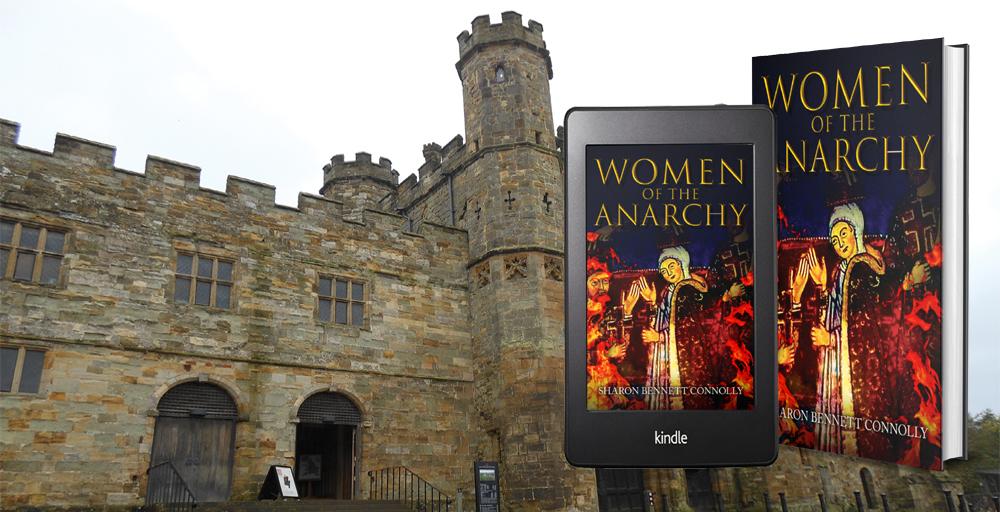
Two cousins. On the one side is Empress Matilda, or Maud. The sole surviving legitimate child of Henry I, she is fighting for her birthright and that of her children. On the other side is her cousin, Queen Matilda, supporting her husband, King Stephen, and fighting to see her own son inherit the English crown. Women of the Anarchy demonstrates how these women, unable to wield a sword, were prime movers in this time of conflict and lawlessness. It show how their strengths, weaknesses, and personal ambitions swung the fortunes of war one way – and then the other.

Available from Bookshop.orgAmberley Publishing and Amazon UK.

Coming on 15 June 2024: Heroines of the Tudor World
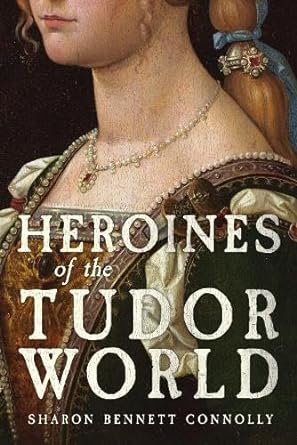
Heroines of the Tudor World tells the stories of the most remarkable women from European history in the time of the Tudor dynasty, 1485-1603. These are the women who ruled, the women who founded dynasties, the women who fought for religious freedom, their families and love. These are the women who made a difference, who influenced countries, kings and the Reformation. In the era dominated by the Renaissance and Reformation, Heroines of the Tudor World examines the threats and challenges faced by the women of the era, and how they overcame them. From writers to regents, from nuns to queens, Heroines of the Tudor World shines the spotlight on the women helped to shape Early Modern Europe.

Heroines of the Tudor World is now available for pre-order from Amberley Publishing and Amazon UK.

Also by Sharon Bennett Connolly:

King John’s Right-Hand Lady: The Story of Nicholaa de la Haye is the story of a truly remarkable lady, the hereditary constable of Lincoln Castle and the first woman in England to be appointed sheriff in her own right. Available from all good bookshops or direct from Pen & Sword Booksbookshop.org and AmazonDefenders of the Norman Crown: The Rise and Fall of the Warenne Earls of Surrey tells the fascinating story of the Warenne dynasty, from its origins in Normandy, through the Conquest, Magna Carta, the wars and marriages that led to its ultimate demise in the reign of Edward III. Available from Pen & Sword BooksAmazon in the UK and US, and Bookshop.org

Ladies of Magna Carta: Women of Influence in Thirteenth Century England looks into the relationships of the various noble families of the 13th century, and how they were affected by the Barons’ Wars, Magna Carta and its aftermath; the bonds that were formed and those that were broken. It is now available in paperback and hardback from Pen & Sword,  Amazon, and Bookshop.orgHeroines of the Medieval World tells the stories of some of the most remarkable women from Medieval history, from Eleanor of Aquitaine to Julian of Norwich. Available now from Amberley Publishing and Amazon, and Bookshop.orgSilk and the Sword: The Women of the Norman Conquest traces the fortunes of the women who had a significant role to play in the momentous events of 1066. Available now from Amazon,  Amberley Publishing, and Bookshop.org.

Alternate Endings: An anthology of historical fiction short stories including Long Live the King… which is my take what might have happened had King John not died in October 1216. Available in paperback and kindle from Amazon.

Podcast:

Have a listen to the A Slice of Medieval podcast, which I co-host with Historical fiction novelist Derek Birks. Derek and I welcome guests, such as Bernard Cornwell and Elizabeth Chadwick, and discuss a wide range of topics in medieval history, from significant events to the personalities involved.

*

Don’t forget! Signed and dedicated copies of all my books are available through my online bookshop.

For forthcoming online and in-person talks, please check out my Events Page.

You can be the first to read new articles by clicking the ‘Follow’ button, liking our Facebook page or joining me on Twitter and Instagram.

*

©2024 Sharon Bennett Connolly FRHistS
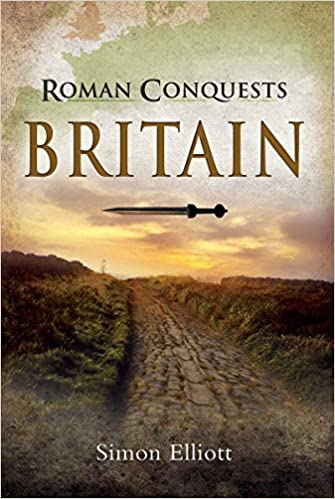
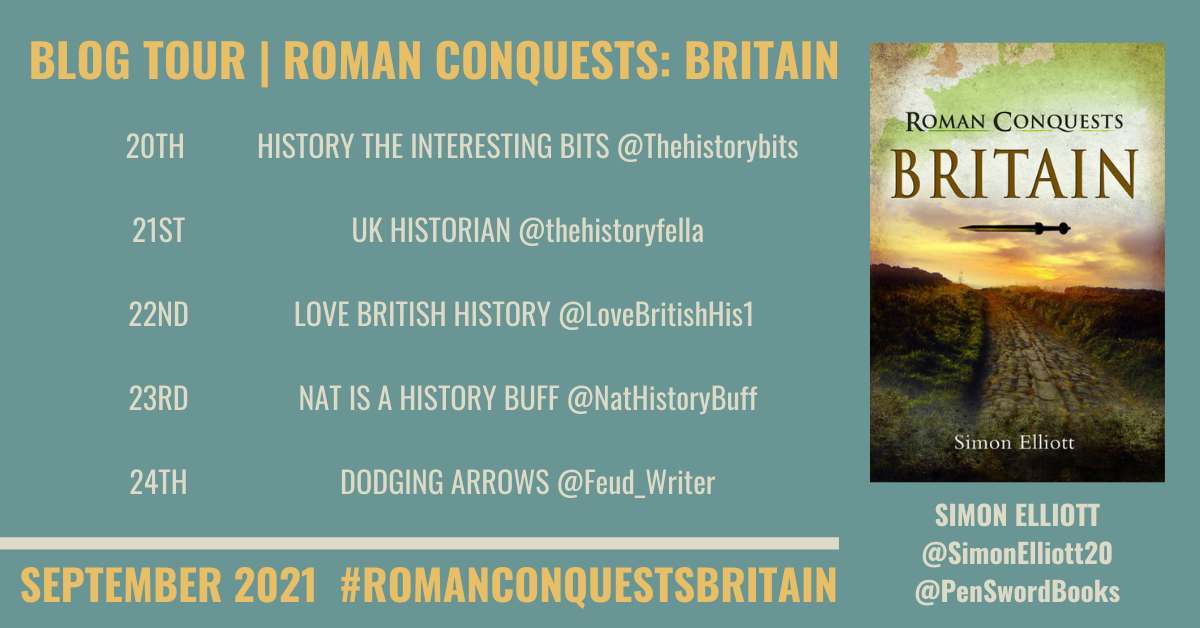
Book Corner: Roman Conquests: Britain by Simon Elliott

The Roman Conquests series seeks to explain when and how the Romans were able to conquer a vast empire stretching from the foothills of the Scottish Highlands to the Sahara Desert, from the Atlantic to the Persian Gulf. How did their armies adapt to and overcome the challenges of widely varied enemies and terrain? In this volume, Dr Simon Elliott draws on the latest research and archaeological evidence to present a new narrative of the conquest (never completed) of Britain. From Julius Caesar’s initial incursions in 55 and 54 BC, through the Claudian invasion of 43 AD and the campaigns of expansion and pacification thereafter, he analyses the Roman army in action. The weapons, equipment, organization, leadership, strategy and tactics of the legions and their British foes are described and analysed. The ferocity of the resistance was such that the island was never wholly subdued and required a disproportionate military presence for the duration of its time as a Roman province.

Roman Conquests: Britain by Simon Elliott is a fascinating study of the Roman campaigns in Britain, from the time of the first forays by Julius Caesar in 55 and 54 BC to the final departure of the legions in the 4th century AD. 400 years of conquest.

I have to confess, I hadn’t read much on Roman history until a holiday on Hadrian’s Wall – at Corbridge – about 8 year ago. Standing on a 2,000 year old High Street in the middle of a Roman town has a way of drawing you in. Since then, I have spent many enjoyable hours reading up on Roman history, particularly in relation to Britain.

Simon Elliott’s Roman Conquests: Britain concentrates on the military aspects of Roman invasion and occupation, and the reactions and rebellions of the various British tribes they wanted to subjugate. With that in mind, the book is an in-depth study of Roman military might and tactics. However, it goes much further, using the evidence of tombstones, archaeology and contemporary sources to give the reader a picture of what it was like to be a Roman – or and Briton – during the 400 years that the Romans held sway over the land at the farthest reaches of its empire.

Caesar made his decision to carry out a second expedition to Britain before the end of 55BC, giving orders to his legates to start building a bespoke fleet of ships more appropriate for a large invasion than those used in his first incursion. He then headed back to Cisalpine Gaul to winter in his usual quarters there.

Early in the new Year, after a brief visit to his other province of Illyricum, he returned to the territory of the Morini where he gathered his entire army of eight legions again, together with 4,000 Gallic allied cavalry. This time we learn the name of the chosen port of embarkation for Britain, Portus Itius. Grainge usefully sets out the various candidate sites in the region, all to the south of modern Calais with its short journey across Oceanus to Britain. The most northerly is Wissant near Cap Gris Nez, while the most southerly is the later major port site at Boulogne (the future headquarters of the Classis Britannica regional fleet). The latter seems the most likely given the fine harbourage there in the estuary of the River Liane.

When Caesar arrived he was pleased with the work of his legates and their shipbuilders, with 600 specially built vessels ready for service. These, based on designs of the Veneti, featured lower freeboards than his earlier Mediterranean designs to enable easier disembarkation, banks of oars as well as a large sail to give good manoeuvrability in shallow waters, and wider beams to carry bulkier loads. To these he added 200 locally chartered transports, over 80 Roman transport ships that had survived the previous year’s incursion, and his 28 remaining war galleys.

Simon Elliott gives a pacy narrative, detailing the various attempts to conquer Britain, and the massive effort needed – in men and resources – to hold on to it. Not that it was ever fully subjugated – the tribes in the far reaches of Scotland made sure of that. Replete with detail, from weapons and personnel to military strategy, Roman Conquests: Britain covers every aspect of the various Roman invasions of Britain, and the men who led them, from Julius Caesar to Agricola and the numerous generals assigned to control the island.

Roman Conquests: Britain highlights what a massive undertaking it was to invade, conquer and subjugate Britain – both in men, money, time and resources. Simon Elliott provides invaluable analysis of the large-scale campaigns and their varying degrees of success, and of the men who led them. However, he does not forget the tribes who opposed them, providing fair assessments of the Boudiccan revolt, the Brigantes’ rebellions and the reasons behind abandoning the newly-built Antonine Wall in favour of the more secure Hadrian’s Wall.

Simon Elliott highlights what we do know about the Roman campaigns in Britain, but clearly identifies how much we do not know. Roman Conquests: Britain is an investigative journey into the first centuries AD, using the evidence we have to explain the possible scenarios and pointing out the information that is still lacking. It is a jigsaw puzzle in which the author pulls together the pieces we have available to give the reader and overall picture of events. Roman Conquests: Britain is a detailed, fascinating look into the conquest of Britain by the massive Roman war machine. Impressive research combines with an engaging narrative to make this an eminently readable book.

A must for anyone with interest in Roman Britain.

Roman Conquests: Britain by Simon Elliott is now available from Pen & Sword Books and Amazon UK.

About the author:

Dr Simon Elliott is an award winning and best selling archaeologist, historian and broadcaster with a PhD in Classics and Archaeology from the University of Kent where he is now an Honorary Research Fellow. He has an MA in Archaeology from UCL and an MA in War Studies from KCL. Simon is widely published with numerous works in print on various themes relating to the ancient world, with a particular focus on the Roman military, and he makes frequent appearances on TV as a Roman expert. Simon lectures widely to universities, local history societies and archaeological groups, is co-Director of a Roman villa excavation, a Trustee of the Council for British Archaeology and an Ambassador for Museum of London Archaeology. He is also a Guide Lecturer for Andante Travels and President of the Society of Ancients.

*

My Books

Signed, dedicated copies of all my books are available, please get in touch by completing the contact me form.

Defenders of the Norman Crown: The Rise and Fall of the Warenne Earls of Surrey tells the fascinating story of the Warenne dynasty, of the successes and failures of one of the most powerful families in England, from its origins in Normandy, through the Conquest, Magna Carta, the wars and marriages that led to its ultimate demise in the reign of Edward III. Defenders of the Norman Crown: Rise and Fall of the Warenne Earls of Surrey is now available from Pen & Sword BooksAmazon in the UK and US and Book Depository.

1 family. 8 earls. 300 years of English history!

Also by Sharon Bennett Connolly:

Ladies of Magna Carta: Women of Influence in Thirteenth Century England looks into the relationships of the various noble families of the 13th century, and how they were affected by the Barons’ Wars, Magna Carta and its aftermath; the bonds that were formed and those that were broken. It is now available from Pen & Sword,  Amazon and from Book Depository worldwide.

Heroines of the Medieval World tells the stories of some of the most remarkable women from Medieval history, from Eleanor of Aquitaine to Julian of Norwich. Available now from Amberley Publishing and Amazon and Book Depository.

Silk and the Sword: The Women of the Norman Conquest traces the fortunes of the women who had a significant role to play in the momentous events of 1066.  Available now from Amazon,  Amberley Publishing, Book Depository.

*

You can be the first to read new articles by clicking the ‘Follow’ button, liking our Facebook page or joining me on Twitter and Instagram.

©2021 Sharon Bennett Connolly

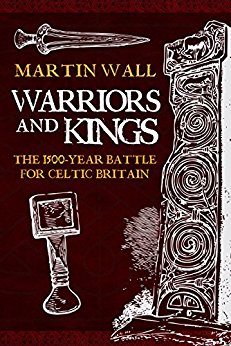
Book Corner: Warriors and Kings by Martin Wall

For centuries, the Celtic peoples of Britain stood fast against invasion and oppression. Theirs is a fascinating and exciting story that includes the deeds of some of the most tenacious and heroic leaders in history – from Caratacus and Boudicca to William Wallace, Owain Glyndwr and the legendary King Arthur. What was it that gave first the Britons, and then the Welsh, this fanatical will to hold out against overwhelming odds through so many centuries?

Martin Wall explores the mythology and psychology of this unyielding and insular people; their devotion to charismatic leaders they believed to be sent from God, and their stubborn determination ‘ne’er to yield’ to oppression and injustice, whether Roman, Saxon, Norman, Viking, or later, the ravages of industrialisation. This fascinating book explores Celtic Britain from before the onslaught of the Roman Empire, through rebellion and open war, to the Act of Union passed under the Tudors and on to the Victorian era.

Warriors and Kings: The 1500-year Battle for Celtic Britain is a treasure trove of information on the history  of the Celts. Charting their progress, trials and tribulations from the time of the Romans, it provides a unique, in-depth biography of the race that once occupied Britain.

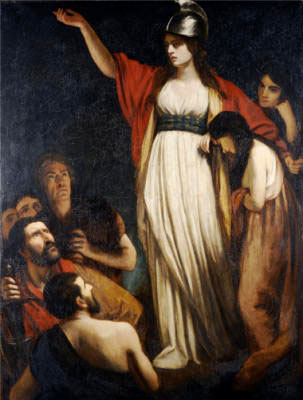
Boadicea Haranguing The Britons by John Opie.

Opening with the first Roman invasion of Britain, Martin Wall takes the reader on a journey through England through the eyes of the Celts, providing a detailed and interesting analysis of their way of life, their culture and beliefs and the key points in the history of the Celtic peoples and – by extension – Britain itself. Warriors and Kings: The 1500-year Battle for Celtic Britain gives us insight into the key characters of Celtic Britain, the heroes and the villains.

Using and analysing contemporary sources Warriors and Kings: The 1500-year Battle for Celtic Britain tells the fascinating story of Boudicca’s – ultimately doomed – rebellion. The book also discusses the existence – or not – of King Arthur, offering theories and ideas as to his identity; while leaving the reader to decide for themselves who he may have been.

The real problem which has bedevilled researchers into a ‘factual’ Arthur is that his rise to power coincided with the collapse of Roman Britain and the re-emergence or revival of Celtic culture – combined with a barbarian onslaught of unprecedented intensity from the Saxons. In times so troubled few contemporary records were kept up, but a little later, after the events but close enough to them to be reliably informed, Gildas wrote his De Excidio et conquestu Britanniae, his ‘complaining book’, about the ‘ruination of Britain’

Martin Wall has produced a book that is both enjoyable and informative, providing balanced argument and analysis of all the major events and figures of Celtic Britain. Making good use of contemporary and near-contemporary literature and archaeology, the story is re-told in a fascinating chronological narrative. Drawing on historians from earliest times, such as Tacitus and Gildas, all the way to the most recent studies, Martin Wall pulls everything together in order to tell the story.

Warriors and Kings: The 1500-year Battle for Celtic Britain charts the 1500-year-long struggle for supremacy over the island of Britain, showing how the Celts have been faced with one invasion after another. Using the battles, conflicts and invasions, we follow the fate of the Celts from the Romans, through the Dark Ages and in to the reign of King Alfred. The wonderful Aethelflaed, Lady of Mercia, and her struggle with the Vikings leads into the Norman Conquest and further erosion of Celtic traditions, with the invaders pushing inexorably westwards. There are some fascinating insights into Celtic culture and history; for example, did you know that small enclaves of Celts existed in Mercia during the 5th and 6th centuries?

By the late 570s it was clear that several powerful Anglo-Saxon kings were poised ready to move westwards. In the north, King Aethelric of Deira commenced hostilities with Rheged. A bold Anglian attack thrust right over the Pennines and at Argoed Llyfein, the forest of Leven in Cumbria, Aethelric, nicknamed the ‘Flame-bearer’ by the Celtic bards (perhaps his army had marched through the mountain passes in a night attack), was confronted on a bleak Saturday morning by the mighty Urien. The Angles were soundly beaten and Urien became a legendary Brythonic hero. This did not end the war, but intensified it until it became an epic conflict – truly worthy of poetry and legend, a contest between ‘Dark Age’ super-powers.

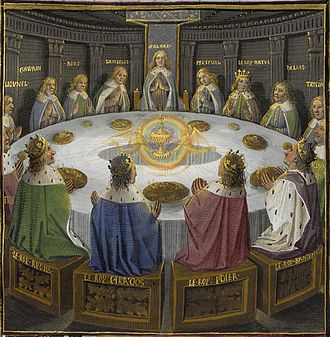
King Arthur and his Knights have a vision of the Holy Grail a by Evrard d’Espinques


Warriors and Kings: The 1500-year Battle for Celtic Britain demonstrates that, despite its name, ‘Dark Age’ Britain is anything but the unknown entity as previously thought. We have a wealth of information on people and events and Martin Wall has brought all the disparate sources – legends, chronicles and poems – together to recreate and enlighten a hitherto underexposed era of British history.

The author’s analysis is clear, concise and informative. He makes it clear where his own theories and those of other historians either agree or digress, while always being respectful. There are no footnotes, but references are included as part of the text, with a bibliography at the back of the book. The sources are assessed on an individual basis, with Martin Wall giving clear views on their veracity, bias and – sometimes – exaggeration.

For fans of Bernard Cornwell, Matthew Harffy and Annie Whitehead, this book gives the historical background to their fabulous novels, explaining the origins and times of Uhtred, Beobrand and Aethelflaed (even if Uhtred and Beobrand are fictional).

Warriors and Kings: The 1500-year Battle for Celtic Britain examines every aspect of Celitc history; their language, literature, religion and, even, warfare. It charts their story through the centuries and provides some explanation of how they disappeared into legend, their enclaves getting smaller and smaller as other tribes grew in power and influence over Britain. The book is a pleasure to read and a useful addition to any book shelf – be it a fan of King Arthur, a lover of Boudicca or a general history lover.

*

Pictures courtesy of Wikipedia

Warriors and Kings: The 1500-year Battle for Celtic Britain by Martin Wall is available from Amberley Publishing and Amazon.

*

My book, Heroines of the Medieval World,  is now available in hardback in the UK from both Amberley Publishing and Amazon UK and worldwide from Book Depository. It is also available on Kindle in both the UK and USA and will be available in Hardback from Amazon US from 1 May 2018.

You can be the first to read new articles by clicking the ‘Follow’ button, liking our Facebook page or joining me on Twitter.

*

©2017 Sharon Bennett Connolly