Wordly Women: MJ Porter

History... the Interesting Bits

It’s Wordly Women time again!

And today I am joined by an author who I could chat with all day, and never run out of things to talk about, M.J. Porter. MJ writes both fiction and non-fiction and can write a jolly good battle. Last year, MJ joined Derek Birks and I on A Slice of Medieval to chat about Athelstan and the Battle of Brunanburh. And what a fascinating discussion it was.

So, I was really excited to invite MJ Porter to take part in my Wordly Women series.

Sharon: Hi MJ! Firstly, can I ask what got you into writing?

MJ: My big dream was to write historical fantasy based on the Viking Age in Iceland. I know it’s both random and very specific. I only turned to historical fiction when I discovered a character during the research for my Master’s, I realised deserved to have his story told. Ealdorman Leofwine of the Hwicce, alive at the end of the tenth century ( a part of the Saxon Mercian kingdom), and his family were, in my view, far more influential and important than the Godwine family, who everyone knows about. I decided to write the story of the last 100 years of Saxon England through their eyes in the Earls of Mercia series. Not a small endeavour, and one which I’m continuing to pursue (I’ve made it to about AD1050 so everything is about to get quite serious), but since then (back in 2013), I’ve moved backwards through the Saxon era, picking for my subjects and stories those lesser-known characters (men or women) and events to share with my readers. I’m a little bit obsessed with the Saxon kingdom of Mercia.

Sharon: You write both fiction and non-fiction – is one harder than the other?

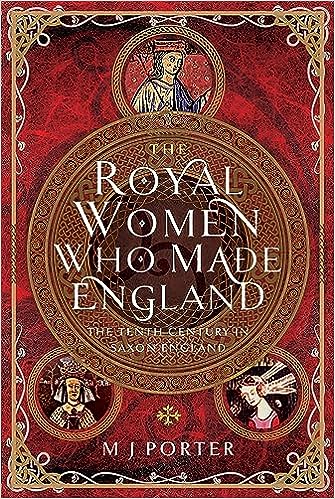
MJ: I’ve written one non-fiction title, The Royal Women of the Tenth Century, and the rest are fiction. What I would say is that non-fiction uses a very different part of my brain from writing fiction. With non-fiction, I struggled to stop each day. I could work on the title for upwards of 12 hours a day without feeling any fatigue. When writing fiction (and I mean writing, not editing), there’s a greater strain as I create as I go. So, my brain gets tired more quickly with fiction writing than non-fiction writing. I imagine that, as I know what’s going to happen with non-fiction, I don’t have that constant pressure when I’m writing. I’m a pantser, so my stories unfold as I write them.

Sharon: Tell us about your books.

History... the Interesting Bits

MJ: I write mostly in the Saxon era, c.540 to 1066. (I do still dabble in fantasy using a pen-name, and I also write quirky 20th-century mysteries). My stories often revolve around either the kingdom of Mercia or the emerging kingdom of England from the tenth century onwards.

I’m attracted to characters and events people don’t know about, or for which evidence is now painting a different picture. However, my stories can range from a blood-and-guts battle fest (with lots of very strong language) to stories about politics. My most recent completed trilogy has been an attempt to recreate events in the true ‘Dark Ages’ in about AD540. It was fascinating but really hard. It was a passion project. I’ve been fascinated by the era for a very long time. My next trilogy will be about the Mercian Civil War of 757, with the future King Offa as the main character. And in the background, I’m continuing my two series set in the ninth century in Mercia, the one following a young Icel as he struggles to become a warrior, not a healer, and the later one, about Mercia’s ‘last king’ King Coelwulf II. The scope for the imagination is immense, and sometimes even I don’t know what form the next story is going to take.

Sharon: What attracts you to the period?

MJ: So, I’m lazy and also, I like to reassess current interpretations, so there are far fewer ‘named’ individuals for me to worry about getting correct in the era, and the scope for reassessing events is immense. We don’t know far more than we know for this period of early English (and wider British) history.

Sharon: Who is your favourite medieval person and why?

MJ: I don’t think I have a favourite. There are too many to pick and choose only one. I do have a very soft spot for William the Marshall, although he’s not in my preferred era.

Sharon: Who is your least favourite medieval person and why?

MJ: Again, I don’t think I have one, but one of my characters, King Coelwulf II of Mercia, really doesn’t like his contemporary, King Alfred of Wessex, and I think he’s probably correct to be suspicious. As historians have commented (to paraphrase), we only know King Alfred was ‘great’ because he made sure to tell us he was (through his Life, written by Asser). That smacks of self-aggrandisement in my books.

Sharon: How do you approach researching your topic?
History... the Interesting Bits

MJ: My process has changed significantly over the years. I began my first historical fiction story by seeing what the Anglo-Saxon Chronicles had to say about events, as well as the surviving charter evidence, but now I tend to start with more general information and then dive deeper. The Anglo-Saxon Chronicle, in all its many forms, is a great place to hunt out stories, but I now consult many more sources, including archaeological finds and the more ‘lived’ experiences. I’ve been studying Saxon England on and off for thirty years, and I suspect I’ve forgotten more than I remember, but I have a general feeling, and I weave the narrative through it, being mindful of what comes before, and what comes after (and also, what I might have written before – which has sometimes caused me more heartache than the alleged historical ‘facts’). I do like to add Easter Eggs through my later stories.

I have a huge collection of reference books these days, and I know where to find information. Additionally, I’m wise enough to realise that sometimes there will be gaps.

I often find that when characters and events are given flesh, they make more sense than in stark non-fiction titles, and this also adds to my confidence in writing stories that counter the current narratives. Some elements simply don’t ‘make sense’ when you add people to them. And others of them suddenly do. The ‘hook’ for my Dark Age trilogy was that after the ‘end’ of Roman Britain, the ability to forge iron from ironstone was lost (although many items were recycled). Abruptly, I realised that when the lost skills were rediscovered, this would have allowed those with sharper blades to dominate those who lacked the ability. I don’t know if that’s true, but it’s a fascinating hypothesis.

Sharon: Tell us your ‘favourite’ true historical story you have come across in your research.

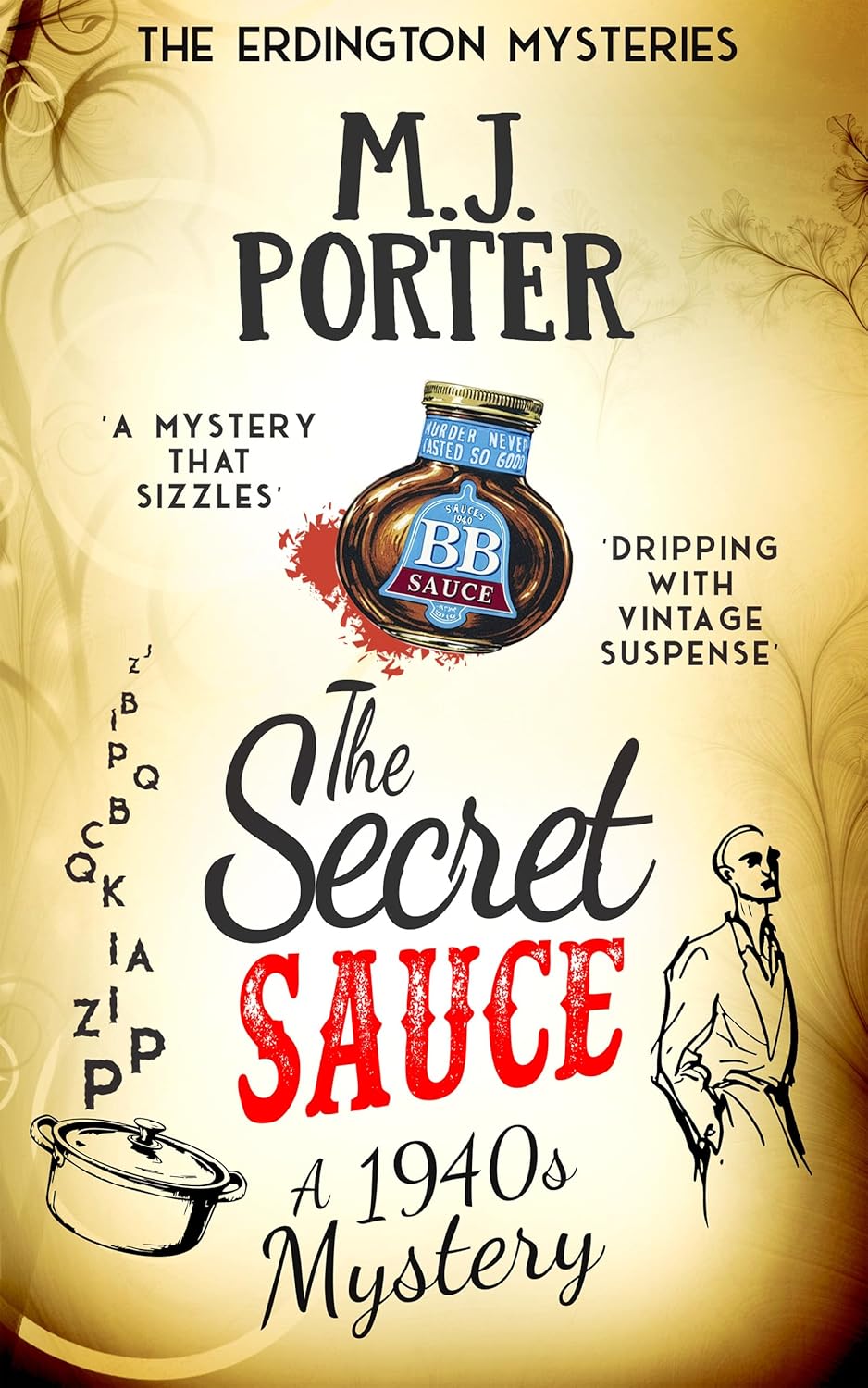
MJ: I don’t know if I have a favourite, but for my last mystery, I discovered something very tragic, regarding a munitions explosion close to RAF Fauld near Burton upon Trent in November 1944. I grew up not far from there, and I’d never heard of it, so I resolved to include it in The Secret Sauce, and now more and more readers are informing me they didn’t know either. I love being able to share these neglected stories with my readers and giving these forgotten individuals some recognition.

Sharon: Tell us your least ‘favourite’ true historical story you have come across in your research.

MJ: I don’t know if I have a least favourite either, but I was devastated when I had to ‘kill off’ my first historical fiction creation, Ealdorman Leofwine, because he disappeared from the historical record. It was so tough. History can be cruel sometimes.

Sharon: Are there any other eras you would like to write about?

MJ: I’ve also written a few 20th-century mysteries, and I’ve dabbled with the Tudors as part of a fantasy trilogy. I might one day be tempted by a little bit of the Roman era as well, but I’m somewhat terrified by how much is known about military units and the way the Romans fought, as my characters are often as disorganised as I am, and I fear I’d offend readers.

Sharon: What are you working on now?
History... the Interesting Bits

MJ: I’m currently writing the first book in The House of Mercia, which will focus on the Civil War in Mercia in 757, with the future King Offa as a main character, while King Æthelbald, his predecessor, is also a character. I’m also in the throes of solving my latest 20th-century mystery, called The Barrage Body. I love the variety, and the convenience of being able to drive and use a telephone as opposed to having a horse and relying on messengers and messages.

Sharon: And finally, what is the best thing about being a writer?

MJ: There’s a lot of freedom to being a writer, once you’ve acknowledged it’s also hard work. I have my processes and routine, but provided I stick to that, I can spend much of my time doing the things I love – writing and researching. I’m very lucky to be able to (just about) earn a living from doing that. I also get to spend my time with characters I either love (or hate), and that is also very freeing.

Books by MJ Porter:

The Secret Sauce; Men of Iron; The House of Mercia; The Earls of Mercia; The Royal Women Who Made England

About the Author:
History... the Interesting Bits

MJ Porter writes: I’m an author of historical fiction (Early English/Saxon, Vikings and the British Isles as a whole before the Norman Conquest, as well as five 20th-century historical mysteries) and fantasy (now published under a different name).

I was born in the old Mercian kingdom at some point since 1066. Raised in the shadow of a strange little building, told from a very young age that it housed the bones of long-dead kings of Mercia and that our garden was littered with old pieces of pottery from a long-ago battle, it’s little wonder that my curiosity in Early England ran riot. I can only blame my parents! I like to write. You’ve been warned!

linktr.ee/MJPorterauthor

*

My books

Signed, dedicated copies of all my books are available through my online store.

Out now: Scotland’s Medieval Queens

Books by Sharon Bennett Connolly

Scotland’s history is dramatic, violent and bloody. Being England’s northern neighbour has never been easy. Scotland’s queens have had to deal with war, murder, imprisonment, political rivalries and open betrayal. They have loved and lost, raised kings and queens, ruled and died for Scotland. From St Margaret, who became one of the patron saints of Scotland, to Elizabeth de Burgh and the dramatic story of the Scottish Wars of Independence, to the love story and tragedy of Joan Beaufort, to Margaret of Denmark and the dawn of the Renaissance, Scotland’s Medieval Queens have seen it all. This is the story of Scotland through their eyes.

Scotland’s Medieval Queens gives a thorough grounding in the history of the women who ruled Scotland at the side of its kings, often in the shadows, but just as interesting in their lives beyond the spotlight. It’s not a subject that has been widely covered, and Sharon is a pioneer in bringing that information into accessible history.’ Elizabeth Chadwick (New York Times bestselling author)

Available now from Amazon and Pen and Sword Books

Also by Sharon Bennett Connolly:

Books by Sharon Bennett Connolly

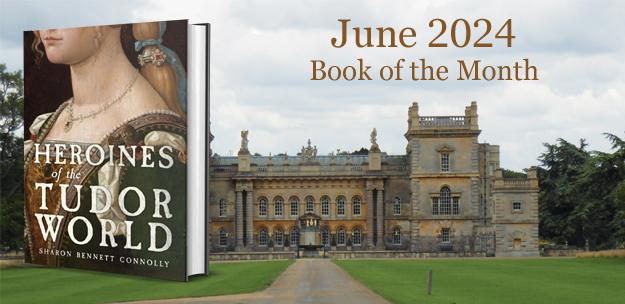
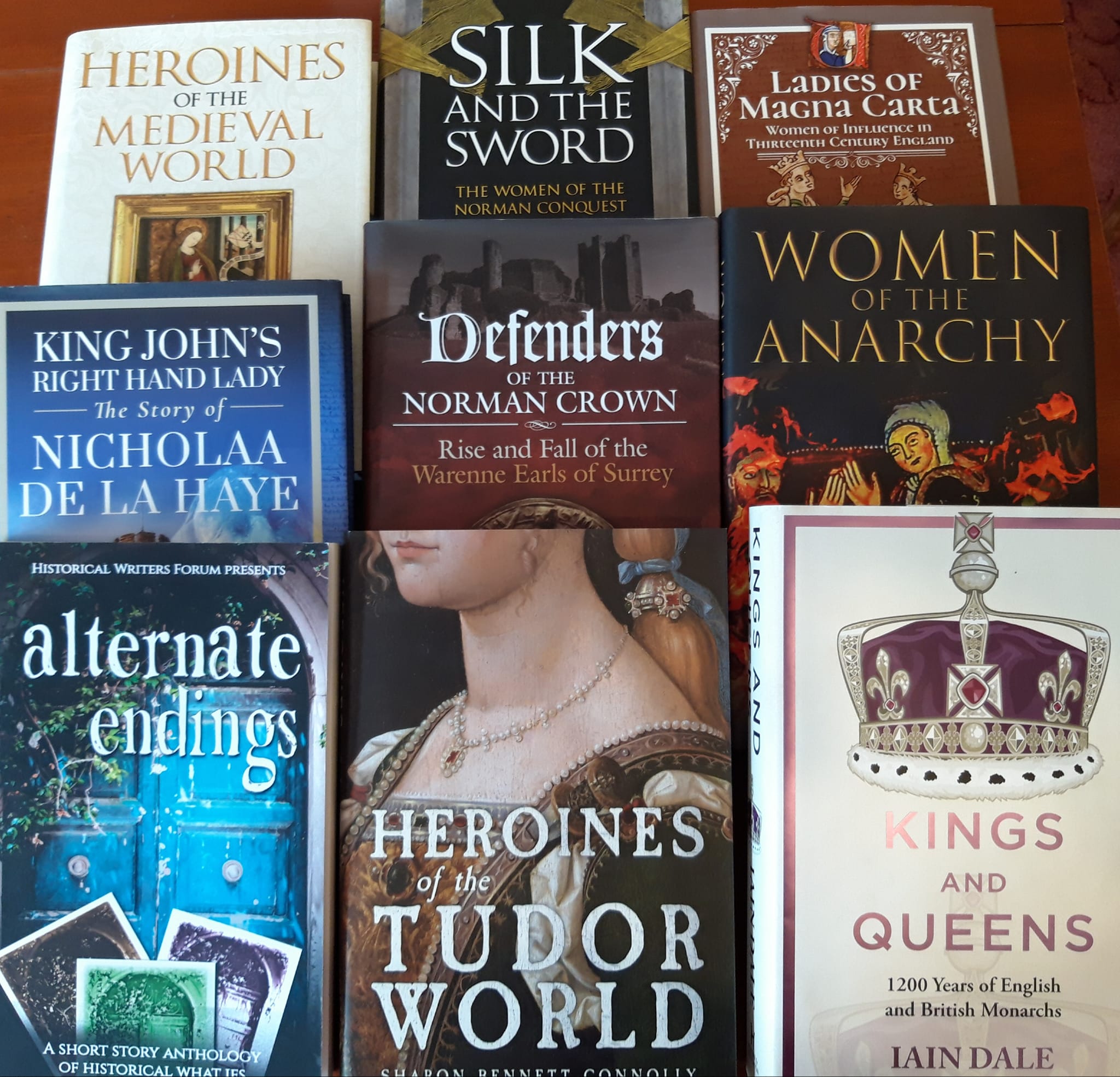
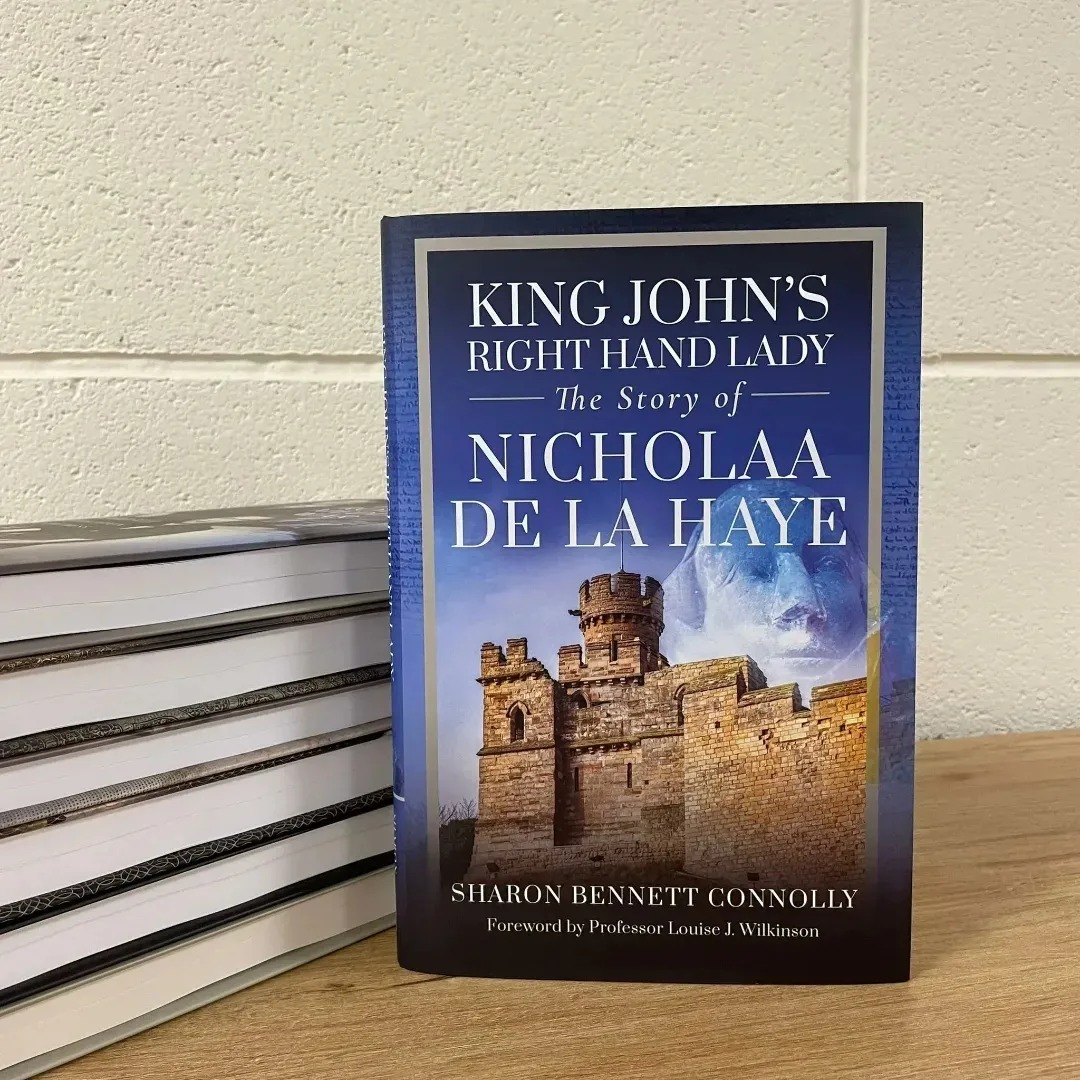
Heroines of the Tudor World tells the stories of the most remarkable women from European history in the time of the Tudor dynasty, 1485-1603. These are the women who ruled, the women who founded dynasties, the women who fought for religious freedom, their families and love. Heroines of the Tudor World is now available from Amberley Publishing and Amazon UK. Women of the Anarchy demonstrates how Empress Matilda and Matilda of Boulogne, unable to wield a sword themselves, were prime movers in this time of conflict and lawlessness. It shows how their strengths, weaknesses, and personal ambitions swung the fortunes of war one way – and then the other. Available from Bookshop.orgAmberley Publishing and Amazon UKKing John’s Right-Hand Lady: The Story of Nicholaa de la Haye is the story of a truly remarkable lady, the hereditary constable of Lincoln Castle and the first woman in England to be appointed sheriff in her own right. Available from all good bookshops Pen & Sword Booksbookshop.org and Amazon

Royal Historical Society

Defenders of the Norman Crown: The Rise and Fall of the Warenne Earls of Surrey tells the fascinating story of the Warenne dynasty, from its origins in Normandy, through the Conquest, Magna Carta, the wars and marriages that led to its ultimate demise in the reign of Edward III. Available from Pen & Sword BooksAmazon in the UK and US, and Bookshop.orgLadies of Magna Carta: Women of Influence in Thirteenth Century England looks into the relationships of the various noble families of the 13th century, and how they were affected by the Barons’ Wars, Magna Carta and its aftermath; the bonds that were formed and those that were broken. It is now available in paperback and hardback from Pen & SwordAmazon, and Bookshop.orgHeroines of the Medieval World tells the stories of some of the most remarkable women from Medieval history, from Eleanor of Aquitaine to Julian of Norwich. Available now from Amberley Publishing and Amazon, and Bookshop.orgSilk and the Sword: The Women of the Norman Conquest traces the fortunes of the women who had a significant role to play in the momentous events of 1066. Available now from Amazon,  Amberley Publishing, and Bookshop.org.

Alternate Endings: An anthology of historical fiction short stories including Long Live the King… which is my take what might have happened had King John not died in October 1216. Available in paperback and kindle from Amazon.

Podcast:

A Slice of Medieval

Have a listen to the A Slice of Medieval podcast, which I co-host with Historical fiction novelist Derek Birks. Derek and I welcome guests, such as Bernard Cornwell and Michael Jecks, and discuss a wide range of topics in medieval history, from significant events to the personalities involved. 

There are now over 75 episodes to listen to!

Every episode is also now available on YouTube.

*

Don’t forget! Signed and dedicated copies of all my books are available through my online store.

For forthcoming online and in-person talks, please check out my Events Page.

You can be the first to read new articles by clicking the ‘Follow’ button, liking our Facebook page or joining me on TwitterThreadsBluesky and Instagram.

*

©2025 Sharon Bennett Connolly and M.J. Porter
Book Corner: Sword of the Saxons by Steven A. McKay

A war to shape the future of a nation.

Betrayed by his kinsmen, his forces overrun by Danes, King Alfred of Wessex has retreated deep into the marshes of his homeland, lying in wait for his chance at redemption.

The scourge of the heathen horde that has ravaged the kingdom for decades is at its peak. Led by the fearsome Viking warlord Guthrum, the fate of the men, women, and children at their mercy appears all but sealed. But underestimate the great king at your peril…

Gathering allies and bannermen to his cause, and building a strategy that will hopefully ensure victory, Alfred sets out to undermine the strength of the complacent invaders, and establish Wessex as the greatest territory in the British Isles.

A final showdown awaits. Not only with Guthrum and his savage warriors, but with destiny. As the battle lines are drawn, the destiny of not just Wessex, but of every Anglo-Saxon in Britain, rests firmly on Alfred’s shoulders.

An utterly ferocious and gripping adventure, covering the fascinating middle years of Alfred the Great’s reign, one of Britain’s most influential monarchs.

War is coming!

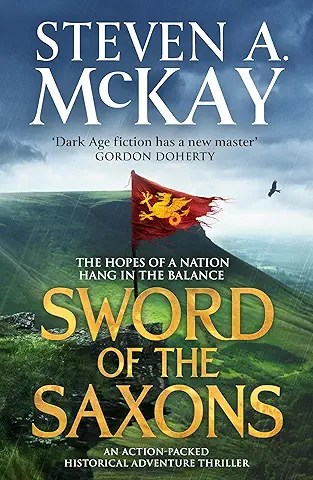
At last! the second book in Steven A McKay’s new Alfred the Great series has arrived. To be fair to Steven, we haven’t had long to wait, even though it felt like an age. The problem was, we left King Alfred at the end of The Heathen Horde, rather down on his luck and looking like things could only get even worse. So it has been agony, waiting for Sword of the Saxons, to see how Steven would get Alfred out of it. We all know the history, Alfred is defeated and seeks shelter in the marshes of Athelney, burns some cakes in order to learn patience and then comes back with a vengeance. So we did know that Alfred’s defeat was not the end of the matter. However, when you get caught up in the story, you need more!

And leaving Alfred, defeated and a fugitive, was a difficult pill to swallow.

King Alfred is the hero who fought to defeat the Danish and Norse invaders – collectively known as the Vikings by many – and unite the disparate kingdoms of England under one king. The kingdom of England would not come to pass in his lifetime, but he started the fight that would be continued by his son and daughter – Edward the Elder and Æthelflæd, Lady of the Mercians – and completed by his grandson, Athelstan, the first King of England.

Sword of the Saxons picks up where The Heathen Horde left off and takes us on Alfred’s journey to not only survive in the marshes, but rebuild his army, renew alliances and begin the fight back. In Sword of the Saxons, King Alfred becomes the leader that England needed, and demonstrates the abilities, both martial and political, that justify his epithet of ‘the Great’.

‘I can almost – almost! – understand Ealdorman Wealdmar giving in to the Danes without a fight,’ Wulfric said to Alfred as they rode towards the little coastal village of Bryn on the outskirts of the Somerset marshes. ‘But his son, Diuma? Refusing to let us into the town when he knew the Danes were hunting us? Gods, I was starting to like the an, and I believed he was a fiercely loyal thane to you, my lord.’

Alfred cleared his throat and spat into the bushes on the side of the road, disgust twisting his features at the memory of the night Wulfric was referring to. ‘So did I,’ he growled. ‘But it seems Diuma was only ever loyal to himself.’ He shook his head and made a cutting motion with his hand. ‘I might possibly be able to forgive some of the men who’ve betrayed me, like Ealdorman Wulfhere. Perhaps they felt like they had no choice. But Diuma? I treated him like a friend. And Brycgstow? That was far enough away from any of Guthrum’s forces to be a target for them! No, Diuma has no excuse for what he’s done. I hope the sea-wolves bleed him and his father dry, and then, eventually, I’ll come face to face with them and hear their excuses before…’ He trailed off, jaw clenched, knuckles white as he gripped his horse’s reins.

There were only two other men with them that morning, for they were merely riding to collect a few supplies but, more importantly, to make sure the good people of Bryn knew that Alfred was still very much alive and hadn’t abandoned his kingdom despite Guthrum’s invasion. The king believed it did the people good to see him in person, rather than his hearth-warriors simply carrying word of his survival to the towns and villages located around Athelney’s marshes. He was a man, after all, not a myth.

‘When are we going to send out word to gather the fyrd, lord?’ The question came from one of the other riders who’d accompanied them, a small but sturdily built warrior called Dunstan. He’d been thane of a village in the north of Wessex which had been utterly destroyed six years earlier, by a party of Northmen led by Jarl Ubba. After that, Dunstan pledged himself to Alfred and now served as one of his fiercest hearth-warriors.

The fourth man in the small group was the sentry from the previous night, Aedan, and he too looked with interest at Alfred, wondering what his reply would be to Dunstan’s question.

The king shook his head slowly. ‘In truth, I don’t know,’ he admitted. ‘I’d like to make sure we have the support of as many people as possible in these nearby settlements. We need to know we can call upon a decent sized fyrd from the lands around Athelney before we look at enlisting people in towns further away.’ He noticed Dunstan and Aedan sharing uncertain glances. ‘I know you two are desperate to take the fight to Guthrum, but we can’t afford to act rashly. First, we build our foundation here in Sumosaete, and then we move on from there.’

With The Heathen Horde, it took me a few chapters to get into the story, to stop comparing Steven A. McKay’s version of King Alfred with the Alfred of Bernard Cornwell – and it took me a while to stop expected Uhtred of Bebbanburg to turn up and save the day, but in Sword of the Saxons Steven has made King Alfred his own. He portrays the great battles his way, has created a hero in Alfred that the reader can get behind wholeheartedly. He is much more likeable than Bernard Cornwell’s King Alfred! Less judgmental…

Alongside Alfred the Great and his family, Steven A. McKay has created a wealth of characters with varying degrees of loyalty to the king. All must be moulded together to fight Guthrum and his men. I have to admit, I love the portrayal of Æthelflæd, Alfred’s oldest daughter and soon to be the Lady of the Mercians. She is a young woman who knows her duty – but also knows her worth and her abilities. She is very much the Æthelflæd I imagine.

Sword of the Saxons is the beginning of the fight back against the invaders. It shows King Alfred coming into his own, becoming the great leader who we know today. He has setbacks, he has doubts, and he has to overcome illness. But this is the Alfred who will lead the reconquest of England that will be completed by his grandson. Steven A. Mckay achieves a wonderful balance, between telling the personal stories of his characters and presenting the great history that they are living through.

It is a gripping read. The fast-paced story leaves the reader breathless – and reading into the early hours! I have no hesitation in recommending Sword of the Saxons to anyone and everyone. Read it! you will not be disappointed.

Buy Sword of the Saxons

About the author:

Steven A. McKay was born in Scotland in 1977 and always enjoyed studying history. He decided to write his Forest Lord novels after seeing a house called “Sherwood” when he was out at work one day. Since then he’s started a new series, the Warrior Druid of Britain Chronicles. In 2021 the Xbox game HOOD: Outlaws and Legends was released, featuring his writing, which Steven says was just a fantastic experience. Steven used to be in a heavy metal band although he tends to just play guitar in his study these days. He did use those guitars to write the theme song for the podcast he co-host, Rock, Paper, Swords! with Matthew Harffy, though.

*

My Books

Signed, dedicated copies of all my books are available through my online bookshop.

OUT NOW! Heroines of the Tudor World

Heroines of the Tudor World tells the stories of the most remarkable women from European history in the time of the Tudor dynasty, 1485-1603. These are the women who ruled, the women who founded dynasties, the women who fought for religious freedom, their families and love. These are the women who made a difference, who influenced countries, kings and the Reformation. In the era dominated by the Renaissance and Reformation, Heroines of the Tudor World examines the threats and challenges faced by the women of the era, and how they overcame them. From writers to regents, from nuns to queens, Heroines of the Tudor World shines the spotlight on the women helped to shape Early Modern Europe.

Heroines of the Tudor World is now available for pre-order from Amberley Publishing and Amazon UK.

Also by Sharon Bennett Connolly:

Women of the Anarchy demonstrates how Empress Matilda and Matilda of Boulogne, unable to wield a sword themselves, were prime movers in this time of conflict and lawlessness. It shows how their strengths, weaknesses, and personal ambitions swung the fortunes of war one way – and then the other. Available from Bookshop.orgAmberley Publishing and Amazon UKKing John’s Right-Hand Lady: The Story of Nicholaa de la Haye is the story of a truly remarkable lady, the hereditary constable of Lincoln Castle and the first woman in England to be appointed sheriff in her own right. Available from all good bookshops Pen & Sword Booksbookshop.org and AmazonDefenders of the Norman Crown: The Rise and Fall of the Warenne Earls of Surrey tells the fascinating story of the Warenne dynasty, from its origins in Normandy, through the Conquest, Magna Carta, the wars and marriages that led to its ultimate demise in the reign of Edward III. Available from Pen & Sword BooksAmazon in the UK and US, and Bookshop.org

Ladies of Magna Carta: Women of Influence in Thirteenth Century England looks into the relationships of the various noble families of the 13th century, and how they were affected by the Barons’ Wars, Magna Carta and its aftermath; the bonds that were formed and those that were broken. It is now available in paperback and hardback from Pen & Sword,  Amazon, and Bookshop.orgHeroines of the Medieval World tells the stories of some of the most remarkable women from Medieval history, from Eleanor of Aquitaine to Julian of Norwich. Available now from Amberley Publishing and Amazon, and Bookshop.orgSilk and the Sword: The Women of the Norman Conquest traces the fortunes of the women who had a significant role to play in the momentous events of 1066. Available now from Amazon,  Amberley Publishing, and Bookshop.org.

Alternate Endings: An anthology of historical fiction short stories including Long Live the King… which is my take what might have happened had King John not died in October 1216. Available in paperback and kindle from Amazon.

Podcast:

Have a listen to the A Slice of Medieval podcast, which I co-host with Historical fiction novelist Derek Birks. Derek and I welcome guests, such as Bernard Cornwell and discuss a wide range of topics in medieval history, from significant events to the personalities involved. There’s even an episode on Robin Hood from Steven A. McKay. There are now over 40 episodes to listen to!

*

Don’t forget! Signed and dedicated copies of all my books are available through my online bookshop.

For forthcoming online and in-person talks, please check out my Events Page.

You can be the first to read new articles by clicking the ‘Follow’ button, liking our Facebook page or joining me on Twitter and Instagram.

©2024 Sharon Bennett Connolly FRHistS

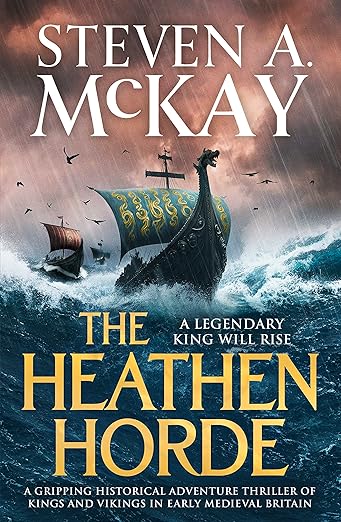
Book Corner: The Heathen Horde by Steven A. McKay

Heavy is the head that wears the crown.

Northumbria, AD 864. Viking warlord Ragnar Lothbrok is captured and killed in brutal fashion, an event that will shape the future of the nation for decades to come.

Mercia, AD 868Alfred, son of Wessex and heir to the throne, draws his first blood on the battlefield. It will not be his last.

A devastating scourge from the north is coming to Britain, one that will bring armies and entire kingdoms to their knees. Travelling along the whale road in their feared longships, the Great Heathen Army move fast, striking with a savagery unmatched, in a seemingly unstoppable tide of blood and iron.

One inexperienced warrior will prove the difference, a young man who will lead from the front and, in time, aspire to become the saviour of the Saxons… Alfred the Great.

A totally enrapturing historical adventure following the life of one of Britain’s most important ever kings.

Wow! Riveting start to what promises to be an excellent series. The Heathen Horde is a fabulous, gritty and entertaining story of how Alfred the Great became ‘Great.’

However…

I have to admit to a little trepidation when I started reading The Heathen Horde. Bernard Cornwell did such a fantastic job of recreating the period in his Last Kingdom series that I was not sure I was ready for another writer’s perspective. I was worried I would not warm to Steven A McKay’s version of the story.

How wrong I was!

And I am so happy that I gave it a go.

‘Look out, Alfred!’

The rider heard his brother’s warning just in time to raise his shield and the linden boards took the brunt of the axe which had been heading for his head, splinters flying as the wood shuddered, pain lancing through his arm. Baring his teeth in rage, Alfred swung his sword down, catching his attacker’s hand just as the axe had been about to strike again. There was a scream of pain as fingers were shorn through to the bone and then Alfred’s horse was past and cantering away from the battle.

‘Back,’ he grunted, tugging on the reins and bringing the horse around quickly. His heart was thudding in his chest and he felt light-headed but it was almost a joyful sensation. He was afraid, aye, but he was also excited, and eager to get back to the fight. He could see the axeman who’d tried to kill him, grimacing and eyeing his mangled hand as if he feared he might never hold a weapon properly again.

Alfred was charging back into the fight before he knew it, battle fever overtaking him at the realisation that he’d almost had his skull caved in. He headed straight for the axeman. The man had transferred his weapon to his left hand but could only wield it awkwardly and his wide eyes told of his fear at being forced to fight in such a manner. Alfred’s horse came alongside the Dane’s and, screaming an incoherent battle-cry, the young warrior smashed the edge of his blade into the enemy’s neck. The sheer force of the blow was enough to throw the man off his horse’s back despite the Dane’s long, mail neck guard. He lay on the ground, unmoving, as his mount bolted and the pounding hooves of the other combatants’ animals swirled around him.

Alfred grinned savagely, knowing that, if the Dane had somehow survived the attack and the fall, he wouldn’t last long before the weight of a horse crushed the life from him.

God be praised, one less sea-wolf to ravage Anglo-Saxon lands!

Admittedly, for the first 20 pages or so, I regularly found myself comparing Steven’s version of King Alfred to Bernard’s version. But I soon left The Last Kingdom behind and found myself enjoying The Heathen Horde for the fascinating story it is in its own right. Soon, I didn’t even notice Uhtred’s absence.

I love this version of King Alfred. His piety is evident, but not as all-consuming as Bernard Cornwell’s Alfred. His military and political prowess both play a greater role in the story. I even liked Alfred’s wife, Ælswith. The Heathen Horde starts when Alfred is merely a younger brother, not expecting to ever take the throne himself, serving his brother loyally and learning the art of war and politics. We see him grown into the role of military leader and develop his concept of a united kingdom – of England.

The story is rich in detail and brings the characters to life. I can’t wait for the next book in the series!

It ends tooooo soon! I need to know what happens next – now! 

The Heathen Horde is one of those books that you can’t wait to need to finish but want it never to end. It is unputdownable! I highly recommend you give it a go.

About the Author:

Steven A. McKay was born in Scotland in 1977. He is the author of two previous series of historical fiction, following Robin Hood and the warrior-druid Bellicus in post-Roman Britain. He plays the guitar, is the co-host of historical adventure podcast Rock, Paper, Swords! along with author Matthew Harffy, and lives just outside Glasgow with his wife and children.

To Buy the book: The Heathen Horde by Steven A. McKay is now available form Amazon.

*

My Books

Signed, dedicated copies of all my books are available through my online bookshop.

Out nowKing John’s Right-Hand Lady: The Story of Nicholaa de la Haye

In a time when men fought and women stayed home, Nicholaa de la Haye held Lincoln Castle against all-comers, gaining prominence in the First Baron’s War, the civil war that followed the sealing of Magna Carta in 1215. A truly remarkable lady, Nicholaa was the first woman to be appointed sheriff in her own right. Her strength and tenacity saved England at one of the lowest points in its history. Nicholaa de la Haye is one woman in English history whose story needs to be told…

King John’s Right-Hand Lady: The Story of Nicholaa de la Haye is now available from Pen & Sword Booksbookshop.org and Amazon.

Coming 15 January 2024: Women of the Anarchy

On the one side is Empress Matilda, or Maud. The sole surviving legitimate child of Henry I, she is fighting for her birthright and that of her children. On the other side is her cousin, Queen Matilda, supporting her husband, King Stephen, and fighting to see her own son inherit the English crown. Both women are granddaughters of St Margaret, Queen of Scotland and descendants of Alfred the Great of Wessex. Women of the Anarchy demonstrates how these women, unable to wield a sword, were prime movers in this time of conflict and lawlessness. It show how their strengths, weaknesses, and personal ambitions swung the fortunes of war one way – and then the other.

Available for pre-order from Amberley Publishing and Amazon UK.

Also by Sharon Bennett Connolly:

Defenders of the Norman Crown: The Rise and Fall of the Warenne Earls of Surrey tells the fascinating story of the Warenne dynasty, of the successes and failures of one of the most powerful families in England, from its origins in Normandy, through the Conquest, Magna Carta, the wars and marriages that led to its ultimate demise in the reign of Edward III. Defenders of the Norman Crown: Rise and Fall of the Warenne Earls of Surrey is now available from Pen & Sword BooksAmazon in the UK and US, and Bookshop.org.

Ladies of Magna Carta: Women of Influence in Thirteenth Century England looks into the relationships of the various noble families of the 13th century, and how they were affected by the Barons’ Wars, Magna Carta and its aftermath; the bonds that were formed and those that were broken. It is now available in paperback and hardback from Pen & Sword,  Amazon, and Bookshop.org.

Heroines of the Medieval World tells the stories of some of the most remarkable women from Medieval history, from Eleanor of Aquitaine to Julian of Norwich. Available now from Amberley Publishing and Amazon, and Bookshop.org.

Silk and the Sword: The Women of the Norman Conquest traces the fortunes of the women who had a significant role to play in the momentous events of 1066. Available now from Amazon,  Amberley Publishing, and Bookshop.org.

Alternate Endings: An anthology of historical fiction short stories including Long Live the King… which is my take what might have happened had King John not died in October 1216. Available in paperback and kindle from Amazon.

Podcast:

Have a listen to the A Slice of Medieval podcast, which I co-host with Historical fiction novelist Derek Birks. Derek and I welcome guests, such as Bernard Cornwell, and discuss a wide range of topics in medieval history, from significant events to the personalities involved.

*

Don’t forget! Signed and dedicated copies of all my books are available through my online bookshop.

For forthcoming online and in-person talks, please check out my Events Page.

You can be the first to read new articles by clicking the ‘Follow’ button, liking our Facebook page or joining me on Twitter and Instagram.

©2023 Sharon Bennett Connolly FRHistS 

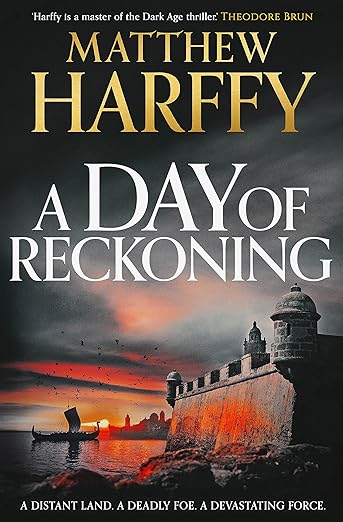
Book Corner: A Day of Reckoning by Matthew Harffy

Hunlaf battles peril and intrigue on a dangerous voyage to Muslim Spain.

AD 796
. Sailing in search of an object of great power, Hunlaf and his comrades are far from home when they are caught up in a violent skirmish against pirates.

After the bloody onslaught, an encounter with ships from Islamic Spain soon sees them escorted under guard to the city of Qadis, one of the jewels of the Emirate of Al-Andalus and the true destination of their voyage.

Hunlaf believes the Emir’s lands hold the key to his search, but there are dangerous games at play. To achieve his goal, Hunlaf and his allies must walk a difficult path where friends and enemies alike are not always what they seem – and where a weapon deadlier than any yet seen could change the future of all the kingdoms in Europe.

What a read! A Day of Reckoning by Matthew Harffy is another riveting story following the adventures of Hunlaf and his quest for the mystical book, The Treasure of Life, stolen from the island monastery of Lindisfarne. And, as usual, Hunlaf’s quest lands the monk-turned-warrior and his friends – the crew of the Brymsteda – in deep water, on sea and land!

Matthew Harffy takes us on a voyage to medieval, Islamic Spain in pursuit of the lost book, and on a secret mission for Charlemagne – a mission so secret that no one is exactly sure of its purpose, beyond escorting the emissary, Giso. Hunlaf must use his wits as well as his sword-arm to extricate himself and his friends from Spain in one piece.

Nothing goes to plan. But then, if it did, it would not be a Matthew Harffy novel, would it? Spiced up with a will-they-won’t-they love story, the betrayal of friend and foe alike and a storyline that will keep you engrossed to the very end, A Day of Reckoning is another Matthew Harffy triumph.

We all stared at the small man. I wondered who he was. He wore a nondescript robe and none of the trappings that would mark him out as a man of noble birth. No gold glimmered on his fingers or at his neck. But he met our gaze with assurance, and the way he had hidden within the room, utterly still and undetected until he chose to reveal himself, was unnerving.

“We are to take him back to Northumbria?” I said. ” Giso is to carry your response to Æthelred King?”

Alhwin flashed his teeth at me in a wide grin. His smile made me almost as nervous as Giso’s stealthy apparition.

“Giso will carry my response, but not to Northumbria.”

“But we are to return northward.”

“Is that so?” he asked, taking on the tone of a tutor speaking to a slow pupil. “What was it that you were commanded to do, Hunlaf?”

I thought back to the orders we had received from Lord Mancas. My eyes narrowed at the memory, again wondering at the depth of knowledge Alhwin possessed. Could he be so cunning?

“We were commanded to bring the message to you and then to wait for your response, that we might carry it aboard Brymsteda.”

“Ah, yes, the fabled ship that Runolf constructed. I would like to see it before you leave.” His smile broadened. “But I digress. You have fulfilled the first part of your king’s orders. I have received his message and other letters from Northumbria. And Giso here will bear my response. But my response is not for Æthelred or indeed anyone from my homeland. You must carry it southward. To al-Andalus.”

In A Day of Reckoning we learn more about the character and lives of Hunlaf’s crewmates. Friendships develop and are stretched to the limit. Hunlaf himself, a natural leader, is learning of the highs and lows of command. His character and beliefs are challenged by the exotic people of Muslim Spain.

Harffy recreates the sights, sounds and tensions of 8th century Spain to the extent that you can imagine yourself in the heart of the city of Qadiz (Cadiz), sensing the mix of languages, cultures and customs, smelling the spices amidst the fumes of Greek fire and burning flesh (it is a Matthew Harffy book, after all). Impeccably researched for the history, culture and politics of the 8th century Iberian peninsula, Matthew Harffy immerses the reader in this strange, exotic world, full of hidden dangers.

Whether or not all our heroes survive is down to a mixture of skill and luck and – well, you’ll have to read it to find out!

Matthew Harffy has honed and perfected his skills as a storyteller over the years, to such an extent that a fabulous week of reading is anticipated and expected when a new book is released. And A Day of Reckoning does not disappoint.

To Buy the Book:

A Day of Reckoning by Matthew Harffy is now available on Amazon.

About the author:

Matthew Harffy lived in Northumberland as a child and the area had a great impact on him. The rugged terrain, ruined castles and rocky coastline made it easy to imagine the past. Decades later, a documentary about Northumbria’s Golden Age sowed the kernel of an idea for a series of historical fiction novels. The first of them is the action-packed tale of vengeance and coming of age, THE SERPENT SWORD.

Matthew has worked in the IT industry, where he spent all day writing and editing, just not the words that most interested him. Prior to that he worked in Spain as an English teacher and translator. Matthew lives in Wiltshire, England, with his wife and their two daughters.

For all the latest news and exclusive competitions, join Matthew online: http://www.matthewharffy.com, twitter.com/@MatthewHarffy, http://www.facebook.com/MatthewHarffyAuthor.

*

My Books

Signed, dedicated copies of all my books are available through my online bookshop.

Out nowKing John’s Right-Hand Lady: The Story of Nicholaa de la Haye

In a time when men fought and women stayed home, Nicholaa de la Haye held Lincoln Castle against all-comers, gaining prominence in the First Baron’s War, the civil war that followed the sealing of Magna Carta in 1215. A truly remarkable lady, Nicholaa was the first woman to be appointed sheriff in her own right. Her strength and tenacity saved England at one of the lowest points in its history. Nicholaa de la Haye is one woman in English history whose story needs to be told…

King John’s Right-Hand Lady: The Story of Nicholaa de la Haye is now available from Pen & Sword Booksbookshop.org and Amazon.

Coming 15 January 2024: Women of the Anarchy

On the one side is Empress Matilda, or Maud. The sole surviving legitimate child of Henry I, she is fighting for her birthright and that of her children. On the other side is her cousin, Queen Matilda, supporting her husband, King Stephen, and fighting to see her own son inherit the English crown. Both women are granddaughters of St Margaret, Queen of Scotland and descendants of Alfred the Great of Wessex. Women of the Anarchy demonstrates how these women, unable to wield a sword, were prime movers in this time of conflict and lawlessness. It show how their strengths, weaknesses, and personal ambitions swung the fortunes of war one way – and then the other.

Available for pre-order from Amberley Publishing and Amazon UK.

Also by Sharon Bennett Connolly:

Defenders of the Norman Crown: The Rise and Fall of the Warenne Earls of Surrey tells the fascinating story of the Warenne dynasty, of the successes and failures of one of the most powerful families in England, from its origins in Normandy, through the Conquest, Magna Carta, the wars and marriages that led to its ultimate demise in the reign of Edward III. Defenders of the Norman Crown: Rise and Fall of the Warenne Earls of Surrey is now available from Pen & Sword BooksAmazon in the UK and US, and  Bookshop.org.

Ladies of Magna Carta: Women of Influence in Thirteenth Century England looks into the relationships of the various noble families of the 13th century, and how they were affected by the Barons’ Wars, Magna Carta and its aftermath; the bonds that were formed and those that were broken. It is now available in paperback and hardback from Pen & Sword,  Amazon, and Bookshop.org.

Heroines of the Medieval World tells the stories of some of the most remarkable women from Medieval history, from Eleanor of Aquitaine to Julian of Norwich. Available now from Amberley Publishing and Amazon, and Bookshop.org.

Silk and the Sword: The Women of the Norman Conquest traces the fortunes of the women who had a significant role to play in the momentous events of 1066. Available now from Amazon,  Amberley Publishing, and Bookshop.org.

Alternate Endings: An anthology of historical fiction short stories including Long Live the King… which is my take what might have happened had King John not died in October 1216. Available in paperback and kindle from Amazon.

Podcast:

Have a listen to the A Slice of Medieval podcast, which I co-host with Historical fiction novelist Derek Birks. Derek and I welcome guests, such as Bernard Cornwell, and discuss a wide range of topics in medieval history, from significant events to the personalities involved.

*

Don’t forget! Signed and dedicated copies of all my books are available through my online bookshop.

For forthcoming online and in-person talks, please check out my Events Page.

You can be the first to read new articles by clicking the ‘Follow’ button, liking our Facebook page or joining me on Twitter and Instagram.

©2023 Sharon Bennett Connolly FRHistS

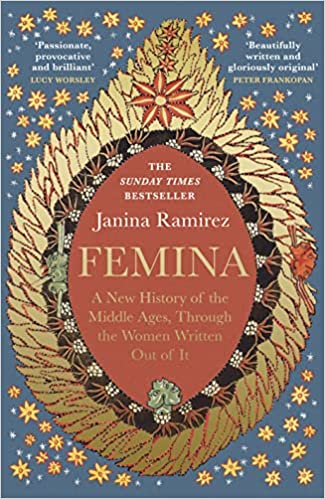
Book Corner: Femina by Janina Ramirez

The middle ages are seen as a bloodthirsty time of Vikings, saints and kings: a patriarchal society which oppressed and excluded women. But when we dig a little deeper into the truth, we can see that the ‘dark’ ages were anything but.

Oxford and BBC historian Janina Ramirez has uncovered countless influential women’s names struck out of historical records, with the word FEMINA annotated beside them. As gatekeepers of the past ordered books to be burnt, artworks to be destroyed, and new versions of myths, legends and historical documents to be produced, our view of history has been manipulated.

Only now, through a careful examination of the artefacts, writings and possessions they left behind, are the influential and multifaceted lives of women emerging. Femina goes beyond the official records to uncover the true impact of women like Jadwiga, the only female King in Europe, Margery Kempe, who exploited her image and story to ensure her notoriety, and the Loftus Princess, whose existence gives us clues about the beginnings of Christianity in England. See the medieval world with fresh eyes and discover why these remarkable women were removed from our collective memories.

When I wrote Heroines of the Medieval World five years ago, I said at the time that it was a book that needed to be written – I just wasn’t sure if I was the person to write it. If I had been asked who should write it, one of the top names on my list would have been Janina Ramirez. So I was not surprised when I discovered that Janina had written a book on medieval women, Femina: A New History of the Middle Ages, Through the Women Written Out of It.

I admit I was a little worried that Femina would make my Heroines obsolete or redundant, but I probably shouldn’t have been. After all, every writer has their own style and approach and every book – even if on the same topic – is written differently. And while the two books do overlap in places, we do not always reach the same conclusion and they really would complement each other on a book shelf (hint, hint!).

Femina: A New History of the Middle Ages, Through the Women Written Out of It looks at some of the most remarkable women of the medieval period, including two women you will be familiar with if you have read Heroines of the Medieval World, Æthelflæd, Lady of the Mercians and Jadwiga, ‘King’ of Poland. And the chapter on Jadwiga is particularly illuminating as Dr Ramirez applies her background in Art History to the symbolism and significance of Jadwiga’s reign, both on a political and spiritual level.

Janina Ramirez also provides great insight in to Emma of Normandy, who I looked at in detail for my own book, Silk and the Sword: the Women of the Norman Conquest. Study is even made of Ӕlfgyva, the mysterious woman in the Bayeux Tapestry, though Janina and I come to very different conclusions – and I would dearly love to have a face-to-face conversation with her to thrash out our theories. That would be fun!

Hild moved from Hartlepool to the site known then as Strenaeshalch and now as Whitby, in AD 657. Here she was granted land to build a double monastery where both men and women could learn the scriptures and dedicate themselves to a monastic life. And engraved stone slab commemorates her successor as abbess, Ælfflæd, and the use of the Latin script and alphabet supports Bede’s suggestion that Whitby was a centre of learning and literacy. But like at Hartlepool, finds from Hild’s abbacy include many luxuries such as decorative hairpins, golden book covers and even a comb with a runic inscription. Runes were the alphabet of the pre-Christian English, but the inscription is clearly Christian: My God. May God Almighty help Cy …’ Again, we find an object which links the Germanic warrior world to the new Christina one. Like Hild herself it straddles ideologies and a time of transition.

Hild was at the top of the tree in terms of influence in seventh-century Northumbria. Bede states that ‘even kings and princes sought and received her counsel’, and she acted as mentor to the daughter of Oswui, King of the Northumbrians from 642-670. What’s more, it was under her rule, in the monastery she founded herself, that the leaders of the English church gathered for the famous Synod of Whitby in AD 664. With Hild in charge of proceedings, the good and the great, representatives of Rome and Ireland, argued which traditions the Northumbrian church should follow. The result went the way of Rome. The variety and uniqueness of Celtic monasteries was lost to the rigour and routine of the Benedictine Rule, and monasticism in the north was transformed forever. For a woman to be involved in such high-level synodal processes is something extraordinary even today. It is also significant that five men who trained under Hild were all made bishops; if there were king-makers in the medieval world, then she was the bishop-maker. Whitby was the training ground for a new, Roman Christian, learned and respected English church. From Hild’s northern headland, educated men and women would stretch out the length and breadth of the country, assuming the very highest positions within churches and monasteries, including the archbishop of York. Hild’s influence would permeate the fabric of Christianity in this part of the world and its effects were felt down the centuries.

Femina: A New History of the Middle Ages, Through the Women Written Out of It is a fabulous study of a number of medieval women – and medieval woman in general. Dr Ramirez manages to combine what it was like to be a woman in medieval times, including their rights and the dangers they faced, such as childbirth, with the histories of particular women – and not always women you would expect to see in history book. The most fascinating chapter is that which is devoted to the Cathars, a religious sect much misunderstood and persecuted to extinction by the church. Janina Ramirez highlights not only their suffering and personal testimonies, but also the strength and respect that women held within the community. It truly is illuminating.

From warrior Viking women, to the successes of Æthelflæd and the excessive crying of Margery Kempe, Janina Ramirez shines a light on the lives and experiences of a huge variety of medieval women. Archaeological discoveries, religious artefacts and medieval artwork are used to describe and illuminate the world in which these women lived and died.

Femina: A New History of the Middle Ages, Through the Women Written Out of It is an engaging, entertaining read, with Janina Ramirez’s unique and wonderful take on medieval history. Introducing her vast knowledge of Art History into the mix adds vibrancy to the individual stories and brings these incredible women to life. Dr Ramirez is fabulous writer and communicator and takes the reader on an incredible journey of discovery through the medieval world. Her enthusiasm and fascination for the topic shines through on every page.

Femina: A New History of the Middle Ages, Through the Women Written Out of It by Janina Ramirez is truly a pleasure to read.

About the author:

Dr Janina Ramirez is a Sunday Times bestselling author, an Oxford lecturer, BBC broadcaster and researcher. She has presented and written over 30 hours of BBC history documentaries and series on TV and radio, and written five books for children and adults.

My books

Signed, dedicated copies of all my books are available, please get in touch by completing the contact me form.

Defenders of the Norman Crown: The Rise and Fall of the Warenne Earls of Surrey tells the fascinating story of the Warenne dynasty, of the successes and failures of one of the most powerful families in England, from its origins in Normandy, through the Conquest, Magna Carta, the wars and marriages that led to its ultimate demise in the reign of Edward III. Defenders of the Norman Crown: Rise and Fall of the Warenne Earls of Surrey is now available from Pen & Sword BooksAmazon in the UK and US, Bookshop.org and Book Depository.

1 family. 8 earls. 300 years of English history!

Also by Sharon Bennett Connolly:

Ladies of Magna Carta: Women of Influence in Thirteenth Century England looks into the relationships of the various noble families of the 13th century, and how they were affected by the Barons’ Wars, Magna Carta and its aftermath; the bonds that were formed and those that were broken. It is now available in paperback and hardback from Pen & Sword,  AmazonBookshop.org and from Book Depository worldwide.

Heroines of the Medieval World tells the stories of some of the most remarkable women from Medieval history, from Eleanor of Aquitaine to Julian of Norwich. Available now from Amberley Publishing and Amazon, Bookshop.org and Book Depository.

Silk and the Sword: The Women of the Norman Conquest traces the fortunes of the women who had a significant role to play in the momentous events of 1066.  Available now from Amazon,  Amberley Publishing, Bookshop.org and Book Depository.

*

You can be the first to read new articles by clicking the ‘Follow’ button, liking our Facebook page or joining me on Twitter and Instagram.

©2022 Sharon Bennett Connolly

Book Corner: A Night of Flames by Matthew Harffy

In the wild lands of Norway, Hunlaf must quell a vicious slave uprising in Matthew Harffy’s new historical adventure.

A wild land. A lethal fanatic. A violent revolt.

Northumbria, AD 794. Those who rule the seas, rule the land. None know the truth of this more than the Vikings. To compete with the seafaring raiders, the king of Northumbria orders the construction of his own longships under the command of oath-sworn Norseman, Runolf.

When the Vikings attack again, the king sends cleric turned warrior, Hunlaf, on a mission to persuade the king of Rogaland into an alliance. But Hunlaf and Runolf have other plans; kin to seek out, old scores to settle, and a heretical tome to find in the wild lands of the Norse.

Their voyage takes them into the centre of a violent uprising. A slave has broken free of his captors and, with religious fervour, is leading his fanatical followers on a rampage – burning all in his path. Hunlaf must brave the Norse wilderness, and overcome deadly foes, to stop this madman. Can he prevent a night of flames and slaughter?

News of a new Matthew Harffy novel has become one of the highlights of my year. Luckily, Harffy is quite a prolific writer, so I never have to wait too long for such news. A Night of Flames is Matthew Harffy’s 11th book in 6 years – that’s quite an achievement!

Especially as his storytelling keeps getting better and better.

The sequel to A Time for Swords, the story begins where the last book left off, with Hunlaf of Ubbanford having forsaken the monk’s cowl for the sword and determined to go in search of his cousin, Aelfwyn, carried off during the raid on Lindisfarne that heralded the Viking era in England. The erstwhile monk comes up with a plan to rescue his cousin and retrieve the highly influential and heretical book, The Treasure of Life, which will lead himself and his friends into the heart of Norway and a heretical band of marauders, made up of former slaves, fanatical warriors and women and children who are killing and spreading devastation wherever they go.

The story has all the ingredients for an exciting adventure. And I have to say, I loved the references to Matthew Harffy’s other series, The Bernicia Chronicles, and the story of Beobrand, with mention of a ballad to Beobrand and his love, Sunniva, or the fact that young Hunlaf was raised in Beobrand’s settlement of Ubbanford, thus interlinking the two very different series with a shared origin.

“I do not wish to slay you,” I hissed at him. “Drop your weapon. End this.”

“There is only one way to end this now,” he yelled. His face was pallid, his eyes glimmering in the bright early morning sun.

Unless he turned away from this course, he was right. I could not defend against him indefinitely. If I waited too long, his brawn and rage would overcome me at last. He was unarmoured, so I had not donned my byrnie. One strike from Wistan could easily prove fatal.

Springing at me again, he attempted a feint, but he signalled his intention with his eyes and his footwork, so my shield was there to parry the attack. This time, I flicked out my sword and opened up a gash on his side, beneath his shield. I skipped away, seeing the pain reach his eyes.

Behind him, Runolf met my gaze. The huge Norseman was grinning, clearly enjoying the excitement of a duel, or hólmgang, as he called it. He had paced out and marked the fighting area with hazel stakes, smiling wolfishly all the while at the prospect of a fight. Beside Runolf, the shorter Gwawrddur was sombre. At my look, he shook his head. I saw the disappointment on the Welshman’s features. There was no honour in defeating a foe who is not able to defend himself. The night before, Gwawrddur had told me to do all in my power to dissuade Wistan from fighting.

“I cannot flee, if he wants to fight,” I had said.

“No, you cannot,” he’d replied. His eyes were sad as he sipped his ale. “But when you laid with his girl, you surely knew this could happen.”

I nodded. I had been flattered by Cwenswith’s attentions, and of course I had enjoyed our fumbling, panting trysts in the store hut, but I had never thought our actions could lead to someone’s death, and certainly not at my hand.

“What if he refuses to step aside?”

“Then you must answer for your actions, just as Wistan must answer for his.”

Wistan now stood breathless before me. He looked down and seemed shocked to see the blood soaking through his kirtle. I had not cut him deeply, hoping the stinging pain would bring him to his senses.

At the sight of blood, someone in the crowd gasped.

Cwenswith screamed, “Finish him!”

Wistan’s eyes narrowed at the shrill sound of her voice. His shoulders tensed and I knew he was preparing to attack once more.

“Don’t,” I said, but too late.

He ran at me, and I retreated. He beat his sword against my shield over and over until the hide covering was tatters and the linden wood splintered.

With a growl, I pushed him back. There was nothing for it. I could not dissuade him, and if I waited any longer, I would be the one to lose my life that day. I sprang forward, holding his blows away from me on my splintering shield and lunging beneath his guard. I felt my sword blade make contact. Wistan grunted and staggered. The morning air was filled with the sudden screaming of women. The men quickly added their voices to the din. I recognised Runolf’s booming voice over the clamour of the crowd, but I could not make out his words.

A Night of Flames is another fabulous rip-roaring adventure from Matthew Harffy, where not everything goes as planned for the heroes and the fight comes close to disaster. It is edge-of-the-seat drama that will keep the reader engrossed late into the night. The battles are vicious, the losses devastating and the outcome uncertain – this is Matthew Harffy at his best.

As has come to be expected with a Matthew Harffy book, the historical research is impeccable; the author’s knowledge of weapons, battle tactics and even sailing the whaleroad is woven into the story so that it is impossible to know where facts end and the author’s imagination begins. The extent of Matthew Harffy’s knowledge and research helps to draw the reader in and makes for a thoroughly engaging book.

The best bit, however – as always with Matthew Harffy – is the story! A Night of Flames is a fascinating, thrilling adventure.

If you like to lose yourself in a book, A Night of Flames by Matthew Harffy is perfect for you!

About the author

Matthew Harffy grew up in Northumberland where the rugged terrain, ruined castles and rocky coastline had a huge impact on him. He now lives in Wiltshire, England, with his wife and their two daughters.

Pre-order links

Amazon UK: https://amzn.to/3sOTmAe

Follow Matthew

Twitter: @MatthewHarffy

Website: www.matthewharffy.com

Follow Aries

Twitter: @AriesFiction

Facebook: Aries Fiction

Website: http://www.headofzeus.com

*

My Books

Signed, dedicated copies of all my books are available, please get in touch by completing the contact me form.

Defenders of the Norman Crown: The Rise and Fall of the Warenne Earls of Surrey tells the fascinating story of the Warenne dynasty, of the successes and failures of one of the most powerful families in England, from its origins in Normandy, through the Conquest, Magna Carta, the wars and marriages that led to its ultimate demise in the reign of Edward III. Defenders of the Norman Crown: Rise and Fall of the Warenne Earls of Surrey is now available from Pen & Sword BooksAmazon in the UK and US, Bookshop.org and Book Depository.

1 family. 8 earls. 300 years of English history!

Also by Sharon Bennett Connolly:

Ladies of Magna Carta: Women of Influence in Thirteenth Century England looks into the relationships of the various noble families of the 13th century, and how they were affected by the Barons’ Wars, Magna Carta and its aftermath; the bonds that were formed and those that were broken. It is now available in paperback and hardback from Pen & Sword,  AmazonBookshop.org and from Book Depository worldwide.

Heroines of the Medieval World tells the stories of some of the most remarkable women from Medieval history, from Eleanor of Aquitaine to Julian of Norwich. Available now from Amberley Publishing and Amazon, Bookshop.org and Book Depository.

Silk and the Sword: The Women of the Norman Conquest traces the fortunes of the women who had a significant role to play in the momentous events of 1066.  Available now from Amazon,  Amberley Publishing, Bookshop.org and Book Depository.

*

You can be the first to read new articles by clicking the ‘Follow’ button, liking our Facebook page or joining me on Twitter and Instagram.

©2022 Sharon Bennett Connolly

Guest Post: Six Misunderstandings About the Vikings by Grace Tierney

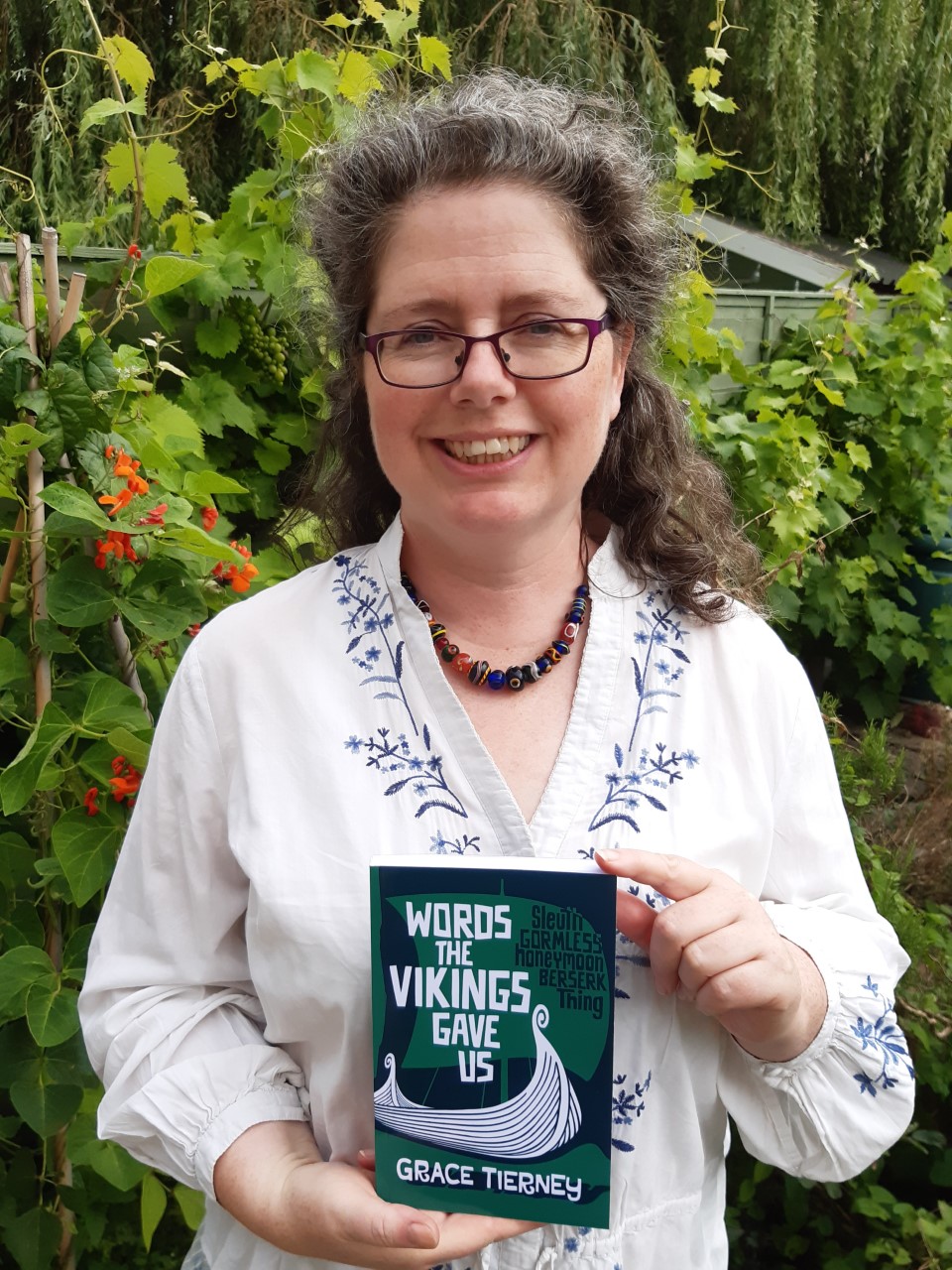
Today it is a pleasure to welcome author Grace Tierney to the blog, with a fascinating article on what we know – and what we get wrong – about the Vikings. Over to Grace:

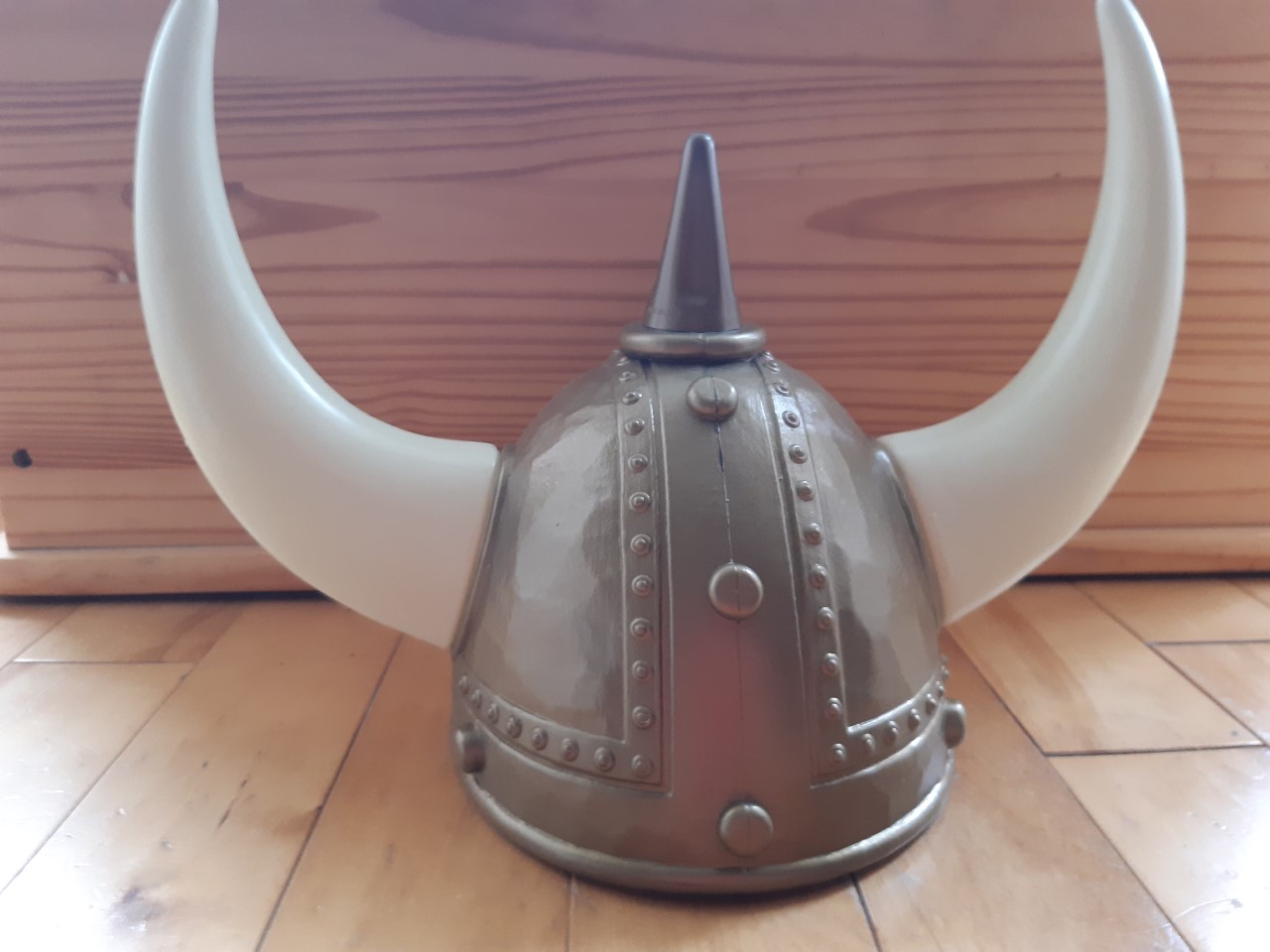
Horned helmet

The Vikings were the people of Norway, Denmark, and Sweden and from 750-1100 they changed everywhere they landed in their longships. They settled from America to Russia and travelled from the Arctic to Africa, not bad for a bunch of lawless raiders. By 1000 A.D. Old Norse (or the Danish tongue as it was called) was the most widely spoken language in Europe and modern English retains many of their words – several of which you use in almost every sentence. We have Vikings to thank for them, they, thing, get, take, time and sky, for example.

1. Vikings Word Horned Helmets, or Did They?

Every Viking you’ve ever seen in a cartoon had horns on his helmet but this stereotype is simply not true. Also, many of those warriors were female.

No horned helmets have been discovered in Viking digs. They wore simple skullcap helmets. How did this misconception arise?

In 1874, Richard Wagner composed “The Ring Cycle”. It’s a group of four operas which he loosely based on the Norse sagas and they’re still popular. The costume designer for the original production, Carl Emil Doepler, designed horned helmets for the Viking characters. His designs have influenced artists, filmmakers, and cartoonists ever since.

Vikings loved horns though. They were astute traders who sold spiral narwhal tusks as unicorn horns. Traders from the rest of Europe hadn’t seen the horned whale themselves as only the Vikings had reached the Arctic at that point. Medieval Europeans believed such a horn had magical properties, especially against poisons and melancholy. “Unicorn horns” were literally worth their weight in gold and the Vikings, who originally bought them from the Inuit and later hunted for them, were happy to bolster the stories.

In the 1500s, Queen Elizabeth I of England received a carved and jewel-encrusted narwhal tusk as a gift which would be worth about £5 million sterling today. It was claimed as being from a sea unicorn and was named the Horn of Windsor.

2. Columbus Discovered North America in 1492

Recent discoveries show the Vikings got there first.

The Viking Sagas tell us that a famous Viking explorer called Leif Erickson sailed to a land west of Greenland (settled by the Vikings) and created a colony called Vinland around the year 1000, almost five centuries before Columbus reached the New World. Historians believe Vinland was in modern-day Canada in the Newfoundland, Gulf of St. Lawrence, and New Brunswick areas. It wasn’t a single location, but a series of settlements along the same coast, many of which had wild grapevines, hence the name.

In 1960 this idea moved from historical theory to reality with the excavation of L’Anse aux Meadows on the northern tip of Newfoundland. The area didn’t have vines, but definitely showed the idea of a Vinland Viking colony was feasible and gave us clear proof that Vikings landed in North America.

The site was explored during the 1960s and 1970s and carbon-dating of timbers confirmed the date (990-1050) of what appears to be a Norse base probably used for timber gathering (wood was in very short supply in Greenland despite the name) and ship repair. Some items founds in the camp came from other areas of North America and show the Vikings had landed there too. Significant levels of Viking artefacts have also been found on Baffin Island and Labrador, Canada.

3. Vikings Traded on the Silk Roads

Vikings were skilled traders. Their trade network, including centres at Hedeby, Birka, and Kiev, helped the European economy recover after the demise of the Roman Empire. They traded Arab coins, Chinese silks, and Indian gems. They used silver, and sometimes gold, as a weighed trading currency. Viking coins, for example, are a common find in digs in Dublin and elsewhere. At a time when trade via bartering was common, the Vikings introduced the idea of coins for use as payment to Northern Europe.

The Viking settlements around the Baltic Sea used that waterway for trade but they also traded along the Rivers Volga and Dnieper in Russia to connect with Constantinople, Jerusalem, Baghdad, and the Caspian Sea. Even the name Russia comes from Old Norse. The waterways linked them to the Silk Roads (a selection of trade routes connecting Europe to Asian silk supplies, only named silk roads quite recently).

4. Vikings Didn’t Leave a Lasting Legacy

This one can be disputed on many levels but I dare you to mention it to a Dane. King Gorm the Old was a Viking who ruled Denmark from 936 to his death in 958. Before King Gorm’s reign, according to the sagas, the land was ruled by the Norse Gods and semi-legendary figures like Ragnar Lothbrok and Ivarr the Boneless (whose stories are told in the TV series “Vikings”). Ragnar did exist, but the sagas about him may refer to more than one person.

Gorm is perhaps best known for fathering three sons – Toke, Knut, and Harald. His son Harald, who ruled after him as King Harald Bluetooth, moved Vikings toward Christianity.

Harald Bluetooth Gormsson was King of Denmark and parts of Norway from 958 until 987 when he was murdered on the orders of his son. He is most famous for bringing together various Danish tribes into a united nation with Norwegian neighbours. It was this ability to bring people together that inspired the naming of bluetooth technology in his honour when it was developed by the Swedish company Ericsson in 1994. The bluetooth symbol is a monogram of the two runes of King Harald’s initials.

Historians are not certain how King Harald got his nickname but most guess he had a prominent blackened tooth. The word used in the old texts to describe his tooth as blue has over-tones of black as well as blue.

King Gorm is officially claimed as an ancestor to the current Danish royal family. The Danish monarchy is one of the oldest in the world and the current queen can trace her line back more than a thousand years, so technically Denmark is still ruled by Vikings.

5. Romans Ruled Britain, the Vikings Just Raided

The Scottish will point at Hadrian’s Wall and proudly explain the Romans never subdued them. The Irish (part of Britain in Roman times) will explain the Romans didn’t bother to invade. It’s more accurate to say the Romans conquered part of Britain (England and Wales) and ruled there for nearly four centuries from 43 to 410 A.D.

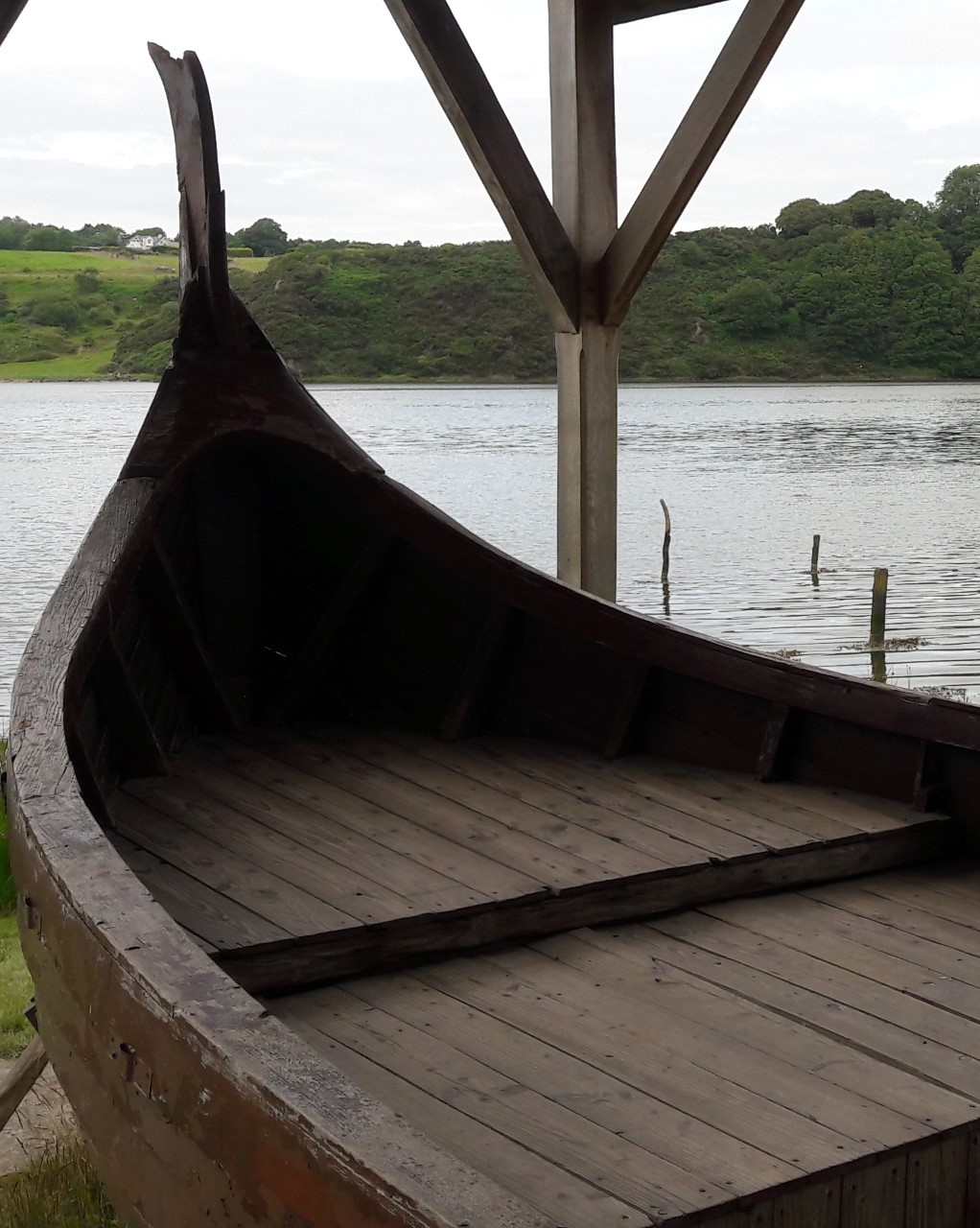
Viking ship prow, Wexford

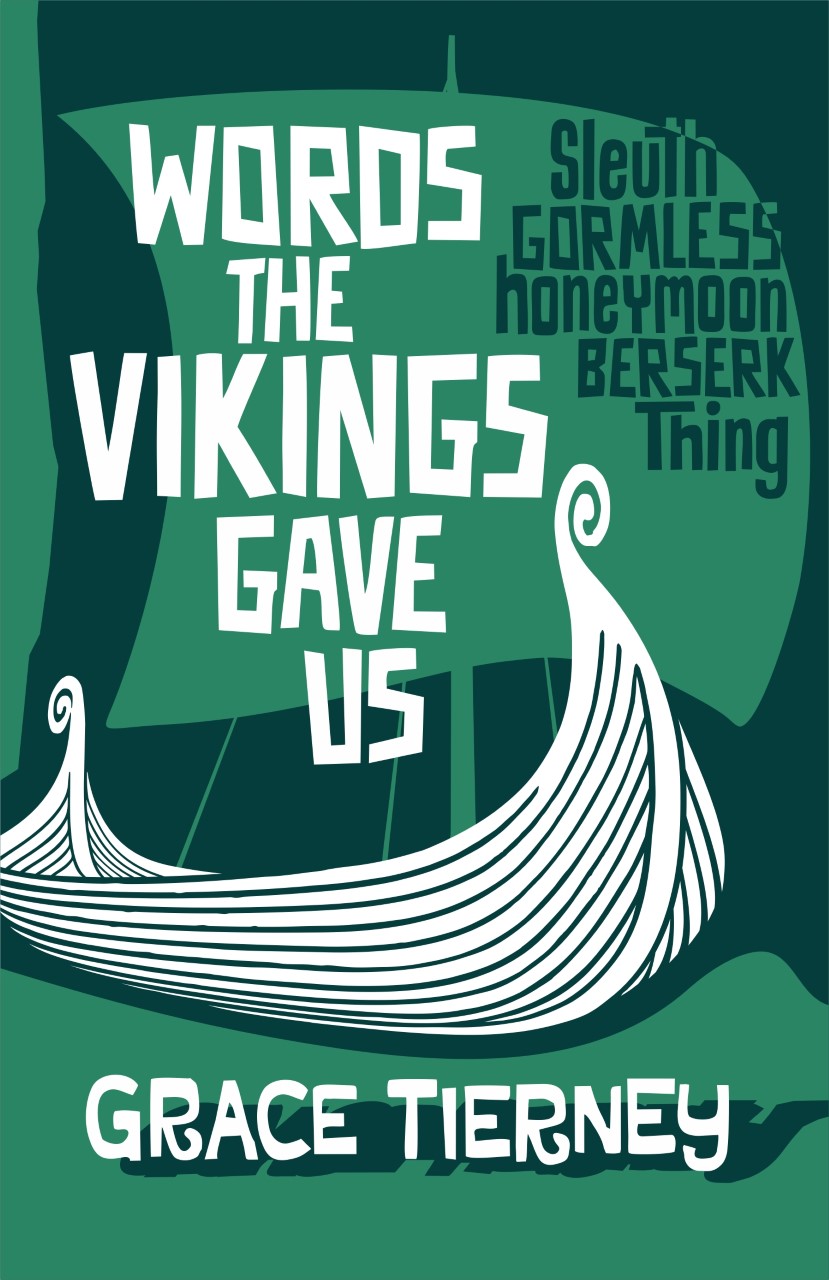
The Vikings settled larger swathes of the British Isles (during the Dane Law years) than the Romans, as they also settled Ireland and Scotland. They didn’t create roads and villas, but as discussed in my book “Words the Vikings Gave Us” they helped form the English language.

Perhaps the most startling example of prolonged Viking rule in the British Isles comes from the Scottish islands of Orkney and Shetland.

The Orkney islands, held a central position in the Viking world for centuries. 60% of modern Orkney islanders are genetically linked to Norway but that’s not surprising as Vikings ruled Orkney and Shetland for nearly 700 years – three centuries longer than Roman Britain.

Vikings settled Orkney in the late 700s as a base to raid into Scotland, England, and Ireland. The islands were finally returned to Scotland in 1468 when they formed part of the dowry of the daughter of King Christian I of Denmark upon her marriage to King James III of Scotland.

The first written accounts of the Shetlands are in the Norse sagas. They were conquered by the Vikings around 800. Again being traded away for a princess’s dowry many centuries later. On Norwegian National Day the island is draped in Norwegian flags despite being an oil-rich part of Great Britain. If you visit on the last Tuesday of January to celebrate Up Helly Aa, watch them burn a longship in costume, led by a Jarl, and wonder if the Vikings ever left Britain.

6. Vikings were Lawless

Despite having a reputation for being lawless raiders, Vikings gave the English language words like bylaw, ombudsman, and law. In fact they also gave us parliaments. Iceland’s national assembly is called the Althing. Its the oldest parliament in the world, having been founded in 930, and it originally met in the Thing Fields outside Reykjavik. This is where the English language gets the word thing. The first English representative parliament was established in 1265, in case you’re wondering.

Give the Vikings a second look, they might surprise you. Just don’t wear a horned helmet.

Many thanks to Grace for such a wonderful post. Words the Vikings Gave Us is available now in ebook and paperback.

About the author:

Grace Tierney is a columnist, author, and blogger writing on Ireland’s coast. Since 2009, she explores unusual English words every Monday at http://wordfoolery.wordpress.com, and on Irish radio. Her latest book, “Words the Vikings Gave Us”, launches this month and is a light-hearted look at the horde of words the English dictionary stole from the Vikings. From akimbo to yule Old Norse merged with Anglo-Saxon to form the start of the English language. The book unearths the history of words like kiss, ombudsman, bluetooth, frisbee, thing, and hustings. More than 300 words and phrases are featured – drawn from ship life, Viking food, farming, Norse romance, myths, politics, modern Vikings, anatomy, place names, daily life, and of course how to fight like a Viking.

Her earlier books about words include “How To Get Your Name In The Dictionary” (the extraordinary lives of those who gave their names as eponyms to English) and “Words The Sea Gave Us” (nautical nouns and phrases from fishermen, pirates, and explorers).

Her favourite Viking words are hug (so unexpected from a gang of plunderers) and attercop because it’s from her favourite childhood book.

Social Media Links

Blog: http://wordfoolery.wordpress.com
Twitter: https://twitter.com/Wordfoolery
Facebook: http://www.facebook.com/gracetierneywriter
Instagram: http://www.instagram.com/wordfoolery/

Buy Links

Paperback and ebook editions are available on Amazon, Kindle, Kobo with signed copies available directly. All the links are at https://wordfoolery.wordpress.com/my-books/

“Words The Sea Gave Us” and “How To Get Your Name In the Dictionary” out now on AmazonKindleApple BooksKobo and signed copies

*

My Books

Signed, dedicated copies of all my books are available, please get in touch by completing the contact me form.

Defenders of the Norman Crown: The Rise and Fall of the Warenne Earls of Surrey tells the fascinating story of the Warenne dynasty, of the successes and failures of one of the most powerful families in England, from its origins in Normandy, through the Conquest, Magna Carta, the wars and marriages that led to its ultimate demise in the reign of Edward III. Defenders of the Norman Crown: Rise and Fall of the Warenne Earls of Surrey is now available from Pen & Sword BooksAmazon in the UK and US and Book Depository.

1 family. 8 earls. 300 years of English history!

Also by Sharon Bennett Connolly:

Ladies of Magna Carta: Women of Influence in Thirteenth Century England looks into the relationships of the various noble families of the 13th century, and how they were affected by the Barons’ Wars, Magna Carta and its aftermath; the bonds that were formed and those that were broken. It is now available from Pen & Sword,  Amazon and from Book Depository worldwide.

Heroines of the Medieval World tells the stories of some of the most remarkable women from Medieval history, from Eleanor of Aquitaine to Julian of Norwich. Available now from Amberley Publishing and Amazon and Book Depository.

Silk and the Sword: The Women of the Norman Conquest traces the fortunes of the women who had a significant role to play in the momentous events of 1066.  Available now from Amazon,  Amberley Publishing, Book Depository.

*

You can be the first to read new articles by clicking the ‘Follow’ button, liking our Facebook page or joining me on Twitter and Instagram.

©2021 Sharon Bennett Connolly and Grace Tierney

Book Corner: The Serpent King by Tim Hodkinson

The fight for vengeance has no victors…

AD 936

The great warrior, Einar Unnsson, wants revenge. His mother’s assassin has stolen her severed head and Einar is hungry for his blood. Only one thing holds him back. He is a newly sworn in Wolf Coat, and must accompany them on their latest quest.

The Wolf Coats are a band of fearsome bloodthirsty warriors, who roam the seas, killing any enemies who get in their way. Now they’re determined to destroy their biggest enemy, King Eirik, as he attempts to take the throne of Norway.

Yet, for Einar, the urge to return to Iceland is growing every day. Only there, in his homeland, can he avenge his mother and salve his grief. But what Einar doesn’t know is that this is where an old enemy lurks, and his thirst for vengeance equals Einar’s…

I have followed Einar’s adventures since the very first book, Odin’s Game, two years ago; and each book gets better and better. The Serpent King is the fourth and latest book in the Whale Road Chronicles and, most definitely, the best story in the series so far. We follow the adventures of Einar and his friends, the Wolf Coats, from Norway to Orkney, with a few stops in between, on a dual mission of rescue and revenge.

The Serpent King is set in the mid-10th century, when Aethelstan, grandson of Alfred the Great, is attempting to unite England and extend his borders north into Scotland. He has made allies with the Norwegian Christian, Hakon, formerly king of York and now questing to dethrone his brother, King Eirik Bloody Axe of Norway. Einar and the band of Wolf Coats are drawn into the political in-fighting and rivalries, despite their attempts to stay aloof from the machinations of the ambitious rulers around them. Einar has his own quest, for revenge against his father for the murder of his mother. The hatred between father and son is visceral and the backbone behind this series of books. Einar and his father, Thorfinn, Jarl of Orkney, are on a collision course to a day of reckoning.

The Serpent King is a fast-paced, wonderfully visual adventure, set in a time when a man could make or break his fortune simply by the decision of who to back in the constant power struggle between England, Norway and Ireland. Tim Hodkinson weaves a tale that will have you hooked from the beginning, its many twists and turns leaving you mesmerised and reading ‘just one more chapter’ until the early hours.

As Einar watched, another man came out the door. He too was swathed in a heavy cloak. The metal of a helmet visor was visible under the cloak’s hood and he bore a spear in his right hand.

‘Thor blast Halfdan with Mjolnir,’ the second warrior said. ‘I don’t see him taking his turn to stand guard on the palisade on a filthy night like this.’

‘Well I don’t want to be the one missing if he shows up to check the guard tonight,’ the first man said. ‘Which he’s bound to do. Get a move on.’

A crash of thunder rocked the sky. As if in response the already lashing rain got even heavier. It hissed down all around into the already sodden muddy ground.

‘Look at this storm.’ Thorleif said, ducking his head as the rain pounded down on him. ‘No one will attack us on a night like this!’

Einar, watching from the shadows, could not help but smile.

The two warriors began splashing their way through the mud towards him. Einar tried to make himself as flat as possible against the wall. Wrapped up in their cloaks and hurrying through the rain, there was every chance they would not see him and go right past him without realising he was there.

What then, though? When they arrived at the gate they would find Surt and Wulfhelm have the time and luck to silence them first?

Then Einar heard the sound of another pair of sloshing footsteps approaching, this time from the direction he had come.

Tim Hodkinson is fabulous at building the tension in a story and keeping it going to the very end of the book. There are so many twists and turns that the reader is kept on their toes. Just when you think Einar and his companions are going to come out on top, another spanner is thrown in the works! So to speak. The tension is palpable – to the very end.

The characters, both the heroes and their enemies, are wonderfully colourful and have developed over the past two years. Einar and his companions have become a fighting team that relies on each other, not just in battle, but in the friendships and trust that has developed through their adventures. Where they were once a disparate group of individuals, they are now a coherent fighting team, able to rely on each others’ skills and judgements to get them through the various battle and plots they are faced with.

The Serpent King is full of clashes – of swords, personalities and even the gods. The battle scenes are wonderfully frenetic, with the reader feeling every sword thrust or the impact of axe on shield. If you have a love of Viking adventures, the clash of cultures and political machinations that accompanied the changing alliances as England, Norway, Ireland and Scotland were developing their identities during the 10th century, this is definitely a series for you to sink your teeth into.

This is a fabulous adventure, from the first page to the last, and not to be missed!

You can follow Einar’s adventures through The Serpent King blog tour, over the next 9 days:

About the author

Tim Hodkinson was born in 1971 in Northern Ireland. He studied Medieval English and Old Norse Literature at University with a subsidiary in Medieval European History. He has been writing all his life and has a strong interest in the historical, the mystical and the mysterious. After spending several happy years living in New Hampshire, USA, he has now returned to life in Northern Ireland with his wife Trudy and three lovely daughters in a village called Moira.

Tim is currently working on a series of viking novels for Ares Fiction, an imprint of Head of Zeus.

Buy links:

Amazon: https://amzn.to/3oNubLI; Kobo: https://bit.ly/3wKzs9Z; Google Play: https://bit.ly/34edsYu; iBooks: https://apple.co/3ukCyzy

Follow Tim:

Twitter: @TimHodkinson

Follow Aries:

Twitter: @AriesFiction; Facebook: @AriesFiction; Website: http://www.headofzeus.com

*

My Books

Defenders of the Norman Crown: The Rise and Fall of the Warenne Earls of Surrey tells the fascinating story of the Warenne dynasty, of the successes and failures of one of the most powerful families in England, from its origins in Normandy, through the Conquest, Magna Carta, the wars and marriages that led to its ultimate demise in the reign of Edward III.

1 family. 8 earls. 300 years of English history!

Defenders of the Norman Crown: Rise and Fall of the Warenne Earls of Surrey will be released in the UK on 31 May and in the US on 6 August. And it is now available for pre-order from Pen & Sword BooksAmazon in the UK and US and Book Depository.

Also by Sharon Bennett Connolly:

Ladies of Magna Carta: Women of Influence in Thirteenth Century England looks into the relationships of the various noble families of the 13th century, and how they were affected by the Barons’ Wars, Magna Carta and its aftermath; the bonds that were formed and those that were broken. It is now available from Pen & Sword,  Amazon and from Book Depository worldwide.

Heroines of the Medieval World tells the stories of some of the most remarkable women from Medieval history, from Eleanor of Aquitaine to Julian of Norwich. Available now from Amberley Publishing and Amazon and Book Depository.

Silk and the Sword: The Women of the Norman Conquest traces the fortunes of the women who had a significant role to play in the momentous events of 1066.  Available now from Amazon,  Amberley Publishing, Book Depository.

*

You can be the first to read new articles by clicking the ‘Follow’ button, liking our Facebook page or joining me on Twitter and Instagram.

©2021 Sharon Bennett Connolly

Book Corner: The Last Berserker by Angus Donald

The greatest warriors are forged in the flames

Two pagan fighters

771AD, Northern Europe. Bjarki Bloodhand and Tor Hildarsdottir are journeying south into Saxony. Their destination is the Irminsul, the One Tree that links the Nine Worlds of the Middle-Realm. In this most holy place, they hope to learn how to summon their animal spirits so they can enter the ranks of the legendary berserkir: the elite frenzied fighters of the North.

One Christian king

Karolus, newly crowned King of the Franks, has a thorn in his side: the warlike Saxon tribes on his northern borders who shun the teachings of the Church, blasphemously continuing to worship their pagan gods.

An epic battle for the soul of the North

The West’s greatest warlord vows to stamp out his neighbours’ superstitions and bring the light of the True Faith to the Northmen – at the point of a sword. It will fall to Bjarki, Tor and the men and women of Saxony to resist him in a struggle for the fate of all Europe.

I have read Angus Donald’s books since the first of his Robin Hood series, Outlaw, came out many moons ago. And I absolutely adored his series set around the 1688 Glorious Revolution with unlikely hero Holcroft Blood. But there is always a risk when an author starts a new series; will it live up to previous stories?

Well, with The Last Berserker there is no need to worry. From the first few lines you are reassured that Angus Donald starts as he means to go on; with an action-filled storyline that will take the reader on a breathtaking journey through the turbulent years of the 8th century. It is quite the adventure!

The story derives from the many tales of the berserkers, men who went wild in battle, killing dozens at a time. Angus Donald has created a world in which the berserkers were not just mad men, but legendary fighters who honed their skills through belief, training and discipline. They were heroes who used their unique talents to lead men into battle and deliver victory after victory. Set in the time when the great Charlemagne was waging his campaign of conquest against the German tribes, The Last Berserker tells the story of Bjarki Bloodhand, who joins the fight to defend his homelands.

‘How about you, son? You look like a strapping fellow. Care to try your strength? Bjarki realised the tall blond man was speaking to him.

He shook his head.

‘No need to be afraid. I’ll tell Black Svein to go easy on you.’

‘I’m not afraid,’ Bjarki said.

‘Then come inside the hazel square and prove it.’

Bjarki shook his head. He smiled.

The straw-haired man turned away. ‘There must be one or two here today who are not snivelling cowards,’ he said, his back turned to Bjarki.

Bjarki stopped smiling. He felt suddenly cold. He took a step forward.

‘He’s not a coward,’ said a voice at his elbow, a cool hand there, too, restraining him. ‘He just doesn’t want to fight your friend today. And calling him one won’t change his mind.’

The straw-haired man turned back and looked at Bjarki – and Tor, who was now standing beside him.

‘You his girl then?’ he said. Then to Bjarki: ‘Aren’t you a one – getting your little girlie to speak for you. I see now why you won’t fight.’

‘He won’t fight your friend,’ said Tor, ‘but I will. You said you had quarterstaffs? Yes? All right then, I accept your challenge.’

The straw-haired man was nonplussed. This scrawny young woman, with arms like kindling sticks, was about half of the weight of Black Svein – and a head shorter than him too. It was a ridiculous match.

‘You can’t fight him,’ he said.

‘Oh yes? Why is that? Is he afraid of me?’

That started a howl of laughter from the crowd, which had thickened considerably by now. The straw-haired man flushed pink with irritation.

‘You cannot fight him, girlie. It would not be a fair contest.’

‘What if I go really easy on him?’ said Tor. ‘I promise I won’t hurt him all that much – hardly at all. I’ll be as gentle as a lamb with the poor idiot.’

Angus Donald weaves together, myth, legend and history to recreate a world where the berserker not only flourished, but was revered as a great warrior.
As an author, Donald is very adept at creating unique, interesting protagonists. Holcroft Blood was an autistic officer who had a knack for uncovering spies and a skill in artillery that was unrivalled. Robin Hood was a vicious killer, not the cuddly Robin Hood from legend. And with Bjarki Bloodhand, we have another individual who is not, at first sight, your typical hero. He is a rather dull, awkward boy; quite unassuming in fact. He comes across as naive, a little too trusting and not overly ambitious. He is, however, loyal to ahis friends, a good fighter and as brave as they come. He doesn’t shirk from a fight, but doesn’t necessarily seek it out. And he is incredibly likeable.
Bjarki’s sidekick, for want of a better word, is Tor, a slip of a girl with an attitude that belies her size. A born fighter, she is always looking to prove herself. Tor is a fascinating character who has secrets of her own to hide and ‘issues’ to work through. The two make an unlikely pairing but a firm friendship that helps them through their many trials.

Angus Donald wonderfully recreates the world of 8th century central Europe, from the landscape and the natural borders that separate the various nations, to the contrasting religious beliefs – both Christian and pagan – that lie at the centre of the conflict. A natural storyteller when it comes to warfare, Donald vividly evokes the song of battle, with seax, sword, axe and shield. The frenetic energy of the battle scenes leave the reader breathless and eager for more. The intricacies of the story, with its various twists and turns, some rather surprising, keep the reader on the edge of their seat throughout.

The Last Berserker is a truly enthralling story, not easy to put down – and a thoroughly enjoyable reading experience. It is one book that is not to be missed!

The Last Berserker by Angus Donald is available in paperback and ebook from Amazon.

*

About the Author:

Angus Donald is the author of the bestselling Outlaw Chronicles, a series of ten novels set in the 12th/13th centuries and featuring a gangster-ish Robin Hood. Angus has also published the Holcroft Blood trilogy about a mildly autistic 17th-century English artillery officer, son of notorious Crown Jewels thief Colonel Thomas Blood. Before becoming an author, Angus worked as a fruit-picker in Greece, a waiter in New York City and as an anthropologist studying magic and witchcraft in Indonesia. For fifteen years he was a journalist working in Hong Kong, India, Afghanistan and London. He now writes full time from a medieval farmhouse in Kent.

*

My books

Ladies of Magna Carta: Women of Influence in Thirteenth Century England looks into the relationships of the various noble families of the 13th century, and how they were affected by the Barons’ Wars, Magna Carta and its aftermath; the bonds that were formed and those that were broken. It is now available from Pen & Sword,  Amazon and from Book Depository worldwide.

Also by Sharon Bennett Connolly:

Heroines of the Medieval World tells the stories of some of the most remarkable women from Medieval history, from Eleanor of Aquitaine to Julian of Norwich. Available now from Amberley Publishing and Amazon and Book Depository.

Silk and the Sword: The Women of the Norman Conquest traces the fortunes of the women who had a significant role to play in the momentous events of 1066.  Available now from Amazon,  Amberley Publishing, Book Depository.

*

You can be the first to read new articles by clicking the ‘Follow’ button, liking our Facebook page or joining me on Twitter and Instagram.

©2021 Sharon Bennett Connolly.

Book Corner: Reading Round-up 1

I am well behind on the list of book reviews I still have to write up, so I though I would do a couple of articles that include mini-reviews of several books that I have read and enjoyed over the last few months, to clear the backlog and give you some fabulous ideas if you’re looking for that next read.

A Hidden History of the Tower of London by John Paul Davis

Famed as the ultimate penalty for traitors, heretics and royalty alike, being sent to the Tower is known to have been experienced by no less than 8,000 unfortunate souls. Many of those who were imprisoned in the Tower never returned to civilisation and those who did, often did so without their head! It is hardly surprising that the Tower has earned itself a reputation among the most infamous buildings on the planet. There have, of course, been other towers. Practically every castle ever built has consisted of at least one; indeed, even by the late 14th century, the Tower proudly boasted no less than 21. Yet even as early as the 1100s, the effect that the first Tower had on the psyche of the local population was considerable. The sight of the dark four-pointed citadel – at the time the largest building in London – as it appeared against the backdrop of the expanding city gave rise to many legends, ranging from the exact circumstances of its creation to what went on within its strong walls. In ten centuries what once consisted of a solitary keep has developed into a complex castle around which the history of England has continuously evolved. So revered has it become that legend has it that should the Tower fall, so would the kingdom. Beginning with the early tales surrounding its creation, this book investigates the private life of an English icon. Concentrating on the Tower’s developing role throughout the centuries, not in terms of its physical expansion into a site of unique architectural majesty or many purposes but through the eyes of those who experienced its darker side, it pieces together the, often seldom-told, human story and how the fates of many of those who stayed within its walls contributed to its lasting effect on England’s – and later the UK’s – destiny. From ruthless traitors to unjustly killed Jesuits, vanished treasures to disappeared princes and jaded wives to star-crossed lovers, this book provides a raw and at times unsettling insight into its unsolved mysteries and the lot of its unfortunate victims, thus explaining how this once typical castle came to be the place we will always remember as THE TOWER.

What a wonderful read!

Packed to the brim with the best stories from the Tower, and almost 1,000 years of history – some you will know and some you won’t. John Paul Davis tells the remarkable story of the Tower of London through the lives of the people who have resided under its roofs – some of them most unfortunate indeed! We hear the stories of those fortunate people who escaped – and the not-so-fortunate who died in the attempt. John Paul Davis examines every aspect of the Tower of London, its role as a royal fortress, prison and place of execution; and the national events in which it played apart, such as the Peasants’ Revolt and the executions of 2 of Henry VIII’s queens. Written in 23 chapters, the story of the Tower as a prison is told from its foundation in 1066 to the present day.

With these incredible and often heart breaking stories, John Paul Davis clearly demonstrates how the fortress acquired its sinister reputation.

A Hidden History of the Tower of London is a thoroughly enjoyable read, and impossible to put down.

Lost Heirs of the Medieval Crown by J.F. Andrews

When William the Conqueror died in 1087 he left the throne of England to William Rufus … his second son. The result was an immediate war as Rufus’s elder brother Robert fought to gain the crown he saw as rightfully his; this conflict marked the start of 400 years of bloody disputes as the English monarchy’s line of hereditary succession was bent, twisted and finally broken when the last Plantagenet king, Richard III, fell at Bosworth in 1485.

The Anglo-Norman and Plantagenet dynasties were renowned for their internecine strife, and in Lost Heirs we will unearth the hidden stories of fratricidal brothers, usurping cousins and murderous uncles; the many kings – and the occasional queen – who should have been but never were. History is written by the winners, but every game of thrones has its losers too, and their fascinating stories bring richness and depth to what is a colourful period of history. King John would not have gained the crown had he not murdered his young nephew, who was in line to become England’s first King Arthur; Henry V would never have been at Agincourt had his father not seized the throne by usurping and killing his cousin; and as the rival houses of York and Lancaster fought bloodily over the crown during the Wars of the Roses, life suddenly became very dangerous indeed for a young boy named Edmund.

With Lost Heirs of the Medieval Crown, author JF Andrews provides a fascinating study of the also-rans and almost-made-its of medieval history; those children of the kings of England who died before they could claim their birth-right, or were passed over due to the dynastic squabbles of the Norman and Plantagenet dynasties that ruled England from the Norman Conquest in 1066 to the advent of the Tudor age.

From the battles of Robert Curthose, eldest son of William the Conqueror, to the tragic lives of the Yorkist heirs, Edward V, Edward of Middleham and Edward Earl of Warwick, Lost Heirs of the Medieval Crown is a thoroughly engaging read, examining the lives of the heirs who were unable to claim their birthright, imprisoned for their royal blood, died before their time, or died in the attempt to claim the throne. Each individual story is brought into one volume, and demonstrates the struggle for power and supremacy in medieval England.

Beautifully written and well researched, it is an engaging read.

Decoding the Bayeux Tapestry by Arthur C. Wright

For the first time, a scholar reveals the meaning of the marginal images on the Bayeux Tapestry, unlocking a completely new meaning of the work.
 
The story of the Norman Conquest and the Battle of Hastings as shown in the Bayeux Tapestry is arguably the most widely-known in the panoply of English history, and over the last 200 years there have been hundreds of books on the Tapestry seeking to analyze its meanings. Yet, there is one aspect of the embroidery that has been virtually ignored or dismissed as unimportant by historians—the details in the margins.
 
The fables shown in the margins are neither just part of a decorative ribbon, nor are they discontinuous. They follow on in sequence. When this is understood, it becomes clear that they must relate to the action shown on the body of the Tapestry. After careful examination, the purpose of these images is to amplify, elaborate, or explain the main story.
 
In this groundbreaking study, Arthur Wright reveals the significance of the images in the margins. Now it is possible to see the “whole” story as never before, enabling a more complete picture of the Bayeux Tapestry to be constructed. Wright reexamines many of the scenes in the main body of the work, showing that a number of the basic assumptions, so often taught as facts, have been based on nothing more than reasoned conjecture.
 
It might be thought that after so much has been written about the Bayeux Tapestry there was nothing more to be said, but Decoding the Bayeux Tapestry shows how much there is still to be learned.

Decoding the Bayeux Tapestry: The Secrets of History’s Most Famous Embroidery Hidden in Plain Sight by Arthur C. Wright is a wonderful, engaging study of this most famous of embroideries, retelling the Norman Invasion in stunning, colourful needlework. Arthur C. Wright studies every aspect of the Tapestry, from the beasts in the margins to the story being played out in dramatic detail in the main part of the Tapestry. The author demonstrates how the images in the tapestry, even the animals and mystical creatures in the margin, serve to tell the story of the tapestry and the Norman Conquest.

An entertaining read and thoughtful study of the most famous of tapestries Decoding the Bayeux Tapestry is an illuminating work, beautifully illustrated along the way with images from the famous needlework.

Sex and Sexuality in Stuart Britain by Andrea Zuvich

Peek beneath the bedsheets of Stuart Britain in this frank, informative, and captivating look at the sexual lives of the peoples of the British Isles between 1603 and 1714. Popular Stuart historian Andrea Zuvich, The Seventeenth Century Lady , explores our ancestors’ ingenious, surprising, bizarre, and often entertaining beliefs and solutions to the challenges associated with maintaining a healthy sex life, along with the prevailing attitudes towards male and female sexual behaviour. The author sheds light not only on the saucy love lives of the Royal Stuarts, but also on the dark underbelly of the Stuart era with histories of prostitution, sexual violence, infanticide, and sexual deviance. What was considered sexually attractive in Stuart Britain? At which ages would people be old enough for marriage? What were the penalties for adultery, incest, and fornication? How did Stuart-era peoples deal with infertility, sexually-transmitted illnesses, and child mortality? Find out the answers to these questions – and more – as fashion, food, science, art, medicine, magic, literature, love, politics, faith and superstition of the day are all examined, leaving the reader with a new regard for the ingenuity and character of our seventeenth and early eighteenth-century ancestors.

Sex and Sexuality in Stuart Britain by Andrea Zuvich is a wonderful study of the bedroom exploits of the Stuart dynasty of the seventeenth century. Andrea Zuvich examines all aspects of Stuart sexual life, from attitudes to rape and pornography, to the notions of love and marriage. Zuvich also looks at the lives of the Stuart monarchs, examining the rumours around them, the various mistress and lovers and the perceptions they gave to their people and to history. This is a truly fascinating study of a part of life that is important to all of us – and necessary for our continued existence – but so rarely talked about. Sex and Sexuality in Stuart Britain is so much more than a study of sexual practices in Stuart Britain, it also analyses the effects of child mortality, the dangers of childbirth. It also looks at the seedier side of society, such as infanticide and sexually transmitted diseases.

Sex and Sexuality in Stuart Britain is fascinating! It is a book that needed to be written and provides a wonderful contrast to the usual books on Stuart Britain, which concentrate on the Civil Wars, rather than the lives, loves and desires of the people. Andrea Zuvich has written a marvelous study of Stuart attitudes towards sex and sexuality, leaving no stone unturned to give the reader a comprehensive view of Stuart life, including the legal, social and personal aspects and implications.

The Peasants Revolting Lives by Terry Deary

Today we are aware of how the rich and privileged have lived in the past because historians write about them endlessly. The poor have largely been ignored and, as a result, their contributions to our modern world are harder to unearth. Skilled raconteur TERRY DEARY takes us back through the centuries with a poignant but humorous look at how life treated the common folk who scratched out a living at the very bottom of society. Their world was one of foul food, terrible toilets, danger, disease and death the last, usually premature. Discover the stories of the teacher turned child-catcher who rounded up local waifs and strays and put them to work, and the thousands of children who descended into the hazardous depths to dig for coal. Read all about the agricultural workers who escaped the Black Death only to be thwarted by greedy landowners. And would you believe the one about the man who betrothed his 7-year-old daughter to a Holy Roman Emperor, or even the brothel that was run by a bishop? On the flip side, learn how cash-strapped citizens used animal droppings for house building and as a cure for baldness; how sparrow s brains were incorporated into aphrodisiacal brews; and how mixing tea with dried elder leaves could turn an extra profit. And of the milestones that brought some meaning to ordinary lives, here are the trials and tribulations of courtship and marriage; the ruthless terrors of the sporting arena; and the harsh disciplines of education all helping to alleviate the daily grind. The Peasants Revolting Lives celebrates those who have endured against the odds. From medieval miseries to the idiosyncrasies of being a twenty-first-century peasant, tragedy and comedy sit side by side in these tales of survival and endurance in the face of hardship.

Terry Deary’s The Peasants’ Revolting Lives is a fun and fascinating read for all the family. Whenever a Terry Deary book arrives on the doorstep, there is an inevitable squabble between myself and my son as to who should read it first – I tend to lose!

With stories that are often amusing, sometimes gruesome and all true, Terry Deary examines every aspect of the life of the peasant – throughout history – from work and religion, to sport, entertainment and education. The book is packed full of facts, each story or anecdote intended to inform and entertain – and they do!

The Peasants’ Revolting Lives is a wonderful reading experience for adult and child alike. The stories are so engaging and interesting that you don’t even realise you are learning about the trials and hardships of life as a peasant down the centuries. It is a must-read for any history lover.

All these books are available from Pen & Sword, with 30% off throughout December.

*

My Books

Ladies of Magna Carta: Women of Influence in Thirteenth Century England looks into the relationships of the various noble families of the 13th century, and how they were affected by the Barons’ Wars, Magna Carta and its aftermath; the bonds that were formed and those that were broken. It is now available from Pen & Sword,  Amazon and from Book Depository worldwide.

Also by Sharon Bennett Connolly:

Silk and the Sword: The Women of the Norman Conquest traces the fortunes of the women who had a significant role to play in the momentous events of 1066.  Available now from Amazon,  Amberley Publishing, Book Depository.

Heroines of the Medieval World tells the stories of some of the most remarkable women from Medieval history, from Eleanor of Aquitaine to Julian of Norwich. Available now from Amberley Publishing and Amazon and Book Depository.

*

You can be the first to read new articles by clicking the ‘Follow’ button, liking our Facebook page or joining me on Twitter and Instagram.

©2020 Sharon Bennett Connolly