Wordly Women: Cathie Dunn

History...the Interesting Bits

Time for another edition of Wordly Women! It has been great fun, meeting all these amazing authors. I do hope everyone is enjoying it as much as I am. Today, I want to introduce you to a very dear friend, historical novelist Cathie Dunn. Cathie and I have known each other a good few years on Facebook, so much so that the first time we met in real life, there was no awkwardness. I love that about social media!

So, let me introduce you to Cathie!

Sharon: Hi, Cathie, first things first, what got you into writing?

Cathie: Ooh, that takes me back decades! It was the romantic historical novels by the likes of M.M. Kaye, Victoria Holt / Philippa Carr (Eleanor Burford’s pseudonyms), in my late teens that got me hooked. I loved Ms Holt’s gothic romance novels in particular, at the time. They were so atmospheric, and – growing up in Germany – I loved the vision of historic and haunted English manors. During the late 1990s and 2000s, after my move to the UK, I learnt a lot about how to create a compelling plot, within a realistic historical setting, by devouring novels by Helen Hollick, Elizabeth Chadwick, and Barbara Wood, amongst others. It was enough to make me embark on HE Certificate in Creative Writing (online) at Lancaster University (though at the time, I was the only one on the course who wrote historical fiction). But at least, it provided me with deeper insights into the writing craft.

Sharon: Tell us about your books.

Cathie: I started off with a project which went from romance to murder mystery to spy novel to (supposedly) a series of events set during the Anarchy – one of my favourite eras. To date, Dark Deceit is an undefined mix, which I’ll need to untangle at some point in time.

Sharon: Yes please! I want to read it!

Cathie: In 2009, I took part in NaNoWriMo, working on a Scottish romance set after the 1715 Jacobite rebellion. I used real locations and studied the background history in depth – too much for traditional romance publishers, who duly rejected it. Fortunately, Highland Arms was picked up by a fabulous US indie press, and my path was clear! I later wrote a second Scottish romance, A Highland Captive, set during the Wars of Independence.

After my move from Scotland to France, my focus changed to medieval French history, with a dual-timeline mystery inspired by my surroundings. Love Lost in Time delves into the distant past of the county of Carcassonne. And the novel immortalised a young cat I lost too soon, Shadow.

Next, I wrote a novel set at the court of Louis XIV. The Shadows of Versailles deals with a dark side of the otherwise glittering court: the Affair of the Poisons. It may be too dark for some readers, as it contains disturbing scenes of child abductions and black masses. Tragically, it’s all based on real, credible accounts of the time. Researching history can be revolting, at times.

After that serious topic, I needed a more positive distraction, and I promptly delved into the foundation years of Normandy, a county I love. Ascent tells the forgotten story of Poppa of Bayeux. Everyone with a TV now knows her more danico husband – Rollo – but who was the mother of his children? Sadly, she was overlooked in the recent series, Vikings. Ascent tells her (fictionalised) story.

Sharon: What attracts you to the early medieval period?

Cathie: It was an era of great change, all across the British Isles and the European continent. The old ways and beliefs had been discarded, to make way for a Church growing in political influence, and it all makes for fascinating research. New hierarchies were formed amidst a continuing power struggle between different families. As the appointments of ‘nobility’ grew into fashion, so did the influence of favourites and allies on rulers. It was a fascinating time.

Sharon: Who is your favourite early medieval character and why?

History...the Interesting Bits
Image of the statue of Poppa of Bayeux, Bayeux – Photochrom Print Collection

Cathie: Ooh, that’s a tricky one. There are so many real people we know little about, especially women.

(So, a big *Thank You* to you for shining a light on them with your brilliant books!)

I do think Poppa of Bayeux deserves a lot more credit. She had to deal with so many challenges – married to a marauding stranger who was likely a decade or two older, and a Pagan; bearing his children; fleeing with him to Anglia; returning to see his power increase, while she is quietly forgotten. I quite like her to be my favourite early medieval character.

Charles Martel is another. He was a fascinating man, paving the way for a greater Frankish kingdom with his conquests across what is now France. Whilst most people know his grandson, Charlemagne, without Charles, Charlemagne’s ascent in the political sphere of central Europe would not have been possible. Was Charles likeable? Hm, I’m not sure. We know he was ruthless, efficient, and a capable leader of men. Did he have time to be nice? Perhaps that’s a question for another writing project…

Sharon: Who is your least favourite early medieval character and why?

Cathie: That would probably be Charles the Fat, Carolingian King of the Franks and Holy Roman Emperor for a few years in the 880s. He was ineffective, and hopeless at controlling different sections of his empire. He was deposed and died in early 888, and the crown went to Odo of Paris. The Carolingian dynasty was restored after Odo’s reign, though the crown of Frankia went back and forth for a while. This is the era Ascent is set in, and it made for intriguing research.

The real Rollo surely had his work cut out, having to deal with all these changing rulers and their agendas.

Sharon: How do you approach researching your topic?
Cathie: I love history books. I think by now I own more history books than novels! Usually, I start with checking online resources. Jstor is a useful site, where you can read a number of articles for free each month; Medievalists.net is another helpful resource.

But most online sites just give you only an overview, so you need to check books that focus on the relevant era. I have an array of history books on early, high & late medieval England, Tudor England, and medieval & Jacobite Scotland on my shelves. For my France-based novels, I consult non-fiction books in French, many of which I find (handily!) in second-hand bookshops. I also use German resources, where needed.

I find that having a range of resources from different countries to consult is the best way to get a fair overview of historic events. We know that original sources were often (though not always) based on what rulers wanted the rest of the world to know – that being not necessarily the full truth. The winner records history in his favour. So, drawing from sources in different languages adds to the experience in discovering the past.

Sharon: That is so true!

Sharon: Tell us your ‘favourite’ medieval story you have come across in your research.
History... the Interesting Bits
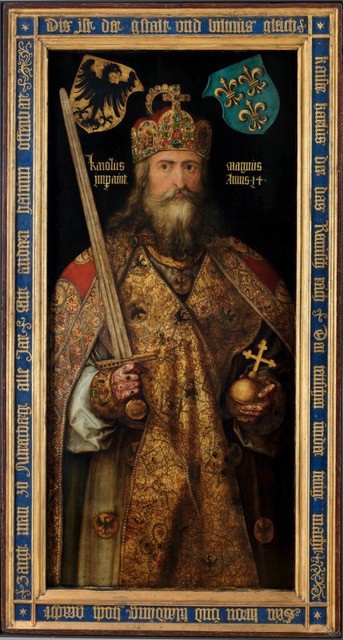
Image of Albrecht Dürer’s painting of Charlemagne

Cathie: Unfortunately, it is difficult to find credible stories about early medieval characters, unless they were major players like Charlemagne, due to the loss (or deliberate omission) of references for lesser-known individuals.

Therefore, I’ve chosen Charlemagne’s wives and concubines as a story I find entertaining, and enlightening! I mean – how on earth did the man have the time to marry four times, have several concubines after the death of his last wife (and possibly before) – and father an estimated twenty (20!) children? His court was always travelling across his ever-expanding realm (and later, his empire), though it is said that his main seat at Aachen (Aix-la-Chapelle) became his favourite.

He insisted his illegitimate children were raised alongside his legitimate offspring, ensuring they all received an education deserving of their Royal bloodline. After his son Pepin’s untimely death, he even took his grandchildren in to be educated with the others.

This is a fact I recently discovered, and now I’m curious to find out more! With daughters, and especially illegitimate ones, usually being swept off into marriage or convents, his insistence that they are all educated is telling. Clearly, here was a man who valued learning – be that in practical skills or reading and writing.

For a man who ruthlessly expanded his territories, responsible for subjugation of peoples and a great number of deaths ranging from Germanic Saxony to the Iberian Peninsula, this shows an entirely different side of the ‘great Charles’.

Sharon: Tell us your least ‘favourite’ medieval story you have come across in your research.

Cathie: That has to be Charlemagne’s darkest episode – the subjugation of Germanic Pagan tribes in Saxony. The wars lasted – on and off – for three decades, and they were brutal. The Saxons did not give in easily, much to Charlemagne’s frustration, and their conversion to Christianity was slow. Their skirmishes into his territory vexed him immensely.

Eventually, according to the Royal Frankish Annals, the infamous ‘Blood Court’ massacre at Verden, in October 882, saw the execution of approx. 4,500 Saxon ‘rebels’ captured after recent battles. Their leader, Widukind, had managed to flee north.

Although later historians disputed the figure quoted in the annals, with several trying to make ridiculous excuses for Charlemagne’s actions, there seems to have been a great slaughter of thousands of prisoners, regardless. Charlemagne wanted to set an example, an effective deterrent.

Warfare continued for three more years, then it was all over for the Saxons, especially after Widukind converted to Christianity. But it was the massacre at Verden that remained like a blood stain on his otherwise pristine reputation.

Sharon: Are there any other eras you would like to write about?

Cathie: I do love different eras, as you know. The Anarchy is definitely high on my list, and I’ll have to revisit Dark Deceit to see where it takes me. (Sharon: Do it! Please!)

But I also love the court of Louis XIV of France, with all its superficial splendour and dark secret plots. The Affair of the Poisons is such an intriguing event, with many prolific nobles implicated in trying to influence the king’s opinion through nefarious deeds. Deeply disturbing, and utterly fascinating.

And then, of course, is the time of the Scottish Wars of Independence. It wasn’t easy to mess with a remarkable, power-hungry king like Edward I! (Sharon: Ooh, yes!)

But, ultimately, it’s the late Dark Ages (do we still call it that, as they weren’t really that dark?) and early Middle Ages that keep me hooked. Oh, to travel to Frankia for one day only…

Sharon: What are you working on now?
Cathie: My current WIP is called Treachery, and it’s the story of Sprota the Breton, handfasted wife of William Longsword – Poppa’s and Rollo’s son. Like his father and his two wives, William married Sprota in more danico (in the Danish custom), and Luitgarde of Vermandois in a proper Church blessing, for political reasons.

Even less is known of Sprota than of Poppa; mainly that she was mother to William’s only son, Richard, likely the first Duke of Normandy. (Rollo and William never were dukes.) I introduced her towards the end of Ascent, when she had to flee to Bayeux as William’s enemies closed in on him at his fortress in Fécamp. Following William’s assassination by Count Arnulf of Flanders in 842, Sprota had to remarry to keep her young son’s inheritance secure. And to ensure his safety!

Her responsibility as the mother of William’s heir, and her struggles for them to survive, make for an intriguing story. So many powerful men had set their sights on Normandy, wanting Richard out of the way. I hope to do Sprota justice, as, again, she has been forgotten in time.

The third and final instalment of my House of Normandy trilogy about the early ladies of Normandy will conclude in Reign, about Richard’s second wife (and previous lover), Gunnora.

Then there’s Poppa’s daughter Adela, married to the Count of Poitou. Perhaps a companion novel? 😉 Sigh…

Sharon: And finally, what is the best thing about being a writer?

Cathie: Exploring past histories is utterly fascinating, and I can only recommend it. That goes for the good and the bad we discover in our research.

Reliving the distant past is fun, but also a great responsibility, as we should stay as close to the few known facts as possible. An ogre can’t just turn into a Prince Charming, although looking at Charlemagne, he definitely had two sides to his character – the caring father interested in learning and culture, and ruthless ruler chopping off heads of his prisoners. A man of his times. But what about his women? (Cathie, behave! One novel at a time…)

And though my earlier works focused more on events and fictional characters, I now find it far more rewarding to bring forgotten women from the distant past back to life, even ‘just’ in fictionalised format. Their stories must be told.

Thank you again for letting me ramble on about my research and writing. It’s been fabulous revisiting my stories, and the real characters involved in them, and I hope your readers enjoy my interview.

Sharon: Cathie, thank you so much! It has been a pleasure! No wonder you and I get on so well!

About the Author:
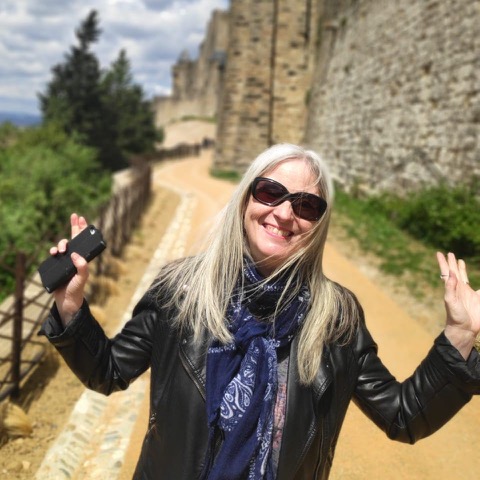
Cathie Dunn is an Amazon-bestselling author of historical fiction, dual-timeline, mystery, and romance. She loves to infuse her stories with a strong sense of place and time, combined with a dark secret or mystery – and a touch of romance. Often, you can find her deep down the rabbit hole of historical research…

In addition, she is also a historical fiction book promoter with The Coffee Pot Book Club, a novel-writing tutor, and a keen book reviewer on her blog, Ruins & Reading.

After having lived in Scotland for almost two decades, Cathie is now enjoying the sunshine in the south of France with her husband, and her rescued pets, Ellie Dog & Charlie Cat.

She is a member of the Historical Novel Society, the Richard III Society, the Alliance of Independent Authors, and the Romantic Novelists’ Association.

Where to find Cathie:

Website: Amazon; Facebook Author Page; Twitter / X; Bluesky.

To Buy Cathie’s books: Ascent: Love Lost in Time

*

My Books:

Signed, dedicated copies of all my books are available through my online bookshop.

Out now: Scotland’s Medieval Queens

Books by Sharon Bennett Connolly

Scotland’s history is dramatic, violent and bloody. Being England’s northern neighbour has never been easy. Scotland’s queens have had to deal with war, murder, imprisonment, political rivalries and open betrayal. They have loved and lost, raised kings and queens, ruled and died for Scotland. From St Margaret, who became one of the patron saints of Scotland, to Elizabeth de Burgh and the dramatic story of the Scottish Wars of Independence, to the love story and tragedy of Joan Beaufort, to Margaret of Denmark and the dawn of the Renaissance, Scotland’s Medieval Queens have seen it all. This is the story of Scotland through their eyes.

Scotland’s Medieval Queens gives a thorough grounding in the history of the women who ruled Scotland at the side of its kings, often in the shadows, but just as interesting in their lives beyond the spotlight. It’s not a subject that has been widely covered, and Sharon is a pioneer in bringing that information into accessible history.’ Elizabeth Chadwick (New York Times bestselling author)

Available now from Amazon and Pen and Sword Books

Also by Sharon Bennett Connolly:

Books by Sharon Bennett Connolly

Heroines of the Tudor World tells the stories of the most remarkable women from European history in the time of the Tudor dynasty, 1485-1603. These are the women who ruled, the women who founded dynasties, the women who fought for religious freedom, their families and love. Heroines of the Tudor World is now available for pre-order from Amberley Publishing and Amazon UK. Women of the Anarchy demonstrates how Empress Matilda and Matilda of Boulogne, unable to wield a sword themselves, were prime movers in this time of conflict and lawlessness. It shows how their strengths, weaknesses, and personal ambitions swung the fortunes of war one way – and then the other. Available from Bookshop.orgAmberley Publishing and Amazon UKKing John’s Right-Hand Lady: The Story of Nicholaa de la Haye is the story of a truly remarkable lady, the hereditary constable of Lincoln Castle and the first woman in England to be appointed sheriff in her own right. Available from all good bookshops Pen & Sword Booksbookshop.org and Amazon

Royal Historical Society

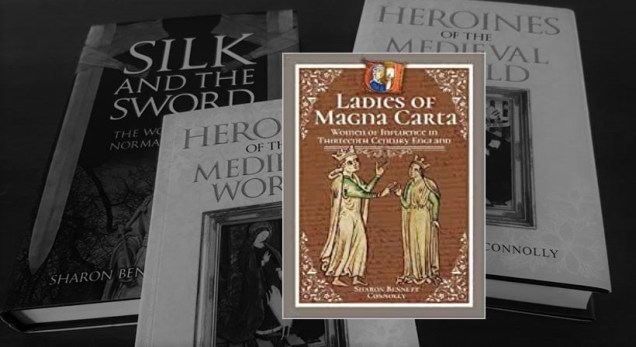
Defenders of the Norman Crown: The Rise and Fall of the Warenne Earls of Surrey tells the fascinating story of the Warenne dynasty, from its origins in Normandy, through the Conquest, Magna Carta, the wars and marriages that led to its ultimate demise in the reign of Edward III. Available from Pen & Sword BooksAmazon in the UK and US, and Bookshop.orgLadies of Magna Carta: Women of Influence in Thirteenth Century England looks into the relationships of the various noble families of the 13th century, and how they were affected by the Barons’ Wars, Magna Carta and its aftermath; the bonds that were formed and those that were broken. It is now available in paperback and hardback from Pen & SwordAmazon, and Bookshop.orgHeroines of the Medieval World tells the stories of some of the most remarkable women from Medieval history, from Eleanor of Aquitaine to Julian of Norwich. Available now from Amberley Publishing and Amazon, and Bookshop.orgSilk and the Sword: The Women of the Norman Conquest traces the fortunes of the women who had a significant role to play in the momentous events of 1066. Available now from Amazon,  Amberley Publishing, and Bookshop.org.

Alternate Endings: An anthology of historical fiction short stories including Long Live the King… which is my take what might have happened had King John not died in October 1216. Available in paperback and kindle from Amazon.

Podcast:

A Slice of Medieval

Have a listen to the A Slice of Medieval podcast, which I co-host with Historical fiction novelist Derek Birks. Derek and I welcome guests, such as Bernard Cornwell and Elizabeth Chadwick, and discuss a wide range of topics in medieval history, from significant events to the personalities involved.

Every episode is also now available on YouTube.

*

Don’t forget! Signed and dedicated copies of all my books are available through my online bookshop.

For forthcoming online and in-person talks, please check out my Events Page.

You can be the first to read new articles by clicking the ‘Follow’ button, liking our Facebook page or joining me on TwitterThreadsBluesky and Instagram.

*

©2025 Sharon Bennett Connolly FRHistS and Cathie Dunn

Guest Post: The Ambassadress by Ronan Beckman

The Historical Writers Forum have released a new Anthology of short stories. You may remember that last year’s Anthology, Alternate Endings, included a short story about the final days of King John, by me! This year’s Anthology, Masterworks: Historical Fiction Inspired by Works of Art, will make you look at some famous artworks a little differently…

Today, I am joined by one of the contributors, Ronan Beckman, whose story is inspired by Emma Hamilton. Over to Ronan…

Do you remember what got you hooked onto a specific time period or aspect of history? I had just finished reading Amanda Foreman’s excellent biography Georgiana, The Duchess of Devonshire , which resulted in my addiction to everything about the Georgian-era but especially to women’s history in that time. Often relegated to the sidelines of history, Georgian times allowed women to begin to step into the spotlight – albeit in very slow, tiny steps. I began to voraciously read biographies of prominent ladies of that time. And one story that truly stood out for me was the life of a blacksmith’s daughter from Cheshire born as Amy Lyon. But the world knows her better as Emma, Lady Hamilton; lover of Admiral Nelson. Flora Fraser’s Beloved Emma laid out the incredible story of the amazing transformation of this pretty young woman into one of the most talked about celebrities of her age.

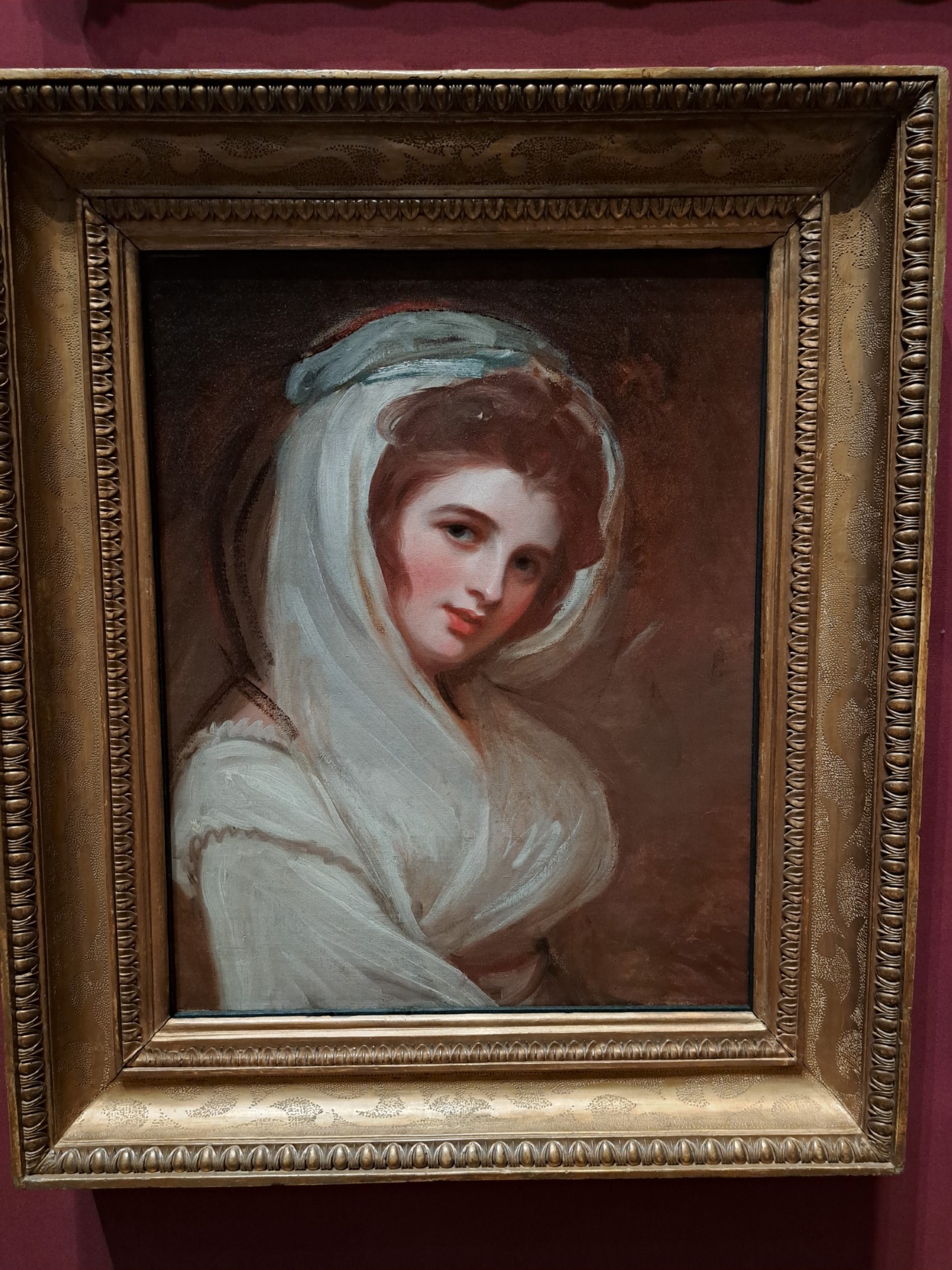
Portrait of Emma Hamilton by George Romney

Several years later, The National Maritime Museum in London put together a fabulous exhibition entitled Seduction & Celebrity that explored Emma Hamilton’s rise and fall, from beginning to end. One of the most noticeable aspects of the show was that there was ample material to display, primarily from one particular artist. George Romney was one of the most prominent society portrait painters of the late Georgian period. Although his talent was comparable to his well-respected contemporaries, such as Joshua Reynolds, Thomas Gainsborough and John Hoppner; he refused to participate in the antics associated with the Royal Academy of Arts and their annual exhibitions. Artists would become fiercely competitive as they all vied for the most prominent places within the show, hoping that their works would stand out from the rest. Romney wanted no part of this circus, and relied on his talent and reputation to gain custom amongst his wealthy clients. This worked out well for him, and he had no shortage of sitters. However, the tedium of producing staid portraiture of the elite classes began to prove tiresome.

How fortunate for Romney then that a customer, Sir Charles Greville, brought in a secret mistress that he had ensconced away in a humble, rural cottage in nearby Edgeware. The 16 year-old Amy Lyon had already experienced several tragedies in her young life; having found herself pregnant by another aristocratic man, Sir Henry Fetherstonhaugh, who promptly abandoned her. Greville came to the rescue, but on the proviso that she gave her baby away, living a life of thrift and economy whilst being at his beck and call. She had no room to negotiate and was grateful for this second chance. Greville sought to have her beauty be captured and admired on canvas, for him to be able to display to his friends. In effect, he wanted to boast “This heavenly goddess is mine, and you cannot even see her in the flesh. Don’t you envy me?”

Emma Hart by Romney

Romney was immediately enchanted by the charisma and stunning beauty of the newly renamed Emma Hart. Her presence reinvigorated his artwork. They embarked on a creative partnership that resulted in Romney’s finest and most creative output. In return, Emma was portrayed in various guises for posterity. She had to reinvent herself for each sitting, becoming a mythological creature or some historic character from long ago. Emma sat for dozens of paintings by Romney. She was his muse, allowing him to explore his craft beyond the confines of standard portraiture. Greville was happy to loan her modelling services to Romney, for it was increasing the value of his ‘ward’ that he had saved from a certain life of penury. Engravings had been made of some of Romney’s paintings, affording a glimpse of her allure to a wider audience. As her image was circulated, there was an increasing curiosity aroused throughout the capital city. Who was this charming being?

The drip-feed of artistic content provided opportunities for both Romney and Emma. Romney’s reputation and name was further advanced as well as inspiring his art to reach new levels of creativity. Emma became what may well be the very first Supermodel – a celebrity whose fame and notoriety was constantly on an upward trajectory. It seems apparent that Romney became infatuated with Emma. And perhaps Emma appreciated the advice and friendship of a man outside of the realm of the Ton, but who knew of the inner workings and mindset of the Upper Class who made up his clientele.

But this fame and notoriety was not appealing to Sir Charles Greville, who was seeking a wealthy heiress to supplement his dwindling finances. Being saddled with an infamous beauty as a mistress would not make him very appealing as a suitor to the respectable ladies that he wanted to pursue. Therefore, he duped Emma into travelling to Naples, to visit his uncle who was the serving British ambassador there. He had offered her to his uncle as a mistress, without her consent or knowledge. This separation severed the symbiotic artistic relationship between Emma and Romney for several years. Romney, who was prone to depression, was affected by her absence deeply. Although furious with Greville for abandoning her, Emma did make the best of her situation – enjoying her time in the royal court of Naples and eventually becoming quite fond of her ambassador.

In the summer of 1791, Emma returned to England to marry Sir William Hamilton and return to Naples as a respectable wife of the ambassador. During these brief few weeks, Emma reunited with her favourite artist, kick-starting a frenetic pace of artistic output as the painter and his muse were working together again. This brief slice in time intrigued me and I wanted to explore it further. I am fortunate enough to have seen many examples of Romney’s work with Emma as the model. You can feel the creative frisson embedded in these artworks. Romney’s paintings of Emma are seared with an energy that simply does not exist in his other portraits. There was something electric between these two individuals. Was it romantic? There is a feeling of magnetic attraction when one looks through Romney’s gaze in his portraits of Emma. I must say that even though Emma modelled for other great artists (Joshua Reynolds, Thomas Lawrence, Élisabeth Louise Vigée Le Brun, among many others), that spark of something special and extraordinary is just not there.

Romney self-portrait

The last painting that Romney painted of Emma was actually painted on her wedding day. Entitled The Ambassadress, the viewer is a witness to the complete transformation of Emma Hart into Lady Hamilton. As Vesuvius erupts in the dark background, one can imagine the well of emotions bursting forth from Romney’s paintbrush – being well aware that this was the last time that he would lay eyes upon the divine Emma he so cherished. Emma looks back at him, slightly pensive but very refined as she knows she is about to embark on a life of newfound respectability. There is so much wistful emotion silently conveyed in this moving portrait. What were those last moments like in Romney’s studio, as they parted ways for the final time?

The Ambassadress was the inspiration for my short story of the same name. It is one of eleven short stories in the Historical Writer Forum’s anthology entitled Masterworks. Eleven authors have written stories that have been influenced by a particular work of art. The result is a series of stories that takes the reader through time and place, from ancient Sumerian kingdoms to present day London. Available now through Amazon.

About the author:

Ronan Beckman is an American educator who has lived in the UK for over 30 years. His interest in history and genealogy helped to spark an interest in further developing the stories of some of the family he researched – resulting in his debut novel ‘An Actress of Repute’. Subsequently, he has become a bit obsessed with all things Georgian and Regency related. Further adventures are in the works for the character of Elizabeth Searle and her fellow actor friends. His latest project has been editing a transcript of a rare, out-of-print book by a Lancashire coal miner who became secretary of the TUC and a Member of Parliament. The new annotated version of Samuel Woods’ ‘Visions of the Mine’ contains biographical notes and historical images. Visit his blog at http://www.ronanbeckman.com.

*

My Books

Christmas is coming!

Signed, dedicated copies of all my books are available through my online bookshop.

Coming 15 January 2024: Women of the Anarchy

On the one side is Empress Matilda, or Maud. The sole surviving legitimate child of Henry I, she is fighting for her birthright and that of her children. On the other side is her cousin, Queen Matilda, supporting her husband, King Stephen, and fighting to see her own son inherit the English crown. Both women are granddaughters of St Margaret, Queen of Scotland and descendants of Alfred the Great of Wessex. Women of the Anarchy demonstrates how these women, unable to wield a sword, were prime movers in this time of conflict and lawlessness. It show how their strengths, weaknesses, and personal ambitions swung the fortunes of war one way – and then the other.

Available for pre-order from Amberley Publishing and Amazon UK.

Also by Sharon Bennett Connolly:

Out nowKing John’s Right-Hand Lady: The Story of Nicholaa de la Haye is the story of a truly remarkable lady. Nicholaa de la Haye was the hereditary constable of Lincoln Castle and the first woman in England to be appointed sheriff in her own right. Her strength and tenacity saved England at one of the lowest points in its history. Nicholaa de la Haye is one woman in English history whose story needs to be told…

King John’s Right-Hand Lady: The Story of Nicholaa de la Haye is now available from Pen & Sword Booksbookshop.org and Amazon.

Defenders of the Norman Crown: The Rise and Fall of the Warenne Earls of Surrey tells the fascinating story of the Warenne dynasty, of the successes and failures of one of the most powerful families in England, from its origins in Normandy, through the Conquest, Magna Carta, the wars and marriages that led to its ultimate demise in the reign of Edward III. Defenders of the Norman Crown: Rise and Fall of the Warenne Earls of Surrey is now available from Pen & Sword BooksAmazon in the UK and US, and Bookshop.org.

Ladies of Magna Carta: Women of Influence in Thirteenth Century England looks into the relationships of the various noble families of the 13th century, and how they were affected by the Barons’ Wars, Magna Carta and its aftermath; the bonds that were formed and those that were broken. It is now available in paperback and hardback from Pen & Sword,  Amazon, and Bookshop.org.

Heroines of the Medieval World tells the stories of some of the most remarkable women from Medieval history, from Eleanor of Aquitaine to Julian of Norwich. Available now from Amberley Publishing and Amazon, and Bookshop.org.

Silk and the Sword: The Women of the Norman Conquest traces the fortunes of the women who had a significant role to play in the momentous events of 1066. Available now from Amazon,  Amberley Publishing, and Bookshop.org.

Alternate Endings: An anthology of historical fiction short stories including Long Live the King… which is my take what might have happened had King John not died in October 1216. Available in paperback and kindle from Amazon.

Podcast:

Have a listen to the A Slice of Medieval podcast, which I co-host with Historical fiction novelist Derek Birks. Derek and I welcome guests, such as Bernard Cornwell, and discuss a wide range of topics in medieval history, from significant events to the personalities involved.

*

Don’t forget! Signed and dedicated copies of all my books are available through my online bookshop.

For forthcoming online and in-person talks, please check out my Events Page.

You can be the first to read new articles by clicking the ‘Follow’ button, liking our Facebook page or joining me on Twitter and Instagram.

*

©2023 Ronan Beckman and Sharon Bennett Connolly FRHistS

Book Corner: Women of the American Revolution

Women of the American Revolution will explore the trials of war and daily life for women in the United States during the War for Independence. What challenges were caused by the division within communities as some stayed loyal to the king and others became patriots? How much choice did women have as their loyalties were assumed to be that of their husbands or fathers? The lives of women of the American Revolution will be examined through an intimate look at some significant women of the era. Some names will be familiar, such as Martha Washington who travelled to winter camps to care for her husband and rally the troops or Abigail Adams who ran the family’s farms and raised children during John’s long absences. Elizabeth Schuyler Hamilton is popular for her role in Hamilton the musical, but did you know she was also an early activist working tirelessly for multiple social causes? Decide for yourself if the espionage of Agent 355 or the ride of Sybil Ludington are history or myth. Not all American women served the side of the revolutionaries. Peggy Shippen gambled on the loyalist side and paid severe consequences. From early historian Mercy Otis Warren to Dolley Madison, who defined what it means to be a US First Lady, women of the American Revolution strived to do more than they had previously thought possible during a time of hardship and civil war.

I have to admit, I stepped right out of my comfort zone with Women of the American Revolution by Samantha Wilcoxson. And I know very little about the period – except there was something to do with tea and Boston Harbour – Boston, Massachusetts rather than Boston, Lincolnshire (I am definitely more familiar with the latter!). There was some chap called George Washington, too…

So I was going into this book with a very open mind, eager to learn all I could about the women who helped – or sometimes hindered – in the creation of the United States of America. Women of the American Revolution will certainly give readers a greater understanding of the American Revolution and War of Independence; it fills a gap in the study of the period and is long overdue.

Most books on the American Revolution concentrate on the politics or the military actions, but Samantha Wilcoxson has approached the familiar story from an under represented angle; the women. And what incredible women they were. Some are well known, such as Martha Washington Abigail Adams and Dolley Madison. Others less so famous, such as the mysterious Agent 355. And there is the story of Margaret Shippen Arnold, who was considered incapable of being complicit in her husband’s defection to the British – because she was a woman.

In addition to her household skills, Martha [Washington] was taught to be a lady while confined in corsets that helped form her figure and correct her posture. Virginia ladies of Martha’s time were trained to mimic British aristocracy in their manners and decorum. Simply walking and sitting could be a challenge in the full skirts that were the fashion. Martha apparently learned these skills well, because she flawlessly played the role of hostess as a married woman, even when thrust into the public world as America’s original First Lady (although that title was not used during her husband’s time in office). Her parents ensured that she could ride elegantly in a sidesaddle while maintaining perfect posture. Physical control and poise were also vital when learning to dance, a skill not to be underestimated in its importance in eighteenth century Virginia.

The objective would have been for her to eventually obtain a satisfactory husband, and in this Martha most certainly made her parents proud. Daniel Parke Custis belonged to the closest America had to an aristocracy. Rich and possessing thousands of acres of land, the Custis family was such a step up for Martha that Daniel’s father initially forbade his son to marry her. This is where one gains the first insight into the woman Martha would become. Though only eighteen years old, Martha courageously stood up to her future father-in-law. He had threatened to disinherit Daniel and throw the family silver into the street rather than allow Martha to use it, but she managed to charm him into giving his reluctant blessing. The couple was married when Martha was nineteen years old and her bridegroom was twenty years her senior. This age difference was not uncommon or a barrier to their happiness. The skills Martha had learned at the Dandridge home made her a competent manager of the larger Custis plantation, prophetically named White House.

A large enslaved population made it possible for Daniel and Martha to profitably run the Custis estate. Ne evidence exists that Martha believed owning slaves was immoral or wrong in any way. While she did not support cruel treatment or sales that broke up families, Martha also could not understand when enslaved people ran away from what she felt was a comfortable home. It was a lifestyle she had been born into and never questioned, even as the colonies strived toward their freedom.

Women of the American Revolution is a wonderful collection of the stories of the most remarkable women of the era. Through the historical record and their own letters Samantha Wilcoxson has brought these women back to life, their stories as vivid as they must have been over 200 years ago. The books combines the women’s involvement in the national and international politics and events of the day with their day-to-day lives as wives and mothers. It is an illuminating and informative book on so many levels.

Women of the American Revolution tells the story of these remarkable women, warts and all, but does not try to attach modern-day morals on people who lived so many generations ago. In this way, Samantha Wilcoxson does not ignore the women’s attitude to slavery, or to female emancipation, but explains them in the context of the time. The abundance of letters written by some of the women provide a unique insight into their minds, and into the times they lived in.

And I have to say Samantha Wilcoxson has written an eminently accessible book, whether you are knowledgeable of the era or not. Her research is thorough and impeccable and presented in a beautifully written volume that will stand proud in any library. By focusing on the women, Women of the American Revolution fills a gap in the history and study of the American Revolution. Without a study of the women of the time, no history of any period is complete.

This is Samantha Wilcoxson’s first foray into non-fiction but I truly hope she will write more!

Women of the American Revolution by Samantha Wilcoxson is an informative and entertaining read. I loved this book! And I learned so much! I cannot recommend it highly enough.

To Buy the Book:

Women of the American Revolution by Samantha Wilcoxson is available now from Amazon and Pen and Sword in the UK. It is available for pre-order on Amazon in the US and is now available worldwide from Book Depository.

About the Author:

Samantha Wilcoxson is an author of historical fiction and administrator of a history blog. She has written four full-length novels, three novellas, and two middle grade chapter books. Topics of her writing have ranged from the Wars of the Roses to America’s Civil Rights Movement. Samantha is passionate about history and exploring the personal side of events. In her writing, she urges the reader to truly experience what it might have felt like to live through a moment in history. Samantha’s most recent novel is biographical fiction featuring Catherine Donohue, one of America’s “radium girls.” She is currently working on a novelization of the life of Nathan Hale, and features in Hauntings, an anthology published by the Historical Writers Forum.

*

My books:

Signed, dedicated copies of all my books are available, please get in touch by completing the contact me form.

Defenders of the Norman Crown: The Rise and Fall of the Warenne Earls of Surrey tells the fascinating story of the Warenne dynasty, of the successes and failures of one of the most powerful families in England, from its origins in Normandy, through the Conquest, Magna Carta, the wars and marriages that led to its ultimate demise in the reign of Edward III. Defenders of the Norman Crown: Rise and Fall of the Warenne Earls of Surrey is now available from Pen & Sword BooksAmazon in the UK and US, Bookshop.org and Book Depository.

1 family. 8 earls. 300 years of English history!

Also by Sharon Bennett Connolly:

Ladies of Magna Carta: Women of Influence in Thirteenth Century England looks into the relationships of the various noble families of the 13th century, and how they were affected by the Barons’ Wars, Magna Carta and its aftermath; the bonds that were formed and those that were broken. It is now available in paperback and hardback from Pen & Sword,  AmazonBookshop.org and from Book Depository worldwide.

Heroines of the Medieval World tells the stories of some of the most remarkable women from Medieval history, from Eleanor of Aquitaine to Julian of Norwich. Available now from Amberley Publishing and Amazon, Bookshop.org and Book Depository.

Silk and the Sword: The Women of the Norman Conquest traces the fortunes of the women who had a significant role to play in the momentous events of 1066.  Available now from Amazon,  Amberley Publishing, Bookshop.org and Book Depository.

Alternate endings: An anthology of historical fiction short stories including Long Live the King… which is my stake what might have happened had King John not died in October 1216. Available in paperback and kindle from Amazon.

*

You can be the first to read new articles by clicking the ‘Follow’ button, liking our Facebook page or joining me on Twitter and Instagram.

*

©2022 Sharon Bennett Connolly FRHistS.

Guest Post: Revolutionary Female Friends by Samantha Wilcoxson

Today it is a pleasure to welcome Samantha Wilcoxson to History the Interesting Bits…. with an article about Mercy Otis Warren and her friend Catharine Macauley. Samantha’s new book Women of the American Revolution – her first non-fiction – provides a fabulous insight into the often-overlooked and severely underestimated women of the period. It is truly illuminating!

Revolutionary Female Friends: Mercy Otis Warren and Catharine Macaulay

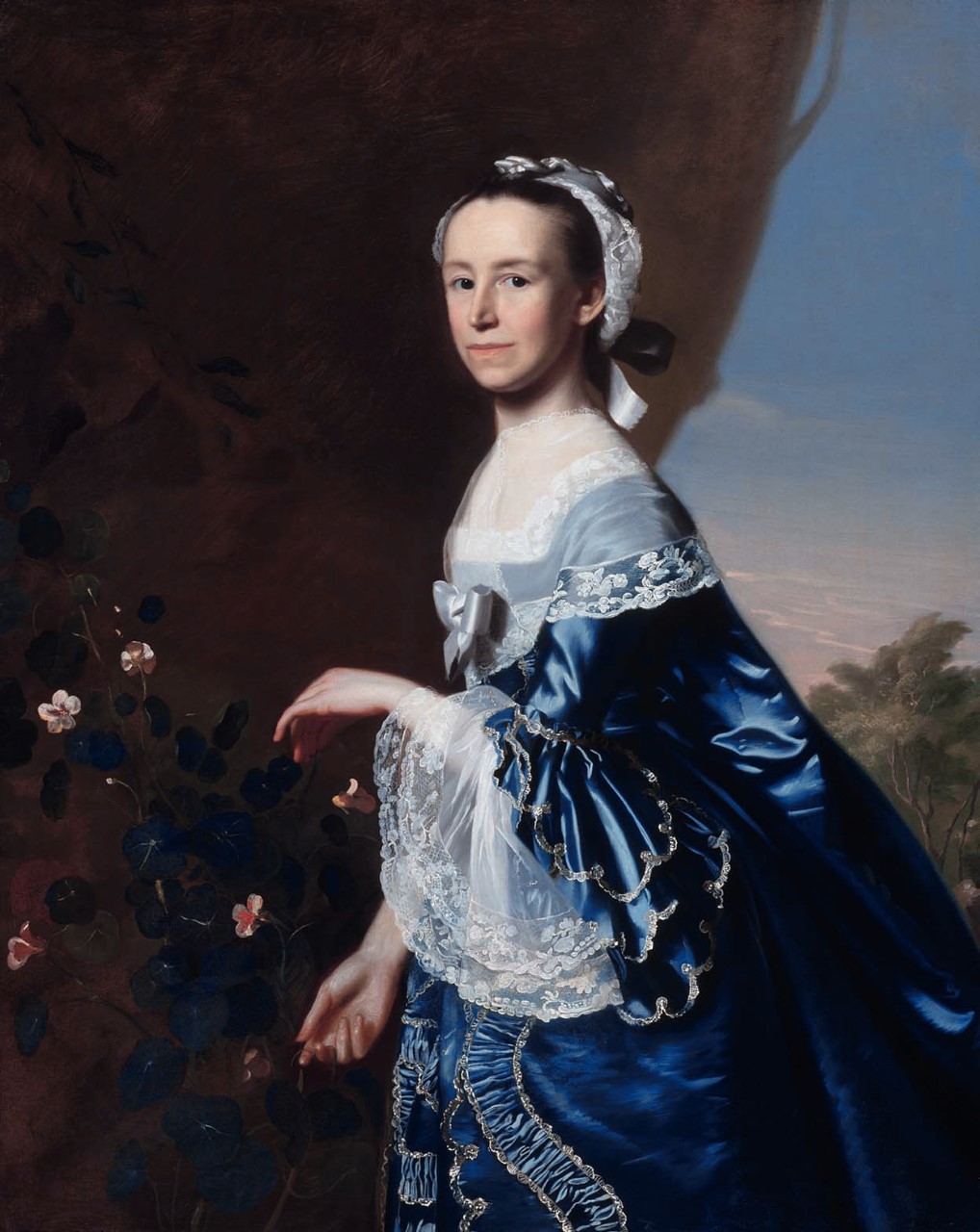
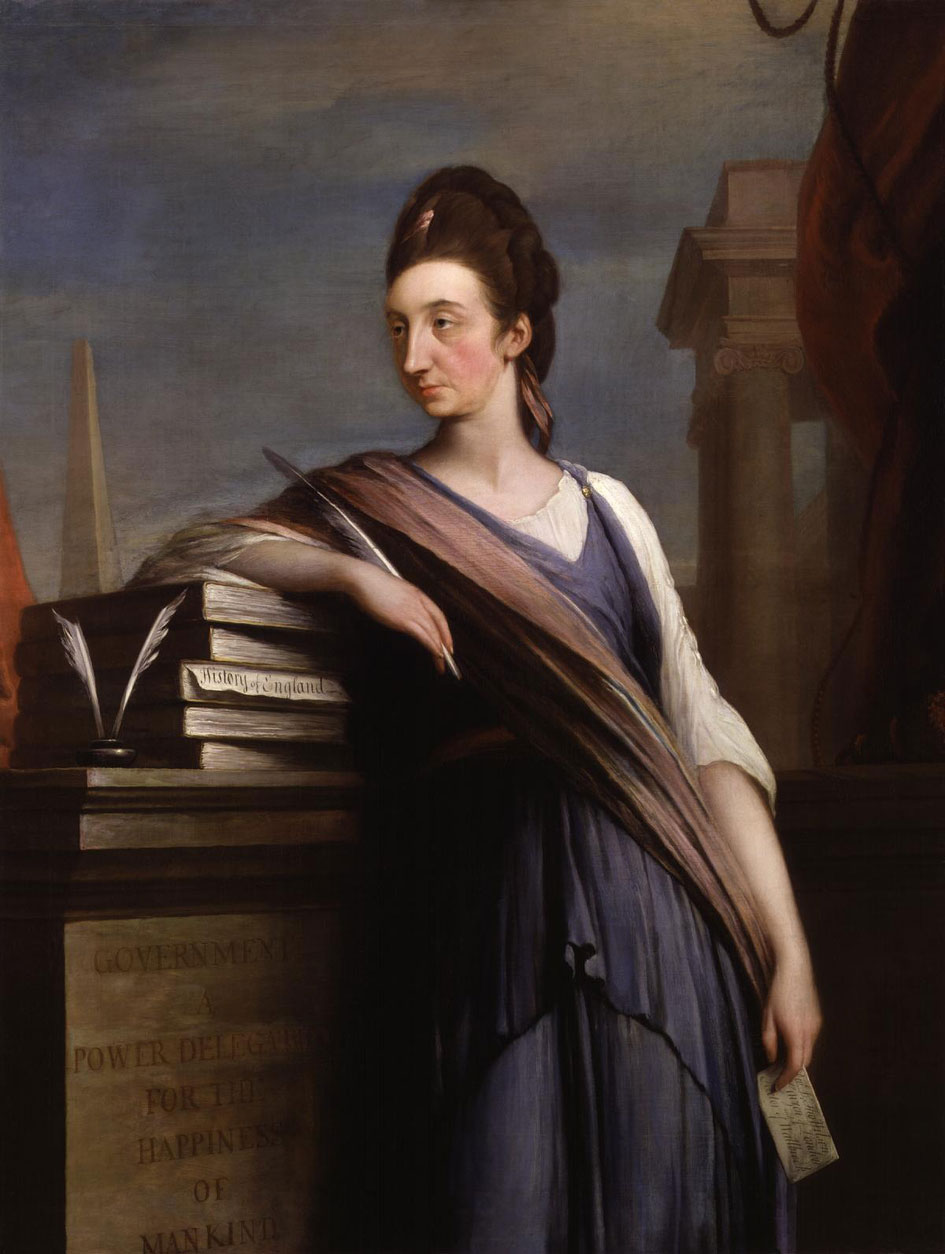
Mercy Otis Warren by John Singleton Copley

In July 1784, Catharine Macaulay arrived in America where she visited Mercy Otis Warren. One wonders if those around them appreciated the historic value of this meeting between two early female historians. Catharine in England and Mercy in America had each written multiple works responding to events of the day in an era when women were not expected to discuss politics let alone write about it. Finally meeting after years of letter writing, it must have been an exciting introduction.

Catharine was outspoken and published in her own name, while Mercy’s satirical plays had been published anonymously. Boldly writing to American patriots to offer her support, Catharine initially corresponded with Mercy’s brother, James Otis Jr, who Catharine wrote was ‘the great guardian of American liberty.’

When James suffered from mental instability following a beating by British customs agents, Mercy took over the correspondence. Both women made astute observations on the evolving political situation. In 1767, Macaulay prophetically wrote that a democratic republic was the ‘only form of government….capable of preserving dominion and freedom to the people.’ The following year, Mercy foresaw that when British soldiers arrived in Boston ‘The American War may be dated from the hostile parade of this day.’

Catharine watched the Revolution from a distance, supporting the American colonies and encouraging members of parliament to consider their position and negotiate rather than losing them altogether. The opposite course was taken with British troops sent to Boston in 1768 and the Coercive Acts passed in 1774. Mercy had an insider’s view of the Revolution. Her husband, another James, served as Paymaster-General, was appointed to the Continental Congress, and sat on the Continental Navy Board. While Mercy was a patriot, she worried about her five sons ‘who must buckle on the harness. And perhaps fall a sacrifice to the manes of liberty.’

Catharine Macauley

When Mercy met Catharine in person for the first time in 1784, she had lost no sons to war, though one had been severely wounded. Perhaps it was not until this meeting that the women realized how different they were. Through letters which focused on their shared political ideas and observations, they may have been convinced that they held more in common that they did.

Catharine arrived in America with a new, young husband. William Graham was twenty-one when he married the forty-seven-year-old Catharine six years earlier. Mercy, who frequently gave her sons moral lectures in her letters, would have been shocked by this relationship and the rumors that Catherine also had an affair with her brother-in-law. The values of simplicity and frugality held by Mercy were not as closely held by Catharine, who patronized the Sans Souci, a fashionable club that Mercy believed was the sort of establishment that would lead the new nation into a rapid decline.

Despite a falling out over their differences on morality, Mercy and Catharine salvaged their friendship before Catharine left America. They continued their correspondence, debating the strengths and weaknesses of the proposed US Constitution as fervently as the men in congress.

Mercy opposed the ratification of the Constitution and attempted to influence state leaders with a pamphlet titled Observations on the New Constitution, and on the Federal and State Conventions by a Columbian Patriot. She was concerned that individual rights were not established in the Constitution. While some states requested the addition of a Bill of Rights, none made their ratification dependent upon it. In a moment of frustration over the course the country was taking, Mercy wrote to Catharine in 1789, ‘we are too poor for Monarchy, too wise for Despotism, and too dissipated, selfish, and extravagant for Republicanism.’

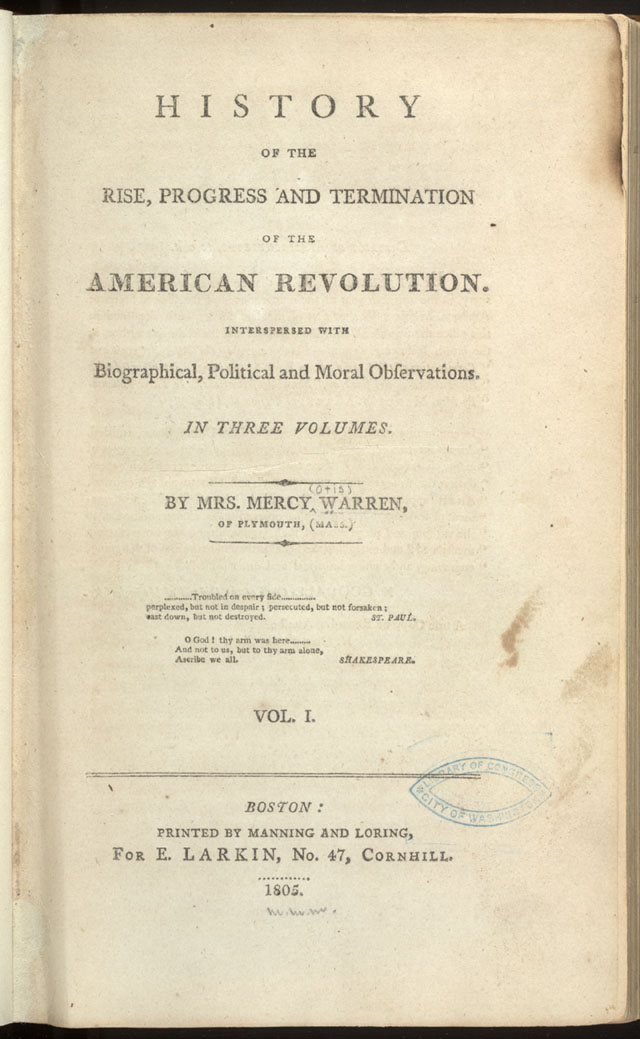
Mercy’s History

Catharine wrote a letter to George Washington, who she had met during her year in America, congratulating him ‘on the event which placed you at the head of the American government.’ She was also not afraid to share her opinions with him warning of growing inequality between two houses of legislature and the possibility of the ‘evils of Aristocracy’ which America had thus far been ‘exempt from.’

Mercy and Catharine, through their epistolatory relationship, discussed the French Revolution, the writing of Edmund Burke, women’s rights, and any number of topics that 18th century women were not meant to discuss. Their civil discourse came to an end with Catharine’s death on 22 June 1791. Mercy finally published her History of the Rise, Progress, and Termination of the American Revolution at age seventy-seven in 1805. She died on 19 October 1814 during the War of 1812, which solidified the independent status of the United States of America.

Sources:

The Muse of the Revolution: The Secret Pen of Mercy Otis Warren and the Founding of a Nation by Nancy Rubin Stuart https://www.mountvernon.org/library/digitalhistory/digital-encyclopedia/article/catharine-sawbridge-macaulay-graham-1731-1791/ https://allthingsliberty.com/2019/10/catharine-macaulay-her-final-gifts-to-america-and-france-1787-1791

To Buy the Book:

Women of the American Revolution by Samantha Wilcoxson is available now from Amazon and Pen and Sword in the UK. It is available for pre-order on Amazon in the US and is now available worldwide from Book Depository.

About the book:

Women of the American Revolution will explore the trials of war and daily life for women in the United States during the War for Independence. What challenges were caused by the division within communities as some stayed loyal to the king and others became patriots? How much choice did women have as their loyalties were assumed to be that of their husbands or fathers? The lives of women of the American Revolution will be examined through an intimate look at some significant women of the era.

Some names will be familiar, such as Martha Washington who travelled to winter camps to care for her husband and rally the troops or Abigail Adams who ran the family’s farms and raised children during John’s long absences. Elizabeth Schuyler Hamilton is popular for her role in Hamilton the musical, but did you know she was also an early activist working tirelessly for multiple social causes? Decide for yourself if the espionage of Agent 355 or the ride of Sybil Ludington are history or myth. Not all American women served the side of the revolutionaries. Peggy Shippen gambled on the loyalist side and paid severe consequences. From early historian Mercy Otis Warren to Dolley Madison, who defined what it means to be a US First Lady, women of the American Revolution strived to do more than they had previously thought possible during a time of hardship and civil war.

About the Author:

Samantha Wilcoxson is an author of historical fiction and administrator of a history blog. She has written four full-length novels, three novellas, and two middle grade chapter books. Topics of her writing have ranged from the Wars of the Roses to America’s Civil Rights Movement. Samantha is passionate about history and exploring the personal side of events. In her writing, she urges the reader to truly experience what it might have felt like to live through a moment in history. Samantha’s most recent novel is biographical fiction featuring Catherine Donohue, one of America’s “radium girls.” She is currently working on a novelization of the life of Nathan Hale, and features in Hauntings, an anthology published by the Historical Writers Forum.

*

My books:

Signed, dedicated copies of all my books are available, please get in touch by completing the contact me form.

Defenders of the Norman Crown: The Rise and Fall of the Warenne Earls of Surrey tells the fascinating story of the Warenne dynasty, of the successes and failures of one of the most powerful families in England, from its origins in Normandy, through the Conquest, Magna Carta, the wars and marriages that led to its ultimate demise in the reign of Edward III. Defenders of the Norman Crown: Rise and Fall of the Warenne Earls of Surrey is now available from Pen & Sword BooksAmazon in the UK and US, Bookshop.org and Book Depository.

1 family. 8 earls. 300 years of English history!

Also by Sharon Bennett Connolly:

Ladies of Magna Carta: Women of Influence in Thirteenth Century England looks into the relationships of the various noble families of the 13th century, and how they were affected by the Barons’ Wars, Magna Carta and its aftermath; the bonds that were formed and those that were broken. It is now available in paperback and hardback from Pen & Sword,  AmazonBookshop.org and from Book Depository worldwide.

Heroines of the Medieval World tells the stories of some of the most remarkable women from Medieval history, from Eleanor of Aquitaine to Julian of Norwich. Available now from Amberley Publishing and Amazon, Bookshop.org and Book Depository.

Silk and the Sword: The Women of the Norman Conquest traces the fortunes of the women who had a significant role to play in the momentous events of 1066.  Available now from Amazon,  Amberley Publishing, Bookshop.org and Book Depository.

*

You can be the first to read new articles by clicking the ‘Follow’ button, liking our Facebook page or joining me on Twitter and Instagram.

©2022 Sharon Bennett Connolly

Guest Post: Failed Spies: Hale and André by Samantha Wilcoxson

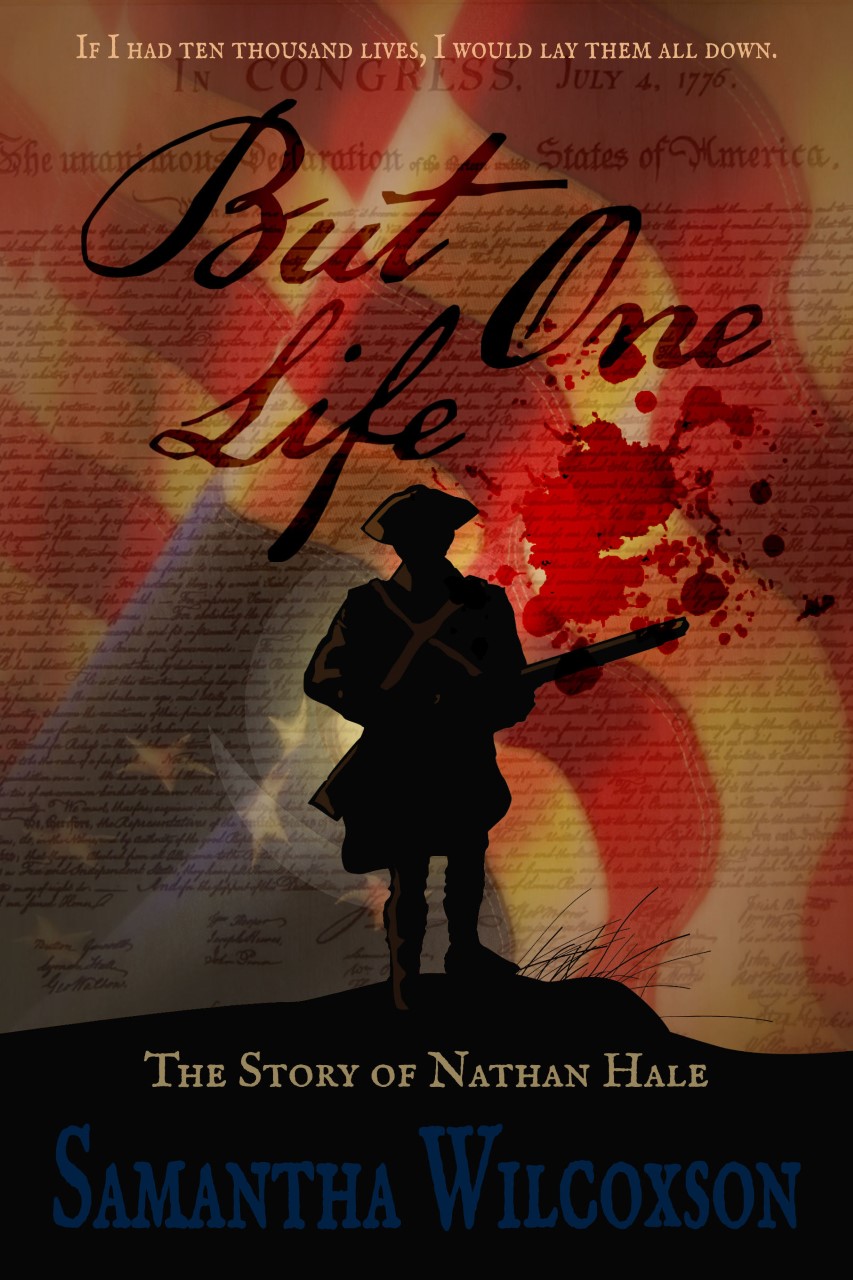
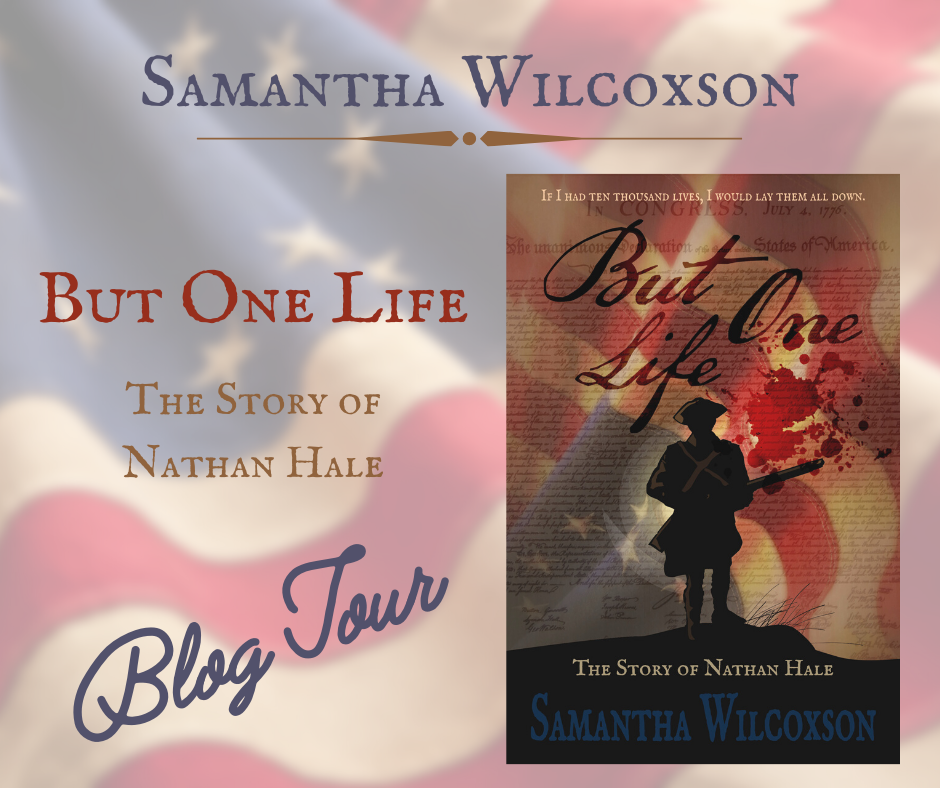
Today, is is a pleasure to welcome Samantha Wilcoxson to History … the Interesting Bits, with an article about the research into her latest novel, But One Life, set during the American Revolution.

Failed Spies: Hale and André

Espionage played an important role during the American Revolution, with both sides in the conflict experiencing some victories and tragic defeats in this area. British spymasters had the advantages of experience and expertise, while Americans benefited from working in their native land with a better idea of who could be trusted and who could not. Very early in the conflict, General George Washington stated his desperate need for knowledge of the enemy.

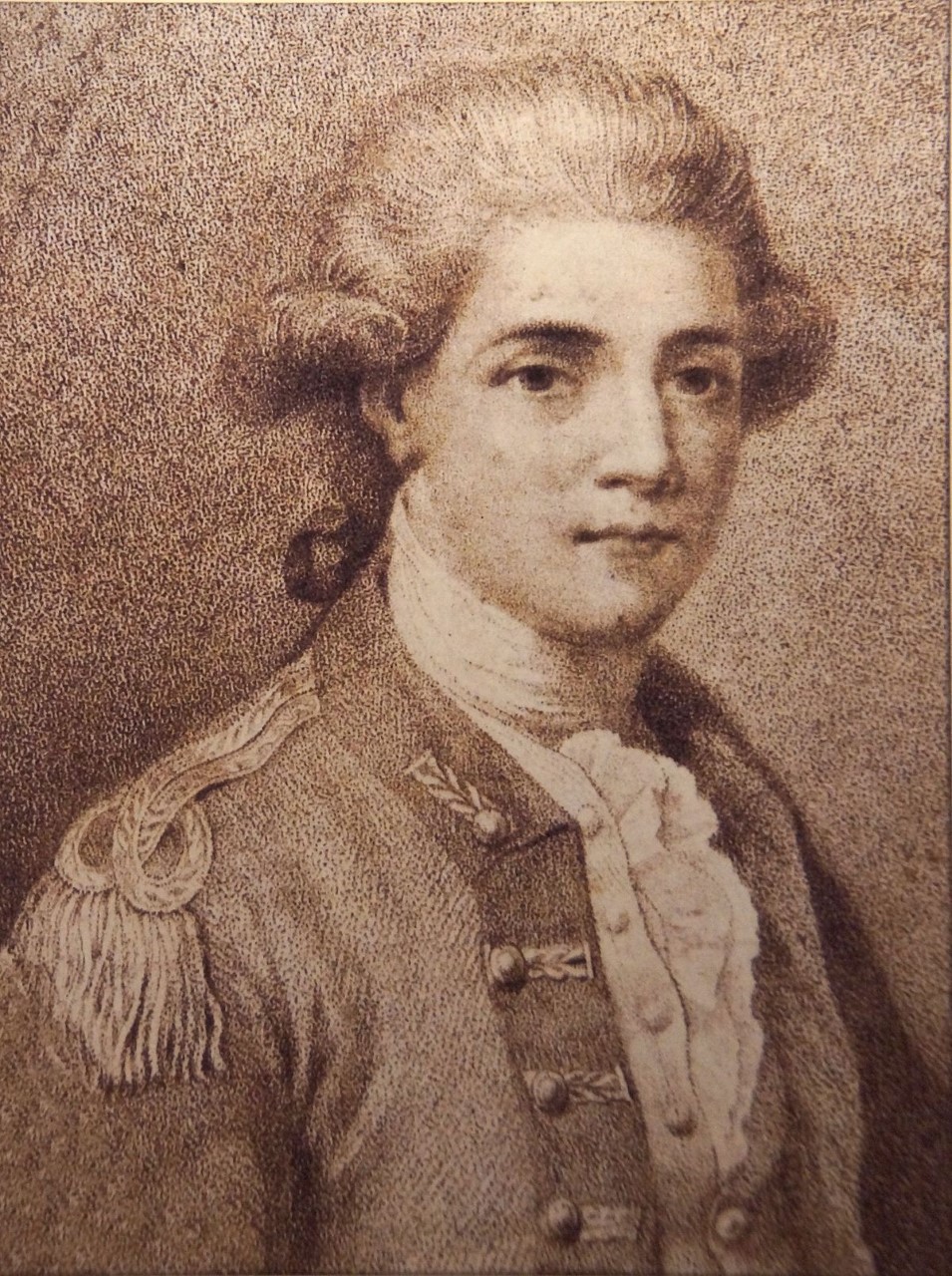
Major John André

‘I do most earnestly entreat you and General Clinton to exert yourselves to accomplish this most desirable end. Leave no stone unturned, nor do not stick at expense, to bring this to pass, as I was never more uneasy than on account of my want of knowledge on this score,’ Washington wrote to General William Heath seventeen days before Captain Nathan Hale was hanged as a rebel spy on 22 September 1776.

Today, Nathan Hale is remembered as the quintessential patriot. He was recently graduated from Yale when he joined the Continental Army with many other young men of his acquaintance. When he learned that a volunteer was needed to discover the information needed by Washington, he did not hesitate, despite the advice of many friends who insisted he was not well-suited to the mission.

It was not only because of his open, honest personality that they attempted to dissuade him. Spywork was considered a low, dishonorable duty. One friend, who tried to talk Hale out of his mission, reported later that Hale had insisted, ‘I wish to be useful, and every kind of service, necessary to the public good, becomes honorable by being necessary.’

Whether due to pride or excessive patriotism, Hale set forth upon a mission to Long Island, New York, his Yale diploma in hand to support his disguise as a Latin tutor. Hale had briefly served as a schoolmaster between graduation and army service, so his ruse should have come naturally to him. However, he was a trusting and friendly man, unlike the clever spy-catchers employed by the British. Within days of leaving his regiment, Hale was captured and executed, possibly with a paraphrase of Cato on his lips that his only regret was that he had but one life to give for his country. His body was left hanging for days to warn other would-be spies.

In the meantime, Major John André was making a name for himself in the British ranks as one who had connections and could get information. He was, like Hale, young, erudite, and eager to serve his country. André believed he had found the key to securing his future when he received correspondence from American General Benedict Arnold. The hero of Saratoga was willing to turn his coat for the right price.

Continental Commission for Nathan Hale

Arnold had married Peggy Shippen a month earlier, and she was friends, or possibly more, with André. Together, they convinced the general that the British would show him greater appreciation and compensation, and they were bound to win the war anyway. In the spring of 1780, Arnold informed André that he was expecting to gain command of West Point, an important series of forts that controlled traffic on the Hudson River. He was willing to turn it over to the British in return for cash and a position in British command.

On 21 September 1780, almost precisely four years after the death of Nathan Hale, John André was captured after a secret meeting with General Benedict Arnold to finalize their plan. He begged that Washington treat him as an officer rather than a spy.

‘Let me hope, Sir, that if aught in my character impresses you with esteem towards me, if aught in my misfortune marks me as the victim of policy and not resentment, I shall experience the operation of these feelings in your breast by being informed that I am not to die on a gibbet.’ Washington refused his request, and André was hanged on 2 October 1780.

Other American espionage efforts were more successful than Hale’s, most notably the Culper Spy Ring, managed by Hale’s good friend and Yale classmate, Benjamin Tallmadge. The names of those involved in this successful ring were not revealed until over a century after the war had ended. Tallmadge also played a part in John André’s capture. One can imagine he had a sense of justice served as Hale’s British counterpart shared his fate.

But One Life by Samantha Wilcoxson is now available from Amazon.

Sources:

Spies, Patriots, and Traitors: American Intelligence in the Revolutionary War by Kenneth A Daigler

Documentary Life of Nathan Hale by George D Seymour

The Life of John André: The Redcoat who Turned Benedict Arnold by DAB Ronald

To Buy the book:

But One Life is now available from Amazon

About the author:

Writer of historical fiction and sufferer of wanderlust, Samantha enjoys exploring the lives of historical figures through research and visiting historic places. Certain that no person is ever purely good or evil, she strives to reveal the deep emotions and motivations of historical figures, enabling readers to connect with them in a unique way. Samantha is an American writer with British roots and proud mother of three amazing young adults. She can frequently be found lakeside with a book in one hand and glass of wine in the other.

Samantha’s next project will take readers into the lives of women of the American Revolution – stay tuned!

*

My Books

Signed, dedicated copies of all my books are available, please get in touch by completing the contact me form.

Defenders of the Norman Crown: The Rise and Fall of the Warenne Earls of Surrey tells the fascinating story of the Warenne dynasty, of the successes and failures of one of the most powerful families in England, from its origins in Normandy, through the Conquest, Magna Carta, the wars and marriages that led to its ultimate demise in the reign of Edward III. Defenders of the Norman Crown: Rise and Fall of the Warenne Earls of Surrey is now available from Pen & Sword BooksAmazon in the UK and US, Bookshop.org and Book Depository.

1 family. 8 earls. 300 years of English history!

Also by Sharon Bennett Connolly:

Ladies of Magna Carta: Women of Influence in Thirteenth Century England looks into the relationships of the various noble families of the 13th century, and how they were affected by the Barons’ Wars, Magna Carta and its aftermath; the bonds that were formed and those that were broken. It is now available in paperback and hardback from Pen & Sword,  AmazonBookshop.org and from Book Depository worldwide.

Heroines of the Medieval World tells the stories of some of the most remarkable women from Medieval history, from Eleanor of Aquitaine to Julian of Norwich. Available now from Amberley Publishing and Amazon, Bookshop.org and Book Depository.

Silk and the Sword: The Women of the Norman Conquest traces the fortunes of the women who had a significant role to play in the momentous events of 1066.  Available now from Amazon,  Amberley Publishing, Bookshop.org and Book Depository.

*

You can be the first to read new articles by clicking the ‘Follow’ button, liking our Facebook page or joining me on Twitter and Instagram.

©2022 Sharon Bennett Connolly and Samantha Wilcoxson

Guest Post: Best Friends Turned Enemies by Jo Willet

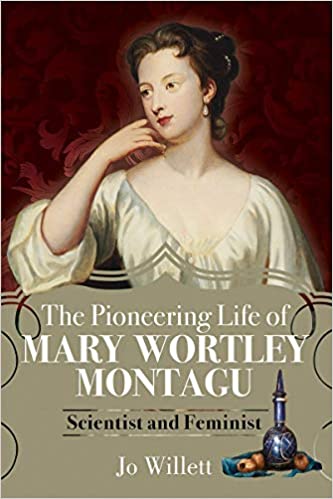
Today it is a pleasure to welcome author Jo Willet to the blog. Jo has just released the biography The Pioneering Life of Mary Wortley Montagu: Scientist and Feminist. Lady Mary Wortley Montagu is remembered for her pioneering advocacy of smallpox inoculation – her 3 year-old daughter being the first westerner to be inoculated against the killer disease.

Mary Wortley Montagu and Alexander Pope – Best Friends turned Enemies

Lady Mary Wortley Montagu by Jonathan Richardson,

A friendship between a woman and a man which starts off as just that but develops into something altogether more dangerous  – despite #MeToo heightening our awareness, these kinds of problems have been with us since time immemorial.  The aristocrat Lady Mary Wortley Montagu and the poet Alexander Pope had just such a relationship. For both of them, it was one of the most powerful and ultimately the most damaging of their lives.

The two met in April 1715 in the London studio of a mutual friend, the artist Charles Jervas. Lady Mary was a 26-year old aristocrat, slight, dark and fiendishly intelligent.  Alexander Pope was a year older.  As a child he had suffered from tuberculosis of the bone, Potts Disease, which had stunted his growth and left him with a hunchback. He was only 1.2 metres in height, a bit smaller than Mary. Middle-class and Catholic, his background was very different from hers, but he had already found fame and fortune as a writer, which impressed her.  Both saw themselves as outsiders and used these feelings to express themselves with wit and irony. 

Mary and Pope were part of a group of friends all of whom liked to write and to share their writing with each other. Along with John Gay (who wrote The Beggars’ Opera) they began a shared project called The Town Eclogues.  The Latin poet Virgil had written six poems known as The Pastoral Eclogues, each linked to a day of the week, and the idea was to use these as an inspiration for contemporary, English poems, capturing a sense of life in London at the time. Pope described himself and Mary working together on writing one of the poems and Mary calling out: “No, Pope, no touching! For then, whatever is good for anything will pass for yours, and the rest for mine.”  Already there was an erotic undertone.

The poems were designed to be shown to friends, but they soon fell into the wrong hands.  One of Mary’s poems satirised two women desperate to serve at the court of Princess Caroline of Ansbach.  When the princess was shown a copy she was extremely displeased.  Then, even worse, the notorious Edmund Curll published an unauthorised version of the poems, which immediately became a best-seller.  None of them needed this kind of publicity. Furious, Pope arranged to meet Curll as if by chance at a drinking house. He introduced a powerful emetic into his drink, as revenge. We have no record of what Mary thought of this – but it probably felt good to have a friend protect her honour so powerfully.

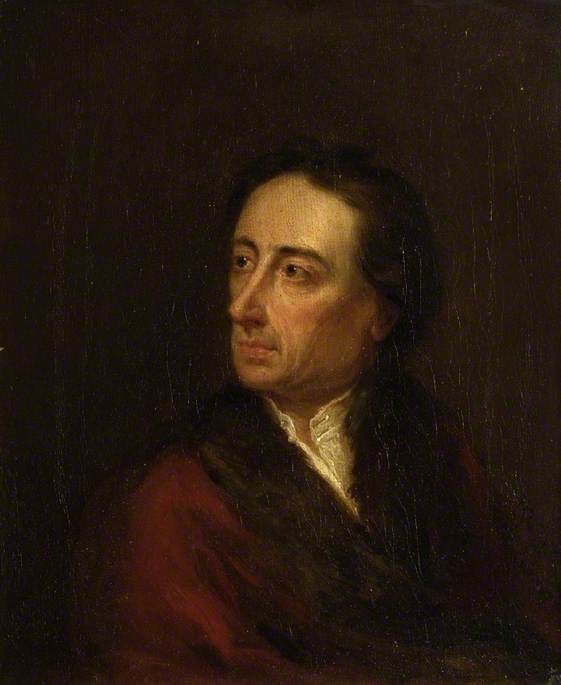
Alexander Pope by Jonathan Richardson

Mary’s husband, Edward Wortley Montagu, was appointed British Ambassador to Turkey in 1716. Spirited as always, she decided to go with him.  Pope was distraught.  He pleaded with her to give him some of her ‘last Moments’ before leaving, as if she were not simply travelling but dying. That said, a journey such as this would be fraught with danger.  He gave her an album of their Town Eclogues bound in the finest red Turkey leatherand admitted: ‘indeed I find I begin to behave myself worse to you than to any other Woman, as I value you more.’  She left the album in London, said goodbye to Pope and set off on her travels.

It was expected that she would be away for five years.  In fact the trip only lasted half that time.  Pope wrote her a series of letters where it became increasingly obvious that his feelings for her had changed from friendship to something far more powerful.  The further away she travelled, the less inhibited he became. He and Mary were, he said, ‘like a couple who behave modestly when around other people, but who once by themselves can untie garters or take off Shifts without scruple.’  His physical limitations were something he was always acutely aware of.  He wrote to her imagining a place where women ‘best like the Ugliest fellows…and look upon Deformities as the Signatures of divine Favour.’

For her part, she was so excited by her adventures that she hardly seemed to notice what was going on.  But she was careful to transcribe copies of Pope’s letters into her journal. When she and her husband travelled across the battlefield of Petrograd, strewn with corpses, where the Austrians had been victorious over the Turks only a few months earlier, she wrote to Pope expressing her revulsion for war. She knew he would agree with her.


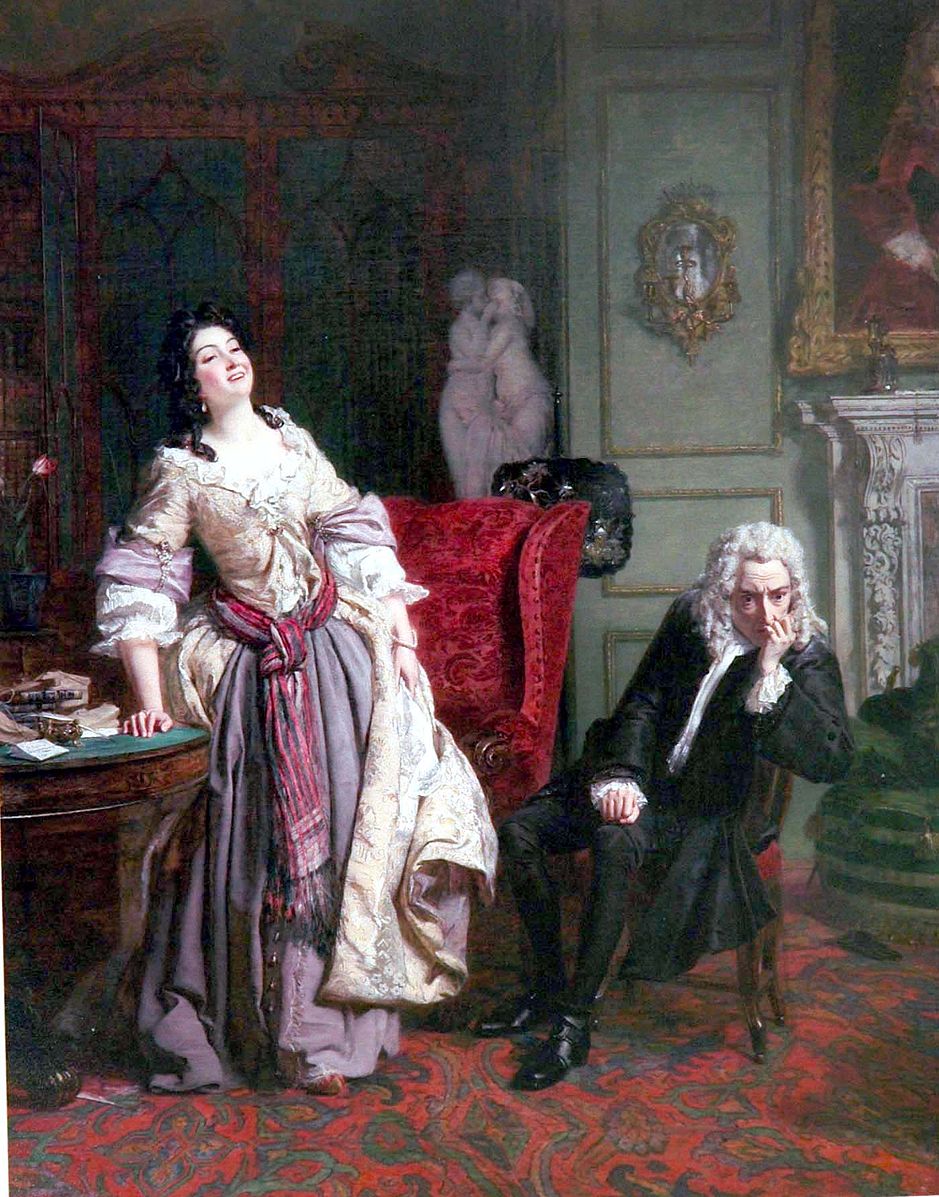
Alexander Pope declares his love for Lady Mary, who bursts into fits of laughter. William Powell Frith’s painting of 1852. 

Pope’s poems of the time were clearly inspired by his feelings for her. Eloisa and Abelard describes an impossible love which remains strong however many obstacles it encounters.  The poem is full of images of eyes, like Mary’s own.  He sent a copy, with a letter clarifying the source of his inspiration, out to Mary in Constantinople. She wrote ‘mine’ in the margin but at the same time dispatched a letter to their mutual friend, William Congreve, asking why he allowed Pope to go on making these ‘Lampoons’.

When the Wortley Montagus started their journey back to England in 1718, Pope offered to travel out to Italy to accompany Mary home. This was a conceit on his part. He would never be well enough to be able to travel. As she neared England, Mary became increasingly nervous as to how to handle things. When she landed in Dover a letter awaited her, expressing Pope’s longing to see her ‘Oriental self’. With it was a poem he had written about a pair of lovers from Stanton Harcourt, in Oxfordshire, who had both been struck by lightning and died simultaneously. The intensity of his feelings was clear.

Mary decided to respond by lightening the tone.  She sent Pope a satirical, cynical poem in response. If the two lovers had lived, she wrote, their future marriage might well have turned out to be a disappointment: ‘Now they are happy in their doom,/For P. has wrote upon their Tomb.’  Pope got the message.  Rather than rushing to greet Mary on her return to London, he held back.

By now Pope was living in Twickenham, outside London, and soon the Wortley Montagus rented a house nearby.  For about ten years the two friends rubbed along.  People noted that Pope tended to resort to over-elaborate puns whenever he was in Lady Mary’s presence but they had lots of mutual friends and enjoyed each other’s company.  Pope even commissioned a portrait of her,  which would hang in the ‘best room’ of his Twickenham house for the rest of his life. Then some time in the 1720s the two fell out spectacularly.  We do not know why.

Mary’s family always believed that Pope one day made the mistake of expressing his feelings for her and that she instinctively broke into gales of laughter at what he said.  An anonymous play, Mr Taste, the Poetical Fop, written a few years later, dramatised exactly this.  Another reason given for the rupture was that she asked him to collaborate with her on a satirical poem and he made it clear he disagreed with her attitude to the subject matter. Yet another suggestion is that she was the author of some cruel verses satirising his relationship with his nurse, who had just died.  Yet another was a rumour, spread by Horace Walpole, that she had borrowed some bedsheets from Pope and returned them unlaundered.

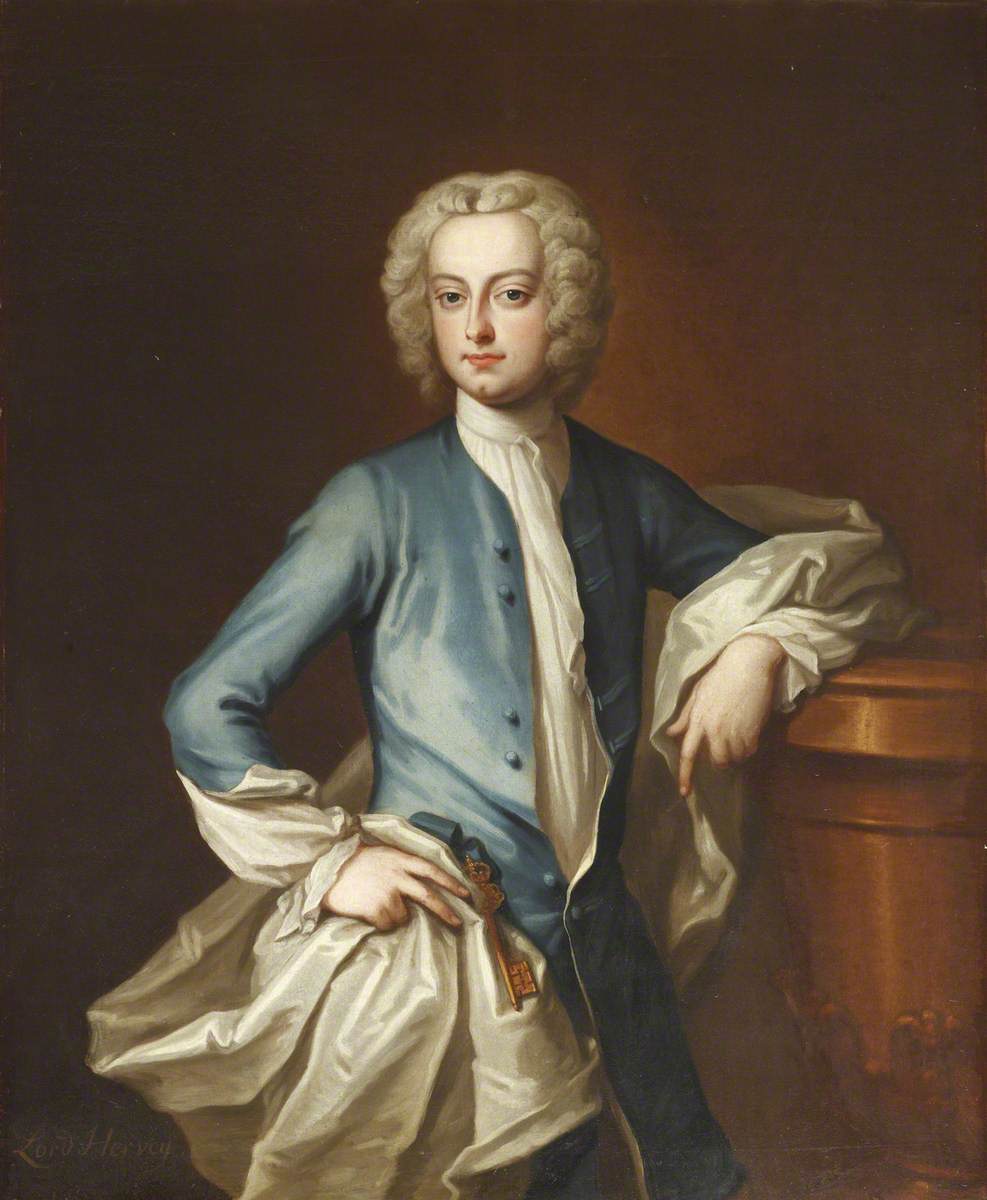
Mary’s friend, Lord John Hervey

Whatever the reason, the result was an unedifying, escalating row. In 1728 a published poem of Pope’s satirised Wortley as a sober yeoman living in Yorkshire whose wife owned a hen (Lady Mary) which attracted lots of cocks.  The innuendo was intentional.  Another longer poem of Pope’s published the same year, The Dunciad, described Lady Mary as a ‘sage dame, experienced in her trade’  – a prostitute.  Mary had been involved in bringing the process of inoculation against the smallpox back with her from Turkey.  Pope played on this by linking smallpox to the word ‘poxed’, implying Mary had syphilis. He also insinuated that she had behaved badly towards someone during the South Sea Bubble Crisis.  Her friends knew that Lady Mary had got into difficulty over some investments a French friend of hers had asked her to make on his behalf. But they would also have known she had behaved honourably throughout.

As an aristocratic woman, Mary risked undermining her reputation if she published anything in response.  So to begin with she simply wrote satirical poems about the situation, which were to be passed around among her friends.  In one the Goddess Dulness set up her headquarters in the famous shell grotto in Pope’s Twickenham garden.  Various more scurrilous verses about the breakdown of the relationship began circulating as well.  It is hard to ascertain whether either of them was the author of any of these. Pope wrote to a mutual friend of theirs claiming to have seen one of these poems in Lady Mary’s handwriting.  She denied she had written it and suggested instead that Pope had indulged in a bit of forgery to blacken her name.

Mary appealed to mutual friends for help – first to Lord Peterborough, whose letter in response read as if Pope had ghost-written it, and then to Sir Robert Walpole, the prime minister.  He asked Pope to remove a particularly nasty couplet about Mary. Pope refused, replying that it was Mary who had libelled him, not the other way round.

Mary then made the strategic mistake of collaborating with another friend of theirs, Lord John Hervey, in writing a satirical poem about Pope:  Verses Addressed to the Imitator of the First Satire of the Second Book of Horace.  Hervey was well-placed within society at the time, a close friend of the queen’s, an aristocrat like Mary and bisexual. The poem is vicious in its portrayal of Pope and ends by cursing him, predicting that he will be destined to wander the earth forever, like Cain, the first murderer in the Bible, ‘with the Emblem of thy crooked Mind/Marked on they Back.’ Somehow – and it was unclear how – the poem was published, with the claim that it was written ‘By a Lady’, with no mention of Hervey.

The gloves were off.  Pope upped his verse attacks on her, all published so everyone who wanted could read them.  And he ensured that even nastier, lewder verses of his were published anonymously.  Again and again he elided smallpox with the pox, or syphilis.  Though she normally charged ten per cent, he wrote, men could currently have Mary’s body for free. She was physically disgusting, ‘at her toilet’s greasy task’. Her dress sense was questionable, in ‘diamonds with her dirty smock’. He harboured ‘a Suspicion that she intended to ravish him.’

Mary could not retaliate with the same force.  She wrote an unpublished poem describing him as a ‘Toad-eater’, but most of their friends and acquaintances sided with Pope not with Mary.  Her friends Lord and Lady Oxford described Mary as having to check with them beforehand whenever she dined at their house that Pope would not be there. In the 1730s Mary went to live abroad, well away from ‘the wicked wasp of Twickenham’, as she called him.  When Pope died in 1744 she wrote home anxiously to be sent a copy of his will, just in case there were anything damaging there.  What a relief it was, she wrote to her husband, that now there was no-one in the whole world who wished them ill.

It feels a familiar story, when relationships turn sour, that the woman comes off worst.  Pope’s satirising of Mary has a distinctly misogynistic feel to it, reading his words today.  For her part, Mary was unable to defend herself satisfactorily.  Her only crime was to invoke feelings in him he could not control and then to reject his advances.

*

All images courtesy of Wikimedia Commons

I would like to express my thanks to Jo Willet for such a fabulous article, and to wish Jo my hearty congratulations on the release of The Pioneering Life of Mary Wortley Montagu: Scientist and Feminist.

To buy the book:

The Pioneering Life of Mary Wortley Montagu: Scientist and Feminist is now available from Pen & Sword Publishing and Amazon.

About the author:

Lavinya of the The Black Curriculum

Jo has been an award-winning TV drama and comedy producer all her working life.  Her credits range from the recent MANHUNT, starring Martin Clunes, to BIRDS OF A FEATHER. Her most relevant productions for this project include BRIEF ENCOUNTERS in 2016 (a fictionalised story of the first women who ran Anne Summers’ parties in the 1980s), THE MAKING OF A LADY in 2012 (an adaption of the Frances Hodgson Burnett novel The Making of a Marchioness), BERTIE AND ELIZABETH in 2002 (telling the story of the Queen Mother’s marriage) and the BAFTA-and-RTS-Award-Winning A RATHER ENGLISH MARRIAGE in 1998 (starring Albert Finney, Tom Courtenay and Joanna Lumley, adapted from the novel of the same name by Angela Lambert). She studied English at Queens College Cambridge and has an MA from Birkbeck in Arts Policy. She is married with a daughter, a son and a stepson. She lives in London and Dorset. www.devoniaroad.co.uk

You can find Jo at:

Twitter:  @Willettjo

Instagram: jowillett_biographer

Website:  www.devoniaroad.co.uk

*

My books

Coming 31st May:

Defenders of the Norman Crown: The Rise and Fall of the Warenne Earls of Surrey tells the fascinating story of the Warenne dynasty, of the successes and failures of one of the most powerful families in England, from its origins in Normandy, through the Conquest, Magna Carta, the wars and marriages that led to its ultimate demise in the reign of Edward III.

Defenders of the Norman Crown: Rise and Fall of the Warenne Earls of Surrey will be released in the UK on 31 May and in the US on 6 August. And it is now available for pre-order from Pen & Sword BooksAmazon in the UK and US and Book Depository.

Also by Sharon Bennett Connolly:

Ladies of Magna Carta: Women of Influence in Thirteenth Century England looks into the relationships of the various noble families of the 13th century, and how they were affected by the Barons’ Wars, Magna Carta and its aftermath; the bonds that were formed and those that were broken. It is now available from Pen & Sword,  Amazon and from Book Depository worldwide.

Heroines of the Medieval World tells the stories of some of the most remarkable women from Medieval history, from Eleanor of Aquitaine to Julian of Norwich. Available now from Amberley Publishing and Amazon and Book Depository.

Silk and the Sword: The Women of the Norman Conquest traces the fortunes of the women who had a significant role to play in the momentous events of 1066.  Available now from Amazon,  Amberley Publishing, Book Depository.

*

You can be the first to read new articles by clicking the ‘Follow’ button, liking our Facebook page or joining me on Twitter and Instagram.

©2021 Sharon Bennett Connolly and Jo Willet

Guest Post: The Mallory Saga – Books 1-3

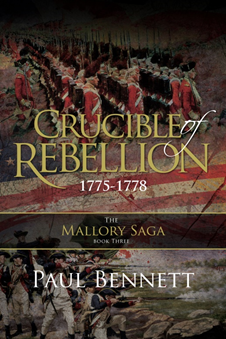
Today, it is a pleasure to welcome fellow author (and Bennett – wonder if we’re related?) Paul Bennett to History … The Interesting Bits. Paul is the author of the popular historical fiction series The Mallory Saga, of which the latest book, and third in the series, Crucible of Rebellion, has just hit the shops.

So, it’s over to Paul Bennett to tell us a little about the books and the inspiration behind them:

The Mallory Saga – Books 1-3

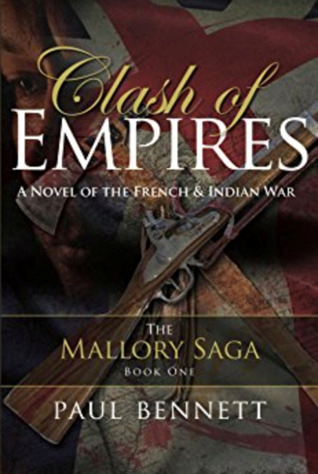
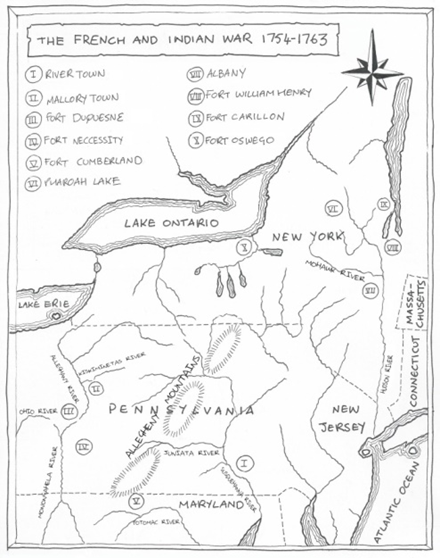
The inspiration to write was, in the beginning, merely to see if I could do it.  I had written short pieces over the years but to tackle a full blown novel was a daunting prospect.  Once the seed was planted I came up with a rough idea of telling the story of three siblings living somewhere in colonial America.  Choosing that general locale was a natural fit for me as I’ve been a lifelong student of American history and I felt that if I was going to write a historical fiction novel, it might be prudent to choose a subject I knew a little about. I picked The French and Indian War as the starting point for what was now becoming a possible series of books that would follow the Mallory clan through the years.  That war intrigued me and I saw a chance to tell the story through the eyes of the Mallory family.  It also provided me with the opportunity to tell the plight of the Native Americans caught up in this conflict.  The French and Indian War paved the way for the colonies to push further west into the Ohio River area.  It also set the stage for the events of the 1770’s.  Britain incurred a huge debt winning that war and looked to the colonies for reimbursement in the form of new taxes and tariffs.  Well, we all know how those ungrateful colonists responded. 

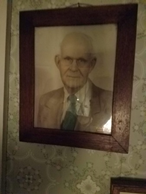
As to the name Mallory – I have a photo hanging on my living room wall of my great grandfather, Harry Mallory.  I got to know him when I was a young boy and was always glad when we visited him.  He lived a good portion of his life in western Pennsylvania which is where much of Clash of Empires takes place.  So, as a gesture to my forebears, Mallory became the name of the family. 

Clash of Empires

In 1756, Britain and France are on a collision course for control of the North American continent that will turn into what can be described as the 1st world war, known as The Seven Year’s War in Europe and The French and Indian War in the colonies.  The Mallory family uproots from eastern PA and moves to the western frontier and find themselves in the middle of the war. It is a tale of the three Mallory siblings, Daniel. Liza and Liam and their involvement in the conflict; the emotional trauma of lost loved ones, the bravery they exhibit in battle situations.  The story focuses on historical events, such as, the two expeditions to seize Fort Duquesne from the French and the fighting around Forts Carillon and William Henry and includes the historical characters George Washington, Generals Braddock, Forbes and Amherst.  The book also includes the event known as Pontiac’s Rebellion in which the protagonists play important roles.  Clash of Empires is an exciting look at the precursor to the events of July 1776; events that will be chronicled in the second book, Paths to Freedom, as I follow the exploits and fate of the Mallory clan.

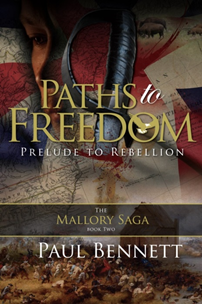
Paths to Freedom

In Paths to Freedom the children of the three Mallory siblings begin to make their presence known, especially Thomas, the oldest child of Liza and Henry Clarke (see right there, already another family line to follow), but Jack and Caleb, the twin sons of Liam and Rebecca along with Bowie, the son of Daniel and Deborah are beginning to get involved as well. The French and Indian War, the historical setting for book 1, was over, and the Mallory/Clarke clan is looking forward to settling and expanding their trading post village, Mallory Town, now that the frontier is at peace. And for a time they had peace, but the increasing discontent in the East, not so much toward the increasing rise in taxes, but the fact that Parliament was making these decisions without any input from the colonies, slowly made its way west to the frontier. Once again the Mallory/Clarke clan would be embroiled in another conflict.

Another facet of my saga is that the main characters are not always together in the same place or even the same event. In Paths my characters are spread out; some have gone East, some have gone West, some are sticking close to Mallory Town, so in effect there are three stories being told, and that means more plots, subplots, twists and surprises.

One of the aspects of the lead up to The Revolutionary War was the attempt by the British to ensure cooperation with the Native Americans, especially the Iroquois Confederation. The British had proclaimed that they would keep the colonies from encroaching on tribal lands, a strong inducement indeed. However, some tribes, like The Oneida, had established a good relationship with the colonists. I knew right away when I started book 2 that the relationship between the Mallory’s and the tribes would be part of it. Among the historical Native Americans who take part in Paths are the Shawnee Chiefs; Catecahassa (Black Hoof), Hokoleskwa (Cornstalk), Pucksinwah (father of Tecumseh), and the Mingo leader Soyechtowa (Logan).

I also realized that I needed to get someone to Boston, and the Sons of Liberty. Thomas Clarke, the eighteen year old son of Liza and Henry, was the perfect choice for the assignment (mainly because he was the only child old enough at the time). J Through him we meet the luminaries of the Boston contingent of rebels, Paul Revere, Dr. Joseph Warren, John Hancock, and the firebrand of the bunch, Sam Adams. Plenty of history fodder to be had…British raid in Salem…Tea Party…the famous midnight rides…culminating with the Battle of Lexington and Concord. Oh yes, plenty of opportunities for Thomas.

An untenable situation arises in Mallory Town resulting in Liam and his two companions, Wahta and Mulhern, finding themselves on a journey to the shores of Lake Michigan and beyond. Driven by his restless buffalo spirit, Liam has his share of adventures; encountering a duplicitous British commander, meeting many new native tribes, some friendly, some not so much. A spiritual journey in a land not seen by many white men.

I ended Paths with the Battle of Lexington and Concord, the first shots of The Revolutionary War. The flint has been struck; the tinder has taken the spark. Soon the flames of war will engulf the land, and the Mallory clan will feel the heat in the third book, Crucible of Rebellion.

Crucible of Rebellion

The timeline for Crucible is 1775 – 1778. I decided to split the Revolutionary War into two books, mainly because there is so much more action as opposed to The French & Indian War…and because as I was writing, my characters insisted on some scenes I hadn’t previously thought of. J Book 4 of the saga is in the planning stages. Tentative title – A Nation Born.

The three Mallory siblings, Daniel, Liza, and Liam play important parts in CoR, but it is their children who begin to make their marks on the saga. Their youngest son, Ethan, and their daughter Abigail, of Daniel and Deborah travel with their parents to Boonesborough, and reside there with Daniel Boone. The war reaches even this remote frontier, prompting Daniel and Deborah to move further west in search of peace. However, the banks of The Wabash River prove not to be immune to conflict.

Their eldest son, Bo accompanies Liam’s twins, Jack and Cal, first to Fort Ticonderoga, then to Boston with a load of cannon for General Washington’s siege of Boston (the Noble Train of Artillery with Colonel/General Henry Knox). In Boston they meet up with Liza and Henry’s son Thomas, who is no longer a prisoner (can’t say more than that) J, Marguerite, and Samuel Webb.

General Washington has plans for the Mallory boys…plans which see some of them in a few of the more important battles of the war… the escape from Long Island, the surprise attack at Trenton, the turning point battles at Saratoga NY, as well as taking part in numerous guerilla type skirmishes.

A long ways away from the conflict Liam, with Wahta, are living with the Crow along the Bighorn River. Liza and Henry made the trip to Boonesborough with Daniel and Deborah, but do not go with them to The Wabash….they have their own adventures.

Although I write fiction tales, the historical aspect of the saga provides the backdrop. History is often overlooked, or is taught with a certain amount of nationalistic pride, whitewashing controversial events, much to the detriment of humankind. So I hope that what I write might help broaden the reader’s horizon a bit, that what they learned in school isn’t necessarily the whole story. Two main historical topics in the story of America that frequent The Mallory Saga are slavery, and the plight of the indigenous people who have lived here since before the founding of Rome; two historical topics that linger still in America’s story. Entertainment and elucidation; lofty goals for a humble scribe telling a tale.

Many thanks to Paul Bennett for a truly fascinating post and my best wishes for the success of Crucible of Rebellion.

The Humble Scribe

I am a retired (recently) data center professional. Not that I started out thinking I would spend nearly 50 years working in mainframe computer environments. My major interests, scholastically, in high school, and college were history, and anthropology. The Cuban missile crisis, Bay of Pigs, assassinations, Vietnam, Watergate, etc., were some of the events that shaped me, forming the basis for my cynical view of government. One of the results of this “hippie attitude” was that I quit school, and my job, taking a year and a half off to travel a bit, and enjoy life. During that period I began composing the odd poem or song lyric, but I knew in my heart, and from experience writing school term papers, final exams, and the like, that I was a prose writer. My favorite fantasy for my future at the time was to become a forest ranger sitting in some fire watch tower writing the great American novel. Life intervened, however, and I put that dream aside to marry, and raise a family, which meant I needed to be employed, thus decades of staring at computer screens ensued. As time went on, I began writing about the golf trips I took with my buddies. At first they were humor laced travelogues, but now they are fictional tales of my friends; the golf becoming a vehicle for creating a story. Then in 2013, I started writing book reviews, and communicating with authors about the process of writing a novel. My dream to write the great American novel returned.

Well I hope I’ve piqued your interest in American historical fiction, and in particular The Mallory Saga. If so moved, the buy links are below. Crucible of Rebellion paperback will be out soon. Follow the progress of The Mallory Saga here:

Facebook Page; Mallory Saga WordPress Blog.

To buy Paul’s books, simply click on the images below:

Paperback

Paths buy links

Kindle

Paperback

Crucible buy links

Kindle

My Books

Ladies of Magna Carta: Women of Influence in Thirteenth Century England  looks into the relationships of the various noble families of the 13th century, and how they were affected by the Barons’ Wars, Magna Carta and its aftermath; the bonds that were formed and those that were broken. It is now available from Pen & SwordAmazon and from Book Depository worldwide.

Also by Sharon Bennett Connolly:

Silk and the Sword: The Women of the Norman Conquest traces the fortunes of the women who had a significant role to play in the momentous events of 1066.  Available now from Amazon,  Amberley Publishing, Book Depository.

Heroines of the Medieval World tells the stories of some of the most remarkable women from Medieval history, from Eleanor of Aquitaine to Julian of Norwich. Available now from Amberley Publishing and Amazon and Book Depository.

*

You can be the first to read new articles by clicking the ‘Follow’ button, liking our Facebook page or joining me on Twitter and Instagram.

©2020 Sharon Bennett Connolly and Paul Bennett

Guest Post: Life in Miniature: A History of Dolls’ Houses by Nicola Lisle

It is a pleasure to welcome to History … the Interesting Bits today, Nicola Lisle, author of Life in Miniature: A History of Dolls’ Houses as part of her Blog Tour with Pen & Sword. A history of dolls’ houses is a little different to my usual type of post, but reading Life in Miniature brought back some very happy childhood memories of my sister and I playing with our dolls’ house in our grandparents’ attic. So I was very interested in finding out more of their history and origins. Nicola very kindly answered a few of my most pressing questions.

Dolls’ house at Charles Dickens’ House, Doughty Street, London

Hi Nicola, congratulations on the release of Life in Miniature and thank you for stopping by to chat.

1. When I heard about your book, I immediately thought of the dolls’ house my sister and I had as children – we used to play with it for hours. How long have you had a fascination for dolls’ houses? Did you have one as a child?

I did have a dolls’ house as a child, and my sister and I played with it a lot. It was apparently made for us by a distant relative, who also made wooden furniture for it. It’s all quite basic, but I love it because it’s unique and it was part of my childhood. We used to have some tiny dolls for it, and we also used to decorate it at Christmas. We had a Christmas tree and had to cut away a square of carpet to fit it in! Sadly, the dolls and Christmas decorations have been lost, but the original furniture and other bits and pieces are still there. As we grew up we lost interest in the dolls’ house and it was in my parents’ loft for many years gathering dust! It wasn’t until I started writing that I became interested in dolls’ houses again, and it was quite by chance. I subscribed to Writing Magazine and Writers’ News – and still do! – and in one issue there was a piece about Dolls House and Miniature Scene magazine, which was open to submissions from freelance writers. It caught my attention, and I got in touch with some ideas. My first piece for the magazine was about the Museum of Childhood at Sudbury Hall in Derbyshire, and it was published in 2004. I carried on writing for the magazine for many years, and it ignited a real passion in me for dolls’ houses. Eventually I rescued my childhood dolls’ house from my mum’s house, and I’m hoping at some point to find the time to give it a bit of TLC! It’s not in bad condition, but it could definitely do with a bit of a makeover!

2. The thing with dolls’ houses is that they are not just for children, are they? My mum has one!

Dolls’ house at Tolsey Museum, Burford

Dolls’ houses are definitely not just for children. I think a lot of adults who had them as children still treasure them, and collecting vintage and antique dolls’ houses is also popular. For children, they are great for stimulating the imagination, but for adults I think it’s more about appreciating the sheer delight of miniatures and the craftsmanship that went into creating them.

3. I think the most famous dolls’ house has to be Queen Mary’s in Windsor Castle, isn’t it? What is so special about it?

Reproduction of miniature of Conan Doyle’s ‘How Watson Learned the Trick’, written for Queen Mary’s Dolls’ House

Yes, I think Queen Mary’s dolls’ house is probably the most famous. It’s special because it captures a slice of 1920s England in such exquisite detail, from the furniture and soft furnishings right down to the food and drink that were popular at the time. It attracted international interest when it first appeared, and it was a showcase to the world, a display of some of the very finest British talent. I think it also restored some pride and optimism in the country during the immediate post-war years. The house and garden were designed by Sir Edwin Lutyens and Gertrude Jekyll, and among its highlights are miniature books, music scores and paintings by popular writers, composers and artists of the day. Many of the books contained original stories written exclusively for the dolls’ house. Two of these, Fougasse’s J. Smith and Conan Doyle’s How Watson Learned the Trick, have been reproduced as miniature replicas with booklets containing the stories in full-size print. Another, Vita Sackville-West’s A Note of Explanation – a story about a mischievous spirit who inhabits the dolls’ house – was also reproduced in full size. I treated myself to all three when I was researching my book, and they are now treasured items on my bookshelves!

4. How long have dolls’ houses been around, Nicola? I always associate them with the Victorians, but were they around earlier? Are dolls’ houses an English creation, or did they come from the continent?

Nicola’s childhood dolls’ house

Dolls’ houses have been around since at least the 16th century and originated in Germany, where they were known as baby houses. The first known dolls’ house was made for the Duke of Bavaria in 1557, and it was a miniature version of his ducal palace. By the 17th century, baby houses had become popular in Germany, particularly in Nuremberg. The idea caught on in Holland towards the end of the 17th century, but instead of baby houses the

Dutch favoured cabinet houses, which were grand, elaborately-carved cabinets containing exquisitely furnished miniature rooms. The earliest dolls’ houses in England appeared in the late 17th century and were similar to the Dutch cabinet houses. By the early 18th century they were beginning to look more like houses than cabinets, and they were often modelled on the great country houses and created by estate carpenters. It wasn’t until the Victorian era that they became regarded as toys for children, and mass production towards the end of the 19th century made them much more widely accessible.

5. And what was their original purpose, were they always aimed at children.

The earliest baby houses, cabinet houses and dolls’ houses were primarily display pieces, and they were very much the preserve of royalty and the aristocracy – each one was a statement of the owner’s wealth and social status. They also had an educational role, often being used to instruct young ladies and servants in efficient household management and domestic skills.

6. I am fascinated by dolls’ houses and have to admit that the first thing I did on getting your book was look at the pictures. The houses are beautiful and the furniture inside is so detailed and intricate, do you have a favourite?

Reproduction of miniature of J. Smith by Fougasse, written for Queen Mary’s Dolls’ House

I saw so many gorgeous dolls’ houses while writing and researching my book that it’s almost impossible to pick a favourite. I think all dolls’ houses have their own particular charm, from the grand, ornate ones to the very simplest, and often it’s the stories behind them that make them special. For this reason, I think the dolls’ house at Uppark in West Sussex is one of my favourites, partly because it’s one of the earliest surviving dolls’ houses from the early 18th century, reflecting the Palladian-style architecture that was popular at the time, and partly because it has a connection with H.G. Wells, and I always love literary connections! Wells’s mother was the housekeeper at Uppark during the late 19th century, and he drew on his childhood memories of Uppark in his novel Tono-Bungay, in which he refers to the “great dolls’ house on the nursery landing”.

Another with a literary connection is the dolls’ house at Charles Dickens’ House at Doughty Street in London. The house doesn’t actually have a connection with Dickens himself, but it was modelled on the Doughty Street house by dolls’ house maker Christopher Cole for his book Make Your Own Dolls’ House, which was published in 1976. It is a simplified version of the real thing, rather than an exact replica, but it is very similar, especially the outside, and it was one I particularly enjoyed going to see! It’s not on public display, but it can be viewed by appointment.

I also have special fondness for the dolls’ house at Overbeck’s in Devon. It was created during the 1980s by a lady called Mabel Hill, a very talented, self-taught craftswoman who used scraps of leftover material and other household odds and ends to make the furniture and soft furnishings. What’s particularly lovely is that Overbeck’s was used as a convalescent home for wounded soldiers during the First World War, and one of the activities they were encouraged to do as therapy was to make dolls’ house furniture. Although there’s no direct link between that and Mabel Hill’s house, it does feel as though there is a spiritual connection.

Others closer to home, in Oxfordshire, include the Regency-style dolls’ house at the Tolsey Museum in Burford, which was created during the 1930s by members of the local community and reflects the town’s rural industries (another fascination of mine!), and the Palladian-style house at Greys Court, near Henley, which was created by a local lady, Patricia Mackenzie, during the 1970s. Like Mabel Hill, she used old materials and household objects to create the house and its contents. She was inspired by the Carlisle Collection of Miniature Rooms, which she used to visit when it was displayed at Greys Court during the 1970s. The collection is now housed at Nunnington Hall in Yorkshire, and is another favourite of mine, with a fascinating history – as I said, there are so many favourites!

7. I am guessing that some of these dolls’ houses have fascinating histories – is there one that has a story that particularly caught your attention?

Interior of Dolls’ house at Charles Dickens’ House

Something I became fascinated with while researching the book was finding out about famous collectors, particularly Vivien Greene, wife of novelist Graham Greene. Her collection was once housed in a museum in Oxford, not far from where I live, so there’s a bit of a connection there! Tracking down Vivien Greene’s dolls’ houses almost became a project of its own – sadly, she decided to auction her collection during the late 1990s when her eyesight was deteriorating and most of it finished up in private hands. But one that is on public display is Whiteway at Saltram, a National Trust house in Devon, and its Victorian-style interior is exquisite. I particularly loved the library with its miniature books, all made from wood, and the dining room with its plush red furnishings. The provenance of the house is something of a mystery, and I do love a good mystery! There’s another Vivien Greene house on display at Ilkley Toy Museum in Yorkshire, which dates from the late Victorian era and used to belong to a lady in Abingdon, Oxfordshire – again, not far from where I live. At some point it was converted into an hotel and named The Original Swan after a pub in Cowley, just outside Oxford. It has lost some of its original contents, but it is in good condition and you can still see the mahogany bar and its wooden barrels and glass bottles.

8. What made you want to write a book on dolls’ houses?

The Original Swan at Ilkley Toy Museum

It was writing for Dolls House and Miniature Scene magazine for so many years that made me think it would be interesting to write a book on the subject. I had already accumulated a lot of information and pictures that I could use as the basis for a book, and I had a lot of fun building on that, visiting various museums and stately homes that had dolls’ houses on display and gathering up lots more fascinating facts about these wonderful miniatures. I enjoyed researching and writing the book so much – it was a real labour of love!

9. What is your next writing project?

I’ve been working on some possible new book ideas, but at the moment I’m very busy with other writing work. I have several article deadlines coming up, and I am also a tutor on four distance-learning courses with The Writers Bureau, so I’m having to work on my book pitches in between everything else! Hopefully, though, at some point I’ll get them finished and sent off!

10. Where can people find you? Do you have a website or blog? Are you on social media?

I’m on Twitter – you can find me at @NicolaLisle1. I did set up a blog a while ago but haven’t actually done anything with it for some time, so it’s due for a major overhaul – that’s probably going to be a Christmas holiday job!

Thank you, Nicola, for such a lovely chat!

Life in Miniature: A History of Dolls’ Houses is available from Amazon or direct from Pen & Sword and would make a perfect Christmas present.

About the author:

Nicola Lisle is a freelance journalist and author specialising in history and the arts. She has written numerous articles for family history magazines, including Who Do You Think You Are?, Your Family History and Discover Your Ancestors, and was a regular contributor to Dolls House and Miniature Scene magazine for many years. She is the author of Tracing Your Family History Made Easy (Which? Books, 2011) and Tracing Your Oxfordshire Ancestors (Pen & Sword, 2018).

*

My Books

Ladies of Magna Carta: Women of Influence in Thirteenth Century England  looks into the relationships of the various noble families of the 13th century, and how they were affected by the Barons’ Wars, Magna Carta and its aftermath; the bonds that were formed and those that were broken. It is now available from Pen & SwordAmazon and from Book Depository worldwide.

Also by Sharon Bennett Connolly:

Silk and the Sword: The Women of the Norman Conquest traces the fortunes of the women who had a significant role to play in the momentous events of 1066.  Available now from Amazon,  Amberley Publishing, Book Depository.

Heroines of the Medieval World tells the stories of some of the most remarkable women from Medieval history, from Eleanor of Aquitaine to Julian of Norwich. Available now from Amberley Publishing and Amazon and Book Depository.

*

You can be the first to read new articles by clicking the ‘Follow’ button, liking our Facebook page or joining me on Twitter and Instagram.

©2020 Sharon Bennett Connolly & Nicola Lisle

Guest Post: Introducing Michael Saxon

Today it is a pleasure to welcome Kevin Heads to the blog, to introduce us to Michael Saxon, his new hero for children aged 10 and above.

Kevin Heads is a writer and poet who has a love of Historical Fiction. He classes himself more as a storyteller than a writer, and likes his stories to reflect that approach.

Born in Newcastle-Upon-Tyne in 1962, he grew up in Cramlington Northumberland, and after leaving school with no idea what he wanted to do, ended up as an apprentice box maker in a carton-manufacturing firm.

Kevin met his wife Sue at High School and after they married they had two children Sam and Stephanie. This is where Kevins’ love of storytelling began. Tired of reading the same books to his children, he started inventing characters and stories to entertain his children at bedtime. His children loved them and still remember them fondly. He never wrote these stories down as they were only for his children and he never took them seriously.

After moving around the country several times throughout his career Kevin ended up in Selby North Yorkshire. Surrounded by history he often spends time in Selby Abbey, York and walking the local battlefields, Towton being a particular favourite. However it was on a trip back from Devon that Kevin had the idea of a series of historical fiction books aimed at the younger generation.

Michael Saxon was born and by the time Kevin had driven home the first few chapters were already formulated in his mind.

Kevin is an avid reader and Bernard Cornwell is one of his favourite authors. He has read all the books apart from the Sharpe series citing Shaun Beans’ portrayal in the T.V adaptation as the reason. He loved the series and watched them all with his son and that is a memory he doesn’t want to change by reading the books.

It is Sharpe that made him decide that Waterloo would be the first setting for his Michael Saxon series specifically The Chateau d’Hougoumont.

Where it goes from there we will have to wait and see, although it is possible that a great naval battle may be next in line.

Kevin has also written an adult book set in Norway around 870AD and this is currently being edited. He plans to make Helga a series also.

He has several other ideas moving forward, he would like to visit 1066 and also has plans for a story based around the battle of Towton.

Although history plays a big part in these stories, it is the characters that Kevin wants people to engage with. Without them there is no story.

Michael Saxon Waterloo

After Michael’s grandfather goes missing presumed dead, his family moves from the city into the country home that was left to his mother in his grandfathers’ will. Michael struggles to fit in and hates the country life. He is failing at school and has no friends; spending most of his time playing video games in his bedroom. Then, after his Great Aunt visits from Whitby, things dramatically change.

She tells him of the library in the attic that is full of historical books, and gives him the key to look for himself. This is no ordinary attic and when Michael takes a book about Waterloo from the dust-covered shelves and attempts to leave, he is immediately transported through time and history to the Chateau d’Hougoumont.

Now dressed, as a soldier in the Coldstream Guards, Michael has to find a way to navigate the battlefield and find his way home. With no experience of real warfare he must depend on others to help him fight and survive in one of the biggest battles in British History.

This is the debut book by author Kevin Heads and the first in a series.

Aimed at 10 years plus it is a gentle introduction into the world of Historical fiction

It is available to purchase on Amazon now in both Paperback and Kindle format.

You can also find Kevin and his books on his website. http://www.kevinheads.co.uk, where he blogs about his stories and his poetry.

The characters, fact or fiction:

The best part of writing a book is learning new things, and intertwining the story around actual facts and characters.

In Michael Saxon there is a fair amount of creative invention, yet the facts surrounding the battle at Hougoumont remain accurate as far as I can ascertain from historical sources.

Most of the main characters are fictional as we enter the gates of the Chateau. Angus, Jimmy, Alec and Helena all created and liberties were taken with Helena as there is no evidence that Major Hunter, the surgeon in Hougoumont, actually had a daughter at all, and even if he did then she was definitely not at the battle.

Cartwright is my invention and was the most fun to write, a wicked man who was only interested in self-preservation. Although fictional I imagine there was a few like him in the army at that time.

Other characters were real.

Sergeant Graham for one was instrumental in the closing of the north gate during the battle.

Lt – Colonel Charles Dashwood was also a real person also and in charge of the third guards that defended the orchard.

Lieutenant Colonel James MacDonnell was in charge of the whole garrison, although his speech in this story is purely fictional.

Major Hunter also real and indeed a surgeon in Hougoumont.

Corporal Brewster was also a fact, although he may well have been a Private at the time. His intervention during the battle was said to have helped save the day and he was decorated for his actions and bravery.

The one that interests me the most was the French drummer boy that was rumoured to be the only survivor of the French troops that managed to get through the north gate before it was closed.

Although I could find no official proof that this actually happened, the fact it is rumoured was enough for me to include it in my book.

I named him Philip as the name transcends both the French and English language.

I hope this gives you some incite into the history and characters written about in my book and urges you to read more about the people and places from our historical past. History is such a great subject and our past should never be forgotten.

*

My Books

Coming soon! 

Ladies of Magna Carta: Women of Influence in Thirteenth Century England will be released in the UK on 30 May 2020 and is now available for pre-order from Pen & SwordAmazon UK and from Book Depository worldwide. It will be released in the US on 2 September and is available for pre-order from Amazon US.

Also by Sharon Bennett Connolly:

Silk and the Sword: The Women of the Norman Conquest traces the fortunes of the women who had a significant role to play in the momentous events of 1066.  Available now from Amazon UK,  Amberley Publishing, Book Depository and Amazon US.

Heroines of the Medieval World tells the stories of some of the most remarkable women from Medieval history, from Eleanor of Aquitaine to Julian of Norwich. Available now from Amberley Publishing and Amazon UK, Amazon US and Book Depository.

*

You can be the first to read new articles by clicking the ‘Follow’ button, liking our Facebook page or joining me on Twitter and Instagram.

©2020 Sharon Bennett Connolly

Book Corner: The Peasants' Revolting Crimes by Terry Deary

By Lewis Connolly

Popular history writer Terry Deary takes us on a light-hearted and often humorous romp through the centuries with Mr & Mrs Peasant, recounting foul and dastardly deeds committed by the underclasses, as well as the punishments meted out by those on the right side’ of the law.

Discover tales of arsonists and axe-wielders, grave robbers and garroters, poisoners and prostitutes. Delve into the dark histories of beggars, swindlers, forgers, sheep rustlers and a whole host of other felons from the lower ranks of society who have veered off the straight and narrow. There are stories of highwaymen and hooligans, violent gangs, clashing clans and the witch trials that shocked a nation. Learn too about the impoverished workers who raised a riot opposing crippling taxes and draconian laws, as well as the strikers and machine-smashers who thumped out their grievances against new technologies that threatened their livelihoods.

Britain has never been short of those who have been prepared to flout the law of the land for the common good, or for their own despicable purposes. The upper classes have lorded and hoarded their wealth for centuries of British history, often to the disadvantage of the impoverished. Frustration in the face of this has resulted in revolt. Read all about it here!

This entertaining book is packed full of revolting acts and acts of revolt, revealing how ordinary folk – from nasty Normans to present-day lawbreakers – have left an extraordinary trail of criminality behind them. The often gruesome penalties exacted in retribution reveal a great deal about some of the most fascinating eras of British history.

It has been a strange week for us all, I’m sure. And on Tuesday evening we got a message from my son’s school saying it was closed until further notice, so Wednesday morning was my first day of home schooling. School have been amazing and set tons of work to keep the child occupied. However, on Wednesday, there was no English so I had to set some myself; which was basically for said child to write a review of Terry Deary’s The Peasants’ Revolting CRIMES. I received this book as a review copy from the publishers, Pen & Sword, but the child got to read it first, and loved it. He’s a die-hard fan of Horrible Histories, so this book was right up his street.

So, it’s over to Lewis:

I liked, no I LOVED Terry Deary’s The Peasants’ Revolting CRIMES. I would recommend it for people who are age 13+ (due to minor swearing content) and you will not need to know your history because this book educates you in the revolting and hard life of the peasant.

Opening with ‘Norman Nastiness’, the book gives you a vivid taste of peasant crimes right up until the ‘Georgian Jokers and Victorian Villains’ and beyond.

The last witch

After seeing a smiling ‘medium’ at a psychic fair, a friend of mine punched her. When I asked him why he would do such a thing, he replied, ‘My father always taught me to strike a happy medium’,

In 1944, Helen Duncan was a Scottish spiritual medium, working in Portsmouth. She began broadcasting information from the port’s gullible sailors wjhho came ot consult her. D-Day was approaching and she was a security risk. She had to be stopped.

Duncan was originally charged under the Vagrancy Act 1824, relating to fortune telling, astrology and spiritualism. Then there was a change of plan. The paranoid government’s legal experts sent her to be tried by jury at the Old Bailey for contravening section 4 of the Witchcraft Act 1735, which carried the heavier penalty of a prison sentence.

Winston Churchill even described the whole episode as ‘obsolete tomfoolery’ but Helen went to prison for nine months.

The 1753 Act was later repealed and replaced with the Fraudulent Mediums Act of 1951.

So, no more witch trials.

You could call it hex-it

In this book, you will explore various ages of history, from the Middle Ages to the Stuarts, to the vicious, unforgiving Victorian era and the modern era. You will hear various quotes from all sorts of people, from William Shakespeare, to Martin Luther King and many, many others as you explore the book.

I particularly like the funny jokes like “Bring a man a fire and he will be warm for a day. Give a man a fire and he will be warm for the rest of his life” and “Will Shakespeare. Great writer, dodgy historian”. There are various other jokes, which are scattered throughout the book.

There was nothing to dislike about this book, despite its gory and bloody moments. It will tickle your funny bone for hours on end, so much so you will never put it down!

In conclusion, this is a great book for children and adults alike. It is not only comedy but it also used 100% historically accurate. You should order it now. What are you waiting for?

Huge thanks to Lewis for a fabulous, entertaining review!

The Peasants’ Revolting CRIMES by Terry Deary is available from Pen & Sword and Amazon.

About the author:

Terry Deary is the esteemed author of the immensely popular Horrible Histories series. This is his first title for Pen and Sword Books, to be followed next year by The Peasants’ Revolting Lives.

My Books

Coming soon! 

Ladies of Magna Carta: Women of Influence in Thirteenth Century England will be released in the UK on 30 May 2020 and is now available for pre-order from Pen & SwordAmazon UK and from Book Depository worldwide. It will be released in the US on 2 September and is available for pre-order from Amazon US.

Also by Sharon Bennett Connolly:

Silk and the Sword: The Women of the Norman Conquest traces the fortunes of the women who had a significant role to play in the momentous events of 1066.  Available now from Amazon UK,  Amberley Publishing, Book Depository and Amazon US.

Heroines of the Medieval World tells the stories of some of the most remarkable women from Medieval history, from Eleanor of Aquitaine to Julian of Norwich. Available now from Amberley Publishing and Amazon UK, Amazon US and Book Depository.

*

You can be the first to read new articles by clicking the ‘Follow’ button, liking our Facebook page or joining me on Twitter and Instagram.

©2020 Sharon Bennett Connolly