
It is time for another edition of Wordly Women! And today I am chatting with an author who, like me, likes to bring historical female characters to the fore, from the early medieval to the Tudors. She has also written a fabulous trilogy on Henry VIII himself. Judith Arnopp writes both historical fiction and non-fiction and has a wonderful back catalogue for you to explore, if you have not discovered her yet. Judith is also one of those authors who is happy to share her experiences with readers and writers alike.
Hello Judith! Welcome!
Sharon: What got you into writing?
Judith: It was so long ago now I barely remember. I have always written stories, as a child I wrote things to read to my dolls who were always very appreciative. When I was about fourteen I wrote a torrid romance featuring a heroine called Rosalind and a hero named Tybalt – I bet you can’t guess where the inspiration for those names came from – lol. My best friend used to come round every evening to hear the next chapter and there’d be hell to pay if it wasn’t ready. I’d love to get my hands on it now. I bet it was dreadful!
When marriage and children came along I still managed to write stories but now they featured my kids who loved listening to themselves having adventures. It wasn’t until my daughter and three sons had grown old enough not to need me 24/7 that I enrolled at the University of Wales and did a degree in English literature and Creative Writing. I loved it so much I stayed on to do a masters in Medieval History. I would have liked to remain at uni forever but one has to leave eventually and find a proper job.
At that time, we lived on a rural smallholding, far from town and suitable jobs were few so it made sense to concentrate on what I loved and what I was reasonably good at. Historical fiction was the obvious choice and luckily the internet, which was relatively new then, made easing myself into the book world achievable, even from the wilds of Wales. There were great online groups then, like You Write On where I encountered other authors, most of whom I am still in touch with today.
Sharon: Tell us about your books.
Judith: My first published novel was Peaceweaver; the story of Eadgyth, who was consort to both Gruffydd ap Llewellyn of Wales and Harold II of England. In the recent TV debacle, King and Conqueror, they renamed her Margaret for some reason and she played a much larger role in Harold’s story. My book is set in the years leading up to the Norman Conquest, culminating just after the Battle of Hastings.
A further two novels followed, The Forest Dwellers, set in the New forest after the invasion and another, The Song of Heledd, set in 7th century Powys. My early books barely made a ripple and sales were slow but people constantly asked me if I had written anything ‘Tudor’ – in the end, I caved in and wrote The Winchester Goose. That was the jumping off point really and I spent the next few years writing about Henry VIII’s queens, The Kiss of the Concubine, the story of Anne Boleyn, Intractable Heart, the story of Katheryn Parr, and was about Henry’s daughter, Mary. Once I’d written them I began to wonder if I was ready to tackle Henry himself.
Henry VIII is a huge undertaking. He had already cropped up in most of my books, The Beaufort Chronicle which is about his grandmother Margaret Beaufort, and A Song of Sixpence which is about his mother, Elizabeth of York. During the course of skirting around the king, I realised how few books there are that look at the events from his perspective. I knew it was time to stop being afraid, and just do it.
The four years it took me to write the trilogy were hard. I know it sounds silly but Henry figured so largely in my head that he became real and as I neared his later years, it became really difficult to live in such close proximity.
The trilogy is written in Henry’s voice. I imagined him sitting with me in my office as he related his story. Sometimes he would grow so indignant, so angry, so defensive that I forgot it was simply fiction.
Henry always had the perfect excuse and if he began to feel uncomfortable while making a confession he either grew angry and stormed out or just lied. He was a very unreliable narrator, which is something I love in other people’s books and it was fun to use the device in my own work. It is up to the reader to decide how much of his revelation is truth, and how much is gloss.
But somehow, particularly as I neared the end, I was able to empathise with him. I acknowledged his many sins but I had also come to a better understanding of what drove him. I wouldn’t say I pitied him exactly but I came to regret how his life unfolded. He could have been a great king.
Sharon: What attracts you to the Tudor period?
Judith: I think it is the intrigue, the uncertainty, the politics, the unacknowledged fear that everyone walked in. And then, of course, there are the fabulous clothes. When the reenactment group was still running I used to make heaps of Tudor gowns for when I played Mary I, and doublets and gowns for my husband who played Norfolk. Ill health has forced us to stop that for a while but I’d like to do it again. With a gown like that hanging in the wardrobe, it’s a shame not to.
We know so much about the reign of Henry VIII yet there are still so many questions that will never be answered. Nobody seemed to learn from past mistakes. After the plight of Anne Boleyn, why oh why did Katherine Howard play fast and loose with the king; and what was Jane Rochford thinking to encourage the queen in such a dangerous game?
I’d like to travel back in time to visit the Tudor court to find the answers, but not as a person, I value my head too much. Perhaps I could be a bird in the rafters of the great hall, or a fly on the bedchamber wall. Or maybe one of Henry’s beloved spaniels so I could listen in while he fondled my ears – that would be safer!
Sharon: Who is your favourite Tudor and why?
Judith: It is close between Margaret Beaufort or Henry VIII. I seem to be drawn to the historical figures who are regarded as ‘baddies’ but I am always puzzled by Margaret’s bad reputation. She was strong, brave, determined and loyal yet many people are convinced she was involved in the disappearance of the princes. Online arguments can be quite heated but I don’t join in. There is little point growing hot and bothered over a supposed crime with no evidence or even the certainty that foul play even took place. It would be totally out of character for Margaret, a pious woman of unblemished reputation to resort to infanticide. I disregard the theory yet remain totally fascinated. I do have my own ideas but like everyone else’s there is no evidence.

As to why Henry is one of my favourite Tudors, I guess I already answered that in the last question but I will try to sum it up.
If you put aside the fact of his crimes and focus on his motives, he becomes rather more understandable. I often wonder what I would have done were I in his shoes. To understand him we must put aside all modern opinion and look at it entirely from the perspective of a 16th century king.
He was unexpectedly thrust into kingship. He was raised to believe that as king his will was akin to God’s. It was drummed into him that a king’s first and only duty was to produce an heir, and protect the dynasty. He knew from the experience of losing his elder brother that one son was not enough for a king. In his youth, Henry excelled at everything, from wrestling and jousting to poetry and music. To fail was unthinkable and when he began to recognise he was not fulfilling expectations, it was unbearable. Time was running out, Katherine of Aragon was no longer fertile so he kicked out like an angry toddler and in doing so destroyed his wives, his oldest friends, his mentors, and he ultimately destroyed himself and his shining, unspotted image.
Many people hate Henry and I do not in any way admire him but he is nonetheless fascinating.
Sharon: Who is your least favourite Tudor and why?
Judith: I hate to say it but I think it is Jane Seymour. Not because of modern day perceptions of her as a home wrecker but simply because unlike the other queens, she does not emerge from the historical record as a fully rounded character. Even though she is often regarded as Henry’s greatest love, it is quite likely he would have moved on if he’d had time to grow tired of her. She is a bit yawny. The only extant historic item to provide a glimmer of her inner self is her splendid portrait. (which incidentally is on the cover of my non-fiction book about Tudor clothing, How to Dress Like A Tudor.)
Jane seems quite plain to our eyes, chubby face, cheesy-green skin tone which probably has more to do with the age of the painting than Jane herself. I suppose, after Anne, anyone would seem dull and we shouldn’t really compare them. If she’d had longer to make a personal dent in history I am sure I would feel differently but the only time I have felt a spark of interest in her is Hilary Mantel’s portrayal in Bring Out the Bodies. But that is fiction and Hilary was a genius.
Sharon: How do you approach researching your topic?
Judith: I’ve been researching in one way or another for donkey’s years but it wasn’t until I went to uni that I learned how to do it properly. I’ve been writing in roughly the same era for so long that I no longer need to research as deeply I used to. When I first began I had to know everything about Tudor life, customs, clothing, diet, housing, social niceties but now it is more a case of refreshing my knowledge. I usually write in the first person and I make a point of reading several different biographies of my subject, both contemporary and modern accounts to get a rounded picture.
As I said previously, I usually opt for ‘difficult’ characters so I read both sides of the matter, question everything and make a timeline of their lives, marking where they were and when so I can follow as close as possible in their footsteps.
But I always bear in mind that both primary and secondary accounts will be biased one way or another. There are very few first-person historical accounts (Oh how I’d love a secret diary of Margaret Beaufort to be discovered) so I can only surmise their inner thoughts by careful study of recorded reactions to events.
For instance, the death of Katherine and Henry’s children. We always hear how dreadful it must have been for her to watch her offspring die, and indeed it must have been. But they were Henry’s children too. His devastation must have been equal to Katherine’s. His grief would have matched his anger at God for depriving him of an heir. Of course, he hid it, he was very proud but I can imagine the death of each child increased his already burgeoning terror that he might fail to beget a son.
But sorry, I digress. Once I have sketched the outline of the story, I put aside the huge pile of research books I’ve accumulated and let my imagination take over. During the revision process I frequently return to my research to see where or if I have diverted – sometimes I correct it, but if it adds to the drama I don’t delete the scene but I make a note of the diversion in the authors’ note.
Sharon: Tell us your ‘favourite’ Wars of the Roses story you have come across in your research.
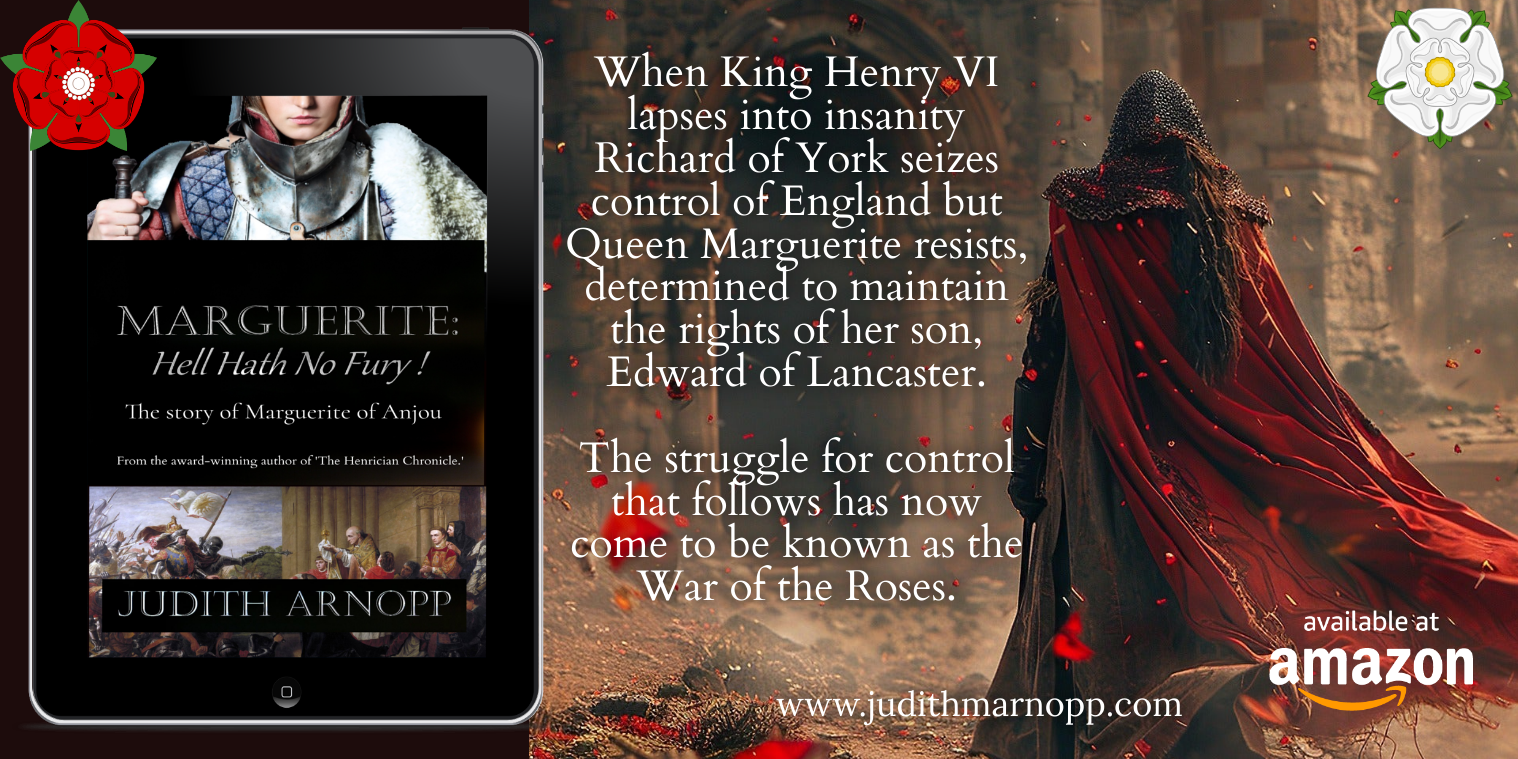
Judith: I’ve read historical fiction since I was a girl. I always sided with York (don’t shoot me!) and enjoyed books that portrayed women like Maguerite of Anjou and Margaret Beaufort as evil intentioned. Until relatively recently, any woman that stepped from her prescribed role was viewed negatively. As a young girl I never even questioned it but these days I am more neutral. I am old enough to realise that evil is in the eye of the beholder and things just aren’t black and white.
I still enjoy books set in the era but I no longer take up arms. As in any conflict there is good and bad on both sides.
It wasn’t until I began to read in this unbiased way that I even considered questioning Marguerite of Anjou’s portrayal in both fiction and non-fiction. She really wasn’t liked then and neither is she now. Shakespeare didn’t help by naming her as the ‘she-wolf’. But when you consider the whole York/Lancaster war from her point of view, the story changes.
She is an anointed queen, her incompetent husband goes a bit crazy, York comes strutting into court demanding to be regent when she has proven herself perfectly capable in the role but, of course, she is a woman, and a French woman at that! York then names her child illegitimate and somehow has him ousted from succession.
It is no wonder she was miffed!
Marguerite fought valiantly and tirelessly for her son’s rights until his death at Tewkesbury and there was nothing left to fight for. I rather admire that. Ok, some atrocities were carried out in her name, her ungoverned armies won her few friends but York and his contemporaries also carried out atrocious acts. The murder of Henry VI by Edward IV, the drowning of Clarence in the Tower. I could provide more examples.
Atrocities happen in war.
The injustices heaped upon Marguerite, coupled with the slurs that are still being spoken against her today inspired me to write her story but do not worry, I have not turned her into a saint. In my book, Marguerite: Hell Hath No Fury! you will encounter a young French girl who arrives in England to marry the king as part of the peace process at the end of the hundred years war. She is hated and reviled as a ‘foreigner’ from the start, saddled with an incompetent king, expected to produce an heir yet when she does, they name her an adulteress and her son a bastard.
As the long fight for justice continues, she is often rash, ungoverned, unwise. She grows angrier, and toward the end perhaps a little mad, but she fights tirelessly until she has nothing left worth fighting for. In judging Marguerite we should use the same rules as when judging her male counterparts.
Sharon: Tell us your least ‘favourite’ Wars of the Roses story you have come across in your research.
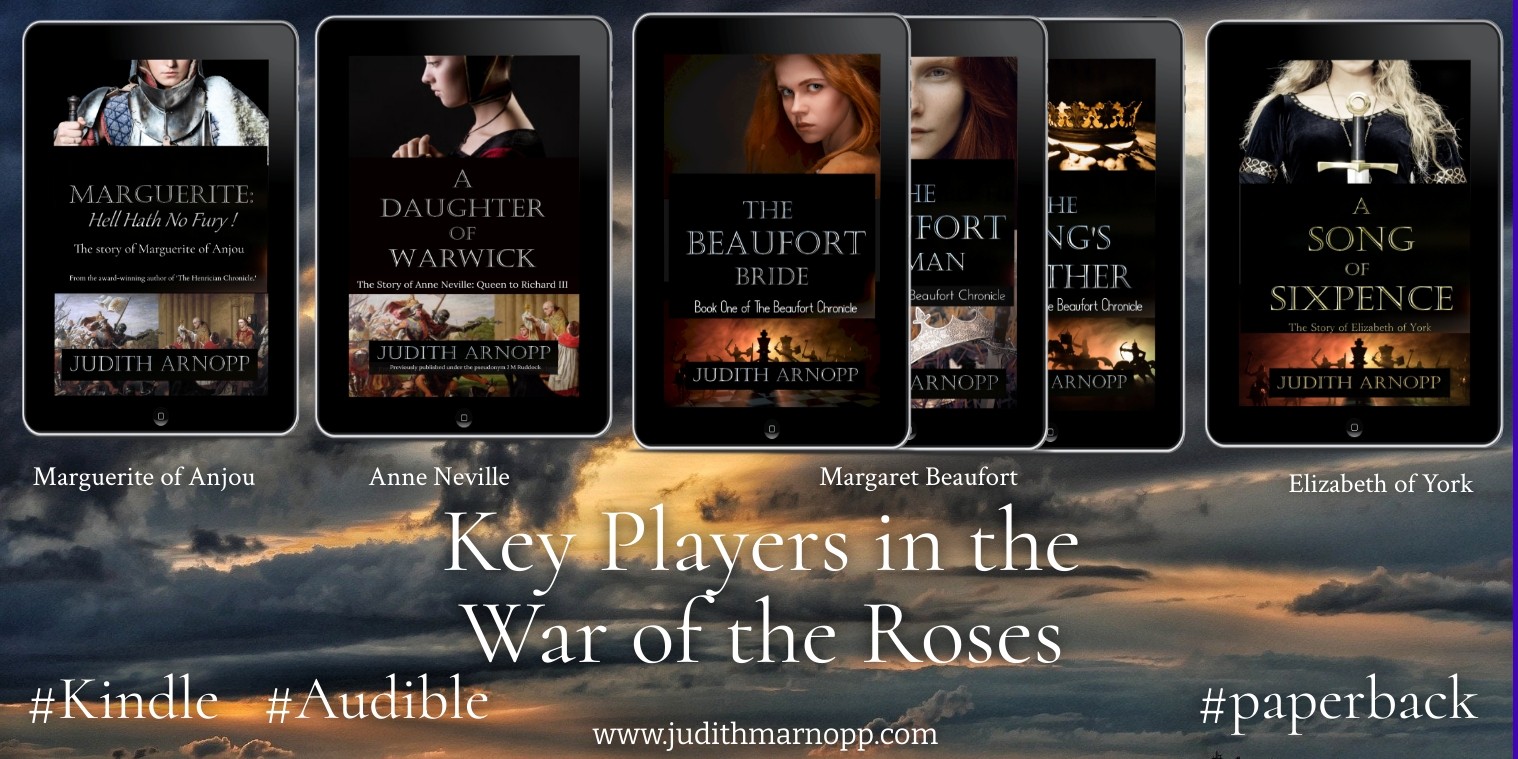
Judith: I don’t really have a ‘least favourite’. As a historian I try to remain objective so I am not squeamish when it comes to the murders and betrayal. If anything, the worse the story is, the more fascinating I find it.
It is important, imperative even, to view events from the perspective of the era. I am always impatient to hear Edmund Tudor derided as a child molester because of Margaret’s age when Henry VII was conceived. It may have raised a few eyebrows at the time but there is nothing in the record to suggest she was unwilling. Margaret was not alone, it was not unheard of and other women of the era also married and gave birth at a young age. Margaret always looked kindly on Edmund and in her will, requested to be buried with him rather than any of her other spouses. Her request was ignored and she lies in splendour at Westminster Abbey but her wish to be with Edmund suggests to me that she thought well of him and held no grudge, so why should we?
I try to keep a neutral opinion until the times comes to start writing and assume the persona of my chosen subject. As far as I am concerned, the more shocking the event, the better.
I am often so consumed by the subject of my novel that it prevents me from sleeping. The characters linger in my head for long after I’ve published and Henry has been the worst one for that. It is getting on for three years since the final volume of The Henrician Chronicle was published and he is still lurking but then, I guess it is to be expected as he always was an attention seeker.
Sharon: Are there any other eras you would like to write about?
Judith: Most of my books are set in transitional periods. I began my career writing about the Norman invasion, focusing on the problems regime changes bring. I covered the dissolution of the monasteries and the Reformation in Sisters of Arden, an era that was also life changing to the people of England. The war of the roses is similarly ‘transitional’ and there are still historical figures I’ve not yet covered. I quite fancy the glorious revolution and I’ve read a lot of novels set in and around WWI and WWII but I am too old now to carry out the research required to write in that era. It will be better to stick where I am, safe in the very dangerous world that I know.
Sharon: What are you working on now?
Judith: Marguerite: Hell Hath No Fury! was only published a short time ago and I am supposed to taking a few months off to rest. However, I have begun to play with something else. I have written a few chapters but am still finding my feet. Rather like The Book of Thornhold that jumps through several eras of history, it is about a place, rather than any particular period. The focus is on the history of the building, the people who lived there and the events that left a mark. Layers of history that build a transparency of events that shaped the building into what it is today. This of course, makes for a lot of research and the resulting book will be very hard to market but I’ve always been a glutton for punishment.
Sharon: And finally, what is the best thing about being a writer?
Judith: Oh, now there’s a question. It is very hard being a writer just now. It is all very fine when sitting in my own home, losing myself in time while tapping out fabulous stories but in recent years, marketing has become a living nightmare!
When I first began, around 2004, it was fun but now my mailbox in overflowing with faux promoters, faux publishers, tic-tockers, all demanding money for promises they either cannot fulfil or have no intention of delivering. It is no longer possible to know who to trust. There is also AI to deal with – a constant battle … AI stole our intellectual property for training purposes and is now putting the authors it stole from, and illustrators out of work … but I will leave it there, you asked what the best thing is…
For me it is the camaraderie with fellow authors, the mutual support, the back slapping, the advice, the encouragement. We may never meet face to face but authors understand things that non-writers can’t. I couldn’t do without them and neither could I continue to work without my readers. I appreciate every reader who takes the time to email to say how much they enjoy my work, the ones who go the extra mile of leaving a wonderful review or recommend my books to others. Like most authors, I need constant reassurance that I am doing ok. When the praise stops, the words falter and I am in danger of wandering away from my desk.
I am solitary by nature and writing is a lonely place but it pleases me to look up from my work and rediscover the wonderful view from my house that looks over Cardigan Bay. I save the few thousand words I have added to my wip, close my laptop and spend the rest of the day either gardening or walking on the beach or restoring my antique doll’s houses. Sometimes it is hard to believe that this is my job – I’ve no lengthy commute, no office clique to deal with, no rules. I may not be a big-name author but I love writing and I love my readers, and judging from their emails, they love me in return. I am grateful that they buy my books and keep me from penury. I am the author of my own life and that is just perfect.
About the Author:
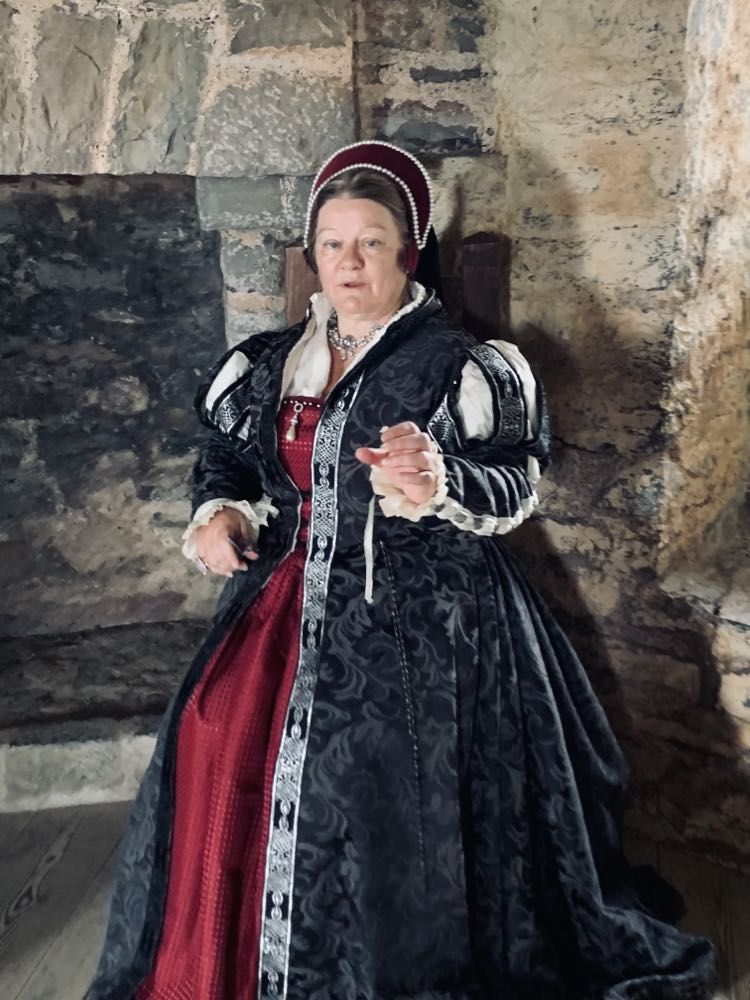
Judith Arnopp’s novels are set during the War of the Roses and the Tudor era. They focus on women like Margaret Beaufort, Anne Neville, Elizabeth of York, Anne Boleyn, and Mary Tudor.
She has a Master’s degree in medieval studies and a BA in English and creative writing from the University of Wales, making Historical Fiction the obvious career choice. She lives on the coast of West Wales with her husband, John, and now her family have flown the nest she writes full time from her home overlooking Cardigan Bay. Her early books were set in the Anglo-Saxon period but since switching to the Wars of the roses and Tudor era her career has flourished and she now has a substantial collection of titles in her catalogue. All books are available on Kindle and in paperback, some are on Audible.
Judith also writes non-fiction, her most recent published by Pen and Sword is a study of Tudor clothing and fashion, How to Dress Like a Tudor. Her work features in several anthologies and magazines.
You can find more information on http://www.judithmarnopp.com and follow her blog on http://www.juditharnoppnovelist.blogspot.co.uk and most social media platforms.
She runs a small seaside holiday let in Aberporth and when she has time for fun, likes to garden and restore antique doll’s houses. You can find her on most social media platforms.
Her novels include:
A Daughter of Warwick: the story of Anne Neville, Queen of Richard III; Marguerite: Hell Hath No Fury! the story of Marguerite of Anjou; A Song of Sixpence: the story of Elizabeth of York; The Beaufort Chronicle: the life of Lady Margaret Beaufort (three book series); A Matter of Conscience: Henry VIII, the Aragon Years (Book One of The Henrician Chronicle); A Matter of Faith: Henry VIII, the Days of the Phoenix (Book Two of The Henrician Chronicle); A Matter of Time: Henry VIII, the Dying of the Light (Book Three of The Henrician Chronicle); The Kiss of the Concubine: a story of Anne Boleyn; Sisters of Arden: on the Pilgrimage of Grace; The Winchester Goose: at the court of Henry VIII; Intractable Heart: the story of Katheryn Parr; The Heretic Wind: the life of Mary Tudor, Queen of England; Peaceweaver; The Forest Dwellers; The Song of Heledd; The Book of Thornhold
Non-Fiction
How to Dress Like a Tudor (Pen & Sword Books)
Where to find Judith: Webpage; Amazon Author Page; Blog; Facebook; Twitter; Threads; Blue sky
*
My Books:
Signed, dedicated copies of all my books are available through my online bookshop.
Out now: Scotland’s Medieval Queens

Scotland’s history is dramatic, violent and bloody. Being England’s northern neighbour has never been easy. Scotland’s queens have had to deal with war, murder, imprisonment, political rivalries and open betrayal. They have loved and lost, raised kings and queens, ruled and died for Scotland. From St Margaret, who became one of the patron saints of Scotland, to Elizabeth de Burgh and the dramatic story of the Scottish Wars of Independence, to the love story and tragedy of Joan Beaufort, to Margaret of Denmark and the dawn of the Renaissance, Scotland’s Medieval Queens have seen it all. This is the story of Scotland through their eyes.
‘Scotland’s Medieval Queens gives a thorough grounding in the history of the women who ruled Scotland at the side of its kings, often in the shadows, but just as interesting in their lives beyond the spotlight. It’s not a subject that has been widely covered, and Sharon is a pioneer in bringing that information into accessible history.’ Elizabeth Chadwick (New York Times bestselling author)
Available now from Amazon and Pen and Sword Books
Also by Sharon Bennett Connolly:

Heroines of the Tudor World tells the stories of the most remarkable women from European history in the time of the Tudor dynasty, 1485-1603. These are the women who ruled, the women who founded dynasties, the women who fought for religious freedom, their families and love. Heroines of the Tudor World is now available for pre-order from Amberley Publishing and Amazon UK. Women of the Anarchy demonstrates how Empress Matilda and Matilda of Boulogne, unable to wield a sword themselves, were prime movers in this time of conflict and lawlessness. It shows how their strengths, weaknesses, and personal ambitions swung the fortunes of war one way – and then the other. Available from Bookshop.org, Amberley Publishing and Amazon UK. King John’s Right-Hand Lady: The Story of Nicholaa de la Haye is the story of a truly remarkable lady, the hereditary constable of Lincoln Castle and the first woman in England to be appointed sheriff in her own right. Available from all good bookshops Pen & Sword Books, bookshop.org and Amazon.
Defenders of the Norman Crown: The Rise and Fall of the Warenne Earls of Surrey tells the fascinating story of the Warenne dynasty, from its origins in Normandy, through the Conquest, Magna Carta, the wars and marriages that led to its ultimate demise in the reign of Edward III. Available from Pen & Sword Books, Amazon in the UK and US, and Bookshop.org. Ladies of Magna Carta: Women of Influence in Thirteenth Century England looks into the relationships of the various noble families of the 13th century, and how they were affected by the Barons’ Wars, Magna Carta and its aftermath; the bonds that were formed and those that were broken. It is now available in paperback and hardback from Pen & Sword, Amazon, and Bookshop.org. Heroines of the Medieval World tells the stories of some of the most remarkable women from Medieval history, from Eleanor of Aquitaine to Julian of Norwich. Available now from Amberley Publishing and Amazon, and Bookshop.org. Silk and the Sword: The Women of the Norman Conquest traces the fortunes of the women who had a significant role to play in the momentous events of 1066. Available now from Amazon, Amberley Publishing, and Bookshop.org.
Alternate Endings: An anthology of historical fiction short stories including Long Live the King… which is my take what might have happened had King John not died in October 1216. Available in paperback and kindle from Amazon.
Podcast:
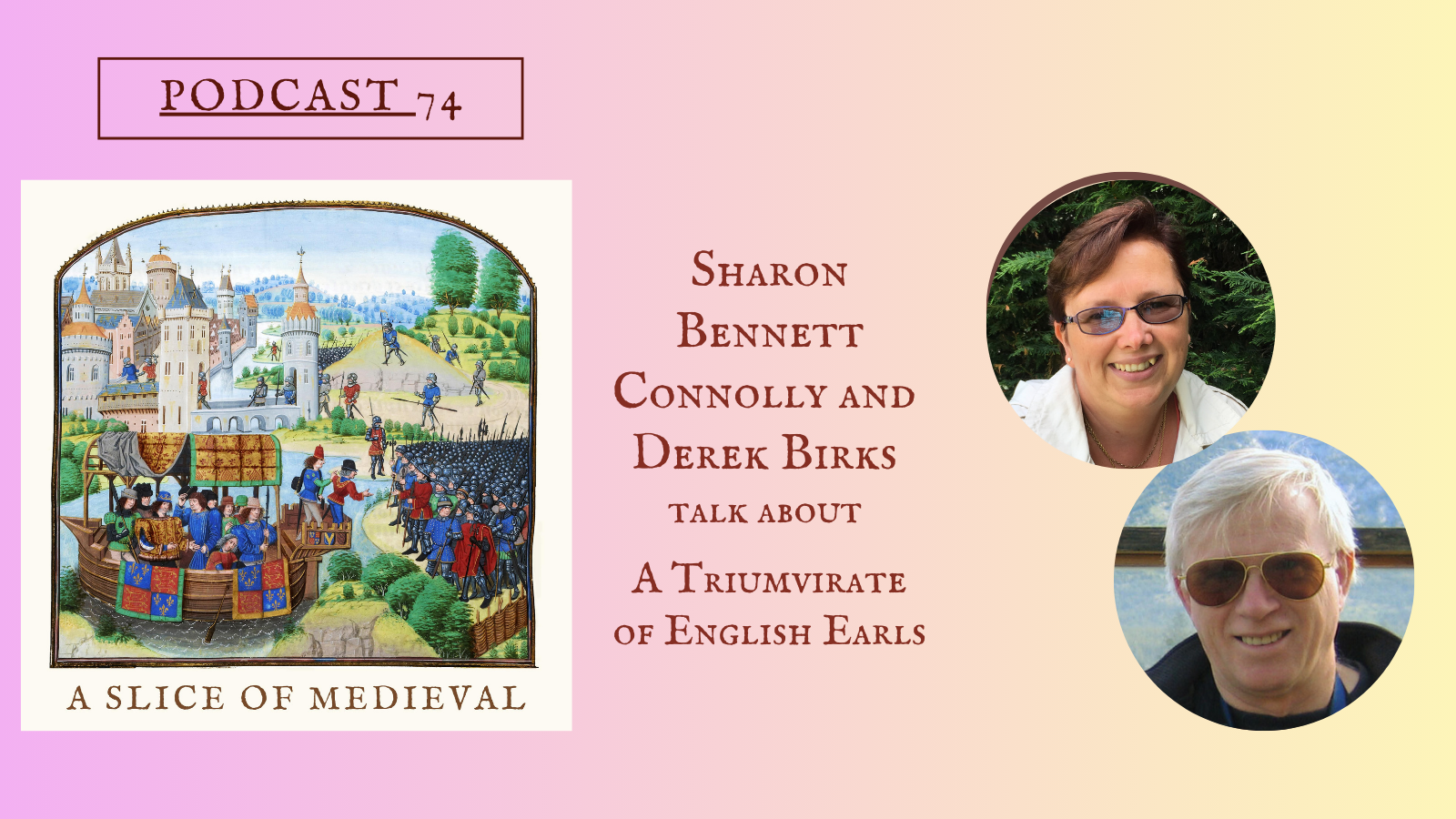
Have a listen to the A Slice of Medieval podcast, which I co-host with Historical fiction novelist Derek Birks. Derek and I welcome guests, such as Bernard Cornwell and Elizabeth Chadwick, and discuss a wide range of topics in medieval history, from significant events to the personalities involved.
Every episode is also now available on YouTube.
*
Don’t forget! Signed and dedicated copies of all my books are available through my online bookshop.
For forthcoming online and in-person talks, please check out my Events Page.
You can be the first to read new articles by clicking the ‘Follow’ button, liking our Facebook page or joining me on Twitter, Threads, Bluesky and Instagram.
*
©2025 Sharon Bennett Connolly FRHistS and Judith Arnopp
 History... the interesting bits!