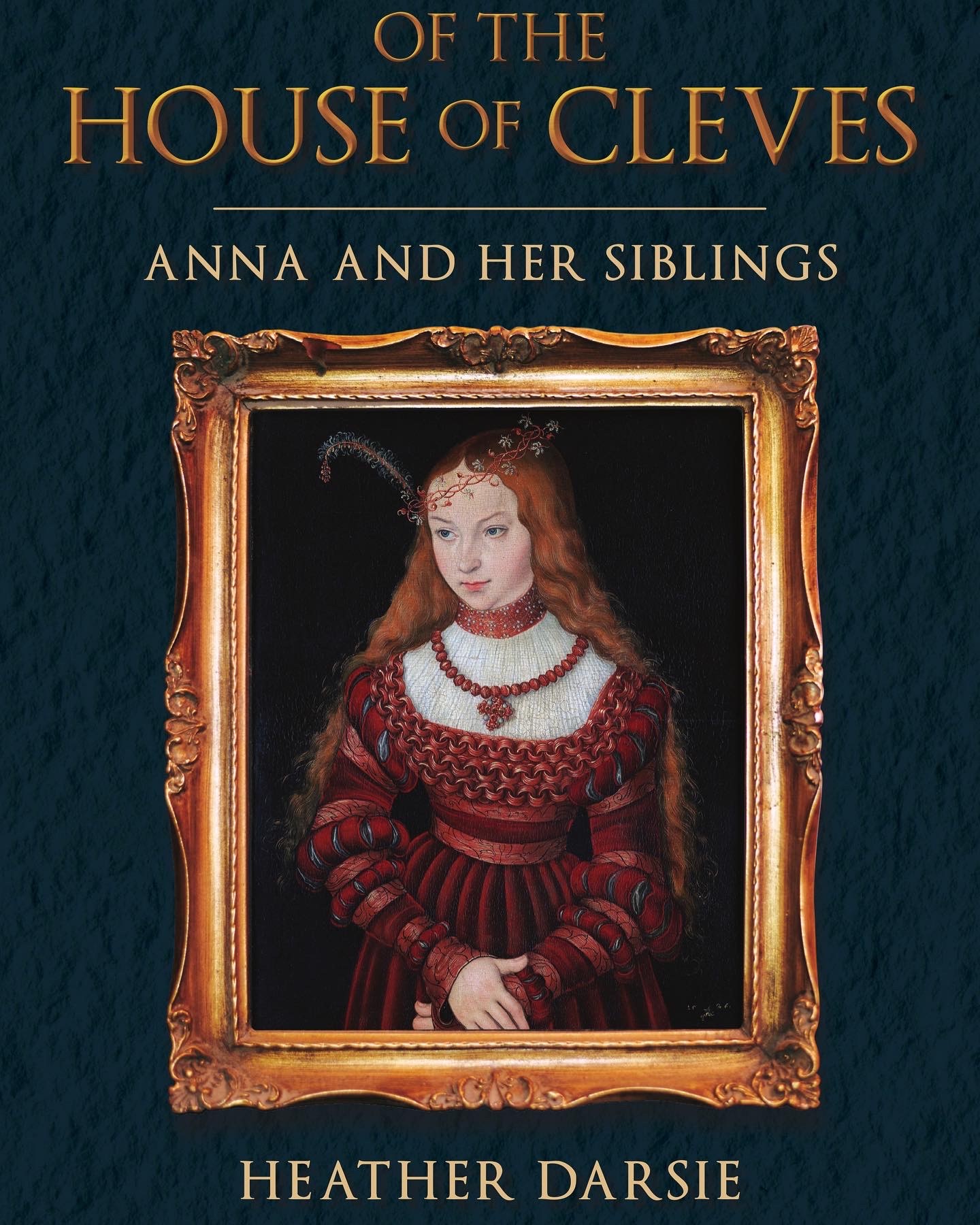
Today it is an honour and pleasure to open the blog tour for Heather R. Darsie’s latest book, Children of the House of Cleves: Anna and Her Siblings. You may remember that Heather wrote a fabulous biography of Anna of Cleves, Henry VIII’s fourth wife, a few years back. She has now followed that up with a look into Anna’s family.
Mental Illness in the House of Cleves
By Heather R. Darsie, J.D.
The von der Mark family, particularly once it came to the mental health of Anna of Cleves’ fraternal nephew Johann Wilhelm, was marred with mental health issues. Unfortunately, it is impossible to diagnose individuals from hundreds of years ago with afflictions that the modern person would recognize. To that end, terms from the time are rather simplistic.
Anna of Cleves’ family did not appear to have any serious mental health concerns on her father Johann III’s side, although Johann was regarded as being simple-minded. Madness featured on the maternal, Jülich-Berg side of Anna’s family. Her mother Maria of Jülich-Berg’s paternal grandfather, Gerhard of Jülich-Berg. He, “fell in and out of madness, beginning when William was still an infant…” That eventually led to William’s regency on the late 15th century, until Gerhard died.
William’s daughter Maria, mother of Anna and her siblings, was said to have died in a fit of rage. She was recognized as an intelligent, capable woman in her lifetime. Beyond her heartbroken rage at the end of her life, there is nothing to hint that Gerhard’s mental instability was passed down to Maria.
Anna’s brother Wilhelm is difficult to discern. After a series of strokes in his forties and fifties, Wilhelm occasionally suffered from a mental stupor. Whether it was from the strokes or a mental disorder is hard to sort. However, whatever his post-stroke limitations, a regency was never necessary during Wilhelm’s long reign as Duke of Jülich-Cleves-Berg.
Anna’s second sister-in-law through Wilhelm, Maria von Habsburg, was prone to fits of melancholy. Sometimes, the fits, or what the modern person might suspect to be depression, could be quite intense. She was one of Juana the Mad’s granddaughters, after all.
With the exception of perhaps Gerhard of Jülich-Berg, no one in the family was quite as mad as Anna’s nephew, Johann Wilhelm of Jülich-Cleves-Berg. Johann Wilhelm’s peculiar disposition began presenting itself in his youth, although it was easy enough to put him away in a religious establishment. Unfortunately, by the time he became a young man, there was no hiding his infirmity.
Again, there are really only glimpses of what ailed Johann Wilhelm. At times, he seemed to have entered an almost catatonic state. At other times, he seemed perfectly lucid, but was highly paranoid.
As the decades rolled on and Anna’s brother Wilhelm sought method after method of treating Johann Wilhelm, nothing worked. Multiple doctors saw him, including a known quack. Even witches were consulted in hopes of curing Johann Wilhelm, but nothing worked. On top of Johann Wilhelm’s mental illness, he failed to conceive any children.
Likely motivated by her own desperation for a child, Johann Wilhelm’s wife arranged an exorcism for him,
“The exorcism, which began around 5 September 1599, was violent, but started off harmlessly enough. Johann Wilhelm and members of his court were at Hambach Castle [near the city of Jülich], then being used by the duke as a hunting lodge. Foreign priests … and their religious retinue awaited Johann Wilhelm and his company as they returned from a hunting excursion. The priests gathered in Hambach Castle’s galleries to greet Johann Wilhelm, who was immediately apprehensive when he saw them. According to the report, Johann Wilhelm behaved strangely toward them because, “he was able to think or suspect without a doubt that the priests or monks are not being called for in vain, but are called to the place for the sake of the cause” of exorcising him.
Aside from dispossessing Johann Wilhelm of whatever demon was harassing him, the monks and priests wished to remove any impediment to Johann Wilhelm’s marriage bed…. The hope was that God would make them fruitful. Johann Wilhelm was keenly aware that the United Duchies needed an heir, especially since his first marriage was childless.”
What follows is a curious description of the efforts to which the priests went in cleansing Johann Wilhelm of the demon or demons whom they believed were vexing him. It was a shameful event.
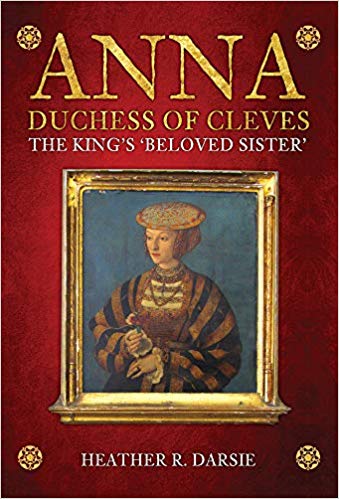
If this excerpt piqued your interest, consider reading Children of the House of Cleves: Anna and Her Siblings, set for release in the UK on 15 June 2023 and in the US/Internationally on 12 September 2023. Can’t wait until September? The US Kindle version is released on 15 June, too! You might also like to read Heather R. Darsie’s biography on Anna of Cleves, the first researched and written from the German perspective, Anna, Duchess of Cleves: The King’s Beloved Sister.
Children of the House of Cleves: Anna and Her Siblings is available from Amberley Publishing and Amazon in the UK and US
About the Author:

Heather R. Darsie is an independent researcher in the US specializing in early modern history. She focuses on researching the Holy Roman Empire and England in the early 16th century. She is the author of ‘Anna, Duchess of Cleves’ and ‘Catherine of Aragon – Spanish Princess’. Her primary career is as an attorney. She runs the website MaidensAndManuscripts.com.
Sources & Suggested Reading
1. Darsie, Heather R. Children of the House of Cleves: Anna and Her Siblings. Stroud: Amberley (2023).
2. Darsie, Heather R. Anna, Duchess of Cleves: The King’s Beloved Sister. Stroud: Amberley (2019).
*
My Books:
Signed, dedicated copies of all my books are available, please get in touch by completing the contact me form.
Out Now!
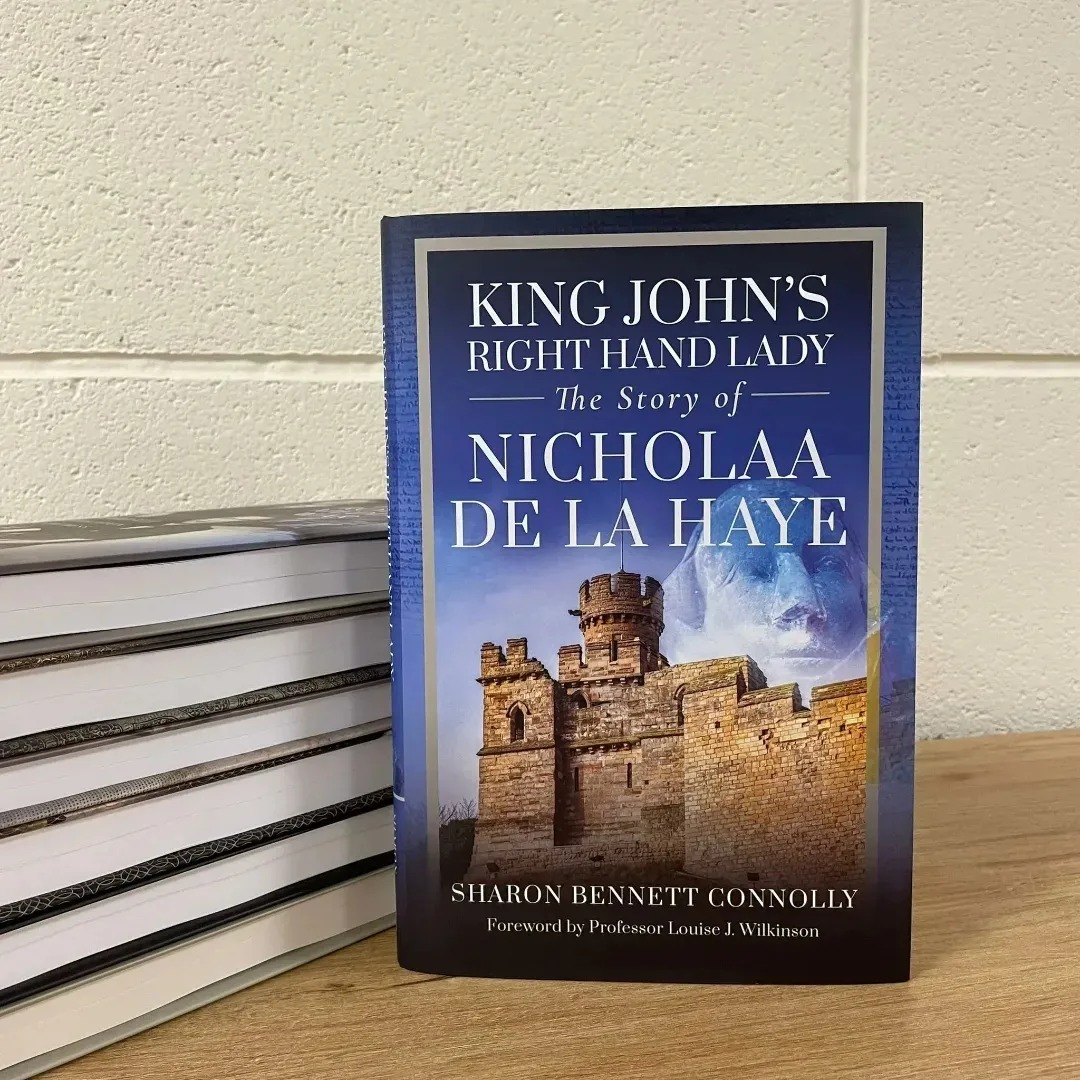
King John’s Right-Hand Lady: The Story of Nicholaa de la Haye is now available for pre-order from Pen & Sword Books, bookshop.org and Amazon UK. (I will hopefully have a US release date shortly)
In a time when men fought and women stayed home, Nicholaa de la Haye held Lincoln Castle against all-comers. Not once, but three times, earning herself the ironic praise that she acted ‘manfully.’ Nicholaa gained prominence in the First Baron’s War, the civil war that followed the sealing of Magna Carta in 1215.
A truly remarkable lady, Nicholaa was the first woman to be appointed sheriff in her own right. Her strength and tenacity saved England at one of the lowest points in its history. Nicholaa de la Haye is one woman in English history whose story needs to be told…
Coming 15 January 2024: Women of the Anarchy

On the one side is Empress Matilda, or Maud. The sole surviving legitimate child of Henry I, she is fighting for her birthright and that of her children. On the other side is her cousin, Queen Matilda, supporting her husband, King Stephen, and fighting to see her own son inherit the English crown. Both women are granddaughters of St Margaret, Queen of Scotland and descendants of Alfred the Great of Wessex. Women of the Anarchy demonstrates how these women, unable to wield a sword, were prime movers in this time of conflict and lawlessness. It show how their strengths, weaknesses, and personal ambitions swung the fortunes of war one way – and then the other.
Available for pre-order from Amberley Publishing and Amazon UK.
Also by me:

Defenders of the Norman Crown: The Rise and Fall of the Warenne Earls of Surrey tells the fascinating story of the Warenne dynasty, of the successes and failures of one of the most powerful families in England, from its origins in Normandy, through the Conquest, Magna Carta, the wars and marriages that led to its ultimate demise in the reign of Edward III. Defenders of the Norman Crown: Rise and Fall of the Warenne Earls of Surrey is now available from Pen & Sword Books, Amazon in the UK and US, and Bookshop.org.
Ladies of Magna Carta: Women of Influence in Thirteenth Century England looks into the relationships of the various noble families of the 13th century, and how they were affected by the Barons’ Wars, Magna Carta and its aftermath; the bonds that were formed and those that were broken. It is now available in paperback and hardback from Pen & Sword, Amazon, and Bookshop.org.

Heroines of the Medieval World tells the stories of some of the most remarkable women from Medieval history, from Eleanor of Aquitaine to Julian of Norwich. Available now from Amberley Publishing and Amazon, and Bookshop.org.
Silk and the Sword: The Women of the Norman Conquest traces the fortunes of the women who had a significant role to play in the momentous events of 1066. Available now from Amazon, Amberley Publishing, and Bookshop.org.
Alternate Endings: An anthology of historical fiction short stories including Long Live the King… which is my take what might have happened had King John not died in October 1216. Available in paperback and kindle from Amazon.
*
Podcast:
Have a listen to my A Slice of Medieval podcast:
For forthcoming online and in-person talks, please check out my Events Page.
You can be the first to read new articles by clicking the ‘Follow’ button, liking our Facebook page or joining me on Twitter and Instagram.
*
©2023 Heather R. Darsie and Sharon Bennett Connolly FRHistS
 History... the interesting bits!
3 thoughts on “Guest Post: Children of the House of Cleves by Heather R Darsie”